

P0106 on 2014-2021 Chevrolet Corvette: MAP Sensor, Valve Spring, and ECM Issues
On a 2014-2021 Corvette, code P0106 often points to more than just a bad MAP sensor. The most likely causes are a broken valve spring or the need for an ECM software update, as documented in several GM Technical Service Bulletins. A faulty MAP sensor or vacuum leak are also possible.
- On a 2014-2021 Corvette, P0106 is a serious code that requires immediate attention.
- Always check for GM Technical Service Bulletins first; the fix is often a specific ECM reprogram or a known mechanical failure.
- Do not automatically replace the MAP sensor. The root cause is frequently a broken valve spring, especially if accompanied by codes P0300 (misfire) or P0506 (low idle).
- A physical inspection for broken valve springs and intake system vacuum leaks is a critical diagnostic step.
- Due to the potential for serious engine damage, professional diagnosis is strongly advised.
What's Unique About the 2014-2021 Chevrolet CORVETTE
For the C7 (2014-2019) and C8 (2020-2021) Corvette, a P0106 code is a significant warning that should not be taken lightly. While it can be caused by a simple faulty sensor, General Motors has issued multiple Technical Service Bulletins (TSBs) linking this specific code to serious mechanical failures, namely broken valve springs. Other TSBs point to software glitches in the ECM that require reprogramming by a dealer, particularly on Z06 models under high load or specific 2017-2018 models. Therefore, unlike on many other vehicles, simply replacing the MAP sensor is often not the correct fix and can lead to misdiagnosis of a more severe underlying problem.
Diagnostic Flowchart
Tap your situation to follow the diagnostic path that matches what you're seeing on this vehicle.
Generation note: This range covers the C7 generation (2014-2019) and the early C8 generation (2020-2021). TSBs related to P0106 have been issued for both generations, pointing to issues like broken valve springs (C7 and C8) and necessary ECM updates (C7). The engines covered include the C7's LT1, LT4, and LT5, and the C8's LT2.
Symptoms You May Notice
- Check Engine Light (MIL) illuminated
- Rough idle, engine shaking, or stalling
- Engine misfire and associated noise (ticking, bucking, or loud bangs)
- Poor acceleration or hesitation
- Reduced engine power message on the Driver Information Center (DIC)
- Decreased fuel economy
- Black smoke from exhaust, indicating a rich fuel mixture
- Replacing the MAP sensor without checking for TSBs. Many owners and shops may default to replacing the sensor, only to have the code return because the root cause was a software issue or a broken valve spring.
Most Likely Causes
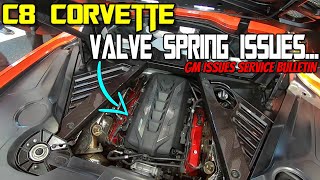
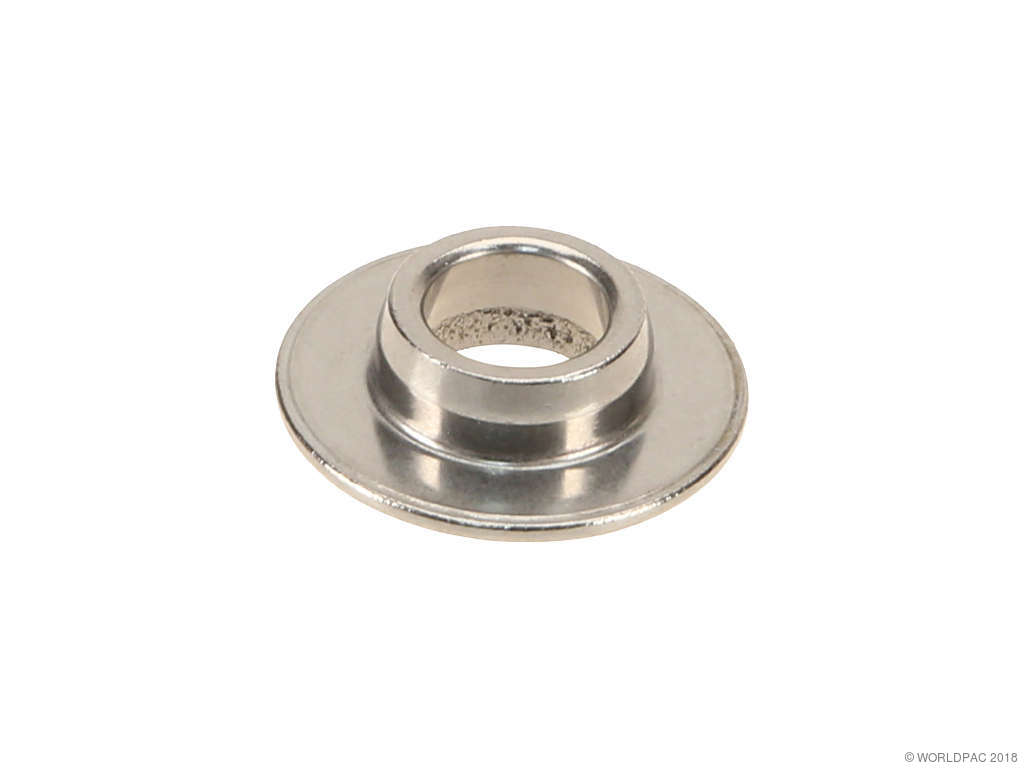
- Broken Valve Spring 🔴 High Probability Multiple GM Technical Service Bulletins (#PIP5423B, #PIP5752M) explicitly link P0106 to broken valve springs on these engines. TSB #PIP5752A specifically identified a bad batch of valve springs in vehicles built between June 1, 2020, and September 15, 2020, affecting LT1, LT2, LT4, and L87 engines.
How to confirm: A physical inspection is required. This involves removing the valve covers to check for broken springs. This is often preceded by hearing engine misfires or noise. A cylinder leakage test should be performed on the affected cylinder to check for further damage.
Typical fix: If no cylinder leakage is found, the broken valve spring must be replaced. For vehicles within the date range of TSB #PIP5752A, GM recommends replacing all valve springs on both banks. If the valve dropped into the cylinder, more extensive engine repair or replacement is necessary. Many owners on forums recommend replacing all springs with upgraded aftermarket units (e.g., from BTR) even if only one breaks, to prevent future failures.
Est. part cost: $15-$30 for a single OEM spring, or $200-$400 for a full set of upgraded aftermarket springs. - Engine Control Module (ECM) Software Update Needed 🔴 High Probability TSB #17-NA-264 was issued for 2017-2018 models with the LT4 engine to correct a software anomaly causing an erroneous P0106. Owners of Z06 models, in particular, report this code appearing at high speeds (e.g., top of 4th gear) which can be resolved by this ECM reflash. Dealers may be hesitant to perform the update under warranty unless the Check Engine Light is actively on.
How to confirm: A GM dealership or a qualified shop with access to GM's service information (TIS2WEB) can check the vehicle's VIN against available TSBs and software updates.
Typical fix: Reprogramming the ECM with the latest software calibration. This requires a specific tool to maintain stable battery voltage during the process.
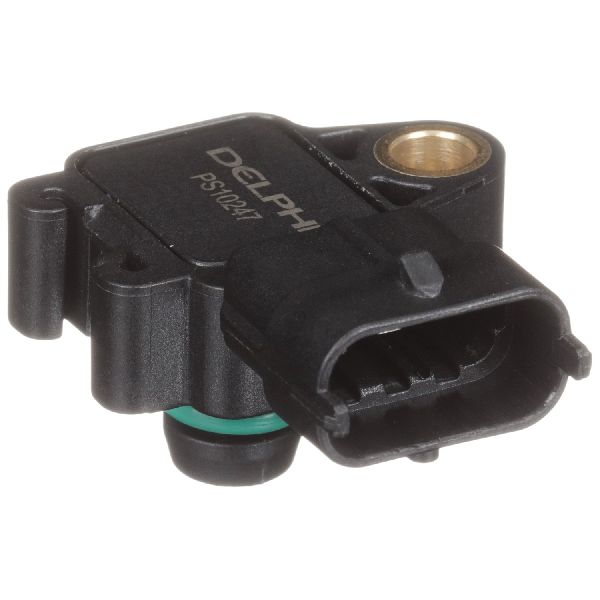
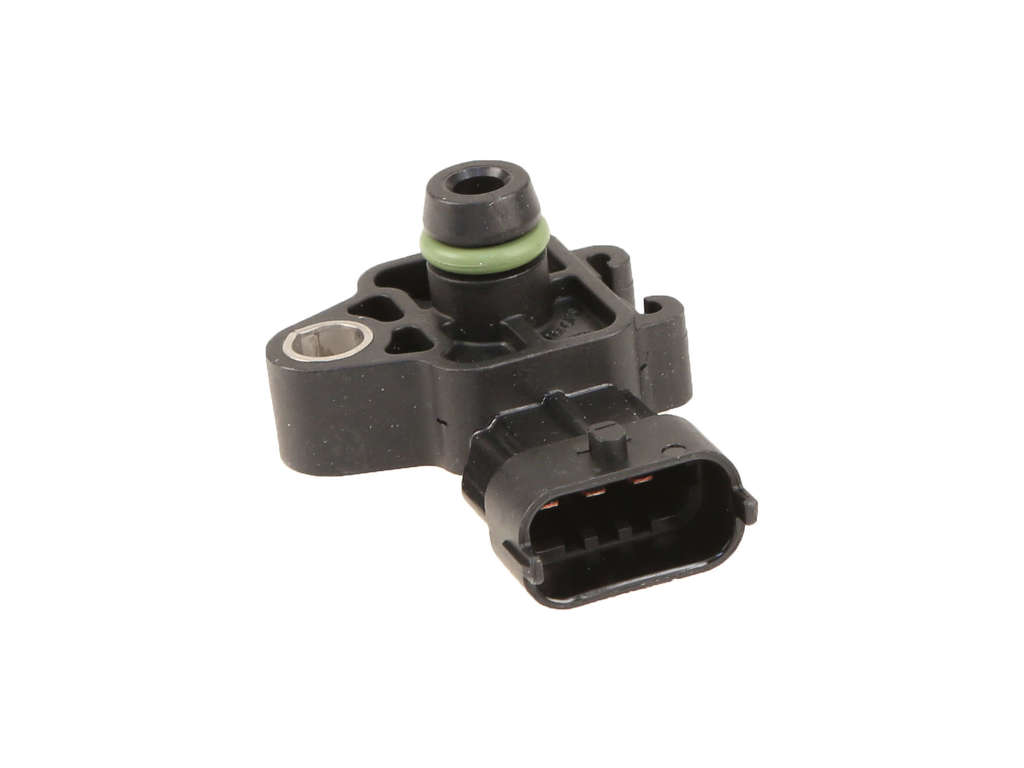
Est. part cost: $0 (if under warranty), otherwise labor costs of 1-2 hours apply for the reflash. - Faulty Manifold Absolute Pressure (MAP) Sensor 🟡 Medium Probability
How to confirm: Use a scan tool to monitor the MAP sensor voltage with the key on, engine off, and then while the engine is running. The voltage should change smoothly with engine vacuum. A multimeter can also be used to test the sensor's wiring and 5-volt reference signal.
Typical fix: Replace the MAP sensor. It is located at the back of the intake manifold and secured with a single Torx bolt. It is highly recommended to use a genuine ACDelco OEM part to avoid compatibility issues. Ensure the O-ring seal is also replaced and not damaged.
Est. part cost: $50-$100 for an OEM sensor. - Vacuum Leak 🟡 Medium Probability A Corvette Z06 owner on CorvetteForum discovered a crack in the air cleaner outlet duct (Part #23229401) near the EVAP system connection, causing a P0106 code under high load. This indicates that plastic components in the intake system can become brittle and fail, creating an unmetered air leak.
How to confirm: Visually inspect all vacuum hoses and the entire air intake tract for cracks, loose connections, or damage. A smoke test is the most effective way to find hard-to-see leaks.
Typical fix: Repair or replace the leaking hose, gasket, or intake component. In the documented case of the cracked air duct, the part was discontinued and had to be repaired with JB-Weld as a temporary fix.
Est. part cost: $5-$150 depending on the failed component.
Rare But Worth Checking
- MAP Sensor Icing: In very cold climates, GM has noted that ice can form on the MAP sensor during long drives, causing a temporary P0106 code. The issue often resolves itself after the engine warms up at idle. A winter grille cover may be recommended.
- Restricted Exhaust: A clogged catalytic converter can cause abnormal pressure in the intake manifold, potentially triggering a P0106 code. This is usually accompanied by other symptoms like a severe loss of power and potentially other DTCs.
Diagnosis Steps
- Check for Technical Service Bulletins (TSBs) for your specific VIN. This is the most critical first step, as TSBs #17-NA-264, #PIP5423B, and #PIP5752M are highly relevant.
- Scan for other DTCs. The presence of P0300 or P0506 strongly points towards a mechanical issue like a valve spring.
- Listen for engine noises. A distinct ticking, shaking, or bucking can indicate a broken valve spring.
- With the engine off, use a scan tool to check that the MAP sensor reading is consistent with the local barometric pressure.
- Start the engine and monitor the MAP sensor data on a scan tool. The reading should change instantly with throttle input.
- Perform a thorough visual inspection of the entire air intake system, from the air filter to the throttle body, looking for cracks or loose connections, especially the air cleaner outlet duct.
- If misfires are present or TSBs suggest it, remove the valve covers and perform a physical inspection of all valve springs for breakage. If a spring is broken, perform a cylinder leak-down test on that cylinder.
- If no physical faults are found, consult a dealer about performing an ECM reprogram as per TSB #17-NA-264, especially for 2017-2018 LT4 models.
- If all else fails, test the MAP sensor's wiring for continuity and proper 5V reference voltage before replacing the sensor itself.
Parts You'll Likely Need
- Valve Spring(s)
(OEM #10206040)— Multiple TSBs identify broken valve springs as a primary cause for this code on Corvettes. TSB #PIP5752A identified a bad batch from the supplier for some 2020 models.
Trusted brands: ACDelco, Brian Tooley Racing (BTR)
OEM price range: $15-$30 per spring
Aftermarket price range: $200-$400 for a full set - Manifold Absolute Pressure (MAP) Sensor
(OEM #12644228 (superseded by 12711681))— If a software or mechanical fault is ruled out, the sensor itself may have failed. Using an OEM sensor is highly recommended.
Trusted brands: ACDelco
OEM price range: $50-$100
Aftermarket price range: $30-$80
Related Codes That Often Appear With This One
- P0300 — This code for 'Random/Multiple Cylinder Misfire' is frequently seen with P0106 when a broken valve spring is the cause, as noted in TSB #PIP5752M.
- P0506 — This code for 'Idle Air Control System RPM Lower Than Expected' is also linked to broken valve springs in conjunction with P0106, as cited in TSBs #PIP5752M and #PIP5423B.
Technical Service Bulletins (TSBs) & Recalls
- PIP5752M: Service engine light, misfire, and engine noise with DTCs P0300, P0106, P0506, possibly due to a valve spring concern, especially in vehicles built mid-2020.
- 17-NA-264: Recommends an ECM reprogram to correct a condition where DTC P0106 is set on 2017-2018 LT4-equipped models.
- PIP5423B: Connects DTCs P0106 and P0506 to a potential broken valve spring on C7 models and other GM vehicles.
Platform-Specific Known Issues
- Bulletin #PIP5752M: Notes that a 2020 Corvette with a P0106, P0300, and P0506 may have a valve spring concern. It specifically identifies a bad batch of springs in vehicles built from June 1, 2020 to September 15, 2020 and recommends replacing all springs on both banks if no cylinder leakage is found.
- Bulletin #17-NA-264: Provides instructions to reprogram the ECM on 2017-2018 models with the LT4 engine to correct an erroneous P0106 code caused by a software anomaly, often triggered during high-speed driving.
Mechanic-Grade Diagnostic Values
- MAP Sensor Signal Voltage at Idle — expected: 1.0V - 1.5V. Failure: Voltage is significantly higher or lower, or does not respond to engine load changes.
- MAP Sensor Signal Voltage at Wide Open Throttle (WOT) — expected: 4.0V - 4.8V. Failure: Voltage does not rise to this level when the throttle is fully open.
- MAP Sensor 5-Volt Reference — expected: 4.8V - 5.2V. Failure: Voltage outside this range indicates a problem with the ECM or wiring.
- MAP Sensor Low Reference Circuit Resistance to Ground — expected: Less than 5 ohms. Failure: Resistance greater than 5 ohms indicates an open or high resistance in the ground circuit.
- MAP Sensor Reading (KOEO - Key On, Engine Off) — expected: Should match local barometric pressure (approx. 100 kPa at sea level). Voltage should be high (approx. 4.75V).. Failure: Reading is significantly different from local barometric pressure, indicating a faulty sensor or circuit.
Scan Tool Commands That Help
- GDS2 / Tech2 / Professional Scan Tool: Bi-directional controls — To energize solenoids, turn on fans, and perform other component tests to rule out related system failures without having to physically replace parts. This is mentioned by technicians on forums as a key diagnostic advantage.
- GDS2 / Professional Scan Tool: Compare MAP Sensor Data to Known Good Vehicle — GM's diagnostic procedure suggests comparing the live MAP sensor parameter to a known good vehicle under various operating conditions. A reading that differs by more than 5 kPa can indicate a problem.
Wiring & Ground Locations
- MAP Sensor Connector (C7) — On the MAP sensor, located at the rear of the intake manifold.. This 3-pin connector provides power, ground, and signal transmission. A poor connection here is a common point of failure. The connector itself is available as a replacement part with pigtail leads (GM Part #19367738).
- ECM Connector X2 (C7) — On the Engine Control Module (K20).. This is where the MAP sensor signals terminate. Pin 43 is the MAP Sensor Signal (L-GN/WH), Pin 44 is the 5 Volt Reference (GY-RD), and Pin 63 is the Low Reference/Ground (BK/L-GN). These are the specific pins to test for continuity or voltage issues originating from the ECM.
- G104 / G106 — G104 is on the frame next to the battery. G106 is on the right side of the engine block above the starter.. These are primary engine and PCM ground points. A corroded or loose connection at these locations can cause a host of electrical issues, including erratic sensor readings for the MAP, MAF, and others, leading to a P0106 code.
Real Owner Repair Stories
- CorvetteForum user 'rikhek' (C7 Corvette Z06) — P0106 code appearing only when running the car hard on a race track.
❌ Tried (didn't work) Replacing the MAP sensor, Adjusting the MAP sensor range table via a TSB reflash
✅ What actually fixed it Discovered a crack around the plastic quick-connect fitting on the air cleaner outlet duct (Part #23229401). This created a vacuum leak between the MAF sensor and the throttle body under high load. The part was discontinued, so it was repaired with JB-Weld as a temporary fix, which resolved the code. - CorvetteForum user 'brandonsmash' (2015 Corvette Z06 M7) — Reduced Engine Power mode and P0106 code after 2-3 hard laps on a track.
❌ Tried (didn't work) Letting the car cool down extensively between sessions.
✅ What actually fixed it The user identified that a coupler for the aftermarket cold air intake had slightly slipped off the bottom of the throttle body. The gap was not visible from above. Refitting the coupler and tightening the clamp solved the issue. This is another example of an unmetered air leak post-MAF causing the P0106 code under high airflow conditions.
"I Checked Everything" — The Actual Cause
- In cases involving high-performance driving on Z06 models, a standard smoke test at idle may not reveal a leak. The issue can be a crack in a plastic intake tube or a loose coupler that only opens up under high engine torque, vibration, or significant airflow, causing a momentary unmetered air leak that triggers P0106.
OEM Part Supersession History
12644228→12711681— Standard part update/revision by GM.
Heads up: No known incompatibilities; 12711681 is the direct replacement for 12644228. Both are considered genuine OEM parts.
Model Year Variations Within This Range
- 2017-2018: Models with the LT4 engine (Z06) in these years are specifically covered by TSB #17-NA-264, which involves an ECM reflash to prevent an erroneous P0106 code, often triggered at high speeds. This suggests a software calibration change was made by GM to widen the acceptable MAP sensor parameters.
- 2020: A specific batch of valve springs used in vehicles built between June 1, 2020, and September 15, 2020, was identified as defective in TSB #PIP5752A and later revisions. This makes valve spring failure a particularly high-probability cause for P0106 on Corvettes from this specific build window.
Helpful Videos
![How to Fix CHEVROLET P0106 Engine Code in 2 Minutes [1 DIY Method / Only $11.91]](https://img.youtube.com/vi/rtfam4alRyk/mqdefault.jpg)


We Have This Part in Stock


The information in this article is provided for general reference and educational purposes only. Vehicle specifications, procedures, and part compatibility can vary by production date, trim level, and region. Always consult your vehicle's factory service manual and verify part numbers before purchasing or performing repairs. Safety-critical components such as airbags, seat belts, and braking systems should be installed by a qualified professional.
- Chevrolet CORVETTE:
- 🎬 Helpful Videos
- 🛍️ Shop This Part
- What's Unique About the 2014-2021 Chevrolet CORVETTE
- Diagnostic Flowchart
- Symptoms You May Notice
- Most Likely Causes
- Rare But Worth Checking
- Diagnosis Steps
- Parts You'll Likely Need
- Related Codes That Often Appear With This One
- Technical Service Bulletins (TSBs) & Recalls
- Platform-Specific Known Issues
- Mechanic-Grade Diagnostic Values
- Scan Tool Commands That Help
- Wiring & Ground Locations
- Real Owner Repair Stories
- "I Checked Everything" — The Actual Cause
- OEM Part Supersession History
- Model Year Variations Within This Range
- 🎟️ Get 5% Off