

P0106 on 2016-2021 Chevrolet Camaro: MAP Sensor or Broken Valve Spring?
On 2016-2021 Camaros, P0106 often points to more than just a bad MAP sensor. Manufacturer bulletins strongly link this code to broken valve springs, especially on V8 models. Diagnosis must rule out this serious mechanical issue before replacing sensors, as failure to do so can lead to catastrophic engine damage.
- For a 2016-2021 Camaro, P0106 is a serious code that requires immediate attention.
- Do not automatically replace the MAP sensor. The root cause is frequently a broken valve spring, especially on V8 models.
- Listen for any engine ticking or misfires. If present, this strongly suggests a mechanical valve train problem.
- Check for accompanying codes like P0300 (misfire) and P0506 (low idle), which reinforce the likelihood of a broken valve spring.
- Due to the risk of severe engine damage, professional diagnosis is highly recommended.
What's Unique About the 2016-2021 Chevrolet CAMARO

While P0106 commonly points to a faulty MAP sensor on many vehicles, for the sixth-generation Camaro (particularly V8 models with LT1 and LT4 engines), it's a well-documented indicator of a potentially serious mechanical problem: a broken valve spring. Multiple GM Technical Service Bulletins (TSBs) explicitly direct technicians to inspect for broken valve springs when P0106 appears, especially alongside misfire (P0300) or low idle (P0506) codes. This makes proper diagnosis critical, as simply replacing the MAP sensor will not fix the underlying mechanical failure and risks severe engine damage.
Diagnostic Flowchart

Tap your situation to follow the diagnostic path that matches what you're seeing on this vehicle.
Symptoms You May Notice
- Check Engine Light illuminated
- Engine misfires or rough running, sometimes described as a 'bouncy' feeling
- Audible engine noise (ticking, clattering, or a loud pop followed by misfire)
- Rough or low idle speed
- Poor acceleration or hesitation
- Reduced engine power or entering 'limp mode'
- Black smoke from the exhaust
- Decreased fuel economy
- Stalling or difficulty restarting the engine
- Replacing the MAP sensor without checking for mechanical engine problems like a broken valve spring. Given the TSBs, this is the most critical misdiagnosis to avoid. A Reddit user with a V6 Camaro replaced the MAP sensor, but the issue persisted, highlighting the need for deeper diagnosis.
Most Likely Causes

- Broken Valve Spring 🔴 High Probability GM issued multiple Technical Service Bulletins (TSBs) for this specific issue on V8 engines (LT1, LT4, L86, etc.) used in the Camaro and its platform mates. TSBs #PIP5752M and #PIP5423B directly link P0106 to broken valve springs, suggesting a known weakness. TSB #PIP5752A notes a specific batch of faulty springs on 2020 models built between June and September 2020.
How to confirm: Listen for engine ticking or misfires. A professional technician will perform a cylinder leak-down test on the affected cylinder and visually inspect the valve train by removing the valve covers. A broken spring will be visibly fractured or shorter than the others.
Typical fix: Replacement of the broken valve spring, retainers, and seals. Per TSB #PIP5752A, for 6.2L engines (LT1, LT4, etc.) built between June 1, 2020, and September 15, 2020, all valve springs on both cylinder banks must be replaced. For other instances, only the single broken spring may be replaced. 🎬 Watch: Step-by-step walkthrough of an LT1 valve spring installation If the valve has dropped, cylinder head and piston replacement will be necessary.
Est. part cost: $10-$30 per spring, but a full set can be $150-$400. If the head is damaged, costs will be significantly higher. - Faulty Manifold Absolute Pressure (MAP) Sensor 🟡 Medium Probability While less common than the valve spring issue on this platform, the MAP sensor is the primary reporter for this code and can fail like any electronic component. Contamination from oil in the PCV system can also foul the sensor.
How to confirm: Use a scan tool to monitor the MAP sensor voltage/pressure reading. With Key On, Engine Off (KOEO), the reading should be close to the Barometric Pressure (BARO) sensor reading (approx. 4.5-5.0 volts). At idle, it should drop to a low, steady voltage (e.g., 1.5-2.1 volts). If it's stuck, erratic, or doesn't change with RPM, the sensor is suspect. 🎬 See how to diagnose a MAP sensor using a scan tool
Typical fix: Replace the MAP sensor. On the LT1 V8, it is located on the top rear of the intake manifold, behind the throttle body.
Est. part cost: $30-$80 - Vacuum Leak ⚪ Low Probability Vacuum hoses, particularly in the PCV system, can crack or become disconnected, creating an unmetered air leak that confuses the MAP sensor.
How to confirm: Visually inspect all vacuum hoses connected to the intake manifold, especially the PCV lines, for cracks, brittleness, or disconnection. A smoke test is the most effective way to find hard-to-see leaks.
Typical fix: Replace the cracked or broken vacuum hose or intake manifold gasket.
Est. part cost: $5-$50 for hoses, more for intake gaskets. - Wiring or Connector Issue ⚪ Low Probability
How to confirm: Inspect the MAP sensor's electrical connector for corrosion, moisture, or loose pins. Check the wiring harness for any signs of damage from heat or chafing.
Typical fix: Repair the damaged wiring or clean/replace the connector.
Est. part cost: $5-$100 depending on the extent of damage.
Rare But Worth Checking
- Broken Exhaust Valve:
Diagnosis Steps
- Scan the ECM for all stored trouble codes. Note if P0300, P0506, or P0068 are present with P0106, as this strongly suggests a mechanical issue.
- Listen to the engine while running for any ticking, tapping, or misfire sounds. A broken spring may be immediately obvious. 🎬 Watch: Hear what a cracked Camaro valve spring sounds like
- If engine noise is present, STOP and proceed to internal engine inspection. Do not continue with sensor diagnostics to avoid further damage.
- If no noise is present, use a scan tool to observe live data from the MAP sensor. With Key On, Engine Off (KOEO), compare the MAP reading to the barometric pressure (BARO) reading. They should be nearly identical.
- Start the engine and observe the MAP reading at idle. It should be a steady low pressure (high vacuum). Rev the engine; the reading should change instantly and smoothly. An erratic reading points to a sensor, wiring, or vacuum issue.
- If MAP sensor data is erratic, inspect the sensor's wiring and connector for damage, corrosion, or a loose connection.
- If wiring is good, test for vacuum leaks. Visually inspect PCV hoses and intake connections. A smoke test is the most reliable method.
- If codes P0300 or P0506 are present, or if any mechanical noise exists, a valve train inspection is mandatory. Remove the appropriate valve cover and visually inspect all valve springs for fractures. A broken spring is often a clean break and will look shorter than the others.
- If a broken spring is found, perform a cylinder leak-down test on that cylinder to check for bent valves or other internal damage before proceeding with the spring replacement.
Parts You'll Likely Need
- Valve Spring
(OEM #12690968)— A documented weak point on some GM V8 engines within this year range, directly cited in TSBs as a cause for P0106. Another potentially applicable part number is 12706568, which supersedes older numbers.
Trusted brands: ACDelco, GM Genuine Parts
OEM price range: $15-$30
Aftermarket price range: $10-$25 - Manifold Absolute Pressure (MAP) Sensor
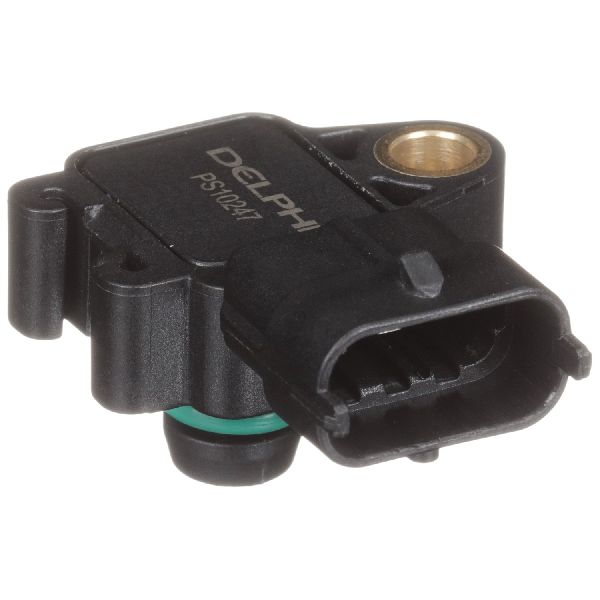
(OEM #12644228)— This is the sensor that directly reports the fault. While often not the root cause on this vehicle, it can fail and is a common fix for P0106 on other platforms. A newer part number, 12711681, is also used for 2016+ models.
Trusted brands: ACDelco, Bosch, Delphi
OEM price range: $50-$80
Aftermarket price range: $30-$60
Related Codes That Often Appear With This One
- P0300 — A random/multiple cylinder misfire code. A broken valve spring will cause the affected cylinder(s) to misfire, triggering P0300. TSB #PIP5752M explicitly lists these codes together. A Corvette forum member with an LS2 engine reported P0106 and P0300 from a broken valve spring.
- P0506 — An idle air control system RPM lower than expected code. A broken valve spring or significant vacuum leak can cause a rough, low idle, triggering P0506. TSBs #PIP5752M and #PIP5423B list these codes together.
- P0068 — A MAP/MAF - Throttle Position Correlation code. This can be triggered when the erratic manifold pressure from a broken valve spring causes a mismatch between airflow readings and what the ECM expects based on the throttle's position.
Technical Service Bulletins (TSBs) & Recalls

- PIP5752M (June 1, 2021): Links P0106, P0300, and P0506 to a possible valve spring concern on various GM models including the Camaro.
- PIP5423B (April 10, 2019): Advises technicians to inspect for a broken valve spring when P0106 and P0506 are found on a wide range of GM trucks and performance cars, including the 2016-2019 Camaro.
- PIP5752A (September 22, 2020): Specifically identifies a batch of 2020 6.2L engines with potentially faulty valve springs and mandates replacement of all springs if one is found broken.
- PIP5529B / PIP5529A: Includes P0106 in a list of codes that may illuminate the MIL, requiring careful diagnosis.
Platform-Specific Known Issues
- TSB #PIP5752M, #PIP5423B, and #PIP5752A specifically call out a 'Possible valve spring concern' on vehicles presenting with code P0106, often accompanied by P0300 and P0506. This is particularly noted for 6.2L engines (LT1, LT4).
- TSB #PIP5752A specifies that for 2020 models with 6.2L engines (L87, LT1, LT4, LT2) built between June 1, 2020, and September 15, 2020, a single broken spring necessitates the replacement of all valve springs on both cylinder banks.
Mechanic-Grade Diagnostic Values
- MAP Sensor 5V Reference — expected: 4.8-5.2 Volts. Failure: Voltage outside this range indicates a problem with the ECM or wiring.
- MAP Sensor Signal Voltage (Key On, Engine Off) — expected: 4.0-5.0 Volts (should correspond to local barometric pressure). Failure: A significantly lower voltage (e.g., under 4.0V) suggests a faulty sensor or a wiring issue.
- MAP Sensor Signal Voltage (Hot Idle) — expected: 1.5-2.1 Volts. Failure: Voltage that is too high at idle can indicate a vacuum leak or a mechanical issue like a broken valve spring affecting manifold pressure.
- MAP Sensor Ground Circuit Voltage Drop — expected: Less than 100mV (0.1V). Failure: Voltage higher than 100mV indicates high resistance in the ground circuit, which can skew sensor readings.
Scan Tool Commands That Help
- GM GDS2 (Global Diagnostic System 2): Module Diagnostics -> Engine Control Module -> Control Functions — GDS2 allows for bidirectional control to test various components. While it cannot directly test the MAP sensor signal, it can be used to command other systems on and off to see how they affect manifold pressure and to verify the functionality of other sensors and actuators that might be influencing the MAP reading.
- GM GDS2 (Global Diagnostic System 2): Vehicle DTC Information -> Display DTCs — Used to retrieve not just the primary code (P0106) but also any associated manufacturer-specific or history codes that a generic scanner might miss, providing a more complete diagnostic picture.
Wiring & Ground Locations
- MAP Sensor Connector (LT1) — On the top rear of the intake manifold, behind the throttle body.. This is the primary connection point for testing voltage and ground for the MAP sensor. The typical 3-wire connector has a 5V reference, a signal wire, and a low reference (ground).
- MAP Sensor Pinout (Typical GM) — At the sensor connector. Pin A: Ground, Pin B: Signal, Pin C: 5V Reference.. Knowing the pinout is essential for accurate multimeter testing of the power, ground, and signal circuits without causing damage.
- Engine Block Ground — A ground bolt attaches a strap from the block to the frame rail, often underneath the passenger side exhaust manifold near the starter.. A loose or corroded main engine ground can cause erratic behavior in multiple sensors, including the MAP sensor, due to an unstable ground reference for the ECM.
- Cylinder Head Grounds — There are typically two small ground wires attached to the back of the passenger-side cylinder head.. These grounds are part of the engine harness and are critical for the proper operation of sensors mounted on the engine.
Real Owner Repair Stories
- LS1Tech user (Car with LS-family engine) — Car suddenly started running very badly, throwing codes P0101 (MAF) and P0106 (MAP). All spark plugs were fouled sooty black.
❌ Tried (didn't work) Replacing the MAF sensor, Replacing the MAP sensor
✅ What actually fixed it The car developed a tapping noise and the final diagnosis was a broken intake valve spring that eventually led to a dropped valve. The erratic manifold pressure from the broken spring was the root cause of the sensor codes. - CorvetteForum user (2007 Corvette with stock LS2 engine, 24k miles) — Car started running very rough, had to keep RPMs up to get home. Codes P0106 and P0300 were present.
❌ Tried (didn't work) Initial internet searches pointed towards LS7 engine issues, not LS2.
✅ What actually fixed it A GM dealer diagnosed and confirmed a broken valve spring was the cause of the P0106 and P0300 codes. The repair was covered under an extended warranty.
OEM Part Supersession History
12553696, 12589774→12706568— Standard part evolution, likely for improved material or manufacturing process.
Heads up: The new part number (12706568) is the recommended replacement for a wide range of GM V8 engines, including the LT1.12644228→12711681— Part update for newer model years.
Heads up: While they may be interchangeable, it is best to use the part number specified for the vehicle's exact year and model, as there could be minor calibration differences.
Model Year Variations Within This Range
- 2017-2021 (ZL1): The supercharged LT4 engine in the ZL1 model uses at least two MAP sensors: one at the supercharger inlet and another on the intake manifold itself. A P0106 code could refer to either sensor, requiring more specific diagnosis to identify the correct faulty unit.
- 2019-2021: Later models (2019+) with the 6.2L V8 engine may be equipped with the 10L80 10-speed automatic transmission, which has different control logic and integration with the ECM compared to the earlier 8L90 8-speed. While not a direct cause, software interactions could differ.
Helpful Videos
We Have This Part in Stock


The information in this article is provided for general reference and educational purposes only. Vehicle specifications, procedures, and part compatibility can vary by production date, trim level, and region. Always consult your vehicle's factory service manual and verify part numbers before purchasing or performing repairs. Safety-critical components such as airbags, seat belts, and braking systems should be installed by a qualified professional.
- Chevrolet CAMARO:
- 🎬 Helpful Videos
- 🛍️ Shop This Part
- What's Unique About the 2016-2021 Chevrolet CAMARO
- Diagnostic Flowchart
- Symptoms You May Notice
- Most Likely Causes
- Rare But Worth Checking
- Diagnosis Steps
- Parts You'll Likely Need
- Related Codes That Often Appear With This One
- Technical Service Bulletins (TSBs) & Recalls
- Platform-Specific Known Issues
- Mechanic-Grade Diagnostic Values
- Scan Tool Commands That Help
- Wiring & Ground Locations
- Real Owner Repair Stories
- OEM Part Supersession History
- Model Year Variations Within This Range
- 🎟️ Get 5% Off