

P0106 on 2009-2012 Audi Q5 3.2L V6: MAP Sensor and Vacuum Leak Fixes
On the Audi Q5 3.2L V6, code P0106 is most often caused by a faulty MAP sensor or a vacuum leak from a cracked hose or bad PCV valve. Replacing the MAP sensor costs about $40-$100 for the part and is a simple DIY fix. Always check for vacuum leaks before replacing the sensor.
- This guide applies specifically to the 2009-2012 Audi Q5 with the 3.2L V6 engine.
- Before replacing any parts, use a scan tool to compare MAP and BARO sensor readings with the engine off. A significant difference strongly suggests a bad MAP sensor.
- Always check for vacuum leaks (especially from the PCV system) before assuming a sensor is bad. A smoke test is the most effective method.
- Be aware that heavy carbon buildup on the intake valves is a common issue on this engine and a likely cause of P0106 if simple fixes don't work.
- A persistent P0106 code that is not resolved by replacing the MAP sensor or fixing vacuum leaks could indicate a rare but serious internal ECU fault.
What's Unique About the 2009-2017 Audi Q5
The Audi Q5 was available with the 3.2L V6 (CALB) engine from 2009 to 2012. Unlike the 2.0T engine where P0106 almost always points to a failed PCV valve, the causes on the 3.2L FSI engine are more varied. This direct-injection engine is known for significant carbon buildup on its intake valves, which can disrupt airflow and trigger this code. Additionally, a unique and frustrating possibility on this platform is the failure of the barometric pressure sensor (F96), which is integrated inside the main engine computer (ECU), leading to a persistent P0106 code that cannot be fixed with external sensor or vacuum leak repairs. This internal ECU fault has been confirmed by owners in forum discussions after exhausting all other options.
Symptoms You May Notice
- Check Engine Light is on
- Rough or unstable idle
- Hesitation or poor acceleration
- Reduced fuel economy
- Engine may feel sluggish or lack power
- Occasional black smoke from exhaust
- Engine backfiring
- Replacing the MAP sensor without first checking for vacuum leaks. A smoke test is a crucial diagnostic step.
- Replacing spark plugs or ignition coils, as the rough idle symptom can be mistaken for a misfire.
- Confusing the issue with a Mass Airflow (MAF) sensor problem. This engine uses a MAP sensor for primary load calculation, though it may also have a MAF sensor.
Most Likely Causes
- Faulty Manifold Absolute Pressure (MAP) Sensor 🔴 High Probability The sensor can become contaminated with oil from the PCV system or simply fail electronically over time, providing a reading that is out of sync with the ECU's internal barometer.
How to confirm: With the key on and engine off, use a diagnostic tool like VCDS to compare the intake manifold pressure reading (from the MAP sensor G71) to the atmospheric pressure reading (from the ECU's internal BARO sensor F96). The values should be nearly identical (within ~40 mbar). A significant, persistent difference points to a faulty MAP sensor or the rarer internal ECU fault.
Typical fix: Replace the MAP sensor. It is located on the intake manifold and secured with a single Torx screw (often a T20), making for a quick replacement. Cleaning the sensor with dedicated electronics cleaner can be attempted first, but replacement is often necessary.
Est. part cost: $40-$100 - Vacuum Leak 🟡 Medium Probability Hoses and gaskets become brittle with age and heat cycles. The PCV (oil separator) valve diaphragm is a known failure point; it can tear and create a significant unmetered air leak.
How to confirm: Perform a smoke test to systematically check all vacuum lines, intake manifold gaskets, and the PCV system for leaks. A torn PCV diaphragm can often be identified by a strong suction at the oil filler cap when the engine is running, making it difficult to remove.
Typical fix: Replace the specific cracked hose, failed gasket, or the entire PCV valve assembly if its diaphragm is torn. The brake booster vacuum hose is a common point of failure.
Est. part cost: $20-$200 - Carbon Buildup on Intake Valves 🟡 Medium Probability As a direct-injection (FSI) engine, fuel does not wash over the intake valves. Oil vapors from the PCV system bake onto the hot valves, forming thick carbon deposits that restrict and disrupt airflow, which can affect manifold pressure readings and trigger a P0106 code.
How to confirm: This requires visual inspection by removing the upper intake manifold. A borescope can then be used to view the valves through the intake ports to assess the level of buildup.
Typical fix: The intake valves must be manually or mechanically cleaned. The most effective and common professional method is walnut shell blasting to scour the carbon off the valves and ports.
Est. part cost: $0 (if DIY cleaning) - $50 (walnut media) - Dirty or Faulty Throttle Body ⚪ Low Probability
How to confirm: Visually inspect the throttle body and plate for heavy carbon or grime buildup that could impede its movement or prevent it from sealing properly at idle.
Typical fix: Clean the throttle body thoroughly with a dedicated throttle body cleaner and a soft brush. After cleaning, a throttle body adaptation must be performed using a diagnostic tool like VCDS to reset its learned values.
Est. part cost: $5-$15
Rare But Worth Checking
- Internal ECU/ECM Failure: The barometric pressure sensor (F96) is integrated into the Engine Control Unit. If this internal component fails or degrades, it can cause a persistent P0106 code that won't be resolved by replacing external parts. Diagnosis is made when VCDS shows a large, static discrepancy between the MAP (G71) and BARO (F96) sensor readings with the engine off, even after replacing the MAP sensor. This requires ECU repair or replacement.
- Damaged MAP Sensor Wiring: Check the wiring harness and connector for the MAP sensor for any signs of damage, corrosion, or tension. A broken wire or poor connection will mimic the symptoms of a failed sensor. A 'wiggle test' of the harness while monitoring live data can sometimes reveal an intermittent connection issue.
- ECU Software Update Required: On some Audi models, a P0106 code was addressed by a technical service bulletin (TSB) that called for an ECU software update, not a hardware replacement. It's worth checking with an Audi dealer if any software updates are pending for your vehicle's VIN.
Diagnosis Steps
- Read the fault codes with an OBD-II scanner and note any other codes present.
- With the ignition on but the engine off (KOEO), use a capable scan tool (like VCDS) to view live data. Compare the 'Intake Manifold Pressure' (G71) and 'Atmospheric Pressure' (F96) values. They should be within 40-50 mbar of each other. If they differ significantly, the MAP sensor or the ECU's internal barometer is likely faulty.
- Inspect all visible vacuum hoses for cracks or disconnection, particularly the lines connected to the intake manifold and the brake booster.
- With the engine idling, carefully try to remove the oil filler cap. If it's held on by very strong suction, the PCV valve diaphragm is likely torn and causing a massive vacuum leak.
- Perform a smoke test on the intake system to find any hidden vacuum leaks from gaskets, hoses, or the PCV system itself.
- Remove and inspect the MAP sensor. Clean it with a dedicated electronics or MAF sensor cleaner. Do not touch the sensing element. Reinstall and check if the code returns.
- Remove and inspect the throttle body for heavy carbon buildup. Clean if necessary and perform a throttle body adaptation using a scan tool.
- If all of the above steps do not resolve the code, the next step is to inspect the intake valves for carbon buildup, which requires removing the upper intake manifold.
- If the code still persists after cleaning the valves and verifying all other components, investigate the rare possibilities of a wiring issue or an internal ECU fault by observing the KOEO pressure readings.
Parts You'll Likely Need
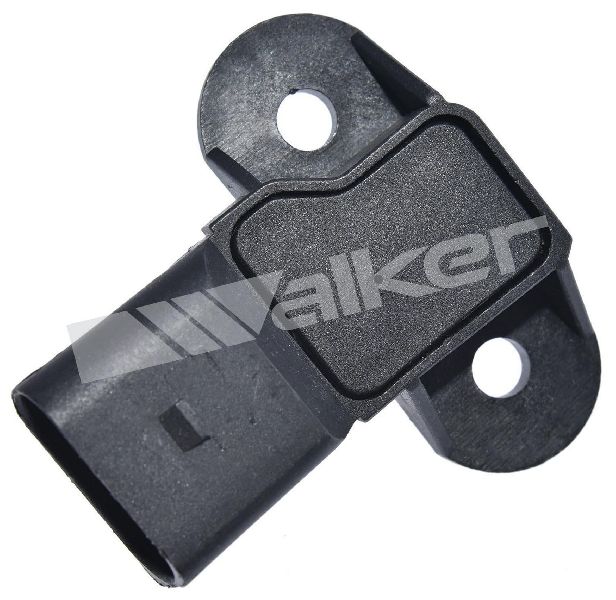
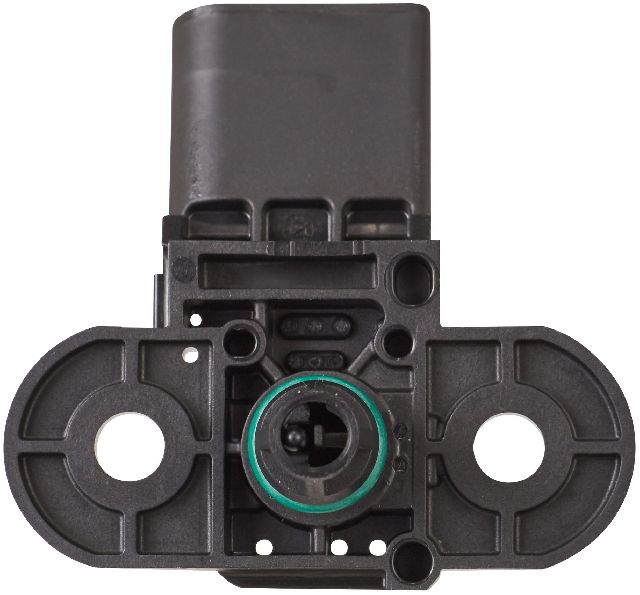
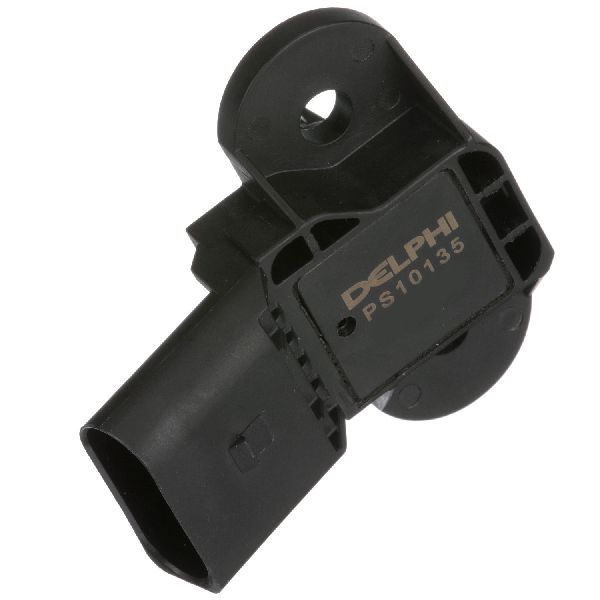
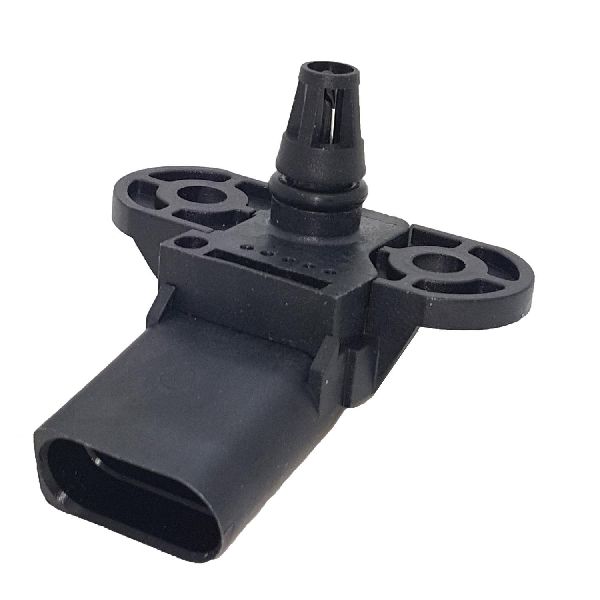
- Manifold Absolute Pressure (MAP) Sensor
(OEM #03C906051F)— This is the most common part to fail electronically, causing incorrect pressure readings. Bosch is the OEM supplier.
Trusted brands: Bosch, Genuine Audi
OEM price range: $80-$120
Aftermarket price range: $40-$70 - PCV Valve / Oil Separator
(OEM #06E103547P)— The internal diaphragm can tear, creating a large vacuum leak that triggers the P0106 code. Part number may vary slightly by production date, always verify with VIN.
Trusted brands: Genuine Audi, Vaico, Hengst
OEM price range: $150-$220
Aftermarket price range: $80-$140
Related Codes That Often Appear With This One
- P0300-P0306 — Random or specific cylinder misfire codes can occur because the incorrect MAP sensor readings lead to an improper air/fuel mixture, or if the root cause is severe carbon buildup.
- P0171 / P0174 — System Too Lean (Bank 1 / Bank 2) codes are common if the P0106 is caused by an unmetered vacuum leak from a torn PCV diaphragm or cracked hose.
- P0507 — Idle Air Control System RPM Higher Than Expected can be triggered by a vacuum leak that also causes the P0106 code.
Technical Service Bulletins (TSBs) & Recalls
- While no specific TSB for the 3.2L V6 and P0106 was found, a TSB for other Audi models (like the Q7) and engines (like the 2.0T) exists for this code, sometimes recommending an ECU software update or addressing wiring harness issues, which are still relevant diagnostic paths.
Platform-Specific Known Issues
- Severe carbon buildup on the intake valves is a very common maintenance issue for the 3.2L FSI engine and a known cause of this code. This is not a typical 'repair' but a cleaning service that is often needed every 60,000-80,000 miles.
- The barometric pressure sensor is located inside the ECU, making diagnosis difficult if it fails. This can lead to expensive misdiagnosis where external parts are replaced without fixing the root cause.
Mechanic-Grade Diagnostic Values
- MAP Sensor (G71) Harness Voltage - Reference — expected: Approximately 5.0V. Failure: No voltage or significantly lower voltage indicates a problem with the ECU or wiring.
- MAP Sensor (G71) Signal Wire Voltage - KOEO — expected: Approximately 4.5V. Failure: A reading that is significantly different suggests a faulty sensor.
- MAP Sensor (G71) Signal Wire Voltage - Engine Idling — expected: 1.0V - 2.0V. Failure: A voltage that remains high (closer to 4.5V) at idle indicates the sensor is not reading engine vacuum correctly, or there is a massive vacuum leak.
- MAP (G71) vs. Barometric (F96) Pressure - KOEO — expected: Readings should be nearly identical (within 40-50 mbar).. Failure: A persistent difference greater than ~50 mbar (e.g., 80 mbar) points to a failure in either the G71 sensor or the F96 sensor inside the ECU.
- MAP Sensor Harness to ECU Harness Resistance — expected: < 1.5 Ohms. Failure: Higher resistance (or infinite ohms) indicates an open or corroded wire in the harness.
Scan Tool Commands That Help
- VCDS (VAG-COM): Throttle Body Adaptation (TBA) — Mandatory after cleaning or replacing the throttle body. Navigate to [01-Engine] -> [Basic Settings - 04] -> Group 060 (or select from dropdown on newer models). This resets the throttle plate's learned idle and off-idle positions, preventing correlation faults like P0068 that can accompany P0106.
- VCDS (VAG-COM): Graphing Measuring Blocks (MVB) — This is the primary diagnostic step for P0106. Graphing the MAP sensor (G71) and the Barometric sensor (F96) side-by-side with the Key On, Engine Off allows for a direct visual comparison to confirm if they are reading the same atmospheric pressure.
Wiring & Ground Locations
- G71 MAP Sensor Connector — On the intake manifold, typically secured with a single Torx screw.. This is the primary connection point for testing voltage and signal. Per service info, you must check for ~5V reference, a good ground, and the signal wire. Use only gold-plated terminals if repairs are needed.
- Ground Connection 12 — In the engine compartment on the left side, typically on the firewall or inner fender area.. This is a main grounding point for the Engine Control Module (ECM) and various sensors. A loose or corroded connection here can cause erratic sensor readings, including the MAP sensor, leading to a P0106 fault.
- Ground Point 609 — In the plenum chamber (under the windshield wipers), on the right side.. This ground is in a water-prone area. Corrosion here can cause intermittent electrical issues for the main electronics box and the sensors it controls.
- Ground Connection 369 — A common ground point located within the main engine wiring harness itself.. A break or corrosion in this internal harness ground can affect multiple sensors that share the connection, leading to confusing and hard-to-diagnose fault codes.
Real Owner Repair Stories
- Ross-Tech Forums user 'Dimitri' (2006 Audi A4 3.2L (different chassis but same engine family and P0106 logic)) — Recurring P0106 code with no noticeable performance issues (smooth idle, good power).
❌ Tried (didn't work) Replacing the MAP sensor with a new Bosch part (0 261 230 234)., Replacing the N80 purge valve., Cleaning the throttle body and performing adaptation., Replacing the air filter., Checking MAP sensor wiring and grounds.
✅ What actually fixed it The root cause was a vacuum leak from a bad PCV valve. Critically, the P0106 code only disappeared after the user re-installed the ORIGINAL Audi-branded MAP sensor. The new Bosch sensor, despite being the correct part number, was deemed incompatible or faulty and continued to cause the code even after the vacuum leak was fixed. - Ross-Tech Forums user 'DAS60' (Audi A6 with 3.2L engine) — Persistent P0106 code that trips with the key on, engine off.
❌ Tried (didn't work) Replacing the MAP sensor with a new Bosch part (0 261 230 234)., Checking for vacuum leaks (long term fuel trims were good)., Verifying wiring continuity.
✅ What actually fixed it The issue was not resolved in the thread, but the diagnosis definitively pointed to a faulty internal ECU barometric sensor (F96). With the key on and engine off, the new MAP sensor (G71) read ambient pressure correctly (~1010 mbar), while the ECU's internal sensor (F96) was stuck reading ~924 mbar. This ~80 mbar discrepancy was the direct cause of the code, pointing to a required ECU replacement.
"I Checked Everything" — The Actual Cause
- The most common scenario for this is a failure of the internal barometric pressure sensor (F96) located inside the ECU. A smoke test will find no vacuum leaks, and a new external MAP sensor (G71) won't fix the issue because the ECU's baseline pressure reading is permanently skewed, causing a persistent 'implausible signal' fault.
- An incompatible, albeit new and correct-by-part-number, aftermarket MAP sensor was the cause. A user fixed their underlying PCV vacuum leak, but the P0106 code only cleared after they removed the new Bosch sensor and reinstalled their old, original Audi-branded sensor.
When the Usual Fixes Don't Work
- While replacing the MAP sensor is a very common fix, it is not always successful. In one documented case, a user fixed a known vacuum leak from the PCV system, but the P0106 code persisted. The ultimate fix was to remove the newly installed Bosch MAP sensor and reinstall the original Audi-branded sensor, which resolved the fault. This indicates that even when a vacuum leak is the true root cause, a seemingly correct aftermarket sensor can introduce a new, secondary problem. In another scenario, after replacing the MAP sensor and confirming no vacuum leaks, the code remained due to a ~80 mbar discrepancy between the new MAP sensor and the ECU's internal barometer, confirming the rare but real failure of the ECU itself.
OEM Part Supersession History
06E103547 (and revisions E, F, H)→06E103547P (or later revisions like Q, AF)— Revisions were made to improve the durability of the internal rubber diaphragm, which is a very common failure point causing vacuum leaks.
Heads up: Always use the latest available revision for this part. The part numbers are generally interchangeable/backwards compatible.03C906051F (Genuine Audi)→Bosch 0261230234 (OEM equivalent)— OEM supplier part offered as an alternative to the dealer part.
Heads up: While Bosch is the OEM and the part number is listed as correct, at least one owner reported that a new Bosch sensor continued to set a P0106 code, which was only resolved by reinstalling the original Audi-branded sensor. This suggests a potential sensitivity or manufacturing tolerance difference the ECU can detect.
Diagnostic Flowchart
Other Known Issues on This Vehicle
Issues unrelated to this code that are worth knowing about as an owner of this generation:
- Timing Chain Tensioner Wear / Chain Stretch 🔴 High — Becomes a concern over 80,000-100,000 miles. A rattle on cold startup for 1-2 seconds is the primary symptom. Repair is extremely expensive as the chains are on the rear of the engine, requiring engine removal.
- Intake Valve Carbon Buildup 🟠 Medium — A universal issue for all FSI (direct injection) engines. Significant buildup can occur by 60,000-80,000 miles, causing misfires, rough idle, and reduced power. Requires intake manifold removal for cleaning (walnut blasting).
- Water Pump Failure 🟠 Medium — The original water pumps often used plastic components that become brittle and leak coolant. Many fail between 60,000 and 100,000 miles. An updated pump with metal components is available. (Ref: A class-action lawsuit led to an extended warranty for some vehicles, but it may have expired. Check with a dealer.)
- Sunroof Rattle and Leaks 🟡 Low — Very common across the first-generation Q5. The sunroof assembly can develop rattles over bumps or fail to seal properly, leading to water leaks and potential damage to interior electronics.
- Upper Oil Pan / Timing Cover Leaks 🟠 Medium — Oil leaks can develop from the upper oil pan seal or the rear timing chain covers. These are labor-intensive to repair, especially the timing covers which require engine or transmission removal.
Used vs. New Parts: Buying Guide for This Vehicle
When a used part is the smart pick: For this repair, used parts are generally not recommended for the common failure items (sensors, PCV valve). A used intake manifold is acceptable if it is inspected for cracks and is not warped.
Donor-vehicle mileage cap: roughly under 80000 miles for the part to have meaningful remaining life.
What to inspect on the donor part:
- For a PCV valve, there is no reliable way to inspect a used one; buy new.
- For a MAP sensor, there is no reliable visual inspection; buy new.
- For an ECU, ensure the part number matches exactly and that the seller offers a warranty or return policy. Be aware that immobilizer coding by a dealer or specialist will be required.
OEM-only on this vehicle (don't cheap out):
- Engine Control Unit (ECU/ECM): Due to the integrated barometric sensor and immobilizer programming, a new or professionally refurbished unit is required if it fails.
- Manifold Absolute Pressure (MAP) Sensor: Given forum reports of incompatibility with even high-quality OEM-supplier parts, using a Genuine Audi sensor is the safest choice to avoid troubleshooting headaches.
Aftermarket brands forum-validated for this vehicle:
- PCV Valve / Oil Separator: Hengst and Vaico are reported to be reliable OEM-quality alternatives to the Genuine Audi part.
Brands owners have reported issues with on this vehicle:
- While Bosch is the OEM for the MAP sensor, there is at least one documented case where a new Bosch unit did not resolve the P0106 code while the original Audi part did, suggesting a potential incompatibility risk.
Real Owner Stories
Aggregated from forums and TSBs cited above. Mileages and costs reflect what owners reported in those sources.
2009 Audi Q5 3.2L V6
Symptoms: Owner diagnosed P0106 and performed troubleshooting including replacing the MAP sensor, cleaning the throttle body, and performing a throttle body adaptation (TBA).
What fixed it: The owner worked through the diagnostic process by comparing G71 (MAP) and F96 (BARO) values using VCDS.
Source hint: Ross-Tech Forums: 'P0106 Fault Code Help'
2009-2011 Audi A6 3.2L V6 (CALA)
Symptoms: Owner suspected a bad MAP sensor but found a discrepancy between the MAP sensor and the internal ECU barometer.
What fixed it: Diagnosis pointed toward the internal ECU barometer (F96) after replacing the MAP sensor and verifying there were no vacuum leaks.
Source hint: AudiWorld Forums: 'P0106 - Do I just have a bad MAP Sensor?'
Audi 3.2L V6
Symptoms: A frustrating and persistent P0106 code that remained even after replacing the computer, performing a carbon cleaning, and replacing sensors.
What fixed it: The source highlights the extreme difficulty of resolving this code on the 3.2L platform even after major component replacement.
Source hint: Reddit r/Audi: '3.2L giving a P0106 code'
Related OBD-II Codes
Frequently Asked Questions
How can I tell if my P0106 code is caused by the MAP sensor or the internal ECU barometer on my Q5?
Is there a specific TSB for the 3.2L V6 Audi Q5 regarding P0106?
Why does my 3.2L FSI engine require carbon cleaning to fix manifold pressure codes?
Can a bad PCV valve cause the P0106 code on my Audi Q5?
What is the G71 sensor mentioned in Audi diagnostic manuals?
Do I need to do anything special after cleaning the throttle body to clear P0106?
Helpful Videos
We Have This Part in Stock


The information in this article is provided for general reference and educational purposes only. Vehicle specifications, procedures, and part compatibility can vary by production date, trim level, and region. Always consult your vehicle's factory service manual and verify part numbers before purchasing or performing repairs. Safety-critical components such as airbags, seat belts, and braking systems should be installed by a qualified professional.
- Audi Q5:
- 🎬 Helpful Videos
- 🛍️ Shop This Part
- What's Unique About the 2009-2017 Audi Q5
- Symptoms You May Notice
- Most Likely Causes
- Rare But Worth Checking
- Diagnosis Steps
- Parts You'll Likely Need
- Related Codes That Often Appear With This One
- Technical Service Bulletins (TSBs) & Recalls
- Platform-Specific Known Issues
- Mechanic-Grade Diagnostic Values
- Scan Tool Commands That Help
- Wiring & Ground Locations
- Real Owner Repair Stories
- "I Checked Everything" — The Actual Cause
- When the Usual Fixes Don't Work
- OEM Part Supersession History
- Diagnostic Flowchart
- Other Known Issues on This Vehicle
- Used vs. New Parts: Buying Guide for This Vehicle
- Real Owner Stories
- 2009 Audi Q5 3.2L V6
- 2009-2011 Audi A6 3.2L V6 (CALA)
- Audi 3.2L V6
- Related OBD-II Codes
- Frequently Asked Questions
- 🎟️ Get 5% Off