

P0106 on 2017-2019 Alfa Romeo Giulia: MAP Sensor Range/Performance Fault Causes and Fixes
This code indicates a problem with the Manifold Absolute Pressure (MAP) sensor's signal, which is illogical compared to other engine sensor data. The most common fixes are replacing a faulty MAP sensor or finding and repairing a vacuum leak in the intake system. In some cases, oil contamination from an aftermarket air filter or a failing PCV system can foul the sensor. Expect to pay $25-$70 for an aftermarket sensor or $96-$140 for an OEM part.
- P0106 on a Giulia points to an issue with the MAP sensor's performance, not necessarily a complete failure.
- Before buying a new sensor, always check for vacuum leaks around the intake manifold and inspect the sensor's wiring and connector.
- This code is often accompanied by O2 sensor (P013A) or knock sensor (P0331) codes. Diagnose and fix the P0106 issue first, as it is likely the root cause.
- Replacing the MAP sensor is a DIY-friendly job with a difficulty of 2/5, typically requiring only basic hand tools.
What's Unique About the 2017-2019 Alfa Romeo GIULIA

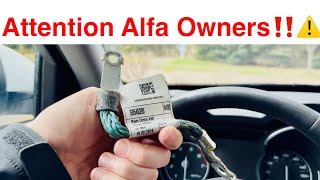
On the turbocharged engines of the Alfa Romeo Giulia, the MAP sensor (also called a boost pressure sensor) is critical for managing the turbocharger system and calculating the correct air-fuel mixture under boost. Alfa Romeo has issued Technical Service Bulletins (TSBs) that show this code can appear alongside O2 sensor and knock sensor codes, which can sometimes complicate diagnosis if not approached logically. A Reddit forum thread also showed a user with a 2017 Giulia Veloce getting a P0106 along with a P0236 (Turbocharger Boost Sensor 'A' Circuit Range/Performance) after installing an aftermarket oiled air intake, which coated the sensor in oil. This suggests the system is sensitive to modifications and contamination. A notable and often-missed issue on this platform is a corroded main ground strap between the transmission and chassis 🎬 Watch: How to inspect and fix this common ground strap failure, which can cause erratic sensor readings and multiple fault codes, including P0106.
Diagnostic Flowchart

Tap your situation to follow the diagnostic path that matches what you're seeing on this vehicle.
Symptoms You May Notice
- Check Engine Light is on
- Rough or fluctuating idle
- Hesitation or stumbling during acceleration
- Reduced engine power or entering 'limp mode'
- Decreased fuel economy
- Black smoke from the exhaust
- Difficulty starting the engine
- Engine backfiring
- Stalling, especially when coming to a stop
- Replacing the O2 sensor. The provided TSBs show that P0106 is often accompanied by O2 sensor codes like P013A. The O2 sensor code is usually a *symptom* of the bad air-fuel mixture caused by the faulty MAP signal, not the root cause.
- Replacing the knock sensor. TSB #1804623 shows P0106 can appear with knock sensor code P0331. An incorrect air-fuel ratio from a bad MAP reading can cause detonation (knock), triggering the knock sensor. The MAP issue should be diagnosed first.
- Replacing parts without diagnosis. A forum user noted that a DIYer might replace the MAP sensor, vacuum lines, and wiring as basic steps, only to find the issue was a more serious mechanical problem like a stuck intake valve.
Most Likely Causes

- Faulty Manifold Absolute Pressure (MAP) Sensor 🔴 High Probability Sensors can fail over time due to heat cycles and internal component degradation. On the Giulia, oil contamination is also a potential cause of failure. A Reddit user reported codes P0106 and P0236 after their MAP sensor became coated in oil, which they suspected was from an over-oiled aftermarket air filter. A bad PCV system can also cause oil to foul the sensor.
How to confirm: Use a scan tool to monitor live MAP sensor data (voltage or pressure) with the Key On, Engine Off (KOEO) and again with the engine running. At KOEO, the reading should be close to the barometric pressure (approx. 4.5V). At idle, it should show a strong vacuum (low pressure, around 1-2V). If the reading is stuck, doesn't change instantly when you snap the throttle, or is coated in oil upon visual inspection, the sensor is likely bad.
Typical fix: Replace the MAP sensor. It is typically mounted directly on the intake manifold with a single screw. If the old sensor is oily, clean the intake port before installing the new one and investigate the source of the oil (e.g., aftermarket filter, PCV system).
Est. part cost: $25-$140 - Vacuum Leak 🟡 Medium Probability Vacuum hoses can become brittle and crack over time from engine heat. Gaskets can also fail, creating unmetered air leaks that throw off the MAP sensor's readings. A leaking o-ring on the MAP sensor itself can also cause this code.
How to confirm: Visually inspect all vacuum lines connected to the intake manifold for cracks, disconnection, or collapse. Listen for a hissing sound with the engine running. A smoke test is the most effective way to find small, hard-to-see leaks in the intake system.
Typical fix: Replace the cracked hose, faulty gasket, or the MAP sensor's o-ring.
Est. part cost: $10-$50 - Wiring or Connector Issue ⚪ Low Probability Vibrations and heat can damage wiring or cause corrosion on connector pins. Technicians report that a common cause across Fiat-Alfa platforms is a connector not being fully seated after previous service. A corroded main engine ground strap is a known issue on the Giulia/Stelvio platform that can cause this and other electrical faults.
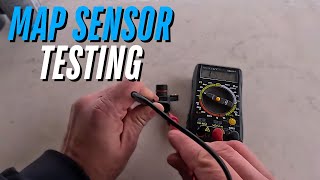
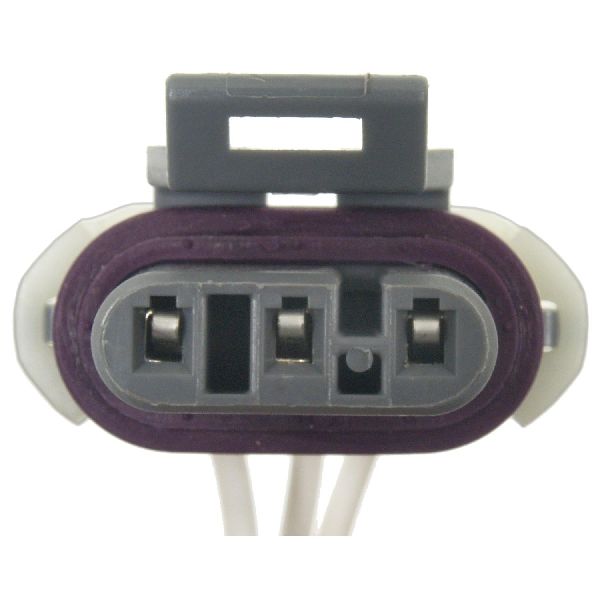
How to confirm: Inspect the MAP sensor's electrical connector for corrosion, damage, or loose pins. Ensure it is fully clipped in. Use a multimeter to check for proper voltage (5V reference), ground (less than 100mV), and signal continuity back to the ECM. 🎬 Watch: Step-by-step guide to testing MAP sensors with a multimeter Visually inspect the main ground strap from the transmission to the chassis for corrosion or breakage.
Typical fix: Clean the connector, repair the damaged section of the wiring harness, or replace the corroded main ground strap.
Est. part cost: $5-$100
Rare But Worth Checking
- Clogged Catalytic Converter: A clogged exhaust can create backpressure that affects intake manifold pressure, potentially confusing the sensor. This will usually be accompanied by other codes and a severe loss of power, especially at high RPMs.
- Engine Control Module (ECM) Fault: This is extremely rare, but a faulty ECM can misinterpret a perfectly good sensor signal. All other possibilities should be exhausted before considering the ECM. Some TSBs for the Giulia platform do involve software updates to the PCM to fix various issues, so checking for available updates with a dealer is a valid diagnostic step if all else fails.
Diagnosis Steps
- Read all fault codes using an OBD-II scanner. Note any other codes present, especially P013A, P0331, or P0236.
- With the Key On, Engine Off (KOEO), check the live data from the MAP sensor. The reading should be close to your local atmospheric (barometric) pressure and show around 4.5 volts.
- Start the engine and observe the MAP reading at idle. It should drop to a low pressure/high vacuum reading (around 1-2 volts). Rev the engine; the reading should change instantly with throttle position.
- If the reading is stuck or illogical, perform a thorough visual inspection of the intake system. Look for any cracked, disconnected, or collapsed vacuum hoses. Listen for hissing sounds.
- Inspect the MAP sensor's electrical connector and wiring for any signs of damage, corrosion, or looseness. Ensure it is securely fastened.
- Remove the MAP sensor (usually one screw) and inspect its tip for oil or carbon buildup. A contaminated sensor is a strong indicator of a fault. If oil is present, investigate the PCV system or aftermarket air filter as a potential cause.
- If a vacuum leak is suspected but not visible, perform a smoke test to pinpoint the source of the leak.
- If no vacuum leaks are found, the wiring is intact, and the sensor is clean but still provides incorrect readings, the MAP sensor itself is the most likely culprit and should be replaced.
- As a critical platform-specific step, inspect the main engine ground strap, which runs from the transmission to the chassis. Check for any signs of corrosion or breakage, as a poor ground here is a known cause of erratic sensor behavior.
- After the repair, clear the codes and perform a test drive to ensure the problem is resolved.
Parts You'll Likely Need
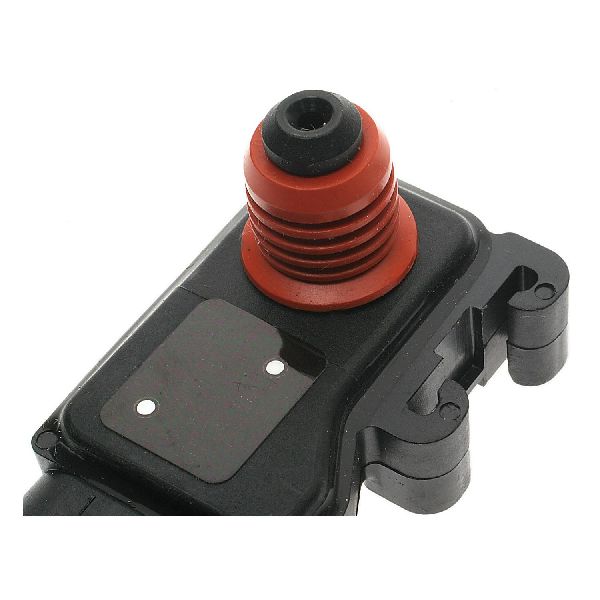
- Manifold Absolute Pressure (MAP) Sensor
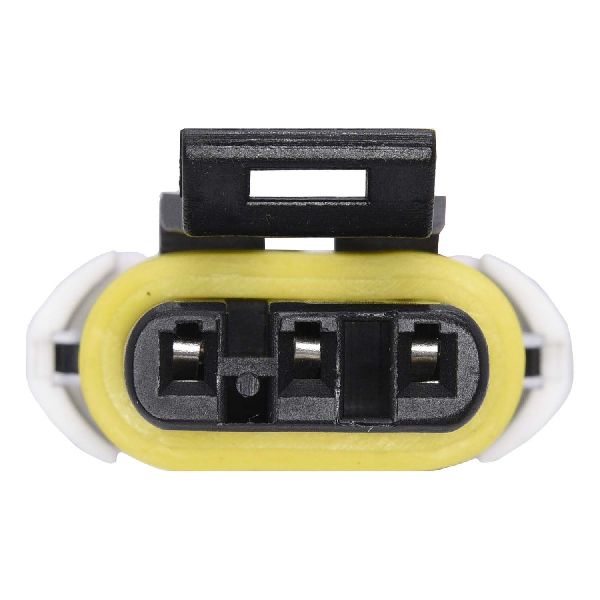
(OEM #68212571AA)— This sensor is the most common point of failure for code P0106 when no vacuum leaks are present. It is also referred to as a Boost Sensor or Pressure Sensor in Mopar parts catalogs.
Trusted brands: Mopar, Bosch, NGK, Standard Motor Products, Crown Automotive
OEM price range: $96-$140
Aftermarket price range: $25-$70
Related Codes That Often Appear With This One
- P013A-00 — As cited in TSB #1804623 and #18-027-20, this O2 sensor slow response code often appears because the incorrect MAP sensor reading causes a consistently rich or lean fuel mixture, which the O2 sensor then reports as a fault.
- P0331-00 — Cited in TSB #1804623, this knock sensor code can be triggered if the incorrect MAP reading leads to a lean fuel mixture and improper timing, causing engine knock or detonation.
- P0236 — This code for Turbocharger Boost Sensor 'A' Circuit Range/Performance can appear alongside P0106, as the MAP sensor is also used to measure boost pressure. A Reddit user with a 2017 Giulia experienced both codes simultaneously, suspecting an oil-fouled sensor from an aftermarket intake was the cause.
Technical Service Bulletins (TSBs) & Recalls
- 1804623: Notes P0106 may be found with knock sensor and O2 sensor DTCs.
- 18-027-20: Notes P0106 may be found with an O2 sensor DTC.
Platform-Specific Known Issues
- NHTSA Technical Service Bulletin #1804623 mentions that P0106 may be set along with codes P0331-00 (Knock Sensor) and P013A-00 (O2 Sensor).
- NHTSA Technical Service Bulletin #18-027-20 also documents P0106-00 appearing with P013A-00, reinforcing the connection between these faults.
- An owner complaint filed under NHTSA ODI #11668326 for a 2017 model listed P0106 along with several other circuit and sensor codes, suggesting a potential for wider electrical issues or multiple simultaneous faults.
- A Reddit user with a 2017 Giulia Veloce (2.0L) reported getting P0106 and P0236 codes, limp mode, and disabled start/stop after installing an aftermarket oiled air intake. The MAP sensor was found to be coated in oil.
- Owners on forums report that the main engine-to-chassis ground strap is unprotected and prone to corrosion, which can lead to a variety of electrical faults, including P0106, and even no-start conditions with smoke from the wheel well as the starter seeks an alternative ground path.
Mechanic-Grade Diagnostic Values
- MAP Sensor Signal Voltage (Key On, Engine Off) — expected: ~4.5 Volts (Should correspond to barometric pressure). Failure: Voltage is stuck low (e.g., 1-2V) or does not match barometric pressure reading on a scan tool.
- MAP Sensor Signal Voltage (Engine at Idle) — expected: 1.0 - 2.0 Volts (High vacuum). Failure: Voltage is stuck high (e.g., 4.5V) or does not drop significantly after starting the engine.
- MAP Sensor 5V Reference Wire — expected: ~5.0 Volts (Constant with key on). Failure: Voltage is significantly lower than 5V or is absent.
- MAP Sensor Ground Wire Voltage — expected: < 100 millivolts (0.1 Volts). Failure: Voltage is higher than 100mV, indicating a poor ground connection.
Scan Tool Commands That Help
- MultiECUScan (MES): Parameters Tab (Live Data) — To monitor the live voltage and pressure readings from the MAP sensor to check if it responds correctly to engine conditions (KOEO, idle, throttle snap). This is a primary step in diagnosing the sensor's performance.
- MultiECUScan (MES) / wiTECH: Scan DTC / Read Fault Codes — To read codes from all vehicle modules, not just the ECM. This can reveal related faults in the ABS or Body Control Module that might be linked to a systemic electrical issue, such as a bad ground.
- MultiECUScan (MES) / wiTECH: Clear Fault Codes — After a repair is performed, this function is used to erase the stored P0106 code from the ECM. A test drive should follow to confirm the code does not return.
Wiring & Ground Locations
- Main Engine Ground Strap — Under the car, connecting the transmission to the vehicle's chassis.. This strap is known to corrode and fail on Giulia/Stelvio models. A poor ground can cause unstable voltage references and signal returns for various engine sensors, including the MAP sensor, leading to erratic readings and fault code P0106.
- Remote Negative (-) Post — An exposed stud located on the upper frame rail, next to the passenger side hood lock.. This is a manufacturer-designated, known-good chassis ground point in the engine bay. It is the ideal reference point when using a multimeter to test the MAP sensor's ground wire and signal voltage for accuracy.
Real Owner Repair Stories
- Reddit user on r/AlfaRomeo (2018 Alfa Romeo Stelvio (shared platform/drivetrain)) — Car would not start, acted like a dead battery. After a few start attempts, a large cloud of white smoke came from the driver's side wheel well.
❌ Tried (didn't work) Attempting to restart the car.
✅ What actually fixed it The root cause was a corroded main ground strap under the car connected to the transmission. The failed ground caused the starter to overload a smaller ground wire, melting parts of the main engine wiring harness. The fix was replacing the entire engine wiring harness and the faulty ground strap. - Reddit user on r/AlfaRomeo (Alfa Romeo Stelvio (shared platform/drivetrain)) — Sudden no-start condition. Attempting to restart caused smoke from the front wheel arch area with a bad smell.
❌ Tried (didn't work) Multiple start attempts.
✅ What actually fixed it The ground cable had failed due to corrosion. The user notes the cable is unprotected and exposed to road salt and water. Replacing the ground cable (costing ~110€ from the dealer) resolved the issue.
"I Checked Everything" — The Actual Cause
- A technician may perform a smoke test and find no vacuum leaks, and even replace the MAP sensor, but the P0106 code returns. In several documented cases on the Giulia/Stelvio platform, the actual cause was a corroded main engine ground strap. This electrical fault provides an unstable ground reference to the engine's sensors, causing the MAP sensor to send an illogical signal to the ECM, which has no relation to intake manifold pressure or vacuum leaks.
When the Usual Fixes Don't Work
- While replacing the MAP sensor or fixing vacuum leaks are the most common solutions for P0106, a significant counter-narrative exists for the Alfa Romeo Giulia. Multiple owners have chased this code, replacing sensors without success, only to discover the true culprit was a corroded main engine ground strap. This failure creates electrical instability that causes the sensor to report illogical data, perfectly mimicking a sensor or vacuum fault. In these cases, the standard diagnostic path of smoke testing and sensor replacement will not fix the issue, and the actual repair is purely electrical and related to the vehicle's main grounding system.
OEM Part Supersession History
68212571AA→No supersession found in research.— N/A
Helpful Videos
We Have This Part in Stock


The information in this article is provided for general reference and educational purposes only. Vehicle specifications, procedures, and part compatibility can vary by production date, trim level, and region. Always consult your vehicle's factory service manual and verify part numbers before purchasing or performing repairs. Safety-critical components such as airbags, seat belts, and braking systems should be installed by a qualified professional.
- Alfa Romeo GIULIA:
- 🎬 Helpful Videos
- 🛍️ Shop This Part
- What's Unique About the 2017-2019 Alfa Romeo GIULIA
- Diagnostic Flowchart
- Symptoms You May Notice
- Most Likely Causes
- Rare But Worth Checking
- Diagnosis Steps
- Parts You'll Likely Need
- Related Codes That Often Appear With This One
- Technical Service Bulletins (TSBs) & Recalls
- Platform-Specific Known Issues
- Mechanic-Grade Diagnostic Values
- Scan Tool Commands That Help
- Wiring & Ground Locations
- Real Owner Repair Stories
- "I Checked Everything" — The Actual Cause
- When the Usual Fixes Don't Work
- OEM Part Supersession History
- 🎟️ Get 5% Off