

P0103 on 2015 Dodge Charger V8: MAF Circuit High Causes and Fixes
For a 2015 Dodge Charger with a V8 engine, code P0103 almost always points to a failed Mass Air Flow (MAF) sensor or a short in its wiring harness. The 3.6L V6 engine does not have a MAF sensor, so this code does not apply. Expect to pay $70-$250 for a replacement sensor, which is often sold as an integrated Intake Air Temperature sensor.
- This code applies ONLY to 2015 Dodge Chargers with a V8 engine (5.7L, 6.4L, 6.2L). The 3.6L V6 does not have a MAF sensor.
- The most likely cause is a failed MAF sensor that has internally shorted.
- Before replacing the sensor, check its wiring connector for damage and consider cleaning it with dedicated MAF sensor cleaner as a first step.
- A scan tool that can read live data is the most effective tool for confirming a failed sensor, which will show a voltage reading stuck near 5V.
- Ignoring this code will lead to very poor engine performance, high fuel consumption, and potential damage to other exhaust components.
What's Unique About the 2015-2015 Dodge CHARGER
The most critical detail for the 2015 Dodge Charger is that the standard 3.6L V6 engine does NOT use a Mass Air Flow (MAF) sensor. Instead, it uses a speed-density system with a Manifold Absolute Pressure (MAP) sensor and an Intake Air Temperature (IAT) sensor to calculate airflow. Therefore, the P0103 code is only applicable to the V8 engine options (5.7L Hemi, 6.4L SRT, and 6.2L Hellcat) which are equipped with a MAF sensor. Misdiagnosing this on a V6 model is a common pitfall.
Diagnostic Flowchart
Tap your situation to follow the diagnostic path that matches what you're seeing on this vehicle.
Symptoms You May Notice
- Check Engine Light is on
- Engine runs rough or has an unstable idle.
- Hesitation or stumbling when accelerating.
- Significant loss of engine power or entering 'limp mode'.
- Decreased fuel economy, with some owners reporting a 5-10% drop.
- Black smoke from the exhaust, indicating a rich fuel condition.
- Hard starting or stalling, especially at idle.
- In some cases, automatic transmission shifting may feel erratic because engine load data is incorrect.
- Attempting to find or replace a MAF sensor on a 3.6L V6 model, which does not have one.
- Replacing the oxygen sensors, as a rich condition caused by the faulty MAF reading can sometimes trigger secondary codes related to fuel trim (P0172, P0175).
- Replacing the MAF sensor without first checking the wiring for a short, leading to the new sensor appearing faulty as well.
Most Likely Causes
- Failed Mass Air Flow (MAF) Sensor 🔴 High Probability The sensor itself can develop an internal short, causing it to send a constant high voltage signal to the PCM. This is the most frequent cause reported by owners.
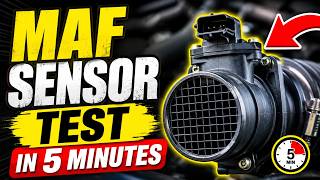
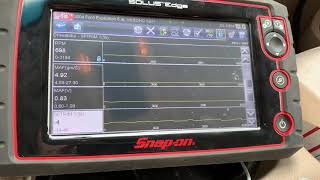
How to confirm: With the engine running, use a scan tool to view live data. If the MAF 🎬 Watch: How to use a scan tool to test MAF data. sensor reading is stuck at a maximum value (e.g., near 5 volts or a very high g/s reading) and does not change with RPM, the sensor has likely failed. Disconnecting the sensor should cause the reading to drop to zero; if it does, the sensor is the culprit.
Typical fix: Replace the Mass Air Flow sensor. It is located on the air intake tube just after the air filter box.
Est. part cost: $70-$250 - MAF Sensor Circuit Shorted to Voltage 🟡 Medium Probability Wiring can become damaged from engine heat, vibration, or abrasion over time, leading to a short circuit where the signal wire touches a power source. Sometimes, the harness can be misrouted too close to high-current components like ignition wires or the alternator, causing electrical interference that triggers the code.
How to confirm: Disconnect the MAF sensor connector. Use a multimeter to test the voltage on the signal wire in the harness connector (with the key on, engine off). If you read 5 volts or more, there is a short to voltage in the wiring harness. If the voltage is low or zero, the wiring is likely okay.
Typical fix: Inspect the wiring harness between the MAF sensor and the PCM. Locate the shorted section of wire and repair or replace it. Pay close attention to areas where the harness is near hot or moving components, and ensure it is not routed near sources of electrical interference.
Est. part cost: $5-$100 - Dirty or Contaminated MAF Sensor ⚪ Low Probability While more likely to cause a performance (P0101) or low input (P0102) code, heavy contamination from dirt or an over-oiled aftermarket air filter can sometimes cause erratic, high readings. Oil from a K&N-style filter can coat the sensor element, disrupting its function.
How to confirm: Visually inspect the sensor's sensing elements (hot wire or film). If they are covered in dirt, oil, or debris, they need cleaning.
Typical fix: Remove the sensor and clean it carefully using only dedicated Mass Air 🎬 See this quick guide on cleaning your sensor safely. Flow sensor cleaner. Do not touch the sensing elements. Allow it to dry completely before reinstalling.
Est. part cost: $10-$15
Rare But Worth Checking
- Faulty Powertrain Control Module (PCM): This is very rare. The PCM's internal circuit for the MAF sensor can fail, causing it to read a high voltage regardless of the sensor's input. This should only be considered after the sensor and wiring have been definitively ruled out as the cause. A diagnostic step is to disconnect the sensor; if the scan tool voltage remains high, the fault is in the wiring or the PCM.
Diagnosis Steps
- Verify the vehicle has a V8 engine. If it is a 3.6L V6, this code is not applicable.
- Read the code with an OBD-II scanner and check for any other related codes.
- Visually inspect the MAF sensor connector for loose pins, corrosion, or damage. Ensure it is plugged in securely.
- Inspect the air intake tube for any cracks or damage and check that the air filter is clean and properly installed.
- Use a scan tool to monitor the MAF sensor's live data. With the key on and engine off, the reading should be near zero. At idle, it should be a stable, low number. When revving the engine, the reading should increase smoothly. A reading that is stuck at a very high value indicates a fault.
- If the reading is stuck high, disconnect the MAF sensor. If the reading on the scan tool drops to zero, the sensor itself is faulty and needs replacement.
- If the reading remains high with the sensor disconnected, the problem is likely a short to voltage in the wiring harness or a faulty PCM.
- Inspect the wiring harness for any signs of melting, chafing, or damage, especially where it runs near the engine block or other harnesses that could cause electrical interference.
- As a preliminary step, you can try cleaning the MAF sensor with dedicated MAF sensor cleaner. Let it dry completely before reinstalling and clearing the codes to see if the problem is resolved.
Parts You'll Likely Need
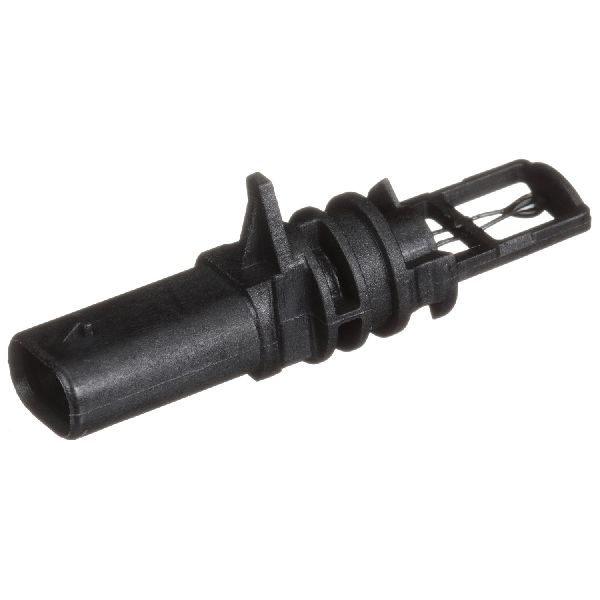
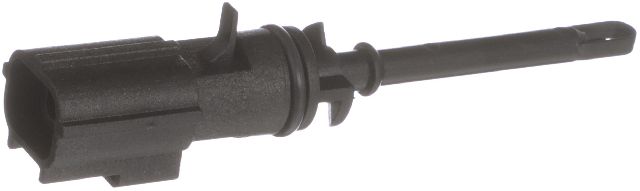
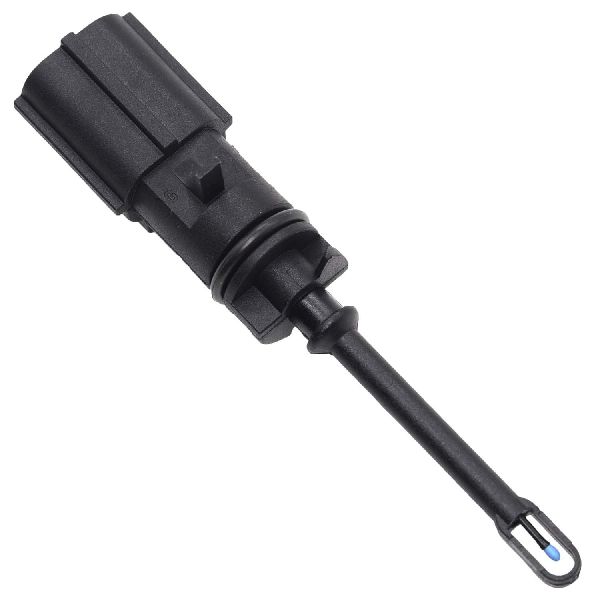
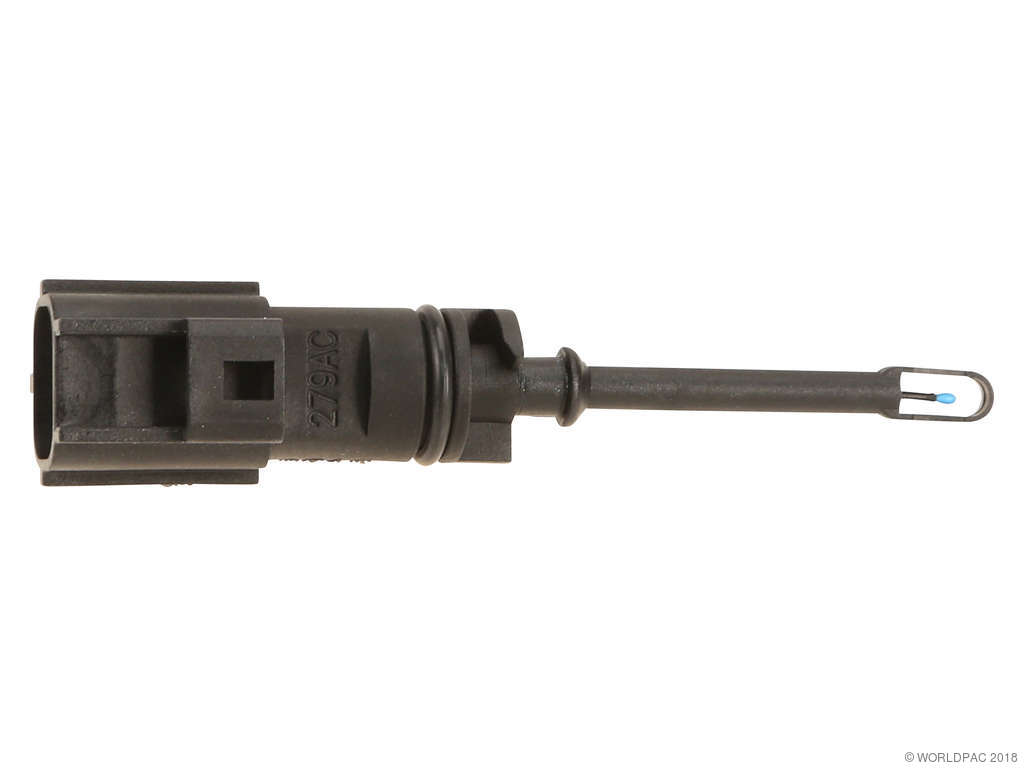
- Mass Air Flow (MAF) Sensor / Intake Air Temperature (IAT) Sensor
(OEM #5149279AC)— This is the most common failure point for a P0103 code, as an internal short will cause the exact 'circuit high' condition. On these Hemi engines, the MAF and IAT functions are integrated into a single sensor unit, which is officially named 'Sensor-Charge Air Temp' by Mopar.
Trusted brands: Mopar, Bosch, Hitachi, Denso
OEM price range: $150-$250
Aftermarket price range: $70-$180
Related Codes That Often Appear With This One
- P0172 — System Too Rich (Bank 1). The PCM may command too much fuel because it incorrectly thinks a massive amount of air is entering the engine, leading to a rich condition.
- P0175 — System Too Rich (Bank 2). Same reason as P0172, but for the opposite cylinder bank on the V8 engine.
- P0101 — Mass or Volume Air Flow 'A' Circuit Range/Performance. This can sometimes accompany P0103 if the sensor's readings are not just high, but also erratic.
Technical Service Bulletins (TSBs) & Recalls
- 18-061-17: Enables freeze frame/failure records to be stored for P0103 - MAF Sensor Circuit shorted High. This TSB confirms the code's existence and improves diagnostics but does not provide a fix.
- 18-047-16: Enables freeze frame/failure records to be stored for P0103 - MAF Sensor Circuit shorted High.
- 18-035-15 REV-B: Enables freeze frame/failure records to be stored for P0103 - MAF Sensor Circuit shorted High.
Platform-Specific Known Issues
- Several Technical Service Bulletins (TSBs) including #18-061-17, #18-047-16, and #18-035-15 REV-B mention P0103. These bulletins are for a PCM software update that enables the storage of freeze-frame data when this code is set. They do not identify a specific root cause or repair, but rather improve the vehicle's diagnostic capability when the fault occurs. Applying these updates is good practice but will not fix the underlying hardware issue.
- Owner Experience: The Limp Mode Journey: An owner on the speckog.com forums detailed a frustrating experience with P0103 where the car would repeatedly enter limp mode under 🎬 Watch: Common causes and fixes for Charger limp mode. acceleration. After first replacing the fuel filter with no success, they replaced the MAF sensor, which also did not fix the issue. This highlights the importance of diagnosing the circuit itself before simply replacing parts. The issue could be intermittent wiring shorts that are hard to trace.
Mechanic-Grade Diagnostic Values
- MAF Sensor Signal Voltage (Live Data) — expected: Approx. 0.5V - 1.5V at idle, rising smoothly to ~4.5V at wide-open throttle.. Failure: Voltage is stuck at or near 5.0V and does not change with engine RPM.
- MAF Sensor Airflow Rate (Live Data) — expected: For a 5.7L/6.4L V8, expected idle is roughly 5 to 11 g/s (grams per second). The reading should increase steadily with RPM.. Failure: Reading is stuck at an abnormally high number (e.g., >100 g/s) or does not correspond to engine RPM changes.
- MAF Sensor Signal Wire Voltage (Harness Side) — expected: Near 0V with sensor disconnected, key on, engine off.. Failure: Voltage reads 5V or higher with the sensor disconnected, indicating a short to voltage in the harness or a faulty PCM.
- MAF Sensor Return Circuit Resistance — expected: Near 0 ohms to ground.. Failure: High resistance or an open circuit (OL) indicates a bad ground connection for the sensor.
Wiring & Ground Locations
- K157 — This is the Mopar circuit identifier for the MAF sensor signal wire running between the sensor connector and the PCM.. When testing for a short to voltage, this is the specific wire to probe at the harness connector.
- K957 — This is the Mopar circuit identifier for the MAF sensor return (ground) circuit.. An open or high resistance on this wire will cause sensor reading issues. It should be tested for continuity to a known good ground.
- G901a — Located in the left front of the engine compartment, this is a primary chassis ground point.. A poor connection at this main ground point can cause a variety of electrical issues, including sensor faults. It should be inspected for corrosion and tightness.
- Airbox Ground Point — On similar platforms, there is a factory grounding point on the chassis located underneath the air filter box.. Given its proximity to the MAF sensor, ensuring this ground is clean and secure is a critical diagnostic step for any sensor-related electrical fault in the area.
OEM Part Supersession History
5149279AB→5149279AC— Standard part revision by the manufacturer.
Heads up: There are no known incompatibilities; 5149279AC is the correct service replacement for the 2015 model year. The official Mopar name is 'Sensor-Charge Air Temp' because it integrates the IAT sensor.
Helpful Videos




We Have This Part in Stock


The information in this article is provided for general reference and educational purposes only. Vehicle specifications, procedures, and part compatibility can vary by production date, trim level, and region. Always consult your vehicle's factory service manual and verify part numbers before purchasing or performing repairs. Safety-critical components such as airbags, seat belts, and braking systems should be installed by a qualified professional.
- Dodge CHARGER:
- 🎬 Helpful Videos
- 🛍️ Shop This Part
- What's Unique About the 2015-2015 Dodge CHARGER
- Diagnostic Flowchart
- Symptoms You May Notice
- Most Likely Causes
- Rare But Worth Checking
- Diagnosis Steps
- Parts You'll Likely Need
- Related Codes That Often Appear With This One
- Technical Service Bulletins (TSBs) & Recalls
- Platform-Specific Known Issues
- Mechanic-Grade Diagnostic Values
- Wiring & Ground Locations
- OEM Part Supersession History
- 🎟️ Get 5% Off