

P0102 on 2009-2013 Toyota Corolla: MAF Circuit Low Causes and Fixes
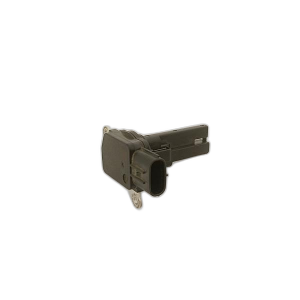
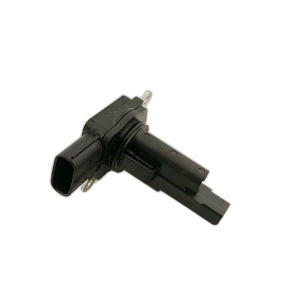
For a 2009-2013 Toyota Corolla, code P0102 almost always points to a dirty or faulty Mass Airflow (MAF) sensor. The easiest first step is to clean the sensor with dedicated MAF cleaner. If that doesn't work, a replacement sensor is the next logical step. Stick with the OEM supplier, Denso (part #22204-37010), as cheap aftermarket sensors are a common source of repeat failures. The part costs around $208-$278 from the dealer, but can be found for less from OEM suppliers.
- P0102 on a 2009-2013 Corolla means the Mass Airflow (MAF) sensor signal is low.
- The most likely cause is a dirty sensor. Start by cleaning it with dedicated MAF sensor cleaner.
- If cleaning doesn't work, the sensor itself has likely failed and needs to be replaced.
- This is a very easy DIY repair that requires only a Phillips head screwdriver and can be completed in under 10 minutes.
- Always check the air filter as well, as a clogged filter can contribute to the problem.
What's Unique About the 2009-2013 Toyota Corolla

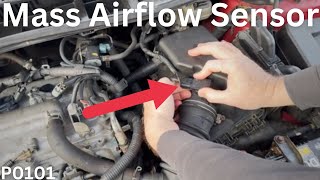
The 10th generation Toyota Corolla (E140/E150) with the 1.8L 2ZR-FE engine has a straightforward and reliable engine design. The MAF sensor is extremely accessible, located directly on the air intake duct between the air filter box and the throttle body. There are no widespread, unique design flaws that make this model particularly prone to P0102 beyond the normal likelihood of a sensor getting dirty or failing over time. The simplicity of the intake system makes diagnosis relatively easy compared to more complex, modern engines. However, it's important to note that if the engine is started with the MAF sensor unplugged (e.g., after an air filter change), it can store a 'permanent' P0102 code that may not clear with a standard scanner and can cause a smog check failure.
Symptoms You May Notice
- Check Engine Light is on
- Engine runs rough or has a poor idle
- Hesitation or lack of power during acceleration
- Engine stalling, especially at idle or when coming to a stop
- Decreased fuel economy
- Black smoke from the exhaust
- Hard starting
- Replacing oxygen sensors. While fuel trim issues can be related, P0102 specifically points to the MAF circuit, which should be the primary focus.
- Replacing the throttle body. The throttle body is downstream from the MAF sensor and is not typically a cause for this specific code.
Most Likely Causes

- Dirty or Contaminated Mass Airflow (MAF) Sensor 🔴 High Probability Over time, oil vapors from the PCV system and fine dust can coat the sensor's delicate hot wire, insulating it and causing it to read low airflow. This is a common issue on most vehicles, not specific to the Corolla.
How to confirm: Remove the sensor (held by two Phillips screws) and visually inspect the small wires inside. If they appear coated or dirty, cleaning is warranted.
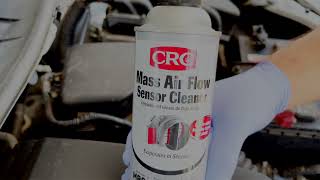
Typical fix: Clean the sensor using only a dedicated Mass Airflow Sensor cleaner spray. Do not use brake cleaner or carburetor cleaner, as they can damage the sensor. Allow it to dry completely for at least 10 minutes before reinstalling. 🎬 Watch: A quick guide to cleaning your Corolla's MAF sensor
Est. part cost: $8-$15 for MAF cleaner spray - Faulty Mass Airflow (MAF) Sensor 🟡 Medium Probability After many years and miles (typically over 100,000), the electronic components within the sensor can fail. Aftermarket sensors are also a common source of premature failure and can cause persistent issues even when new.
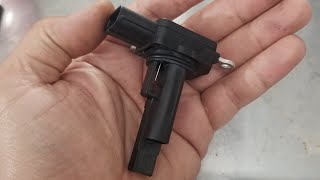
How to confirm: If cleaning the sensor does not resolve the code, the next step is replacement. A diagnostic 'smack test' (tapping the sensor housing with the handle of a screwdriver while monitoring live data) can sometimes show a glitch or cause the engine to stall, confirming an internal fault. 🎬 See how to perform a MAF sensor smack test Using a scan tool, a healthy MAF sensor on a 1.8L 2ZR-FE should read approximately 1.5-4.0 g/s at a stable, warm idle. If the reading is significantly lower or does not increase smoothly with RPM, the sensor is likely bad.
Typical fix: Replace the MAF sensor. It is strongly recommended to use an OEM Denso sensor to avoid compatibility issues. 🎬 Watch: Step-by-step instructions for replacing your MAF sensor
Est. part cost: $208-$278 (OEM), $120-$180 (Denso Aftermarket) - Clogged or Dirty Engine Air Filter ⚪ Low Probability A severely clogged air filter can restrict airflow enough to cause the MAF sensor to read lower than expected. This is often the root cause of the MAF sensor becoming contaminated in the first place.
How to confirm: Visually inspect the engine air filter. If it is visibly black, full of debris, or has not been changed in a long time, it is likely restricting airflow.
Typical fix: Replace the engine air filter. It's good practice to clean the MAF sensor whenever you change the air filter.
Est. part cost: $15-$30 - Vacuum Leak After the MAF Sensor ⚪ Low Probability A crack in the intake boot or a loose clamp allows 'unmetered' air to enter the engine after the MAF sensor. The sensor reports low air, but the engine receives more, leading to a lean condition that can sometimes trigger other codes alongside P0102, like P0171.
How to confirm: Visually inspect the air intake hose between the MAF sensor and the throttle body for cracks or loose connections. A smoke test is the most effective way to find hidden leaks. You can also carefully spray carburetor cleaner around suspected leak points with the engine running; a change in engine RPM indicates a leak.
Typical fix: Repair the source of the leak, which usually involves replacing a cracked intake hose or tightening a clamp.
Est. part cost: $30-$70 for an intake hose
Rare But Worth Checking
- Wiring or Connector Issue: A damaged wire or a corroded pin in the MAF sensor's electrical connector can cause a low or intermittent signal. Check for any visible damage to the harness near the sensor. A user on ScionLife with the same engine and code traced the issue to a lack of 12v power on the correct wire.
- Leaking Intake Manifold Gasket: While less common on the 2ZR-FE than its predecessor (1ZZ-FE), a leaking intake manifold gasket can create a significant vacuum leak, causing a P0102 code, often accompanied by a rough or surging idle, especially on a cold start. The gasket becomes hard and brittle over time.
- Faulty Engine Control Module (ECM): This is extremely rare. The ECM itself can fail, but all other potential causes should be exhaustively ruled out before considering the ECM as the problem.
Diagnosis Steps
- Read the code with an OBD-II scanner to confirm P0102 is present and check for any other codes.
- Using the scanner's live data, observe the MAF sensor reading in grams per second (g/s) at warm idle. A normal reading for the 1.8L engine is typically between 1.5 and 4.0 g/s. With the engine off and key on, it should be near 0 g/s.
- Visually inspect the engine air filter and replace if dirty.
- Inspect the MAF sensor wiring and connector for any visible damage, corrosion, or loose connections.
- Remove the MAF sensor (two Phillips screws). Visually inspect the sensor elements for dirt or contamination.
- If dirty, clean the sensor using only dedicated MAF sensor cleaner spray. Allow it to dry completely before reinstalling.
- Reinstall the sensor, clear the code, and perform a test drive. Monitor the live MAF data to see if readings are now in the normal range and if the code returns.
- If the code returns and live data is still low or erratic, perform a 'smack test' by lightly tapping on the MAF sensor housing while the engine is running. If the engine stumbles, stalls, or the g/s reading spikes erratically, the sensor is internally faulty and must be replaced.
- If a new, quality (Denso) sensor does not fix the issue, check for vacuum leaks in the intake system between the MAF sensor and the throttle body. A smoke test is the most reliable method.
Parts You'll Likely Need

- Mass Airflow Sensor
(OEM #22204-37010)— This is the most common part to fail and cause a P0102 code after cleaning does not resolve the issue. Using the OEM Denso part is highly recommended to avoid further issues.
Trusted brands: Denso (OEM)
OEM price range: $208-$278
Aftermarket price range: $50-$150 - Mass Airflow Sensor Cleaner — Often, the sensor is just dirty and cleaning it is the only fix required. This is the cheapest and easiest first step.
Trusted brands: CRC, WD-40 Specialist
Aftermarket price range: $8-$15 - Engine Air Filter
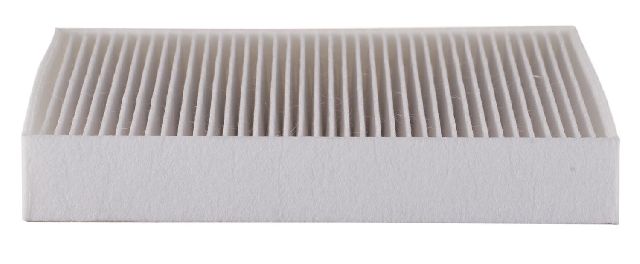
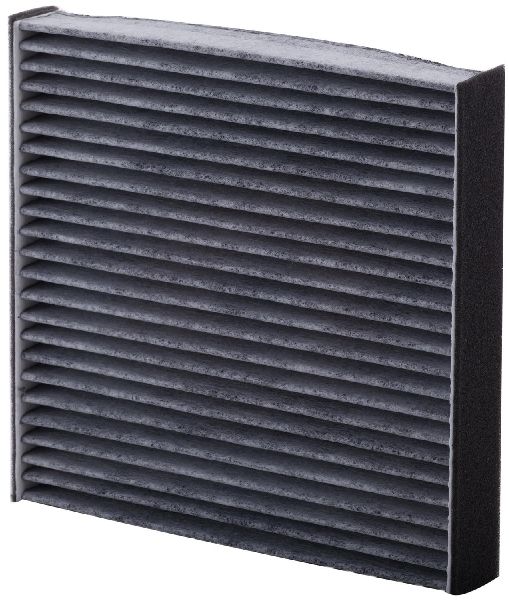
(OEM #17801-0T030)— A clogged filter can restrict airflow and should be checked as part of routine maintenance and diagnosis for this code.
Trusted brands: Denso, Purolator, WIX
OEM price range: $20-$30
Aftermarket price range: $15-$25
Related Codes That Often Appear With This One
- P0171 — System Too Lean (Bank 1). If there is a vacuum leak after the MAF sensor, the sensor reports less air than is actually entering the engine. The extra, unmetered air causes a lean condition, triggering P0171. A failing MAF sensor can also cause this code.
Mechanic-Grade Diagnostic Values

- MAF Sensor Live Data (g/s) with Key On, Engine Off (KOEO) — expected: Less than 0.25 g/s.. Failure: A reading significantly higher than 0.25 g/s with the engine off indicates a faulty sensor.
- MAF Sensor Live Data (g/s) Response to RPM — expected: The g/s value should roughly double when engine RPM is doubled (e.g., from idle to 2000 RPM).. Failure: A value that is stuck (e.g., 0.18 g/s) or does not increase smoothly with RPM points to a failed sensor.
- MAF Connector Voltage Check — expected: Approximately 12V (battery voltage) at the power supply pin (+B) and 5V at the IAT sensor supply pin with KOEO.. Failure: No voltage on the power supply pin indicates a wiring or fuse issue upstream from the sensor.
- Intake Air Temperature (IAT) Sensor Resistance — expected: Approximately 2.21kΩ to 2.69kΩ at 20°C (68°F) between pins 4 and 5 of the sensor connector.. Failure: A reading far outside this range indicates a failure of the IAT portion of the MAF sensor assembly.
Hidden / Shadow Codes Worth Checking
- P0102 (Permanent DTC): A 'permanent' version of the P0102 code can be stored in the ECM if the engine is started with the MAF sensor disconnected. This code will not illuminate the Check Engine Light but will be detected during an emissions (smog) check, causing a failure. (see via Visible with some advanced OBD-II scanners and dealer-level tools like Techstream, even when no active codes are present.)
Scan Tool Commands That Help
- Toyota Techstream: Data List > MAF — This is the primary function used to diagnose P0102. It allows the technician to view the live airflow reading in grams/second to check if it is within specification at KOEO, idle, and under load.
- OBD-II Scanner with Drive Cycle capability: Permanent DTC Clearing via Drive Cycle — Used to clear a 'Permanent' P0102 code after a repair. Unlike regular codes, this cannot be cleared by a simple 'Clear Codes' command or by disconnecting the battery. The vehicle must be driven in a specific pattern (e.g., steady speed followed by acceleration) to allow the ECM to verify the fault is gone and clear the permanent code.
Wiring & Ground Locations
- MAF Sensor Connector (5-Pin) — On the MAF sensor, located on the air intake duct between the air filter housing and the throttle body.. This is the primary connection point to test for power, ground, and signal. A common pinout is: Pin 1 (THA - IAT Signal), Pin 2 (E-THA - IAT Ground), Pin 3 (+B - 12V Power), Pin 4 (E2G - MAF Ground), Pin 5 (VG - MAF Signal). Verifying power on Pin 3 and good grounds on Pins 2 and 4 is a critical diagnostic step.
- Engine Harness Ground — A primary engine harness ground point is often located on a bolt on the side of the cylinder head, below the throttle body area.. The MAF sensor's ground circuit (E2G) ultimately connects to the chassis through the main engine harness grounds. A loose or corroded main ground can cause erratic sensor readings and trigger a P0102 code.
- Chassis Ground G105 (example) — There is a critical chassis ground connection point located under the battery tray where the negative battery cable and other grounds attach to the frame.. Corrosion at this point is a known issue and can cause a host of electrical problems, including faulty sensor readings. It should be inspected for looseness and corrosion if wiring issues are suspected.
Real Owner Repair Stories
- ScannerDanner Forum (2015 Toyota Corolla 1NZ-FE (similar 5-pin MAF sensor and diagnosis)) — Check engine light on, engine stalls sometimes.
❌ Tried (didn't work) Initial scan showed P0102.
✅ What actually fixed it The technician performed detailed live data and electrical checks. Live data showed the MAF reading was stuck at 0.18 g/s and did not change when revving the engine. Voltage checks at the connector confirmed power and ground were present. The final diagnosis pointed to an internally failed MAF sensor requiring replacement. - YouTube User 'T's Garage' (Toyota vehicle with P0102 (procedure is generic but applies)) — Check engine light, failed smog test.
❌ Tried (didn't work) Using a standard OBD-II scanner to clear the code., Disconnecting the battery to clear the code.
✅ What actually fixed it The issue was a 'permanent' P0102 code set after the engine was started with the MAF unplugged. The fix was to perform a specific drive cycle: drive the car to maintain a speed of around 50 mph for a while, then accelerate hard to over 4,000 RPM. This allowed the ECU to verify the sensor was working correctly and cleared the permanent code. - NHTSA ODI #11296751 (Toyota vehicle) — An owner reported that error codes P0113 and P0102, along with warning messages for the check engine light and ICS malfunction, appeared immediately when starting the vehicle after it had been garaged.
OEM Part Supersession History
22204-37010→22204-28010— Part update or consolidation.
Heads up: Caution: While some parts catalogs show this supersession, 22204-28010 is also listed for other engines like the 2AZ-FE. Always verify compatibility with a VIN before purchasing a superseded part number.
Model Year Variations Within This Range
- 2011-2013: These models received a minor facelift with a new front grille, head/taillights, and bumpers. The underlying 1.8L 2ZR-FE engine and MAF sensor system remained the same, so diagnosis for P0102 is identical to 2009-2010 models.
- 2010-2013: Vehicle Stability Control (VSC) became standard on all U.S. models from 2010. This does not affect P0102 diagnosis but is a notable system difference from the 2009 model year.
Diagnostic Flowchart
Used vs. New Parts: Buying Guide for This Vehicle
When a used part is the smart pick: A used OEM Denso MAF sensor from a reputable salvage yard can be a cost-effective option if the donor vehicle has low mileage and no signs of front-end damage or engine fire. It is a gamble, as the part's remaining lifespan is unknown.
Donor-vehicle mileage cap: roughly under 75000 miles for the part to have meaningful remaining life.
What to inspect on the donor part:
- Verify the part number on the sensor is the correct OEM number (22204-37010).
- Inspect the connector pins for any signs of corrosion or damage.
- Look at the sensor element wires; if they are visibly broken, contaminated, or appear to have been physically cleaned/scraped, do not buy it.
- Ask for the donor vehicle's VIN and mileage to verify its history if possible.
OEM-only on this vehicle (don't cheap out):
- Mass Airflow Sensor
Aftermarket brands forum-validated for this vehicle:
- Denso (is the OEM supplier, buying this brand is equivalent to OEM)
Brands owners have reported issues with on this vehicle:
- Unnamed or generic 'white-box' brands from online marketplaces. Forum consensus is strong that these parts are unreliable and often fail quickly or are dead-on-arrival, leading to wasted time and money.
Real Owner Stories
Aggregated from forums and TSBs cited above. Mileages and costs reflect what owners reported in those sources.
2012 Toyota Corolla LE — 81000 miles
Symptoms: Check Engine Light and traction control light came on after installing an aftermarket air filter box. Codes P0172, P0101, and P0102 were present.
What fixed it: The owner had not found a solution at the time of posting, though commenters suggested checking for a vacuum leak caused by the new aftermarket air box.
Source hint: Reddit r/MechanicAdvice
2009 Toyota Corolla base model, 1.8 liter engine — 170000 miles
Symptoms: Engine was stalling, and the idle was dipping as low as 400 RPM when coming to a stop. Codes P0113 and P0102 appeared.
What fixed it: The owner replaced the MAF sensor, which only resolved the issue for about a week before it returned. The final fix was not reported.
Source hint: Reddit r/AskMechanics
2009-2013 Toyota Corolla — ~110000 miles
Symptoms: Check Engine Light on, rough idle, and hesitation on acceleration.
What fixed it: After an initial attempt to fix the issue with a cheap, no-name aftermarket sensor failed, the problem was resolved by installing a genuine Denso-branded MAF sensor.
Source hint: toyotanation.com forum discussions
Related OBD-II Codes
Frequently Asked Questions
If I need to replace the MAF sensor on my Corolla, what brand should I buy?
What are the correct MAF sensor readings for my 2009-2013 Corolla's 1.8L engine?
I cleaned the MAF sensor, but the P0102 code came back. What's the next step?
Can I use brake cleaner or carburetor cleaner to clean my MAF sensor?
Could a dirty engine air filter be the only cause for code P0102?
Does this P0102 problem affect other vehicles besides the Corolla?
Helpful Videos
Used OEM Parts in Stock

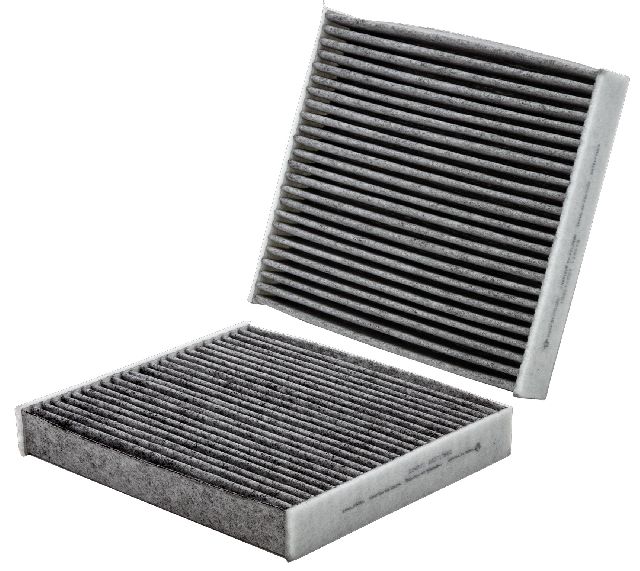
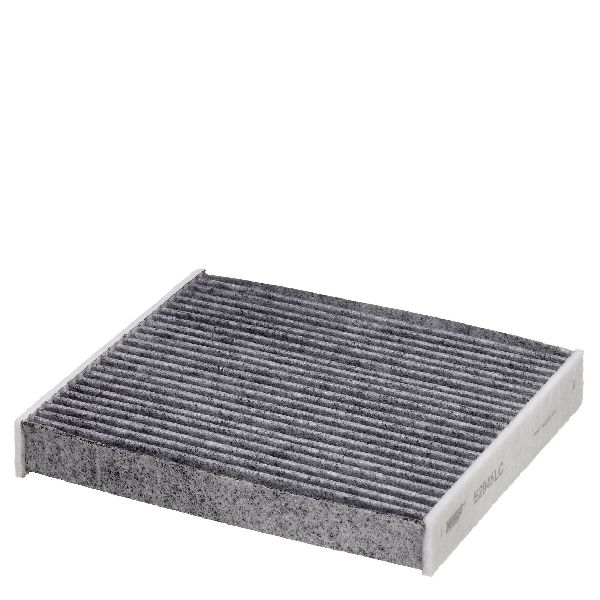
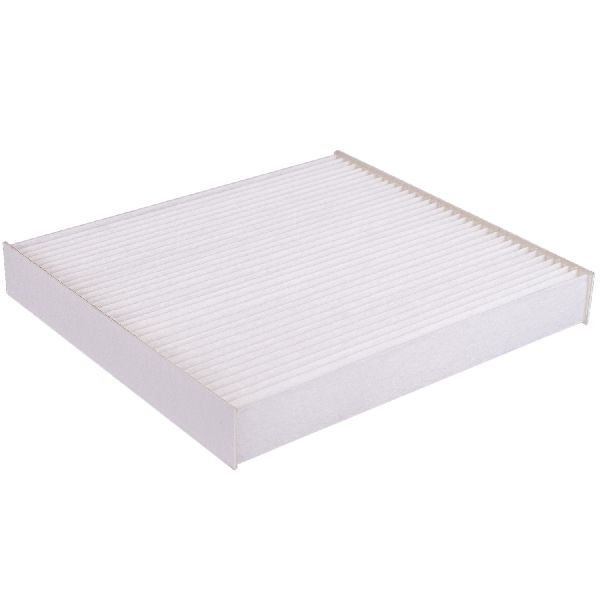
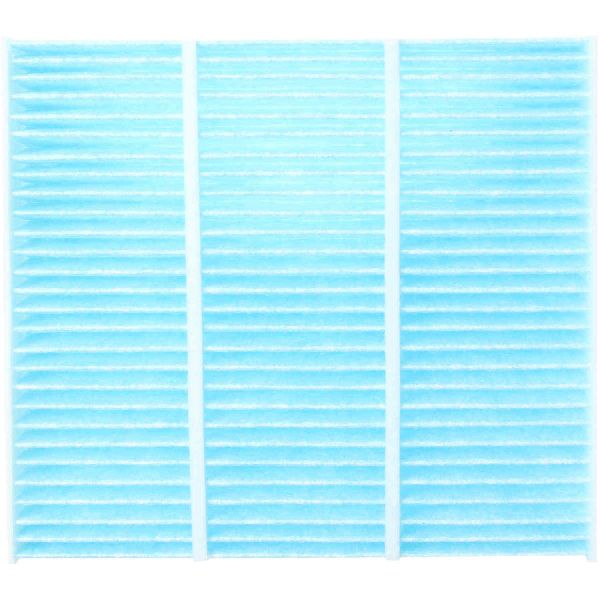
New Aftermarket Parts Available

The information in this article is provided for general reference and educational purposes only. Vehicle specifications, procedures, and part compatibility can vary by production date, trim level, and region. Always consult your vehicle's factory service manual and verify part numbers before purchasing or performing repairs. Safety-critical components such as airbags, seat belts, and braking systems should be installed by a qualified professional.
- Toyota Corolla:
- 🎬 Helpful Videos
- 🛍️ Shop This Part
- What's Unique About the 2009-2013 Toyota Corolla
- Symptoms You May Notice
- Most Likely Causes
- Rare But Worth Checking
- Diagnosis Steps
- Parts You'll Likely Need
- Related Codes That Often Appear With This One
- Mechanic-Grade Diagnostic Values
- Hidden / Shadow Codes Worth Checking
- Scan Tool Commands That Help
- Wiring & Ground Locations
- Real Owner Repair Stories
- OEM Part Supersession History
- Model Year Variations Within This Range
- Diagnostic Flowchart
- Used vs. New Parts: Buying Guide for This Vehicle
- Real Owner Stories
- 2012 Toyota Corolla LE — 81000 miles
- 2009 Toyota Corolla base model, 1.8 liter engine — 170000 miles
- 2009-2013 Toyota Corolla — ~110000 miles
- Related OBD-II Codes
- Frequently Asked Questions
- 🎟️ Get 5% Off