

P0102 on 2011-2015 Honda Civic: MAF Sensor Circuit Low Causes and Fixes
P0102 on a 2011-2015 Honda Civic most often indicates a dirty or faulty Mass Air Flow (MAF) sensor. The most common fix is cleaning the sensor with a dedicated cleaner, which is a quick and inexpensive DIY job. If cleaning fails, the issue may be the sensor itself or a wiring fault.
- P0102 on a 2011-2015 Civic means the MAF sensor is sending a low voltage signal to the computer.
- The most likely cause is a dirty MAF sensor. Start by cleaning it with a dedicated MAF sensor cleaner.
- This is a very DIY-friendly repair. The sensor is easy to access and cleaning or replacing it requires basic tools.
- If cleaning doesn't work, the sensor itself has likely failed and needs to be replaced.
- Always check your engine air filter as well, as a clogged filter can cause this code or contribute to the MAF sensor getting dirty.
What's Unique About the 2011-2015 Honda Civic

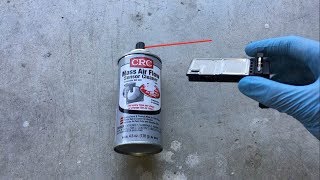
For the 9th generation Honda Civic (2011-2015), the P0102 code is a straightforward issue almost always tied directly to the MAF sensor or its immediate wiring. Unlike some vehicles where this code can be triggered by complex secondary issues, the Civic's system is relatively simple. Owners report that the most common cause by far is a contaminated sensor element, which can often be resolved with a simple cleaning, making it a very DIY-friendly diagnosis and repair. However, the use of aftermarket cold air intakes (CAIs) on this platform, particularly the Si model, 🎬 Watch: How to clean the MAF sensor on a Civic Si can introduce wiring issues if the harness needs to be extended, creating a specific failure point.
Symptoms You May Notice
- Check Engine Light is on
- Rough or unstable idle, sometimes described as feeling like a 'cammed' engine
- Engine hesitation or stumbling during acceleration
- Stalling, especially when coming to a stop or at idle
- Reduced engine power and sluggish performance
- Decreased fuel economy
- Difficulty starting the engine, may require flooring the accelerator to start
- Black smoke from the exhaust in some cases
- On some models, the Vehicle Stability Assist (VSA) light may also illuminate
- Replacing the oxygen (O2) sensor. An O2 sensor might report a lean condition as a result of the MAF issue, but it is not the root cause of P0102.
- Replacing the throttle body. The MAF sensor is a separate component and should be diagnosed first.
- Immediately replacing the MAF sensor without checking for wiring issues, vacuum leaks, or simply cleaning it first.
Most Likely Causes

- Dirty or Contaminated MAF Sensor 🔴 High Probability The MAF sensor's hot wire is sensitive and can become contaminated by dirt, oil, or debris that gets past the air filter, especially if the filter is old or an over-oiled aftermarket type. This is the most common fix reported by owners.
How to confirm: Visually inspect the MAF sensor's sensing wire/element. If it appears dirty, cleaning is the first logical step. The sensor is located on the air intake tube, right after the air filter box.
Typical fix: Remove the sensor and clean it carefully using only dedicated Mass Air Flow sensor cleaner spray. Do not touch the delicate wires. Allow it to dry completely before reinstalling.
Est. part cost: $10-$15 for MAF sensor cleaner spray. - Faulty Mass Air Flow (MAF) Sensor 🟡 Medium Probability While durable, the sensor's internal electronics can fail over time due to heat cycles and age, causing it to send an incorrect low voltage signal even when clean. Some owners report that cleaning is only a temporary fix and replacement is eventually needed.
How to confirm: If cleaning the sensor does not resolve the code, the next step is to test the sensor's output voltage with a multimeter or an advanced scan tool. If the voltage is stuck low (e.g., near 0V) and does not increase with RPM, the sensor has likely failed.
Typical fix: Replace the MAF sensor. It is typically held in by two screws and is easy to access. 🎬 See this DIY walkthrough for cleaning or replacing your sensor Using an OEM or high-quality OEM-spec brand like Denso or Hitachi is recommended.
Est. part cost: $40-$80 for an aftermarket sensor, $240-$270 for an OEM sensor. - Damaged Wiring or Loose Connector ⚪ Low Probability Vibration or previous repairs can lead to a loose connection at the MAF sensor harness plug. Rodents are also known to chew on engine bay wiring, including the MAF harness. Additionally, installing an aftermarket cold air intake that relocates the sensor may require a harness extension, which introduces another potential point of failure.
How to confirm: Visually inspect the MAF sensor connector and wiring for any signs of damage, corrosion, looseness, or chew marks. Wiggle the connector with the engine running to see if it affects the idle. Check for battery voltage and good ground at the connector with a multimeter.
Typical fix: Repair the damaged section of wiring or clean and secure the connector. If the connector itself is broken, a new pigtail connector can be spliced in. For modified intakes, ensure the extension harness is high quality and properly seated.
Est. part cost: $5-$50 for wiring repair supplies or a new pigtail connector. - Clogged or Dirty Engine Air Filter ⚪ Low Probability A severely clogged air filter can restrict airflow to the point that the MAF sensor reads an abnormally low value, triggering the code.
How to confirm: Inspect the engine air filter. If it is visibly dirty, clogged with debris, or has not been changed in a long time, it should be replaced.
Typical fix: Replace the engine air filter.
Est. part cost: $15-$30
Rare But Worth Checking
- Blown Fuse: The MAF sensor circuit is protected by a fuse, often labeled 'ACG' in the under-dash fuse box. For this generation, it may be fuse B2 (15A). This fuse may be shared with other components like the O2 sensors. If other related codes are present, checking this fuse is a worthwhile step.
- Vacuum Leak: A vacuum leak downstream of the MAF sensor can let unmetered air into the engine. While this more commonly triggers a lean code (P0171), a large leak could potentially cause erratic MAF readings and trigger P0102.
- Faulty Powertrain Control Module (PCM): This is extremely rare. One owner on Reddit reported replacing the ECU after three failed MAF sensors, but the problem returned, suggesting the root cause was likely still elsewhere (e.g., wiring). The PCM should be the last component to suspect after all other possibilities have been exhausted.
Diagnosis Steps

- Read the code with an OBD-II scanner and check for any other accompanying codes like P0171 or P0113.
- Visually inspect the engine air filter. If it's dirty, replace it.
- Inspect the air intake tube for any cracks, loose clamps, or disconnections between the MAF sensor and the throttle body.
- Locate the MAF sensor on the intake tube. Inspect the electrical connector for a secure fit and check the wiring for any visible damage, corrosion, or signs of rodent activity.
- Unplug the sensor, remove the two screws holding it in, and carefully take it out.
- Inspect the sensor element. If it looks dirty, clean it using only a dedicated MAF sensor cleaner spray. Do not touch the wires.
- Allow the sensor to air dry completely for at least 20 minutes. Do not use compressed air.
- Reinstall the sensor, clear the P0102 code with the scanner, and test drive the vehicle to see if the code returns.
- If the code returns, use a scan tool with live data to monitor the MAF sensor's readings (in grams/second) at idle and while revving the engine. A healthy sensor should show a smooth increase in airflow with RPMs (e.g., doubling the RPMs should roughly double the g/s reading). If the reading is stuck low (near 0 g/s) or erratic, the sensor is likely faulty.
- With the key on and engine off, use a multimeter to check for battery voltage and a good ground at the sensor's electrical connector.
- Check the relevant fuse (often labeled ACG, specifically fuse B2 15A) in the under-dash fuse box.
- If cleaning didn't work and the wiring/fuse are confirmed good, replacing the MAF sensor is the next most probable solution.
Parts You'll Likely Need

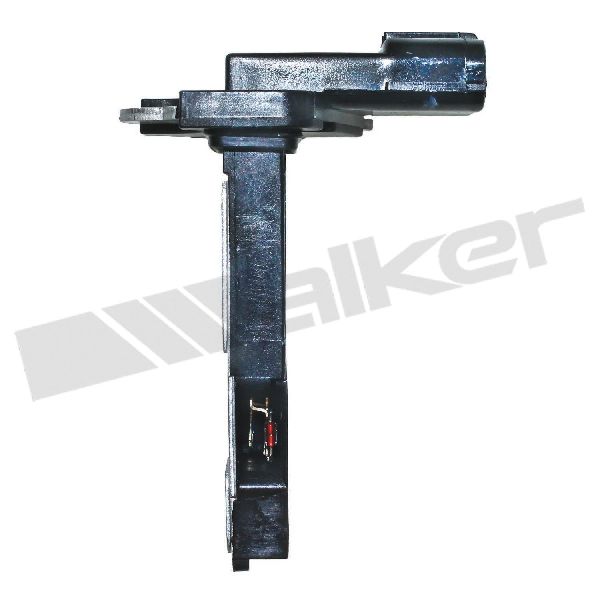
- Mass Air Flow (MAF) Sensor
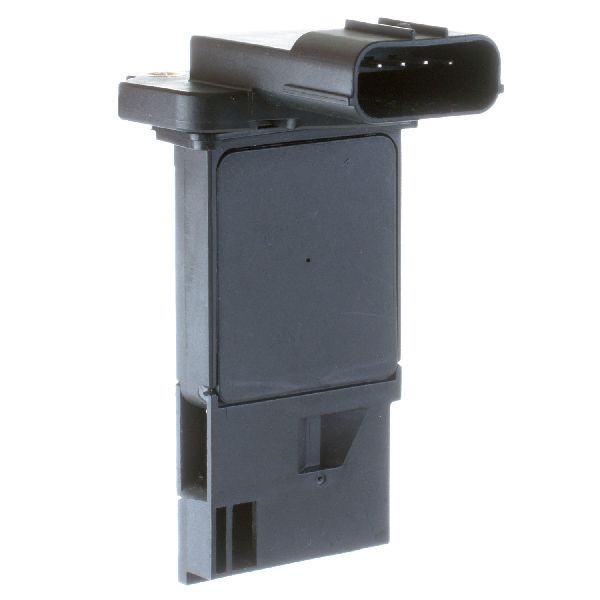
(OEM #37980-RNA-A01)— This is the most common part to fail or require replacement if cleaning does not resolve the P0102 code. This part number is widely used across many Honda models from this era.
Trusted brands: Honda (OEM), Denso (OEM supplier), Hitachi
OEM price range: $240-$270
Aftermarket price range: $40-$80 - Mass Air Flow Sensor Cleaner — Often, the sensor is just dirty and does not need to be replaced. This specialized cleaner is essential for safely cleaning the delicate sensor element and is the recommended first step.
Trusted brands: CRC, Liqui Moly, WD-40 Specialist
Aftermarket price range: $10-$15
Related Codes That Often Appear With This One
- P0171 — System Too Lean (Bank 1). A faulty MAF sensor under-reporting airflow causes the PCM to inject too little fuel, leading to a lean air-fuel mixture detected by the O2 sensor.
- P0113 — Intake Air Temperature (IAT) Sensor Circuit High. On these Civics, the MAF and IAT sensors are often integrated into a single unit. A fault in the shared connector or wiring can trigger codes for both sensors simultaneously.
Platform-Specific Known Issues
- Aftermarket Cold Air Intake (CAI) Installation: On the Civic Si (2012-2015), installing a CAI often requires relocating the MAF sensor further down the intake pipe. This necessitates a wiring harness extension. Poor quality extensions or improper connections can easily lead to a P0102 code. Acuity and other brands sell specific 13-inch extensions for this purpose.
- Recurring Code After Replacement: A Reddit user with a Civic reported that the P0102 code returned even after replacing the MAF sensor three times and then replacing the ECU. This highlights that a persistent P0102 code is often not the sensor itself, but a more elusive underlying issue like a hairline crack in a wire, a corroded pin in a connector, or a bad ground.
Mechanic-Grade Diagnostic Values
- MAF Sensor Live Data (g/s) at idle — expected: Approximately 1.8 - 2.4 g/s for the 1.8L engine at normal operating temperature. The value should roughly match the engine displacement in liters.. Failure: A reading near 0 g/s or a reading that does not increase smoothly with RPM.
- MAF Sensor Signal Voltage at idle — expected: Approximately 0.5V to 1.5V at idle.. Failure: Voltage is stuck below 0.5V, or reads near 0.1V as per Honda's diagnostic criteria for this code.
- MAF Sensor Connector Pin 1 (Power) to Ground — expected: Battery Voltage with Key On, Engine Off.. Failure: No voltage indicates an open in the power wire or a blown fuse (Fuse B2 15A in under-dash box).
- MAF Sensor Connector Pin 2 (Ground) to Chassis Ground — expected: Less than 0.2 ohms of resistance.. Failure: High resistance indicates a poor ground connection, which can cause a low voltage signal.
- VGP Wire Resistance (Sensor disconnected) — expected: 190–210 kΩ between Pin 3 of the MAF connector and body ground.. Failure: A reading outside this range suggests a problem with the VGP wire running to the PCM.
Scan Tool Commands That Help
- Honda Diagnostic System (HDS): MAF Sensor Data List — Used to view the live data from the MAF sensor in grams/second and volts. This is the primary way to confirm if the sensor is outputting a signal that is too low. A reading of 0.1V or less confirms the fault condition.
- Honda Diagnostic System (HDS): Reset ECM / ECM Idle Learn Procedure — This should be performed after replacing the MAF sensor or cleaning the throttle body to clear old learned values and allow the PCM to adapt to the new/clean component.
- Honda Diagnostic System (HDS): Jump SCS Line — This is a specific diagnostic step required before performing certain continuity checks on sensor wiring to the PCM, as outlined in the service manual, to prevent interference from other systems.
Wiring & Ground Locations

- G101 — The main ECU and sensor ground point, typically located on the thermostat housing, bolted to the engine block/head area.. A corroded or loose G101 ground is a known cause of various sensor issues on Hondas, including erratic or low voltage signals from the MAF sensor. The sensor's ground path relies on this primary connection being clean and tight.
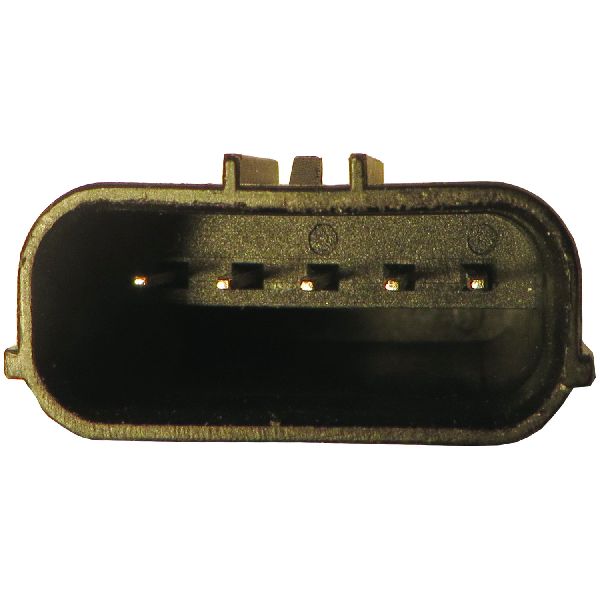
- MAF/IAT Sensor 5-Pin Connector — On the air intake tube, immediately following the air filter box.. This is the direct connection point for the sensor. The pins are: Pin 1 (Power from IG1 ACG fuse), Pin 2 (Ground), Pin 3 (VGP - Signal to PCM), Pin 4 (IAT Signal), Pin 5 (Sensor Ground). Testing voltage and ground here is the first step in electrical diagnosis.
- PCM Connector E (80P) or B (49P) — At the Powertrain Control Module (PCM), typically located in the engine bay or under the dashboard.. This is the termination point for the MAF sensor signal wire. For example, on some models, the signal wire (VGP, Light Blue) goes to pin E61 or B22. Checking for continuity between the sensor connector and this pin is the definitive test for an open or shorted wire.
OEM Part Supersession History
37980-RAD-L11→37980-RNA-A01— Part consolidation and potential minor revision.37980-RV0-A01→37980-RNA-A01— Part consolidation across different Honda models.37980-R11-A02→37980-RLF-013— Revision for specific models, though 37980-RNA-A01 is the most common fit for this generation.
Heads up: While 37980-RNA-A01 is the primary part, some submodels might have used other variants. Always verify fitment with VIN.
Diagnostic Flowchart
Used vs. New Parts: Buying Guide for This Vehicle
When a used part is the smart pick: A used OEM MAF sensor from a reputable salvage yard can be a cost-effective alternative to a new OEM part, especially if the donor vehicle is a low-mileage, later-model-year wreck. Given the high cost of a new OEM sensor, a used one is a reasonable gamble over a cheap, unbranded aftermarket part.
Donor-vehicle mileage cap: roughly under 80000 miles for the part to have meaningful remaining life.
What to inspect on the donor part:
- Check for a clean-looking sensor element (no visible oil or heavy grime).
- Ensure the connector pins are straight and free of corrosion.
- Verify the part number on the sensor matches the required OEM number (37980-RNA-A01).
- Ask for the donor vehicle's mileage if possible.
Aftermarket brands forum-validated for this vehicle:
- Denso (often the OEM supplier)
- Hitachi
- Delphi
- NTK
Brands owners have reported issues with on this vehicle:
- Unbranded, low-cost sensors from online marketplaces. Owners frequently report that these parts are poorly calibrated, fail quickly, or are dead on arrival, causing the P0102 code to return immediately.
Real Owner Stories
Aggregated from forums and TSBs cited above. Mileages and costs reflect what owners reported in those sources.
2011-2015 Honda Civic — ~40000 miles
Symptoms: Engine hesitation issues.
What fixed it: Cleaning the MAF sensor with dedicated cleaner spray.
Source hint: Honda-Tech - 'Don't forget to clean your Mass Air Flow sensor'
2011-2015 Honda Civic
Symptoms: The P0102 code returned repeatedly.
What fixed it: The issue was not resolved by replacing the MAF sensor three times or even replacing the ECU, indicating the root cause was a persistent wiring or connector fault.
Source hint: Reddit r/mechanic - 'Honda Civic ECU/MAF sensor problem??'
2011-2015 Honda Civic
Symptoms: P0102 code was present and returned after an attempted fix.
What fixed it: Cleaning the MAF sensor did not fix the code, indicating that the sensor itself had failed and required replacement.
Source hint: PedrosBoard - 'I have the P0102 and cleaned the MAF with electronic cleaner'
2011-2015 Honda Civic
Symptoms: MAF sensor related codes (P0102).
What fixed it: The MAF sensor harness had been chewed by rodents. The problem was resolved by repairing the damaged wiring.
Source hint: Reddit r/hondafit - 'Advice for MAF sensor harness repair (rats got me again)'
Documented NHTSA Reports
Honda Platform Reference
Symptoms: An owner reported engine hesitation while trying to accelerate, which triggered the check engine light and electronic stability control warnings.
Diagnosis: NHTSA ODI #10284957 describes a technician finding codes P0102, P0141, and P0340. Although the light was cleared and the vehicle test driven, the symptoms returned one month later.
Source hint: NHTSA ODI #10284957
Related OBD-II Codes
Frequently Asked Questions
I installed a cold air intake on my 2012-2015 Civic Si and immediately got a P0102 code. What's the problem?
Is it better to clean or replace the MAF sensor on my 2011-2015 Civic for a P0102 code?
I need to replace the MAF sensor on my Civic. What brand should I buy?
My P0102 code keeps coming back even after replacing the MAF sensor multiple times. What else could be wrong?
Besides the check engine light, are there any other warning lights associated with P0102 on this Civic?
Which fuse should I check for the MAF sensor on my 2011-2015 Civic?
Helpful Videos

Used OEM Parts in Stock


New Aftermarket Parts Available



The information in this article is provided for general reference and educational purposes only. Vehicle specifications, procedures, and part compatibility can vary by production date, trim level, and region. Always consult your vehicle's factory service manual and verify part numbers before purchasing or performing repairs. Safety-critical components such as airbags, seat belts, and braking systems should be installed by a qualified professional.
- Honda Civic:
- 🎬 Helpful Videos
- 🛍️ Shop This Part
- What's Unique About the 2011-2015 Honda Civic
- Symptoms You May Notice
- Most Likely Causes
- Rare But Worth Checking
- Diagnosis Steps
- Parts You'll Likely Need
- Related Codes That Often Appear With This One
- Platform-Specific Known Issues
- Mechanic-Grade Diagnostic Values
- Scan Tool Commands That Help
- Wiring & Ground Locations
- OEM Part Supersession History
- Diagnostic Flowchart
- Used vs. New Parts: Buying Guide for This Vehicle
- Real Owner Stories
- 2011-2015 Honda Civic — ~40000 miles
- 2011-2015 Honda Civic
- 2011-2015 Honda Civic
- 2011-2015 Honda Civic
- Documented NHTSA Reports
- Honda Platform Reference
- Related OBD-II Codes
- Frequently Asked Questions
- 🎟️ Get 5% Off