

P0102 on 2012-2017 Honda Accord: MAF Circuit Low Causes and Fixes
On a 2012-2017 Honda Accord, code P0102 is most often caused by a dirty Mass Air Flow (MAF) sensor. The most likely fix is cleaning the sensor with a dedicated spray cleaner, which costs about $10-$15 and is a very easy DIY job. If cleaning doesn't work, inspect the wiring before replacing the sensor.
- P0102 on a 2012-2017 Accord almost always points to the Mass Air Flow (MAF) sensor.
- Before buying any parts, spend $15 on a can of MAF sensor cleaner and clean the sensor. This fixes the problem in a majority of cases.
- The job is extremely DIY-friendly, requiring only a screwdriver and about 20 minutes.
- Always check the engine air filter at the same time; a clogged filter can cause this code and other performance issues.
- If cleaning doesn't work, the sensor itself has likely failed and needs to be replaced.
What's Unique About the 2012-2017 Honda Accord

For the 8th (2012) and 9th (2013-2017) generation Honda Accord, the P0102 code is a straightforward issue almost always tied directly to the MAF sensor or its immediate wiring. Unlike some vehicles where this code can be triggered by complex secondary problems, the Accord's system is relatively simple. The most common cause by a wide margin is a contaminated sensor element, which can often be resolved with a simple cleaning, making it a very DIY-friendly diagnosis and repair. The 4-cylinder models are also known for having an undersized battery, and low system voltage can sometimes contribute to circuit-related fault codes.
Generation note: This range covers two Accord generations: the end of the 8th generation (2012) and the full 9th generation (2013-2017). The location of the MAF sensor and the diagnostic process for code P0102 are virtually identical for both generations, applying to both the 4-cylinder (K24W) and V6 (J35Y) engines.
Symptoms You May Notice
- Check Engine Light is on
- Rough or unstable idle
- Hesitation or poor acceleration
- Engine stalling, especially when coming to a stop
- Decreased fuel economy
- Hard starting
- Black smoke from exhaust (less common)
- Replacing the oxygen (O2) sensors. O2 sensors may report issues due to the incorrect air/fuel mixture caused by the faulty MAF reading, but they are rarely the root cause of P0102.
- Replacing the throttle body. While related to the air intake system, a throttle body issue would typically set different diagnostic trouble codes.
- Replacing the MAF sensor without checking wiring. As seen in owner forums, replacing the sensor sometimes fails to fix the issue, pointing to an underlying wiring or connector problem that was missed.
Most Likely Causes

- Dirty or Contaminated MAF Sensor 🔴 High Probability Over-oiled aftermarket air filters or delaying air filter changes can allow dirt, oil vapor, and other debris to coat the sensor's delicate hot wire, insulating it and causing an artificially low reading.
How to confirm: Visually inspect the MAF sensor's sensing wire (located inside the sensor housing). If it appears dirty, cleaning is warranted. The sensor is located on the air intake tube, right after the air filter box.
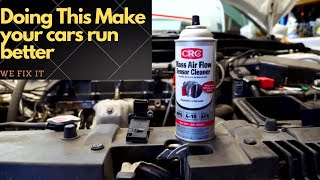
Typical fix: Remove the sensor and clean it thoroughly with a dedicated Mass Air Flow sensor cleaner spray. 🎬 Watch: A quick guide on cleaning your Accord's MAF sensor. Do not touch the internal wires. Let it dry completely before reinstalling.
Est. part cost: $10-$25 for MAF cleaner spray. - Faulty MAF Sensor 🟡 Medium Probability The sensor's internal electronics can fail over time due to heat cycles and age, leading to a permanent low voltage output.
How to confirm: If cleaning the sensor does not resolve the code, and the wiring is confirmed to be good, the sensor itself has likely failed. A scan tool can monitor the MAF sensor's output; a faulty sensor may show a flatlined low voltage reading (e.g., under 0.1V) even when the engine is running and RPMs increase.
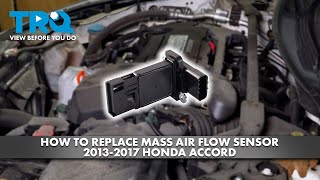
Typical fix: Replace the MAF sensor. This is a simple DIY task involving two screws and an electrical connector. 🎬 See this walkthrough for replacing the sensor on 9th-gen Accords.
Est. part cost: $80-$250 - Wiring or Connector Issue ⚪ Low Probability While not common, wires can become frayed or the connector pins can become corroded or loose, interrupting the signal. This can cause a short to ground or an open circuit.
How to confirm: Visually inspect the MAF sensor's electrical connector and wiring harness for any signs of damage, corrosion, or looseness. Wiggle the connector with the engine running while observing live data on a scan tool to see if the signal changes. Use a multimeter to back-probe the connector to verify a 5V reference signal, power (usually 12V), and a good ground.
Typical fix: Repair the damaged wiring or clean/replace the connector pigtail.
Est. part cost: $15-$50 - Clogged or Dirty Engine Air Filter ⚪ Low Probability A severely clogged air filter can restrict airflow enough to cause the MAF sensor to read lower than expected, though it is less likely to cause a circuit-low code than a performance-range code (P0101).
How to confirm: Remove and inspect the engine air filter. If it is visibly black, filled with debris, or has not been changed in over 15,000 miles, it should be replaced.
Typical fix: Replace the engine air filter.
Est. part cost: $20-$40
Rare But Worth Checking
- Vacuum Leak: A significant leak in the air intake tube between the MAF sensor and the throttle body can allow unmetered air to enter the engine. This can sometimes cause a P0102, but it is more commonly associated with lean codes like P0171.
- Blown Fuse: The MAF sensor circuit is protected by a fuse, often shared with other components like O2 sensors or the EVAP purge valve. While rare, a blown fuse will cut power to the sensor and cause a low input code. On some Hondas, this is the ACG fuse. For the 8th generation Accord (2008-2012), the MAF sensor fuse is fuse #17 in the under-hood fuse box.
- Low System Voltage: A failing battery or alternator can cause low system voltage. Some Honda control modules are known to be sensitive to low voltage, which can trigger various electrical faults. While not a direct cause, it can be a contributing factor.
Diagnosis Steps

- Read the code with an OBD-II scanner to confirm P0102 is present.
- Visually inspect the engine air filter. Replace if it is dirty or clogged.
- Inspect the air intake tube between the air filter box and the engine for any cracks, tears, or loose clamps.
- Locate the MAF sensor on the intake tube. Inspect its electrical connector and wiring for any visible damage, corrosion, or loose pins.
- With the ignition off, disconnect the MAF sensor. Remove the two screws holding it in place and carefully pull it out.
- Spray the sensor's internal wires and components with a dedicated MAF sensor cleaner. Do not touch the wires. Allow it to air dry completely for at least 15-20 minutes.
- Reinstall the sensor, clear the code with the scanner, and start the engine. Go for a test drive to see if the code returns.
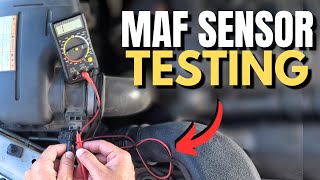
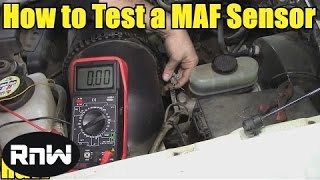
- If the code returns, use a scan tool to monitor the MAF sensor voltage live data. It should be around 0.5V-0.8V at idle and increase smoothly with RPM, not flatline at or near 0V. 🎬 Watch: How to test your MAF sensor using OBD2 data.
- If live data is suspect, use a multimeter to back-probe the connector with the key on, engine off. Check for 12V power, a good ground (near 0V), and a 5V reference signal on the appropriate pins.
- If the wiring and power/ground are good but the code persists and cleaning failed, the MAF sensor itself is likely faulty and should be replaced.
Parts You'll Likely Need

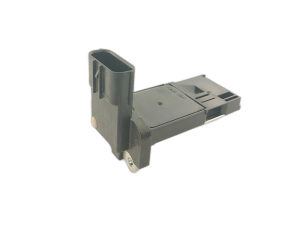
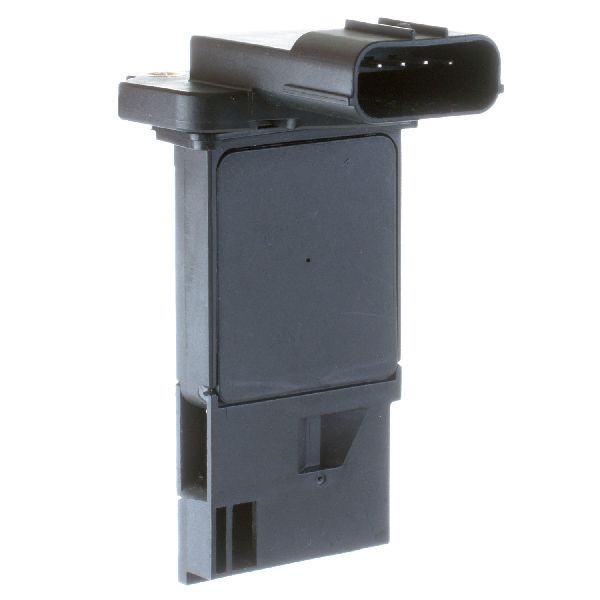
- Mass Air Flow Sensor
(OEM #37980-RC0-M01 (Common for V6 and some 4-Cyl models), 37980-RLF-013 (Common for 4-Cyl models))— This is the most common part to fail if cleaning does not resolve the issue.
Trusted brands: Honda (OEM), Denso, Hitachi
OEM price range: $150-$265
Aftermarket price range: $80-$150 - Mass Air Flow Sensor Cleaner — This is the first and most likely fix. A can of dedicated cleaner is inexpensive and often all that is needed.
Trusted brands: CRC, WD-40 Specialist, Liqui Moly
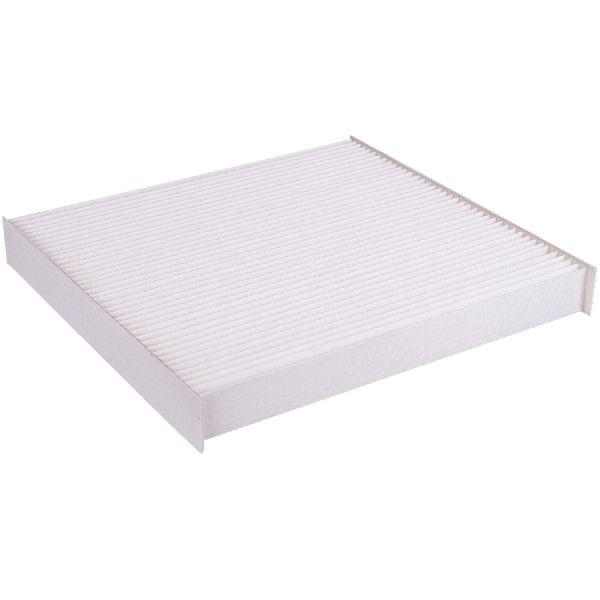
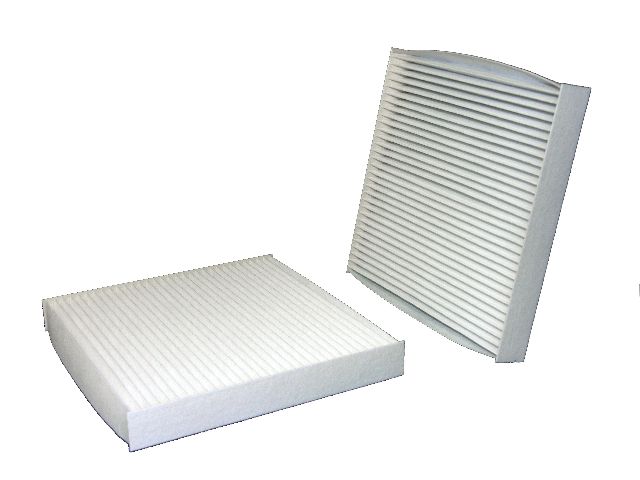
Aftermarket price range: $10-$25 - Engine Air Filter
(OEM #17220-R1A-A01 (Example for 4-cyl))— A clogged air filter can contribute to the code and should be replaced as part of routine maintenance.
Trusted brands: Honda OEM, Denso, WIX, Fram
OEM price range: $25-$40
Aftermarket price range: $15-$30
Related Codes That Often Appear With This One
- P0171 — If there is a vacuum leak after the MAF sensor, the sensor will report low airflow (P0102) while the oxygen sensor detects too much oxygen, triggering a System Too Lean (P0171) code.
- P0101 — A MAF Sensor Circuit Range/Performance code can appear alongside P0102 if the sensor's readings are erratic, not just consistently low.
- P0103 — A MAF Sensor Circuit High Input code might appear intermittently with P0102 if there is a wiring short that causes the voltage to fluctuate wildly.
Platform-Specific Known Issues
- On 4-cylinder models, the stock battery is known to be undersized and can weaken prematurely. While not a direct cause, low system voltage can create or worsen electronic issues, so ensuring the battery and charging system are healthy is a good ancillary step when diagnosing any circuit code.
Mechanic-Grade Diagnostic Values
- MAF Sensor Signal Voltage at Idle (Engine Warm) — expected: 0.5V to 1.5V. Failure: A reading below 0.2V or a flatlined voltage that doesn't change with RPM. The P0102 code specifically triggers when voltage is below 0.1V for a set period.
- MAF Sensor Airflow Reading at Idle (Scan Tool, Engine Warm) — expected: Approximately 2.0-4.0 g/s. A common rule of thumb is that the g/s value should be close to the engine's displacement in liters. For a 2.4L K24 engine, expect around 2.4 g/s. For a 3.5L J35, expect around 3.5 g/s.. Failure: A reading near zero or a reading that does not increase when the engine RPM is raised.
- MAF Sensor Ground Wire Resistance — expected: Less than 0.2 ohms. Failure: A high resistance reading indicates a poor ground connection, which can cause a low voltage signal.
- MAF Sensor Connector Pin Voltages (Key On, Engine Off) — expected: Pin 1: 12V (Power Supply), Pin 3: 5V (Reference Voltage), Pin 4: Ground (near 0V). Failure: Missing voltage on Pin 1 or Pin 3, or high voltage/resistance on the ground pin.
Scan Tool Commands That Help
- Honda Diagnostic System (HDS): PCM Reset / Idle Learn Procedure — After replacing the MAF sensor or cleaning the throttle body, it is critical to perform a PCM reset and an idle learn procedure. This clears adaptive fuel trim values and allows the PCM to recalibrate to the new/clean sensor's readings, preventing a rough idle or the code returning immediately.
Wiring & Ground Locations

- MAF Sensor Connector (9th Gen V6) — On the air intake tube, between the air filter housing and the throttle body.. This is a 5-pin connector. Knowing the pinout is essential for testing. Pin 1: Power (12V), Pin 2: IAT Signal, Pin 3: 5V Reference, Pin 4: Ground, Pin 5: MAF Signal Output. A short to ground on Pin 5 will cause P0102.
- Engine Block Ground — On the engine block, near the firewall, behind the fuel injectors. Often a single bolt with multiple black wires attached.. A poor engine ground can affect multiple sensors, including the MAF. Verifying the MAF ground pin has good continuity to this point is a key diagnostic step. A voltage drop test from the MAF ground pin to the battery negative terminal should be less than 0.1V.
- Fuse #17 (8th Gen) — In the under-hood fuse box on 2008-2012 models.. This fuse provides power to the MAF sensor. If it blows, the sensor will have no power, resulting in a P0102 code.
Real Owner Repair Stories
- SE-R.net forum user Jim Wright (Similar Nissan vehicle, but principle applies universally to MAF sensors with grounding issues.) — Poor idle and MAF-related issues.
❌ Tried (didn't work) Initial diagnostics pointed towards a faulty sensor.
✅ What actually fixed it The sensor ground was poor. The fix was to run a new, dedicated ground wire from the MAF sensor's ground pin directly to a clean ground lug on the engine block. The voltage drop on the ground circuit measured before the fix was over 9mV, and after the fix, it dropped significantly, resolving the issue. - NHTSA ODI #10284957 (Cross-model Honda reference) — An owner reported difficulty accelerating and immediately visited a dealer. The technician found codes P0102, P0141, and P0340. The dealer cleared the lights and test drove the vehicle, though the issue recurred a month later.
OEM Part Supersession History
37980-R40-A01, 37980-R11-A01, 37980-R11-A02, 37980-RLF-003→37980-RLF-013— Standard part consolidation and minor revisions over the production run.
Heads up: The listed part numbers are generally interchangeable for the 4-cylinder Accord within this generation, but it is always best to verify with a VIN. The final superseded part, 37980-RLF-013, is the most current replacement for many 2.4L applications.
Model Year Variations Within This Range
- 2013-2017 (9th Gen): The V6 (J35) engine uses a 5-pin MAF sensor, as it integrates the Intake Air Temperature (IAT) sensor. The 4-cylinder (K24) also uses a 5-pin sensor in this generation. The 8th generation (2012) 4-cylinder also uses a similar 5-pin setup. Pinouts are generally consistent.
- 2012 (8th Gen) vs 2013-2017 (9th Gen): While the diagnostic process is nearly identical, the physical location of grounds and harness routing may have subtle differences. The under-hood fuse box layout changed between generations, so fuse locations (like the MAF fuse) are not the same. For the 8th gen, the MAF fuse is #17.
Diagnostic Flowchart
Other Known Issues on This Vehicle
Issues unrelated to this code that are worth knowing about as an owner of this generation:
- Premature Starter Failure 🔴 High — Very common on both 4-cylinder and V6 models, often failing between 50k-100k miles. Symptoms include a single click with no crank, or requiring multiple attempts to start. (Ref: TSB 16-002 (for V6 models, addresses starter noise/grind by replacing starter and potentially repositioning torque converter ring gear).)
- VCM (Variable Cylinder Management) Related Oil Consumption / Vibrations (V6 Only) 🟠 Medium — A persistent issue where the system that deactivates cylinders for fuel economy can lead to fouled spark plugs, oil consumption, and engine vibrations. Many owners install an aftermarket 'VCM Muzzler' to disable the system. (Ref: A class-action lawsuit was settled for earlier generations, but the issue persists. Honda's fix was a software update to alter VCM behavior.)
- LED Daytime Running Light (DRL) Burnout 🟡 Low — The signature LED light strip in the headlight assembly can fail or burn out prematurely on 2016-2017 models. The entire headlight assembly often needs to be replaced. (Ref: TSB 19-042 was issued, and Honda extended the warranty for this specific issue.)
- Excessive Oil Consumption (4-Cylinder) 🟠 Medium — Some K24W 'Earth Dreams' engines can consume oil between changes. While less severe than the issues on the later 1.5T engines, it's a documented complaint. Replacing the PCV valve and using more frequent oil change intervals can sometimes help.
Used vs. New Parts: Buying Guide for This Vehicle
When a used part is the smart pick: A used OEM MAF sensor from a reputable salvage yard is often a smarter choice than a new, cheap aftermarket sensor. The OEM sensors are calibrated specifically for the vehicle's intake system, and a used Denso or Hitachi (the OEM suppliers) part from a low-mileage donor is more likely to perform correctly than a new, unbranded part with questionable calibration.
Donor-vehicle mileage cap: roughly under 80000 miles for the part to have meaningful remaining life.
What to inspect on the donor part:
- Check for a clean, undamaged connector with no corrosion on the pins.
- Inspect the sensor housing for cracks or physical damage.
- Look at the internal sensing elements if possible; they should be free of oil, debris, or physical breakage.
- Ask for the VIN of the donor car to verify compatibility and check its history for accidents or flood damage.
Aftermarket brands forum-validated for this vehicle:
- Denso
- Hitachi
- Bosch
- NTK
Brands owners have reported issues with on this vehicle:
- Unbranded, 'white box' sensors from online marketplaces are a significant gamble. They often have poor calibration, leading to persistent performance issues or other trouble codes even if they clear the P0102.
Real Owner Stories
Aggregated from forums and TSBs cited above. Mileages and costs reflect what owners reported in those sources.
2013 Honda Accord
Symptoms: RPMs were between 1-2 oddly then in mid drive stopped at a light when it shut off on its own. Turned it back on, drove fine. P0113 and P0102 codes present.
What fixed it: The owner attempted cleaning the MAF sensor with dedicated cleaner, but the codes did not clear, suggesting a need for further wiring or sensor testing.
Source hint: Reddit r/AskMechanics owner report
2013 Honda CR-V (2.4L K24 engine)
Symptoms: Error code P0102 returned even after replacing the MAF sensor with a new part.
What fixed it: The discussion highlighted the importance of testing the wiring and connector for voltage and ground using back-probes rather than just replacing the sensor.
Source hint: CarKiller / Ask Scotty Community - 'Error code P0102 on 2013 Honda crv'
Related OBD-II Codes
Frequently Asked Questions
Can I use any cleaner to fix the P0102 code on my 2012-2017 Accord?
My 2013 Accord V6 has a grinding noise when starting; is this related to the P0102 code?
Could my aftermarket air filter be causing the P0102 code?
I have a 4-cylinder Accord; could a weak battery cause electronic codes like P0102?
Is there a specific TSB for the LED light strip failure on my 2016 Accord?
Where is the MAF sensor located on the 2012-2017 Accord for inspection?
Helpful Videos
Used OEM Parts in Stock


New Aftermarket Parts Available

The information in this article is provided for general reference and educational purposes only. Vehicle specifications, procedures, and part compatibility can vary by production date, trim level, and region. Always consult your vehicle's factory service manual and verify part numbers before purchasing or performing repairs. Safety-critical components such as airbags, seat belts, and braking systems should be installed by a qualified professional.
- Honda Accord:
- 🎬 Helpful Videos
- 🛍️ Shop This Part
- What's Unique About the 2012-2017 Honda Accord
- Symptoms You May Notice
- Most Likely Causes
- Rare But Worth Checking
- Diagnosis Steps
- Parts You'll Likely Need
- Related Codes That Often Appear With This One
- Platform-Specific Known Issues
- Mechanic-Grade Diagnostic Values
- Scan Tool Commands That Help
- Wiring & Ground Locations
- Real Owner Repair Stories
- OEM Part Supersession History
- Model Year Variations Within This Range
- Diagnostic Flowchart
- Other Known Issues on This Vehicle
- Used vs. New Parts: Buying Guide for This Vehicle
- Real Owner Stories
- 2013 Honda Accord
- 2013 Honda CR-V (2.4L K24 engine)
- Related OBD-II Codes
- Frequently Asked Questions
- 🎟️ Get 5% Off