

P0102 on 1993-1997 Ford Ranger 3.0L: MAF Circuit Low Causes and Fixes
On a 1993-1997 Ranger with the 3.0L V6, code P0102 is most often caused by a dirty Mass Air Flow (MAF) sensor or a vacuum leak between the sensor and the throttle body. Start by cleaning the MAF sensor with a dedicated spray cleaner, which is a sub-$15 fix and often resolves the issue. Also, inspect the PCV hose elbow, a common failure point for vacuum leaks on this engine.
- Always start by cleaning the MAF sensor with a dedicated cleaner; it's the cheapest and most likely fix.
- Thoroughly inspect for vacuum leaks, especially the large intake boot and all PCV hoses, as brittle rubber and plastic are common on a truck of this age.
- If you replace the MAF sensor, consider using a reputable brand like Motorcraft, as forum members report issues with cheap aftermarket parts failing prematurely or not working at all.
- A quick diagnostic trick is to unplug the MAF sensor. If the truck idles or runs better, the sensor itself is almost certainly the problem.
What's Unique About the 1993-1997 Ford Ranger

The second-generation Ford Ranger with the 3.0L Vulcan V6 is a straightforward, workhorse truck. For this P0102 code, the platform's simplicity is key. The issue is almost always located in the intake path, with owners frequently reporting success after simply cleaning the MAF sensor's delicate wires. Unlike newer, more complex engines, the diagnostic path is usually direct and doesn't involve intricate electronic systems. However, these trucks are known for developing age-related vacuum leaks from brittle plastic and rubber hoses, which is a primary cause to investigate alongside the MAF sensor itself. A particularly notorious failure point is the PCV hose and its rubber elbow, which can crack and create a significant vacuum leak.
Generation note: The 1993-1997 Ford Ranger models all belong to the second generation of the platform, featuring a significant exterior redesign from the first generation. The diagnostic and repair procedures for a P0102 code are consistent across this entire year range for the 3.0L V6 engine.
Symptoms You May Notice
- Check Engine Light is on
- Engine stalls immediately after starting or won't idle
- Rough or surging idle
- Stalling when coming to a stop or during deceleration
- Hesitation or lack of power during acceleration
- Poor fuel economy
- Black smoke from the exhaust if the computer defaults to a rich mixture
- Engine dies when the throttle is applied
- Replacing the oxygen (O2) sensors. The O2 sensors may report a lean or rich condition (like codes P0171/P0174) as a result of the P0102 fault, but they are not the cause.
- Replacing the Throttle Position Sensor (TPS). While the PCM compares MAF and TPS signals, a P0102 code specifically points to the MAF circuit.
Most Likely Causes

- Dirty or Contaminated MAF Sensor 🔴 High Probability Over time, oil vapor from the PCV system and fine dust can coat the sensor's delicate hot wires, insulating them and causing them to under-report airflow. This is a very common issue on many vehicles of this era, including the Ranger. Cleaning the sensor is a frequent first-step fix reported by owners.
How to confirm: Remove the sensor from the airbox housing. Visually inspect the two small filament wires inside. If they appear coated or dirty, they need cleaning. Do not touch them.
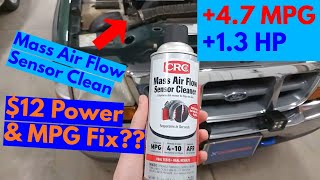
Typical fix: Carefully spray the sensor wires with a dedicated Mass Air Flow sensor cleaner, such as CRC Mass Air Flow Sensor Cleaner. Do not use brake or carburetor cleaner, as they can leave a residue and damage the sensor. Allow it to dry completely before reinstalling. 🎬 Watch: Step-by-step guide to cleaning your MAF sensor
Est. part cost: $10-$15 for a can of MAF cleaner. - Vacuum Leak 🟡 Medium Probability The plastic and rubber vacuum lines, intake snorkel boot, and gaskets become brittle and crack with age and heat cycles, allowing unmetered air to enter the engine after the MAF sensor. Common leak points include the PCV valve hoses and the intake air tube itself. The rubber elbow for the PCV system located under the throttle body is a particularly common failure point known to cause rough idling and lean codes.
How to confirm: With the engine running, listen for an audible hissing sound. You can also carefully spray short bursts of carburetor cleaner or use a smoke machine around the intake manifold, vacuum lines, and intake boot. If the engine idle changes, you've found the leak. A user on Ranger-Forums.com found a massive vacuum leak from a large gash in the PCV elbow, which caused a no-idle condition and multiple codes including P0102. Additionally, NHTSA ODI #10383032 for a similar Ford truck noted a pinpoint leak in a resonator hose that triggered a P0102 code and caused the vehicle to stall.
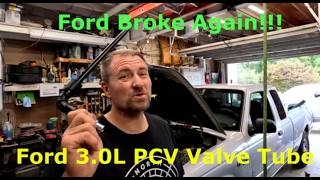
Typical fix: Replace the cracked hose, boot, or gasket. The PCV valve and its associated hoses are frequent culprits and are inexpensive to replace. 🎬 See how to replace the PCV tube yourself
Est. part cost: $10-$50 for hoses or gaskets. - Faulty MAF Sensor 🟡 Medium Probability While durable, the sensor's electronics can fail with age. Aftermarket sensors are also noted by owners to sometimes be faulty right out of the box or fail prematurely. One owner on Reddit experienced a P0102 with a new Duralast sensor reading only 0.9 g/s at idle.
How to confirm: After confirming no vacuum leaks and cleaning the sensor, the next step is to test the sensor's output. With a scan tool, watch the MAF reading at idle (should be around 3.0 g/s for the 3.0L engine) and see if it increases smoothly with RPM. If the reading is stuck near zero or a very low number, the sensor is likely bad. You can also unplug the sensor; if the engine runs better, it strongly points to a bad sensor. This forces the PCM into a default fueling strategy.
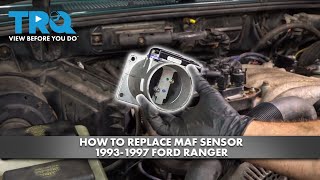
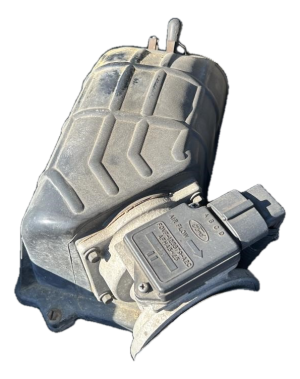
Typical fix: Replace the MAF sensor. It is held in the air filter housing by two screws or nuts. Using a quality OEM brand like Motorcraft is recommended to avoid issues with aftermarket parts. 🎬 Watch: How to replace the MAF sensor
Est. part cost: $70-$150 for a quality aftermarket sensor, $150-$250 for an OEM Motorcraft sensor. - Wiring or Connector Issue ⚪ Low Probability
How to confirm: Visually inspect the MAF sensor connector and wiring harness for any breaks, corrosion, or loose pins. With the key on and engine off, use a multimeter to check for 12V power on the red wire (Pin A) and a good ground on the Black/White wire (Pin B). The signal wire (Light Blue/Red, Pin D) and its ground (Tan/Light Blue, Pin C) can also be checked for continuity back to the PCM. Wiggle the harness while the engine is running to see if it causes the idle to stumble.
Typical fix: Repair the damaged section of wire or clean/replace the connector pigtail. A new pigtail is available from various auto parts stores.
Est. part cost: $15-$30 for a new pigtail connector.
Rare But Worth Checking
- Clogged Air Filter: A severely clogged air filter can restrict airflow enough to cause a P0102 code. It's a simple and essential maintenance item to check first.
- Faulty Powertrain Control Module (PCM): This is extremely rare. The PCM should only be considered after all other possibilities, including wiring, have been exhaustively ruled out by a professional. A user on Ranger-Forums noted that after many part replacements, their random stalling issue (which included P0102) was suspected to be the PCM.
- Internal Engine Damage: In extreme cases, a P0102 can appear alongside severe internal issues. For example, NHTSA ODI #11539323 describes a case where P0102 was retrieved alongside other codes, and it was determined that coolant had intruded into the engine block, requiring an engine replacement.
Diagnosis Steps

- Read the Code: Confirm P0102 is the primary code stored. Note any other codes present, like P0171/P0174, which strongly suggest a vacuum leak.
- Visual Inspection: Check the air intake system between the MAF sensor and the throttle body for any obvious cracks, loose clamps, or disconnected hoses.
- Check Air Filter: Inspect the engine air filter. If it is dirty or clogged, replace it.
- Clean the MAF Sensor: Disconnect the battery. Remove the MAF sensor. Spray the internal wires with dedicated MAF sensor cleaner. Do not touch the wires. Let it dry completely and reinstall.
- Check for Vacuum Leaks: Reconnect the battery. Start the engine. Listen for hissing noises. Pay close attention to the PCV hoses and the intake manifold area. Carefully spray starter fluid or use a smoke machine around vacuum lines and intake gaskets to identify leaks.
- Test MAF Connector: If the problem persists, use a multimeter to test the electrical connector with the key on, engine off. You should have battery voltage (approx. 12V) at the red power wire (Pin A) and a good ground at the black/white wire (Pin B).
- Live Data Scan: If you have a capable scan tool, monitor the MAF sensor reading in grams per second (g/s). At a warm idle, it should be stable and roughly equal to the engine displacement (around 3.0 g/s). The reading should increase smoothly as you raise the engine RPM. If it's flatlined near zero or erratic, the sensor is likely bad.
- Unplug Test: As a final confirmation, unplug the MAF sensor's electrical connector while the engine is running. The PCM will switch to a default fueling strategy. If the engine's idle and running condition improve significantly, it's a strong indication the MAF sensor has failed and needs replacement.
- Replace MAF Sensor: If all tests point to a faulty sensor, replace it with a new, quality part. The OEM Motorcraft part number is F57Z-12B579-DA, which may be superseded.
Parts You'll Likely Need

- Mass Air Flow (MAF) Sensor
(OEM #F57Z-12B579-DA)— This is the sensor that fails or gets dirty, directly causing the P0102 code. Cleaning often works, but if the internal electronics have failed, replacement is necessary. - MAF Sensor Cleaner — The most common cause is a contaminated sensor. A $10-15 can of dedicated cleaner is the first and most frequent fix.
- PCV Hose/Elbow — The rubber hoses for the PCV system, especially the elbow under the throttle body, are known to crack from age and heat, causing vacuum leaks that can trigger P0102.
Related Codes That Often Appear With This One
- P0171 — System Too Lean (Bank 1) - If there is a vacuum leak, unmetered air enters the engine, creating a lean condition that the MAF sensor doesn't see.
- P0174 — System Too Lean (Bank 2) - Same reason as P0171, as a vacuum leak affects both cylinder banks on a V6 engine.
- P0172 — System Too Rich (Bank 1) - If the MAF sensor is failing and reading extremely low, the PCM may default to a rich fuel mixture to prevent engine damage, triggering this code.
- P0300 — Random/Multiple Misfire Detected - A severe vacuum leak or incorrect MAF reading can cause such a poor air/fuel mixture that it leads to misfires across multiple cylinders.
Mechanic-Grade Diagnostic Values
- MAF Sensor Live Data (g/s) at warm idle — expected: Approximately 3.0 g/s (grams per second), which should be close to the engine's displacement in liters.. Failure: A reading stuck near 0 g/s, or a reading significantly lower than 2.5 g/s.
- MAF Sensor Signal Voltage at idle — expected: Approximately 0.34 - 1.96 Volts DC.. Failure: Voltage is below 0.34V or does not increase smoothly as the throttle is opened.
- MAF Sensor Power Supply Voltage (KOEO) — expected: 10 to 12 Volts DC (or battery voltage) at the Red wire (Pin A) of the connector.. Failure: Voltage is significantly below 10V, indicating a power supply issue to the sensor.
- MAF Sensor Ground Circuit — expected: Good ground connection at the Black/White wire (Pin B) of the connector.. Failure: High resistance to ground, indicating a poor ground connection.
- OBD-I Equivalent Codes (1993-1994 models) — expected: Code 26: MAF Out Of Self-Test Range, Code 56: MAF Circuit Above Maximum Voltage, Code 66: MAF Circuit Below Minimum Voltage.. Failure: These codes on an OBD-I scanner point directly to a MAF circuit fault.
Wiring & Ground Locations
- MAF Connector Pin A (Red) — On the 4-pin connector at the Mass Airflow Sensor, located on the air filter housing.. This is the 12V power supply wire from the PCM. A lack of voltage here means the sensor cannot operate.
- MAF Connector Pin B (Black/White) — On the 4-pin connector at the Mass Airflow Sensor.. This is the main ground wire for the sensor. A bad ground will cause incorrect readings or a complete lack of signal.
- MAF Connector Pin D (Light Blue/Red) — On the 4-pin connector at the Mass Airflow Sensor.. This is the signal wire that sends the airflow reading back to the PCM. A break or short in this wire will cause a P0102 code.
- Engine Block Grounds (G100/G101) — Typically located on the engine block or cylinder head, often near the alternator or starter. Multiple ground straps connect the engine to the chassis and firewall.. The MAF sensor's circuit ultimately grounds to the engine block/chassis. A corroded or loose main engine ground can cause a variety of sensor issues, including P0102.
Real Owner Repair Stories
- Reddit user travissetsfire (Ford Ranger (year not specified, but behavior consistent with 93-97)) — With new MAF sensor plugged in, engine would start and die instantly. With MAF unplugged, it would idle poorly but die when the throttle was touched.
❌ Tried (didn't work) Replacing the MAF sensor with a new aftermarket one, Replacing spark plugs, Replacing fuel pump, Replacing air filter, Adding new gas
✅ What actually fixed it After replacing a very bad, corroded battery, the owner reinstalled the ORIGINAL, old MAF sensor. The truck then started and ran correctly, indicating the new aftermarket MAF sensor was faulty out of the box.
OEM Part Supersession History
F27F-12B579-BB→F37Z-12B579-D, F57Z-12B579-DA, AFLS131— Standard part revisions and updates by Ford/Motorcraft over the years.
Heads up: Be cautious with 2001+ Ranger MAF sensors, as they switched to a 6-wire design with an integrated IAT sensor and are not compatible with the 4-wire system used in the 1993-1997 models.
Model Year Variations Within This Range
- 1993-1994: These earlier models use the OBD-I diagnostic system. A MAF circuit low fault will trigger a Code 66, which is the direct equivalent of the later OBD-II P0102.
- 1995-1997: These models are OBD-II compliant and will show the P0102 code directly on any standard scanner.
Diagnostic Flowchart
Other Known Issues on This Vehicle
Issues unrelated to this code that are worth knowing about as an owner of this generation:
- Camshaft Synchronizer Failure 🔴 High — Common after 80,000 miles. Often preceded by a 'chirping' or 'squeaking' noise from the back of the engine, which can be mistaken for a belt. (Ref: TSB 02-22-1 addresses incorrect installation procedures, which can cause similar symptoms.)
- Cracked Cylinder Heads 🟠 Medium — The 3.0L Vulcan V6 heads were prone to cracking, especially on earlier models, often leading to coolant loss, overheating, and head gasket failure symptoms. This issue became less common on heads manufactured after 1999.
- Frame Rust 🔴 High — Very common on Rangers used in the salt belt. The frame is known to rust severely, particularly at the rear leaf spring hangers and shackles, and near the gas tank. It can lead to structural failure even if the body appears clean. (Ref: No official recall was issued for Rangers, unlike a similar issue with Toyota trucks, but it is a widely documented problem.)
- PCV Hose Elbow Degradation 🟡 Low — Extremely common. The rubber elbow in the PCV system becomes brittle and cracks, causing vacuum leaks that lead to rough idle, stalling, and lean codes (P0171/P0174).
Used vs. New Parts: Buying Guide for This Vehicle
When a used part is the smart pick: A used OEM Motorcraft MAF sensor from a junkyard is often a better choice than a cheap, new aftermarket sensor. Given the high failure rate of some new aftermarket units for this vehicle, a tested, working OEM part from a low-mileage donor can be a reliable and cost-effective repair.
Donor-vehicle mileage cap: roughly under 150000 miles for the part to have meaningful remaining life.
What to inspect on the donor part:
- Look for a donor vehicle that appears well-maintained and doesn't have excessive engine grime.
- Inspect the air filter in the donor vehicle; a clean filter suggests better care.
- Check the sensor connector for corrosion or damage before pulling the part.
- Ask the junkyard if they offer a short warranty or exchange policy.
OEM-only on this vehicle (don't cheap out):
- Mass Air Flow (MAF) Sensor - While not strictly 'OEM-only', owner experiences strongly suggest that new aftermarket sensors can be faulty out of the box. Sticking with a Motorcraft part (new or used) is highly recommended to avoid diagnostic headaches.
Aftermarket brands forum-validated for this vehicle:
- Motorcraft (OEM)
Brands owners have reported issues with on this vehicle:
- Unbranded 'white box' sensors
- Duralast (some owners have reported immediate failures or incorrect readings)
Real Owner Stories
Aggregated from forums and TSBs cited above. Mileages and costs reflect what owners reported in those sources.
2001 Ford Ranger 3.0L V6
Symptoms: Random stalling issue where the truck completely dies, throwing multiple codes including P0102.
What fixed it: Potential severe electrical issue, possibly with the PCM, after many other parts were replaced.
Source hint: Ranger-Forums: '01 3.0 ranger xlt, complete power loss at random'
Ford Ranger 3.0L V6
Symptoms: No-idle situation, P0102, lean codes (P0171/P0174), and misfire codes (P0300/P0316).
What fixed it: Reconnecting a PCV hose that had become disconnected.
Source hint: Ranger-Forums: 'Won't sustain idle!'
Ford Ranger 4.0L (Reference for 3.0L)
Symptoms: P0102 code with live data showing only 0.9 g/s at idle after installing a new part.
What fixed it: Replacing a faulty aftermarket Duralast MAF sensor.
Source hint: Reddit r/fordranger: 'Faulty maf sensor or bad fuse?'
Documented NHTSA Reports

Ford Truck (Reference for Ranger)
Symptoms: Vehicle stalled at a stop sign and at other times. A pinpoint leak was found in the resonator hose, triggering code P0102.
What fixed it: Replacing the resonator hose.
Source hint: NHTSA ODI #10383032
Ford Edge (Reference for Engine Diagnostics)
Symptoms: Diagnostic codes P0756, P1450, P0136, and P0102 were retrieved from the vehicle.
What fixed it: A dealer determined that coolant had intruded into the engine block, necessitating an engine replacement.
Source hint: NHTSA ODI #11539323
Related OBD-II Codes
Frequently Asked Questions
What is the recommended MAF sensor brand for my 3.0L Ranger to avoid out-of-the-box failures?
My 3.0L Ranger has a P0102 and won't idle; could it be the PCV system?
What should the MAF sensor live data reading be for a 1993-1997 Ford Ranger 3.0L at idle?
Can I use any cleaner to fix the MAF sensor wires on my Ranger?
Is there a TSB for the chirping noise coming from the back of my 3.0L engine?
Does this P0102 diagnosis apply to the Mazda B3000 as well?
Helpful Videos
We Have This Part in Stock



The information in this article is provided for general reference and educational purposes only. Vehicle specifications, procedures, and part compatibility can vary by production date, trim level, and region. Always consult your vehicle's factory service manual and verify part numbers before purchasing or performing repairs. Safety-critical components such as airbags, seat belts, and braking systems should be installed by a qualified professional.
- Ford Ranger:
- 🎬 Helpful Videos
- 🛍️ Shop This Part
- What's Unique About the 1993-1997 Ford Ranger
- Symptoms You May Notice
- Most Likely Causes
- Rare But Worth Checking
- Diagnosis Steps
- Parts You'll Likely Need
- Related Codes That Often Appear With This One
- Mechanic-Grade Diagnostic Values
- Wiring & Ground Locations
- Real Owner Repair Stories
- OEM Part Supersession History
- Model Year Variations Within This Range
- Diagnostic Flowchart
- Other Known Issues on This Vehicle
- Used vs. New Parts: Buying Guide for This Vehicle
- Real Owner Stories
- 2001 Ford Ranger 3.0L V6
- Ford Ranger 3.0L V6
- Ford Ranger 4.0L (Reference for 3.0L)
- Documented NHTSA Reports
- Ford Truck (Reference for Ranger)
- Ford Edge (Reference for Engine Diagnostics)
- Related OBD-II Codes
- Frequently Asked Questions
- 🎟️ Get 5% Off