

P0102 on 2005-2010 Ford Mustang 4.6L V8: Causes and Fixes for MAF Circuit Low
On a 2005-2010 Mustang GT, code P0102 is most often caused by a dirty Mass Air Flow (MAF) sensor. Cleaning the sensor with a dedicated MAF cleaner for under $15 is the most likely fix. If that doesn't work, inspect the wiring connector and check for vacuum leaks, especially the PCV hose elbow behind the intake manifold, before replacing the sensor.
- Start by cleaning the MAF sensor with a dedicated cleaner; this is the most common and cheapest fix.
- If P0102 is accompanied by P0171 and P0174, you almost certainly have a vacuum leak. Perform a smoke test to find it.
- Avoid using cheap aftermarket MAF sensors. Forum members strongly recommend using a genuine Motorcraft sensor to prevent further issues.
- You will need a T20 security Torx bit to remove the MAF sensor from its housing for cleaning or replacement.
What's Unique About the 2005-2010 Ford Mustang
For the S197 Mustang generation with the 4.6L V8, the MAF sensor is generally reliable but sensitive to contamination. Aftermarket cold air intakes are a very common modification on these cars and a frequent source of P0102 issues. If the new intake tube changes the airflow characteristics, it can create turbulence across the sensor, leading to an unstable signal and triggering the code. Additionally, over-oiling a reusable filter is a primary cause of sensor contamination. Owners on forums consistently report that sticking with a genuine Motorcraft sensor is crucial for replacement, as some aftermarket units can cause persistent idling and performance problems even when new.
Symptoms You May Notice
- Check Engine Light is on
- Engine runs rough or has an unstable idle.
- Stalling, especially at idle or when coming to a stop.
- Hesitation or lack of power during acceleration.
- Poor fuel economy
- Black smoke from the exhaust.
- Engine surging at constant speeds.
- Replacing the MAF sensor without cleaning it first. Often, the sensor is just dirty and fully functional.
- Replacing the MAF sensor when the actual problem is a vacuum leak elsewhere in the intake system, such as a cracked PCV hose.
Most Likely Causes
- Dirty or Contaminated MAF Sensor 🔴 High Probability Oiled air filters from common cold air intake modifications can contaminate the sensor's hot wire. Dust and debris can also accumulate over time, insulating the sensor element.
How to confirm: Visually inspect the small wires inside the MAF sensor. If they appear dirty, coated, or have debris on them, they need cleaning.
Typical fix: Remove the sensor and clean it carefully using only a dedicated Mass Air Flow sensor cleaner spray. Do not touch the wires. Allow it to air dry completely before reinstallation.
Est. part cost: $10-$15 for MAF cleaner spray - Vacuum Leak 🟡 Medium Probability Rubber and plastic vacuum lines and intake components can become brittle and crack with age and heat. A very common failure point on the 4.6L 3V is the PCV hose elbow located at the back of the intake manifold, which can collapse or split.
How to confirm: Listen for hissing sounds around the engine bay at idle. A smoke test is the most effective way to find the source of a leak. Pay close attention to the intake tube clamps and all PCV hose connections.
Typical fix: Replace the cracked hose or leaking gasket. The PCV elbow is a common, inexpensive part to replace.
Est. part cost: $10-$100 depending on the leaking component - Faulty MAF Sensor 🟡 Medium Probability
How to confirm: After cleaning the sensor and ruling out vacuum leaks and wiring issues, the sensor itself is the likely culprit. Using a scan tool to monitor MAF (g/s) data can show no reading or a reading that doesn't increase with RPM.
Typical fix: Replace the MAF sensor. It is highly recommended to use an OEM Motorcraft part to avoid compatibility issues, a sentiment echoed in many owner forums.
Est. part cost: $150-$250 for an OEM sensor - Wiring Harness or Connector Issue ⚪ Low Probability
How to confirm: Visually inspect the MAF sensor connector for corrosion, pushed-out pins, or damaged wires. Use a multimeter to check for proper power (12V), ground, and signal voltage at the connector according to the service manual.
Typical fix: Repair the damaged section of the harness or replace the pigtail connector.
Est. part cost: $20-$50 for a new pigtail connector
Rare But Worth Checking
- Clogged Air Filter: A severely clogged engine air filter can restrict airflow enough to trigger a P0102 code. It's a simple and essential maintenance item to check first.
- Faulty Powertrain Control Module (PCM): This is extremely rare, but if all other diagnostic steps have been exhausted, the PCM itself could be the source of the problem.
- Internal Engine Issues: While rare for this specific code, cross-manufacturer records such as NHTSA ODI #11539323 note that P0102 can sometimes be retrieved alongside other codes when coolant has intruded into the engine block.
Diagnosis Steps
- Check for other DTCs. Codes like P0171 and P0174 strongly suggest a vacuum leak.
- Inspect the engine air filter. Replace if it is dirty or clogged.
- Visually inspect the MAF sensor electrical connector and wiring for any signs of damage, corrosion, or loose pins.
- Inspect the air intake tube between the MAF sensor and the throttle body for cracks or loose clamps.
- Remove the MAF sensor (requires a T20 security Torx bit) and carefully clean it with a dedicated MAF sensor cleaner spray. Let it dry completely before reinstalling.
- After cleaning, clear the codes and test drive the vehicle to see if the code returns. It may take up to 10-30 miles of driving for all system monitors to be ready.
- If the code persists, check for vacuum leaks. A smoke test is the most reliable method. Pay special attention to the PCV hoses, especially the elbow at the rear of the intake manifold. Note that similar Ford platforms have documented pinpoint leaks at the resonator hose (NHTSA ODI #10383032) triggering this code.
- Use a scan tool to monitor the MAF sensor's output in grams per second (g/s). The reading should be low at idle (around 4-7 g/s for a healthy 4.6L V8) and increase smoothly as you raise the engine RPM. A static or zero reading indicates a failed sensor or circuit issue.
- If the sensor signal is still faulty, use a multimeter to verify power (B+ voltage), ground (<0.2 ohms resistance to chassis ground), and reference voltage at the MAF sensor connector with the key on, engine off.
- If the wiring is confirmed to be good and the sensor has been cleaned, the MAF sensor itself is likely faulty and should be replaced, preferably with an OEM Motorcraft part.
Parts You'll Likely Need
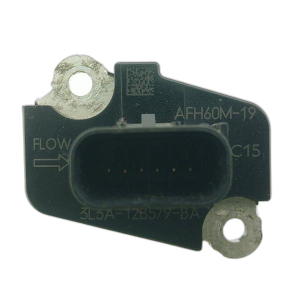
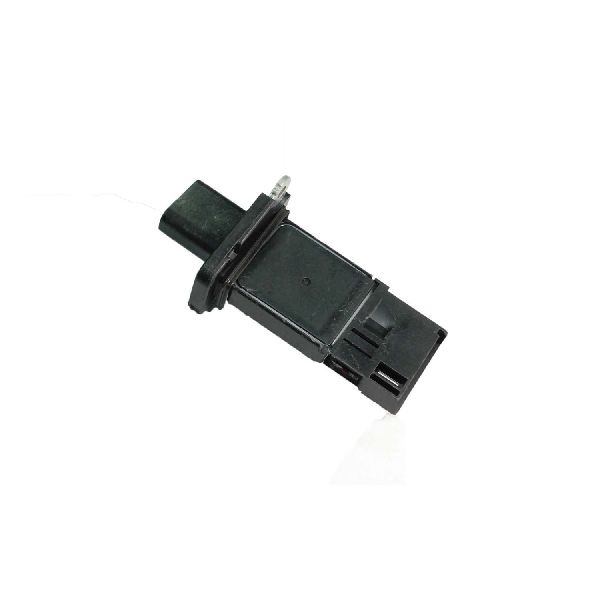
- Mass Air Flow (MAF) Sensor
(OEM #3L3A-12B579-BA (Verify by VIN))— This is the primary component related to the code. It may fail internally after cleaning and ruling out other issues.
Trusted brands: Motorcraft, Delphi
OEM price range: $150-$250
Aftermarket price range: $50-$150 - Mass Air Flow (MAF) Sensor Cleaner — This is the most common and cheapest first step. Contamination is the leading cause of P0102.
Trusted brands: CRC, Liqui Moly
Aftermarket price range: $10-$15 - MAF Sensor Connector Pigtail
(OEM #Motorcraft WPT-1241)— If the connector or wiring is damaged, replacing the pigtail is the standard repair.
Trusted brands: Motorcraft, Dorman, Standard Motor Products (S2371)
OEM price range: $40-$50
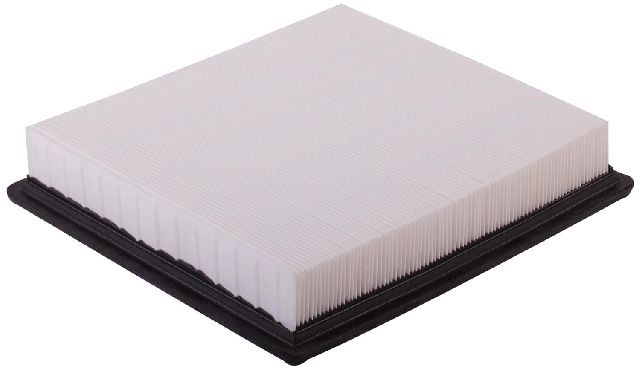
Aftermarket price range: $15-$30 - Engine Air Filter — A severely restricted filter can cause low airflow readings. It's a basic maintenance item that should be checked during diagnosis.
Trusted brands: Motorcraft, Wix, Fram
OEM price range: $20-$30
Aftermarket price range: $15-$25
Related Codes That Often Appear With This One
- P0171 — System Too Lean (Bank 1) - Often appears with P0102 when there is a vacuum leak. Unmetered air enters the engine after the MAF, so the MAF reports low airflow (P0102) while the oxygen sensors detect the extra air, triggering a lean code.
- P0174 — System Too Lean (Bank 2) - Same reason as P0171. Seeing both lean codes together with P0102 is a strong indicator of a significant vacuum leak affecting both cylinder banks.
- P0113 — Intake Air Temperature (IAT) Sensor 1 Circuit High - The IAT sensor is often integrated into the MAF sensor assembly. A fault in the MAF sensor or its connector can simultaneously cause a P0113 code.
Technical Service Bulletins (TSBs) & Recalls
- TSB 04-17-4: Notes that lean condition codes (often seen with P0102) are frequently caused by vacuum leaks, and technicians should investigate these before replacing components. It specifically mentions checking PCV elbows.
- TSB 08-7-6: Details the difficult spark plug removal procedure for 4.6L 3V engines built before 11/30/07 due to the two-piece plug design. While not directly related to P0102, it's a critical serviceability issue for this platform.
Platform-Specific Known Issues
- Water Intrusion and Smart Junction Box (SJB) Corrosion: A common S197 Mustang issue is water leaking into the passenger footwell due to clogged cowl drains. This water can drip directly onto the Smart Junction Box (fuse panel), causing corrosion and a host of bizarre electrical problems, which could potentially include circuit faults for engine sensors. If P0102 is accompanied by other seemingly unrelated electrical codes, inspecting the SJB for water damage is critical.
Mechanic-Grade Diagnostic Values
- MAF Sensor Live Data (g/s) at Idle — expected: 4-7 g/s (for a fully warmed-up 4.6L V8). Failure: A reading that is static, zero, or does not increase smoothly with RPM.
- MAF Sensor Power Supply Voltage (KOEO) — expected: 10-12 Volts DC (Battery Voltage). Failure: Significantly lower than 10V or 0V indicates a problem with the power supply circuit from the PCM or fuse.
- MAF Sensor Ground Circuit Check — expected: 10-12 Volts DC (when probing the ground terminal and connecting the other lead to the positive battery terminal). Failure: Low or no voltage indicates a poor ground connection.
- MAF Signal Voltage at Idle (Warmed Up) — expected: Approximately 0.8-1.0 Volts DC. Failure: Voltage significantly below this range (e.g., <0.5V) for a sustained period will trigger P0102. Voltage should increase smoothly and proportionally to throttle input, up to ~4.5V at wide-open throttle.
Scan Tool Commands That Help
- Ford IDS (Integrated Diagnostic System): Datalogger (PCM) — This is the primary tool for diagnosing P0102. Technicians use it to monitor live PIDs (Parameter IDs) for MAF (g/s), MAF_V (voltage), IAT (Intake Air Temp), Short Term Fuel Trim (SHRTFT), and Long Term Fuel Trim (LONGFT). Watching these values simultaneously helps distinguish between a sensor fault, a vacuum leak, or a wiring issue.
- Ford IDS (Integrated Diagnostic System): KOER (Key On, Engine Running) Self-Test — This automated test commands the PCM to check all sensor inputs and outputs while the engine is running. It can sometimes flag intermittent circuit faults that aren't immediately obvious from live data alone.
Wiring & Ground Locations
- G102 / G104 — In the engine bay, on the driver's side, right next to the battery.. These are primary front-end ground points. While not a direct PCM ground, poor connections here can introduce electrical noise and voltage stability issues across the entire system.
- G201 — Located on the passenger side kick panel, near the Powertrain Control Module (PCM).. This is a critical ground for the PCM itself. A corroded or loose G201 can cause a multitude of seemingly unrelated sensor codes, including P0102, due to unstable reference voltages.
- Engine-to-Firewall Ground Strap — Connects from a stud on the back of the driver's side cylinder head to the firewall.. This is the main secondary ground for the engine block and accessories. If this strap is missing, loose, or corroded, the electrical system may try to find ground through other, smaller paths, leading to voltage drops and erratic sensor behavior.
- MAF Connector (C120) — Plugged into the MAF sensor, which is located on the air filter housing/intake tube.. This is the direct connection point. Technicians test for 12V power, ground, and signal voltage at the pins of this connector to isolate the fault to the sensor, wiring, or PCM.
Real Owner Repair Stories
- S197Forum.com user (2007 Mustang GT) — Car threw P0102 code, went into safe mode, and had a horrible surging idle.
❌ Tried (didn't work) Cleaning the MAF sensor., Replacing the MAF sensor with a new one.
✅ What actually fixed it The user eventually discovered the issue was a bad alternator. The failing alternator was likely causing low system voltage, which in turn caused the MAF sensor circuit to report a low input value to the PCM, triggering the P0102 code. Replacing the alternator resolved all symptoms. - NHTSA ODI #10383032 — An owner of a similar Ford platform reported that their vehicle stalled at a stop sign and again at a later date; a technician eventually identified a pinpoint leak at the resonator hose which had triggered code P0102.
OEM Part Supersession History
3L3A-12B579-BA→3L3Z-12B579-BA, AFLS-131 (Motorcraft Service Number)— Standard part number revision and service part assignment.
Heads up: This part number is specific to 2005-2010 models. The 2011+ Mustangs use a different, digital MAF sensor (e.g., BR3Z-12B579-A) that is not interchangeable.
Model Year Variations Within This Range
- 2005-2010: The 2005-2010 4.6L V8 Mustangs use an analog, voltage-based MAF sensor (Part No. 3L3A-12B579-BA). In contrast, some later Ford models (including the 2011+ Mustang) switched to a digital, frequency-based MAF sensor. While the P0102 code can exist on both, the diagnostic values and sensor types are completely different and non-interchangeable.
Diagnostic Flowchart
Other Known Issues on This Vehicle
Issues unrelated to this code that are worth knowing about as an owner of this generation:
- Two-Piece Spark Plug Breakage 🔴 High — Common on engines built before late 2007. Occurs during spark plug removal after high mileage (e.g., 60k-100k miles) due to carbon buildup. (Ref: TSB 08-7-6)
- Passenger Footwell Water Leak 🟠 Medium — Very common across 2005-2010 models. Caused by clogged cowl vent drains under the windshield, allowing water to overflow into the cabin air filter opening. (Ref: TSB 08-26-7)
- Timing Chain Tensioner Seal Failure 🟠 Medium — Can occur after 80,000+ miles. The seals on the plastic tensioner bodies fail, causing a loss of oil pressure to the tensioners, resulting in a startup rattle or persistent chain noise.
- Failing Alternator 🟠 Medium — A widely reported failure point, often occurring between 50,000 and 100,000 miles. Symptoms include a battery light, dimming headlights, and eventual no-start.
- Thermostat Housing Cracks 🟡 Low — The plastic thermostat housing can become brittle with age and heat cycles, leading to coolant leaks. Often occurs at higher mileage (100k+ miles).
Used vs. New Parts: Buying Guide for This Vehicle
When a used part is the smart pick: A used OEM Motorcraft MAF sensor from a low-mileage, verified-running donor car can be a cost-effective alternative to a new aftermarket part, which can be of questionable quality. Given the sensitivity of the Ford PCM to MAF sensor calibration, a used OEM part is often a safer bet than a cheap new one.
Donor-vehicle mileage cap: roughly under 75000 miles for the part to have meaningful remaining life.
What to inspect on the donor part:
- Verify the donor vehicle was running and did not have any fuel trim or MAF-related codes.
- Inspect the sensor element for any physical damage, coating, or signs of contamination from an over-oiled filter.
- Check the connector pins for corrosion or damage.
- Ensure the part number (3L3A-12B579-BA) matches exactly.
OEM-only on this vehicle (don't cheap out):
- Mass Air Flow (MAF) Sensor
Aftermarket brands forum-validated for this vehicle:
- Hitachi (often an OEM supplier)
- Delphi
Brands owners have reported issues with on this vehicle:
- Unbranded, 'white-box' sensors from online marketplaces are frequently reported by owners to be poorly calibrated, causing persistent idle and performance issues even when new.
Real Owner Stories
Aggregated from forums and TSBs cited above. Mileages and costs reflect what owners reported in those sources.
2005-2010 Ford Mustang 4.6L V8
Symptoms: The car was experiencing a rough idle and stalling, especially when coming to a stop. The Check Engine Light was illuminated with code P0102.
What fixed it: Cleaning the MAF sensor and checking for vacuum leaks resolved the issue.
Source hint: StangNet Forums - P0102 Code, Rough Idle, Stalling
2005-2010 Ford Mustang 4.6L V8
Symptoms: Bizarre electrical problems accompanied by engine sensor circuit faults; water was found leaking into the passenger footwell.
What fixed it: Inspecting the Smart Junction Box (SJB) for corrosion caused by clogged cowl drains.
Source hint: Vehicle Specific Issues: Water Intrusion and Smart Junction Box (SJB) Corrosion
Ford Owner Report (NHTSA ODI #11539323)
Symptoms: A dealer diagnosed multiple DTCs including P0102, P0756, P1450, and P0136.
What fixed it: The dealer determined that coolant had intruded into the engine block and the engine needed to be replaced.
Related OBD-II Codes
Frequently Asked Questions
Can I use any cleaner to fix the MAF sensor on my 4.6L Mustang?
Why is my Mustang's aftermarket cold air intake causing a P0102 code?
Is there a specific vacuum line on the 4.6L 3V engine known for causing these issues?
Should I buy an aftermarket MAF sensor for my 2005-2010 Mustang?
Could a water leak in my passenger footwell be related to my engine codes?
Does TSB 04-17-4 apply to the P0102 code on my Mustang?
What tool do I need to remove the MAF sensor on my 4.6L V8?
Helpful Videos
Used OEM Parts in Stock
New Aftermarket Parts Available



The information in this article is provided for general reference and educational purposes only. Vehicle specifications, procedures, and part compatibility can vary by production date, trim level, and region. Always consult your vehicle's factory service manual and verify part numbers before purchasing or performing repairs. Safety-critical components such as airbags, seat belts, and braking systems should be installed by a qualified professional.
- Ford Mustang:
- 🎬 Helpful Videos
- 🛍️ Shop This Part
- What's Unique About the 2005-2010 Ford Mustang
- Symptoms You May Notice
- Most Likely Causes
- Rare But Worth Checking
- Diagnosis Steps
- Parts You'll Likely Need
- Related Codes That Often Appear With This One
- Technical Service Bulletins (TSBs) & Recalls
- Platform-Specific Known Issues
- Mechanic-Grade Diagnostic Values
- Scan Tool Commands That Help
- Wiring & Ground Locations
- Real Owner Repair Stories
- OEM Part Supersession History
- Model Year Variations Within This Range
- Diagnostic Flowchart
- Other Known Issues on This Vehicle
- Used vs. New Parts: Buying Guide for This Vehicle
- Real Owner Stories
- 2005-2010 Ford Mustang 4.6L V8
- 2005-2010 Ford Mustang 4.6L V8
- Ford Owner Report (NHTSA ODI #11539323)
- Related OBD-II Codes
- Frequently Asked Questions
- 🎟️ Get 5% Off