

P0102 on 2012-2018 Ford Focus ST: MAF Circuit Low Causes and Fixes
For a 2012-2018 Focus ST, P0102 almost always means the Mass Airflow (MAF) sensor is dirty or its connector is loose. Start by cleaning the sensor with dedicated MAF cleaner for about $15. If that fails, a new Motorcraft sensor costs around $150-$200, and the fix is a 1/5 difficulty DIY. On 2013-2014 models, check if Recall 14S17 for a faulty wiring harness has been performed, as this is a known cause.
- P0102 on a Focus ST is most likely caused by a dirty MAF sensor.
- Before buying any parts, spend $15 on a can of dedicated MAF sensor cleaner and clean the sensor.
- Always check that the MAF sensor connector is fully plugged in, especially after changing the air filter.
- If you have a 2013-2014 model, be aware of the wiring harness recall (14S17) which can cause identical symptoms.
- If cleaning doesn't work, the correct replacement part is Ford/Motorcraft CP9Z-12B579-B / AFLS-196.
What's Unique About the 2012-2018 Ford Focus ST
The 2.0L EcoBoost in the Focus ST is a turbocharged, direct-injection engine that is sensitive to airflow readings. While there isn't a unique design flaw causing P0102, this platform is very popular in the enthusiast community, leading to a high prevalence of aftermarket air intakes. These often use oiled filters, which can contaminate the MAF sensor and are a leading cause of this code on the ST. Additionally, early 2013-2014 models were subject to a recall for wiring harness issues that could cause identical symptoms, making a wiring check more critical on those specific years.
Generation note: The 2012-2018 range covers the entire third generation (Mk3) of the Ford Focus ST in North America, which includes a significant facelift for the 2015 model year. However, there are no major differences between the pre-facelift (2013-2014) and post-facelift (2015-2018) models regarding the causes or fixes for code P0102. The only notable difference is a wiring harness recall (14S17) that specifically affects 2013-2014 models due to insufficiently crimped splices in the engine harness.
Symptoms You May Notice
- Check Engine Light is on
- Rough or unstable idle
- Engine stalling, especially when coming to a stop
- Hesitation or stumbling during acceleration
- Reduced engine power and sluggish performance
- Poor fuel economy
- Vehicle may enter 'limp mode', limiting engine RPM and speed
- Black smoke from exhaust on acceleration (due to rich fuel mixture from incorrect air reading)
- Replacing the MAF sensor without first attempting to clean it.
- Replacing the MAF sensor when the actual problem is a vacuum leak or a loose connector.
- Replacing O2 sensors when a P0171 code appears alongside P0102, as the root cause is more likely unmetered air from a vacuum leak.
Most Likely Causes
- Dirty or Contaminated MAF Sensor 🔴 High Probability Very common on Focus STs, especially those with aftermarket oiled air filters. The oil aerosolizes and coats the delicate sensor wires. This is the most frequent cause reported by owners.
How to confirm: Visually inspect the MAF sensor's two small wires in the sensor housing. If they appear coated or dirty, they need cleaning.
Typical fix: Remove the sensor (two T20 Torx screws) and clean it thoroughly with a dedicated Mass Airflow Sensor cleaner spray. Do not touch the wires or use other chemicals like brake cleaner. Let it air dry completely before reinstalling.
Est. part cost: $10-$20 for a can of MAF cleaner. - Loose or Damaged MAF Sensor Connector/Wiring 🟡 Medium Probability The connector can easily be left unseated after an air filter change. Additionally, 2013-2014 models were recalled for faulty wiring harness splices (Recall 14S17) which can cause identical symptoms. The specific splices identified in the recall are S133 (yellow/violet wires) and S132 (yellow/green wires).
How to confirm: Wiggle the MAF sensor connector with the engine running to see if the idle changes. Visually inspect the wiring for any chafing, breaks, or corrosion at the pins. For 2013-2014 models, verify if recall 14S17 was performed.
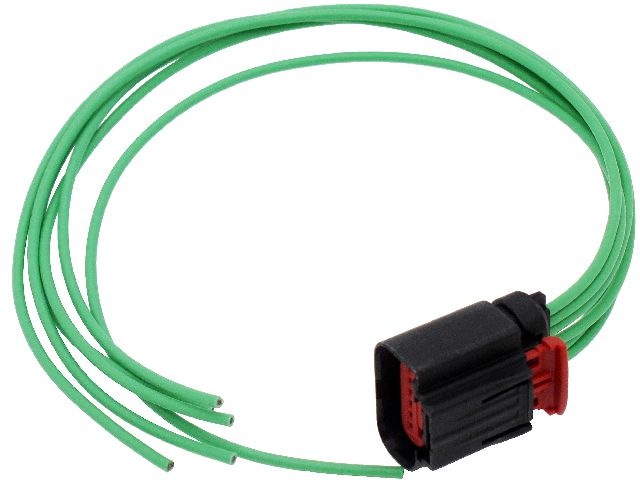
Typical fix: Ensure the connector is fully seated and the locking tab clicks into place. If wiring is damaged, repair the affected wires or replace the pigtail connector (Motorcraft WPT-1141).
Est. part cost: $25-$50 for a new pigtail connector. - Vacuum Leak (Unmetered Air) 🟡 Medium Probability Cracked intake hoses, loose clamps, or a faulty PCV hose allow air to enter the engine *after* the MAF sensor, so the sensor under-reports airflow. Owners often report leaks from the plastic breather hose connected to the main intake tube. As a cross-manufacturer reference, NHTSA ODI #10383032 notes a similar P0102 condition where a pinpoint leak was found in a resonator hose, causing the engine to stall at stop signs.
How to confirm: Listen for hissing sounds around the intake manifold and vacuum lines. Perform a smoke test to pinpoint the source of the leak. This code is often accompanied by a P0171 (System Too Lean) code when a vacuum leak is present.
Typical fix: Replace the cracked hose or tighten the loose clamp.
Est. part cost: $20-$150 depending on which hose has failed. - Faulty MAF Sensor ⚪ Low Probability
How to confirm: If cleaning the sensor and verifying the wiring does not resolve the code, the sensor's internal electronics have likely failed. You can verify this by monitoring the MAF sensor's output in grams/second with an OBD-II scanner; it should be near zero with the engine off and increase smoothly with RPM. A healthy idle reading is typically 2-7 g/s.
Typical fix: Replace the MAF sensor assembly.
Est. part cost: $150-$230 for an OEM sensor. - Severely Clogged Engine Air Filter ⚪ Low Probability
How to confirm: Visually inspect the engine air filter. If it is black, filled with debris, or has not been changed in a long time, it is likely restrictive.
Typical fix: Replace the engine air filter.
Est. part cost: $20-$50.
Rare But Worth Checking
- Blown Fuse: A blown fuse for the MAF sensor circuit will cause a no-signal or low-signal condition. On the Mk3 Focus, check fuse F28 in the engine bay fuse box and fuse F56 in the Body Control Module (BCM) behind the glove box.
- Faulty Powertrain Control Module (PCM): This is extremely rare and should only be considered after all other possibilities (sensor, wiring, leaks) have been exhaustively ruled out. In extreme cases involving other Ford models, NHTSA ODI #11539323 reports P0102 appearing alongside other codes when coolant intrusion into the engine block was diagnosed, though this is not a standard failure mode for the Focus ST.
Diagnosis Steps
- Use an OBD-II scanner to confirm P0102 is the primary code. Note any other codes like P0171 or P0113.
- Inspect the engine air filter. If it is dirty or clogged, replace it.
- Locate the MAF sensor on the air filter housing. Ensure its electrical connector is plugged in securely and the locking tab is engaged. Disconnect it and check for any corrosion or bent pins.
- Inspect the entire air intake tract between the MAF sensor and the turbocharger inlet for any cracks, loose clamps, or disconnected hoses, paying close attention to the PCV and breather tube connections.
- Carefully remove the MAF sensor (held by two T20 Torx screws). Spray the internal sensor wires with a dedicated MAF sensor cleaner. Let it dry completely before reinstalling. Do NOT use brake cleaner or touch the wires.
- Clear the codes and drive the vehicle to see if the code returns. If it does, proceed to the next step.
- With the engine running, use a scan tool to monitor the MAF reading in grams per second (g/s). The reading should be stable at idle (typically 2-7 g/s) and increase smoothly as you raise the engine RPM. If the reading is stuck at a very low number or doesn't change, the sensor or its circuit is faulty.
- If you suspect a wiring issue, use a multimeter to check for proper voltage and ground at the MAF sensor connector. With the key on, engine off, you should have ~12V (battery voltage) on the power wire and 5V on the signal wire. The ground wire should have continuity to the chassis ground. Refer to a vehicle-specific wiring diagram for pinouts.
- If all wiring checks out and cleaning did not work, replace the MAF sensor.
Parts You'll Likely Need
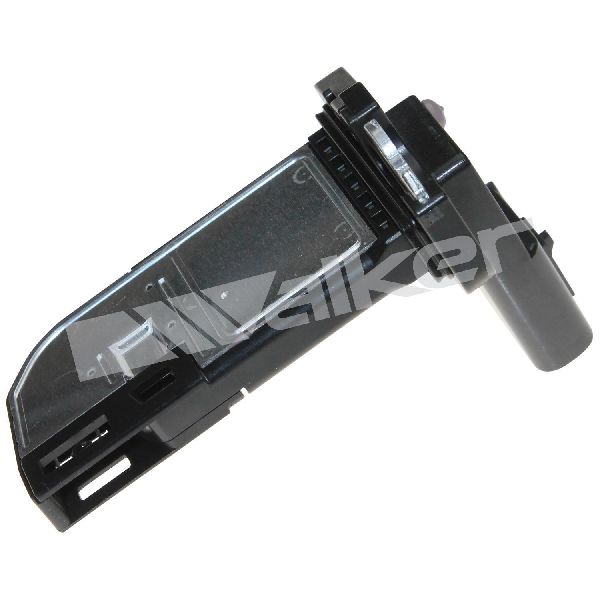
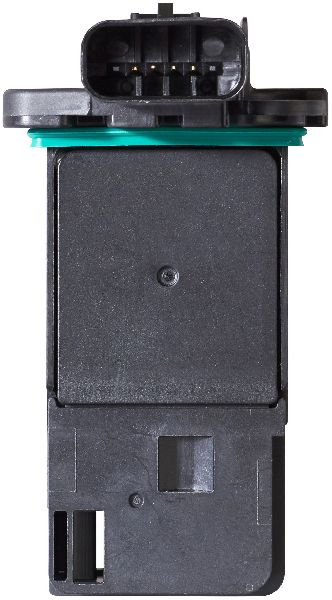
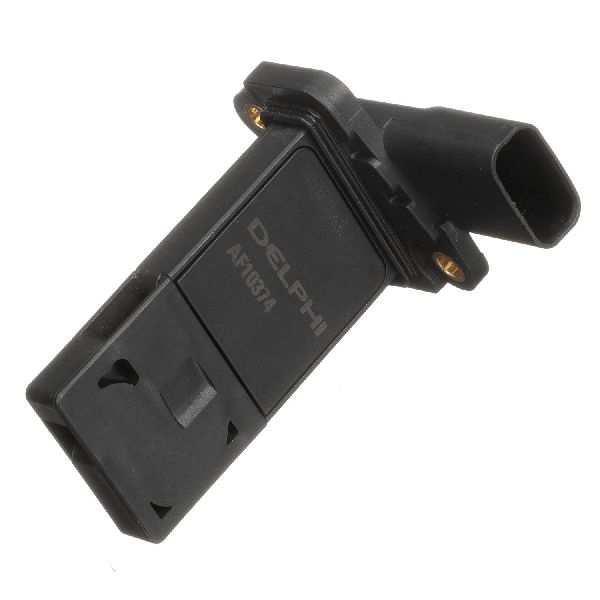
- Mass Air Flow (MAF) Sensor
(OEM #CP9Z-12B579-B)— This is the part that fails or gets dirty, causing the P0102 code. It is the most common part to be replaced if cleaning does not solve the issue.
Trusted brands: Motorcraft (AFLS-196), Bosch, Hitachi, Delphi
OEM price range: $160-$230
Aftermarket price range: $70-$150 - MAF Sensor Cleaner — Often, the sensor is just dirty and does not need to be replaced. This is the first and most cost-effective repair to attempt.
Trusted brands: CRC, Liqui Moly, WD-40 Specialist
Aftermarket price range: $10-$20 - MAF Sensor Connector Pigtail
(OEM #WPT-1141 (Motorcraft))— If the connector or wiring right at the sensor is damaged, replacing the pigtail is the standard repair. This is a known failure point.
Trusted brands: Motorcraft, Dorman
OEM price range: $40-$60
Aftermarket price range: $15-$30
Related Codes That Often Appear With This One
- P0171 — System Too Lean (Bank 1). This is a very common companion code. A vacuum leak allows unmetered air into the engine, so the MAF sensor reports low airflow (P0102) while the oxygen sensor detects the extra air, resulting in a lean condition (P0171).
- P0113 — Intake Air Temperature (IAT) Sensor Circuit High. The IAT sensor is integrated into the MAF sensor assembly on the Focus ST. A fault in the shared connector or the sensor unit itself can cause both codes to appear.
Technical Service Bulletins (TSBs) & Recalls
- Ford Safety Recall 14S17 (Supersedes TSB 13-09-07) - Addresses faulty engine wiring harness splices on 2013-2014 Focus ST models causing drivability issues.
Platform-Specific Known Issues
- Wiring Harness Recall (2013-2014 models): Ford issued recall 14S17 for faulty engine wiring harness splices that
Mechanic-Grade Diagnostic Values
- MAF Sensor Live Data (Scan Tool at Idle) — expected: 2-7 g/s. Failure: A reading of 0 g/s, a fixed high value, or readings that do not respond to changes in engine speed.
- MAF Sensor Live Data (Scan Tool at 2500 RPM) — expected: 15-25 g/s. Failure: Value does not increase smoothly with RPM or is significantly outside this range.
- MAF Sensor Signal Wire Voltage (KOEO - Key On, Engine Off) — expected: ~1.0V - 1.2V. Failure: A reading of 0V or 5V indicates an electrical fault. A 5V reading with the sensor unplugged can indicate an internally shorted sensor.
- MAF Sensor Signal Wire Voltage (Engine at Idle) — expected: ~0.5V - 1.5V. Failure: Voltage is stuck at 0V or a high value, or does not increase when the engine is revved.
- MAF Sensor Power Supply Wire (KOEO) — expected: ~12V (Battery Voltage). Failure: Missing or low voltage indicates a fuse or wiring issue.
- MAF Sensor Ground Wire Resistance to Chassis — expected: Less than 0.2 Ohms. Failure: Higher resistance indicates a poor ground connection, a common cause for circuit low codes.
Scan Tool Commands That Help
- FORScan: Live Data Monitoring (MAF_F, MAF_V) — Use to monitor MAF sensor readings in grams/sec (MAF_F) and voltage (MAF_V) to check for expected values at idle and during acceleration. This helps differentiate a sensor failure from a wiring or vacuum issue.
- Professional Scan Tool (e.g., Ford IDS): Active Test / Sensor Simulation — A technician can use a sensor simulator to feed a known-good voltage signal into the harness connector. If the scan tool shows the simulated value correctly, it proves the wiring and PCM are good, isolating the fault to the MAF sensor itself.
Wiring & Ground Locations
- MAF/IAT Sensor Connector — On the air intake duct assembly, immediately after the air filter box.. This is the primary connection point for the sensor. A loose connection, corrosion on pins, or damaged wires here are a direct cause of P0102. The 6 pins are for Vehicle Power (VPWR), Power Ground (PWRGND), Signal Return (SIGRTN), MAF Signal, and IAT Signal.
- G104 — Left front of the engine compartment, often under or near the airbox.. This is a critical engine and PCM ground point. A loose or corroded G104 can cause erratic voltage and sensor readings for multiple components, including the MAF sensor, leading to P0102 and other codes.
- Harness Chafe Point — The engine wiring harness can rub on the top of the transmission bell housing or the starter motor.. This is a known failure point on the Focus ST. Chafing can wear through the insulation of the MAF sensor wires, causing a short or open circuit. This can lead to a persistent P0102 even after replacing the sensor.
Real Owner Repair Stories
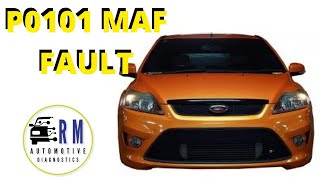
- YouTube channel 'RMAutodiag' (Ford Focus ST (Mk3)) — Multiple codes including a MAF fault (P0101 in this case, but same diagnostic principle). MAF signal wire was stuck at 5V.
❌ Tried (didn't work) Initial diagnosis pointed to a bad MAF sensor because it was reading a fixed 5V, suggesting an internal short.
✅ What actually fixed it The wiring harness was found to be rubbing through on top of the starter motor and bell housing. This caused a short in the 5V reference wire. Repairing the damaged wires restored the correct 5V feed and allowed a new MAF sensor to function correctly. The original MAF was likely damaged by the short. - Ford Focus Club forum user (Ford Focus 1.6 TDCi (similar MAF diagnostic principles)) — Hesitation during acceleration around 2000 RPM. Live data showed the MAF reading dropping from ~80 g/s to 50 g/s during the hesitation.
❌ Tried (didn't work) Considering immediate replacement of the MAF sensor.
✅ What actually fixed it The recommended diagnostic test was to unplug the MAF sensor entirely and drive the car. If the car runs the same or better with the MAF unplugged, the sensor is confirmed to be faulty. If it runs worse, the MAF is likely working and the problem is elsewhere. This is a common field test to confirm a bad MAF before spending money on a new part.
Diagnostic Flowchart
Other Known Issues on This Vehicle
Issues unrelated to this code that are worth knowing about as an owner of this generation:
- Canister Purge Valve Failure 🔴 High — Extremely common. Can fail at various mileages, often leading to rough idle, stalling after refueling, and fuel tank deformation. (Ref: Recall 18S32 / NHTSA 18V735; Customer Satisfaction Program 19S22.)
- Manual Transmission Synchronizer Wear 🟠 Medium — Common, particularly on pre-facelift (2013-2014) models, but can affect all years. Leads to grinding or being locked out of gears, most often 2nd or 3rd.
- Low-Speed Pre-Ignition (LSPI) 🔴 High — A risk inherent to many direct-injection turbo engines, including the 2.0L EcoBoost. Occurs when applying heavy throttle at low RPM (<3000 RPM) in a high gear, which can cause catastrophic engine damage.
- Passenger-Side Engine Mount Failure 🟠 Medium — The factory hydraulic-filled mount is prone to leaking and failing, often around 50k miles, causing excessive engine vibration and noise.
- Wiring Harness Splice Failure (Pre-Facelift) 🔴 High — Affects 2013-2014 models. Poorly crimped splices in the engine harness cause a range of electrical issues, including stalling and codes like P0102. (Ref: Recall 14S17 / NHTSA 14V495000.)
Used vs. New Parts: Buying Guide for This Vehicle
When a used part is the smart pick: A used MAF sensor is generally not recommended. The sensing elements are delicate and can be contaminated or damaged. Given that a new, high-quality aftermarket sensor is not prohibitively expensive, the risk of getting a faulty used part from a junkyard is not worth the small savings.
Donor-vehicle mileage cap: roughly under 40000 miles for the part to have meaningful remaining life.
What to inspect on the donor part:
- Ensure the donor vehicle was not in a front-end collision that could have damaged the sensor.
- Inspect the connector pins for any signs of corrosion or damage.
- Look for the OEM brand (e.g., FoMoCo or Bosch) on the housing. Avoid if it's a no-name aftermarket part.
OEM-only on this vehicle (don't cheap out):
- While not strictly 'OEM-only', forum consensus strongly favors using the OEM Motorcraft/Bosch sensor. Cheaper aftermarket MAF sensors are known to have incorrect calibration curves, leading to persistent performance issues even if they don't set a code immediately.
Aftermarket brands forum-validated for this vehicle:
- Bosch (Often the original OEM supplier)
- Motorcraft
Brands owners have reported issues with on this vehicle:
- Unbranded eBay/Amazon sensors
- NGK (Some European forum users reported issues with NGK MAF sensors on Ford platforms, causing intermittent codes).
Real Owner Stories
Aggregated from forums and TSBs cited above. Mileages and costs reflect what owners reported in those sources.
2013-2018 Ford Focus ST 2.0L EcoBoost
Symptoms: The code appeared immediately after an air filter change.
What fixed it: Checking the connector's seating; the sensor was not plugged back in correctly.
Source hint: r/FocusST on Reddit
2013-2018 Ford Focus ST 2.0L EcoBoost
Symptoms: P0102 Mass Airflow Sensor Low Input code after an intake install.
What fixed it: Finding and securing a loose electrical connection.
Source hint: focusst.org - 'P0102 Mass Airflow Sensor Low Input'
Documented NHTSA Reports
Ford Manufacturer Reference
Symptoms: Engine stalling at stop signs and rough operation.
What fixed it: NHTSA ODI #10383032 describes a case where a pinpoint leak was identified in the resonator hose, triggering code P0102. Replacing the resonator assembly resolved the stalling issues.
Ford Manufacturer Reference
Symptoms: Multiple DTC codes retrieved including P0756, P1450, P0136, and P0102.
What fixed it: In a complex diagnostic case (NHTSA ODI #11539323), these codes were retrieved after it was determined that coolant had intruded into the engine block, necessitating an engine replacement.
Related OBD-II Codes
Frequently Asked Questions
My 2014 Focus ST is idling roughly and stalling; could this be related to a recall?
I just installed an aftermarket oiled air filter and now have a P0102 code. What happened?
Can I use brake cleaner to clean the MAF sensor on my 2.0L EcoBoost?
What are the specific wiring splices I should check on my 2013 Focus ST for this issue?
If I need to replace the MAF connector, is there a specific Ford part number?
My car is stalling when coming to a stop and showing P0102; could it be a vacuum leak?
Helpful Videos
Used OEM Parts in Stock

New Aftermarket Parts Available


The information in this article is provided for general reference and educational purposes only. Vehicle specifications, procedures, and part compatibility can vary by production date, trim level, and region. Always consult your vehicle's factory service manual and verify part numbers before purchasing or performing repairs. Safety-critical components such as airbags, seat belts, and braking systems should be installed by a qualified professional.
- Ford Focus ST:
- 🎬 Helpful Videos
- 🛍️ Shop This Part
- What's Unique About the 2012-2018 Ford Focus ST
- Symptoms You May Notice
- Most Likely Causes
- Rare But Worth Checking
- Diagnosis Steps
- Parts You'll Likely Need
- Related Codes That Often Appear With This One
- Technical Service Bulletins (TSBs) & Recalls
- Platform-Specific Known Issues
- Mechanic-Grade Diagnostic Values
- Scan Tool Commands That Help
- Wiring & Ground Locations
- Real Owner Repair Stories
- Diagnostic Flowchart
- Other Known Issues on This Vehicle
- Used vs. New Parts: Buying Guide for This Vehicle
- Real Owner Stories
- 2013-2018 Ford Focus ST 2.0L EcoBoost
- 2013-2018 Ford Focus ST 2.0L EcoBoost
- Documented NHTSA Reports
- Ford Manufacturer Reference
- Ford Manufacturer Reference
- Related OBD-II Codes
- Frequently Asked Questions
- 🎟️ Get 5% Off