

P0102 on 2012-2018 Ford Focus: MAF Circuit Low Causes and Fixes
For a 2012-2018 Ford Focus, code P0102 most often points to a dirty or faulty Mass Airflow (MAF) sensor or an issue in its electrical circuit. Cleaning the sensor with a dedicated MAF cleaner is a common first step and often resolves the issue. If cleaning doesn't work, thoroughly inspect the wiring and connector before replacing the sensor, as circuit faults are a very common cause.
- P0102 on a 2012-2018 Focus means the MAF sensor is sending a low voltage signal.
- The most likely cause is a dirty MAF sensor. Start by cleaning it with a dedicated MAF sensor cleaner.
- If cleaning doesn't work, inspect the wiring and connector, then consider replacing the MAF sensor.
- Also, check the engine air filter, as a severely clogged filter can cause this code.
- This is a DIY-friendly repair with a difficulty of 2 out of 5.
What's Unique About the 2012-2018 Ford Focus

The 2012-2018 Ford Focus (Mk3) with the 2.0L GDI engine uses a MAF sensor located on the air filter housing, a common design. While there are no widespread, unique design flaws specific to this platform that cause P0102, owners frequently resolve the code by cleaning the sensor, suggesting it is susceptible to contamination over time. It's also worth noting this generation of Focus has a well-documented recall for a faulty canister purge valve (part of the EVAP system), which can cause various drivability issues, though it doesn't typically set a P0102 code directly.
Symptoms You May Notice
- Check Engine Light is on
- Rough or erratic idle
- Engine stalling, especially at idle
- Hesitation or lack of power during acceleration
- Poor fuel economy
- Black smoke from the exhaust
- Hard starting
- Replacing the MAF sensor without first attempting to clean it or test the wiring. Many P0102 cases are caused by wiring faults or contamination, not a failed sensor.
- Replacing oxygen (O2) sensors. While O2 sensors can be affected by a bad air-fuel mixture, they are not the root cause of a P0102 code.
Most Likely Causes

- Dirty or Contaminated MAF Sensor 🔴 High Probability The sensor's sensing elements (hot wires) are delicate and can become coated with dirt, oil, or other residue from the intake system over time, insulating them and causing inaccurate low readings. This is especially true if an aftermarket oiled air filter is used.
How to confirm: Visually inspect the MAF sensor's wire or film elements. If they appear dirty or coated, cleaning is warranted. This is the most common and easiest first step.
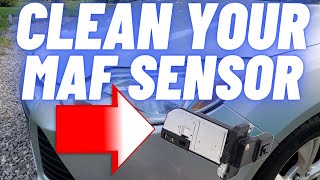
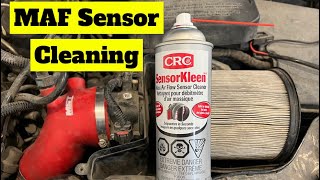
Typical fix: Remove the sensor and clean it carefully using only a dedicated Mass Airflow Sensor cleaner spray. Do not touch the sensor elements or use other chemicals like brake or carb cleaner.
Est. part cost: $8-$15 for a can of MAF cleaner - Wiring or Connector Issue 🟡 Medium Probability Vibrations and heat can cause wires to fray or break internally near the connector, or the connector pins can become loose or corroded over time, leading to a low or intermittent signal. This is a very common point of failure. 🎬 Watch: How to fix common MAF wiring and connector issues.
How to confirm: Inspect the MAF sensor's electrical connector for a secure fit, corrosion, or pushed-out pins. With the engine running and a scan tool monitoring MAF data, gently wiggle the harness near the sensor to see if it causes the reading to drop out or fluctuate wildly. Use a multimeter to back-probe the connector and check for 12V power, good ground, and a variable signal voltage.
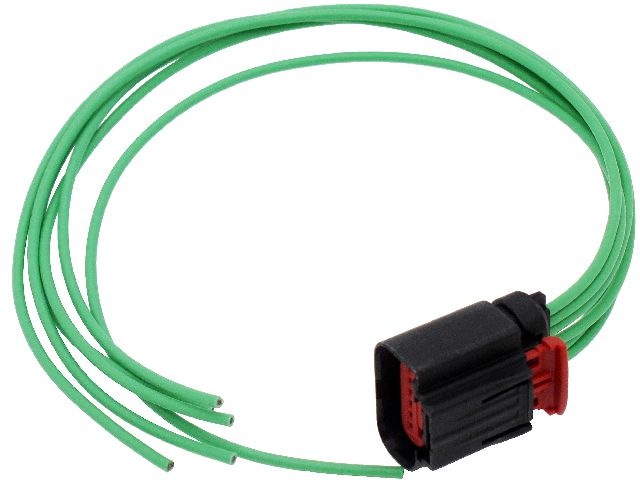
Typical fix: Repair the damaged section of wiring or replace the connector pigtail. AutoZone and other suppliers sell the pigtail connector (e.g., Motorcraft WPT-1141).
Est. part cost: $15-$50 for a new pigtail connector - Faulty Mass Airflow (MAF) Sensor 🟡 Medium Probability Electronic components can fail with age and heat cycles. If cleaning the sensor and verifying the wiring does not resolve the issue, the sensor itself has likely failed internally. Be aware that new, non-OEM sensors can sometimes be faulty out of the box.
How to confirm: After cleaning the sensor and confirming good wiring/power/ground, if the code returns, the sensor is the likely culprit. A technician can use a scan tool to monitor the MAF sensor's output (in grams/second); if the reading is flatlined or does not increase smoothly with engine RPM, the sensor is bad.
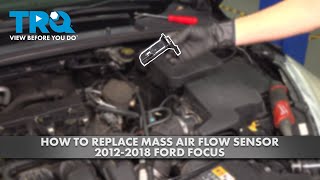
Typical fix: Replace the MAF sensor. It is typically held in place by two Torx T20 bolts on the air filter housing. 🎬 See this walkthrough on how to replace the MAF sensor.
Est. part cost: $70-$200 - Vacuum Leak ⚪ Low Probability Air leaks in the intake system downstream of the MAF sensor (e.g., a cracked intake boot, loose clamp, or leaking gasket) allow unmetered air into the engine. The MAF sensor correctly reads low airflow, but the engine runs lean, which can trigger this code, often accompanied by P0171 or P0174. In similar Ford platforms, NHTSA ODI #10383032 noted that a pinpoint leak in a resonator hose was the specific cause of a P0102 code.
How to confirm: Visually inspect all intake ducting between the MAF sensor and the engine for cracks or loose connections. Listen for a hissing sound at idle. A smoke test is the most effective way to find hidden leaks.
Typical fix: Repair or replace the leaking component, such as the intake air duct or a vacuum hose.
Est. part cost: $20-$100 depending on the part - Clogged Engine Air Filter ⚪ Low Probability A severely clogged air filter can restrict airflow into the engine, causing the MAF sensor to report an accurately low airflow reading.
How to confirm: Remove and inspect the engine air filter. If it is visibly dirty, black, or full of debris, it needs to be replaced.
Typical fix: Replace the engine air filter.
Est. part cost: $15-$40
Rare But Worth Checking
- Blown MAF Sensor Fuse: The MAF sensor circuit is protected by fuses. While not common, a blown fuse will cause a complete loss of signal. On the Mk3 Focus, there are two fuses to check: one in the engine bay fuse box (Fuse F28) and one in the Body Control Module (BCM) behind the glove box (Fuse F56).
- Low System Voltage: A weak battery or failing alternator can cause low voltage across multiple systems. MAF sensors are sensitive to voltage, and low system voltage can sometimes trigger a false P0102 code. This may be accompanied by other electrical-related codes.
- Faulty Powertrain Control Module (PCM): This is extremely rare. The PCM is the last item to suspect after all other possibilities, including wiring, have been exhaustively tested and ruled out.
- Internal Engine Issues: While rare for a standalone MAF code, some Ford owners have reported P0102 appearing alongside other codes when more severe issues occur; for instance, NHTSA ODI #11539323 describes a case where P0102 was retrieved after coolant had intruded into the engine block.
Diagnosis Steps

- Read the Code: Use an OBD-II scanner to confirm P0102 is the active code and check for any other related codes, especially P0171/P0174.
- Inspect the Air Intake System: Visually check the entire air intake path from the air filter box to the throttle body. Look for loose clamps, disconnected hoses, or cracks in the plastic/rubber ducting.
- Inspect the Air Filter: Remove and check the engine air filter. If it's dirty or clogged, replace it.
- Inspect the MAF Sensor and Connector: Locate the MAF sensor on the air filter housing. Check that its electrical connector is plugged in securely. Inspect the wiring harness for any visible signs of damage, fraying, or melting.
- Monitor Live Data: With a scan tool, view the live data for the MAF sensor (usually in grams/sec). At idle, it should be a stable, low number. When you rev the engine, the g/s reading should rise smoothly. If it's stuck at or near zero, or doesn't change, there's a problem.
- Perform a 'Wiggle Test': While the engine is idling and you are monitoring live data, gently wiggle the wiring harness leading to the MAF sensor. If the g/s reading drops out or spikes, you have a wiring issue.
- Clean the MAF Sensor: Disconnect the sensor, remove the two T20 Torx screws holding it in, and carefully take it out. Spray the sensor's internal wires/elements 10-15 times with a dedicated MAF sensor cleaner. Let it dry completely for at least 30 minutes before reinstalling. DO NOT use other cleaners or touch the elements. 🎬 Watch: Step-by-step guide to cleaning your Focus MAF sensor.
- Clear Codes and Test Drive: Reinstall the sensor, clear the codes with the scanner, and drive the vehicle to see if the code returns. If it does not, the cleaning was successful.
- Check for Power and Ground (if code returns): Using a multimeter set to DC Volts, back-probe the connector (while it's connected and the key is on). Check for 12V power on the power wire and check for good ground continuity on the ground wire. The signal wire should show a variable voltage that changes with engine RPM.
- Replace the MAF Sensor: If the sensor has been cleaned, the wiring checks out with good power and ground, and the live data is still incorrect, the sensor itself is faulty and should be replaced.
- Perform a Smoke Test: If you suspect a vacuum leak is the cause (especially if P0171/P0174 are present), a smoke test is the most effective way to find it.
Parts You'll Likely Need

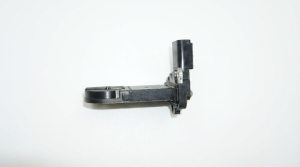
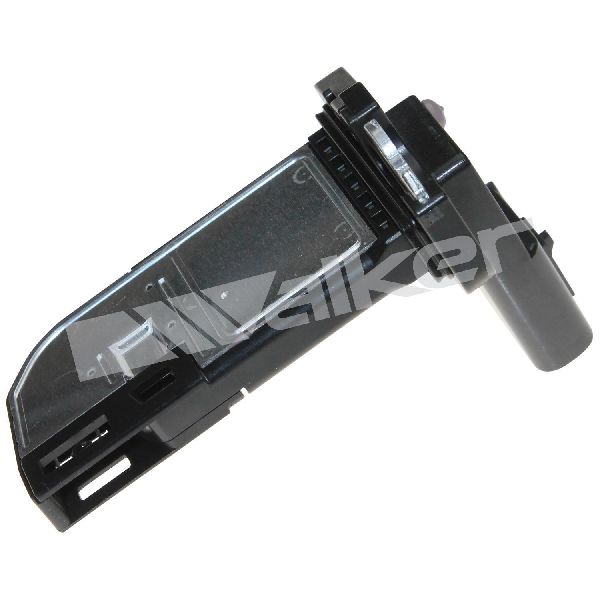
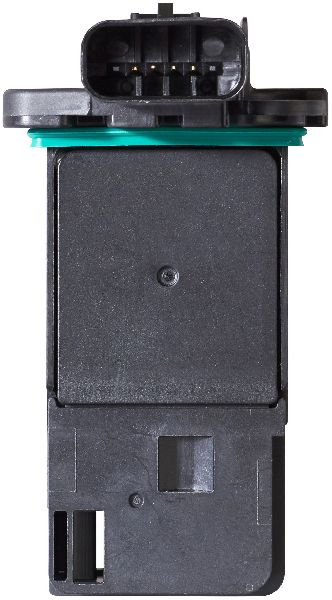
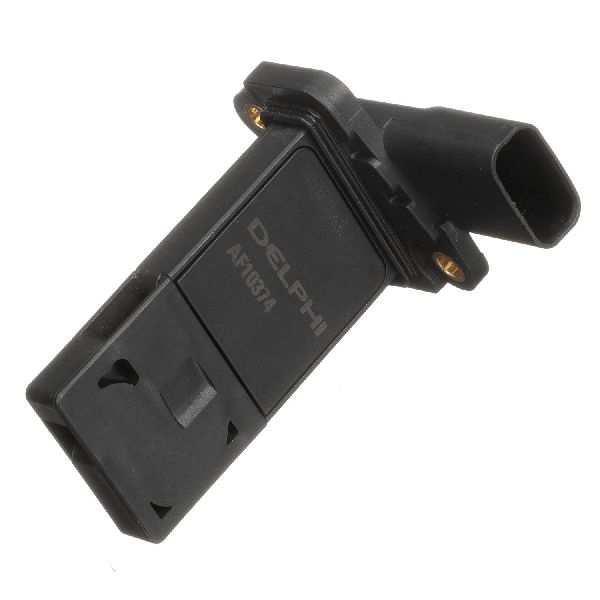
- Mass Airflow Sensor
(OEM #CM5Z-12B579-A / 7M51-12B579-BB)— This is the most common part to fail for this code if cleaning and wiring checks do not solve the problem.
Trusted brands: Motorcraft (AFLS182), Hitachi, Delphi, NTK - MAF Sensor Connector Pigtail
(OEM #Motorcraft WPT-1141)— The wiring near the connector is a common failure point due to engine vibration and heat, requiring the connector to be cut out and a new pigtail spliced in.
Trusted brands: Motorcraft, Dorman - Mass Airflow Sensor Cleaner — Often, the sensor is just dirty and cleaning it is the only repair needed. This is the first and most cost-effective step.
Trusted brands: CRC Mass Air Flow Sensor Cleaner, WD-40 Specialist MAF Sensor Cleaner
Related Codes That Often Appear With This One
- P0101 — Mass Airflow (MAF) Circuit Range/Performance. This code often appears with P0102 as both relate to the MAF sensor's signal being out of the expected range.
- P0171 / P0174 — System Too Lean (Bank 1 / Bank 2). Seeing these codes with P0102 is a strong indication of a vacuum leak. Unmetered air enters after the MAF, so the MAF reports low air (P0102) while the O2 sensors detect the excess oxygen from the lean mixture (P0171/P0174).
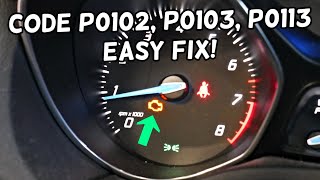
- P0103 — Mass Airflow (MAF) Circuit High Input. Seeing this code along with P0102 could indicate an intermittent wiring problem causing the signal to swing from low to high.
- P0113 — Intake Air Temperature (IAT) Sensor 1 Circuit High. On many Ford vehicles, the IAT sensor is integrated into the MAF sensor assembly. A failure of the MAF sensor or its wiring can trigger codes for both components.
Platform-Specific Known Issues
- Harness Fatigue at Connector: While not a formal recall, a common theme in owner forums is the failure of the wiring within a few inches of the MAF sensor connector. Constant engine vibration and heat cycles can cause the wires to become brittle and break internally, even if the exterior sheathing looks fine. Performing a 'wiggle test' while monitoring live data is the best way to confirm this specific issue.
- Unseated Connector After Service: Because the MAF sensor is on the air filter housing, it is frequently disconnected during routine service like an air filter change. It's common for the connector to not be fully seated upon reassembly, leading to an immediate P0102 code. Always double-check that the connector clicks firmly into place after any airbox service.
Mechanic-Grade Diagnostic Values
- Scan Tool: MAF Reading (g/s) at Idle — expected: 2.5 to 4.5 g/s for a 2.0L engine at normal operating temperature. A common rule of thumb is that the g/s reading should be roughly double the engine's displacement in liters.. Failure: A reading at or near 0.0 g/s, or a reading that does not change with RPM, indicates a circuit or sensor failure.
- Scan Tool: MAF Reading (g/s) at 2500 RPM — expected: 15 to 25 g/s (should rise smoothly and linearly from idle).. Failure: Reading fails to rise, rises erratically, or is significantly lower than expected, suggesting a faulty sensor or restriction.
- Multimeter: MAF Connector Pin - Power Wire — expected: Approximately 12V (battery voltage) with key on, engine off. This is typically a Red or similarly colored wire.. Failure: No voltage or significantly low voltage indicates a blown fuse, a break in the power wire, or a faulty PCM relay.
- Multimeter: MAF Connector Pin - Ground Wire — expected: Less than 0.1V (good continuity to ground). There may be two ground wires on some Ford MAF sensors, one for chassis ground and one for PCM/sensor ground.. Failure: Voltage reading higher than 0.1V indicates a poor ground connection, which is a common cause of low circuit codes.
- Multimeter: MAF Connector Pin - Signal Wire — expected: A variable DC voltage that is low at idle (e.g., ~0.5-1.0V) and increases smoothly as the engine is revved. Note: The primary signal is frequency-based, but a corresponding voltage change should be observable.. Failure: Voltage is stuck at 0V, 5V, or does not change with engine RPM, pointing to a failed sensor or wiring short/open.
Scan Tool Commands That Help
- FORScan: Live Data Monitoring (Oscilloscope Mode) — Use this to simultaneously graph the MAF (g/s), MAF_V (voltage), and RPM PIDs. This is extremely effective for spotting signal dropouts or non-linear responses during a 'wiggle test' or while revving the engine, which might be missed by looking at numbers alone.
Wiring & Ground Locations
- MAF Sensor Connector (C128) — On the air filter housing, connecting directly to the MAF sensor.. This is the primary point of failure for wiring issues. Pins can corrode, and wires can fatigue and break from engine vibration right at the connector.
- MAF Connector Pinout (Typical 4-Pin) — At the MAF sensor connector harness.. Testing these specific pins is required for electrical diagnosis. A typical layout is: Pin 1: IAT Sensor Signal, Pin 2: Ground, Pin 3: Power (12V), Pin 4: MAF Signal. However, always verify with a vehicle-specific diagram as wire colors and positions can vary.
Real Owner Repair Stories
- Common forum narrative (2012-2018 Ford Focus 2.0L) — P0102 code, rough idle, hesitation on acceleration.
❌ Tried (didn't work) Cleaning the MAF sensor, which did not resolve the issue., Replacing the MAF sensor with a cheap, unbranded aftermarket part from eBay or Amazon, which either did not fix the code or introduced new drivability problems.
✅ What actually fixed it Replacing the sensor with a genuine Ford/Motorcraft part or a reputable OE-equivalent brand like Hitachi or Delphi finally resolved the code and symptoms. - Diagnostic principle from technician forums (General (applies to Ford Focus)) — Persistent P0102 code, MAF reads 0.0 g/s.
❌ Tried (didn't work) Replacing the MAF sensor., Checking for 12V at the power pin with the connector unplugged (read good).
✅ What actually fixed it The power wire had high resistance and was causing a voltage drop *under load*. With the sensor plugged in, the voltage at the power pin dropped to near zero. The fix was to run a new power wire from the fuse box to the MAF connector, bypassing the faulty section of the original harness. - Stalling at Stop Signs — An owner reported that their vehicle stalled at a stop sign and was diagnosed with code P0102, which was eventually traced to a pinpoint leak in a resonator hose (NHTSA ODI #10383032).
"I Checked Everything" — The Actual Cause
- If a smoke test reveals no vacuum leaks, the cause is almost certainly not unmetered air. The next most likely culprits are electrical. A common finding in this scenario is a faulty MAF sensor connector or a break in the wiring harness. Perform a 'wiggle test' on the harness while monitoring live data. Another possibility is a voltage drop on the power or ground wire that only occurs when the sensor is plugged in and drawing current.
OEM Part Supersession History
7M51-12B579-BB→CP9Z-12B579-B— Part update/revision by Ford.
Heads up: While the older part number is often listed for Mk2/Mk3 Focus models, the definitive part for the 2012-2018 2.0L GDI is CP9Z-12B579-B.CP9Z-12B579-B (Ford)→AFLS-196 (Motorcraft)— This is the Motorcraft service part number corresponding to the Ford engineering number.
Diagnostic Flowchart
Used vs. New Parts: Buying Guide for This Vehicle
When a used part is the smart pick: A used OEM (Motorcraft) MAF sensor from a low-mileage wrecked vehicle can be a cost-effective and reliable alternative to a new, cheap aftermarket sensor. Since it's an electronic part with no moving components, wear is minimal.
Donor-vehicle mileage cap: roughly under 60000 miles for the part to have meaningful remaining life.
What to inspect on the donor part:
- Ensure the donor vehicle has the same 2.0L GDI engine.
- Inspect the connector pins on the used sensor for any signs of corrosion or damage.
- Verify the part number on the sensor housing matches (e.g., CP9Z-12B579-B).
- Check that the delicate sensing wires inside the bore are physically intact and not broken.
OEM-only on this vehicle (don't cheap out):
- Mass Airflow Sensor: While not strictly 'OEM-only', using a genuine Ford/Motorcraft part is highly recommended. Forum discussions frequently show that cheap, unbranded aftermarket MAF sensors are a common cause of persistent P0102 codes or other performance issues.
Aftermarket brands forum-validated for this vehicle:
- Hitachi
- Delphi
- Bosch
Brands owners have reported issues with on this vehicle:
- Generic, unbranded sensors from online marketplaces like eBay or Amazon are frequently reported to be defective out of the box or fail shortly after installation.
Real Owner Stories
Aggregated from forums and TSBs cited above. Mileages and costs reflect what owners reported in those sources.
2014 Ford Focus (base model)
Symptoms: The check engine light was on, showing codes P0103 and P0113, which are related to the MAF sensor circuit.
What fixed it: A shop diagnosed and repaired a wiring issue in the MAF sensor circuit.
Source hint: Reddit r/FordFocus - 2014 Focus (base model) check engine light
2014 Ford Focus
Symptoms: After a battery replacement, the car had strange electrical issues and the check engine light came on.
What fixed it: The cause was discovered to be the MAF sensor not being plugged back in correctly after the service.
Source hint: Reddit r/FordFocus - 2014 Ford Focus Advice
2013 Ford Focus
Symptoms: An intermittent P0102 code would appear, and live data from the scan tool showed the MAF reading would drop out when the wiring harness near the sensor was wiggled.
What fixed it: The wiring harness pigtail for the MAF sensor was faulty due to vibration and heat and had to be replaced.
Source hint: Vehicle-specific issue: Harness Fatigue at Connector
2016 Ford Focus
Symptoms: The P0102 code appeared immediately after a routine engine air filter change.
What fixed it: The MAF sensor's electrical connector was not fully clicked into place during reassembly. Firmly seating the connector resolved the code.
Source hint: Vehicle-specific issue: Unseated Connector After Service
Documented NHTSA Reports
Ford Fleet Vehicle Diagnostic
Symptoms: A vehicle was diagnosed with DTC codes P0756, P1450, P0136, and P0102.
What fixed it: In this specific instance, a dealer determined that coolant had intruded into the engine block, necessitating an engine replacement (NHTSA ODI #11539323).
Ford Truck Performance Issue
Symptoms: The vehicle stalled at a stop sign, and a P0102 code was retrieved at 9,511 miles.
What fixed it: Technicians identified a pinpoint leak in the resonator hose as the cause of the code (NHTSA ODI #10383032).
Related OBD-II Codes
Frequently Asked Questions
What is the most common cause for a P0102 code on my 2012-2018 Ford Focus?
I just changed my air filter and now the Check Engine Light is on with a P0102. What happened?
My mechanic says the wiring to the MAF sensor is bad. Is this a known issue on the Focus?
Can I clean the MAF sensor myself, and what's the right way to do it?
I've confirmed the wiring harness connector is bad. What is the replacement part number?
I'm also getting a P0171 code along with the P0102. What does that indicate?
Helpful Videos
Used OEM Parts in Stock
New Aftermarket Parts Available


The information in this article is provided for general reference and educational purposes only. Vehicle specifications, procedures, and part compatibility can vary by production date, trim level, and region. Always consult your vehicle's factory service manual and verify part numbers before purchasing or performing repairs. Safety-critical components such as airbags, seat belts, and braking systems should be installed by a qualified professional.
- Ford Focus:
- 🎬 Helpful Videos
- 🛍️ Shop This Part
- What's Unique About the 2012-2018 Ford Focus
- Symptoms You May Notice
- Most Likely Causes
- Rare But Worth Checking
- Diagnosis Steps
- Parts You'll Likely Need
- Related Codes That Often Appear With This One
- Platform-Specific Known Issues
- Mechanic-Grade Diagnostic Values
- Scan Tool Commands That Help
- Wiring & Ground Locations
- Real Owner Repair Stories
- "I Checked Everything" — The Actual Cause
- OEM Part Supersession History
- Diagnostic Flowchart
- Used vs. New Parts: Buying Guide for This Vehicle
- Real Owner Stories
- 2014 Ford Focus (base model)
- 2014 Ford Focus
- 2013 Ford Focus
- 2016 Ford Focus
- Documented NHTSA Reports
- Ford Fleet Vehicle Diagnostic
- Ford Truck Performance Issue
- Related OBD-II Codes
- Frequently Asked Questions
- 🎟️ Get 5% Off