

P0101 on 2013-2016 VW GTI: MAF Sensor and Vacuum Leak Causes & Fixes
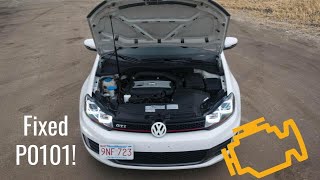
On a 2013-2016 VW GTI, code P0101 is most often caused by a failed PCV valve creating a vacuum leak or a faulty Mass Airflow (MAF) sensor. A smoke test is the best first diagnostic step. A PCV valve replacement (OEM part 06H103495AH for Mk6, 06K103495AR for Mk7) costs around $80-$150 for the part, while a new Bosch or Hitachi MAF sensor is about $150-$200.
- For a 2013-2016 GTI, suspect a failed PCV valve first for code P0101, especially if you hear a whistling sound or feel strong suction at the oil cap.
- A smoke test is the most effective way to diagnose the vacuum leaks that commonly cause this code.
- Before replacing the MAF sensor, try cleaning it with dedicated cleaner and rule out all possible vacuum leaks.
- If you have an aftermarket air intake, you may need to install an air straightener to resolve the code.
- Always confirm if your GTI is a Mk6 (2013-2014) or Mk7 (2015-2016) before ordering parts like the PCV valve or MAF sensor, as they are different.
What's Unique About the 2013-2016 Volkswagen GTI

The EA888 engine used in this era of GTI is notoriously prone to PCV (Positive Crankcase Ventilation) valve failures. The rubber diaphragm inside the valve tears, creating a significant unmetered vacuum leak. This leak is a very common cause of the P0101 code, often misleading owners into first suspecting the MAF sensor itself. Additionally, these engines are sensitive to aftermarket air intakes, which can cause turbulent airflow and trigger this code if an air straightener isn't used.
Diagnostic Flowchart
Tap your situation to follow the diagnostic path that matches what you're seeing on this vehicle.
Generation note: This range covers two GTI generations: the Mk6 (2013-2014) and the Mk7 (2015-2016). The Mk6 uses the EA888 Gen 1/2 engine, while the Mk7 uses the updated EA888 Gen 3. While the causes for P0101 are similar, the PCV valves and MAF sensors are different parts. Always verify your vehicle's model year before purchasing components. The PCV system in particular has undergone several revisions; it is always best to purchase the latest available version.
Symptoms You May Notice
- Check Engine Light (MIL) illuminated
- Rough or unstable idle
- Hesitation or stumbling during acceleration
- Noticeable loss of engine power
- Reduced fuel economy
- Stalling
- Black smoke from the exhaust
- Whistling noise from the engine bay (indicative of a torn PCV diaphragm or other vacuum leak)
- Replacing the MAF sensor when the actual problem is a torn PCV valve diaphragm or other vacuum leak.
- Replacing oxygen (O2) sensors, as a lean condition caused by a vacuum leak can sometimes trigger related codes like P0171 or P2177.
Most Likely Causes

- Failed PCV Valve / Oil Separator 🔴 High Probability The diaphragm in the PCV valve is a well-known failure point on the EA888 engine; it becomes brittle and tears, creating a large vacuum leak. The entire assembly contains multiple valves that can fail or stick.
How to confirm: With the engine running, try to remove the oil filler cap. If there is very strong suction holding it down, the PCV diaphragm is likely torn. Another simple test is to cover the small bleeder hole on the PCV's top cap; if the idle stabilizes, the diaphragm is torn. A smoke test of the intake system will also definitively show a leak at the PCV valve.
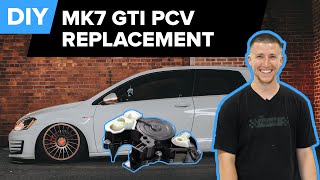
Typical fix: Replace the entire PCV valve assembly. It is located on top of the engine and is a common DIY job held on by Torx screws. 🎬 Watch: Step-by-step Mk6 GTI PCV valve replacement guide.
Est. part cost: $80-$150 - Faulty Mass Airflow (MAF) Sensor 🔴 High Probability The MAF sensor can become contaminated by oil from aftermarket oiled filters or simply fail electronically over time, providing implausible signals.
How to confirm: First, try cleaning the sensor with dedicated MAF cleaner; do not touch the internal wires. If the code returns, monitor the MAF reading (in g/s) with a scan tool. If readings are erratic or do not change with RPM, and no vacuum leaks are present, the sensor is likely bad. Unplugging the MAF sensor may cause the car to idle better, which often points to a bad MAF, but can also indicate a large vacuum leak.
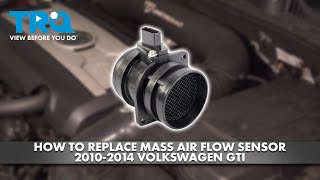
Typical fix: Replace the MAF sensor. It is located in the intake tube just after the air filter box and is secured with two screws.
Est. part cost: $150-$250 - Air Leak in Intake System 🟡 Medium Probability Cracked hoses, loose clamps, or a poorly sealed connection between the intake pipe and turbo inlet can allow unmetered air to enter the engine. This is common after recent service where intake components were removed.
How to confirm: Perform a thorough visual inspection of all intake plumbing from the MAF sensor to the throttle body. A smoke test is the most effective method to find hidden leaks.
Typical fix: Replace the cracked hose or tighten the loose clamp that is causing the leak.
Est. part cost: $20-$100 - Aftermarket Air Intake Issues ⚪ Low Probability Some aftermarket cold air intakes, particularly those with a larger diameter than stock, create turbulent airflow across the MAF sensor, causing inaccurate readings and triggering a P0101 code, often with P2177.
How to confirm: This issue is diagnosed by exclusion. If the code only appeared after installing an aftermarket intake and all other causes are ruled out, this is the likely culprit.
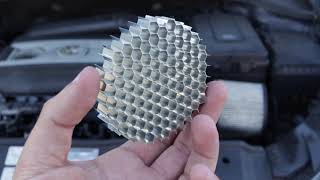
Typical fix: Install a honeycomb-style air straightener into the intake tube just before the MAF sensor to smooth the airflow. Alternatively, reinstall the factory airbox. 🎬 Watch: How to install an air straightener to fix P0101.
Est. part cost: $30-$50
Rare But Worth Checking
- Failed Rear Main Seal: Excessive crankcase pressure from a faulty PCV valve can cause the rear main seal (between the engine and transmission) to fail. This creates a major unmetered air leak, which can trigger P0101 and lean codes. A smoke test showing smoke from the bell housing area confirms this. This is a labor-intensive repair as the transmission must be removed.
- Clogged Air Filter: A severely restricted air filter can starve the engine of air, causing the MAF readings to be lower than expected. This is a simple and important check.
- Wiring Issue to MAF Sensor: A damaged wire or corroded connector pin can cause an implausible signal. Check for power, ground, and signal integrity at the MAF sensor connector before replacing the sensor.
- Foreign Object in Intake: In rare cases, debris like a paper towel left behind during service can become lodged in the intake tract, obstructing airflow and causing a P0101 code.
Diagnosis Steps

- Scan the vehicle for any other fault codes. Codes like P0171, P2177, or P0507 can help pinpoint the issue.
- Inspect the engine air filter to ensure it is clean and not overly restrictive.
- Perform a quick check of the PCV valve: with the engine idling, try to remove the oil cap. If it's held on by strong vacuum, the PCV diaphragm has likely failed. Also try covering the bleeder port on the PCV cap to see if the idle changes.
- Visually inspect the entire air intake path from the airbox to the throttle body for any obvious cracks, disconnected hoses, or loose clamps.
- If no obvious leaks are found, perform a smoke test to pressurize the intake system. This is the most reliable way to find hidden vacuum or boost leaks. Check for smoke from the PCV valve, intake hoses, and the bell housing area (which would indicate a failed rear main seal).
- If no leaks are present, remove and inspect the MAF sensor. Clean it using a dedicated MAF sensor cleaner spray. Do not touch the delicate sensor wires. Allow it to dry completely before reinstalling.
- Clear the codes and perform a test drive. If the code returns, use a scan tool to monitor the MAF sensor's live data. The reading at idle should be stable and within the manufacturer's specification (typically 2-5 g/s for this engine).
- If the MAF readings are erratic or incorrect and all leaks have been ruled out, test the MAF sensor's wiring for proper power, ground, and signal using a multimeter.
- If the wiring is good and no leaks are present, replace the MAF sensor.
Parts You'll Likely Need
- PCV Valve / Oil Separator Assembly
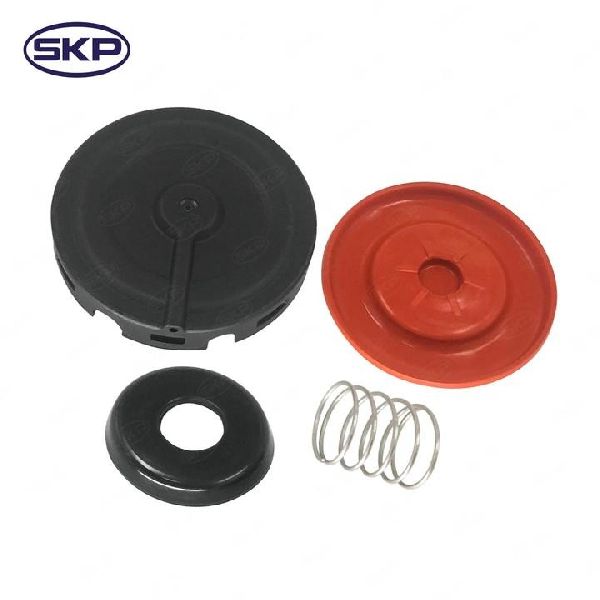
(OEM #06H103495AH (Mk6) / 06K103495AR (Mk7))— This is the most common failure point on the EA888 engine that directly causes a vacuum leak, leading to code P0101. Multiple revisions exist; always buy the latest version.
Trusted brands: Volkswagen (OEM), RKX, UroTuning
OEM price range: $120-$160
Aftermarket price range: $70-$110 - Mass Airflow (MAF) Sensor
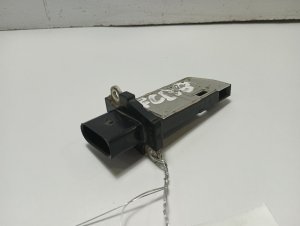
(OEM #06J906461D)— The sensor can fail electronically or become contaminated, providing incorrect airflow readings to the ECU. This part number is widely used across many VW/Audi 2.0T models.
Trusted brands: Bosch (OEM), Hitachi (OEM Supplier), Continental
OEM price range: $180-$250
Aftermarket price range: $120-$180
Related Codes That Often Appear With This One
- P0171 — System Too Lean. A vacuum leak from a bad PCV, intake hose, or rear main seal allows unmetered air into the engine, which the MAF sensor doesn't see, leading to a lean condition.
- P2177 — System Too Lean Off Idle. This is another lean code that frequently accompanies P0101, pointing strongly toward a vacuum leak or an issue with an aftermarket intake.
- P0299 — Turbocharger/Supercharger Underboost. A significant vacuum/boost leak from a failed PCV or charge pipe can cause both an incorrect MAF reading and a loss of boost pressure. This code is mentioned in a VW TSB alongside P0101.
- P0507 — Idle Air Control System RPM Higher Than Expected. A large vacuum leak from the PCV valve will cause the engine to idle high, often triggering this code along with P0101.
Technical Service Bulletins (TSBs) & Recalls
- VIN-4-A-PIN AUGU (2016-08-30): A general TSB from VW listing multiple potential MIL-ON codes for 2016 models, which includes P0101 and P0100. It confirms the code is on the manufacturer's radar but offers no specific diagnostic procedure in its title.
- 21-20-01TT (2020-03-06): A Tech Tip for the 2020 Passat (with a similar EA888 engine) notes that DTC P0101 can be set by a loose or disconnected charge air (boost) hose. It advises performing a pressure test of the charge air system.
Platform-Specific Known Issues
- The PCV valve diaphragm is a known weak point and is considered a maintenance item by many owners. Its failure is a primary cause of P0101.
- The 2015-2016 Mk7 GTI uses both a MAF and MAP (Manifold Absolute Pressure) sensor. While P0101 points to the MAF circuit, some forum users have reported that failing MAP sensors can also contribute to or cause this code.
- A failed PCV valve can lead to excessive crankcase pressure, which can then cause the rear main seal to fail. This results in a large vacuum leak at the transmission bell housing, which can also trigger P0101.
Mechanic-Grade Diagnostic Values
- Mass Airflow Reading at Idle (Scan Tool) — expected: 2.0 - 5.0 g/s with engine at operating temperature.. Failure: Readings are erratic, do not increase with RPM, or are significantly outside the expected range when no vacuum leaks are present.
- MAF Sensor Reference Voltage (Key On, Engine Off) — expected: 4.5 - 5.0 Volts DC at the reference wire terminal.. Failure: Significantly lower or no voltage indicates a wiring or ECU issue.
- MAF Sensor Ground Circuit Check (Key On, Engine Off) — expected: 10 - 12 Volts DC when probing the ground wire terminal with the red multimeter lead on the battery positive terminal.. Failure: No or low voltage indicates a break in the ground wire.
- MAF Sensor Ground Wire Voltage Drop (Engine Idling) — expected: Less than 9 mV (.009 V) between the MAF ground wire and the engine block ground.. Failure: Voltage higher than 9 mV suggests high resistance in the ground circuit, which can cause an implausible signal.
Scan Tool Commands That Help
- VCDS / OBDeleven: Live Data - Measuring Blocks (e.g., Group 003) — Use this function to monitor the live MAF sensor reading in grams per second (g/s). This is the primary method for determining if the sensor is reporting plausible data that responds correctly to changes in engine RPM.
- VCDS / OBDeleven: Clear All DTCs & Reset Adaptations — After replacing a component like the MAF sensor or fixing a vacuum leak, it is crucial to clear the fault codes and reset learned fuel trim adaptations. This forces the ECU to relearn values with the new/repaired components, preventing the old, incorrect adjustments from causing further issues.
Wiring & Ground Locations
- Engine Block Ground Stud — On the engine block, often located near the firewall and behind the fuel injectors. Look for a bolt with several black or brown ground wires attached to it.. The MAF sensor requires a clean, low-resistance ground to function correctly. Corrosion or a loose connection at this common ground point can cause an unstable or incorrect signal, triggering P0101 even if the sensor itself is good.
- MAF Sensor Connector Pins — At the MAF sensor located in the intake tube after the air filter box.. Knowing the pin functions (typically power, ground, and signal) is essential for testing the circuit. On many VWs, the brown wire is ground. A common 5-pin layout includes 12V power, sensor ground, signal ground, a 5V signal, and IAT signal. A 3-wire sensor will have power, ground, and signal. Verifying power and ground at the connector is a critical step before condemning the sensor.
Real Owner Repair Stories
- Golfmk6.com forum user (Mk6 GTI (APR Stage 2)) — Car ran poorly, stuttered, hesitated, and threw P0101 immediately after a clutch replacement.
❌ Tried (didn't work) Cleaning the MAF sensor., Replacing the MAF sensor with a new one from the dealership.
✅ What actually fixed it The issue was traced to an air leak in the throttle body pipe. The pipe had been removed during the transmission work for the clutch install and was not properly sealed upon reinstallation, creating a large post-MAF air leak. - YouTube user 'zuum' on channel 'MK6 GTI' (Mk6 GTI with a Cobb cold air intake.) — Persistent P0101 and P2177 codes, indicating a MAF range issue and a lean condition.
❌ Tried (didn't work) Cleaning the MAF sensor., Cleaning the air filter.
✅ What actually fixed it Installing a 3-inch honeycomb air straightener into the intake tube just before the MAF sensor. The aftermarket intake caused turbulent airflow, which the straightener corrected, allowing for an accurate MAF reading.
"I Checked Everything" — The Actual Cause
- A common scenario for this code, especially on tuned vehicles, is the installation of an aftermarket cold air intake. A smoke test will show no leaks, leading to confusion. The actual cause is turbulent, non-laminar airflow hitting the MAF sensor, causing it to send implausible data to the ECU. The fix is not sealing a leak, but rather installing a honeycomb air straightener in the intake tube before the sensor to smooth out the airflow.
When the Usual Fixes Don't Work
- In one documented case on a Mk6 GTI, a user experienced a P0101 code immediately after having a new clutch installed. Despite the code pointing to the MAF sensor, and the car running better with the MAF unplugged, replacing the sensor did not solve the problem. The root cause was an air leak from the throttle body pipe, which had been removed and reinstalled during the service. This highlights that even when symptoms strongly suggest a faulty MAF, the true cause can be a mechanical issue or leak introduced during unrelated repairs.
OEM Part Supersession History
06K103495AR (Mk7 PCV Valve)→06K103495AP, 06K103495BM, among others.— The PCV valve on the Gen 3 EA888 engine is a known failure point and has been revised multiple times by Volkswagen to improve reliability and oil separation performance.
Heads up: Always purchase the latest available revision for your vehicle. Older versions are more prone to failure. Part numbers like 06K103495AA, AG, and AQ are all earlier, superseded versions.
Model Year Variations Within This Range
- 2015 vs 2016 (Mk7): The 2016 model year introduced the MIB2 infotainment system, which included Apple CarPlay and Android Auto, a significant upgrade over the 2015's MIB1 system. Additionally, a backup camera became standard on all trims for 2016, and the base engine output was increased by 10 horsepower to 220 hp.
Helpful Videos
Used OEM Parts in Stock
New Aftermarket Parts Available

The information in this article is provided for general reference and educational purposes only. Vehicle specifications, procedures, and part compatibility can vary by production date, trim level, and region. Always consult your vehicle's factory service manual and verify part numbers before purchasing or performing repairs. Safety-critical components such as airbags, seat belts, and braking systems should be installed by a qualified professional.
- Volkswagen GTI:
- 🎬 Helpful Videos
- 🛍️ Shop This Part
- What's Unique About the 2013-2016 Volkswagen GTI
- Diagnostic Flowchart
- Symptoms You May Notice
- Most Likely Causes
- Rare But Worth Checking
- Diagnosis Steps
- Parts You'll Likely Need
- Related Codes That Often Appear With This One
- Technical Service Bulletins (TSBs) & Recalls
- Platform-Specific Known Issues
- Mechanic-Grade Diagnostic Values
- Scan Tool Commands That Help
- Wiring & Ground Locations
- Real Owner Repair Stories
- "I Checked Everything" — The Actual Cause
- When the Usual Fixes Don't Work
- OEM Part Supersession History
- Model Year Variations Within This Range
- 🎟️ Get 5% Off