

P0101 on 2013-2016 Volkswagen CC: MAF, Vacuum Leak, and Carbon Buildup Fixes
On a 2013-2016 VW CC with the 2.0T engine, code P0101 is most often caused by a dirty or faulty Mass Airflow (MAF) sensor, a vacuum leak from a failed PCV valve, or a cracked intake hose. Cleaning the MAF sensor is a good first step and costs under $15. A failed PCV valve is an extremely common cause on this specific engine.
- For P0101 on a 2013-2016 VW CC, don't just assume the MAF sensor is bad. Vacuum leaks are a very common cause.
- The easiest first step is to clean the MAF sensor with dedicated cleaner, which costs less than $20 and may solve the problem.
- Check the PCV valve by trying to lift the oil cap while the engine is running. Strong suction indicates a failed PCV, which is a frequent culprit.
- Be aware that the 2.0T TSI engine will eventually need its intake valves cleaned due to carbon buildup, which can also cause this code.
What's Unique About the 2013-2016 Volkswagen CC

The 2.0T TSI engine in the VW CC is known for a few specific issues that can lead to a P0101 code. Unlike in many other cars where a faulty MAF sensor is the primary culprit, on this platform, vacuum leaks from a failed PCV (Positive Crankcase Ventilation) system are a very common cause. The diaphragm inside the PCV is a known weak point that tears, creating a large unmetered air leak. Furthermore, these direct-injection engines are highly susceptible to carbon buildup on the intake valves, which can restrict airflow and trigger an implausible MAF signal as early as 60,000-80,000 miles. This means diagnosis must go beyond just the MAF sensor itself.
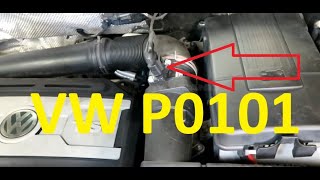
🎬 Watch: A breakdown of P0101 causes and fixes for Volkswagens.Diagnostic Flowchart
Tap your situation to follow the diagnostic path that matches what you're seeing on this vehicle.
Symptoms You May Notice
- Check Engine Light is on
- Rough or erratic idle
- Hesitation or stumbling during acceleration
- Reduced engine power or feeling sluggish
- Poor fuel economy
- Engine stalling, especially when coming to a stop or during light braking
- Hissing or whistling sound from the engine bay, indicating a vacuum leak
- Replacing the MAF sensor without checking for vacuum leaks. A new MAF sensor will not fix a P0101 code caused by a bad PCV valve or cracked intake hose.
- Replacing O2 sensors. While lean codes might accompany P0101, the O2 sensors are usually just reporting the condition, not causing it.
Most Likely Causes

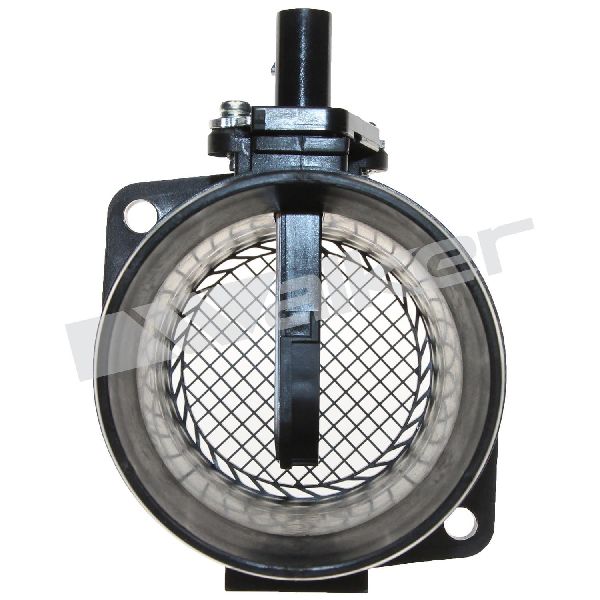
- Dirty or Faulty Mass Airflow (MAF) Sensor 🔴 High Probability The MAF sensor's delicate heated elements can become contaminated by dirt, debris, or oil from aftermarket air filters, causing inaccurate readings. Aftermarket sensors are also known to fail prematurely.
How to confirm: Unplug the MAF sensor. If the engine runs more smoothly (in a default mode), the sensor is likely faulty. For a more precise test, use a scan tool to monitor MAF readings. A healthy sensor on a warm engine at idle should read around 2.0-5.0 g/s. Watch for readings that are flat or don't change with RPM; this indicates a bad sensor.
Typical fix: First, try cleaning the sensor with a dedicated MAF sensor cleaner spray. Do not touch the sensor elements. If cleaning doesn't resolve the issue, the sensor must be replaced with a quality OEM or equivalent part (e.g., Bosch, Hitachi).
Est. part cost: $10-$20 for cleaner, $100-$250 for a new sensor - Vacuum Leak (especially PCV Valve) 🔴 High Probability The diaphragm in the PCV valve (also called the oil separator) on the 2.0T TSI engine is a known failure point. When it tears, it creates a significant vacuum leak by allowing unmetered air from the crankcase into the intake manifold, which the MAF sensor cannot account for.
How to confirm: With the engine running, try to lift the oil cap. If there is strong suction holding it down, the PCV valve has likely failed. You may also hear a loud hissing or whistling sound from the PCV valve itself. A smoke test is the definitive way to find this or any other vacuum leak.
Typical fix: Replace the PCV valve/oil separator assembly. It is recommended to use the latest OEM revision part to ensure a more durable repair. 🎬 See this step-by-step guide to replacing your PCV valve.
Est. part cost: $120-$200 for a PCV service kit - Cracked or Loose Intake Air Hose 🟡 Medium Probability The plastic and rubber components of the intake system between the MAF sensor and the turbocharger can become brittle and crack over time, allowing unmetered air to enter.
How to confirm: Visually inspect all intake ducting for cracks, especially in ribbed sections and at connection points. Check that all clamps are tight. Listen for hissing sounds. A smoke test will confirm any leaks.
Typical fix: Replace the damaged section of the intake hose or boot.
Est. part cost: $50-$150 - Severe Carbon Buildup on Intake Valves 🟡 Medium Probability As a direct-injection (TSI) engine, fuel is sprayed directly into the cylinder, not over the intake valves. This means there are no detergents to clean the valves, and oil vapor from the PCV system bakes onto them, forming hard carbon deposits that restrict airflow. This becomes common around 70,000-100,000 miles.
How to confirm: This requires physical inspection by removing the intake manifold. Symptoms like cold start misfires and a gradual loss of power are strong indicators. A borescope can be used to inspect the valves without full manifold removal.
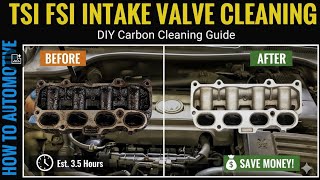
Typical fix: The intake manifold must be removed, and the valves must be manually cleaned, typically through walnut blasting or chemical/mechanical scraping. 🎬 Watch: How to clean carbon buildup from your intake valves. This is a labor-intensive job, with shop costs ranging from $600 to over $1500.
Est. part cost: $20-$40 for a new intake manifold gasket
Rare But Worth Checking
- Clogged Air Filter: A severely clogged air filter can restrict airflow enough to cause the MAF sensor to read outside its expected range. Always check this first as it's the easiest and cheapest fix.
- Faulty Intake Manifold Runner: The provided TSB lists P0101 alongside P2015 (Intake Manifold Runner Position Sensor). A stuck or broken intake runner flap can disrupt airflow, leading to a P0101 code. The manifold itself may have an extended warranty; check with a dealer.
- Wiring or Connector Issue: A corroded connector or damaged wire leading to the MAF sensor can cause an implausible signal. Inspect the harness and connector pins for damage or corrosion.
- Aftermarket Air Intake Turbulence: Some aftermarket cold air intakes can cause turbulent airflow across the MAF sensor, leading to inaccurate readings and a P0101 code, especially on tuned vehicles. Owners have fixed this by installing an 'air straightener' (a honeycomb mesh) in the intake tube before the sensor.
Diagnosis Steps

- Read all fault codes with an OBD-II scanner. Note any other codes that appear with P0101, as they provide critical clues (e.g., P2187, P2015).
- Inspect the engine air filter. Replace if it is dirty or clogged.
- Visually inspect the entire air intake system from the airbox to the turbocharger for any cracks, loose clamps, or disconnected hoses. Pay close attention to the ribbed flex sections.
- With the engine idling, listen for hissing sounds. Perform the oil cap test: if it's difficult to remove due to strong suction, the PCV valve is the likely culprit.
- Unplug and remove the MAF sensor. Inspect it for contamination. Clean it using only dedicated MAF sensor cleaner spray and allow it to dry completely. Reinstall, clear the codes, and test drive.
- If the code returns, perform a smoke test to definitively identify any vacuum leaks in the intake manifold, PCV system, or vacuum hoses. This is the most reliable way to find hairline cracks.
- If no leaks are found, use a scan tool with live data capability. Monitor the MAF sensor reading (g/s) at idle and while driving. The reading should be stable at idle (2-5 g/s) and increase smoothly with engine RPM. Flat-lining or erratic jumps indicate a failed sensor.
- If all else fails and the car has over 60,000-70,000 miles, suspect significant carbon buildup. This requires removing the intake manifold for inspection and cleaning.
Parts You'll Likely Need
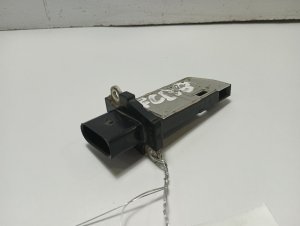
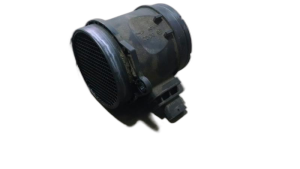
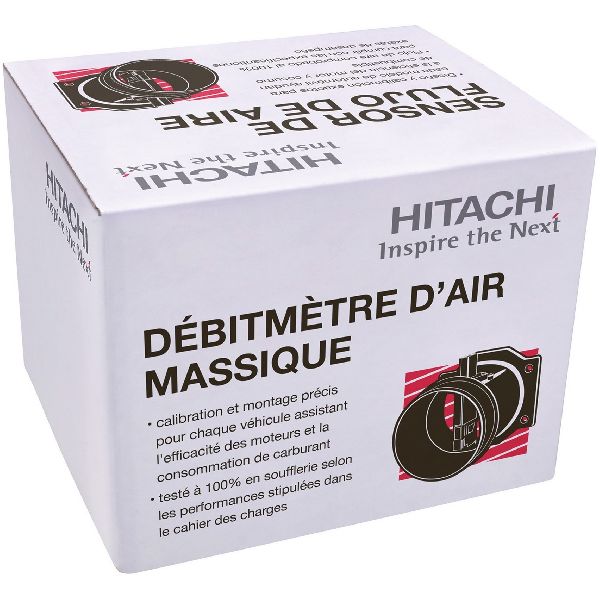
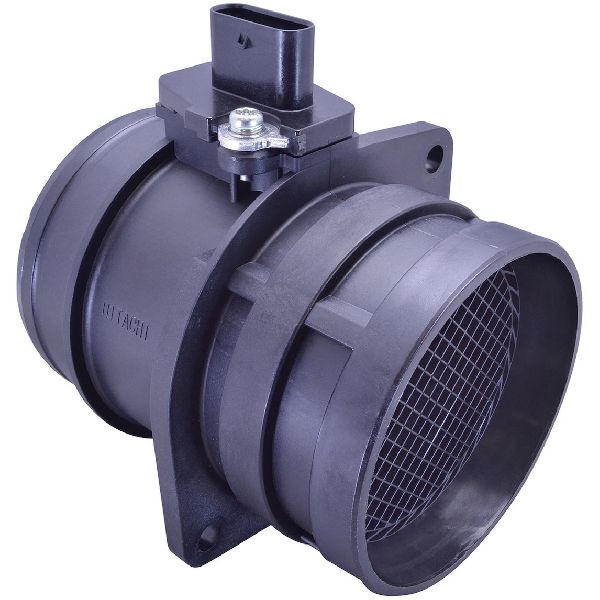
- Mass Airflow (MAF) Sensor
(OEM #06J906461D)— This sensor is the primary component related to the code and can fail or become too contaminated to clean effectively.
Trusted brands: Bosch, Hitachi
OEM price range: $140-$250
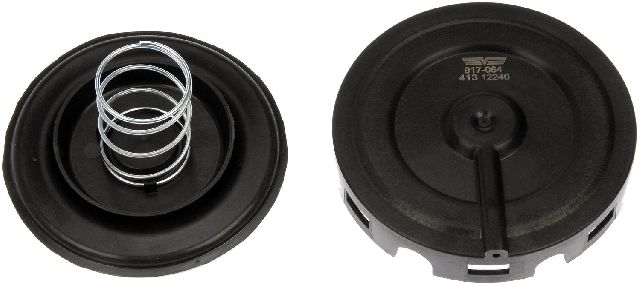
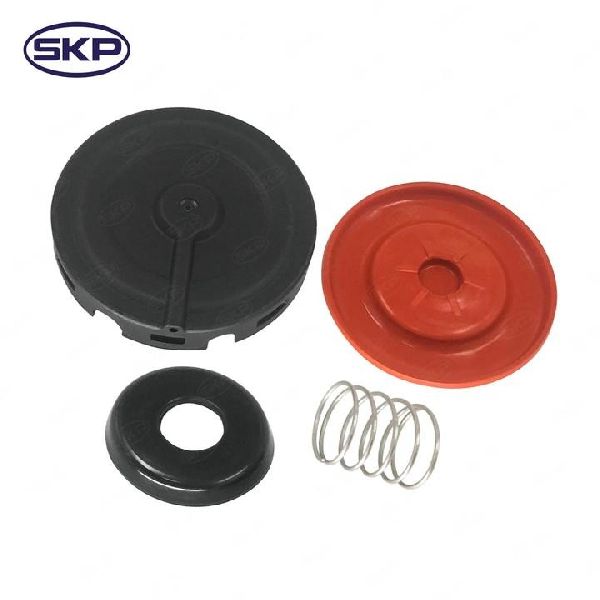
Aftermarket price range: $70-$150 - PCV Valve / Oil Separator
(OEM #06H103495AH, 06H103495E, 06H103495AC (and newer revisions like AK, BM, BL))— A very common failure point on the 2.0T TSI engine that causes a significant vacuum leak and triggers P0101. Always use the latest available OEM revision.
Trusted brands: OEM Volkswagen, Vaico, Febi Bilstein
OEM price range: $150-$200
Aftermarket price range: $30-$80
Related Codes That Often Appear With This One
- P2187 — System Too Lean at Idle. This code is frequently caused by the same vacuum leaks (like a failed PCV valve) that trigger P0101.
- P0299 — Turbocharger/Supercharger Underboost. A large vacuum or boost leak post-turbo can cause both an underboost condition and an air metering fault.
- P2015 — Intake Manifold Runner Position Sensor/Switch Circuit Range/Performance. A faulty intake manifold can directly cause the airflow issues that trigger P0101. A TSB links these codes.
- P030x (e.g., P0301, P0302) — Cylinder Misfire. Severe carbon buildup or a significant vacuum leak can cause a lean condition that leads to misfires, especially on cold starts.
Technical Service Bulletins (TSBs) & Recalls
- VIN-4-A-PIN AUGU (2016-08-30): This is a general bulletin listing multiple potential issues for VIN-specific inquiries, not a detailed repair guide. It confirms that P0101 is a known issue on this platform, often appearing alongside P0299 (Underboost) and P2015 (Intake Manifold Runner).
Platform-Specific Known Issues

- The 2.0T TSI engine is a direct-injection design, which makes it inherently prone to heavy carbon accumulation on the intake valves, a condition that requires manual cleaning (walnut blasting) every 60,000-80,000 miles to prevent airflow restrictions and related codes.
- The PCV valve diaphragm is made of rubber that frequently tears, a well-documented failure that is a primary cause of vacuum leaks and lean conditions on this engine.
Mechanic-Grade Diagnostic Values
- MAF Sensor Reading (g/s) at Idle — expected: 3.4 - 3.8 g/s (for a 2.0L engine at operating temperature, no load). Failure: Significantly lower or higher readings, or a value that does not change with RPM.
- MAF Sensor Peak Reading (g/s) under Load — expected: Approx. 160 g/s (for a 200hp engine). Failure: A peak value significantly less than 80% of the engine's horsepower (e.g., <140 g/s) suggests the sensor is under-reporting airflow.
- Fuel Trims (VCDS Measuring Block 032) — expected: Multiplicative trim (partial load, field 2) should be within +/- 10%.. Failure: A large positive multiplicative trim (> +10%) suggests the ECU is adding fuel to compensate for unmetered air (vacuum leak or bad MAF). A large negative trim (> -10%) suggests the ECU is pulling fuel due to a rich condition.
- MAF Sensor Signal Voltage — expected: Key On, Engine Off: ~0.4V. Idle: 0.9V - 1.3V. At 2500 RPM: 1.3V - 2.1V.. Failure: Voltages outside these ranges or that don't respond smoothly to RPM changes indicate a faulty sensor or wiring issue.
Hidden / Shadow Codes Worth Checking
- 16485 / P0101 / 000257: This is the VAG-specific fault code for 'Mass Air Flow Sensor (G70): Implausible Signal'. It is the same as the generic P0101 but is how it will be displayed in VW-specific tools like VCDS. (see via VCDS or other VAG-compatible diagnostic software.)
Scan Tool Commands That Help

- VCDS (VAG-COM): Throttle Body Adaptation (TBA) — Perform after cleaning or replacing the throttle body, or after the battery has been disconnected. The ECU needs to relearn the throttle's full range of motion. Go to [01 - Engine] -> [Basic Settings - 04] -> Group 060. With Key On, Engine Off, activate the function. You will hear the throttle body cycle.
- VCDS (VAG-COM): Log MAF data in Measuring Blocks — To test MAF sensor performance under load. Log Group 003 while performing a full-throttle acceleration run in 2nd or 3rd gear from low to high RPM to check if the peak g/s reading is plausible for the engine's horsepower.
Wiring & Ground Locations
- Main Engine Ground Point — In the engine bay, typically located on the chassis frame rail or bulkhead behind or above the battery. Look for a stud with multiple brown wires attached.. Corroded or loose ground connections can cause erratic sensor readings, including from the MAF sensor, leading to a P0101 code.
- Engine Wiring Harness — The section of the main engine harness that runs behind the brake booster in the engine bay.. There are documented cases on the 2013 CC where this section of the harness can melt, causing multiple wires to short to ground, resulting in numerous faults including P0101 and hard starting.
Real Owner Repair Stories
- YouTube user 'Should I Get It Reviews' (2012 Volkswagen GTI Mk6 (similar 2.0T engine) with aftermarket intake and Stage 1 tune) — P0101 error code after installing a tune, causing the car to throttle power.
❌ Tried (didn't work) Clearing the code
✅ What actually fixed it Installing a 3-inch honeycomb air straightener screen into the intake piping just before the MAF sensor. This smoothed out the turbulent air from the aftermarket intake, allowing the MAF to read correctly. - Ross-Tech Forums user (2013 Volkswagen CC with 216,640km) — P0101 and multiple other 'short to ground' faults, hard starting with black smoke when cold.
❌ Tried (didn't work) Timing chain replacement, Valve job, New intake manifold, Replaced rear main seal, Cleaned injectors, Replaced ECM after a mechanic's recommendation
✅ What actually fixed it The owner discovered a melted section of the wiring harness behind the brake booster where five wires were shorting together. Repairing this section of the harness was the implied final fix for the widespread electrical issues.
"I Checked Everything" — The Actual Cause
- A failed rear main seal. This is a very common cause of P0101 on the 2.0T TSI engine that will not be found with a standard intake smoke test. The torn seal allows unmetered air to be sucked into the crankcase, which is then drawn into the intake manifold through the PCV system, completely bypassing the MAF sensor. This creates a lean condition and a P0101 code. Diagnosis is often made after a smoke test is clean and a new PCV valve does not solve the problem.
OEM Part Supersession History
06H103495A, 06H103495E→06H103495AC (and subsequent revisions like AK, BM, BL)— The original PCV valve diaphragms were prone to tearing. Newer revisions are designed to be more durable.
Heads up: Always use the latest available revision for the most reliable repair.06J906461B→06J906461D— Sensor revision for different production runs or ECU software calibrations.
Heads up: The MAF sensor with part number 06J906461B is explicitly listed as NOT compatible with vehicles requiring 06J906461D. Using the wrong sensor will cause P0101 to persist. It is critical to verify the correct part number for the specific vehicle's VIN.
Helpful Videos
Used OEM Parts in Stock

New Aftermarket Parts Available


The information in this article is provided for general reference and educational purposes only. Vehicle specifications, procedures, and part compatibility can vary by production date, trim level, and region. Always consult your vehicle's factory service manual and verify part numbers before purchasing or performing repairs. Safety-critical components such as airbags, seat belts, and braking systems should be installed by a qualified professional.
- Volkswagen CC:
- 🎬 Helpful Videos
- 🛍️ Shop This Part
- What's Unique About the 2013-2016 Volkswagen CC
- Diagnostic Flowchart
- Symptoms You May Notice
- Most Likely Causes
- Rare But Worth Checking
- Diagnosis Steps
- Parts You'll Likely Need
- Related Codes That Often Appear With This One
- Technical Service Bulletins (TSBs) & Recalls
- Platform-Specific Known Issues
- Mechanic-Grade Diagnostic Values
- Hidden / Shadow Codes Worth Checking
- Scan Tool Commands That Help
- Wiring & Ground Locations
- Real Owner Repair Stories
- "I Checked Everything" — The Actual Cause
- OEM Part Supersession History
- 🎟️ Get 5% Off