

P0101 on 2006-2012 Toyota RAV4 3.5L V6: Causes and Fixes for MAF Sensor Issues
For a 2006-2012 RAV4 V6, code P0101 almost always points to a dirty Mass Air Flow (MAF) sensor. Cleaning it with a dedicated spray cleaner is the most common fix and costs under $15. If that fails, a replacement Denso sensor costs around $80-$150. Always check the air filter and intake boot for damage first.
- P0101 on your RAV4 V6 means the MAF sensor's reading doesn't match what the engine computer expects.
- The most likely fix is cleaning the MAF sensor with a special cleaner, which is a simple 15-minute DIY job.
- Always check the engine air filter; a clogged filter is a common and easy-to-fix cause.
- If you must replace the sensor, use a Denso (OEM) part to avoid compatibility issues. The correct part number is 22204-31020.
- While vacuum leaks can cause this code, they are less common on this vehicle than a simple dirty sensor.
What's Unique About the 2006-2012 Toyota RAV4
The 2GR-FE V6 engine is widely used across the Toyota and Lexus lineup and is generally very reliable. For this P0101 code, the issue is rarely a major mechanical failure. It's most often a simple maintenance issue, like a dirty sensor or a degraded air filter. Unlike some platforms where this code points to complex vacuum leaks or electrical faults, on the RAV4 V6, the diagnostic path almost always starts and ends with the MAF sensor itself or a simple intake leak.
Symptoms You May Notice
- Check Engine Light is on
- Vehicle Stability Control (VSC) light may be on
- Engine hesitation or stumbling during acceleration
- Rough idle
- Reduced fuel economy
- Engine may stall occasionally
- Black smoke from the exhaust (less common)
- Replacing the MAF sensor before cleaning it. Cleaning is effective in over 75% of cases and is much cheaper.
- Replacing oxygen (O2) sensors. While P0101 can be seen with lean/rich codes (like P0171), the root cause is the incorrect airflow measurement, not the O2 sensor itself.
Most Likely Causes
- Dirty or Contaminated MAF Sensor 🔴 High Probability Over time, dust, oil vapors from the PCV system, and debris can coat the sensor's delicate hot wire, insulating it and causing inaccurate readings. Using an over-oiled aftermarket air filter (like a K&N) is a very common way to contaminate the sensor.
How to confirm: Remove the sensor from the intake tube (located right after the air filter box) and visually inspect the small wires inside. Even if it looks clean, it can still be dirty enough to cause a fault. The issue is often invisible contamination.
Typical fix: Clean the sensor wires carefully using only a dedicated Mass Airflow Sensor cleaner spray. Do not touch the wires. Allow it to dry completely before reinstalling.
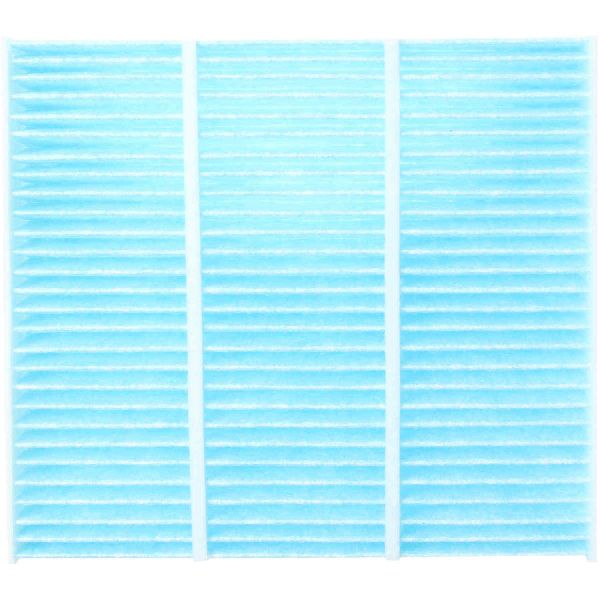
Est. part cost: $10-$20 for MAF cleaner spray - Clogged or Dirty Engine Air Filter 🟡 Medium Probability A severely clogged air filter restricts the amount of air entering the engine. The MAF sensor will read a lower-than-expected airflow, which the ECM can interpret as a performance fault when compared to engine RPM and throttle demand.
How to confirm: Visually inspect the engine air filter. If it is dark, full of debris, or has not been changed in over 15,000 miles, it should be replaced.
Typical fix: Replace the engine air filter.
Est. part cost: $20-$40 - Vacuum Leak ⚪ Low Probability Air that enters the engine *after* the MAF sensor is 'un-metered' and can cause the engine to run lean, which may trigger a P0101 code. Common sources are a cracked air intake boot (the rubber tube between the air filter box and throttle body) or a disconnected/cracked PCV hose.
How to confirm: Visually inspect all intake ducting for cracks or loose clamps. With the engine running, listen for hissing sounds. A professional can use a smoke machine to find hidden leaks.
Typical fix: Replace the cracked intake hose or reconnect any loose vacuum lines.
Est. part cost: $50-$150 for an intake boot - Faulty MAF Sensor ⚪ Low Probability While durable, the sensor can fail electronically. This is typically the last resort after cleaning the sensor and checking for other issues have not resolved the code.
How to confirm: After cleaning the sensor and confirming no vacuum leaks, if the code returns, the sensor itself is likely faulty. A scan tool can monitor the MAF sensor's live data; the reading in grams/second (g/s) should be steady at idle (around 2.5-5 g/s for the 2GR-FE) and increase smoothly as you rev the engine. If the reading is erratic, stuck, or does not respond, the sensor is bad.
Typical fix: Replace the Mass Air Flow sensor. It is highly recommended to use an OEM or Denso-branded part.
Est. part cost: $80-$180
Rare But Worth Checking
- Clogged Catalytic Converter: A severely restricted exhaust can cause backpressure that affects the airflow reading at the MAF sensor. This is usually accompanied by a significant loss of power, especially at higher RPMs, and potentially other codes like P0420 or P0430.
- Wiring or Connector Issue: Damage to the MAF sensor's wiring harness or corrosion in the connector can cause an intermittent or complete loss of signal. Wiggling the connector while monitoring live data can sometimes reveal a bad connection.
Diagnosis Steps
- Read the code with an OBD-II scanner and check for any other codes present. Troubleshoot other codes first if they exist.
- Visually inspect the engine air filter. Replace if it is dirty or clogged.
- Inspect the air intake system between the air filter housing and the throttle body. Look for any cracks in the rubber boot, loose clamps, or disconnected hoses, especially the PCV hose.
- Locate the MAF sensor in the intake tube. Unplug it and remove the two screws holding it in place.
- Carefully spray the sensor's internal wires and components with a dedicated MAF sensor cleaner. Do NOT use brake cleaner or carb cleaner, and do NOT touch the wires.
- Allow the sensor to air dry completely for at least 15-20 minutes. Do not use compressed air.
- Reinstall the sensor, clear the trouble code with the scanner, and perform a test drive to see if the code returns.
- If the code comes back, use a scan tool to monitor the MAF sensor's live data (g/s reading) at idle and while revving the engine to check for a logical response. The reading should be stable and rise smoothly with RPM.
- If the sensor reading is illogical or the code persists, consider testing for vacuum leaks with a smoke machine.
- If all other steps fail, replace the MAF sensor, preferably with a Denso or OEM part. Part number 22204-31020 is the correct OEM part.
Parts You'll Likely Need
- Mass Air Flow Sensor Cleaner — This is the most common and cost-effective first step, as a dirty sensor is the leading cause of P0101.
Trusted brands: CRC, Liqui Moly
Aftermarket price range: $10-$20 - Mass Air Flow Sensor
(OEM #22204-31020)— If cleaning the sensor does not resolve the issue, the sensor itself has likely failed and requires replacement.
Trusted brands: Denso (OEM supplier), Hitachi
OEM price range: $140-$210
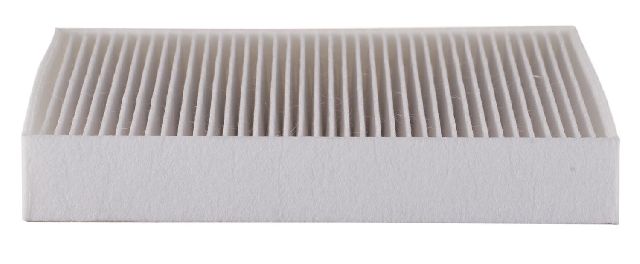
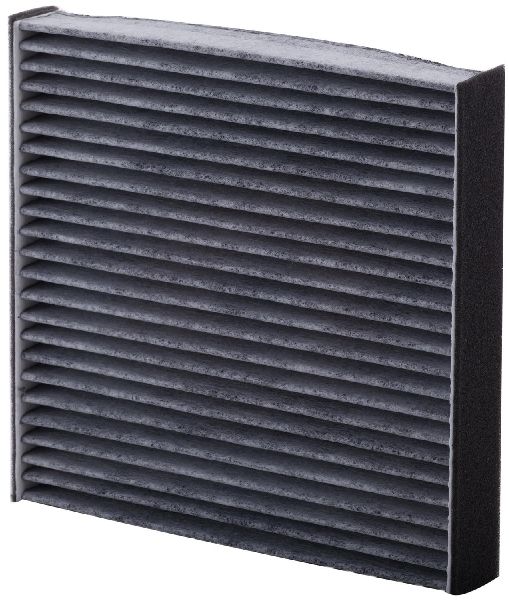
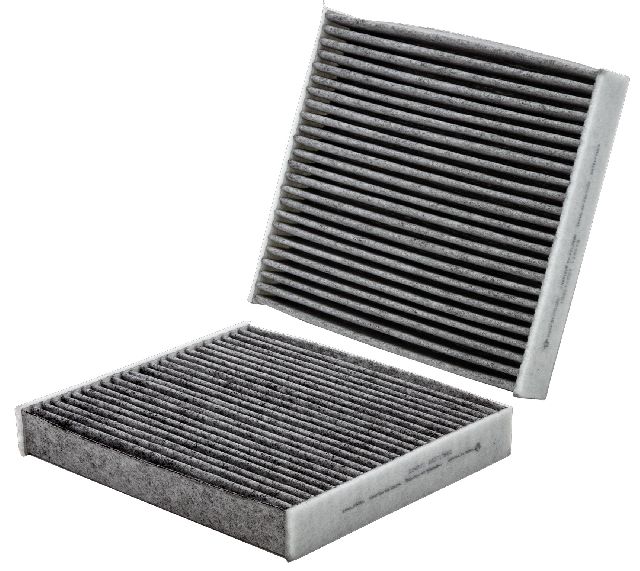
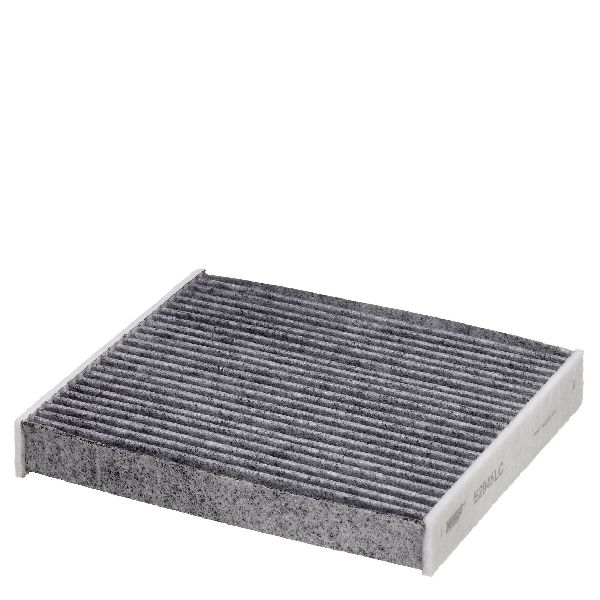
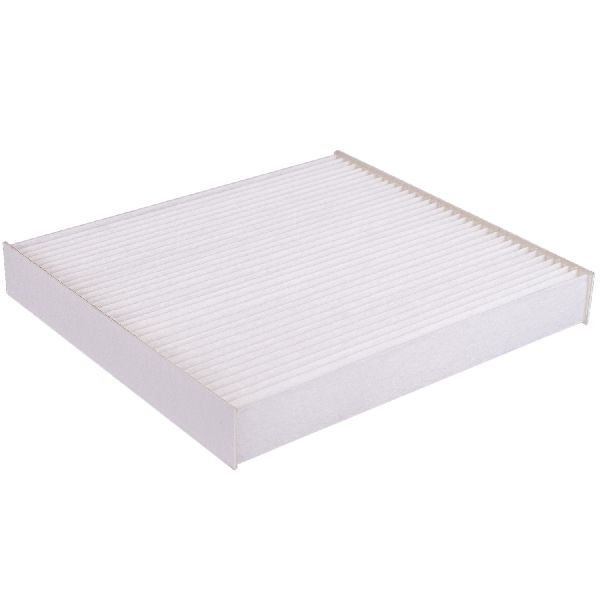
Aftermarket price range: $80-$140 - Engine Air Filter
(OEM #17801-31120)— A clogged air filter can restrict airflow and cause the MAF to report out-of-range values. It's a critical maintenance item.
Trusted brands: Denso, WIX, Purolator
OEM price range: $25-$40
Aftermarket price range: $15-$30
Related Codes That Often Appear With This One
- P0171 — System Too Lean (Bank 1) - If there is a vacuum leak after the MAF sensor, un-metered air enters the engine, causing a lean condition that the O2 sensors detect. The P0101 is set because the MAF reading doesn't account for this extra air.
- P0174 — System Too Lean (Bank 2) - Same reason as P0171, but for the second bank of cylinders on the V6 engine.
Technical Service Bulletins (TSBs) & Recalls
- T-SB-0033-11: Addresses the common 'clunk' from the steering column area by replacing the intermediate steering shaft.
- T-SB-0094-11: Pertains to excessive oil consumption on the 4-cylinder 2AZ-FE engine, not the 2GR-FE V6, but is a well-known TSB for this RAV4 generation.
- LSC 90K: A Limited Service Campaign to replace the problematic VVT-i oil line on 2006-2009 2GR-FE engines to prevent catastrophic oil leaks.
- TSB Bulletin #T-SB-0092-15: While specifically documenting the Tundra with the 3UR-FE engine, Toyota notes that vehicles may experience a MIL "ON" condition with DTC P0101 (Mass Air Flow Circuit Range/Performance Problem).
Platform-Specific Known Issues
- Real-World Repair Story: Cracked Intake Boot: A user on a Toyota forum with a 2010 RAV4 V6 reported getting P0101 and P0171 codes. After cleaning the MAF sensor with no success, they performed a smoke test which revealed a significant leak. The source was a large crack in the accordion section of the main intake boot, located between the MAF sensor and the throttle body. Replacing the intake boot resolved both codes. This highlights the importance of checking for vacuum leaks even when a dirty MAF is the most common culprit.
Mechanic-Grade Diagnostic Values
- MAF Sensor Live Data (g/s) at Idle — expected: Approximately 2.5-5.0 g/s for a fully warmed-up 2GR-FE engine.. Failure: A reading that is stuck, erratic, or significantly outside this range at idle. For example, a reading of 1.0 g/s or 10.0 g/s at idle would indicate a problem. The reading should increase smoothly and proportionally with engine RPM.
- MAF Sensor Signal Voltage at Idle — expected: Approximately 0.9V to 1.2V with the engine fully warmed up and idling.. Failure: Voltage that is significantly higher (e.g., 1.8V) or lower, or does not increase smoothly when the throttle is opened, indicates a faulty sensor or wiring issue.
- MAF Sensor Power Supply Voltage (at connector) — expected: Approximately 12V (Battery Voltage) with the ignition ON, engine OFF.. Failure: No voltage or significantly low voltage indicates a problem with the power supply circuit, such as a blown fuse or wiring fault, not the sensor itself.
- MAF Sensor Live Data (g/s) with Ignition ON, Engine OFF — expected: Less than 0.70 g/s.. Failure: If the value is not as specified, the service manual suggests replacing the MAF meter.
Scan Tool Commands That Help
- Toyota Techstream: Data List Monitoring (Powertrain -> Engine and ECT -> Data List -> MAF) — This is the primary function used to diagnose P0101. It allows a technician to view the live airflow reading in grams per second (g/s) to determine if the sensor's output is logical at idle, under load, and with the engine off.
- Toyota Techstream: Freeze Frame Data — When a P0101 code is stored, the ECM records a snapshot of vehicle data (engine speed, temperature, etc.) at the moment the fault occurred. This is critical for understanding the conditions (e.g., high RPM, cold engine) that triggered the code.
Wiring & Ground Locations
- Engine Harness Ground (Valve Cover) — The 2GR-FE engine harness has primary grounding points on top of both valve covers, which then connect to the chassis near the strut towers.. A corroded or loose engine ground can cause erratic voltage and unstable sensor readings, including the MAF sensor. Ensuring these main grounds are clean and tight is a crucial step in diagnosing any electronic sensor fault.
- Engine Harness Ground (Cylinder Head) — An additional engine harness ground attaches to a boss on the side of the front cylinder head, underneath the throttle body area.. This ground is in close proximity to the main engine sensors. A fault here could directly impact the reference ground for the MAF sensor, leading to incorrect signal readings.
- MAF Sensor Connector — The 5-pin connector plugs directly into the MAF sensor, located on the air intake tube just after the air filter housing.. Testing for 12V power, ground, and the signal voltage (typically 0.9-1.2V at idle) occurs at these pins. A wiring diagram or back-probing is necessary to identify the correct pins for testing.
Real Owner Repair Stories
- GM-Trucks.com Forum (Concept applies across brands) (General Motors Truck with P0101 and P0300) — Intermittent P0101 (MAF) and P0300 (Random Misfire) codes, especially when climbing hills at 2500+ RPM. Owner also noticed a coolant smell.
❌ Tried (didn't work) Initial diagnosis focused solely on the MAF sensor.
✅ What actually fixed it The root cause was a leaking intake manifold gasket. The un-metered air entering through the bad gasket was causing the MAF readings to be out of range under load, and the coolant leak was from the same gasket. Replacing the intake manifold gasket resolved both the P0101 and P0300 codes.
OEM Part Supersession History
22204-31010→22204-31020— Standard part revision and update by the manufacturer.
Heads up: 22204-31020 is the correct and current replacement for the original part and is fully compatible.22204-0P010→22204-31020— Part consolidation and revision.
Heads up: 22204-31020 is the direct replacement.22204-0H010→22204-31020— Part consolidation and revision.
Heads up: 22204-31020 is the direct replacement.22204-0V020→N/A - This is a different but related part number.
Heads up: Part number 22204-0V020 (and its predecessor 22204-0T040) is used on many other Toyota models, including some RAV4s with the 2.5L engine, but is generally NOT the correct part for the 3.5L V6 2GR-FE in this year range. Using the wrong MAF sensor, even if it fits physically, will cause incorrect fuel trims and performance issues. Always verify the part number by VIN.
Diagnostic Flowchart
Other Known Issues on This Vehicle
Issues unrelated to this code that are worth knowing about as an owner of this generation:
- VVT-i Oil Line Rupture 🔴 High — Common on early production 2006-2009 models with the original rubber/metal hose. Failure can occur without warning and lead to catastrophic engine failure from oil starvation. (Ref: Limited Service Campaign (LSC) 90K / TSB Z-01-01.)
- Water Pump Failure 🟠 Medium — Known wear item that can fail prematurely, leading to coolant leaks and engine overheating. Failures are often noted by weeping from the pump housing.
- Intermediate Steering Shaft Clunk 🟡 Low — Very common issue causing a clunking or popping noise from the steering column area at low speeds. It is due to premature wear in the shaft's U-joints. (Ref: T-SB-0033-11 (supersedes T-SB-0318-08))
- Transmission Whine 🟡 Low — Some owners report a noticeable whine from the transmission during operation. While concerning, it does not typically lead to transmission failure and is often considered a characteristic nuisance.
Used vs. New Parts: Buying Guide for This Vehicle
When a used part is the smart pick: A used OEM MAF sensor from a reputable salvage yard can be a cost-effective option, especially if it comes from a low-mileage, collision-damaged vehicle. Since the most common failure mode is contamination (which can be cleaned), a functional used sensor is often a better choice than a new, non-OEM aftermarket part.
Donor-vehicle mileage cap: roughly under 100000 miles for the part to have meaningful remaining life.
What to inspect on the donor part:
- Check for the OEM Denso branding on the sensor body.
- Inspect the connector pins for any signs of corrosion or damage.
- Ask for the VIN of the donor vehicle to verify its engine (2GR-FE) and mileage if possible.
- Avoid sensors from vehicles that show signs of major engine failure or fire.
OEM-only on this vehicle (don't cheap out):
- Mass Air Flow Sensor
Aftermarket brands forum-validated for this vehicle:
- Denso (This is the Original Equipment Manufacturer; a Denso-branded part is identical to the Toyota-branded part, often at a lower cost).
Brands owners have reported issues with on this vehicle:
- Generic, no-name, or unbranded sensors from online marketplaces. These frequently use lower-quality components that are not calibrated correctly for the 2GR-FE engine, leading to persistent performance issues, poor fuel economy, and the P0101 code returning even after replacement.
Real Owner Stories
Aggregated from forums and TSBs cited above. Mileages and costs reflect what owners reported in those sources.
2010 Toyota RAV4 3.5L V6
Symptoms: Check Engine Light with P0101 and P0171 codes. Cleaning the MAF sensor did not resolve the issue.
What fixed it: A smoke test revealed a significant leak caused by a large crack in the accordion section of the main intake boot between the MAF sensor and the throttle body. Replacing the intake boot fixed both codes.
Source hint: Real-World Repair Story: Cracked Intake Boot
Related OBD-II Codes
Frequently Asked Questions
Does TSB-0094-11 regarding oil consumption apply to my 3.5L V6 RAV4?
What is the correct replacement part number for the MAF sensor on my 2GR-FE engine?
My VSC light is on along with the Check Engine Light for P0101; is my stability control broken?
Is there a specific campaign for oil leaks on the 2006-2009 RAV4 V6?
Can I use any cleaner to fix the MAF sensor wires?
What should the MAF sensor reading be at idle for the 3.5L V6?
Helpful Videos

Used OEM Parts in Stock


New Aftermarket Parts Available

The information in this article is provided for general reference and educational purposes only. Vehicle specifications, procedures, and part compatibility can vary by production date, trim level, and region. Always consult your vehicle's factory service manual and verify part numbers before purchasing or performing repairs. Safety-critical components such as airbags, seat belts, and braking systems should be installed by a qualified professional.
- Toyota RAV4:
- 🎬 Helpful Videos
- 🛍️ Shop This Part
- What's Unique About the 2006-2012 Toyota RAV4
- Symptoms You May Notice
- Most Likely Causes
- Rare But Worth Checking
- Diagnosis Steps
- Parts You'll Likely Need
- Related Codes That Often Appear With This One
- Technical Service Bulletins (TSBs) & Recalls
- Platform-Specific Known Issues
- Mechanic-Grade Diagnostic Values
- Scan Tool Commands That Help
- Wiring & Ground Locations
- Real Owner Repair Stories
- OEM Part Supersession History
- Diagnostic Flowchart
- Other Known Issues on This Vehicle
- Used vs. New Parts: Buying Guide for This Vehicle
- Real Owner Stories
- 2010 Toyota RAV4 3.5L V6
- Related OBD-II Codes
- Frequently Asked Questions
- 🎟️ Get 5% Off