

P0101 on 2012-2016 Subaru Impreza 2.0L: MAF Sensor Causes and Fixes
On a 2012-2016 Subaru Impreza, code P0101 is most often caused by a dirty Mass Airflow (MAF) sensor. Cleaning it with a dedicated spray cleaner for about $15 is the most likely fix. If that fails, suspect a vacuum leak (especially in the intake boot), a faulty PCV valve, or a failed sensor.
- P0101 on your Impreza almost always points to an issue with the Mass Airflow sensor.
- The first, cheapest, and most common fix is to clean the MAF sensor with a dedicated cleaner.
- If cleaning doesn't work, check thoroughly for vacuum leaks before spending money on a new sensor.
- When replacing the sensor, use a quality brand like Denso or an OEM part; cheap sensors are known to be unreliable.
- The repair is very DIY-friendly and typically requires only basic hand tools.
What's Unique About the 2012-2016 Subaru Impreza
For the FB20B engine in this generation of Impreza, a P0101 code is a very common and straightforward issue. These engines are not known for complex electronic faults related to this code. The most frequent culprit is simply a MAF sensor element contaminated by oil vapors from the PCV system or fine dust that gets past the air filter. A malfunctioning PCV valve can get stuck open, increasing the amount of oil vapor drawn into the intake and onto the MAF sensor. Unlike some other vehicles where P0101 can be a sign of more complex problems, the diagnostic path for this Subaru is typically linear and starts with cleaning the sensor.
Symptoms You May Notice
- Check Engine Light is on
- Rough or shaky idle
- Engine hesitation or stumbling during acceleration
- Reduced engine power and sluggish performance
- Noticeably worse fuel economy
- Occasional stalling, especially when coming to a stop
- Black smoke from the exhaust if the engine is running too rich
- Replacing the oxygen (O2) sensors. While a bad O2 sensor can cause similar symptoms like poor fuel economy, P0101 specifically points to the MAF sensor circuit.
- Replacing the throttle body. Unless there is a specific throttle body-related code, it is rarely the cause of a P0101.
Most Likely Causes
- Dirty Mass Airflow (MAF) Sensor 🔴 High Probability A dirty MAF sensor is a very common issue on these Subarus. The sensor's delicate wire can get contaminated with oil vapor from the crankcase ventilation (PCV) system or fine dust, skewing its readings. Oiled aftermarket air filters are a frequent contributor to contamination.
How to confirm: Visually inspect the sensor element after removing it. If it appears dirty, oily, or has any debris on the small internal wires, it needs cleaning.
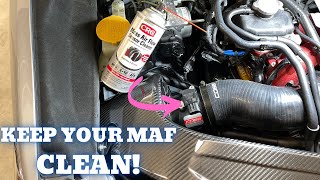
Typical fix: Remove the sensor (held by two Phillips screws) and clean it thoroughly with a dedicated Mass Airflow Sensor cleaner spray. 🎬 Watch: How to clean your Subaru MAF sensor properly. Do not touch the internal wires. Allow it to dry completely for at least 15-20 minutes before reinstalling.
Est. part cost: $10-$20 for MAF cleaner spray - Vacuum Leak 🟡 Medium Probability The accordion-style rubber intake boot between the air filter housing and the throttle body is a common failure point. Over time, it can develop cracks, allowing unmetered air to enter the engine after the MAF sensor.
How to confirm: Perform a smoke test on the intake system to find the source of the leak. Alternatively, with the engine running, carefully spray short bursts of brake cleaner or starting fluid around intake manifold gaskets, vacuum hoses, and especially the intake boot. A change in engine idle RPM indicates a leak.
Typical fix: Replace the cracked hose (especially the main intake boot), leaking gasket, or tighten the loose clamp that is causing the leak.
Est. part cost: $20-$100 depending on the leaking component - Faulty or Sticking PCV Valve 🟡 Medium Probability The PCV valve regulates crankcase pressure. If it sticks open, it can allow excessive oil vapor to be drawn into the intake, fouling the MAF sensor. If it sticks closed, it can increase crankcase pressure, potentially causing oil leaks. Subaru has issued TSBs for PCV valve design changes.
How to confirm: Remove the PCV valve from the engine. If you shake it and it does not rattle, it is stuck and needs to be replaced.
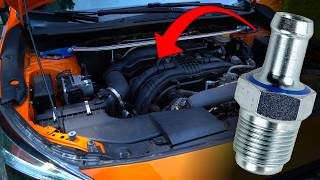
Typical fix: Replace the PCV valve. It is a low-cost part and considered a maintenance item. The part number for the FB20B engine is typically 11810AA131. 🎬 See this walkthrough for replacing the FB20 PCV valve.
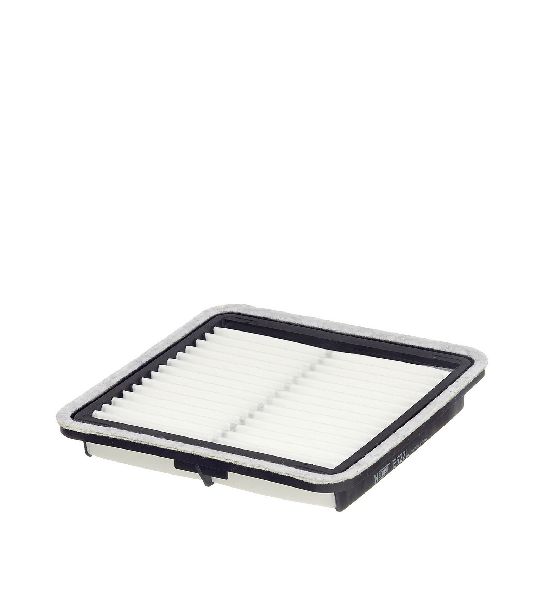
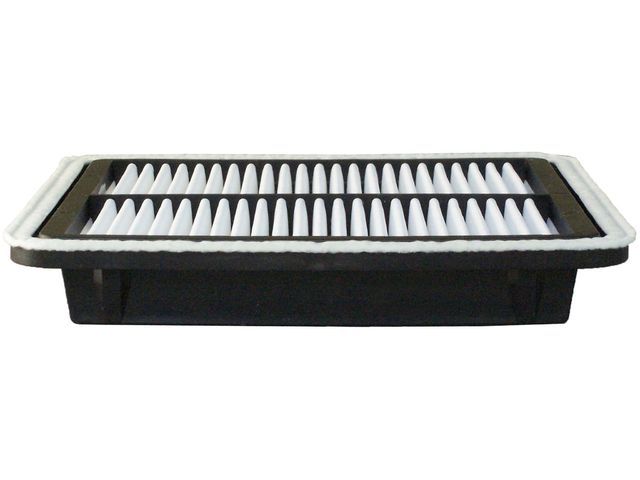
Est. part cost: $15-$30 - Clogged Engine Air Filter ⚪ Low Probability A severely neglected air filter can restrict airflow enough to cause the MAF sensor's readings to be lower than what the ECU expects for a given throttle input, triggering the code.
How to confirm: Visually inspect the engine air filter. If it is black, full of debris, or has not been changed in a long time, it is clogged.
Typical fix: Replace the engine air filter.
Est. part cost: $15-$30 - Faulty MAF Sensor ⚪ Low Probability While durable, the sensor can fail electronically over time. This is usually the cause only after cleaning it and ruling out vacuum leaks and PCV issues.
How to confirm: After confirming no vacuum leaks and that cleaning the sensor did not fix the issue, the sensor itself is the likely culprit. A scan tool can monitor live MAF data (g/s) to see if readings are erratic, unresponsive to RPM changes, or flatlined.
Typical fix: Replace the MAF sensor. It is highly recommended to use an OEM (Subaru) or the original supplier (Denso) part to avoid compatibility issues.
Est. part cost: $150-$250 for OEM, $60-$120 for quality aftermarket
Rare But Worth Checking
- Damaged MAF Sensor Wiring or Connector: Check the wiring harness leading to the MAF sensor for any visible damage, corrosion in the connector pins, or loose connections. This can cause the same symptoms as a failed sensor.
- Clogged Catalytic Converter: A restricted exhaust can create backpressure that affects the airflow readings at the MAF sensor, sometimes triggering a P0101 code. This is more likely if the car feels very sluggish and other exhaust-related codes are present.
Diagnosis Steps
- Connect an OBD-II scanner to verify the P0101 code and check for any other stored codes, especially P0171 or P0172. 🎬 Watch: A guide to diagnosing P0101 causes and fixes.
- Inspect the engine air filter. Replace it if it is dirty or clogged.
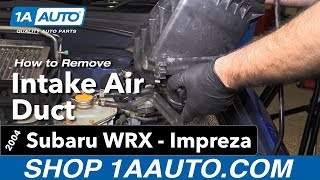
- Visually inspect the entire air intake tract from the air filter box to the throttle body. Pay close attention to the flexible accordion boot for cracks or tears. Ensure all clamps are tight.
- Disconnect the MAF sensor electrical connector and inspect for corrosion or damage.
- Remove the two Phillips head screws holding the MAF sensor in place and carefully pull it out of the intake housing.
- Spray the sensor's wire or plate elements generously with a dedicated MAF sensor cleaner. DO NOT use brake cleaner or carburetor cleaner, and DO NOT touch the elements.
- Allow the sensor to air dry completely for at least 15-20 minutes.
- While the sensor dries, locate and inspect the PCV valve. Remove it and shake it; if it doesn't rattle, replace it.
- Reinstall the MAF sensor, clear the codes with the scanner, and perform a test drive to see if the code returns.
- If the code persists, perform a smoke test to definitively check for vacuum leaks in the intake manifold, gaskets, and vacuum lines.
- If no vacuum leaks are found and cleaning was ineffective, replace the MAF sensor with a new, high-quality OEM or Denso part.
Parts You'll Likely Need
- Mass Air Flow (MAF) Sensor
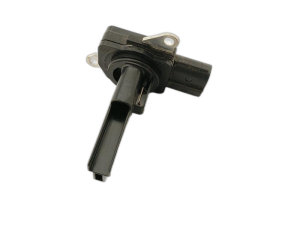
(OEM #22680AA380 (supersedes 22680AA38A))— This is the sensor that triggers the code. It is often replaced if cleaning does not resolve the issue and no vacuum leaks are present.
Trusted brands: Denso (OEM supplier, part #197400-5111), Subaru (OEM)
OEM price range: $175-$250
Aftermarket price range: $70-$120 - Engine Air Filter
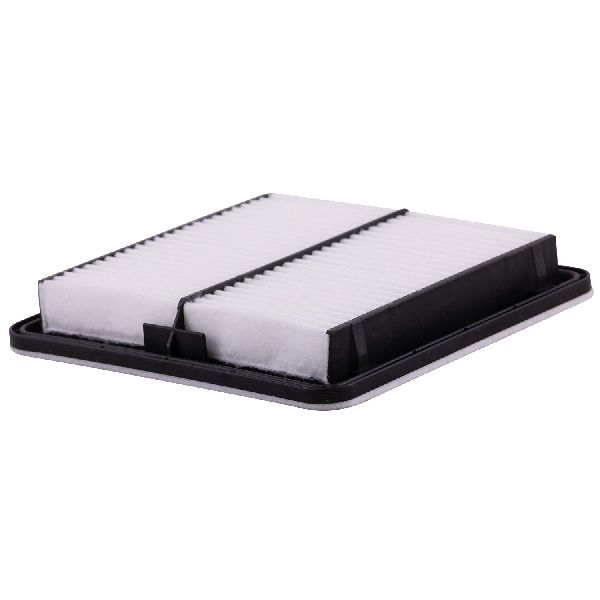
(OEM #16546AA12A)— A clogged air filter is a potential cause and should be inspected and replaced as part of routine maintenance and diagnosis for this code.
Trusted brands: Subaru OE, Denso, Wix
OEM price range: $20-$35
Aftermarket price range: $15-$25 - PCV Valve
(OEM #11810AA131)— A sticking or failed PCV valve is a common maintenance item that can contribute to MAF sensor contamination and trigger a P0101 code.
Trusted brands: Subaru OE, SMP
OEM price range: $15-$30
Aftermarket price range: $10-$20
Related Codes That Often Appear With This One
- P0171 — System Too Lean. A vacuum leak or under-reporting MAF sensor causes the engine to receive more air than it measured, leading to a lean condition. This is the most common code to appear alongside P0101.
- P0172 — System Too Rich. Less common, but a faulty MAF sensor that incorrectly reports high airflow can cause the ECM to inject too much fuel, leading to a rich condition.
Technical Service Bulletins (TSBs) & Recalls
- WTV-81 Campaign: Related to a recall for PCV valve separation on certain Subaru models, which can cause excessive oil consumption and engine damage.
- TSB 07-89-15R: While not directly for P0101, this TSB addresses electrical relay issues that can cause a no-start condition, highlighting the sensitivity of the vehicle's electronics.
Mechanic-Grade Diagnostic Values
- Mass Airflow (g/s) at Idle — expected: 2 to 7 g/s, depending on engine size. For a 2.0L engine like the FB20B, a reading between 2-4 g/s is typical.. Failure: Readings that are significantly lower (suggesting a dirty sensor or vacuum leak) or higher than the expected range, or readings that are erratic and do not increase smoothly with RPM.
- Mass Airflow (g/s) at 2500 RPM (no load) — expected: 15 to 25 g/s.. Failure: A reading that does not rise in a linear fashion with RPM, or is significantly outside the expected range, can indicate a faulty sensor.
- MAF Sensor Voltage at Idle — expected: Approximately 1.2 to 1.4 volts.. Failure: Voltage significantly below this range at idle could indicate a bad sensor.
Scan Tool Commands That Help
- Subaru Select Monitor (SSM) or equivalent professional scan tool: Reset Memory / Clear Learned Values — After replacing the MAF sensor or cleaning it, it is advisable to reset the ECM's learned fuel trim values. This forces the computer to relearn the air-fuel mixture strategy with the new/clean sensor's readings, which can resolve lingering performance issues faster than waiting for the system to adapt on its own.
Wiring & Ground Locations
- MAF Sensor Connector — On the air intake tube, immediately after the air filter housing.. The 5-pin connector and its wiring are a potential point of failure. Check for corrosion on the pins, chafed wires, or a loose connection, as this can interrupt the signal and mimic a failed sensor.
Real Owner Repair Stories
- Reddit user in r/WRX (2005 WRX (EJ engine, but diagnosis is analogous)) — Extremely rough running, had to hold the gas to keep it idling. Fuel trims (LTFT and STFT) were maxed out at +25%.
❌ Tried (didn't work) Inspecting and tightening all pre-turbo intake connections., Replacing the throttle body hose., Cleaning the MAF sensor multiple times with dedicated cleaner.
✅ What actually fixed it The MAF sensor itself had failed. Unplugging the MAF sensor made the engine run perfectly (in a default limp mode), confirming the sensor was sending bad data. The faulty sensor was reading 5-6 g/s at idle, whereas a healthy one should be closer to 1.5-2.5 g/s for that engine. Replacing the sensor resolved the issue.
"I Checked Everything" — The Actual Cause
- A stuck-open PCV valve can act as a vacuum leak that may not be detected by a smoke test if the smoke is introduced at the throttle body. The PCV system pulls unmetered air from the crankcase into the intake manifold, which occurs after the MAF sensor, causing a lean condition and a P0101 code.
OEM Part Supersession History
22680AA38A→22680AA380— Standard part revision by the manufacturer.
Heads up: The parts are interchangeable. 22680AA380 is the current replacement for 22680AA38A.
Model Year Variations Within This Range
- 2015-2016: A facelift for the 2015 model year introduced a revised grille, headlamps, and new touchscreen interfaces. However, the FB20B engine and its related components for the P0101 code remained the same throughout the 2012-2016 generation.
Diagnostic Flowchart
Other Known Issues on This Vehicle
Issues unrelated to this code that are worth knowing about as an owner of this generation:
- Excessive Oil Consumption 🔴 High — Common on 2012-2015 models. Caused by issues with piston rings, allowing oil to burn in the combustion chamber. Some owners report adding a quart of oil every 2,000-3,000 miles. (Ref: A class-action lawsuit led to a warranty extension (8 years/100,000 miles) and potential short block replacement for affected vehicles that fail an oil consumption test.)
- CVT Transmission Problems 🔴 High — Prevalent in early models of this generation (2012-2015), symptoms include shuddering, hesitation, stalling, and jerking. Often related to the internal valve body. (Ref: Subaru extended the CVT warranty to 10 years/100,000 miles for many vehicles produced between 2012 and 2017.)
- Failing PCV Valve 🟠 Medium — The PCV valve can degrade or separate, allowing engine oil into the combustion chamber or causing improper crankcase ventilation. This can lead to oil consumption and contaminate the MAF sensor. (Ref: Subaru issued recalls and TSBs (e.g., WTV-81) for certain models due to PCV valve separation.)
- Front Control Arm Bushing Wear 🟡 Low — As the vehicle ages, the front control arm bushings can wear out, leading to a loose feeling in the steering, especially over bumps.
Used vs. New Parts: Buying Guide for This Vehicle
When a used part is the smart pick: A used MAF sensor from a low-mileage donor vehicle can be a cost-effective option, as they are not a high-wear item. However, given the sensitivity of the part and the relatively low cost of a quality aftermarket replacement, buying new is often the safer bet to avoid inheriting a problem.
Donor-vehicle mileage cap: roughly under 80000 miles for the part to have meaningful remaining life.
What to inspect on the donor part:
- Ensure the donor vehicle was not in a front-end collision that could have damaged the sensor or wiring.
- Visually inspect the sensor element for any signs of physical damage, oil contamination, or broken wires before purchasing.
- Check that the part numbers (Subaru: 22680AA380 and Denso: 197400-5111) match exactly.
Aftermarket brands forum-validated for this vehicle:
- Denso (This is the Original Equipment Manufacturer, making it the best alternative to a Subaru-branded part)
- NTK
Brands owners have reported issues with on this vehicle:
- Unnamed, no-brand sensors from online marketplaces are frequently reported on forums to be calibrated incorrectly, causing persistent performance issues or failing shortly after installation.
Real Owner Stories
Aggregated from forums and TSBs cited above. Mileages and costs reflect what owners reported in those sources.
2010 Subaru Impreza 2.5i
Symptoms: Check engine light came on, showing both codes P0172 and P0101.
What fixed it: Cleaning the original MAF sensor after an aftermarket unit from AutoZone failed to work correctly.
Source hint: r/subaruimpreza
Related OBD-II Codes
Frequently Asked Questions
Is there a specific PCV valve part number I should use for my FB20B engine to prevent MAF fouling?
Does Subaru have any recalls related to the PCV system that could cause a P0101 code?
Can I use any cleaner to fix my dirty MAF sensor?
I have a 2013 Crosstrek with a P0101; is the cause the same as the Impreza?
Should I buy an aftermarket MAF sensor from a local parts store if cleaning doesn't work?
How can I check if my intake boot is causing the P0101 code?
Helpful Videos

![How to Install a Cold Air Intake [Subaru Impreza 2002-2007]](https://img.youtube.com/vi/6HKMTM3X9_A/mqdefault.jpg)
Used OEM Parts in Stock
New Aftermarket Parts Available

The information in this article is provided for general reference and educational purposes only. Vehicle specifications, procedures, and part compatibility can vary by production date, trim level, and region. Always consult your vehicle's factory service manual and verify part numbers before purchasing or performing repairs. Safety-critical components such as airbags, seat belts, and braking systems should be installed by a qualified professional.
- Subaru Impreza:
- 🎬 Helpful Videos
- 🛍️ Shop This Part
- What's Unique About the 2012-2016 Subaru Impreza
- Symptoms You May Notice
- Most Likely Causes
- Rare But Worth Checking
- Diagnosis Steps
- Parts You'll Likely Need
- Related Codes That Often Appear With This One
- Technical Service Bulletins (TSBs) & Recalls
- Mechanic-Grade Diagnostic Values
- Scan Tool Commands That Help
- Wiring & Ground Locations
- Real Owner Repair Stories
- "I Checked Everything" — The Actual Cause
- OEM Part Supersession History
- Model Year Variations Within This Range
- Diagnostic Flowchart
- Other Known Issues on This Vehicle
- Used vs. New Parts: Buying Guide for This Vehicle
- Real Owner Stories
- 2010 Subaru Impreza 2.5i
- Related OBD-II Codes
- Frequently Asked Questions
- 🎟️ Get 5% Off