

P0101 on 2014-2018 Subaru Forester 2.5L: MAF Sensor Causes and Fixes
On a 2014-2018 Subaru Forester, code P0101 is most often caused by a dirty Mass Airflow (MAF) sensor or a cracked air intake boot. Start by cleaning the MAF sensor with a dedicated cleaner (~$15). If the code returns, inspect the flexible rubber intake boot for cracks and replace if necessary.
- P0101 on your Forester means the MAF sensor reading is out of the expected range.
- Before buying any parts, spend $15 on a can of dedicated MAF sensor cleaner and clean the sensor. This is the most common fix.
- Thoroughly inspect the black rubber air intake boot between the air filter box and the engine for cracks, as this is the second most common cause.
- If you must replace the MAF sensor, using an OEM or Denso branded part is strongly recommended for reliability.
- Ignoring this code can lead to poor performance, bad fuel mileage, and potential damage to other expensive components like the catalytic converter.
What's Unique About the 2014-2018 Subaru Forester
For the fourth-generation (SJ) Forester with the FB25B engine, the P0101 code follows a common pattern seen across many vehicles: it's more often a maintenance issue than a hard part failure. The primary culprits are contaminants on the MAF sensor element or unmetered air entering the system after the sensor. A common source of MAF contamination is an over-oiled aftermarket air filter. The flexible rubber intake boot is a known weak point that can develop cracks over time, creating a vacuum leak that the ECM cannot account for, leading to this code.
Symptoms You May Notice
- Check Engine Light illuminated
- Engine hesitation or sluggish acceleration
- Rough or unstable idle
- Stalling, especially when coming to a stop
- Reduced fuel economy
- Black smoke from the exhaust in some cases
- Replacing the MAF sensor before cleaning it. A thorough cleaning with the correct product resolves the issue in a majority of cases and is much cheaper.
- Replacing the MAF sensor when the actual problem is a cracked intake boot. Always inspect for vacuum leaks before replacing expensive electronic parts. 🎬 See why this common issue is often misdiagnosed.
- Overlooking a dirty air filter, which is a simple maintenance item that can cause the code.
Most Likely Causes
- Dirty Mass Airflow (MAF) Sensor 🔴 High Probability The MAF sensor's delicate hot wire can become contaminated with dirt, oil, or other debris over time, which insulates it and causes inaccurate readings. This is a very common issue, often exacerbated by using over-oiled aftermarket air filters which allow oil vapor to coat the sensor element.
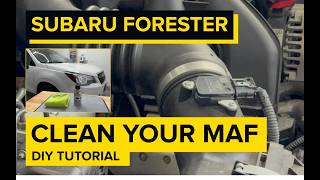
How to confirm: Remove the MAF sensor from the intake tube (located just after the air filter box). Visually inspect the two small wires inside the sensor housing. If they appear dirty or coated, this is the likely cause.
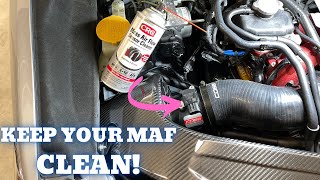
Typical fix: Clean the sensor wires carefully using only a dedicated Mass Airflow Sensor cleaner spray. Do not touch the wires or use other chemicals like brake or carb cleaner. Allow it to dry completely for at least 10-15 minutes before reinstalling.
Est. part cost: $10-$20 for MAF cleaner spray - Cracked or Loose Intake Air Boot 🟡 Medium Probability The flexible rubber duct located between the MAF sensor and the throttle body is subjected to engine heat and vibration, causing it to become brittle and crack over time, especially in the accordion-like ribs. This allows unmetered air to enter the engine, creating a discrepancy between what the MAF sensor reads and what the engine actually receives, often triggering a P0171 (System Too Lean) code alongside P0101.
How to confirm: With the engine running, listen for a hissing sound around the intake area. Visually inspect the entire rubber intake boot, flexing it to reveal hidden cracks in the ribbed sections. A smoke test is the most definitive way to find a leak.
Typical fix: Replace the cracked intake air boot with a new OEM part (Part No. 14456AA440).
Est. part cost: $40-$80 - Dirty or Clogged Engine Air Filter ⚪ Low Probability A severely clogged air filter can restrict airflow to the point that the MAF sensor's readings fall below the expected range for a given engine speed and throttle position.
How to confirm: Remove and inspect the engine air filter. If it is visibly filled with dirt and debris, it needs to be replaced.
Typical fix: Replace the engine air filter.
Est. part cost: $20-$40 - Failed Mass Airflow (MAF) Sensor ⚪ Low Probability While less common than being dirty, the sensor's electronics can fail internally. This is often the case if cleaning the sensor does not resolve the issue and no vacuum leaks are present. Using cheap aftermarket sensors is not recommended as they can be poorly calibrated and cause persistent issues.
How to confirm: After confirming the sensor is clean and there are no vacuum leaks, the next step is to test the sensor's output with a scan tool to see if the g/s readings are erratic or do not increase smoothly with RPM. If readings are faulty, the sensor has failed.
Typical fix: Replace the MAF sensor. It is highly recommended to use an OEM or OEM-supplier part like Denso.
Est. part cost: $100-$200
Rare But Worth Checking
- Wiring or Connector Issue: The wiring harness or connector for the MAF sensor can become damaged, corroded, or loose, causing an intermittent or complete loss of signal. Wiggle the connector and harness with the engine running to see if the idle changes.
- Clogged Catalytic Converter: A restricted exhaust can create backpressure, affecting the engine's ability to draw in air and skewing MAF sensor readings. This is usually accompanied by a significant loss of power, a P0420 code, and possibly other exhaust-related codes.
Diagnosis Steps
- Read the code with an OBD-II scanner and confirm P0101 is present. Note any other codes, especially P0171.
- Visually inspect the entire air intake system from the air filter box to the throttle body. Look for loose clamps or obvious cracks in the rubber intake boot, paying close attention to the accordion ribs.
- Inspect the engine air filter. If it is dirty or clogged, replace it.
- Remove the MAF sensor. It is typically held in by two Phillips head screws. Carefully disconnect the electrical connector.
- Inspect the MAF sensor's internal wires. If they look dirty, clean them using only dedicated MAF sensor cleaner spray. Let it air dry completely for at least 10-15 minutes.
- Reinstall the MAF sensor, clear the code, and perform a test drive to see if the code returns.
- If the code returns, the next step is to check for vacuum leaks. A smoke test is the most effective method to find hard-to-see cracks in hoses.
- If no vacuum leaks are found, use a scan tool with live data capability to monitor the MAF sensor's readings in grams per second (g/s) at idle and while revving the engine. The reading should be stable at idle (typically 2.5-3.5 g/s for a warm FB25B engine) and increase smoothly with RPM.
- If the live data is erratic, shows 0 g/s, or does not change with RPM, and the wiring is confirmed to be intact, the MAF sensor has likely failed and should be replaced.
Parts You'll Likely Need
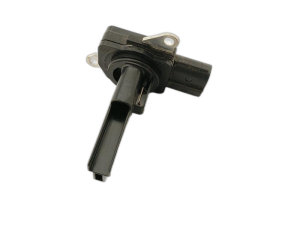
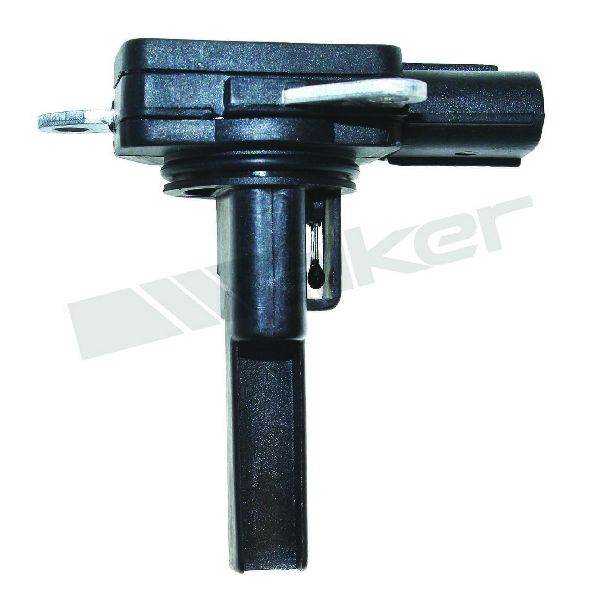
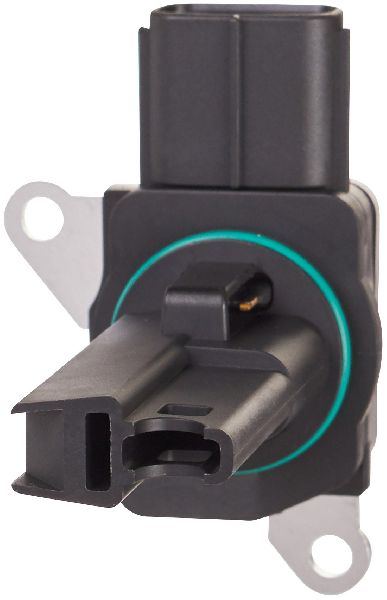
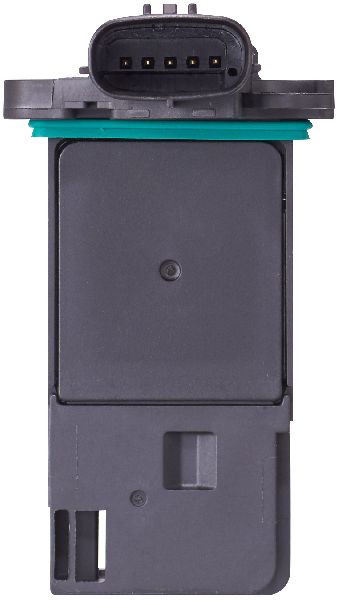
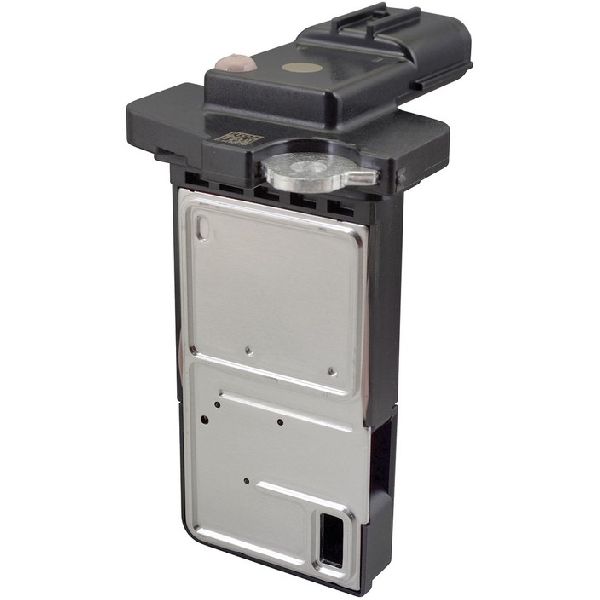
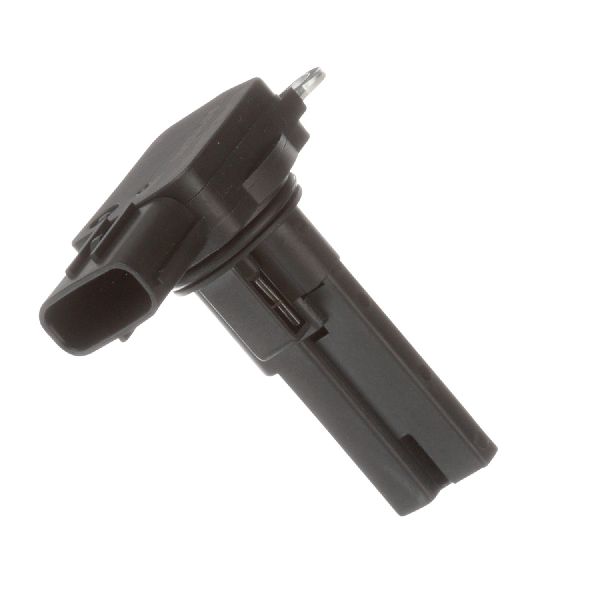
- Mass Airflow (MAF) Sensor
(OEM #22680-AA410)— This is the part to replace if cleaning the original sensor and checking for vacuum leaks does not resolve the code. Note: This part number is for the 2.0L Turbo model but is often cross-referenced; confirm with dealer for 2.5L NA.
Trusted brands: Denso (OEM Supplier), Hitachi
OEM price range: $180-$270
Aftermarket price range: $70-$150 - Intake Air Boot / Duct
(OEM #14456AA440)— This flexible rubber hose is a common failure point for vacuum leaks due to cracking from age and heat.
Trusted brands: Subaru (OEM)
OEM price range: $40-$80
Aftermarket price range: $25-$50 - MAF Sensor Cleaner — This is the first and most common fix. The sensor is often just dirty and does not need to be replaced.
Trusted brands: CRC, WD-40 Specialist
Aftermarket price range: $10-$20
Related Codes That Often Appear With This One
- P0171 — System Too Lean (Bank 1) - A vacuum leak that causes P0101 allows unmetered air into the engine, which leads to a lean air/fuel mixture detected by the oxygen sensor.
Technical Service Bulletins (TSBs) & Recalls
- Subaru Service Bulletin 16-115-18: While not for P0101, this TSB is critical for owners as it details the CVT warranty extension to 10 years/100,000 miles, a major concern for this vehicle generation.
Mechanic-Grade Diagnostic Values
- Mass Airflow Rate at warm, stable idle — expected: Approximately 2.5 g/s. A general rule is that the g/s reading should be roughly equal to the engine's displacement in liters.. Failure: A reading significantly lower than 2.5 g/s (e.g., 1.0 g/s) suggests a large vacuum leak after the sensor, while an erratic or non-responsive reading points to a faulty sensor or wiring.
- MAF Sensor Signal Voltage at idle — expected: Approximately 1.0V at idle.. Failure: Voltage should increase smoothly and proportionally as the engine RPM increases. If the voltage is stuck, erratic, or does not respond to RPM changes, the sensor or its circuit is faulty.
- MAF Sensor Power Supply Voltage (Key On, Engine Off) — expected: 12V (battery voltage) or 5V reference, depending on the specific pin.. Failure: No voltage indicates a blown fuse or a break in the power supply wire.
Wiring & Ground Locations
- MAF Sensor Connector — On the air intake tube, immediately following the engine air filter housing.. This is a 5-wire connector. Damage to the connector or its wiring is a potential cause of the P0101 code. The sensor integrates both the Mass Airflow and Intake Air Temperature (IAT) sensors.
- Engine Ground — Multiple ground straps connect the FB25B engine to the chassis. A primary one is typically located near the engine mount on the passenger side.. A poor engine ground can cause a variety of sensor-related issues, including erratic MAF sensor readings. While not a primary cause, it should be checked if electrical issues are suspected.
OEM Part Supersession History
14456AA440→N/A— This is the current part number for the intake air boot for 2014-2016 2.5L models.
Heads up: Fitment for 2017-2018 models should be confirmed with a VIN, as minor changes may have occurred during the facelift.
Model Year Variations Within This Range
- 2017-2018: The Forester received a facelift for the 2017 model year, which included revised exterior styling, a quieter cabin with an acoustic windshield and thicker glass, and updated technology like the EyeSight system. However, the core 2.5L FB25B engine and its intake system remained fundamentally the same, so the causes and fixes for P0101 are consistent across the 2014-2018 range.
Diagnostic Flowchart
Other Known Issues on This Vehicle
Issues unrelated to this code that are worth knowing about as an owner of this generation:
- Excessive Oil Consumption 🔴 High — Widespread, especially in 2014-2015 models. Led to a class-action lawsuit. Caused by defective piston rings. (Ref: Class-action lawsuit settlement (Yeager v. Subaru of America, Inc.) extended warranties and offered reimbursements for oil consumption tests and repairs.)
- CVT Transmission Failure/Hesitation 🔴 High — Common enough that Subaru extended the powertrain warranty for the CVT to 10 years/100,000 miles. Symptoms include shuddering, hesitation, and stalling. (Ref: Subaru Service Bulletin 16-115-18 (and others) extended the CVT warranty.)
- A/C System Compressor/Condenser Failure 🟠 Medium — Many owners report premature failure of the A/C compressor or leaks from the condenser, leading to loss of cooling.
- Rear Suspension Coil Spring Failure 🟠 Medium — Rear coil springs can corrode and break, particularly on earlier models of this generation. (Ref: Subaru issued a recall (NHTSA ID: 19V149000) for this issue on some 2014-2016 models.)
- Premature Wheel Bearing Failure 🟡 Low — Some owners report wheel bearings failing earlier than expected, resulting in a humming or droning noise that changes with vehicle speed.
Used vs. New Parts: Buying Guide for This Vehicle
When a used part is the smart pick: A used OEM intake air boot from a low-mileage donor vehicle is a reasonable choice if it is thoroughly inspected for cracks. Given the high cost of a new OEM boot, a good-condition used part can be a significant saving. Electronic parts like the MAF sensor are riskier to buy used.
Donor-vehicle mileage cap: roughly under 60000 miles for the part to have meaningful remaining life.
What to inspect on the donor part:
- For an intake boot, inspect it off the vehicle. Flex the accordion ribs and check for any signs of dry rot, brittleness, or hairline cracks.
- Ensure all mounting points and hose connections are intact.
- For a MAF sensor, ask for the donor vehicle's mileage. Avoid sensors from high-mileage cars or those with signs of physical damage to the connector or housing.
OEM-only on this vehicle (don't cheap out):
- Mass Airflow (MAF) Sensor: Aftermarket MAF sensors are notoriously unreliable and often poorly calibrated, leading to the P0101 code returning. It is strongly recommended to use a genuine Subaru or Denso (the OEM supplier) part.
Aftermarket brands forum-validated for this vehicle:
- Denso for the MAF sensor (as they are the original equipment manufacturer).
- CRC or Liqui Moly for MAF sensor cleaner.
Brands owners have reported issues with on this vehicle:
- Avoid generic, unbranded, or suspiciously cheap MAF sensors from online marketplaces. They are a common cause of repeat failures for this code.
Real Owner Stories
Aggregated from forums and TSBs cited above. Mileages and costs reflect what owners reported in those sources.
2014-2018 Subaru Forester FB25B
Symptoms: Significant performance improvement after cleaning the sensor.
What fixed it: Cleaned the MAF sensor for the first time using a $10 can of MAF cleaner.
Cost: $10-$10
Source hint: reddit.com/r/subaru thread titled 'Just cleaned my MAF sensor for the first time...'
2014-2018 Subaru Forester FB25B
Symptoms: P0101 often paired with P0171.
What fixed it: Cleaning the MAF sensor or replacing a cracked intake boot, specifically checking the accordion ribs.
Source hint: subaruforester.org forum threads
Related OBD-II Codes
Frequently Asked Questions
Does Subaru Service Bulletin 16-115-18 apply to my 2014-2018 Forester if I have a P0101 code?
I have a P0101 and a P0171 on my FB25B engine; are they related?
Can I use any cleaner to fix the MAF sensor on my Forester?
What is the specific part number for the intake boot if mine is cracked?
What should the MAF sensor reading be at idle for a warm 2.5L Forester?
Is there a recall for the suspension issues I'm noticing alongside my engine light?
Helpful Videos
Used OEM Parts in Stock

New Aftermarket Parts Available


The information in this article is provided for general reference and educational purposes only. Vehicle specifications, procedures, and part compatibility can vary by production date, trim level, and region. Always consult your vehicle's factory service manual and verify part numbers before purchasing or performing repairs. Safety-critical components such as airbags, seat belts, and braking systems should be installed by a qualified professional.
- Subaru Forester:
- 🎬 Helpful Videos
- 🛍️ Shop This Part
- What's Unique About the 2014-2018 Subaru Forester
- Symptoms You May Notice
- Most Likely Causes
- Rare But Worth Checking
- Diagnosis Steps
- Parts You'll Likely Need
- Related Codes That Often Appear With This One
- Technical Service Bulletins (TSBs) & Recalls
- Mechanic-Grade Diagnostic Values
- Wiring & Ground Locations
- OEM Part Supersession History
- Model Year Variations Within This Range
- Diagnostic Flowchart
- Other Known Issues on This Vehicle
- Used vs. New Parts: Buying Guide for This Vehicle
- Real Owner Stories
- 2014-2018 Subaru Forester FB25B
- 2014-2018 Subaru Forester FB25B
- Related OBD-II Codes
- Frequently Asked Questions
- 🎟️ Get 5% Off