

P0101 on 2017-2018 Nissan Rogue Hybrid: MAF Sensor vs. ECM Software Fix
For a P0101 code on a 2017-2018 Nissan Rogue Hybrid, the issue is often a software glitch that requires a dealer to reprogram the Engine Control Module (ECM) per a technical service bulletin. This TSB (NTB19-045b) addresses an error in how the permanent DTC is stored and cleared. If not the software, the next most likely cause is a dirty or faulty Mass Airflow (MAF) sensor, which is a relatively inexpensive part to clean or replace. Always check for the TSB before replacing parts.
- First, check for TSBs. Your 2017-2018 Rogue Hybrid may only need an ECM software update from a Nissan dealer, which could be the entire fix.
- If software isn't the issue, the most common hardware problem is a dirty MAF sensor. Cleaning it with a dedicated spray is a cheap and easy first step.
- Always inspect for vacuum leaks in the air intake hose between the MAF sensor and the engine before replacing parts.
- If you must replace the MAF sensor, consider using an OEM part from Nissan, as these vehicles can be sensitive to aftermarket electronic components.
What's Unique About the 2017-2018 Nissan ROGUE HYBRID
On the 2017-2018 Rogue Hybrid, a P0101 code doesn't always point to a bad hardware component. Nissan issued several Technical Service Bulletins (TSBs), including NTB19-045b, indicating that due to "calibration errors," the ECM can improperly store this code as a permanent DTC. [⭐ MANUFACTURER TSB — highest authority] The official fix in these cases is not to replace the MAF sensor but to have a dealership reprogram the ECM. Crucially, the TSB clarifies the reprogram 'updates the way the permanent DTC is stored and allowed to be erased' after the actual fault is diagnosed and repaired. This known software issue makes it crucial to check for TSBs before starting any hardware repairs to avoid the code returning even after a fix.
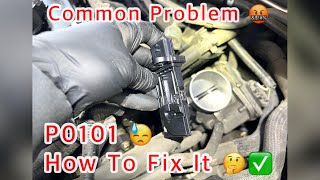
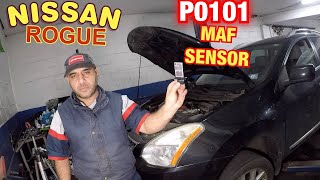
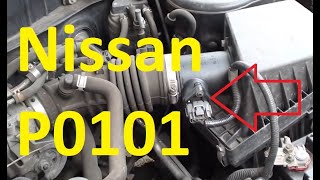
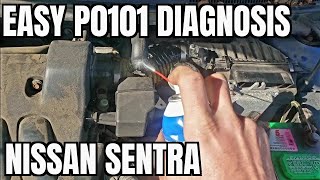
🎬 Watch: Step-by-step guide to fixing this common Nissan P0101 issue.Diagnostic Flowchart
Tap your situation to follow the diagnostic path that matches what you're seeing on this vehicle.
Symptoms You May Notice
- Check Engine Light is on
- Engine hesitation or stumbling during acceleration
- Rough or unstable idle
- Reduced fuel economy, with some owners reporting 20 MPG city / 25 MPG highway
- Stalling, especially at low speeds or when coming to a stop
- Black smoke from the exhaust in rich-running conditions
- Vehicle may enter 'limp mode,' restricting engine power
- Jerking when transmission shifts due to incorrect engine load calculation
- Replacing the MAF sensor when the true cause is the ECM software needing an update as per TSB NTB19-045b. The code often returns after replacement if the reprogram is not performed.
- Replacing the oxygen sensors, as their readings can also be affected by the incorrect air-fuel mixture caused by the P0101 fault.
- Assuming the MAF sensor is bad when it is simply dirty. Cleaning the sensor is a much cheaper first step.
Most Likely Causes
- Engine Control Module (ECM) Software Calibration Error 🔴 High Probability Nissan has issued multiple TSBs (NTB19-045b, P9328_P9343_P934) for this specific issue on 2017-2018 Rogue Hybrids, indicating a known software problem related to storing and clearing permanent DTCs. [⭐ MANUFACTURER TSB — highest authority, 7]
How to confirm: A Nissan dealership can check your vehicle's VIN against the TSBs and confirm if the ECM part number is one of the affected units. This is the only way to definitively confirm if the reprogram applies.
Typical fix: Reprogramming the ECM with updated software. This must be done by a Nissan dealer using their CONSULT diagnostic tool. The TSB states this should be done *after* diagnosing and repairing the initial cause of the code.
Est. part cost: $0 (if under warranty), $100-$250 for dealer labor if not. - Dirty or Contaminated Mass Airflow (MAF) Sensor 🔴 High Probability The MAF sensor's delicate wire can become contaminated by dirt, oil from aftermarket filters, or debris from the air filter, leading to inaccurate readings. This is a common failure point on most modern vehicles and often the first physical part to check.
How to confirm: Visually inspect the sensor element for dirt or grime after removal. You can also monitor live data with a scan tool; the MAF reading at idle with no load should be stable, around 2.5 g/s for this engine. Jumps or erratic values indicate a problem.
Typical fix: Remove the sensor and clean it carefully with a dedicated MAF sensor cleaner spray. Do not touch the sensor element. Allow it to dry completely before reinstalling. If cleaning doesn't work, the sensor must be replaced, preferably with an OEM part.
Est. part cost: $10-$20 for cleaner, $80-$250 for a new sensor. - Vacuum Leak 🟡 Medium Probability Air leaks in the intake system after the MAF sensor allow 'unmetered' air into the engine, causing the actual airflow to differ from the measured airflow, triggering P0101. Cracked intake boots, loose clamps, or deteriorated PCV hoses are common culprits.
How to confirm: Visually inspect the air intake hose between the airbox and throttle body for cracks or loose connections. Listen for hissing sounds at idle. A smoke test is the most effective way to find small, hard-to-see leaks.
Typical fix: Repair the source of the leak, which usually involves replacing a cracked hose or tightening a clamp.
Est. part cost: $20-$100 - Dirty or Clogged Engine Air Filter ⚪ Low Probability A severely restricted air filter can reduce airflow enough to cause the MAF sensor's readings to be out of the expected range, especially under high engine load.
How to confirm: Visually inspect the engine air filter. If it is visibly dirty, clogged with debris, or past its service interval, it needs to be replaced.
Typical fix: Replace the engine air filter.
Est. part cost: $20-$50
Rare But Worth Checking
- Clogged Catalytic Converter: A restricted exhaust can cause backpressure that affects airflow readings. This usually triggers other codes as well, such as P0420, and may be suspected if the P0101 persists after other fixes.
- MAF Sensor Wiring or Connector Issue: Damage to the wiring harness or corrosion in the connector pins can disrupt the signal from the sensor to the ECM. A visual inspection of the connector and harness is recommended.
- Failing Battery: A weak or failing battery can cause low system voltage, leading to erratic behavior from various electronic modules, including the ECM and its communication with the MAF sensor. One owner reported that replacing an old battery resolved their persistent P0101 code.
Diagnosis Steps
- Check for Technical Service Bulletins (TSBs): Before any other step, contact a Nissan dealer or use an online service to see if TSB NTB19-045b applies to your vehicle's VIN. An ECM reprogram may be the required final step to resolve the issue.
- Inspect the Air Intake System: Check the entire air intake path from the air filter box to the throttle body. Look for cracks in the intake boot, loose clamps, or disconnected hoses. A loose boot is a very common cause.
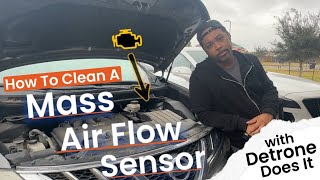
- Inspect and Clean the MAF Sensor: Unplug and remove the MAF sensor. Visually inspect it for dirt or debris. Carefully spray the sensor's wire or element with dedicated MAF sensor cleaner. Do not touch the element. Allow it to dry completely before reinstalling.
- Check the Engine Air Filter: Remove and inspect the air filter. If it's dirty or clogged, replace it. This is a simple but crucial step.
- Check Live Data: Using an OBD-II scanner, monitor the MAF sensor's readings in grams per second (g/s). At a fully warmed-up idle with no accessories on, the reading should be stable around 2.0-3.0 g/s. The reading should increase smoothly and without hesitation as you raise the engine RPM. Jumps or flat lines indicate a problem.
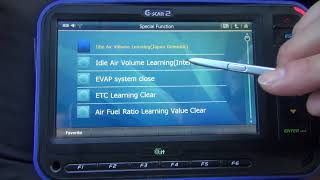
- Perform an Idle Air Volume Learn (IAVL): If you clean or replace the MAF sensor or throttle body, it is highly recommended to perform an IAVL procedure. This helps the ECM relearn the baseline airflow at idle. Some advanced scan tools can command this, otherwise it may require a trip to the dealer.
- Perform a Smoke Test: If a vacuum leak is suspected but not visible, a smoke test is the most definitive way to pinpoint the source of the leak.
- Test or Replace the MAF Sensor: If cleaning the sensor and verifying the intake system integrity does not resolve the issue, the MAF sensor itself may have failed. It is strongly recommended to use an OEM (Hitachi) or high-quality OEM-supplier sensor for Nissan vehicles to avoid compatibility issues.
Parts You'll Likely Need
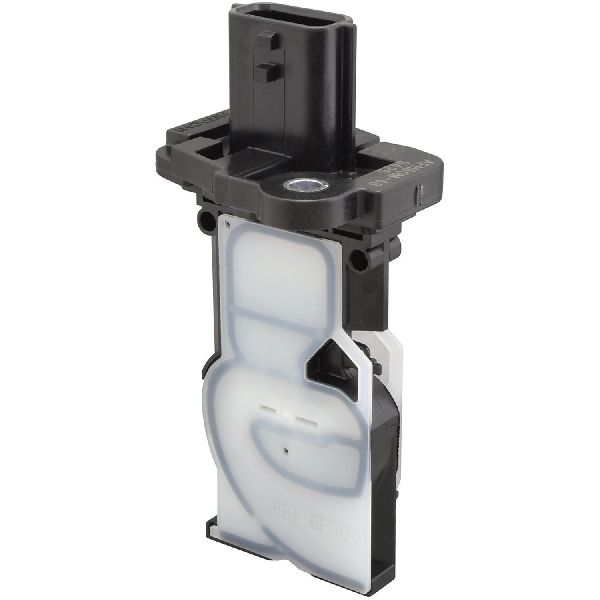
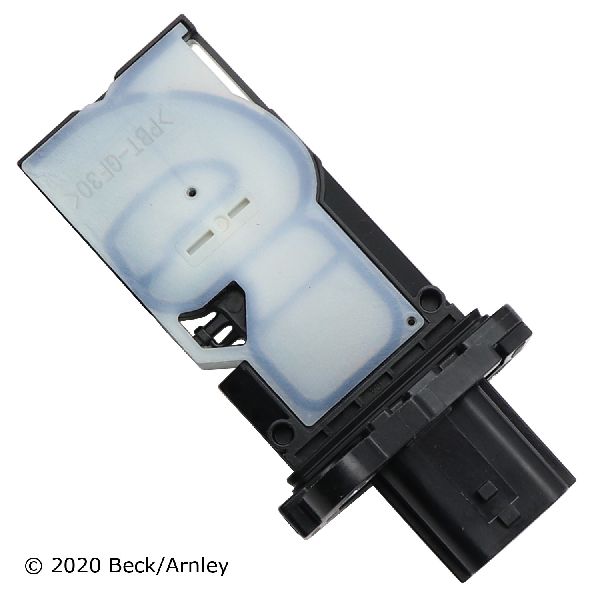
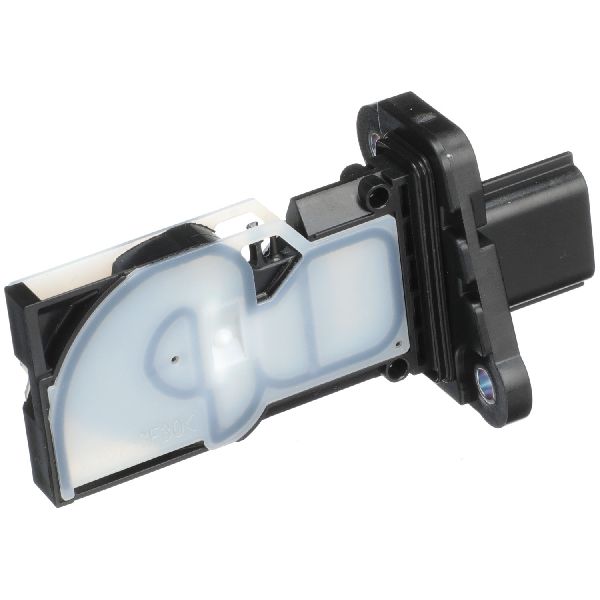
- Mass Airflow (MAF) Sensor
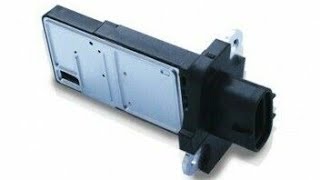
(OEM #22680-5RB0A)— If cleaning the sensor doesn't work and the ECM software is up to date, the sensor itself is the most likely failed component. Nissan vehicles are known to be sensitive to aftermarket electronics, so an OEM part from Hitachi (the OE supplier) or Nissan is highly recommended.
Trusted brands: Hitachi (Actual OE), Nissan OE
OEM price range: $150-$250
Aftermarket price range: $60-$120 - MAF Sensor Cleaner — This is the first and cheapest step in attempting to fix a P0101 code. Often, the sensor is just dirty and cleaning it restores proper function.
Related Codes That Often Appear With This One
- P0087 — This code (Fuel Rail/System Pressure - Too Low) is listed alongside P0101 in Nissan TSBs NTB19-045b and P9328_P9343_P934 as being potentially caused by the same ECM calibration error. [⭐ MANUFACTURER TSB — highest authority]
- P0448 — This code (EVAP Vent Control Circuit Shorted) is listed alongside P0101 in Nissan TSBs NTB19-045b and P9328_P9343_P934 as being potentially caused by the same ECM calibration error. [⭐ MANUFACTURER TSB — highest authority]
- P2008 — This code (Intake Manifold Runner Control Circuit/Open) is listed alongside P0101 in Nissan TSBs NTB19-045b and P9328_P9343_P934 as being potentially caused by the same ECM calibration error. [⭐ MANUFACTURER TSB — highest authority]
Technical Service Bulletins (TSBs) & Recalls
- NTB19-045b: MIL ON WITH DTC P0087, P0101, P0448, OR P2008, VEHICLES REGISTERED OUTSIDE OF CALIFORNIA. [⭐ MANUFACTURER TSB — highest authority]
- P9328_P9343_P934: Mentions reprogramming the ECM in California vehicles if a permanent DTC for P0101 (among others) is recorded due to calibration errors. [⭐ MANUFACTURER TSB — highest authority]
- NTB19-045a: An earlier version of the bulletin, also for MIL ON WITH DTC P0087, P0101, P0448, OR P2008. [⭐ MANUFACTURER TSB — highest authority]
Platform-Specific Known Issues
- ECM Reprogram is a Critical First Check: The most significant vehicle-specific issue is the high probability of a software error. TSB NTB19-045b explicitly states the ECM reprogram is not a 'repair' for the DTC's cause (like a bad sensor), but rather it 'updates the way the permanent DTC is stored and allowed to be erased.' This means even after a valid repair (like cleaning the MAF), the code may not clear until the ECM is updated by a dealer. Owners who replace the MAF sensor without checking for this TSB often report the code returning.
- Sensitivity to Aftermarket MAF Sensors: Multiple forum discussions across different Nissan models emphasize that these vehicles are notoriously sensitive to non-OEM MAF sensors. Owners frequently report that using cheaper, aftermarket sensors from sources like Amazon or local parts stores leads to the P0101 code returning quickly, whereas an OEM sensor (often made by Hitachi) has a better chance of success, assuming the underlying issue is not the ECM software.
- Temporary Fix from Cleaning: A common owner experience is that cleaning the MAF sensor with a dedicated cleaner provides a temporary solution, with the Check Engine Light turning off for a period ranging from a few days to a few weeks before returning. This often points back to either a deeper issue like the ECM software needing the TSB update or a sensor that is failing and can no longer hold its calibration.
Mechanic-Grade Diagnostic Values
- Mass Airflow (g/s) at Idle — expected: 1.0 - 4.0 g/s (with engine warm, no load, A/C off). Failure: Readings that are erratic, jumpy, or significantly outside the expected range.
- Mass Airflow (g/s) at 2,500 RPM — expected: 4.0 - 10.0 g/s (with engine warm, no load, A/C off). Failure: A reading that does not increase smoothly with RPM or falls outside this range.
- Battery Voltage — expected: Greater than 12.9V (Key On, Engine Off). Failure: Lower voltage can cause erratic communication between modules, potentially triggering a false P0101 code.
Scan Tool Commands That Help
- Nissan CONSULT or compatible advanced scan tool (e.g., Z1 Elite Scan Tool): Idle Air Vol Learn (under 'Work Support' or 'Special Functions' in the Engine module) — This function must be used after cleaning or replacing the throttle body or MAF sensor to reset the ECM's learned value for idle airflow. Failure to perform this can result in a persistent rough idle or the P0101 code returning.
Wiring & Ground Locations
- ECM Ground (E21, E29) — Located on the left front of the engine compartment.. A poor ground connection for the Engine Control Module (ECM) can cause erratic sensor readings and unpredictable behavior, including false P0101 codes. Ensuring these grounds are clean and tight is a critical step in advanced diagnosis.
- Main Engine Ground — A primary ground strap runs from the intake manifold to the battery, and another from the exhaust side of the cylinder head to the firewall.. The MAF sensor's readings are referenced against the engine's ground potential. A corroded or loose main ground strap can create a voltage offset, corrupting the MAF signal sent to the ECM.
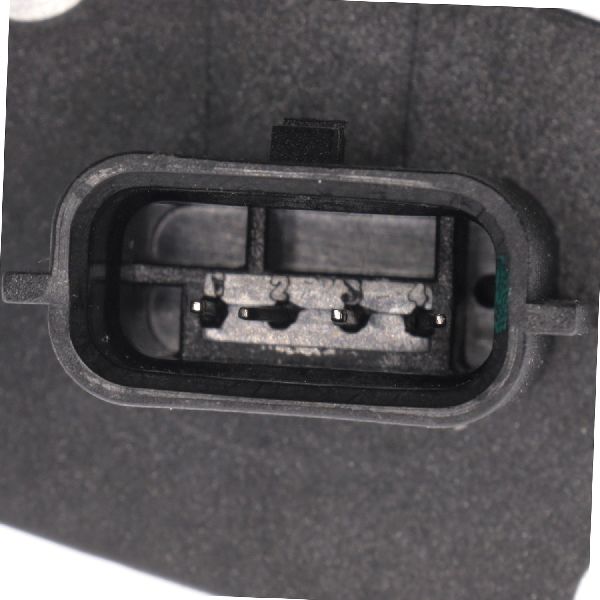
- MAF Sensor Connector (Pin 35 & 36) — At the MAF sensor on the air intake tube.. According to a 2018 Rogue engine control diagram, Pin 35 (Brown wire) is the Sensor Ground and Pin 36 (Blue wire) is the Sensor Power Supply. These pins can be back-probed to test for correct voltage and ground continuity from the ECM.
Real Owner Repair Stories
- Reddit user HuttaTheJab (2018 Nissan Rogue) — Solid Check Engine Light with code P0101.
❌ Tried (didn't work) Replacing the air filter, Cleaning the MAF sensor, Checking for vacuum leaks
✅ What actually fixed it Replacing the 3-year-old battery. The user learned that a dying battery can cause the MAF sensor to not communicate properly, triggering the code even with no other battery-related symptoms. - Reddit user KnicksFanNSad (2018 Nissan Rogue with ~68k miles) — Check Engine Light with code P0101.
❌ Tried (didn't work) Initial diagnosis pointed to MAF sensor.
✅ What actually fixed it The dealership recommended a throttle body replacement. The issue was ultimately covered under the California federal emissions warranty, which the owner was not initially aware of. This highlights that airflow codes can sometimes originate from the throttle body, not just the MAF sensor.
OEM Part Supersession History
22680-BV80B→22680-5RB0A— Standard part revision by the manufacturer.
Heads up: The parts are interchangeable, but using the latest revision (22680-5RB0A) is recommended.
Model Year Variations Within This Range
- 2017-2018: The 2017 model year introduced the Hybrid option alongside the standard 2.5L engine. The Hybrid uses a specific 2.0L MR20DD engine, which is different from the non-hybrid. The MAF sensor and associated TSBs for P0101 are specific to this hybrid powertrain. The VIN's 4th digit should be 'E' to identify the 2.0L Hybrid engine.
Helpful Videos


Used OEM Parts in Stock

New Aftermarket Parts Available


The information in this article is provided for general reference and educational purposes only. Vehicle specifications, procedures, and part compatibility can vary by production date, trim level, and region. Always consult your vehicle's factory service manual and verify part numbers before purchasing or performing repairs. Safety-critical components such as airbags, seat belts, and braking systems should be installed by a qualified professional.
- Nissan ROGUE HYBRID:
- 🎬 Helpful Videos
- 🛍️ Shop This Part
- What's Unique About the 2017-2018 Nissan ROGUE HYBRID
- Diagnostic Flowchart
- Symptoms You May Notice
- Most Likely Causes
- Rare But Worth Checking
- Diagnosis Steps
- Parts You'll Likely Need
- Related Codes That Often Appear With This One
- Technical Service Bulletins (TSBs) & Recalls
- Platform-Specific Known Issues
- Mechanic-Grade Diagnostic Values
- Scan Tool Commands That Help
- Wiring & Ground Locations
- Real Owner Repair Stories
- OEM Part Supersession History
- Model Year Variations Within This Range
- 🎟️ Get 5% Off