

P0101 on 2018-2021 Nissan KICKS: MAF Sensor Causes and Fixes
P0101 on a Nissan Kicks is most often caused by a dirty or faulty Mass Airflow (MAF) sensor, but can also be triggered by an ECM software glitch, a weak battery, or even a loose oil dipstick. Cleaning the sensor, checking for TSBs, and testing the battery are the first steps before replacing any parts. Many owners report that using only OEM sensors is critical for a lasting repair.
- Before buying any parts for a P0101 code on your Nissan Kicks, perform the simple checks first: ensure the oil dipstick is fully seated and the air filter is clean.
- Cleaning the MAF sensor with a dedicated cleaner is a highly effective and cheap first step.
- Be aware that this code is linked to several TSBs; a trip to the dealer for a battery test and an ECM software check might be necessary to permanently fix the issue.
- This engine code can cause other safety systems, like the forward collision warning, to malfunction. Do not ignore it.
- If you must replace the MAF sensor, using an OEM or OEM-supplier part (like Hitachi) is strongly recommended for Nissan vehicles.
What's Unique About the 2018-2021 Nissan KICKS

For the 2018-2021 Nissan Kicks, the P0101 code is uniquely tied to several issues documented in Technical Service Bulletins (TSBs). TSB NTB21-049 instructs technicians to test the 12V battery as a primary step. TSB NTB20-013 points to an unseated oil dipstick causing a vacuum leak, particularly in cold weather where PCV system icing can increase crankcase pressure and push the dipstick out. Furthermore, TSB NTB19-045a addresses an ECM logic update, not to fix the root cause, but to change how a permanent DTC is stored and cleared after a successful repair. These platform-specific bulletins mean that simply replacing the MAF sensor is often not the complete solution.
Diagnostic Flowchart

Tap your situation to follow the diagnostic path that matches what you're seeing on this vehicle.
Symptoms You May Notice
- Check Engine Light (MIL) is on.
- Engine stalls or stops running, especially at idle or in heavy traffic.
- Engine cranks but will not start.
- Forward Collision Warning (FCW) and Traction Control System (TCS) lights come on simultaneously with the Check Engine Light.
- Vehicle brakes unexpectedly (related to the FCW system).
- Poor acceleration, hesitation, or lack of power ('limp mode').
- Rough or high idle.
- Reduced fuel economy.
- Battery light may be on, especially if the issue is related to TSB NTB20-013 where oil is found on the alternator.
- Replacing the MAF sensor with a cheap aftermarket part. Many owners in forums report that the P0101 code returned until they installed a genuine OEM (Hitachi) sensor.
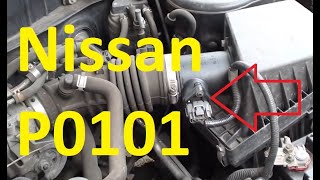
- Repeatedly replacing the MAF sensor without addressing underlying issues like a weak battery (per TSB NTB21-049), a vacuum leak from a loose dipstick (per TSB NTB20-013), or a cracked intake boot. 🎬 Watch: A breakdown of common Nissan P0101 causes and fixes.
Most Likely Causes

- Dirty or Contaminated MAF Sensor 🔴 High Probability Oil vapors and fine dust can accumulate on the sensor's delicate wires over time, skewing its readings. This is a very common first point of failure. Some owners report that cleaning the sensor provides a temporary fix for a few weeks or months before the code returns.
How to confirm: Visually inspect the MAF sensor elements. If they appear dirty, coated, or have debris on them, they need cleaning.
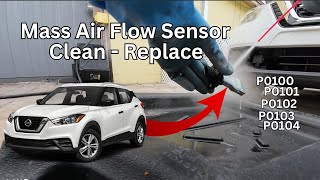
Typical fix: Remove the sensor and clean it carefully with a dedicated Mass Airflow Sensor cleaner spray. 🎬 Watch: How to clean or replace your Kicks MAF sensor. Do not touch the sensor elements or use other chemicals like brake cleaner. Allow it to air dry completely before reinstalling.
Est. part cost: $10-$15 for cleaner - Faulty MAF Sensor 🟡 Medium Probability While cleaning often works, the sensor can fail electronically. Owner complaints strongly suggest that Nissans are sensitive to aftermarket sensors. Many users report the P0101 code returning quickly after installing a non-OEM part, only to be resolved by switching to a genuine Nissan/Hitachi sensor.
How to confirm: After cleaning and ruling out other causes, if the code persists, the sensor is the likely culprit. A definitive test involves monitoring the sensor's output voltage/frequency with an advanced scan tool to see if it responds correctly to changes in RPM.
Typical fix: Replace the Mass Airflow Sensor, preferably with an OEM part from a dealer.
Est. part cost: $180-$250 for OEM - Weak or Failing Battery 🟡 Medium Probability TSB NTB21-049 specifically directs technicians to test the 12-volt battery as the FIRST step when a P0101 is present on a 2018-2021 Kicks. A weak battery or one with low State of Health can cause low voltage issues and various electrical gremlins in modern computer-controlled vehicles, incorrectly triggering fault codes.
How to confirm: Test the battery with a professional automotive battery tester (e.g., Midtronics DSS-5000 as specified by Nissan) that can measure not just voltage but also Cold Cranking Amps (CCA) and overall health (SOH).
Typical fix: Recharge or replace the 12-volt battery if it fails the test.
Est. part cost: $150-$300 - Engine Oil Dipstick Not Fully Seated / PCV System Icing ⚪ Low Probability TSB #NTB20-013 specifically calls this out for the 2018 Kicks, particularly in freezing temperatures (below -10°C/14°F). Ice can block the PCV hose, causing crankcase pressure to build and physically push the oil dipstick out of its tube. This creates a significant vacuum leak, allowing unmetered air to enter the engine and conflict with MAF sensor readings.
How to confirm: Visually inspect the engine oil dipstick to ensure it is pushed all the way down. Check for signs of oil residue around the dipstick tube or on the alternator, which is a symptom mentioned in the TSB.
Typical fix: Fully insert the oil dipstick. If related to the TSB in cold climates, the fix involves replacing the PCV hose and valve with updated parts.
Est. part cost: $0 for seating dipstick; TSB repair cost varies. - Vacuum Leak (Intake Air Leak) ⚪ Low Probability Cracked or loose intake hoses between the MAF sensor and the throttle body allow unmetered air to enter the engine, causing the sensor's readings to conflict with the actual amount of air entering the cylinders. This is a known issue on the platform-mate Nissan Versa with the same engine.
How to confirm: Visually inspect all air intake boots and hoses for cracks, especially in the ribbed, flexible sections. Ensure all clamps are tight. A smoke test is the most effective way to find small, hard-to-see leaks.
Typical fix: Tighten loose clamps or replace the damaged intake hose.
Est. part cost: $50-$150 for a new intake hose
Rare But Worth Checking
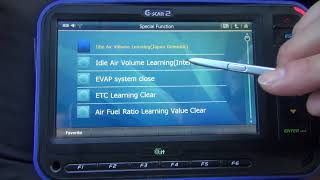
- Dirty Throttle Body: A throttle body caked with carbon can cause erratic idle and airflow issues that may contribute to a P0101 code. Cleaning the throttle body is often recommended, but it is critical to perform an Idle Air Volume Learn (IAVL) procedure afterward using a capable scan tool or a specific manual sequence, otherwise the idle may be too high. 🎬 See this walkthrough for cleaning the throttle body and relearning idle.
- Engine Control Module (ECM) Software Calibration: Nissan issued TSB #P9328_P9343_P934 for some 2019 Kicks in California, indicating an ECM reprogram is needed due to calibration errors. Separately, TSB NTB19-045a notes that for a P0101 on a 2019 Kicks, the ECM should be reprogrammed AFTER the physical repair is done. This update changes the logic for how permanent DTCs are stored and cleared, preventing a situation where the light won't go off even after a fix.
Diagnosis Steps
- Check for TSBs: Check for NTB21-049 (Battery Test), NTB20-013 (Dipstick/PCV), and NTB19-045a (ECM Reprogram) for your vehicle's specific year.
- Test the Battery: Following TSB NTB21-049, the first step is to professionally test the 12V battery. A weak battery can trigger this code. Replace if it fails the test.
- Inspect Dipstick and Air Filter: Ensure the engine oil dipstick is fully seated. Check the engine air filter; a severely clogged filter can restrict airflow and cause P0101.
- Inspect Intake System: Visually inspect the entire air intake tract from the air filter box to the throttle body. Look for cracks in the flexible boot and ensure all clamps are secure.
- Clean the MAF Sensor: Remove the MAF sensor. If it appears dirty, clean it with dedicated MAF sensor cleaner and let it dry completely.
- Check for ECM Updates: If the code returns, have a Nissan dealership check if an ECM software update (per TSB NTB19-045a) is applicable and needed.
- Consider Throttle Body Service: If idle is rough, consider cleaning the throttle body. Crucially, an Idle Air Volume Learn (IAVL) must be performed afterward.
- Perform Idle Air Volume Learn (IAVL): This can be done with a Nissan CONSULT scan tool or manually. The manual procedure is complex and timed: warm up the engine, turn off all accessories, turn ignition ON for 3 sec, press/release accelerator 5 times in 5 sec, wait 7 sec, press and hold accelerator for ~20 sec until MIL stops blinking and stays solid, release pedal within 3 sec, start engine.
- Replace MAF Sensor: If all other steps fail, the MAF sensor itself is likely faulty and requires replacement. Use an OEM part to avoid repeat failures.
Parts You'll Likely Need

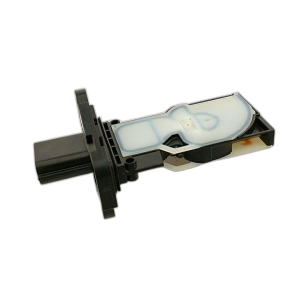
- Mass Air Flow (MAF) Sensor
(OEM #22680-BV80B (superseded by 22680-5RF0A))— This is the primary component associated with the P0101 code. It either becomes contaminated or fails electronically.
Related Codes That Often Appear With This One
- P0507 — TSB NTB21-049 lists P0507 (Idle Air Control System RPM Higher Than Expected) as a code that can appear with P0101. This combination strongly points towards a vacuum leak or an issue requiring an Idle Air Volume Learn procedure after a repair.
- P2004 — TSB NTB20-013 lists P2004 (Tumble Generator Valve Stuck Open) as a code that can appear alongside P0101, pointing to the specific cold-weather PCV icing issue that can cause multiple faults.
Technical Service Bulletins (TSBs) & Recalls
- NTB20-013: Links P0101 to an unseated oil dipstick.
- P9328_P9343_P934: Mentions ECM calibration errors causing improper P0101 storage.
- NTB21-045: Recommends checking the battery first and performing an Idle Air Volume Learn.
- NTB19-045a: Advises reprogramming the ECM after a repair for P0101 to update how the permanent DTC is stored.
Platform-Specific Known Issues
- TSB #NTB20-013 indicates that on the 2018 Kicks, a P0101 code can be triggered by the engine oil dipstick being pushed out of its tube due to PCV system icing in extreme cold.
- TSB #NTB21-049, which applies to 2018-2021 Kicks, mandates testing the 12V battery as the first diagnostic step for a P0101 code, highlighting the electrical sensitivity of the platform.
- TSB #NTB19-045a for 2019 Kicks requires an ECM reprogram after a P0101 repair to update the permanent DTC clearing logic.
- A high number of owner complaints link the P0101 code to the simultaneous illumination of the Forward Collision Warning and Traction Control lights, often resulting in limp mode or unexpected braking.
Mechanic-Grade Diagnostic Values
- MAF Sensor Signal Voltage at Idle — expected: 0.6V - 0.9V. Failure: Values that are erratic or outside this range.
- MAF Sensor Signal Voltage at 2,000 RPM — expected: 1.5V - 2.5V. Failure: Values that are erratic or outside this range.
- MAF Sensor Airflow Reading at Idle (~800 RPM) — expected: 2.1 ± 0.3 g/s. Failure: Readings fluctuating wildly, for example between 1.2 g/s and 3.8 g/s.
- MAF Sensor Power Supply Wire Voltage (Key On, Engine Off) — expected: ~12V. Failure: No voltage or significantly lower voltage.
- MAF Sensor Signal Wire Voltage (Key On, Engine Off) — expected: ~0.5V - 0.7V. Failure: No voltage or significantly different voltage.
Scan Tool Commands That Help
- Nissan CONSULT or compatible advanced scan tool: Idle Air Volume Learn — This function is critical after cleaning or replacing the throttle body, or replacing the MAF sensor. Failure to perform the relearn can result in a high or unstable idle, and may cause the P0101 code to persist or return.
- Nissan NERS (Nissan ECM Reprogramming Software): ECM Reprogramming — Used to apply ECM updates as specified in TSBs like NTB19-045a. This is done after a physical repair to update the logic for how permanent DTCs are stored and cleared. It requires a specific J2534 interface and a stable power supply.
Wiring & Ground Locations
- MAF Sensor Connector — On the air intake tube, between the air filter box and the throttle body.. The connector and its wiring are a common failure point. Check for corrosion on pins, and damaged or broken wires. Wiggling the connector while monitoring live data can help identify a poor connection.
- Main Battery Ground Cable — Connects the negative battery terminal to the vehicle's chassis and/or engine block.. A poor ground connection can cause a host of electrical issues, including erratic sensor readings that can trigger a P0101. TSBs point to battery issues as a primary check, and the ground connection is a key part of that system. A part number for a replacement ground cable on a 2020 Kicks is 24085-5RB0A.
- ECM/ECU Ground — Typically, the ECU is grounded through its mounting bolts to the chassis and also via multiple ground wires within the main engine harness that terminate at various points on the engine block and chassis.. A faulty ECU ground can cause unpredictable behavior, including incorrect processing of sensor data from the MAF. While less common than a sensor failure, checking that main engine and chassis grounds are clean and tight is a valid diagnostic step for persistent, unexplained electrical codes.
Real Owner Repair Stories
- Reddit user in r/Nissan (2019 Nissan Kicks, 28,000 miles) — Check engine light, slippery road light, and collision sensor light all on simultaneously. Car becomes hard to accelerate. Turning the car off and on again temporarily clears the drivability issue, but the check engine light (P0101) remains.
❌ Tried (didn't work) Multiple dealer/mechanic visits where the code was just cleared., Replacing the MAF sensor with an aftermarket (Hitachi) part and resetting the idle provided a temporary fix for about 5 months.
✅ What actually fixed it The user's final attempt, which they hoped would be the permanent fix, was to have the Nissan dealer clean the throttle body, perform an ECM update (as per TSBs), and do an idle relearn procedure. This addresses multiple known issues beyond just the sensor itself. - Reddit user in r/NissanKicks (2019 Nissan Kicks) — P0101 code. Initially, cleaning the MAF sensor worked for a few weeks at a time. Eventually, the car would not drive, idling very high and then dropping to zero.
❌ Tried (didn't work) Repeatedly cleaning the MAF sensor., Replacing the throttle body with a part from a donor car., Replacing the MAF sensor with an aftermarket part from AutoZone.
✅ What actually fixed it The user was advised by others that the Kicks is very sensitive to non-OEM parts and that the final solution would likely require using a genuine Nissan MAF sensor and throttle body from the dealership, as well as checking for intake hose cracks and carbon on the O2 sensor/spark plugs.
OEM Part Supersession History
22680-BV80B→22680-5RF0A— This is a common supersession for Nissan parts, often due to minor revisions in manufacturing, materials, or electronics for improved reliability or to consolidate parts across multiple models.
Heads up: The new part number (22680-5RF0A) is the correct replacement for the original. Using the old part number if found as New Old Stock (NOS) should be fine, but the latest revision is generally recommended.
Model Year Variations Within This Range
- 2018-2020 vs 2021: The Nissan Kicks received a facelift for the 2021 model year, which included updated exterior styling and interior features like a new center console and larger touchscreens. However, the powertrain remained the same, using the 1.6L HR16DE engine and CVT. Therefore, the causes and diagnostic procedures for a P0101 code are identical across the 2018-2021 model year range.
Helpful Videos
We Have This Part in Stock

The information in this article is provided for general reference and educational purposes only. Vehicle specifications, procedures, and part compatibility can vary by production date, trim level, and region. Always consult your vehicle's factory service manual and verify part numbers before purchasing or performing repairs. Safety-critical components such as airbags, seat belts, and braking systems should be installed by a qualified professional.
- Nissan KICKS:
- 🎬 Helpful Videos
- 🛍️ Shop This Part
- What's Unique About the 2018-2021 Nissan KICKS
- Diagnostic Flowchart
- Symptoms You May Notice
- Most Likely Causes
- Rare But Worth Checking
- Diagnosis Steps
- Parts You'll Likely Need
- Related Codes That Often Appear With This One
- Technical Service Bulletins (TSBs) & Recalls
- Platform-Specific Known Issues
- Mechanic-Grade Diagnostic Values
- Scan Tool Commands That Help
- Wiring & Ground Locations
- Real Owner Repair Stories
- OEM Part Supersession History
- Model Year Variations Within This Range
- 🎟️ Get 5% Off