

P0101 on 2016-2024 Mazda MX-5: MAF Sensor Range/Performance Causes and Fixes
On a 2016-2024 Mazda MX-5, the P0101 code is most often caused by a dirty Mass Airflow (MAF) sensor. Cleaning the sensor with a dedicated MAF cleaner for under $15 is the most likely fix and should be your first step. If cleaning doesn't work, inspect for vacuum leaks before replacing the sensor.
- P0101 on your MX-5 almost always means there's an issue with the air being measured, not a major engine problem.
- Always clean the MAF sensor with dedicated cleaner before considering replacement. This fixes the problem in a majority of cases and is very inexpensive.
- Thoroughly inspect the air intake hose between the air filter box and the engine for any cracks or loose clamps, as this is the second most likely cause.
- The repair is very DIY-friendly, requiring only basic tools and about 15-20 minutes.
- If you must replace the sensor, use a genuine Mazda part or a reputable OEM brand like Denso to avoid performance issues with cheap aftermarket parts.
What's Unique About the 2016-2024 Mazda MX-5
For the Skyactiv-G 2.0L engine in the ND generation MX-5, the P0101 code is a straightforward and common issue, almost always pointing to the MAF sensor or intake system. Unlike some other Mazda engines (particularly diesels which can have EGR-related issues, worn camshafts, or carbon buildup trigger similar codes), there are no widespread, complex issues known to cause this specific code on the MX-5. The problem is typically a simple matter of contamination on the sensor or a physical air leak, making it a very DIY-friendly diagnosis.
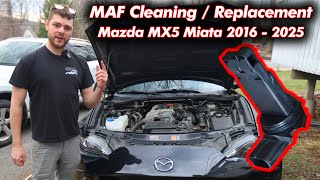
🎬 Watch: How to clean or replace your ND Miata MAF sensor.Generation note: The 2016-2024 year range covers the entire fourth generation (ND) of the Mazda MX-5. This includes the ND1 (2016-2018) and the updated ND2 (2019-2024) which has a revised 2.0L engine. However, the causes and fixes for code P0101 are identical across both versions as the MAF sensor design (PE01-13-215) and intake layout are fundamentally the same.
Symptoms You May Notice
- Check Engine Light is on.
- Rough or erratic idle, sometimes surging.
- Engine hesitation, stumbling, or surging during acceleration.
- Noticeable loss of engine power.
- Reduced fuel economy.
- Black smoke from the exhaust, indicating a rich fuel mixture.
- Difficulty starting the engine, or stalling shortly after starting.
- Replacing the MAF sensor without first attempting to clean it. Cleaning is successful in a majority of cases and costs significantly less.
- Replacing oxygen sensors. While a bad MAF sensor can cause lean or rich codes (like P0171/P0172), the root cause is the incorrect air measurement, not the O2 sensors themselves.
Most Likely Causes
- Dirty Mass Airflow (MAF) Sensor 🔴 High Probability The MAF sensor uses a delicate hot-wire element to measure airflow. Over time, fine dust, oil vapor from the PCV system, or residue from aftermarket oiled air filters can coat this wire, insulating it and causing inaccurate readings. This is the most common cause by a significant margin.
How to confirm: Visually inspect the sensor's wire elements after removal. They should be clean and metallic. If they appear coated in grime, they are dirty. The definitive test is cleaning it; if the code disappears after cleaning and a code reset, this was the cause.
Typical fix: Remove the sensor (held by two Phillips screws) and clean it thoroughly using only a dedicated Mass Airflow Sensor Cleaner spray. Do not touch the wires. Let it dry completely for at least 15-20 minutes before reinstalling.
Est. part cost: $10-$15 for MAF cleaner spray. - Vacuum Leak (Unmetered Air) 🟡 Medium Probability The plastic and rubber components of the intake system can become brittle with age and heat cycles, leading to cracks. A leak can also occur if the air filter housing is not seated correctly after a filter change.
How to confirm: Visually inspect the entire air intake tract between the MAF sensor and the engine's throttle body. Look for cracks in the flexible intake boot, loose hose clamps, or disconnected vacuum lines. A hissing sound at idle can also indicate a leak. A smoke test is the most effective way to find small leaks. Also check the O-ring on the MAF sensor itself for damage upon reinstallation.
Typical fix: Replace the cracked intake boot or tighten the loose clamp. A new intake duct is the most common repair.
Est. part cost: $50-$100 for an intake boot. - Dirty or Clogged Engine Air Filter ⚪ Low Probability
How to confirm: Remove the engine air filter and inspect it. If it is visibly clogged with dirt and debris, it is restricting airflow and should be replaced as a matter of basic maintenance.
Typical fix: Replace the engine air filter. This is a basic maintenance item that should be checked first.
Est. part cost: $20-$40 - Faulty Mass Airflow (MAF) Sensor ⚪ Low Probability
How to confirm: If cleaning the sensor and confirming there are no vacuum leaks does not resolve the code, the sensor itself may have failed electronically. This can be confirmed by monitoring live data with an OBD-II scanner to see if the g/s readings are erratic, zero, or do not change with RPM, or by swapping with a known-good part.
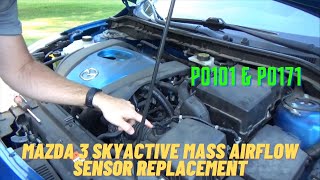
Typical fix: Replace the MAF sensor. It is highly recommended to use a genuine OEM (Mazda PE01-13-215) or a reputable brand like Denso (197-6020), 🎬 Watch: Replacing a Skyactiv MAF sensor to fix code P0101. as cheap aftermarket sensors are known to be unreliable and cause new issues.
Est. part cost: $150-$250 for OEM, $70-$120 for aftermarket (Denso).
Rare But Worth Checking
- Wiring or Connector Issue: The wiring harness or connector for the MAF sensor can become damaged or corroded, causing an intermittent signal. Check for bent pins, corrosion, or frayed wires at the connector.
- Blown Fuse: In some vehicles, the MAF sensor circuit is protected by a fuse. While not a widely reported issue on the MX-5, it's worth checking the fuse box for any blown fuses related to the engine control system if the sensor shows no signs of life on a scanner.
Diagnosis Steps
- Check for other stored DTCs. Address any other codes first.
- Inspect the engine air filter. Replace if it is dirty or clogged.
- Visually inspect the entire air intake system for cracks, loose clamps, or disconnected hoses between the MAF sensor and the throttle body. Ensure the airbox is properly sealed.
- Disconnect the MAF sensor electrical connector and inspect for corrosion or damaged pins.
- Remove the MAF sensor (typically held by two Phillips head screws).
- Carefully clean the sensor's wire elements using only dedicated MAF sensor cleaner spray. Do not touch the wires. Allow it to air dry completely.
- Reinstall the sensor, ensuring the O-ring is in good condition.
- Clear the P0101 code with a scanner and perform a test drive to see if the code returns.
- If the code returns, use an OBD-II scanner with live data capability to monitor the MAF sensor reading (in grams/second). The reading should be stable at idle (around 2-4 g/s for a 2.0L engine) and increase smoothly and proportionally as you raise the engine RPM.
- If the reading is erratic, zero, or does not change with RPM, and you have already confirmed no vacuum leaks exist, the MAF sensor is likely faulty and needs to be replaced.
Parts You'll Likely Need
- Mass Airflow Sensor Cleaner — This is the most common fix. The sensor element gets contaminated and cleaning it restores proper function.
Trusted brands: CRC, Liqui Moly, WD-40 Specialist
Aftermarket price range: $10-$15 - Mass Airflow (MAF) Sensor
(OEM #PE01-13-215)— If cleaning the sensor and checking for vacuum leaks doesn't solve the issue, the sensor itself has likely failed and needs replacement.
Trusted brands: Mazda (OEM), Denso (197-6020)
OEM price range: $180-$250
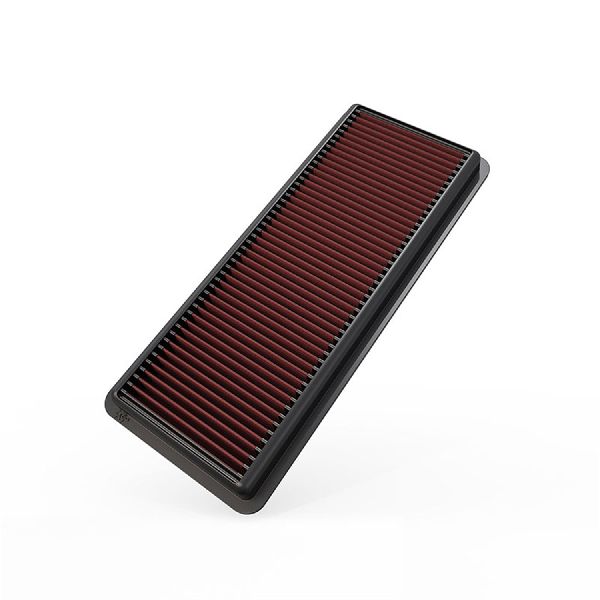
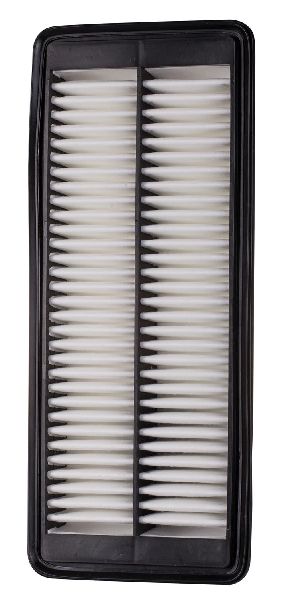
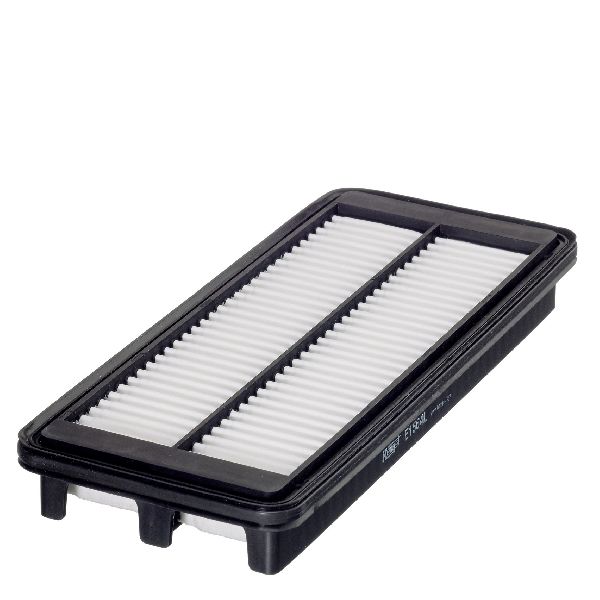
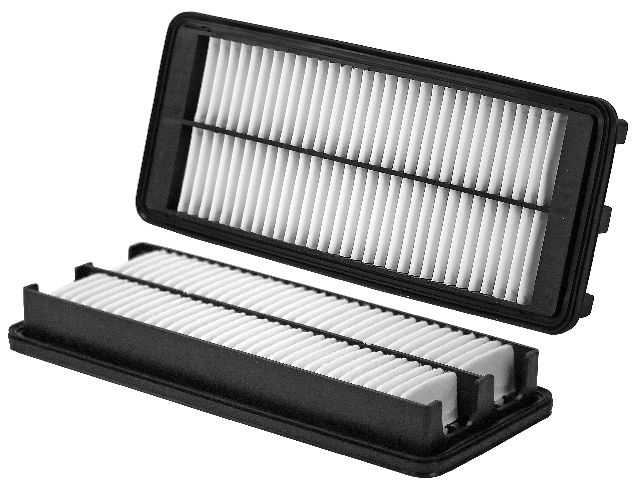
Aftermarket price range: $70-$120 - Engine Air Filter
(OEM #PE07-13-3A0A)— A severely clogged air filter can restrict airflow enough to trigger a P0101 code. It's a basic maintenance item that should be checked first.
Trusted brands: Mazda (OEM), Wix, K&N, Mahle
OEM price range: $30-$40
Aftermarket price range: $15-$30
Related Codes That Often Appear With This One
- P0171 — System Too Lean. This can be caused by a vacuum leak or a dirty MAF sensor under-reporting the amount of air entering the engine, leading the PCM to inject too little fuel.
- P0172 — System Too Rich. This can be caused by a faulty MAF sensor over-reporting the amount of air, causing the PCM to inject too much fuel.
- P0102 — Mass or Volume Air Flow Circuit Low Input. This points more specifically to a low signal from the MAF, often due to wiring issues or a failing sensor.
Technical Service Bulletins (TSBs) & Recalls
- TSB 01-015/18: This TSB applies to 2019 MX-5s (and other models) with VINs lower than JM1ND**302419. It addresses a Check Engine Light with DTC P061B (Internal Control Module Torque Calculation Performance) that can be triggered by interrupting engine cranking. While the primary fix is a PCM software update, the diagnostic procedure instructs technicians to check for other DTCs, including MAF-related codes, first. This confirms the systems are linked but does not provide a direct fix for a primary P0101 code.
- Bulletin #SA-060-17: A manufacturer bulletin notes that some Mazda vehicles may experience a Check Engine Light with DTC P0101 and/or P061B after reprogramming the PCM using certain IDS software versions.
- Bulletin #SA386: Mazda reports that the check engine light with DTCs P0101 and P061B may illuminate after PCM reprogramming due to a mislogic detection in the PCM calibration.
- Bulletin #01-011-13-2766: This manufacturer bulletin documents that some vehicles may exhibit MIL illumination with DTC P0101:00 stored in memory, specifically identifying it as a MAF sensor circuit range/performance problem.
Platform-Specific Known Issues
- A user on the Miata.net forum with a 2016 MX-5 reported getting a P0101 code after installing an aftermarket intake. The issue was resolved by cleaning the MAF sensor, which had likely been contaminated by oils from the new filter, and ensuring all intake clamps were tight.
- Multiple YouTube tutorials for the ND Miata demonstrate the MAF cleaning process, highlighting its simplicity and effectiveness. One video specifically notes to check the sensor's O-ring for damage during reinstallation, as a bad seal could create a vacuum leak right at the sensor.
Mechanic-Grade Diagnostic Values
- MAF Sensor Live Data (g/s) at Idle — expected: 2 to 7 g/s (typically 2-4 g/s for a 2.0L engine). Failure: Readings are zero, erratic, or do not change with RPM.
- MAF Sensor Live Data (g/s) at 2500 RPM — expected: 15 to 25 g/s. Failure: Reading does not increase significantly from idle or is not a smooth, linear rise.
- MAF Sensor Signal Wire Voltage at Idle — expected: Approximately 1.0V - 1.5V DC. Failure: Voltage is stuck high (e.g., 5V), low (0V), or fluctuates wildly at a steady idle.
- MAF Sensor Signal Wire Voltage at Snap Throttle — expected: Should increase smoothly and quickly to 3.0V - 4.5V. Failure: Voltage does not increase, increases slowly, or shows spikes/dropouts.
- MAF Sensor Power Supply Pin Voltage (Key On, Engine Off) — expected: 12V (Battery Voltage). Failure: No voltage or significantly low voltage indicates a wiring or fuse issue.
Scan Tool Commands That Help
- Mazda M-MDS (or equivalent advanced scanner): PID/Data Monitor Inspection — Used to view live data PIDs for MAF (g/s), ECT, TP_RELAT, and ENG_RPM to verify sensor readings against expected values under specific operating conditions, as outlined in the official diagnostic procedure.
- Mazda M-MDS (or equivalent advanced scanner): Clear DTC — Used after a repair (like cleaning or replacing the sensor) to erase the stored P0101 code from the PCM's memory. A test drive is required afterward to confirm the fix.
Wiring & Ground Locations
- MAF Sensor Connector (C1-08) — On the air intake tube, immediately following the air filter box.. This is the primary connection for the MAF sensor. Corrosion, bent pins, or loose connections here will directly cause P0101, P0102, or P0103 codes. The 5-pin connector contains power, ground, MAF signal, and IAT sensor signal wires.
- MAF Pin A (Power) — Pin A on the 5-pin MAF sensor connector.. This pin supplies battery voltage (12V+) to the sensor. A multimeter test here should show battery voltage with the key on. Lack of voltage points to a blown fuse or a break in the power wire.
- MAF Pin B (Ground) — Pin B on the 5-pin MAF sensor connector.. This is the sensor's ground connection. A bad ground here will cause incorrect or no readings. It can be tested for continuity to a known good chassis ground.
- MAF Pin C (Signal) — Pin C on the 5-pin MAF sensor connector.. This is the signal wire that sends the airflow reading (as a variable voltage) back to the PCM. This is the wire to back-probe with a multimeter to check for the 1.0-4.5V signal range during engine operation.
- Engine Ground Point — A primary ground strap is typically located from the passenger side motor mount to the chassis. Other grounds are on the transmission bell housing and driver's side fender area.. A corroded or loose main engine ground can cause a variety of sensor issues, including erratic MAF sensor readings, as the sensor's ground path may become unstable.
Real Owner Repair Stories
- Mazdas247 Forum (Mazdaspeed3 (similar engine principles and MAF sensor behavior)) — P0101 code triggered after installing an aftermarket intake.
❌ Tried (didn't work) Initial diagnosis was unclear.
✅ What actually fixed it The issue was traced to either oil contamination on the MAF sensor from the new oiled filter or a downstream vacuum leak from a loose clamp that was overlooked during the intake installation. Ensuring clamps were tight and the sensor was clean resolved the code. - YouTube video by 'Cars and Service' (Mazda 6 (uses a similar MAF sensor)) — P0101 code, rough running.
✅ What actually fixed it The owner had previously fixed the same P0101 code one year prior by cleaning the MAF sensor. When the code returned, cleaning the sensor again resolved the issue, confirming that contamination is a recurring and primary cause rather than sensor failure. - NHTSA ODI #10978705 — An owner reported that their vehicle experienced bucking and the check engine light illuminated with codes P0101 and P061B; while the MAF sensor appeared fine, the issue persisted after an oil change and inspection.
- NHTSA ODI #10378620 — While driving, an owner reported the engine suddenly lost power, and an OBD-II check revealed code P0101.
OEM Part Supersession History
PE01-13-215→PE01-13-215 (current)— This part number has remained consistent throughout the ND generation's production run.
Heads up: The same sensor is used across a wide range of Mazda vehicles from 2012-2025, including the Mazda3, Mazda6, CX-3, CX-5, and CX-9, indicating broad compatibility.
Diagnostic Flowchart
Other Known Issues on This Vehicle
Issues unrelated to this code that are worth knowing about as an owner of this generation:
- Manual Transmission Failure (Early ND1) 🔴 High — Primarily affects 2016 and some 2017 models. Failures often occur suddenly, particularly during a hard 2-3 shift. Mazda issued a TSB (05-001/17) and later revised the transmission design. (Ref: TSB 05-001/17)
- Infotainment 'Ghost Touch' and Delamination 🟠 Medium — Widespread across many Mazda models from this era, including the MX-5. The screen registers phantom touches or becomes unresponsive, often worsened by heat. The cause is physical degradation of the touch digitizer. (Ref: Customer Service Program (CSP13) extended warranty for the CMU, but not always the screen itself.)
- Chipping Paint (Especially Soul Red Crystal) 🟡 Low — Mazda's multi-layer paints, particularly Soul Red Crystal (46V), are known to be thin and prone to chipping easily from road debris.
- Soft Top Rubbing on Roll Hoops 🟡 Low — On early ND models, the convertible top fabric could rub against the plastic roll hoop covers during operation, causing wear marks. The design was later updated.
- Cracked A/C Line 🟠 Medium — Some owners have experienced a loss of air conditioning due to a cracked refrigerant line, reportedly caused by engine vibrations.
Used vs. New Parts: Buying Guide for This Vehicle
When a used part is the smart pick: A used OEM MAF sensor from a reputable salvage yard can be a cost-effective option if cleaning your original sensor fails and you want to avoid the high cost of a new OEM part. Since this is not a high-wear item, a used sensor from a low-mileage donor is often perfectly reliable. It is generally a better choice than a cheap, new aftermarket sensor of unknown quality.
Donor-vehicle mileage cap: roughly under 60000 miles for the part to have meaningful remaining life.
What to inspect on the donor part:
- Check the donor vehicle's VIN to confirm it's from a similar year range.
- Inspect the sensor for any physical damage, cracks in the plastic housing, or corrosion on the electrical pins.
- Ask the salvage yard for the donor vehicle's mileage if possible.
- Ensure the small wire elements inside the sensor are physically intact and not broken, even if they appear dirty.
OEM-only on this vehicle (don't cheap out):
- While not strictly 'OEM-only', it is strongly recommended to prioritize a genuine Mazda (or the original equipment manufacturer, Denso) part over generic, unbranded aftermarket MAF sensors. Cheap aftermarket sensors are notorious for being poorly calibrated, failing quickly, or causing other performance issues.
Aftermarket brands forum-validated for this vehicle:
- Denso (197-6020) - Denso is the original equipment manufacturer for Mazda, so this part is equivalent to the genuine Mazda part.
- Delphi (AF10412)
- Spectra Premium (DL-3110)
Brands owners have reported issues with on this vehicle:
- Unbranded, no-name sensors from online marketplaces. These often have high failure rates and incorrect calibration, leading to a repeat of the P0101 code or new drivability problems.
Real Owner Stories
Aggregated from forums and TSBs cited above. Mileages and costs reflect what owners reported in those sources.
2016 Mazda MX-5 2.0L
Symptoms: Check engine light P0101 appeared after installing an aftermarket intake system.
What fixed it: Cleaning the MAF sensor (which was contaminated by filter oils) and ensuring all intake clamps were tightened.
Source hint: Miata.net forum
2016-2024 Mazda MX-5 2.0L
Symptoms: Rough idle and hesitation during acceleration.
What fixed it: Cleaning the MAF sensor wire elements with dedicated cleaner spray.
Source hint: Reddit r/Miata
Related OBD-II Codes
Frequently Asked Questions
Does TSB 01-015/18 for the 2019 MX-5 fix the P0101 code?
Can I use any cleaner to fix the MAF sensor on my ND Miata?
Is there a specific MAF sensor part number I should use for my 2.0L Skyactiv-G?
Why did my 2016 MX-5 throw a P0101 code after I installed an aftermarket intake?
What should the MAF sensor reading look like on an OBD-II scanner for this engine?
Helpful Videos

Used OEM Parts in Stock


New Aftermarket Parts Available

The information in this article is provided for general reference and educational purposes only. Vehicle specifications, procedures, and part compatibility can vary by production date, trim level, and region. Always consult your vehicle's factory service manual and verify part numbers before purchasing or performing repairs. Safety-critical components such as airbags, seat belts, and braking systems should be installed by a qualified professional.
- Mazda MX-5:
- 🎬 Helpful Videos
- 🛍️ Shop This Part
- What's Unique About the 2016-2024 Mazda MX-5
- Symptoms You May Notice
- Most Likely Causes
- Rare But Worth Checking
- Diagnosis Steps
- Parts You'll Likely Need
- Related Codes That Often Appear With This One
- Technical Service Bulletins (TSBs) & Recalls
- Platform-Specific Known Issues
- Mechanic-Grade Diagnostic Values
- Scan Tool Commands That Help
- Wiring & Ground Locations
- Real Owner Repair Stories
- OEM Part Supersession History
- Diagnostic Flowchart
- Other Known Issues on This Vehicle
- Used vs. New Parts: Buying Guide for This Vehicle
- Real Owner Stories
- 2016 Mazda MX-5 2.0L
- 2016-2024 Mazda MX-5 2.0L
- Related OBD-II Codes
- Frequently Asked Questions
- 🎟️ Get 5% Off