

P0101 on 2014-2015 Mazda CX-5: MAF Sensor Causes and Fixes
For a P0101 code on a 2014-2015 Mazda CX-5, the most common fix is cleaning the Mass Air Flow (MAF) sensor with a dedicated cleaner. If that doesn't work, inspect the air intake hose for cracks. In rare cases, a software glitch documented by Mazda may be the cause, requiring a dealer visit.
- Start with the cheapest and easiest fix: clean the MAF sensor using a dedicated spray cleaner.
- Thoroughly inspect the rubber air intake hose for cracks, as this is a common source of unmetered air that triggers the code.
- If you've recently had your vehicle serviced at a dealer, be aware that a known software glitch could be the cause, as documented in Mazda TSBs SA-060-17 and SA386.
- Do not replace the MAF sensor until you have first cleaned it and ruled out vacuum leaks.
What's Unique About the 2014-2015 Mazda CX-5

While most P0101 issues are caused by a dirty sensor or vacuum leak, the 2014-2015 CX-5 has a specific, documented history of this code appearing due to a software problem. Mazda issued Technical Service Bulletins (TSBs) indicating that a P0101 code could be falsely triggered after the vehicle's main computer (PCM) was reprogrammed with certain software versions. This is a unique quirk of this platform that owners should be aware of if the usual physical fixes don't resolve the issue.
Diagnostic Flowchart

Tap your situation to follow the diagnostic path that matches what you're seeing on this vehicle.
Symptoms You May Notice
- Check Engine Light is on
- Rough or unstable idle
- Hesitation or stumbling during acceleration
- Loss of engine power or entering 'limp mode'
- Poor fuel economy
- Black smoke from the exhaust in some cases
- Multiple other warning lights (TCS, TPMS) may illuminate simultaneously
- Replacing the oxygen (O2) sensors. While fuel trim issues can be related, P0101 points directly to the air metering system, which should be diagnosed first.
- Replacing the throttle body. While a dirty throttle body can cause idle issues, it is less likely to be the primary cause of a P0101 code. However, in a Reddit thread for a Mazda3 with a persistent P0101, the owner reported that cleaning the throttle body ultimately solved the issue after a MAF replacement did not.
Most Likely Causes


- Dirty Mass Air Flow (MAF) Sensor 🔴 High Probability The MAF sensor's hot wire is delicate and can become contaminated with dust, oil, and other debris over time, skewing its readings. This is the most common and easiest-to-fix cause.
How to confirm: Remove the sensor and visually inspect the small wires inside the housing. If they appear dirty or coated, they need cleaning.
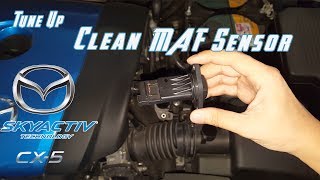
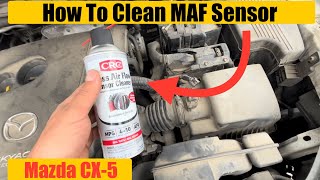
Typical fix: Carefully remove the sensor and spray the sensing elements with a dedicated MAF sensor cleaner. Do not use brake or carb cleaner. Do not touch the wires. Let it air dry completely before reinstalling. 🎬 Watch: A quick guide to cleaning your CX-5 MAF sensor.
Est. part cost: $8-$15 for a can of MAF cleaner. - Cracked or Loose Intake Air Hose 🟡 Medium Probability The flexible rubber intake hose located between the air filter box (where the MAF sensor is) and the engine can develop cracks with age and heat cycles. This allows 'unmetered' air to enter the engine, causing the MAF readings to be incorrect compared to the actual amount of air entering the cylinders.
How to confirm: Visually inspect the entire intake hose for cracks, especially in the ribbed, flexible sections. Ensure all clamps are tight. A smoke test is the most effective way to find hidden leaks that aren't visible.
Typical fix: Replace the cracked intake air hose and tighten all clamps.
Est. part cost: $40-$100 for a new intake hose. - Dirty or Clogged Engine Air Filter ⚪ Low Probability A severely clogged air filter can restrict airflow enough to cause the MAF sensor's readings to be lower than expected for a given engine load.
How to confirm: Remove and inspect the engine air filter. If it is visibly dirty, clogged with debris, or has not been changed per the service schedule, it should be replaced.
Typical fix: Replace the engine air filter.
Est. part cost: $20-$40. - Faulty MAF Sensor ⚪ Low Probability While durable, the sensor's electronics can fail internally, causing it to send incorrect voltage signals to the PCM. A technician on a Mazda forum confirmed they have had to replace a few on CX-5s over the years.
How to confirm: After confirming the sensor is clean and there are no vacuum leaks, use a scan tool to monitor the MAF reading in grams/second (g/s). The reading should be stable at idle (around 2-4 g/s) and increase smoothly with RPM. If readings are erratic, jumpy, or do not change, the sensor is likely bad.
Typical fix: Replace the MAF sensor.
Est. part cost: $180-$290 for an OEM sensor, $70-$150 for a quality aftermarket part.
Rare But Worth Checking
- PCM Software Glitch: As per Mazda TSBs SA-060-17 and SA386, this code can appear after the PCM has been reprogrammed. If you recently had service performed, this could be the cause. This fix requires a dealer to update the PCM with a corrected software version.
- Failing Battery: In a thread on Mazda-Forum.com, a user with a P0101 and multiple other seemingly unrelated warning lights was advised to have their battery load tested. A failing battery can cause voltage drops that lead to spurious error codes from various modules.
Diagnosis Steps
- Read the codes: Use an OBD-II scanner to confirm P0101 is present and check for any other codes.
- Inspect the Air Filter: Check the engine air filter to ensure it is clean and properly installed. A clogged filter is a simple but sometimes overlooked cause.
- Inspect the Intake System: Visually inspect the air intake hose between the air filter box and the throttle body for any cracks, tears, or loose connections. Ensure all clamps are secure. Pay close attention to the flexible, ribbed sections.
- Clean the MAF Sensor: Disconnect the battery. Unplug the MAF sensor's electrical connector. Remove the two screws holding it in place and carefully pull it out. Spray the sensor's wire or element with dedicated MAF sensor cleaner. Do not touch the element. Allow it to dry completely for at least 15-20 minutes before reinstalling. Reconnect the battery.
- Check for Vacuum Leaks: If the code returns, perform a smoke test on the intake system to check for any hidden vacuum leaks that were not visible. This is the most definitive way to find small leaks.
- Inspect Wiring: Check the MAF sensor connector and wiring for any signs of damage, corrosion, or loose pins. A bad ground wire to the MAF plug has been noted as a notorious problem on some Mazda platforms.
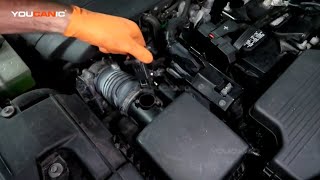
- Test the Sensor: Use a scan tool to monitor live MAF data. The reading in grams per second (g/s) should increase smoothly as you raise the engine RPM. A user on Mazdas247 noted the service manual values: approx. 0.86 V at idle (around 2.17 g/s) and 1.07 V at 2000 RPM (around 4.73 g/s). If your readings are far off or erratic, the sensor may be faulty. 🎬 See how to diagnose and replace a faulty MAF sensor.
- Check TSBs: If all physical checks pass, consider the possibility of the software issue mentioned in TSBs SA-060-17 and SA386. This is especially relevant if the vehicle recently had service or PCM programming. This step requires a visit to a dealership for a PCM software update.
Parts You'll Likely Need
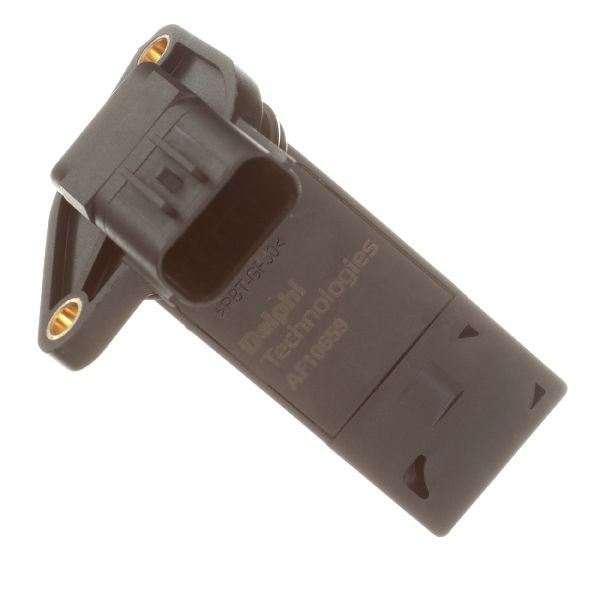
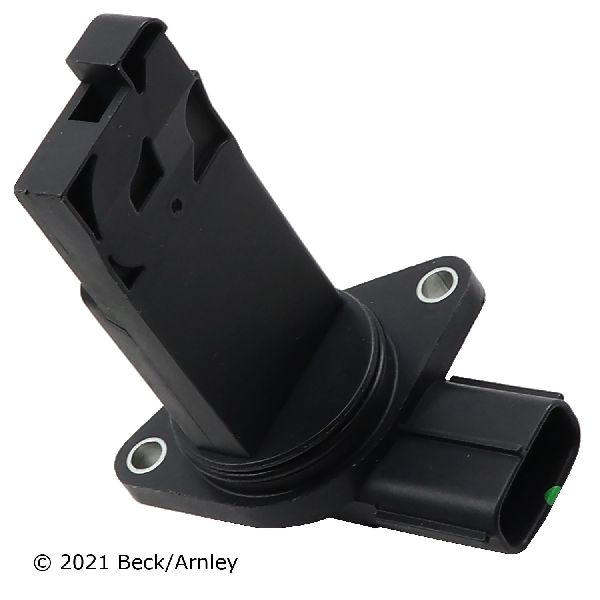
- Mass Air Flow (MAF) Sensor
(OEM #PE01-13-215)— This sensor is the most common point of failure for code P0101, either by becoming dirty or failing electronically. If cleaning does not resolve the issue, replacement is the next step. This part number fits a wide range of Mazda vehicles with Skyactiv engines. 🎬 Watch: Step-by-step MAF sensor replacement for Skyactiv engines.
Trusted brands: Mazda (OEM), Denso (Often the OEM supplier), Hitachi
OEM price range: $190-$290
Aftermarket price range: $70-$150 - MAF Sensor Cleaner — Often, the sensor is just dirty and does not need to be replaced. A can of dedicated cleaner is an inexpensive first step that frequently fixes the problem.
Trusted brands: CRC, WD-40 Specialist, Liqui Moly
Aftermarket price range: $8-$15
Related Codes That Often Appear With This One
- P061B — Mazda TSBs SA-060-17 and SA386 specifically mention that P0101 can appear alongside P061B due to a PCM software calibration issue after reprogramming.
- P2122 — Mentioned in TSB SA386 as another code that can be set along with P0101 due to the same PCM software mislogic.
- P2138 — Also mentioned in TSB SA386 as a code that can accompany P0101 due to the PCM software issue.
- P0171 or P0172 — If the MAF sensor is under-reporting air (e.g., from a vacuum leak), the system may run lean and set a P0171 (System Too Lean). If it's over-reporting air or dirty, the system may run rich and set a P0172 (System Too Rich).
Technical Service Bulletins (TSBs) & Recalls
- SA-060-17
- SA386
Platform-Specific Known Issues

- A known software issue can cause the P0101 code to appear after the Powertrain Control Module (PCM) has been reprogrammed with specific older software versions (IDS 105.02 to 105.04), as documented in Mazda TSB #SA-060-17. [SA-060-17]
- Mazda TSB #SA386 also notes that a "mislogic detection in the PCM calibration" can cause the check engine light to illuminate with DTC P0101, among others, after reprogramming. [SA386]
- On the diesel (Skyactiv-D) version of the CX-5, which is not sold in all markets, a P0101 code can be a symptom of more serious issues like a worn exhaust camshaft or significant carbon buildup in the intake manifold, which alters airflow and fools the MAF sensor.
Mechanic-Grade Diagnostic Values
- MAF Sensor Signal Voltage (Skyactiv-G) — expected: KOEO (Key On, Engine Off): ~0.72 V. Idle: ~0.86 V.. Failure: A significantly higher voltage at KOEO, such as 1.03 V, indicates a faulty sensor.
- MAF Sensor Live Data (Skyactiv-G) — expected: At idle: ~2.64 g/s.. Failure: Readings of 3.5 g/s or higher at KOEO (when it should be zero) indicate a faulty sensor.
- MAF Sensor Signal Voltage (Skyactiv-D) — expected: At idle (operating temperature): 1.085 V to 1.235 V.. Failure: Voltage outside of this range suggests a fault in the MAF circuit or related components.
- Intake Air Temperature (IAT) Sensor Resistance — expected: At 20°C (68°F): 2.5 - 2.7 kΩ. At 60°C (140°F): 0.6 - 0.7 kΩ.. Failure: Resistance readings that are far outside the expected values for a given temperature indicate a failure of the IAT portion of the MAF sensor assembly.
Hidden / Shadow Codes Worth Checking
- Pending Code: Mazda documentation notes that a 'PENDING CODE' for P0101 is stored if the malfunction is detected during the first drive cycle, before the Check Engine Light illuminates on the second consecutive failure. (see via Standard OBD-II scanner capable of reading pending/permanent codes.)
Scan Tool Commands That Help
- M-MDS (Mazda Modular Diagnostic System): PID Monitoring: MAF — The service manual procedure involves monitoring the MAF voltage PID while gently blowing air across the removed sensor element (with connector attached) to verify that the voltage varies. A static or unresponsive voltage indicates a failed sensor.
Wiring & Ground Locations
- G01 — Under the left (driver's side in LHD) headlight assembly.. This is a primary grounding point for the engine control system, which includes the MAF sensor circuit. A poor connection here can cause erratic sensor readings and trigger a P0101 code.
- MAF Sensor Connector — On the air filter housing at the rear of the engine bay.. The 5-pin connector and its wiring are a common point of failure. Check for corrosion on pins, damaged wires, or a loose connection. The pins correspond to power, ground, signal output, and the integrated IAT sensor.
Real Owner Repair Stories
- Mazda Forum user (2015 Mazda CX-5 2.2L Diesel) — P0101 error code.
❌ Tried (didn't work) Initial diagnosis pointed to common causes.
✅ What actually fixed it The owner cleaned the intake manifold, EGR valve, and throttle body, which were all heavily contaminated with carbon soot. Following the cleaning, a Mazda service center performed a motor computer software update. The combination of these actions resolved the P0101 code. - YouTube channel MrNiceGuy (mechanic) (Mazda CX-5 2.2L Skyactiv-D) — P0101 code, limp mode, and multiple dash lights (SCBS, traction control, TPMS).
❌ Tried (didn't work) The mechanic notes that replacing the MAF sensor itself rarely fixes this code on the diesel engines.
✅ What actually fixed it The root cause was a worn exhaust camshaft. After replacing the camshaft and performing a PCM software update, the P0101 code was resolved. The mechanic noted that a software update is often required even after the mechanical repair is complete to prevent the code from returning. - Reddit user r/CX5 (2016 Mazda CX-5 2.2L Diesel, 106k miles) — P0101, P2262 (turbo), and 'vehicle system malfunction' warning.
❌ Tried (didn't work) Replacing MAF sensor with a cheap aftermarket part., Replacing MAF sensor with a second-hand OEM part., Cleaning the MAP sensor (which was caked in carbon)., Replacing a vacuum pump solenoid valve.
✅ What actually fixed it After spending ~£1k on attempted fixes, a Mazda dealer performed a diagnostic and stated the final repair required was a new vacuum pump (which was installed) followed by walnut blasting of the intake for severe carbon buildup, and potentially a new turbocharger. This highlights that on high-mileage diesels, P0101 is often a symptom of a much larger carbon/turbo issue.
"I Checked Everything" — The Actual Cause
- On the 2.2L Skyactiv-D engine, it is very common for a P0101 code to be triggered even with no vacuum leaks. Mechanics report that the actual cause is often internal airflow disruption from either a worn exhaust camshaft or severe carbon buildup in the intake manifold. This abnormal airflow is misread by the PCM, which then incorrectly flags the MAF sensor.
- In one documented case on a 2015 2.2D, a smoke test was clean and multiple parts were replaced. The issue was finally traced to a faulty wastegate solenoid that was stuck at an 85% duty cycle at idle, causing extremely high exhaust backpressure (over 300 kPa). This turbo system malfunction was the root cause of the P0101, which occurred during engine braking.
Helpful Videos



Used OEM Parts in Stock

New Aftermarket Parts Available
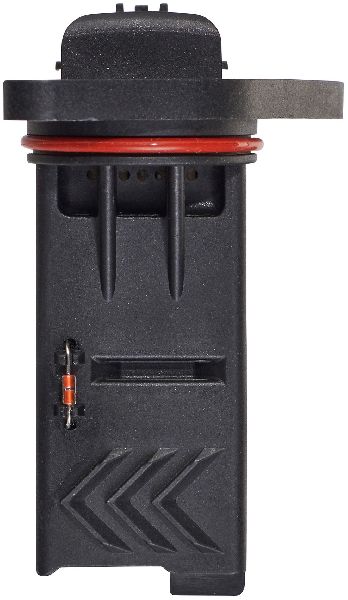

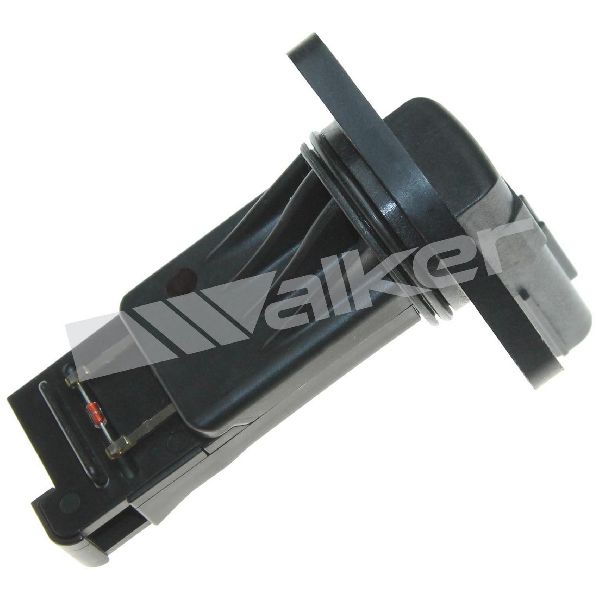

The information in this article is provided for general reference and educational purposes only. Vehicle specifications, procedures, and part compatibility can vary by production date, trim level, and region. Always consult your vehicle's factory service manual and verify part numbers before purchasing or performing repairs. Safety-critical components such as airbags, seat belts, and braking systems should be installed by a qualified professional.
- Mazda CX-5:
- 🎬 Helpful Videos
- 🛍️ Shop This Part
- What's Unique About the 2014-2015 Mazda CX-5
- Diagnostic Flowchart
- Symptoms You May Notice
- Most Likely Causes
- Rare But Worth Checking
- Diagnosis Steps
- Parts You'll Likely Need
- Related Codes That Often Appear With This One
- Technical Service Bulletins (TSBs) & Recalls
- Platform-Specific Known Issues
- Mechanic-Grade Diagnostic Values
- Hidden / Shadow Codes Worth Checking
- Scan Tool Commands That Help
- Wiring & Ground Locations
- Real Owner Repair Stories
- "I Checked Everything" — The Actual Cause
- 🎟️ Get 5% Off