

P0101 on 2013-2016 Mazda CX-5 Skyactiv-G: MAF Sensor Causes and Fixes
For a P0101 code on a 2013-2016 Mazda CX-5 with a gasoline engine, the most likely cause is a dirty Mass Airflow (MAF) sensor or a cracked air intake hose. Start by cleaning the MAF sensor with a dedicated cleaner (around $15) before replacing any parts. Check the flexible intake boot between the air filter and engine for cracks, a very common failure point.
- Always start by cleaning the MAF sensor with a dedicated cleaner before buying any parts.
- Thoroughly inspect the flexible air intake hose for cracks; this is a very common failure point.
- Do not confuse the simple fixes for the gasoline engine with the complex diesel engine problems (like worn camshafts) that can also cause P0101.
- If cleaning the sensor and checking for leaks doesn't fix it, the sensor itself has likely failed.
- Be aware that a rare software glitch, fixable by a dealer, can also be the root cause.
What's Unique About the 2013-2016 Mazda CX-5
While P0101 is a generic code, the Skyactiv-G engines in this CX-5 generation are most susceptible to simple issues like a dirty sensor or a torn intake boot. It's important not to confuse this with the Skyactiv-D (diesel) engine, which is not sold in all markets; on the diesel, this code often points to more severe issues like worn exhaust camshafts or heavy carbon buildup in the intake manifold that disrupts airflow. Additionally, Mazda has issued Technical Service Bulletins (TSBs) acknowledging that a PCM software glitch can sometimes falsely trigger a P0101 code on these gasoline vehicles, often in conjunction with code P061B. For instance, manufacturer service bulletin Bulletin #SA-060-17 notes that some vehicles may experience the Check Engine Light with DTC P0101 and/or P061B after a PCM reprogramming using specific IDS software versions.
Symptoms You May Notice
- Check Engine Light is on
- Rough or unstable idle
- Hesitation or stumbling during acceleration
- Noticeable loss of engine power
- Vehicle may enter a reduced-power 'limp mode'
- Decreased fuel economy
- Multiple other warning lights (e.g., Traction Control, TPMS, SCBS) may illuminate simultaneously
- Replacing the MAF sensor without first attempting to clean it.
- Replacing oxygen (O2) sensors, as the issue is with air measurement before combustion, not the exhaust gas reading after.
- Assuming the cause is a worn camshaft or carbon buildup, which are common problems for the Skyactiv-D (diesel) engine but extremely rare for the Skyactiv-G (gasoline) engine in relation to this code.
Most Likely Causes
- Dirty Mass Airflow (MAF) Sensor 🔴 High Probability The sensor's fine wires are sensitive to contamination from dust, oil vapor from the PCV system, and other airborne particles over time, which insulates the sensing element and skews its readings.
How to confirm: Visually inspect the sensor's wire elements after removal. If they appear coated in grime, they need cleaning. The simplest and most cost-effective test is to clean it with a dedicated cleaner and see if the code disappears.
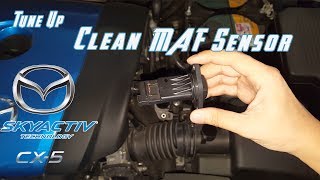
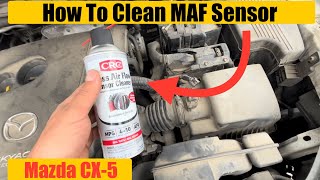
Typical fix: Remove the sensor (held by two Phillips head screws) and clean it thoroughly with a dedicated MAF sensor cleaner spray. Do NOT touch the sensor wires or use other chemicals like brake cleaner. 🎬 Watch: A step-by-step guide to cleaning your MAF sensor. Let it air dry completely before reinstalling.
Est. part cost: $10-$20 - Cracked or Loose Air Intake Hose 🔴 High Probability The flexible, ribbed rubber intake hose between the air filter box and the throttle body can become brittle and crack with age and heat cycles. This allows unmetered air to enter the engine, creating a lean condition and confusing the MAF sensor readings.
How to confirm: With the engine running, listen for a hissing sound around the intake area. Visually inspect the entire hose, especially in the accordion-like ribbed sections, for cracks or tears. A smoke test is the most definitive way to find a leak. 🎬 Watch: Diagnosing and repairing P0101 and P0172 codes.
Typical fix: Replace the cracked or torn air intake hose and ensure all clamps are secure. The part number for the 2.5L engine is commonly PY01-13-221.
Est. part cost: $40-$100 - Faulty MAF Sensor 🟡 Medium Probability If cleaning the sensor and confirming there are no air leaks doesn't resolve the code, the sensor's internal electronics may have failed. This should only be considered after the other, more common causes are ruled out.
How to confirm: After ruling out a dirty sensor and vacuum leaks, the next step is replacement. A professional can test the sensor's output voltage with a multimeter or view live data on a scan tool to confirm failure before replacement.
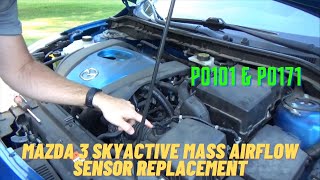
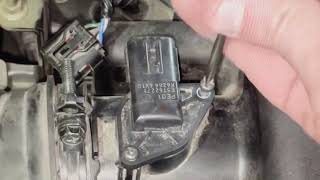
Typical fix: Replace the MAF sensor. The OEM part number is PE01-13-215. 🎬 See this walkthrough for replacing a faulty MAF sensor.
Est. part cost: $80-$250 - PCM Software Glitch ⚪ Low Probability Mazda TSBs SA-060-17 and others (like 01-010/19) document a 'mislogic detection' where certain PCM software versions can falsely trigger P0101, often accompanied by P061B (Internal Control Module Torque Calculation Performance), especially after a previous reprogramming or under specific conditions like high altitude. Bulletin #SA386 also notes that the check engine light with DTCs P0101 and P061B may illuminate after PCM reprogramming due to a mislogic detection in the calibration.
How to confirm: This can only be confirmed by a Mazda dealership. If you have had recent service or PCM programming, and no physical faults (leaks, dirty sensor) can be found, this is a strong possibility.
Typical fix: The Mazda dealership must reprogram the Powertrain Control Module (PCM) with updated software as per the relevant TSB.
Est. part cost: $0-$200
Rare But Worth Checking
- Clogged Engine Air Filter: A severely neglected and clogged air filter can restrict airflow enough to cause the MAF sensor readings to be lower than expected, triggering the code. It's a simple and inexpensive item to check first.
- Damaged MAF Sensor Wiring or Connector: Check the wiring harness and connector for any visible damage, corrosion, or loose pins. A bad connection can mimic a failed sensor.
- Failing Battery: In some forum discussions, owners report that a failing battery can cause voltage fluctuations that lead to a cascade of seemingly unrelated error codes, including P0101 and various chassis system warnings. A battery load test is recommended if multiple strange codes appear at once.
Diagnosis Steps
- Read the trouble codes with an OBD-II scanner to confirm P0101 and check for any other codes like P0171 or P061B.
- Inspect the engine air filter. Replace if it is dirty or clogged.
- Thoroughly inspect the air intake hose between the air filter housing and the throttle body. Squeeze and flex the ribbed sections, looking for hidden cracks. Listen for hissing with the engine running.
- Disconnect the battery. Unplug the MAF sensor connector. Remove the two screws holding the MAF sensor in the intake tube.
- Carefully spray the MAF sensor's wires and elements with a dedicated MAF sensor cleaner. Do not touch the wires. Let it dry completely for at least 15-20 minutes before reinstalling.
- Reinstall the sensor, reconnect the connector and battery. Clear the codes with the scanner and perform a test drive to see if the code returns.
- If the code returns, perform a smoke test to definitively check for vacuum leaks anywhere in the intake system.
- If no vacuum leaks are found and cleaning did not work, the MAF sensor itself is likely faulty and should be replaced with a quality OEM or Denso part.
- If the problem persists after replacing the sensor, especially if code P061B is also present, consult a dealer about a potential PCM software update, referencing TSBs like SA-060-17 or 01-010/19.
Parts You'll Likely Need
- Mass Airflow Sensor Cleaner — This is the most common and inexpensive first step, as the sensor is often just dirty.
Trusted brands: CRC, WD-40 Specialist, Liqui Moly
Aftermarket price range: $10-$20 - Engine Air Intake Hose (2.5L)
(OEM #PY01-13-221)— The rubber hose is a common failure point, developing cracks that cause vacuum leaks and trigger this code. This part number is for the 2.5L engine.
Trusted brands: Mazda OE, Various aftermarket
OEM price range: $70-$100
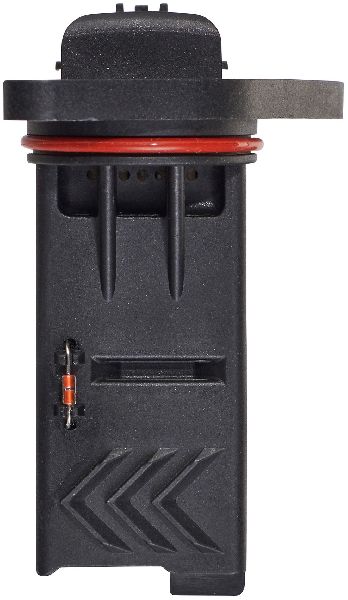
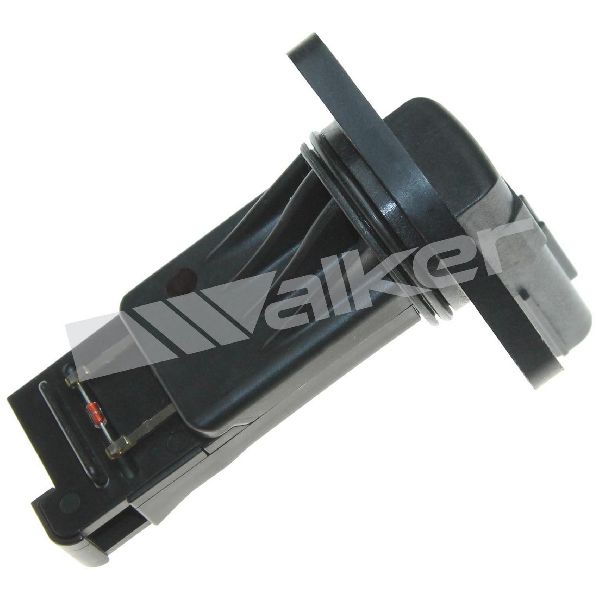
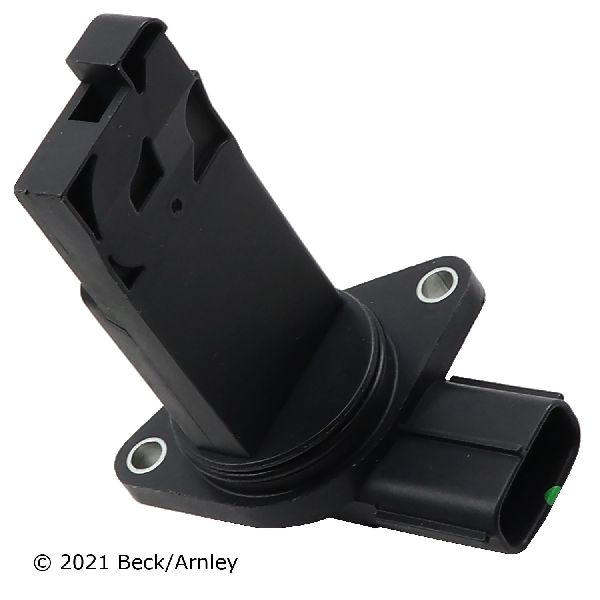
Aftermarket price range: $40-$60 - Mass Airflow (MAF) Sensor
(OEM #PE01-13-215)— If cleaning the sensor and checking for leaks doesn't solve the problem, the sensor itself has likely failed. This part is used across many Mazda models.
Trusted brands: Mazda (Denso is often the OEM manufacturer), Denso, Hitachi, Bosch
OEM price range: $200-$250
Aftermarket price range: $80-$150
Related Codes That Often Appear With This One
- P0171 — System Too Lean. A vacuum leak after the MAF sensor (like a cracked intake hose) allows unmetered air in, causing the engine to run lean.
- P0172 — System Too Rich. A dirty or failing MAF sensor might under-report airflow, causing the PCM to inject too little fuel, but it can also over-report, leading to a rich condition.
- P061B — Internal Control Module Torque Calculation Performance. Mazda TSBs specifically mention this code can appear alongside P0101 due to a PCM software glitch where the torque calculation is too sensitive.
Technical Service Bulletins (TSBs) & Recalls
- SA-060-17: Notes that DTC P0101 can be falsely set due to a PCM software mislogic after reprogramming.
- SA386: Also mentions a mislogic detection in the PCM calibration can cause the check engine light with P0101.
- TSB 01-010/19: Details a scenario where P061B can be stored due to overly sensitive torque calculation logic, especially at high temperatures/altitudes, and requires a PCM software update. This TSB is relevant as P061B often appears with P0101 due to software issues.
- Bulletin #SA-060-17 (dated 2017-07-12): Specifically identifies that some 2013-2015 CX-5s may experience the Check Engine Light with DTC P0101 and/or P061B after reprogramming the PCM using certain IDS versions.
- Bulletin #SA386 (dated 2017-01-13): Confirms that the check engine light with DTCs P0101, P061B, P2122, and P2138 may illuminate after PCM reprogramming due to mislogic detection.
Platform-Specific Known Issues
- A known software issue documented in Mazda TSBs (e.g., SA-060-17, 01-010/19) can cause P0101 to appear, often with P061B, after the PCM has been reprogrammed or when driving in specific conditions like high altitude.
Mechanic-Grade Diagnostic Values
- MAF Sensor Signal Voltage (Skyactiv-G) — expected: Key On, Engine Off: ~0.72 V. At Idle: ~0.86 V.. Failure: A significantly higher voltage at KOEO, such as 1.03 V, or a reading that does not change with engine RPM, points to a faulty sensor.
- MAF Sensor Live Data (Skyactiv-G) — expected: At idle: ~2.64 g/s.. Failure: Readings of 3.5 g/s or higher with the key on and engine off (when it should be zero) strongly indicate a faulty sensor.
- Intake Air Temperature (IAT) Sensor Resistance — expected: At 20°C (68°F): 2.5 - 2.7 kΩ. At 60°C (140°F): 0.6 - 0.7 kΩ.. Failure: Resistance readings that are far outside the expected values for a given ambient temperature indicate a failure of the IAT portion of the MAF sensor assembly.
Hidden / Shadow Codes Worth Checking
- Pending Code P0101: Mazda's system will store a 'PENDING CODE' if the MAF range/performance malfunction is detected during a single drive cycle. The Check Engine Light will not illuminate until the fault is detected on a second consecutive drive cycle. (see via A standard OBD-II scanner capable of reading pending/permanent codes can view this.)
Scan Tool Commands That Help
- M-MDS (Mazda Modular Diagnostic System) or FORScan: PID Monitoring: MAF Voltage & MAF (g/s) — Use this to watch live data. The service manual procedure involves monitoring the MAF voltage PID while gently blowing air across the removed sensor element (with the connector attached) to verify that the voltage changes. A static or unresponsive voltage indicates a failed sensor.
- FORScan: Reset EGR Adaptations / Calibrate Injectors — On Skyactiv-D (diesel) engines, owners have reported that after extensive intake cleaning or parts replacement, a persistent P0101 was resolved by using FORScan to reset adaptations for the EGR and injectors. This forces the PCM to relearn values with the clean components, correcting learned-in errors. While this is a diesel-specific story, it highlights the importance of resetting adaptations after major intake work.
Wiring & Ground Locations
- G11 — Lower left center of the dash.. This is a primary interior ground point. While not the main engine ground, poor grounding here can cause a variety of electrical issues in the cabin and with control modules that could potentially manifest as erratic sensor readings.
- G01 / G02 — Under the left (driver's side LHD) headlight assembly.. This is a primary grounding point for the engine control system and is physically located near the MAF sensor. Corrosion or a loose connection at this point can directly impact the sensor's circuit and the PCM's ability to get a stable reading.
- MAF Sensor Connector — On the MAF sensor itself, in the intake tube after the air filter box.. The official Mazda diagnostic procedure for P0101 involves checking for malfunctions in the MAF sensor connector or its terminals. Corrosion or bent pins can cause an intermittent or complete loss of signal.
Real Owner Repair Stories
- Reddit user in a Mazda3 thread (similar Skyactiv-G engine) (Mazda3 with Skyactiv-G engine) — Persistent P0101 code
❌ Tried (didn't work) Replacing the MAF sensor
✅ What actually fixed it The owner reported that thoroughly cleaning the throttle body ultimately resolved the P0101 code after a new MAF sensor did not fix it. - NHTSA ODI #10978705 — An owner reported experiencing bucking and warning lights where P0101 and P061B problems were present; despite the MAF sensor appearing fine, the malfunction continued after an oil change and inspection.
"I Checked Everything" — The Actual Cause
- While most gasoline engine cases are resolved by cleaning/replacing the MAF or fixing a torn intake boot, on the diesel (Skyactiv-D) version of the CX-5, it is extremely common for P0101 to appear even with a perfectly clean smoke test. The actual cause is often internal airflow disruption from either a worn exhaust camshaft or severe carbon buildup in the intake manifold, which the PCM misinterprets as a MAF sensor fault.
Model Year Variations Within This Range
- 2016: The 2016 model year received a facelift. For the powertrain, the 2.0L engine was restricted to the base Sport trim with a manual transmission. All other trims (including automatic Sports) received the 2.5L engine as standard. This is a change from 2013-2015 where the 2.0L was more common across lower trims.
- 2016.5: A mid-year update designated "2016.5" added more standard features like a backup camera and navigation to certain trims but involved no powertrain changes relevant to P0101.
Diagnostic Flowchart
Other Known Issues on This Vehicle
Issues unrelated to this code that are worth knowing about as an owner of this generation:
- Leaking Serpentine Belt Tensioner 🟠 Medium — Common across many model years. The hydraulic tensioner leaks fluid, which can look like an oil leak and cause the belt to slip or make noise. (Ref: TSB 01-019/19 covers this issue for 2013-2019 CX-5s, noting the seal can fail under high heat and load.)
- Infotainment System Glitches (Blank Screen, Ghost Touch) 🟡 Low — Widespread issue where the screen may go blank, become unresponsive, or register 'ghost' touches. Often requires a hard reset or a software update. (Ref: TSB SA-001-23 addresses the 'ghost touch' issue on later models, but the problem is common on the 2016 models as well.)
- Prematurely Cracked Windshield 🟡 Low — Numerous owner reports of windshields cracking spontaneously or from very minor impacts, suggesting they are under stress.
- Faulty Shifter Switch (Accessories Stay On) 🟡 Low — A faulty switch in the automatic transmission shifter assembly can prevent the vehicle from fully powering down, leaving it in accessory mode and draining the battery.
- Failing LED Daytime Running Lights (2016 model) 🟡 Low — The LED DRLs in the headlights are known to flicker or fail due to moisture intrusion. (Ref: A recall was issued for this problem on 2016 models.)
Used vs. New Parts: Buying Guide for This Vehicle
When a used part is the smart pick: For the flexible air intake hose (PY01-13-221), a used part from a low-mileage, late-model donor vehicle can be a cost-effective option if it is thoroughly inspected for pliability and has no signs of cracking. For the MAF sensor, a used OEM part is a gamble but can be a viable option if sourced from a reputable recycler with a return policy, as it avoids the potential issues of cheap new aftermarket sensors.
Donor-vehicle mileage cap: roughly under 60000 miles for the part to have meaningful remaining life.
What to inspect on the donor part:
- For an intake hose, squeeze the rubber. It should be flexible, not hard or crunchy. Inspect the ribbed sections meticulously for hairline cracks.
- For a MAF sensor, there are no reliable visual cues. Ensure the donor vehicle was not in a front-end collision and check for a clean air filter, which suggests better maintenance.
- Verify the OEM part number (PE01-13-215) on the sensor body matches exactly.
OEM-only on this vehicle (don't cheap out):
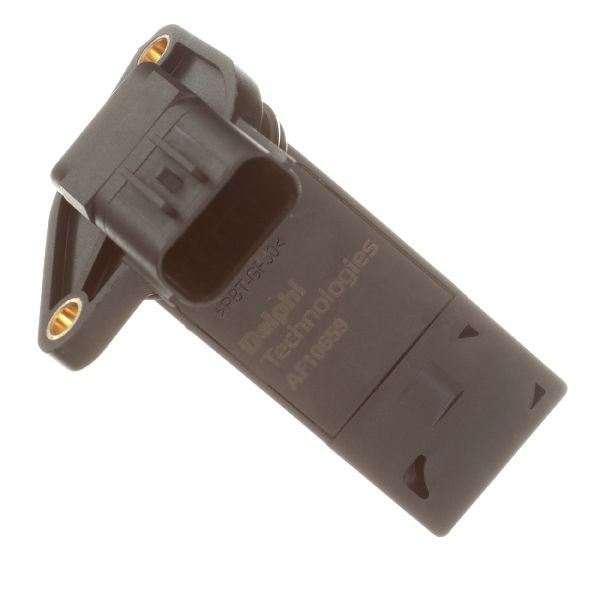
- Mass Airflow (MAF) Sensor: While not strictly 'OEM-only', it is highly recommended to use the OEM (Denso) or a reputable brand like Delphi. Cheap, unbranded aftermarket MAF sensors are a very common source of persistent, hard-to-diagnose issues.
Aftermarket brands forum-validated for this vehicle:
- Denso (often the OEM supplier)
- Delphi
- Bosch
- Hitachi
Brands owners have reported issues with on this vehicle:
- Unbranded, low-cost sensors from online marketplaces (e.g., a '$30 sensor from Amazon'). Forum users frequently report that these parts do not work correctly out of the box or fail quickly.
Real Owner Stories
Aggregated from forums and TSBs cited above. Mileages and costs reflect what owners reported in those sources.
2012 Mazda CX-5
Symptoms: While driving, the check engine, traction control, and tire pressure lights all illuminated simultaneously. The car lost power, would not exceed 25 MPH (limp mode), and made a rattling sound.
What fixed it: The codes pulled were P0101 and P0304; the issue was identified as a MAF sensor failure that cascaded into other warnings.
Source hint: Mazdas247 Forum - 'Main1976' User Experience
2016 Mazda CX-5 2.2L Diesel
Symptoms: Multiple warning lights including traction control, handbrake, smart brake, and tire pressure appeared with P0101, specifically during deceleration.
What fixed it: While the gasoline fix is usually a sensor or hose, the dealer in this diesel-specific case diagnosed a faulty vacuum pump and noted potential needs for walnut blasting and a new turbo.
Source hint: Mazda Forum - P0101 and Warning Lights
Mazda CX-5 Skyactiv-D
Symptoms: Chasing a persistent P0101 error code after already replacing the MAF sensor and cleaning the MAP sensor.
What fixed it: The dealer diagnosed a faulty vacuum pump and carbon buildup (requiring walnut blasting).
Source hint: Reddit r/CX5 - P0101 on a 2.2 Diesel
Related OBD-II Codes
Frequently Asked Questions
My 2014 CX-5 has P0101 and P061B; could this be a software issue?
What is the specific Mazda part number for a replacement MAF sensor on the 2.0L or 2.5L engine?
I suspect an intake leak on my 2.5L CX-5. Is there a specific part that usually fails?
Can a weak battery cause P0101 and other warning lights on my 2016 CX-5?
Does TSB SA-060-17 apply if I haven't had my car serviced recently?
Are there other Mazda models that have this same P0101 issue?
Helpful Videos

Used OEM Parts in Stock


New Aftermarket Parts Available


The information in this article is provided for general reference and educational purposes only. Vehicle specifications, procedures, and part compatibility can vary by production date, trim level, and region. Always consult your vehicle's factory service manual and verify part numbers before purchasing or performing repairs. Safety-critical components such as airbags, seat belts, and braking systems should be installed by a qualified professional.
- Mazda CX-5:
- 🎬 Helpful Videos
- 🛍️ Shop This Part
- What's Unique About the 2013-2016 Mazda CX-5
- Symptoms You May Notice
- Most Likely Causes
- Rare But Worth Checking
- Diagnosis Steps
- Parts You'll Likely Need
- Related Codes That Often Appear With This One
- Technical Service Bulletins (TSBs) & Recalls
- Platform-Specific Known Issues
- Mechanic-Grade Diagnostic Values
- Hidden / Shadow Codes Worth Checking
- Scan Tool Commands That Help
- Wiring & Ground Locations
- Real Owner Repair Stories
- "I Checked Everything" — The Actual Cause
- Model Year Variations Within This Range
- Diagnostic Flowchart
- Other Known Issues on This Vehicle
- Used vs. New Parts: Buying Guide for This Vehicle
- Real Owner Stories
- 2012 Mazda CX-5
- 2016 Mazda CX-5 2.2L Diesel
- Mazda CX-5 Skyactiv-D
- Related OBD-II Codes
- Frequently Asked Questions
- 🎟️ Get 5% Off