

P0101 on 2012-2013 Mazda 3 Skyactiv: MAF Sensor Causes and Fixes
P0101 on your Mazda 3 most likely indicates a dirty Mass Air Flow (MAF) sensor or a vacuum leak. The easiest first step is to clean the MAF sensor with a dedicated spray cleaner, which costs about $10-$15. If the problem persists, check for intake air leaks, a possible PCM software issue that may require a dealer update, or a faulty sensor.
- Always start with the cheapest and easiest fix: clean the MAF sensor with a dedicated cleaner.
- If cleaning doesn't work, carefully inspect the intake for air leaks before buying parts.
- Be aware that this code on this specific vehicle can be caused by a software issue that only a dealer can fix.
- If you need to replace the sensor, double-check that you are buying the correct part number (OEM: PE01-13-215), as some parts catalogs may be incorrect for this early Skyactiv model.
- If code P061B is also present, it strongly points towards the PCM software issue mentioned in Mazda's TSBs. [SA-060-17, SA386]
What's Unique About the 2012-2013 Mazda 3
For these early 2.0L Skyactiv-G engines in the Mazda 3, the P0101 code has a notable history tied to the vehicle's software. Mazda issued Technical Service Bulletins (TSBs) indicating that this code can be falsely triggered by a "mislogic detection in the PCM calibration." [SA386] This means that even if the MAF sensor and intake system are perfectly fine, the car's computer might need a software update from a dealer to correct the fault logic. This is a critical distinction from simply having a bad part. This issue is particularly prevalent when P0101 appears alongside code P061B. [SA-060-17, SA386]
Symptoms You May Notice
- Check Engine Light is on
- Engine hesitation, stumbling, or 'bucking' during acceleration
- Rough or unstable idle
- Noticeable loss of engine power
- Engine may stall after starting or when coming to a stop.
- Decreased fuel economy
- Difficulty starting
- Black smoke from exhaust on hard acceleration
- Replacing the oxygen sensors without checking MAF data first.
- Replacing the throttle body when the issue is simply a dirty MAF sensor or vacuum leak.
- Replacing the MAF sensor repeatedly when the root cause is a vacuum leak or a needed PCM software update.
Most Likely Causes
- Dirty or Contaminated Mass Air Flow (MAF) Sensor 🔴 High Probability Over time, dust, oil vapors, and other debris can coat the sensitive wire or film inside the MAF sensor, insulating it and causing inaccurate readings. This is the most common and easiest-to-fix cause, with cleaning often resolving the issue in the majority of cases.
How to confirm: Remove the sensor and visually inspect the internal sensing elements for dirt or grime. Often, cleaning it is the confirmation. A definitive test is to monitor live data with a scan tool; a dirty sensor will often under-report airflow (g/s) compared to expected values.
Typical fix: Remove the sensor and clean it thoroughly with a dedicated MAF sensor cleaner spray. 🎬 See how to safely clean your MAF sensor Do not use brake cleaner or carburetor cleaner, as they can damage the sensor. Let it air dry completely before reinstalling.
Est. part cost: $10-$15 for cleaner spray - Vacuum Leak in the Intake System 🟡 Medium Probability Any air that enters the engine after the MAF sensor is 'unmetered' and will cause the sensor's readings to be lower than the actual amount of air entering the cylinders. Cracks in the plastic or rubber intake hoses are common over time. A hissing noise from the engine bay at idle can be an indicator of a vacuum leak.
How to confirm: Visually inspect all intake ducting for cracks or loose clamps, especially the flexible boot connecting the airbox to the throttle body. A professional smoke test is the most effective way to find hidden leaks.
Typical fix: Replace the cracked hose or tighten the loose clamp.
Est. part cost: $20-$100 for a new intake hose - Outdated Powertrain Control Module (PCM) Software 🟡 Medium Probability Mazda TSBs #SA-060-17, #SA386, and #01-010/19 specifically mention that P0101 (often with P061B) can be caused by a software glitch where the torque calculation logic is too sensitive, especially after previous PCM reprogramming or in certain environmental conditions. [SA-060-17, SA386] TSB #01-011-13-2766 also points to a PCM update as a potential fix. [01-011-13-2766]
How to confirm: This must be confirmed by a Mazda dealership or a qualified repair shop with access to Mazda's service information. They can check your vehicle's current software version against available updates.
Typical fix: Reprogramming the PCM with the latest software version. This may also involve resetting learned fuel and sensor adaptations.
Est. part cost: $0 (if under warranty) to $100-$250 for labor - Faulty Mass Air Flow (MAF) Sensor ⚪ Low Probability While less common than being dirty, the sensor itself can fail electronically. A Reddit user with a 2013 Skyactiv model confirmed that replacing a faulty sensor, which gave incorrect readings (40-50 g/s) with the engine off, solved their stalling issue. Another owner reported that an aftermarket (Duralast) MAF sensor initially fixed P0101 but soon caused a P0171 (System Too Lean) code, which was resolved by installing an OEM sensor.
How to confirm: Use a scan tool to monitor the MAF sensor's live data (in g/s). A faulty sensor may show erratic readings, no change with RPM, or incorrect values with the key on and engine off (should be near 0 g/s, not 40-50 g/s). A reading of 4-5 g/s with Key On Engine Off on a new sensor has also been reported as normal.
Typical fix: Replace the MAF sensor, preferably with an OEM or high-quality Denso/Hitachi unit to avoid compatibility issues.
Est. part cost: $60-$250 - Clogged or Dirty Engine Air Filter ⚪ Low Probability A severely clogged air filter can restrict airflow enough to cause the MAF sensor's readings to be lower than what the PCM expects for a given throttle opening.
How to confirm: Visually inspect the engine air filter. If it is black, full of debris, or has not been changed in a long time, it needs replacement.
Typical fix: Replace the engine air filter.
Est. part cost: $15-$30
Rare But Worth Checking
- Damaged MAF Sensor Wiring or Connector: Corrosion on the connector pins or a frayed wire can cause an intermittent or incorrect signal, mimicking a faulty sensor. Always inspect the harness before replacing the sensor. Sometimes simply unplugging and reconnecting the connector can temporarily resolve the issue, pointing to a connection problem.
- Restricted Exhaust System: A clogged catalytic converter can prevent the engine from 'breathing' properly, which can throw off the correlation between airflow and other engine parameters, leading to a P0101 code.
- Dirty Throttle Body: While less common, a throttle body flap that is sticking due to carbon buildup can cause airflow anomalies at idle or low speeds, which the PCM may interpret as a MAF sensor range issue. One owner of a first-generation Mazda 3 reported that cleaning a dirty throttle body finally resolved a persistent P0101 after multiple MAF sensor replacements failed to fix it.
Diagnosis Steps
- Read the code with an OBD-II scanner and check for any other accompanying codes, especially P061B or P0171.
- Visually inspect the engine air filter and replace if it's dirty.
- Inspect the entire air intake system between the air filter box and the throttle body for any cracks, tears, or loose connections. Pay close attention to the flexible rubber boot.
- Locate the MAF sensor on the air intake tube. Disconnect it and inspect the connector and wiring for any signs of damage or corrosion.
- Remove the two screws holding the MAF sensor and carefully take it out. Inspect the internal wires for contamination.
- Thoroughly spray the sensor's elements with a dedicated MAF sensor cleaner. Do not touch the wires. Let it dry completely for at least 15 minutes before reinstalling.
- Clear the codes with the scanner and test drive the vehicle to see if the code returns.
- If the code returns, use a scan tool to monitor live data from the MAF sensor (g/s). With the Key On, Engine Off (KOEO), the reading should be near zero. At idle, it should be around 2-7 g/s and increase smoothly as you raise the engine RPM. A reading of 40-50 g/s at KOEO indicates a failed sensor.
- If sensor data seems plausible, perform a smoke test to definitively check for vacuum leaks.
- If no physical faults are found, contact a Mazda dealer to inquire about a PCM software update, referencing TSBs SA-060-17 or SA386 for P0101 and P061B. [SA-060-17, SA386]
Parts You'll Likely Need
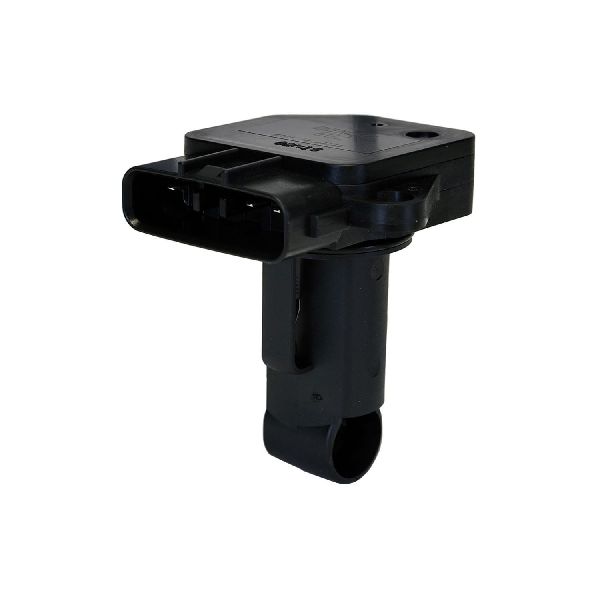
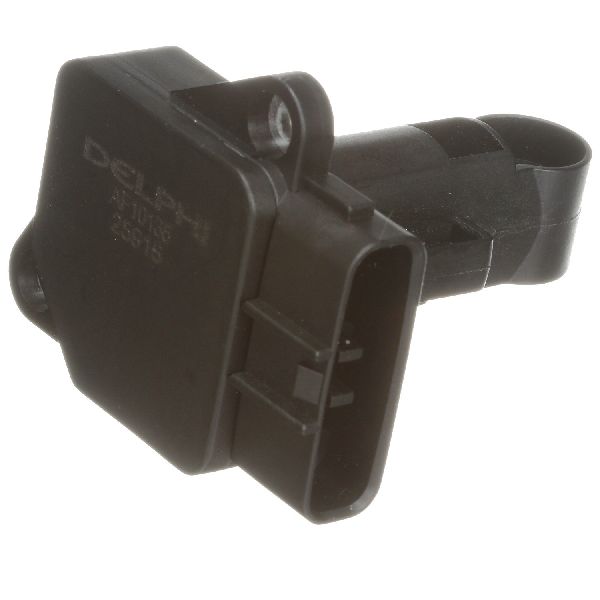
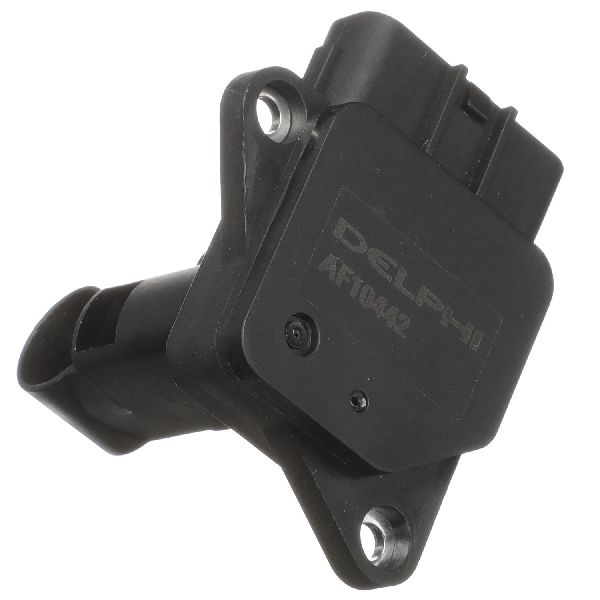
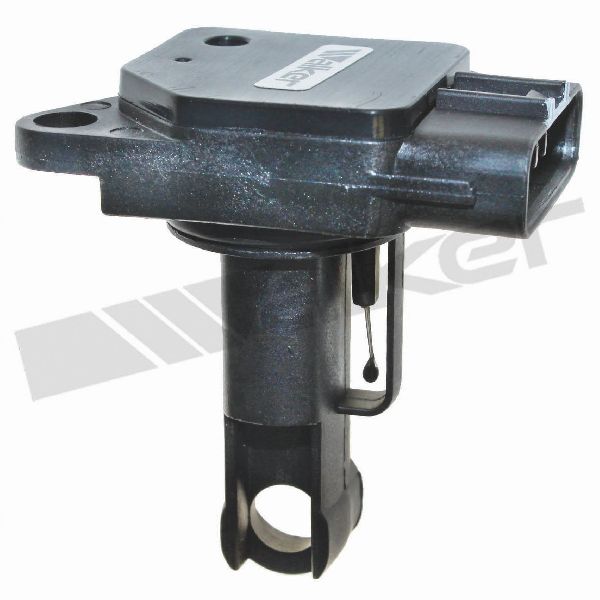
- Mass Air Flow (MAF) Sensor
(OEM #PE01-13-215)— This is the part that fails or requires cleaning. If cleaning doesn't work and the sensor is confirmed to be faulty through testing, it must be replaced. Using the OEM part is recommended to avoid secondary issues like P0171.
Trusted brands: Mazda (OEM), Denso (OEM supplier), Hitachi
OEM price range: $150-$250
Aftermarket price range: $60-$150 - MAF Sensor Cleaner — This is the first and most common fix. A specialized cleaner is required to safely remove contaminants without damaging the sensor's delicate components.
Trusted brands: CRC, WD-40 Specialist, Berryman
Aftermarket price range: $10-$15
Related Codes That Often Appear With This One
- P061B — This code for 'Internal Control Module Torque Calculation Performance' is explicitly mentioned alongside P0101 in Mazda TSBs SA-060-17 and SA386. Seeing them together strongly suggests the PCM software calibration issue described by Mazda. [SA-060-17, SA386]
- P0171 — System Too Lean (Bank 1). This can occur if there is a vacuum leak, as unmetered air is entering the engine, or if a faulty MAF sensor is under-reporting the amount of air, causing the PCM to inject too little fuel. One owner reported this code appeared after installing an aftermarket MAF sensor.
Technical Service Bulletins (TSBs) & Recalls
- SA-060-17
- SA386
- 01-011-13-2766
- 01-010/19
Platform-Specific Known Issues
- PCM Software Glitch: As documented in Mazda TSBs #SA-060-17 and #SA386, the P0101 code (often with P061B) can be triggered by a logic error in the PCM's software, especially after a previous reprogramming. A dealer update is the only fix. [SA-060-17, SA386]
- Aftermarket Sensor Incompatibility: A documented owner experience showed that using a non-OEM (Duralast) MAF sensor caused a new trouble code (P0171 - System Too Lean) to appear shortly after installation, suggesting the calibration was not correct for the Skyactiv engine's ECU. The issue was resolved by installing a genuine Mazda sensor.
Mechanic-Grade Diagnostic Values
- MAF Sensor Live Data (g/s) at Idle — expected: 2 to 7 g/s. Failure: A reading that is erratic, stuck, or significantly outside this range.
- MAF Sensor Live Data (g/s) at 2500 RPM — expected: 15 to 25 g/s. Failure: A reading that does not increase smoothly with RPM or falls far short of this range under acceleration.
- MAF Sensor Live Data (g/s) with Key On, Engine Off (KOEO) — expected: Near 0 g/s. A new, functional sensor might read 4-5 g/s.. Failure: A high reading, such as 40-50 g/s, indicates an electrically failed sensor.
- MAF Sensor Signal Voltage at Idle — expected: Approximately 1.13 to 1.14 V (on a similar 2.2D Skyactiv engine). Failure: Voltage that is erratic or does not correspond to airflow changes.
- Intake Air Temperature Sensor Resistance (part of MAF assembly) — expected: 2.5 - 2.7 kΩ at 20°C (68°F). Failure: Resistance reading is open (infinite) or shorted (zero), or does not match the ambient temperature.
Hidden / Shadow Codes Worth Checking
- P0101:00: This is a specific Mazda format where the ':00' is a Component Fault Identifier (CFI). It indicates the PCM has detected that the difference between the airflow measured by the MAF sensor and the airflow estimated by the MAP sensor is outside the specified range. (see via This format is typically visible on Mazda's own diagnostic system (M-MDS) or higher-end professional scan tools.)
Wiring & Ground Locations
- Engine to Chassis Ground — There are several key grounds. One is typically attached to or near the passenger-side engine mount. Others are located on the transmission housing, connecting to the chassis. A main ground cable also connects from the driver's side fender area to the battery negative terminal.. A poor or corroded ground connection can cause erratic voltage signals and unstable sensor readings, including the MAF sensor. The PCM relies on a stable ground reference to interpret sensor data correctly. An unstable ground can mimic a sensor failure.
Real Owner Repair Stories
- Reddit user xtos2001 (2013 Mazda 3 2.0L Skyactiv-G) — Car would start and then stall out immediately.
❌ Tried (didn't work) Cleaning the MAF sensor, Resetting the ECU by disconnecting the battery
✅ What actually fixed it Replacing the MAF sensor. The faulty sensor was reading 40-50 g/s with the key on and engine off, while the new one read 4-5 g/s in the same condition. The owner also noted that generic auto parts stores had the wrong part listed in their systems for the early Skyactiv engine. - YouTube video by 'funinfungs' (2013 Mazda 3i hatchback Skyactiv) — Starts and dies right away, no codes were initially stored.
❌ Tried (didn't work) Checking intake hoses for cracks.
✅ What actually fixed it Disconnecting the MAF sensor allowed the car to start and run (in a default mode), confirming the MAF was the culprit. Replacing the sensor resolved the stalling.
"I Checked Everything" — The Actual Cause
- On the related Skyactiv-D (diesel) engines, which share similar diagnostic logic, a P0101 that persists after confirming no vacuum leaks is often caused by either severe carbon buildup in the intake manifold or a worn exhaust camshaft. Both conditions disrupt the expected airflow and pressure within the manifold, causing the PCM to flag a MAF performance issue even though the sensor itself is working correctly.
OEM Part Supersession History
PE01-13-215→PE01-13-215 (current)— This part number appears to be stable and has been used across a wide range of Mazda vehicles with Skyactiv engines from 2012 to present.
Heads up: A key issue noted by owners is not part number supersession, but incorrect cataloging by aftermarket parts stores for the early 2012-2013 Skyactiv models, which were a new introduction. It is crucial to verify the part is for the Skyactiv engine, as the sensor for the standard MZR 2.0L is different.
Model Year Variations Within This Range
- 2012-2013: The 2012 model year was the first introduction of the Skyactiv-G engine in the Mazda 3. While the core engine and MAF sensor (PE01-13-215) remained the same for 2013, there were minor updates to trim and infotainment options. The key takeaway is that these early Skyactiv models were relatively low volume, which can lead to parts lookup confusion in aftermarket databases.
Diagnostic Flowchart
Other Known Issues on This Vehicle
Issues unrelated to this code that are worth knowing about as an owner of this generation:
- Intake Valve Carbon Buildup 🟠 Medium — A known characteristic of all early direct injection (GDI) engines. Becomes more noticeable after 60,000-80,000 miles. Can cause misfires, rough idle, and power loss. (Ref: No recall; Mazda has a TSB for a chemical cleaning procedure performed by dealers.)
- Low Oil Pressure (2012-2014 models) 🟠 Medium — Affects a small number of early 2.0L Skyactiv engines. Often caused by debris in the oil pump pressure relief valve. (Ref: Mazda issued a TSB to address this problem.)
- Warped/Lifting Dashboard 🟡 Low — A common cosmetic issue where the dashboard material above the instrument cluster and passenger airbag area can lift or bubble, especially in hot climates.
- Hydraulic Drive Belt Tensioner Failure 🟠 Medium — The tensioner can leak and fail, causing a rattling noise on acceleration. Typically requires replacement of the tensioner and drive belt.
- Transmission Control Module (TCM) Failure (Non-Skyactiv models) 🔴 High — More common on the non-Skyactiv automatic transmissions from this generation, but worth noting. Can cause erratic shifting or complete loss of drive.
Used vs. New Parts: Buying Guide for This Vehicle
When a used part is the smart pick: For the MAF sensor itself, buying a used part is generally not recommended. The failure mode is often electronic or contamination-related, which is difficult to assess visually. A used sensor may have a limited remaining lifespan or the same fault as the one being replaced. A used part may make sense for a cracked intake hose or airbox assembly if it is in good condition.
Donor-vehicle mileage cap: roughly under 50000 miles for the part to have meaningful remaining life.
What to inspect on the donor part:
- For a used MAF sensor (if you must): ensure the connector pins are clean, straight, and free of corrosion.
- Visually inspect the internal sensing wires; they should be clean and unbroken.
- For a used intake hose: check for flexibility (not brittle), and inspect thoroughly for any hairline cracks, especially in the accordion sections.
OEM-only on this vehicle (don't cheap out):
- Mass Air Flow (MAF) Sensor
Aftermarket brands forum-validated for this vehicle:
- Denso (often the OEM supplier)
- Hitachi
Brands owners have reported issues with on this vehicle:
- Unbranded or 'white-box' sensors from online marketplaces. Owners have reported these can fail quickly or cause other codes like P0171 (System Too Lean).
Real Owner Stories
Aggregated from forums and TSBs cited above. Mileages and costs reflect what owners reported in those sources.
2013 Mazda 3 Skyactiv-G 2.0L
Symptoms: Engine stalling and P0101 code. Diagnostic tool showed the MAF sensor reading 40-50 g/s with the engine off.
What fixed it: Replacing the MAF sensor fixed the stalling issue.
Source hint: Reddit r/mazda3 thread titled '2013 Mazda stalling with P0101 code... EDIT: Replacing the MAF sensor fixed it!'
2012-2013 Mazda 3 Skyactiv-G 2.0L
Symptoms: Initial P0101 code. After replacing the MAF with an aftermarket Duralast part, the car threw a P0171 lean code.
What fixed it: Installing a genuine OEM Mazda MAF sensor (part number PE01 / E5T62271).
Source hint: YouTube video 'How to Replace the Mass Airflow Sensor MAF on a Mazda 3 Skyactiv - With Code P0101 & or P0171'
2013 Mazda 3 2.0L — 47000 miles
Symptoms: Owner felt a misfire and observed a P0101 error code.
What fixed it: Cleaning the MAF sensor and throttle body was initiated as the first step for resolution.
Source hint: Mazdas247 thread 'P0101 error code-time to clean MAF sensor and throttle body'
Related OBD-II Codes
Frequently Asked Questions
My 2013 Mazda 3 is stalling and throwing a P0101; could it be a software issue?
I replaced my MAF sensor with a Duralast part and now I have a P0171 code. What happened?
What should the MAF sensor reading be on my Skyactiv-G engine when the engine is off?
Can I use any cleaner to fix the P0101 code on my Mazda 3?
Does TSB #01-011-13-2766 apply to the P0101 code on my 2012 Mazda 3?
Is there a specific part of the intake I should check for vacuum leaks on this model?
Helpful Videos

Used OEM Parts in Stock


New Aftermarket Parts Available



The information in this article is provided for general reference and educational purposes only. Vehicle specifications, procedures, and part compatibility can vary by production date, trim level, and region. Always consult your vehicle's factory service manual and verify part numbers before purchasing or performing repairs. Safety-critical components such as airbags, seat belts, and braking systems should be installed by a qualified professional.
- Mazda 3:
- 🎬 Helpful Videos
- 🛍️ Shop This Part
- What's Unique About the 2012-2013 Mazda 3
- Symptoms You May Notice
- Most Likely Causes
- Rare But Worth Checking
- Diagnosis Steps
- Parts You'll Likely Need
- Related Codes That Often Appear With This One
- Technical Service Bulletins (TSBs) & Recalls
- Platform-Specific Known Issues
- Mechanic-Grade Diagnostic Values
- Hidden / Shadow Codes Worth Checking
- Wiring & Ground Locations
- Real Owner Repair Stories
- "I Checked Everything" — The Actual Cause
- OEM Part Supersession History
- Model Year Variations Within This Range
- Diagnostic Flowchart
- Other Known Issues on This Vehicle
- Used vs. New Parts: Buying Guide for This Vehicle
- Real Owner Stories
- 2013 Mazda 3 Skyactiv-G 2.0L
- 2012-2013 Mazda 3 Skyactiv-G 2.0L
- 2013 Mazda 3 2.0L — 47000 miles
- Related OBD-II Codes
- Frequently Asked Questions
- 🎟️ Get 5% Off