

P0101 on 2015-2017 Jeep Renegade: MAF Sensor Performance Causes and Fixes
P0101 on a 2015-2017 Jeep Renegade typically points to a dirty or faulty Mass Airflow (MAF) sensor, a vacuum leak, or the need for a software update. Cleaning the MAF sensor is a common first step, but check for intake leaks and applicable TSBs before replacing parts. On some 2.4L models, this code can be set despite not having a MAF sensor, pointing to other sensor or software issues.
- Start by inspecting and cleaning the MAF sensor with a dedicated cleaner; this is the cheapest and most common fix.
- Thoroughly inspect the air intake system for any cracks or loose clamps, as vacuum leaks are a frequent cause.
- Be aware that on the 2015-2017 Renegade, P0101 can be a software issue. Check for available PCM updates before replacing expensive parts.
- A dirty air filter can cause this code, so check it first as part of basic maintenance.
What's Unique About the 2015-2017 Jeep RENEGADE

For the 2015-2017 Jeep Renegade, particularly those with the 2.4L Tigershark engine, the P0101 code is frequently mentioned in Technical Service Bulletins (TSBs) alongside a host of other seemingly unrelated codes. This suggests that the issue is not always a simple component failure but can be linked to software glitches that require a powertrain control module (PCM) update. TSB #18-061-16 REV. C specifically applies to the 2016 2.4L model and lists P0101 as a code that can be resolved with a PCM flash to fix various powertrain diagnostic and system enhancements. Similarly, TSB #18-063-16 addresses a 'Cold Start Rough Idle' on 2015 models where P0101 may be present. Complicating matters, some 2.4L Renegades use a speed density system (MAP/IAT sensors) instead of a MAF sensor, yet can still trigger a P0101 code, indicating the fault lies with the PCM's calculations or other input sensors.
Diagnostic Flowchart

Tap your situation to follow the diagnostic path that matches what you're seeing on this vehicle.
Symptoms You May Notice
- Check Engine Light is on
- Rough or unstable idle, especially during a cold start [Bulletin #18-063-16, 33]
- Engine hesitation or surging during acceleration
- Reduced engine power and performance
- Poor fuel economy
- Black smoke from the exhaust
- Stalling, especially at idle or low speeds
- Replacing the MAF sensor when the actual problem is a vacuum leak or a dirty sensor element.
- Replacing oxygen sensors, as their readings can be affected by the same incorrect air-fuel mixture caused by the MAF issue.
- On speed-density models (no MAF), replacing a non-existent sensor instead of investigating the MAP sensor, IAT sensor, or software.
Most Likely Causes

- Dirty or Contaminated MAF Sensor 🔴 High Probability The MAF sensor's delicate wire or film elements can become contaminated by dirt, debris, or oil (especially from aftermarket oiled air filters), skewing its readings. This is a very common first point of failure for this code across all vehicles.
How to confirm: Visually inspect the MAF sensor's wire or film elements after removing it from the intake tube. If they appear dirty or coated, they need cleaning. The sensor is located in the air intake tube, just after the air filter box.
Typical fix: Remove the sensor and clean it carefully with a dedicated MAF sensor cleaner spray. Do not use brake or carb cleaner, as they can damage the sensor. Allow it to dry completely before reinstalling. Many owners report success with this simple fix.
Est. part cost: $8-$15 for MAF cleaner spray - Vacuum Leak 🟡 Medium Probability Cracks in the air intake boot, loose clamps, or leaking intake manifold gaskets allow 'unmetered' air to enter the engine after the MAF sensor. On the Renegade, PCV hoses and the intake manifold gasket itself can be sources of vacuum leaks with age. This causes the sensor's readings to be lower than the actual amount of air entering the engine.
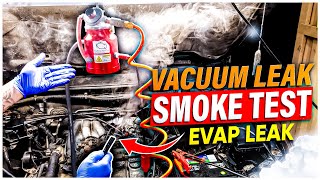
How to confirm: Visually inspect all intake hoses and connections between the MAF sensor and the engine. Listen for a hissing sound at idle. A smoke test is the most effective way to pinpoint the location of a leak. 🎬 See how to find hidden vacuum leaks using a smoke test.
Typical fix: Replace the cracked hose or leaking gasket and ensure all clamps are tight. The main air intake hose for the 2.4L engine is part number 68256372AA or 53340255.
Est. part cost: $20-$100 for a new intake hose - Powertrain Control Module (PCM) Software Update Needed 🟡 Medium Probability Multiple TSBs for the 2015-2017 Renegade list P0101 as one of several codes that can be resolved with a PCM software update. This indicates the original software was too sensitive or had logic errors. TSB 18-061-16 Rev. C specifically targets the 2016 2.4L engine for this issue. Owners on German forums also reported P0101 appearing after a recall-related software update, suggesting software is a frequent factor.
How to confirm: A Jeep dealership or a qualified shop with access to OEM software (wiTECH) can check if your vehicle's VIN has any open TSBs or available software updates.
Typical fix: Flashing the PCM with the latest software version. This is a dealer or specialist-only repair.
Est. part cost: $0 if covered by warranty/recall, otherwise $100-$250 for labor - Faulty MAF Sensor ⚪ Low Probability While less common than being dirty, the sensor's internal electronics can fail over time, leading to incorrect or no signal being sent to the ECM.
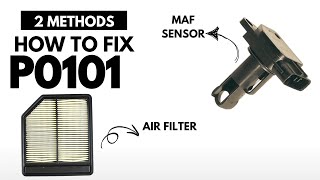
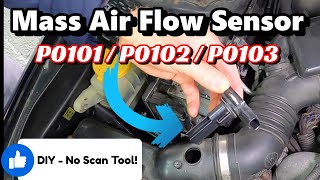
How to confirm: After confirming no vacuum leaks and cleaning the sensor, if the code persists, the sensor itself may be faulty. 🎬 Watch this guide on how to test and replace your MAF sensor. A diagnostic scan tool can be used to monitor the MAF sensor's output (in grams/sec) to see if it responds correctly to changes in engine RPM.
Typical fix: Replace the MAF sensor. The OEM Mopar part is 68144197AA, which is superseded by 68144197AB.
Est. part cost: $75-$275
Rare But Worth Checking
- Clogged Catalytic Converter: A restricted exhaust can create backpressure that affects the airflow readings at the MAF sensor, triggering a P0101 code. This is usually accompanied by a significant loss of power, especially at high RPMs, and potentially other exhaust-related codes.
- Dirty or Clogged Air Filter: A severely clogged engine air filter can restrict airflow enough to cause the MAF sensor's readings to be out of the expected range. This is a simple and inexpensive item to check first.
- Wiring or Connector Issue: A damaged wire or a corroded/loose connector for the MAF sensor can interrupt the signal to the ECM, causing the P0101 code. A visual inspection of the harness and checking for continuity with a multimeter can diagnose this.
Diagnosis Steps
- Check for other DTCs. If multiple codes are present, address them as they may be related, especially if they are mentioned in TSBs.
- Inspect the engine air filter. Replace if it is dirty or clogged.
- Visually inspect the entire air intake system for cracks, loose connections, or disconnected hoses between the air filter housing and the throttle body. Pay close attention to the flexible intake boot.
- Confirm if your vehicle has a MAF sensor. It will be on the intake tube after the air filter box. If not present, the issue is likely with the MAP/IAT sensors or PCM software, and steps 5 & 6 do not apply.
- Inspect the MAF sensor's electrical connector for damage or corrosion. Ensure it is securely plugged in.
- Carefully remove the MAF sensor and inspect its sensing elements. If they look dirty, clean them using only dedicated MAF sensor cleaner. Let it dry completely.
- Reinstall the sensor, clear the codes, and perform a test drive to see if the code returns.
- If the code returns, perform a vacuum leak test using a smoke machine to find hidden leaks.
- Check with a Jeep dealer for any applicable TSBs or PCM software updates for your vehicle's VIN. TSB 18-061-16 Rev. C is a strong candidate for 2016 2.4L models.
- If all other steps fail on a MAF-equipped vehicle, the MAF sensor is likely faulty and should be replaced.
Parts You'll Likely Need

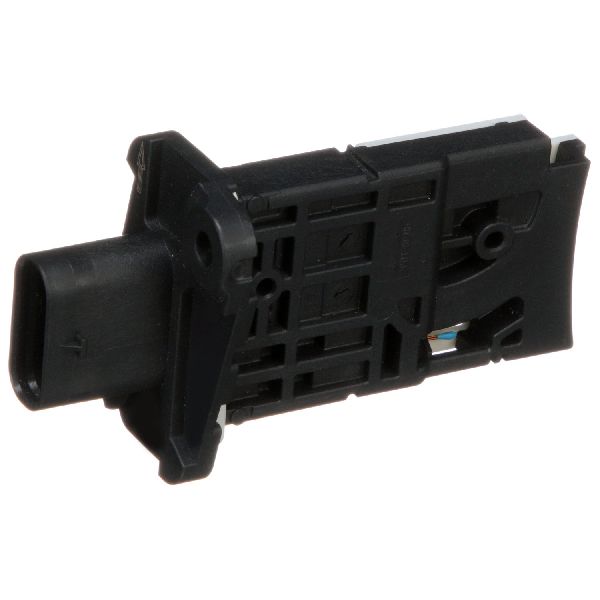
- Mass Airflow (MAF) Sensor
(OEM #68144197AA (superseded by 68144197AB))— This is the sensor that directly measures airflow. It is the most common part to fail or require cleaning. This part number fits both the 1.4L and 2.4L engines when equipped.
Trusted brands: Mopar, Delphi, Walker, Standard Motor Products
OEM price range: $125-$195
Aftermarket price range: $75-$130 - MAF Sensor Cleaner — Often, the sensor is just dirty and does not need to be replaced. A specific cleaner is required to avoid damaging the sensitive electronic components.
Trusted brands: CRC, Liqui Moly
Aftermarket price range: $8-$15
Related Codes That Often Appear With This One
- P050D — Mentioned in TSB #18-063-16, 'Cold Start Rough Idle' often occurs with P0101 as incorrect airflow readings are most critical during cold starts.
- P0335 — Listed in TSBs #18-061-16 REV. C and #18-063-16, 'Crankshaft Position Sensor Circuit' issues can appear alongside P0101, often as part of a broader software issue addressed by a PCM update.
- U1424 — Cited in TSBs #1805520 and #18-061-16 REV. B, 'Implausible Engine Torque Signal Received' points to communication and rationality check failures between modules, which can be triggered by an erroneous airflow value from the MAF sensor.
- P0600 — A user on Reddit with a 2015 1.4L Renegade reported a P0101 code alongside P0600 ('Serial Communication Link'), indicating a potential wiring or module communication problem causing the false MAF code.
Technical Service Bulletins (TSBs) & Recalls
- 1805520
- 18-061-16 REV. C
- 18-063-16
- 1801617
- 18-061-16 REV. B
- 18-061-16 REV. A
- 18-016-17 REV. B
Platform-Specific Known Issues
- Several Technical Service Bulletins (#1805520, #18-061-16 REV. C, #18-063-16) exist for the 2015-2017 Renegade, linking P0101 to software issues requiring a PCM flash, especially on the 2.4L engine.
- Some 2.4L Tigershark engines in the Renegade do not use a MAF sensor and instead use a speed-density system. On these vehicles, a P0101 code points towards a faulty MAP sensor, IAT sensor, or a PCM calculation error.
- Owners have reported rough cold starts and stalling which were resolved by replacing spark plugs, indicating that underlying ignition issues can sometimes contribute to the symptoms associated with P0101.
Mechanic-Grade Diagnostic Values
- MAF Sensor Live Data (PID) at Idle — expected: 2 to 7 grams/second (g/s), depending on engine size and conditions.. Failure: A reading that is significantly higher or lower, or does not change with RPM, indicates a problem.
- MAF Sensor Live Data (PID) at 2500 RPM — expected: 15 to 25 grams/second (g/s).. Failure: The reading should increase linearly with RPM. If it rises too slowly, too quickly, or not at all, the sensor or system has a fault.
- MAF Sensor Signal Wire Voltage (Key On, Engine Off) — expected: Approximately 0V.. Failure: Significant voltage indicates a short to power.
- MAF Sensor Power Supply Wire Voltage (Key On, Engine Off) — expected: Approximately 12V (Battery Voltage).. Failure: Low or no voltage indicates a wiring or fuse issue before the sensor.
Scan Tool Commands That Help
- OEM (wiTECH) or advanced aftermarket scanner: Clear DTCs / Reset ECU — After cleaning or replacing the MAF sensor, the Powertrain Control Module (PCM) should be reset to clear learned values from the old/dirty sensor. This can be done by clearing codes with a scanner or by disconnecting the battery for at least 15-30 minutes. The vehicle may need to be driven for a short period for the ECU to relearn the new sensor's values.
Wiring & Ground Locations
- MAF Sensor Connector — On the air intake duct, between the air filter housing and the throttle body.. The connector has 4 pins. A poor connection, corrosion, or damaged wires at this point will directly cause a P0101 code. The circuit includes a power supply (approx. 12V), a ground, and a signal wire that sends airflow data to the PCM.
- Main Battery Ground — The main negative battery cable connects to the vehicle's frame/chassis. A secondary ground strap often connects the engine block to the chassis.. A faulty or corroded ground connection for the battery or engine block can cause a host of electrical issues, including erratic sensor readings. If the PCM and MAF sensor do not share a stable ground reference, the signal can become skewed, leading to a P0101 code even if the sensor itself is good.
Real Owner Repair Stories
- JeepRenegadeForum.com user (2015 Jeep Renegade Trailhawk 2.4L) — Check engine light with P0101, rough idle, and stalling.
❌ Tried (didn't work) Replacing the MAF sensor, Cleaning the throttle body, Checking for vacuum leaks with a smoke test (none found)
✅ What actually fixed it The user discovered and replaced a faulty ground wire. The original wire had high resistance, causing erratic sensor behavior. After replacing the ground cable, the code was cleared and did not return.
"I Checked Everything" — The Actual Cause
- In one documented case for a 2015 Renegade, a smoke test revealed no vacuum leaks, and replacing the MAF sensor did not solve the P0101 code. The root cause was ultimately traced to a high-resistance ground wire, which provided an unstable reference for the sensor and PCM, mimicking the symptoms of an airflow problem.
OEM Part Supersession History
68144197AA→68144197AB— The specific reason for the supersession is not officially documented for the public, but it typically indicates a minor revision for improved reliability, a change in manufacturer, or compatibility with later vehicle production.
Helpful Videos
Used OEM Parts in Stock

New Aftermarket Parts Available

The information in this article is provided for general reference and educational purposes only. Vehicle specifications, procedures, and part compatibility can vary by production date, trim level, and region. Always consult your vehicle's factory service manual and verify part numbers before purchasing or performing repairs. Safety-critical components such as airbags, seat belts, and braking systems should be installed by a qualified professional.
- Jeep RENEGADE:
- 🎬 Helpful Videos
- 🛍️ Shop This Part
- What's Unique About the 2015-2017 Jeep RENEGADE
- Diagnostic Flowchart
- Symptoms You May Notice
- Most Likely Causes
- Rare But Worth Checking
- Diagnosis Steps
- Parts You'll Likely Need
- Related Codes That Often Appear With This One
- Technical Service Bulletins (TSBs) & Recalls
- Platform-Specific Known Issues
- Mechanic-Grade Diagnostic Values
- Scan Tool Commands That Help
- Wiring & Ground Locations
- Real Owner Repair Stories
- "I Checked Everything" — The Actual Cause
- OEM Part Supersession History
- 🎟️ Get 5% Off