

Infiniti QX60 P0101 (2015-2020): MAF Sensor and ECM Reprogram Guide
For the 2015-2020 Infiniti QX60, code P0101 is most often caused by a software issue requiring an Engine Control Module (ECM) reprogram at a dealership, as outlined in multiple Technical Service Bulletins (ITB20-010, ITB19-027a). Before replacing parts, check for TSBs; the reprogram costs about $150-$200. If not a software issue, cleaning the MAF sensor and throttle body is the next likely fix. Replacing the MAF sensor should be a later step, only after software and cleaning have been addressed.
- **Check for TSBs First:** Before buying any parts, call an Infiniti dealer with your VIN to see if your QX60 needs an ECM software update to fix the P0101 code.
- **Clean Before You Replace:** If no TSBs are open, the next step is to clean the MAF sensor with a dedicated cleaner and clean the throttle body. This is inexpensive and often effective.
- **An ECM Reprogram is a Dealer Job:** While you can clean or replace the sensor yourself, only a dealer or specialized shop can perform the ECM software update.
- **Use OEM Parts if Replacing:** If the MAF sensor must be replaced, using an OEM brand like Hitachi is highly recommended for reliability and correct performance.
What's Unique About the 2015-2020 Infiniti QX60

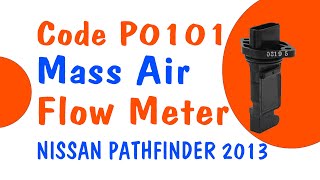
For this specific QX60 generation and its platform-mate, the Nissan Pathfinder (R52), the P0101 code is frequently a "phantom" code caused by overly sensitive software calibration in the Engine Control Module (ECM), not a hardware failure. Infiniti and Nissan issued several Technical Service Bulletins (TSBs) advising technicians to reprogram the ECM with updated software before replacing any parts. 🎬 Watch: Why a software update is often the real fix. This is a crucial distinction from many other vehicles where a P0101 code almost always points directly to a faulty MAF sensor or a vacuum leak.
Diagnostic Flowchart

Tap your situation to follow the diagnostic path that matches what you're seeing on this vehicle.
Generation note: The 2015-2020 model years all fall within the first generation (L50) of the Infiniti QX60. However, there was a significant facelift in 2016, and the engine was updated from the port-injected VQ35DE to the direct-injected VQ35DD in 2017. TSB ITB20-010 is specific to 2017-2020 models with the VQ35DD engine, while other TSBs like ITB19-027a cover a wider range of years, including the VQ35DE. The Nissan Pathfinder (R52) shares the same platform and engines and is affected by similar TSBs.
Symptoms You May Notice
- Check Engine Light is on
- Engine hesitation or sluggish acceleration
- Rough or unstable idle
- Reduced fuel economy
- Engine stalling, especially at idle or when coming to a stop
- Black smoke from the exhaust in some cases
- Replacing the MAF sensor without checking for TSBs. Many owners and shops replace the sensor when the actual problem is the ECM software, leading to the code returning.
- Using a cheap aftermarket MAF sensor. These are known to be unreliable and can cause the same code or other driveability issues. Sticking with the OEM Hitachi sensor is highly recommended.
Most Likely Causes

- Engine Control Module (ECM) Software Requires Update 🔴 High Probability Infiniti has issued multiple Technical Service Bulletins (TSBs), including ITB20-010 and ITB19-027a, stating that the ECM's diagnostic logic is too sensitive and can improperly trigger a P0101 code even when no hardware fault exists. A California-specific campaign (P9329) also addresses this reprogramming need to pass smog checks.
How to confirm: Check the vehicle's service history or contact an Infiniti dealership with your VIN to see if TSBs ITB20-010, ITB19-027a, or campaign P9329 apply and have not been performed. The TSBs list specific ECM part numbers that are eligible for the update.
Typical fix: Reprogramming the ECM with updated software. This must be done by a dealer or a shop with Nissan/Infiniti CONSULT or NERS diagnostic tools. The dealer cost is typically 1 hour of labor, around $150-$200.
Est. part cost: $0 - Dirty or Contaminated Mass Airflow (MAF) Sensor 🟡 Medium Probability The MAF sensor's delicate hot wire can become contaminated with dirt, oil, or debris over time, especially if an aftermarket oiled air filter is used or the stock filter is not maintained.
How to confirm: Visually inspect the MAF sensor element for any film, fuzz, or dirt. A live data scan may also show erratic or non-responsive readings at idle or during acceleration.
Typical fix: Remove the sensor and clean it carefully with a dedicated MAF sensor cleaner spray. Do not touch the sensor wires or use other chemicals like brake cleaner. Allow it to dry completely before reinstalling. If cleaning doesn't work, replace the sensor.
Est. part cost: $5-$15 (for cleaner) - Dirty Throttle Body 🟡 Medium Probability Carbon and oil deposits from the PCV system can build up in the throttle body, restricting airflow at certain positions and causing the MAF sensor readings to deviate from the expected values, triggering the code.
How to confirm: Remove the intake ducting and visually inspect the throttle plate and bore for black carbon buildup. The engine side is often dirtier than the intake side.
Typical fix: Clean the throttle body with a dedicated throttle body cleaner and a soft cloth. An Idle Air Volume Relearn procedure is mandatory after cleaning to prevent high or erratic idle.
Est. part cost: $10-$20 (for cleaner) - Vacuum Leak ⚪ Low Probability Cracked or disconnected intake hoses, a leaking intake manifold gasket, or a damaged PCV hose can allow unmetered air to enter the engine (air that bypasses the MAF sensor), causing the MAF sensor's readings to conflict with the oxygen sensor's readings.
How to confirm: Perform a visual inspection of all intake hoses between the MAF and the engine. A smoke test is the most effective way to find a leak by feeding low-pressure smoke into the intake system and watching where it escapes.
Typical fix: Replace the leaking hose or gasket.
Est. part cost: $20-$200 - Clogged or Improperly Installed Engine Air Filter ⚪ Low Probability
How to confirm: Visually inspect the engine air filter. If it is dirty, clogged, or does not seal properly in the airbox, it can restrict airflow and cause a P0101 code. Aftermarket 'oiled' filters are a common source of MAF sensor contamination.
Typical fix: Replace the engine air filter with a quality OEM or dry-media aftermarket filter.
Est. part cost: $20-$50
Rare But Worth Checking
- Faulty MAF Sensor: While a dirty sensor is common, complete electronic failure is less so. If cleaning the sensor and updating the ECM software doesn't resolve the code, the sensor itself may have failed internally. Using aftermarket sensors is not recommended as they often cause performance issues.
- Wiring to MAF Sensor: Damage to the wiring harness or corrosion in the connector for the MAF sensor can cause an intermittent or complete loss of signal, triggering the code. A visual inspection and continuity test with a multimeter can confirm this.
Diagnosis Steps
- Check for Technical Service Bulletins (TSBs). This is the most critical first step. Contact an Infiniti dealer with your VIN or use an online service to check if TSBs ITB20-010 or ITB19-027a are open for your vehicle. If so, an ECM reprogram is the likely fix.
- Inspect and clean the engine air filter. A clogged or improperly seated filter is a simple and cheap potential cause.
- Inspect the air intake tube between the air filter box and the throttle body for any cracks, loose clamps, or disconnections.
- Remove and inspect the MAF sensor. If it appears dirty, clean it using only dedicated MAF sensor cleaner spray. Allow it to dry completely before reinstalling.
- Inspect the throttle body for carbon buildup. If dirty, clean it thoroughly.
- Perform Idle Air Volume Relearn. This is mandatory after cleaning the throttle body. It can be done with a specific pedal dance procedure or a professional scan tool.
- If the code persists, perform a smoke test to check for vacuum leaks in the intake system.
- If no leaks are found and the ECM is up to date, test the MAF sensor's wiring and connector for proper voltage, ground, and signal using a multimeter.
- If all other possibilities are exhausted, replace the MAF sensor with a new OEM part (Hitachi).
Parts You'll Likely Need

- Mass Airflow Sensor
(OEM #22680-1MG0A)— This sensor is the primary component related to the code. It is often replaced after cleaning fails to solve the issue, or if it has failed electronically. However, it should only be replaced after checking for required ECM updates and cleaning the throttle body.
Trusted brands: Hitachi (OEM)
OEM price range: $120-$180
Aftermarket price range: $50-$100 - Engine Air Filter
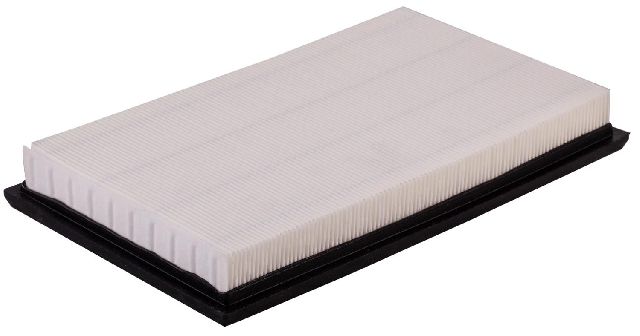
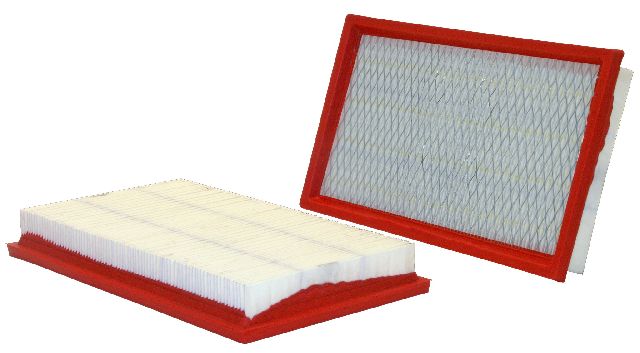
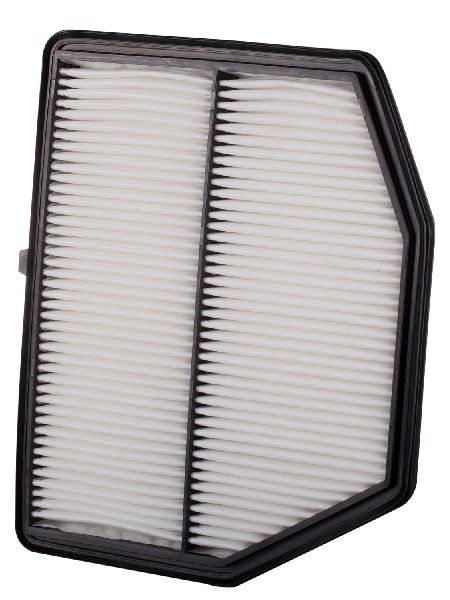
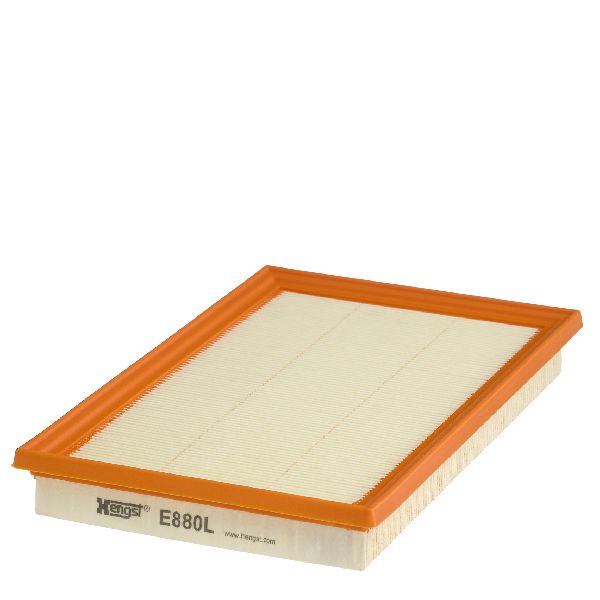
(OEM #16546-3JA0A (example, verify by VIN))— A clogged air filter can restrict airflow and trigger a P0101 code. It's a routine maintenance item that is often overlooked and is a common contributing factor.
Related Codes That Often Appear With This One
- P0087 — TSB ITB19-027 and campaign P9329 link P0101 with P0087, P0448, and P2008, indicating a common ECM calibration issue can trigger any of these codes. The fix is an ECM reprogram.
- P0448 — TSB ITB19-027 and campaign P9329 link P0101 with P0087, P0448, and P2008, indicating a common ECM calibration issue can trigger any of these codes. The fix is an ECM reprogram.
- P2008 — TSB ITB19-027 and campaign P9329 link P0101 with P0087, P0448, and P2008, indicating a common ECM calibration issue can trigger any of these codes. The fix is an ECM reprogram.
Technical Service Bulletins (TSBs) & Recalls

- ITB20-010
- ITB19-027a
- P9329 (California Campaign)
- NTB20-018 (Nissan equivalent)
Platform-Specific Known Issues
- ⭐ TSB ITB20-010: Specifically for 2017-2020 QX60 models with the VQ35DD engine, this bulletin addresses the MIL being on with P0101 stored. It directs technicians to check the ECM part number against a long list in the bulletin and reprogram the ECM if it matches.
- ⭐ TSB ITB19-027a: For a wider range of model years (including 2015-2018 QX60), this TSB notes that P0101 can appear with other codes (P0087, P0448, P2008) due to an ECM logic issue and requires an ECM reprogram.
- ⭐ Campaign P9329: This is a California-specific Voluntary Emission Service Campaign that requires the ECM to be reprogrammed to correct how permanent DTCs like P0101 are stored, ensuring the vehicle can pass a smog check.
- ⭐ Idle Air Volume Relearn Requirement: After cleaning the throttle body or disconnecting the battery, these vehicles often develop a high or surging idle. A specific, multi-step 'pedal dance' or a scan tool is required to perform the Idle Air Volume Relearn procedure to correct it.
Scan Tool Commands That Help
- Nissan CONSULT-III plus: ECU Reprogramming — This is the primary fix when TSB ITB20-010 or ITB19-027a applies. It updates the ECM's software to correct overly sensitive diagnostic logic that falsely triggers P0101.
- Nissan CONSULT-III plus or compatible professional scan tool: Idle Air Volume Learning — This procedure is mandatory after cleaning or replacing the throttle body, and often required after replacing the MAF sensor or reprogramming the ECM. It resets the base idle airflow value in the ECM.
- Nissan CONSULT-III plus: Throttle Valve Closed Position / Accelerator Closed Position — These relearn procedures are required as part of the ECM reprogramming process outlined in TSBs to ensure the ECM correctly recognizes the throttle and pedal's closed positions.
Wiring & Ground Locations
- Fuse #39 (IPDM E/R) — In the Intelligent Power Distribution Module Engine Room (IPDM E/R), which is the fuse box located in the engine compartment.. For the 2017 QX60, this 15A fuse supplies power to the Mass Air Flow sensor. A blown fuse will cause a complete loss of signal and trigger a P0101 code.
Real Owner Repair Stories
- YouTube channel 'Have Tools Will Travel' (2014 Infiniti QX60) — Check Engine Light with code P0101. Live data showed no signal output from the MAF sensor during runtime.
❌ Tried (didn't work) The customer had already replaced the air filter.
✅ What actually fixed it The MAF sensor was replaced, and the throttle body was cleaned of significant buildup. After the repair, an idle relearn procedure was performed by letting the vehicle idle for 10-15 minutes with no electrical load. - YouTube channel 'Ah Duuu' (2014 Nissan Altima (similar platform/engine)) — Check Engine Light with code P0101, weak battery/slow starting.
❌ Tried (didn't work) The video presents a combined approach, implying that just one fix might not be enough.
✅ What actually fixed it The issue was resolved by performing three steps: replacing the dirty engine air filter, replacing the MAF sensor, and cleaning the throttle body. After the parts were replaced, an 'Idle Air Volume Relearn' was performed with a scan tool to stabilize the idle.
OEM Part Supersession History
22680-1MG0A→N/A— This part number is for the VQ35DE engine.
Heads up: This part is specified for the earlier 2014-2017 QX60 models with the VQ35DE engine.22680-BV80B→22680-5RB0A— Part update for the VQ35DD engine.
Heads up: This part number and its successor are for the 2017-2020 QX60 models with the direct-injected VQ35DD engine. The OEM supplier is Hitachi, and the equivalent part is MAF0133.
Model Year Variations Within This Range
- 2015-2017 (pre-update): These models use the port-injected VQ35DE engine and typically use MAF sensor part number 22680-1MG0A.
- 2017-2020 (post-update): These models feature the direct-injected VQ35DD engine. They are specifically targeted by TSB ITB20-010 for an ECM reprogram. They use a different MAF sensor, with the original part being 22680-BV80B, superseded by 22680-5RB0A.
Helpful Videos

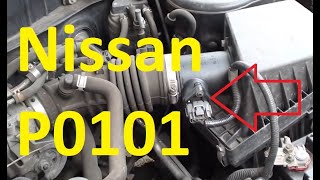
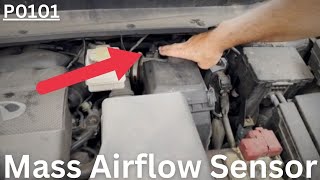
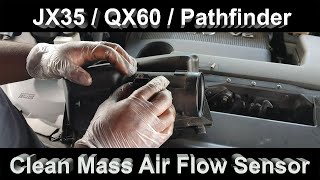
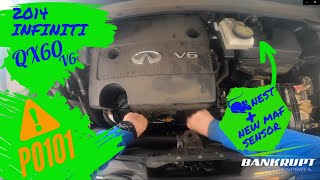
Used OEM Parts in Stock


New Aftermarket Parts Available


The information in this article is provided for general reference and educational purposes only. Vehicle specifications, procedures, and part compatibility can vary by production date, trim level, and region. Always consult your vehicle's factory service manual and verify part numbers before purchasing or performing repairs. Safety-critical components such as airbags, seat belts, and braking systems should be installed by a qualified professional.
- Infiniti QX60:
- 🎬 Helpful Videos
- 🛍️ Shop This Part
- What's Unique About the 2015-2020 Infiniti QX60
- Diagnostic Flowchart
- Symptoms You May Notice
- Most Likely Causes
- Rare But Worth Checking
- Diagnosis Steps
- Parts You'll Likely Need
- Related Codes That Often Appear With This One
- Technical Service Bulletins (TSBs) & Recalls
- Platform-Specific Known Issues
- Scan Tool Commands That Help
- Wiring & Ground Locations
- Real Owner Repair Stories
- OEM Part Supersession History
- Model Year Variations Within This Range
- 🎟️ Get 5% Off