

P0101 on 2017-2022 Infiniti Q60: MAF Sensor Causes and Fixes
On a 2017-2022 Q60, code P0101 is most often caused by a dirty MAF sensor or the need for an Engine Control Module (ECM) software update per Infiniti TSBs. Before replacing parts, clean both MAF sensors and check with a dealer for applicable software updates. Aftermarket intakes are also a very common trigger, often requiring a custom tune.
- Always check for an available ECM software update with an Infiniti dealer before replacing any parts; it is a very common fix for P0101 on this car.
- The easiest and cheapest first step is to clean both MAF sensors with a dedicated cleaner spray.
- If you must replace a sensor, use only a genuine OEM (Hitachi) part (22680-7131R) to avoid persistent issues.
- If you have aftermarket air intakes installed, they are a highly likely cause of this code.
- A simple diagnostic test is to swap the passenger and driver side MAF sensors to see if the code follows the sensor.
What's Unique About the 2017-2022 Infiniti Q60

The 2017-2022 Q60's VR30DDTT engine uses two MAF sensors—one for each turbo and cylinder bank. P0101 points to Bank 1, while P010B points to Bank 2. What's unique to this platform is that Infiniti has issued multiple Technical Service Bulletins (TSBs) acknowledging that the P0101 code can be triggered by overly sensitive software logic in the ECM, not by a faulty part. Therefore, 🎬 Watch: Why a software update often fixes this common code. a simple software update at the dealership is a very common fix, a detail many owners may overlook before buying new sensors. Additionally, the engine's control system is highly sensitive to airflow changes, making aftermarket air intakes a frequent cause of this code unless a specific ECU tune is applied.
Diagnostic Flowchart

Tap your situation to follow the diagnostic path that matches what you're seeing on this vehicle.
Symptoms You May Notice
- Check Engine Light is on
- Rough or unstable idle
- Hesitation, stumbling, or sluggish acceleration
- Reduced engine power or 'limp mode'
- Poor fuel economy
- Black smoke from the exhaust if running rich
- Audible hissing or sucking noises from the engine bay, indicating a vacuum leak
- Replacing the MAF sensor without first checking for TSBs or cleaning the original sensor. Many P0101 codes on this platform are solved with a software update or cleaning, not a new part.
- Using a cheap aftermarket MAF sensor. Owners consistently report that non-OEM sensors fail quickly or do not work correctly out of the box, leading to the code returning.
Most Likely Causes

- Outdated Engine Control Module (ECM) Software 🔴 High Probability Infiniti has released multiple TSBs (including ITB23-001, ITB19-027a, and ITB17-017a) to fix overly sensitive diagnostic logic in the ECM that incorrectly triggers P0101. These bulletins often involve reprogramming the ECM to adjust its parameters for evaluating the MAF sensor signals.
How to confirm: Contact an Infiniti dealership or a qualified shop with access to Infiniti's CONSULT diagnostic tool. They can check your VIN against the TSBs to see if a software update is available and has not been performed.
Typical fix: Reprogramming the ECM with the latest software version. This must be done by a dealer or a specialized shop with the appropriate tools.
Est. part cost: $0 under warranty, otherwise dealer labor charge - Dirty Mass Air Flow (MAF) Sensor 🔴 High Probability The MAF sensor's delicate wire can become contaminated with dirt, debris, or oil from aftermarket air filters, causing inaccurate readings. This is a very common first point of failure.
How to confirm: Visually inspect the MAF sensor element. If it appears dirty or coated, it needs cleaning. This is the most common and cost-effective first step.
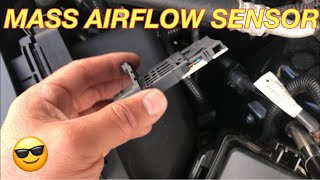
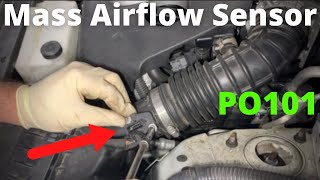
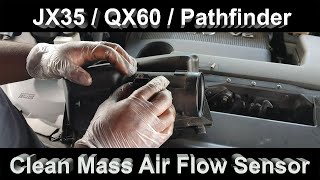
Typical fix: Carefully remove the sensor and clean it using a dedicated MAF sensor cleaner spray, such as from CRC. Do not touch the internal wires. 🎬 See how to safely clean your MAF sensor step-by-step. Allow it to air dry completely before reinstalling.
Est. part cost: $10-$15 - Aftermarket Air Intakes 🟡 Medium Probability The VR30DDTT engine's management system is very sensitive to airflow. Aftermarket intakes (e.g., from AMS, Burger Motorsports) can change the airflow dynamics, causing sensor readings to fall outside the ECM's expected range and triggering a P0101 code.
How to confirm: Check if the vehicle has non-OEM air intake systems installed. If so, they are a prime suspect, especially larger diameter ones.
Typical fix: Reinstall the original factory airboxes or obtain a custom ECU tune calibrated for the specific aftermarket intakes. Some intake manufacturers provide MAF scaling data for tuners.
Est. part cost: $0 if you have the original parts, $400+ for a custom tune - Faulty Mass Air Flow (MAF) Sensor 🟡 Medium Probability Like any electronic component, the MAF sensor can fail over time. However, many owners replace the sensor when only a cleaning or software update was needed.
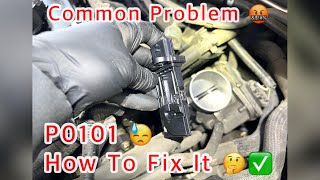
How to confirm: Swap the Bank 1 (passenger side) and Bank 2 (driver side) MAF sensors. 🎬 Watch this guide on how to access and swap sensors. Clear the codes and drive the vehicle. If the code changes to P010B (MAF Sensor Circuit B2), the sensor is confirmed to be faulty.
Typical fix: Replace the faulty MAF sensor. It is highly recommended to use a genuine OEM (Hitachi) part, as aftermarket sensors are known to cause persistent issues on this platform.
Est. part cost: $130-$240 - Vacuum Leak ⚪ Low Probability A crack in an intake boot, a loose clamp on a charge pipe, or a leaking gasket after the MAF sensor allows unmetered air to enter the engine. On the VR30, common leak points are the couplers to the intercoolers and throttle body connections.
How to confirm: Visually inspect all intake hoses and connections between the MAF sensor and the throttle body. A professional smoke test is the most effective way to find hidden leaks, as some may only appear under pressure.
Typical fix: Repair the source of the leak, which may involve tightening a clamp or replacing a cracked intake hose or gasket.
Est. part cost: $5-$150 - Dirty or Clogged Air Filter ⚪ Low Probability A severely restricted air filter can reduce airflow to the point that it falls below the expected range, triggering the code. This is often a contributing factor rather than the sole cause.
How to confirm: Inspect the engine air filter. If it is visibly dirty or clogged, it should be replaced.
Typical fix: Replace the engine air filter.
Est. part cost: $20-$50
Rare But Worth Checking
- Wiring or Connector Issue: A damaged wire or corroded pins on the MAF sensor connector can disrupt the signal to the ECM. This should be checked if swapping sensors does not isolate the problem.
- Weak or Failing Battery: A dying battery can provide inconsistent voltage to vehicle electronics, including the MAF sensors, leading to erroneous readings and a P0101 code. Some owners have reported the code disappearing after replacing an old battery.
- Dirty Throttle Bodies: As a direct injection engine, the VR30DDTT can experience carbon buildup on the throttle bodies. This can restrict airflow or cause the throttle plate to stick, creating a conflict between expected and actual airflow readings.
Diagnosis Steps
- Check for any Technical Service Bulletins (TSBs) related to P0101 for your vehicle's VIN. An ECM software update is a very common fix. Contact a dealer for this information.
- Inspect the engine air filters. Replace them if they are dirty or clogged.
- Visually inspect the air intake system for any obvious cracks, loose hoses, or disconnected clamps, especially around the charge pipe couplers.
- Remove both MAF sensors (Bank 1 is passenger side, Bank 2 is driver side) and clean them with a dedicated MAF sensor cleaner. Do not touch the sensor wires. Allow them to dry completely before reinstalling.
- Clear the codes and drive the vehicle to see if the code returns. Note that a 'permanent' code may remain until the ECU completes a full drive cycle verifying the fix.
- If the code returns, swap the Bank 1 and Bank 2 MAF sensors. They are identical parts.
- Clear the codes again and drive the vehicle. If the code changes to P010B, the MAF sensor is faulty and needs to be replaced with a genuine OEM Hitachi part.
- If the code remains P0101 after the swap, the issue is likely a vacuum leak on Bank 1 or a problem with the Bank 1 wiring harness/connector.
- If a vacuum leak is suspected, perform a smoke test to pinpoint the source.
- Check the battery's health and age. If it's over 3-4 years old, consider having it tested, as low voltage can cause sensor issues.
- If all else fails, have the vehicle diagnosed by a professional technician who can view live sensor data (MAF g/s readings) and check the wiring integrity.
Parts You'll Likely Need
- Mass Air Flow (MAF) Sensor
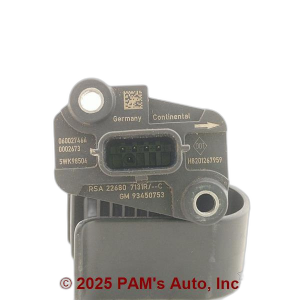
(OEM #22680-7131R)— If cleaning the sensor and swapping it between banks confirms it is faulty, it will need to be replaced. Using a genuine OEM Hitachi part is critical for this sensitive system.
Trusted brands: Hitachi (OEM), Infiniti (Genuine)
OEM price range: $130-$240
Related Codes That Often Appear With This One
- P010B — This is the corresponding MAF sensor code for Bank 2 (driver's side). Since both sensors operate under similar conditions, issues like dirty sensors or software glitches often affect both banks, causing both codes to appear together. TSB ITB17-017a specifically addresses P0101 and P010B appearing together.
- P0106 — This code relates to the Manifold Absolute Pressure (MAP) sensor. The ECM uses both MAF and MAP data to verify airflow. A problem with one can sometimes lead to a fault code for the other. TSB ITB17-017a mentions these codes can appear together.
Technical Service Bulletins (TSBs) & Recalls
- ITB23-001: MIL ON WITH DTC P0101 AND/OR P010B STORED IN THE ECM
- ITB19-027a: MIL ON WITH DTC P0087, P0101, P0448, OR P2008, VEHICLES REGISTERED OUTSIDE OF CALIFORNIA
- P9329_P9344_P934: Voluntary Service Campaign to reprogram the ECM for improper storage of permanent DTCs including P0101.
- ITB17-017: MIL ON WITH DTC P0101, P010B, AND/OR P0106 on vehicles with the V6 twin turbo engine.
Platform-Specific Known Issues
- Sensitivity to Aftermarket Intakes: The VR30DDTT's ECU is notoriously sensitive to changes in airflow from aftermarket intakes. Many owners report throwing a P0101/P010B code immediately after installation. The most common resolutions are reverting to the stock airboxes or getting a professional ECU tune to recalibrate the MAF sensor scaling.
- Permanent DTC (P-DTC) Clearing: After a repair, a 'permanent' P0101 code may remain even after clearing with a standard OBD-II scanner. The ECU must complete a specific, multi-step drive cycle to verify the fix before it will clear the permanent code itself. This can be confusing and lead owners to believe the problem isn't fixed.
Mechanic-Grade Diagnostic Values
- Mass Air Flow (g/s) at Idle — expected: 2 to 7 g/s (for a typical 3.0L engine, expect near the middle of this range). Failure: A reading that is significantly higher or lower, or is erratic and unstable at a steady idle.
- Mass Air Flow (g/s) at 2500 RPM (no load) — expected: 15 to 25 g/s. Failure: The reading should rise smoothly and linearly with RPM. A failure is indicated by a flat reading, a sudden drop, or a non-linear response as RPMs increase.
- MAF Sensor Signal Voltage — expected: A linear voltage rise that corresponds with engine RPM increase.. Failure: Voltage that does not rise with RPM, is stuck, or shows erratic jumps.
Hidden / Shadow Codes Worth Checking
- Permanent DTC (P-DTC): This is not a separate code, but a status for a standard DTC like P0101. A 'permanent' code is stored in a separate, non-volatile memory that cannot be erased by clearing codes with a standard scan tool. The vehicle's ECU must first verify that the underlying fault has been corrected by successfully completing a specific drive cycle before it will clear the code itself. (see via Many OBD-II scan tools will show a 'permanent' or 'p-DTC' status next to the code.)
Scan Tool Commands That Help
- Infiniti CONSULT or compatible advanced scanner: Idle Air Volume Learning — This procedure is required to reset the base idle after cleaning or replacing the throttle bodies, or after certain ECM software updates. Failure to perform this can cause idle issues that may be misdiagnosed as a MAF problem.
- Infiniti CONSULT or compatible advanced scanner: Throttle Valve Closed Position / Accelerator Closed Position — These relearn procedures are mandated by Infiniti TSBs after reprogramming the ECM to ensure the system knows the correct throttle and pedal resting positions.
Wiring & Ground Locations
- MAF Sensor Connector (Bank 1) — On the air intake tube just after the passenger side air filter box.. This is the primary connection point for the sensor. Corrosion, bent pins, or a damaged pigtail harness here will directly cause a P0101. The 5-pin layout typically includes power, ground, signal, and IAT sensor circuits.
- ECM Grounds (E135, E137) — On the left rear side of the engine compartment.. The ECM requires a clean, stable ground reference to accurately interpret the low-voltage signals from the MAF sensors. A corroded or loose ground at these specific points can introduce electrical noise or voltage offsets, causing the ECM to misread the MAF signal and trigger a P0101 code even if the sensor is good.
Real Owner Repair Stories
- Reddit user in r/370z (similar VQ engine platform behavior) (Nissan 370Z with Stillen Gen 3 aftermarket intakes) — Check Engine Light with permanent codes P0101 and P010B.
❌ Tried (didn't work) Clearing codes with a scanner (they remained as 'permanent'), Replacing the battery, Resetting the ECU, Cleaning both MAF sensors
✅ What actually fixed it The user noted their intake couplers were loose, but the ultimate consensus and planned final step was getting a custom ECU tune. Aftermarket intakes alter airflow characteristics so significantly that the stock ECU parameters can no longer interpret the MAF sensor readings correctly, requiring a tune to remap the expected values. - Reddit user in r/G37 (2015 Infiniti Q60S (G37 body style, similar ECU logic)) — Permanent P0101 code that would not clear after a repair.
❌ Tried (didn't work) Using a scan tool to clear the code.
✅ What actually fixed it The user had already fixed the root cause (a vacuum leak found via smoke test). The 'fix' for the persistent permanent code was to perform the specific, multi-step drive cycle required by the ECU to verify the repair. Once the drive cycle was completed successfully, the ECU cleared the permanent code on its own.
"I Checked Everything" — The Actual Cause
- A technician may perform a smoke test and find no vacuum leaks, clean the MAF sensors, and still have a P0101 code. In this scenario on the 2017-2022 Q60, the root cause is frequently not a physical part failure but rather the ECM's software calibration. Infiniti has issued multiple Technical Service Bulletins (e.g., ITB23-001, ITB19-027a) to reprogram the ECM with updated logic that is less sensitive to minor, transient airflow fluctuations that would otherwise trigger the code. The fix is a software update, not a hardware replacement.
OEM Part Supersession History
22680-7131R→N/A— This is the current, correct OEM part number for the VR30DDTT engine.
Heads up: Crucially, MAF sensors from other Infiniti engines, such as the 3.7L V6 (VQ37VHR) which may use part number 22680-7S000, are NOT interchangeable with the VR30DDTT's 22680-7131R sensor. Installing the wrong sensor, even if it physically fits, will cause persistent P0101/P010B codes and driveability issues.
Model Year Variations Within This Range
- 2017-2022: The primary variation within this model year range is not in the physical MAF sensor part, but in the Engine Control Module (ECM) software. Infiniti released a series of TSBs over the years (e.g., ITB17-017 for 2017 models, ITB19-027 for 2018-2019, ITB23-001 up to 2022) to address overly sensitive diagnostic logic. An earlier model year vehicle that has not had these software updates is more prone to throwing a P0101 code than a later model year vehicle or one that has been updated.
Helpful Videos
We Have This Part in Stock

The information in this article is provided for general reference and educational purposes only. Vehicle specifications, procedures, and part compatibility can vary by production date, trim level, and region. Always consult your vehicle's factory service manual and verify part numbers before purchasing or performing repairs. Safety-critical components such as airbags, seat belts, and braking systems should be installed by a qualified professional.
- Infiniti Q60:
- 🎬 Helpful Videos
- 🛍️ Shop This Part
- What's Unique About the 2017-2022 Infiniti Q60
- Diagnostic Flowchart
- Symptoms You May Notice
- Most Likely Causes
- Rare But Worth Checking
- Diagnosis Steps
- Parts You'll Likely Need
- Related Codes That Often Appear With This One
- Technical Service Bulletins (TSBs) & Recalls
- Platform-Specific Known Issues
- Mechanic-Grade Diagnostic Values
- Hidden / Shadow Codes Worth Checking
- Scan Tool Commands That Help
- Wiring & Ground Locations
- Real Owner Repair Stories
- "I Checked Everything" — The Actual Cause
- OEM Part Supersession History
- Model Year Variations Within This Range
- 🎟️ Get 5% Off