

P0101 on 2017-2019 GMC Sierra Denali: MAF Sensor Range/Performance Causes & Fixes
On a 2017-2019 GMC Sierra Denali, P0101 is most often caused by a dirty Mass Air Flow (MAF) sensor, an air leak in the intake system from a cracked hose, or a known manufacturing defect inside the air filter housing. Cleaning the sensor and thoroughly inspecting the intake tube for cracks or plastic 'casting flash' are the critical first steps before replacing any parts.
- Before replacing any parts for a P0101 code, your first and most cost-effective step is to clean the MAF sensor with a dedicated cleaner.
- Thoroughly inspect the entire air intake system for cracks or loose connections, as unmetered air is a primary cause of this code.
- On these specific Sierra models, check for a known manufacturing defect (plastic 'casting flash') inside the air intake tube near the sensor, as noted in TSB #PIP5446.
- If the MAF sensor must be replaced, use a high-quality OEM (ACDelco) or reputable OE-equivalent part to ensure accurate readings and prevent the code from returning.
What's Unique About the 2017-2019 Gmc SIERRA DENALI
For this generation of GMC Sierra, a notable and unique cause for P0101 is a manufacturing defect inside the air intake tube. As documented in Technical Service Bulletin #PIP5446A, excess plastic 'cast flashing' near the MAF sensor can disrupt airflow and trigger the code. This is a known platform-specific issue that can cause symptoms like harsh shifting and a rough idle, making it a critical inspection point beyond the usual dirty sensor or vacuum leak. Additionally, 2019 models can be affected by wiring harness chafing issues as described in TSB #21-NA-149, which can cause an open or short in the MAF circuit.
Diagnostic Flowchart
Tap your situation to follow the diagnostic path that matches what you're seeing on this vehicle.
Generation note: The 2017-2019 model years span the end of the K2XX generation (2014-2018/2019 Limited) and the beginning of the T1XX generation (2019-present). The 'cast flashing' issue noted in TSB #PIP5446A is specifically documented for 2014-2018 models but is a worthwhile check for all. The 2019 T1XX models have a known wiring harness chafing issue (TSB #21-NA-149) that can also cause this code.
Symptoms You May Notice
- Check Engine Light is on
- Rough or unstable idle.
- Hesitation, sputtering, or sluggish acceleration.
- Harsh shifting between gears, especially 1-2 and 2-3 shifts [TSB #PIP5446A].
- Reduced fuel economy.
- Black smoke from the exhaust.
- Engine stalling, especially under light load.
- Replacing oxygen (O2) sensors before checking for vacuum leaks or cleaning the MAF sensor.
- Replacing the throttle body when the issue is unmetered air entering the engine from a cracked intake boot.
- Replacing the MAF sensor repeatedly when the root cause is an electrical issue (per TSB #PIP5729) or casting flash in the intake tube (per TSB #PIP5446A).
Most Likely Causes
- Dirty or Contaminated MAF Sensor 🔴 High Probability Oiled air filters (like K&N) or simple accumulation of dust and debris can contaminate the sensor's delicate wires, causing inaccurate readings.
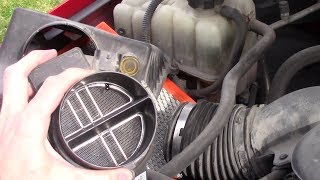
How to confirm: Remove the sensor (held by two T15 Torx screws) from the intake tube and visually inspect the small wires inside for dirt, oil, or any debris.
Typical fix: Clean the sensor using a dedicated Mass Air Flow sensor cleaner spray. Do not touch the wires. Allow it to dry completely before reinstalling. 🎬 Watch: How to clean and replace your Silverado's MAF sensor.
Est. part cost: $10-$15 for cleaner - Vacuum Leak in the Air Intake System 🔴 High Probability The large plastic and rubber intake components can develop cracks or become loose over time due to heat and vibration. The accordion-style boot is a common failure point.
How to confirm: Visually inspect the entire intake tract from the air filter box to the throttle body for cracks, loose clamps, or disconnected hoses. A smoke test is the most effective way to find hidden leaks. You may also hear a hissing sound at idle.
Typical fix: Tighten loose clamps or replace the cracked intake duct/boot. A temporary fix can be made with high-quality tape.
Est. part cost: $80-$170 for a new intake duct - Casting Flash in Air Intake Tube 🟡 Medium Probability A known manufacturing defect where excess plastic molding obstructs or disrupts airflow past the MAF sensor, specifically noted in TSB #PIP5446A for 2014-2018 models.
How to confirm: Remove the MAF sensor and inspect the inside of the intake tube/air filter housing for any plastic ridges or obstructions near the sensor port.
Typical fix: Carefully remove the excess plastic flashing with a file or deburring tool, or replace the affected section of the air intake housing (air cleaner cover) as per TSB #PIP5446A.
Est. part cost: $0 if modifying, $100-$200 for a new housing cover - Faulty MAF Sensor 🟡 Medium Probability
How to confirm: If cleaning the sensor and confirming there are no vacuum leaks does not resolve the code, the sensor itself may have failed electronically. This can be confirmed by monitoring its output (in grams/second) with a scan tool to see if it responds correctly to changes in RPM.
Typical fix: Replace the Mass Air Flow sensor. It is highly recommended to use an OEM ACDelco or reputable OE-equivalent brand like Delphi to avoid repeat failures.
Est. part cost: $75-$150 - Dirty or Clogged Engine Air Filter ⚪ Low Probability
How to confirm: Inspect the engine air filter. If it is visibly dirty and clogged, it can restrict airflow enough to cause a P0101 code. Some aftermarket filters, even when clean, have been reported to cause this code.
Typical fix: Replace the engine air filter, preferably with an OEM ACDelco part.
Est. part cost: $20-$50 - Dirty or Faulty Throttle Body ⚪ Low Probability Carbon buildup around the throttle plate can restrict airflow at idle or cause the plate to stick, leading to a mismatch between expected and actual airflow reported by the MAF sensor.
How to confirm: Remove the intake duct from the throttle body and inspect for a heavy ring of black carbon buildup. The engine may idle erratically.
Typical fix: Clean the throttle body bore and plate with a dedicated throttle body cleaner and a soft cloth or brush. A throttle position relearn procedure may be required after cleaning.
Est. part cost: $10 for cleaner
Rare But Worth Checking
- Electrical Circuit Issues: As mentioned in TSB #PIP5729, code P0101 can appear alongside other electrical DTCs like P1682 or P0689. This could point to a broader wiring harness, ignition relay, or underhood fuse block problem rather than an issue with the MAF sensor itself. TSB #21-NA-149 also points to potential wiring harness chafing on 2019+ models.
- Clogged Catalytic Converter: On some GM vehicles, a severely restricted exhaust can create backpressure that affects the MAF sensor's readings. This is usually accompanied by a significant loss of power and potentially other codes like P0420 or P0300.
Diagnosis Steps
- Read all stored DTCs with an OBD-II scanner and note any other codes present. Pay attention to lean/rich codes (P0171/P0174, P0172/P0175) or electrical codes (P1682).
- Visually inspect the entire air intake system for loose clamps, disconnected hoses, or obvious cracks in the plastic/rubber components, especially the flexible boot between the airbox and throttle body.
- Inspect the engine air filter and replace if it is dirty, clogged, or an over-oiled aftermarket type.
- Remove the MAF sensor (T15 Torx screws) and inspect its sensing elements for dirt, oil, or debris.
- While the sensor is out, inspect the intake tube interior for 'casting flash' as described in TSB #PIP5446A, especially on 2014-2018 models.
- Clean the MAF sensor using only a dedicated MAF sensor cleaner spray. Let it air dry completely.
- Reinstall the sensor, clear the codes, and perform a test drive to see if the code returns.
- If the code persists, use a scan tool to monitor live data. The MAF sensor reading in grams per second (g/s) at a warm, stable idle should be approximately equal to the engine's displacement in liters (e.g., a 5.3L engine should read around 4.5-6 g/s; a 6.2L should read around 5.5-7 g/s).
- Check long-term fuel trims (LTFT). High positive numbers (+10% or more) strongly suggest a vacuum leak (unmetered air).
- If scan tool data is erratic, does not respond smoothly to RPM changes, or fuel trims are normal, suspect the sensor itself or its wiring. Check the connector and harness for damage.
- If all other steps have been checked, replace the MAF sensor with a high-quality OEM or OE-equivalent part.
Parts You'll Likely Need
- Mass Air Flow (MAF) Sensor
(OEM #23262343 (Supersedes: 20787043, 23118170))— This is the primary component that fails if cleaning does not resolve the issue. A faulty sensor can cause a wide range of drivability problems. - MAF Sensor Cleaner — Often, the sensor is merely contaminated with dirt or oil. A simple cleaning is the most cost-effective first step and frequently solves the problem.
- Intake Air Duct — The flexible rubber boot is a common failure point, developing cracks from heat and age that cause unmetered air leaks, a primary trigger for P0101.
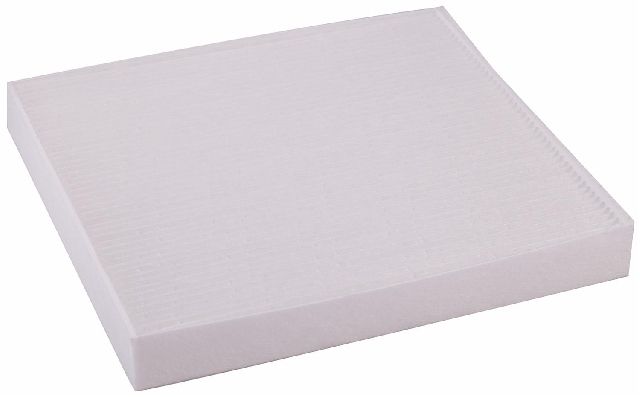
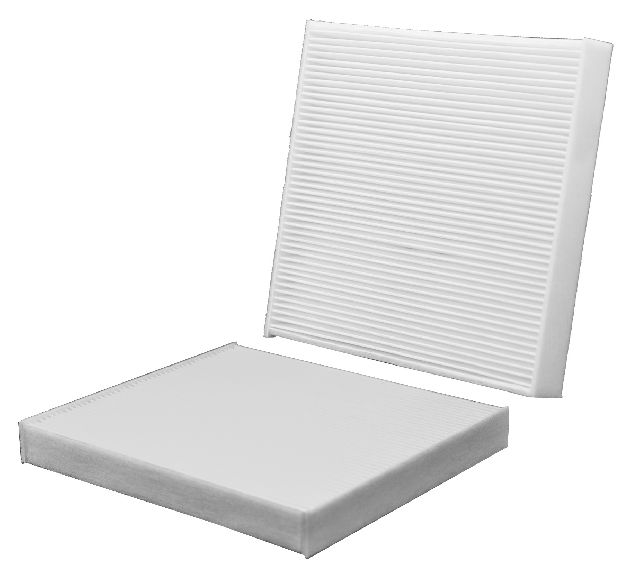
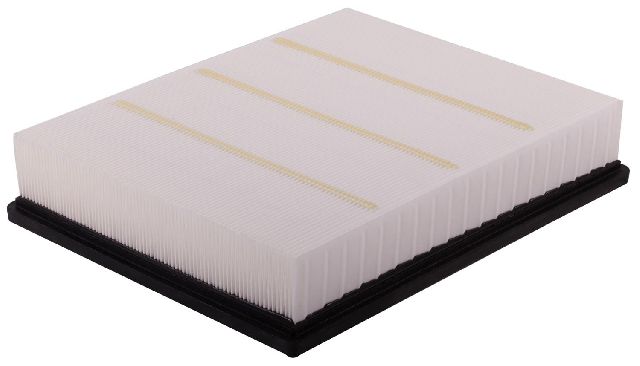
- Engine Air Filter — A severely clogged filter can restrict airflow enough to trigger the code. Over-oiled aftermarket filters are also a known cause of MAF sensor contamination.
Related Codes That Often Appear With This One
- P0171 / P0174 — These 'System Too Lean' codes often appear with P0101 when there is a vacuum leak. The MAF sensor under-reports the amount of air entering the engine, causing the computer to inject too little fuel to compensate for the unmetered air.
- P0172 / P0175 — These 'System Too Rich' codes can occur if the MAF sensor is faulty and over-reporting the amount of air, leading the computer to inject too much fuel. This is also a possible outcome of the 'casting flash' issue.
- P1682, P0689, P16A7, P16BC — TSB #PIP5729 notes that P0101 may be stored in history along with these codes, indicating a potential underlying electrical or ignition circuit fault, possibly a bad ignition relay.
- P0300 — A general 'Random/Multiple Misfire' code can be triggered by the incorrect air/fuel mixture that results from the P0101 fault.
Technical Service Bulletins (TSBs) & Recalls
- PIP5729: Electrical system issues that may present with P0101.
- PIP5446: Harsh shift and rough idle caused by cast flashing near the MAF sensor.
- PIP4932D: General diagnostic information for code P0101.
Platform-Specific Known Issues
- TSB #PIP5446A: Addresses a rough idle, harsh 1-2 and 2-3 shifts, and sputter when applying throttle, which can be caused by excess plastic 'casting flash' inside the air filter housing near the MAF sensor on 2014-2018 models. The fix is to replace the air cleaner housing lid.
- TSB #PIP5729: Warns that if P0101 is present with codes like P1682, the root cause may be a faulty ignition relay or underhood fuse block terminal issue, not the MAF sensor itself. This applies to 2019-2020 models.
- TSB #21-NA-149: Details how the engine wiring harness on 2019-2021 models can chafe against the cylinder head or brackets, causing a short or open in the MAF sensor circuit.
Mechanic-Grade Diagnostic Values
- MAF Sensor Reading (Live Data) — expected: At warm idle, g/s reading should be close to engine displacement in liters (e.g., 5.3L ≈ 5.3 g/s). General range is 2-7 g/s at idle, rising to 15-25 g/s at 2500 RPM.. Failure: Readings are stuck, erratic, or do not rise smoothly and linearly with RPM.
- MAF Sensor Power and Ground (at connector, KOEO) — expected: On the 5-pin connector: Pin C (Pink wire) should have 12V. Pin B (Black/White wire) should have good ground (<2 Ohms to chassis ground).. Failure: No voltage on the power wire or high resistance on the ground wire indicates a circuit problem upstream of the sensor.
- MAF Sensor Signal Voltage (at connector, engine running) — expected: On the 5-pin connector: Pin A (Yellow wire) should produce a voltage signal that increases smoothly from idle (approx. 1.5-2.0V) as the engine is accelerated.. Failure: Voltage is stuck, drops during acceleration, or spikes erratically, indicating a faulty sensor.
Scan Tool Commands That Help
- GDS2 (GM Techline): Idle Learn Reset — After cleaning or replacing the throttle body during P0101 diagnosis. An incorrect learned idle airflow value can cause symptoms that mimic a MAF fault. This function resets the learned values.
- Professional Scan Tool: Throttle Body Relearn (Manual Procedure) — If a scan tool is not available after cleaning the throttle body. A common procedure is: Start engine and idle for 3 minutes, turn off for 1 minute, restart and idle for another 3 minutes. The ECM should relearn the idle position.
Wiring & Ground Locations
- G101 — At the front of the engine block, on the lower section.. This is a primary ground point for the Engine Control Module (ECM). A poor connection here can cause erratic sensor readings for multiple components, including the MAF sensor, leading to a P0101 code.
- G102 / G103 — On the rear of the cylinder heads, near the firewall.. These are critical engine-to-chassis grounds. A loose or corroded connection can create intermittent electrical issues and unstable sensor ground references.
- MAF Sensor Connector — On the MAF sensor itself, located in the intake tube directly after the air filter housing.. This 5-pin connector provides the power, ground, and signal wires for the MAF. Damage to the connector or wires (especially from chafing on 2019+ models per TSB 21-NA-149) is a direct cause of P0101.
Real Owner Repair Stories
- GM-Trucks.com forum user (2016 GMC Sierra 5.3L) — P0101 and P0171 codes, rough idle, stalling.
❌ Tried (didn't work) Cleaned MAF sensor, Replaced MAF sensor with new ACDelco part, Smoke tested the intake system twice (no leaks found), Cleaned throttle body, Replaced spark plugs
✅ What actually fixed it The user had installed an aftermarket oil catch can. The PCV hose connected to it had collapsed internally, creating a large unmetered air leak that a static smoke test did not reveal. Replacing the collapsed hose resolved the codes permanently. - Reddit user in r/MechanicAdvice (Not specified, but symptoms and diagnostics are relevant.) — Persistent P0101 code.
❌ Tried (didn't work) PCV valve and hose replaced, Air filter changed, MAF sensor replaced, Throttle body cleaned, Valve cover gaskets replaced
✅ What actually fixed it After taking the vehicle to a shop, diagnostic testing revealed a clogged catalytic converter was causing enough exhaust backpressure to disrupt intake airflow, triggering the P0101 code.
"I Checked Everything" — The Actual Cause
- A documented case on a GM truck forum showed that multiple smoke tests failed to find a leak. The actual cause was an internally collapsed PCV hose connected to an aftermarket oil catch can, which would only leak under engine vacuum, not the low pressure of a smoke test.
- A leaking power brake booster diaphragm can be a hidden source of a significant vacuum leak. A smoke test may reveal this by showing smoke entering the vehicle's cabin from under the dashboard near the brake pedal, a location not typically checked when diagnosing intake leaks.
When the Usual Fixes Don't Work
- In several owner-documented cases, the most common fixes (cleaning or replacing the MAF sensor, replacing the air filter, and performing a smoke test for vacuum leaks) did not resolve the P0101 code. In one instance, the final root cause was an internally collapsed PCV hose related to an aftermarket oil catch can, which was not detectable by a smoke test. In another case, a clogged catalytic converter created sufficient exhaust backpressure to throw off MAF sensor readings, which was only discovered after all intake-side components were verified to be working correctly. These examples highlight that if common fixes fail, the diagnostic path must expand to less obvious causes like hidden hose failures, exhaust restrictions, and electrical issues.
OEM Part Supersession History
20787043, 23118170→23262343— Standardization and potential design updates for reliability across multiple GM platforms.
Heads up: While this part fits a wide range of 2014-2019 GM trucks, it is critical to verify by VIN, as it will not fit the newer L84/L87 engines introduced on the T1XX platform in 2019-2020.
Model Year Variations Within This Range
- 2017-2018 (K2XX Platform): These models are specifically mentioned in TSB #PIP5446A for having potential 'casting flash' (excess plastic) inside the air intake housing that can disrupt airflow and cause P0101.
- 2019 (T1XX Platform): These models are subject to TSB #21-NA-149, which identifies a potential for the engine wiring harness to chafe against the cylinder head or shock tower, causing shorts or opens in the MAF sensor circuit.
Helpful Videos
We Have This Part in Stock


The information in this article is provided for general reference and educational purposes only. Vehicle specifications, procedures, and part compatibility can vary by production date, trim level, and region. Always consult your vehicle's factory service manual and verify part numbers before purchasing or performing repairs. Safety-critical components such as airbags, seat belts, and braking systems should be installed by a qualified professional.
- Gmc SIERRA DENALI:
- 🎬 Helpful Videos
- 🛍️ Shop This Part
- What's Unique About the 2017-2019 Gmc SIERRA DENALI
- Diagnostic Flowchart
- Symptoms You May Notice
- Most Likely Causes
- Rare But Worth Checking
- Diagnosis Steps
- Parts You'll Likely Need
- Related Codes That Often Appear With This One
- Technical Service Bulletins (TSBs) & Recalls
- Platform-Specific Known Issues
- Mechanic-Grade Diagnostic Values
- Scan Tool Commands That Help
- Wiring & Ground Locations
- Real Owner Repair Stories
- "I Checked Everything" — The Actual Cause
- When the Usual Fixes Don't Work
- OEM Part Supersession History
- Model Year Variations Within This Range
- 🎟️ Get 5% Off