

GMC Sierra Denali P0101 (2012-2016): MAF Sensor Range/Performance Causes and Fixes
For a 2012-2016 GMC Sierra Denali, P0101 is most often caused by a dirty MAF sensor, a vacuum leak from a cracked intake boot, or (on 2014-2016 models) plastic flashing inside the intake tube. Start by cleaning the MAF sensor with a dedicated cleaner (~$15) and inspecting the intake for leaks. For 2014+ models, pay close attention to the TSB regarding intake flashing before replacing parts.
- Always start by cleaning the MAF sensor with dedicated cleaner; it's the cheapest and most common fix.
- If you have a 2014-2016 model, you MUST inspect the intake tube for plastic 'cast flashing' as described in TSB PIP5446.
- Thoroughly inspect the rubber intake boot for cracks, as this is a very common source of vacuum leaks that trigger P0101.
- Don't replace the MAF sensor unless you have ruled out a dirty sensor, vacuum leaks, and (for 2014+) the casting flash issue.
What's Unique About the 2012-2016 Gmc SIERRA DENALI
This year range covers two distinct Sierra generations (GMT900 and K2XX), with the 2014-2016 K2XX models having a unique, documented issue. A GM Technical Service Bulletin (TSB PIP5446A) points to excess plastic 'cast flashing' from the manufacturing process inside the air intake tube/housing, which can disrupt airflow and trigger a P0101 code. This can lead a technician to mistakenly replace a perfectly good MAF sensor when the issue is a simple obstruction that can be scraped away.
Diagnostic Flowchart
Tap your situation to follow the diagnostic path that matches what you're seeing on this vehicle.
Generation note: This range covers the end of the second generation (GMT900, 2012-2013) and the start of the third generation (K2XX, 2014-2016). While many causes are shared, the K2XX models (2014+) are specifically prone to the 'cast flashing' issue in the intake tube mentioned in TSB PIP5446A. Expected MAF g/s readings will also vary slightly by engine displacement (5.3L vs. 6.2L), with the larger engine having a slightly higher reading at idle.
Symptoms You May Notice
- Check Engine Light is on
- Rough or unstable idle
- Engine hesitation or sputtering, especially on light throttle
- Reduced engine power and sluggish acceleration
- Harsh shifting between gears
- Poor fuel economy
- Black smoke from the tailpipe
- Vehicle may enter a reduced power 'limp mode'
- Replacing the MAF sensor without first cleaning it or checking for intake leaks or obstructions.
- Replacing the MAF sensor on a 2014-2016 model when the actual cause is the 'cast flashing' defect in the intake tube, as per TSB PIP5446A.
- Replacing oxygen sensors in response to lean codes (P0171/P0174) when the lean condition is actually caused by a vacuum leak or under-reporting MAF sensor.
Most Likely Causes
- Dirty or Contaminated Mass Air Flow (MAF) Sensor 🔴 High Probability The MAF sensor's hot wire is sensitive and can become contaminated by dust, debris, or oil. Oiled aftermarket air filters are a frequent contributor if they are over-oiled, as the oil aerosolizes and coats the sensor element. Sometimes insects or small debris can get past the filter and stick to the sensor wires, causing a low reading.
How to confirm: Visually inspect the sensor's wire elements for grime or debris. A scan tool may show MAF readings in grams/second (g/s) that are illogically low at idle for the engine size. A fully warmed-up 5.3L engine should read approximately 5-6 g/s at idle with no accessories on. A reading of 3-4 g/s strongly suggests a dirty sensor or a vacuum leak.
Typical fix: Remove the sensor and clean it carefully using only dedicated MAF sensor cleaner spray. Do not touch the sensor wires. Let it air dry completely before reinstalling.
Est. part cost: $10-$20 for cleaner spray - Plastic 'Cast Flashing' in Intake Tube 🔴 High Probability Specific to 2014-2018 (K2XX) models, as documented in TSB PIP5446A. Excess plastic from the molding process can protrude into the airflow path inside the air filter housing lid, creating turbulence right before the MAF sensor and causing incorrect readings.
How to confirm: Remove the MAF sensor and the air filter housing lid. Visually and physically inspect the inside of the housing, specifically the tube portion where the MAF sensor mounts, for any rough edges or excess plastic flashing.
Typical fix: Carefully remove the excess plastic flashing using a deburring tool or a sharp blade, then smooth the area to ensure unobstructed airflow. Reinstall the housing lid. GM's official fix is to replace the air filter housing lid.
Est. part cost: $0 if deburring, $50-$100 for a new housing lid if needed. - Vacuum Leak (Cracked Intake Boot) 🟡 Medium Probability The flexible rubber intake boot connecting the air filter box to the throttle body can develop cracks over time due to heat cycles and engine vibration. This allows 'unmetered' air to enter the engine after the MAF sensor, creating a lean condition (P0171/P0174) and causing the PCM to flag the MAF reading as illogical.
How to confirm: Visually inspect the entire intake tract for cracks, especially in the accordion-like sections of the boot, and check for loose clamps or disconnected PCV hoses. A smoke test is the most effective way to definitively pinpoint a hard-to-see leak.
Typical fix: Replace the cracked or damaged intake boot or hose.
Est. part cost: $50-$150 for a new intake boot - Dirty or Clogged Engine Air Filter 🟡 Medium Probability
How to confirm: Visually inspect the air filter. If it is visibly dirty, clogged with debris, or has collapsed, it is restricting airflow and should be replaced.
Typical fix: Replace the engine air filter.
Est. part cost: $20-$50
Rare But Worth Checking
- Clogged Catalytic Converter: While less common, a restricted exhaust can create excessive backpressure, preventing the engine from breathing properly. This 'chokes' the engine, reducing intake airflow and skewing MAF sensor readings. This is more likely on higher mileage trucks and is usually accompanied by a severe loss of power, a rotten egg smell, and potentially a P0420 or P0430 code.
- Faulty MAF Sensor Wiring or Connector: Damage to the wiring harness (chafing, breaks) or a loose/corroded connector can interrupt the signal from the MAF sensor to the PCM. Check for chaffed wires, bent pins at the connector, and ensure the connector 'clicks' into place.
- Faulty or Stuck-Open EGR Valve: In some cases, an EGR valve that is stuck open allows exhaust gases to flow into the intake manifold at idle when it should be closed. This displaces fresh air, causing the MAF reading to be lower than expected for the given engine speed, which can trigger a P0101. This was the confirmed fix in at least one documented case after other common causes were ruled out.
Diagnosis Steps
- Read all stored DTCs with an OBD-II scanner. Note any fuel trim codes (P0171/P0174/P0172/P0175) that are present.
- With a scan tool, observe the live MAF sensor data at idle on a fully warmed engine. For a 5.3L/6.2L, the reading should be stable around 5-6 g/s. A significantly lower reading points to a problem.
- Inspect the engine air filter. Replace if it is dirty or clogged.
- Visually inspect the entire air intake system from the airbox to the throttle body. Look for cracks in the rubber boots, loose clamps, or disconnected PCV hoses.
- Unplug and remove the MAF sensor. Inspect the sensor elements for any dirt, oil, or debris.
- If the sensor is dirty, clean it using only dedicated MAF sensor cleaner spray. Let it dry completely before reinstalling.
- For 2014-2016 models, thoroughly inspect the inside of the air filter housing lid for any plastic 'cast flashing' near where the sensor mounts, as per TSB PIP5446A. Scrape away any flashing found.
- Reinstall the sensor, clear the codes, and perform a test drive to see if the code returns.
- If the code persists, perform a smoke test to definitively check for vacuum leaks.
- If no leaks are found and cleaning did not work, the MAF sensor itself may have failed electronically and requires replacement.
Parts You'll Likely Need
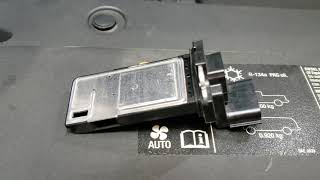
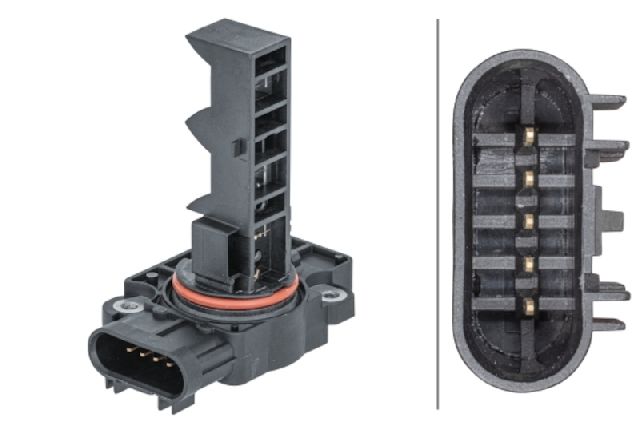
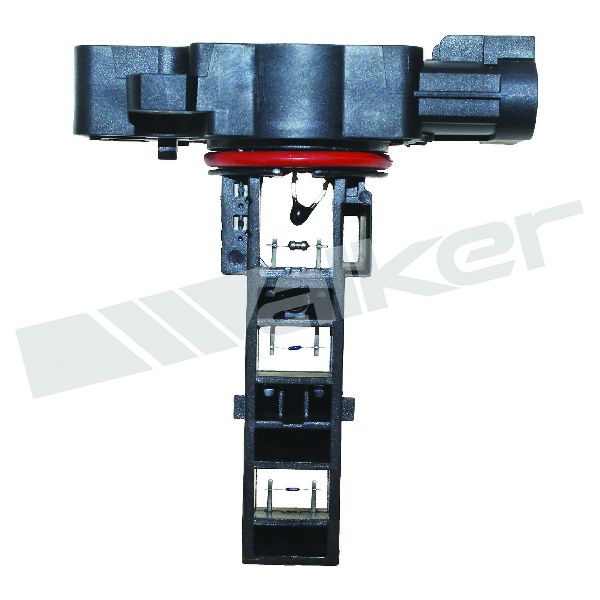
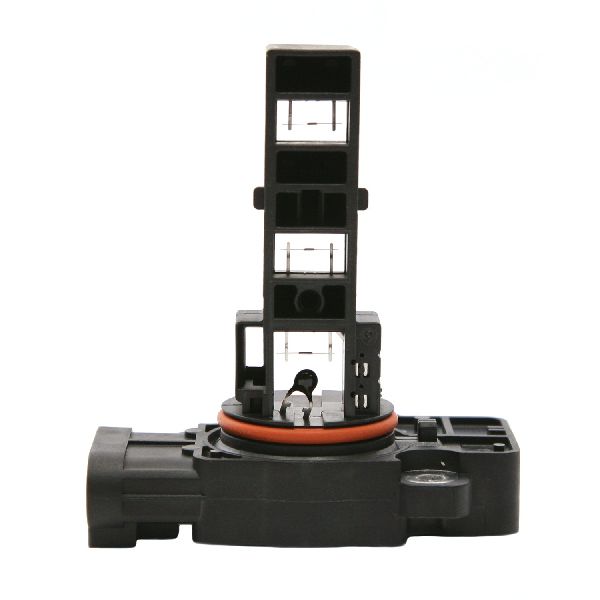
- Mass Air Flow (MAF) Sensor
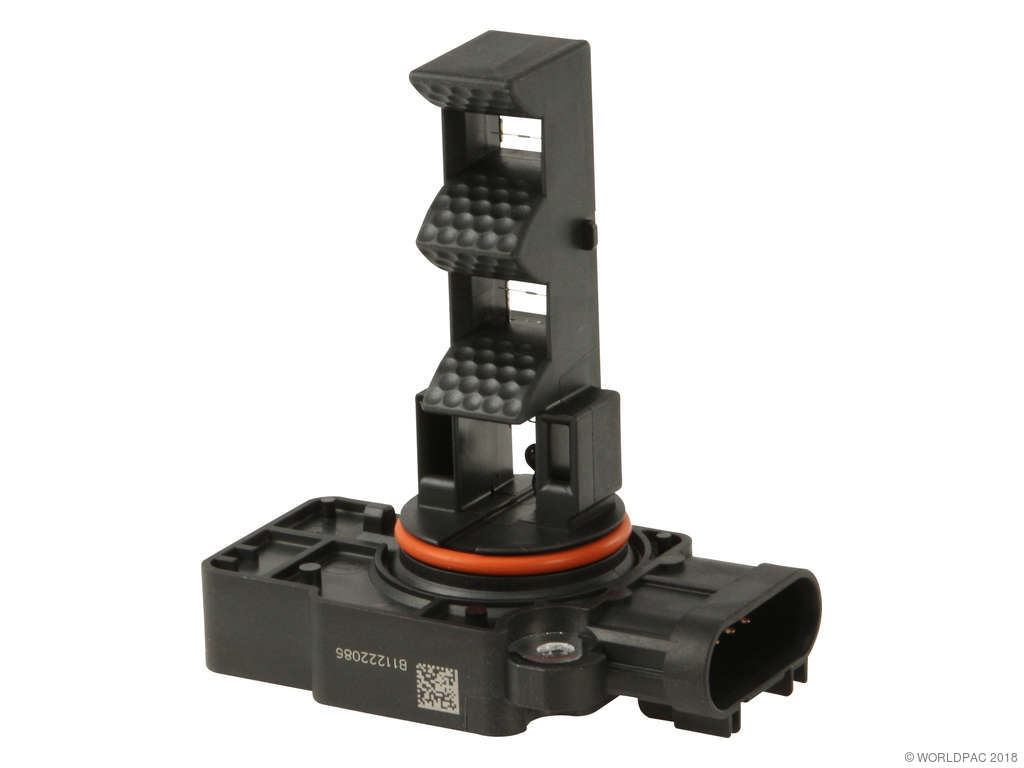
(OEM #ACDelco 23262343 (K2XX, 2014-2016) or ACDelco 213-4222 (GMT900, 2012-2013))— This is the primary component that fails if cleaning and fixing leaks don't resolve the code. Part number varies by generation.
Trusted brands: ACDelco (OEM), Delphi, Hitachi, Walker
OEM price range: $85-$110
Aftermarket price range: $45-$90 - MAF Sensor Cleaner — This is the first and most cost-effective fix to attempt, as a dirty sensor is the most common cause.
Trusted brands: CRC, WD-40 Specialist
Aftermarket price range: $10-$20 - Engine Air Intake Hose — This flexible hose is a common source of vacuum leaks due to cracking over time, allowing unmetered air to enter the engine.
Trusted brands: ACDelco, Dorman
OEM price range: $100-$150
Aftermarket price range: $40-$80
Related Codes That Often Appear With This One
- P0171 — System Too Lean (Bank 1). The PCM detects a lean condition because the MAF sensor is under-reporting airflow (or there's a vacuum leak), causing less fuel to be injected than necessary.
- P0174 — System Too Lean (Bank 2). Same reason as P0171, but for the opposite cylinder bank. Often set together with P0171.
- P0172 — System Too Rich (Bank 1). Less commonly, if the MAF over-reports air, the PCM will inject too much fuel, causing a rich condition. This can also be a symptom of the cast flashing issue.
- P0175 — System Too Rich (Bank 2). Same reason as P0172, for the opposite cylinder bank. Also listed in TSB PIP5446A.
Technical Service Bulletins (TSBs) & Recalls
- PIP5446A
- PIP4932D
Platform-Specific Known Issues
- TSB PIP5446A: Intake Air Housing Cast Flashing: Updated from the original PIP5446, this bulletin covers 2014-2018 models including the Sierra, Silverado, Tahoe, and Escalade. It notes that harsh shifting, sputtering, and a rough idle accompanied by P0101 and/or fuel trim codes can be caused by excessive plastic flashing inside the air filter housing near the MAF sensor. The official correction is to inspect and, if flashing is found, replace the air filter housing lid.
- TSB PIP4932D: General P0101 Diagnostics: This is a more general bulletin for the P0101 code, advising technicians to follow standard service information diagnostics for any DTCs that are set and not to replace the MAF sensor without proper diagnosis, implying that other causes are common.
Mechanic-Grade Diagnostic Values
- MAF Sensor Live Data (Scan Tool, 5.3L Engine) — expected: Approximately 5-6 g/s at fully warmed-up idle with no accessories on.. Failure: A reading of 3-4 g/s or lower at idle strongly suggests a dirty sensor or a vacuum leak.
- Long-Term Fuel Trim (LTFT) — expected: Close to 0%, ideally within +/- 10%.. Failure: Consistently high positive values (e.g., +25% or higher) indicate the PCM is adding significant fuel to compensate for what it thinks is low airflow (unmetered air) or an under-reporting MAF.
- MAF Sensor Signal Frequency (Multimeter with Hz setting) — expected: Approx. 3.2 kHz at idle (~680 RPM), rising smoothly to ~5.2 kHz at 2500 RPM.. Failure: Frequency does not increase with RPM, is stuck, or shows no signal.
- MAF Connector Power Supply Voltage (KOEO) — expected: 10 to 12 Volts DC at the Pink wire.. Failure: No voltage or low voltage indicates a problem with the power supply circuit or fuse.
- MAF Connector Ground Circuit Resistance — expected: Less than 0.5 ohms between the Black/White wire terminal and the battery negative post.. Failure: High resistance indicates a poor ground connection, which can cause erratic sensor readings.
Scan Tool Commands That Help
- N/A - Manual Procedure: Fuel Trim / ECU Reset — After replacing or cleaning the MAF sensor, it is recommended to reset the ECU's learned values. The most common method is to disconnect the negative battery terminal for 15-30 minutes. This clears the long-term fuel trims that were compensating for the old/dirty sensor. A drive cycle under various conditions (idle, city, highway) should follow to allow the ECU to relearn adaptations with the new sensor readings.
Wiring & Ground Locations
- MAF Sensor Connector — On the MAF sensor, which is located in the air intake tube between the air filter box and the throttle body.. Verifying power and ground at the connector is a critical step before replacing the sensor. The Pink wire (or Pink w/ Black stripe) should have 10-12V with the key on, and the Black w/ White stripe wire should have a good ground (<0.5 ohms to battery negative). The Yellow wire is the signal wire that sends the frequency reading to the ECU.
Real Owner Repair Stories
- YouTube channel 'Jon Will Fix It' (GMC Sierra with 5.3L V8) — Check Engine Light with codes P0101, P0171, P0174. Scan tool showed Long Term Fuel Trims at +35%.
❌ Tried (didn't work) Initial diagnosis focused on the high fuel trims and lean codes.
✅ What actually fixed it The mechanic identified the MAF reading was only ~3 g/s at idle, far below the expected ~5.3 g/s. He removed and cleaned the MAF sensor with dedicated cleaner. Upon reinstallation, the MAF reading corrected to nearly 5 g/s and the Short Term Fuel Trims immediately went negative to compensate, confirming the fix. A dirty air filter was also recommended for replacement. - Forum case documented by Vertex AI (2016 Sierra) — P0101 and P0171 codes
❌ Tried (didn't work) Multiple smoke tests, which all passed (showed no leaks).
✅ What actually fixed it The root cause was a collapsed internal hose related to an aftermarket oil catch can installation. This created a vacuum leak that only occurred under engine load and was not detectable by a static smoke test at idle. - Reddit user in r/Nissan (2018 Nissan Rogue (principle applies across makes)) — Persistent P0101 code.
❌ Tried (didn't work) Cleaning the MAF sensor., Checking the air filter., Inspecting for vacuum leaks.
✅ What actually fixed it Replacing the 3-year-old battery. A weak or dying battery can provide unstable voltage to engine sensors, causing them to send erratic data and trigger performance codes like P0101, even if the sensor itself is good.
"I Checked Everything" — The Actual Cause
- In one documented case on a 2016 Sierra, repeated P0101/P0171 codes were present even after passing multiple smoke tests. The actual cause was a collapsed hose from an aftermarket oil catch can setup, which created a vacuum leak only under load, a condition a static smoke test would not replicate.
OEM Part Supersession History
15865791→ACDelco 213-4222— Part number consolidation and branding update.
Heads up: This part number is for the GMT900 generation (2012-2013) and is not compatible with the K2XX generation (2014-2016).
Model Year Variations Within This Range
- 2014-2016: These K2XX generation trucks are subject to TSB PIP5446A, which identifies excess plastic 'cast flashing' in the air intake housing as a potential cause for P0101. This is not a documented issue on the 2012-2013 GMT900 models.
Helpful Videos
We Have This Part in Stock


The information in this article is provided for general reference and educational purposes only. Vehicle specifications, procedures, and part compatibility can vary by production date, trim level, and region. Always consult your vehicle's factory service manual and verify part numbers before purchasing or performing repairs. Safety-critical components such as airbags, seat belts, and braking systems should be installed by a qualified professional.
- Gmc SIERRA DENALI:
- 🎬 Helpful Videos
- 🛍️ Shop This Part
- What's Unique About the 2012-2016 Gmc SIERRA DENALI
- Diagnostic Flowchart
- Symptoms You May Notice
- Most Likely Causes
- Rare But Worth Checking
- Diagnosis Steps
- Parts You'll Likely Need
- Related Codes That Often Appear With This One
- Technical Service Bulletins (TSBs) & Recalls
- Platform-Specific Known Issues
- Mechanic-Grade Diagnostic Values
- Scan Tool Commands That Help
- Wiring & Ground Locations
- Real Owner Repair Stories
- "I Checked Everything" — The Actual Cause
- OEM Part Supersession History
- Model Year Variations Within This Range
- 🎟️ Get 5% Off