

P0101 on 2007-2011 GMC Sierra Denali: MAF Sensor Causes and Fixes
On a 2007-2011 GMC Sierra Denali, code P0101 is most often caused by a dirty Mass Airflow (MAF) sensor. Cleaning the sensor with dedicated MAF cleaner for about $15 is the most common fix. If that fails, suspect a vacuum leak from a cracked intake hose, a problematic aftermarket air filter, or a faulty sensor.
- P0101 on your Sierra Denali almost always points to an issue with the Mass Airflow sensor or the air intake system.
- The first and cheapest step is to clean the MAF sensor with dedicated cleaner; do not use other chemicals.
- Thoroughly inspect the rubber air intake hose between the air filter and the engine for cracks, as this is a very common failure point causing vacuum leaks.
- If cleaning the sensor doesn't work, and there are no vacuum leaks, the sensor itself likely needs to be replaced. Use a quality OEM or reputable aftermarket brand.
- If you also have severe power loss, consider a clogged catalytic converter as a possible, though less common, cause.
What's Unique About the 2007-2011 Gmc SIERRA DENALI
On these GMT900-platform GM trucks, the P0101 code is a very common issue. While a dirty MAF sensor is the usual suspect, these trucks are also known to develop vacuum leaks from cracked intake boots due to age and heat. More uniquely for GM V8 trucks, a severely clogged catalytic converter can create enough exhaust backpressure to restrict airflow into the engine, which can also trigger a P0101 code, a cause that is less common on other vehicle makes. Furthermore, these engines are sensitive to aftermarket air filters; oiled filters can contaminate the sensor, and even some dry filters can alter airflow enough to trigger a code.
Diagnostic Flowchart
Tap your situation to follow the diagnostic path that matches what you're seeing on this vehicle.
Symptoms You May Notice
- Check Engine Light is on
- Rough or unstable idle
- Engine hesitation or stumbling during acceleration
- Reduced engine power and performance
- Decreased fuel economy
- Engine stalling
- Incorrect or harsh transmission shifting
- Replacing the MAF sensor without first attempting to clean it.
- Replacing the MAF sensor when the actual problem is a cracked air intake hose (vacuum leak).
- Repeatedly replacing MAF sensors without considering that an aftermarket air filter (especially oiled types) is the root cause.
Most Likely Causes
- Dirty or Contaminated MAF Sensor 🔴 High Probability The MAF sensor's delicate sensing elements can become coated with dust, moisture, and especially oil from aftermarket oiled air filters. This coating insulates the elements, causing inaccurate readings.
How to confirm: Visually inspect the sensor's wires/elements. If they appear dirty or coated, cleaning is warranted. This is the most common and cost-effective first step.
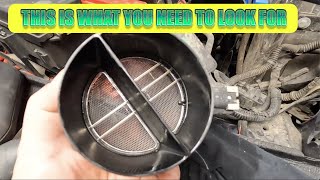
Typical fix: Remove the sensor (held by two T15 Torx screws) and clean it thoroughly with a dedicated Mass Airflow Sensor cleaner. 🎬 Watch: Step-by-step guide to cleaning your GM truck's MAF sensor. Do not use brake or carburetor cleaner, as they can damage the sensor.
Est. part cost: $10-$20 for MAF cleaner - Vacuum Leak (Unmetered Air) 🟡 Medium Probability The plastic and rubber components of the air intake system, particularly the large intake duct, can become brittle and crack with age and exposure to engine heat. This allows air to enter the engine after the MAF sensor, causing a lean condition and conflicting sensor readings.
How to confirm: Visually inspect the air intake duct between the air filter box and the throttle body for cracks, tears, or loose clamps. A smoke test is the most definitive way to find a leak.
Typical fix: Replace the cracked or damaged air intake hose or secure any loose clamps.
Est. part cost: $50-$150 for an intake hose - Dirty, Clogged, or Improper Air Filter 🟡 Medium Probability A neglected, clogged filter can restrict airflow. Additionally, some aftermarket filters, even when clean, can create air turbulence or have different flow characteristics that the sensitive GM MAF sensor interprets as a fault, triggering a P0101 code.
How to confirm: Remove and inspect the engine air filter. If it is visibly dirty, replace it. If an aftermarket filter is installed and other causes are ruled out, consider it a primary suspect.
Typical fix: Replace the engine air filter with a new one, preferably an OEM-style paper filter from a brand like ACDelco to eliminate filter design as a variable. 🎬 See why aftermarket filters often trigger this specific P0101 code.
Est. part cost: $20-$50 - Faulty MAF Sensor ⚪ Low Probability
How to confirm: If cleaning the sensor and confirming there are no vacuum leaks or air filter issues does not resolve the code, the sensor's internal electronics may have failed. This can be confirmed by monitoring sensor data with an advanced scan tool (looking for erratic readings) or by substituting a known-good sensor.
Typical fix: Replace the Mass Airflow Sensor.
Est. part cost: $70-$200
Rare But Worth Checking
- Clogged Catalytic Converter: On GM trucks, a blocked catalytic converter can create significant exhaust backpressure, which impedes airflow into the engine and can trigger a P0101 code. This is usually accompanied by a severe loss of power under load and potentially a P0420 code.
- Wiring or Connector Issue: The wiring harness or connector for the MAF sensor can become damaged, corroded, or have a loose pin, causing an intermittent or lost signal. Check for chafed wires and ensure the connector pins are clean and tight.
- Dirty Throttle Body: A throttle body heavily coated in carbon can restrict airflow or prevent the throttle plate from closing properly, which can contribute to airflow correlation faults and trigger a P0101.
- Aftermarket Cold Air Intake (CAI): Many aftermarket cold air intakes change the diameter and routing of the intake tube, which alters the airflow characteristics across the MAF sensor. This can cause the sensor to report readings outside of the expected range, triggering a P0101 code even if there are no leaks.
Diagnosis Steps
- Read the code with an OBD-II scanner and note any other codes present, especially P0171/P0174. 🎬 Watch: Diagnosing P0101 when combined with lean bank codes.
- Visually inspect the entire air intake tract from the air filter housing to the throttle body. Look for any cracks in the rubber/plastic hoses, loose clamps, or disconnected lines.
- Remove and inspect the engine air filter. If it's dirty, replace it. If an aftermarket (especially oiled K&N style) filter is installed, consider it a high-probability suspect.
- Remove the MAF sensor (typically held by two T15 Torx screws). Inspect the sensor housing for any large debris like leaves or even insects.
- Thoroughly spray the MAF sensor's wire or plate elements with a dedicated MAF sensor cleaner. Let it air dry completely before reinstalling. Do not touch the elements.
- With the MAF sensor reinstalled, clear the codes. Consider disconnecting the negative battery terminal for 15 minutes to reset fuel trims. Perform a test drive.
- If the code returns, use a scan tool to monitor live data. With the engine fully warmed up and at idle, the MAF sensor reading should be stable and approximately 6.0-7.0 grams/second (g/s) for the 6.2L engine. Readings significantly below 5 g/s at idle point to a restriction or sensor issue.
- If you suspect a vacuum leak and a visual inspection is inconclusive, perform a smoke test on the intake system to find the source of the leak.
- If an aftermarket air filter is installed, temporarily swap it with a stock ACDelco paper filter, clear codes, and test drive. This is a crucial step to eliminate the filter as the cause.
- Inspect the MAF sensor connector and wiring for any signs of damage, corrosion, or loose pins.
- If other symptoms like poor idle are present, consider cleaning the throttle body.
- If all other possibilities are exhausted, the MAF sensor itself has likely failed and requires replacement.
Parts You'll Likely Need
- Mass Airflow Sensor Cleaner — This is the most common and cost-effective first step, as a dirty sensor is the leading cause of P0101.
Trusted brands: CRC, WD-40 Specialist
Aftermarket price range: $10-$20 - Mass Airflow (MAF) Sensor
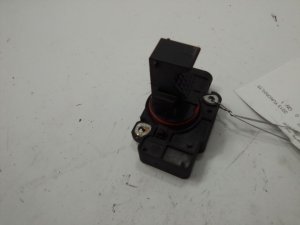
(OEM #23256991 (Also known as ACDelco 213-4222, supersedes 15865791))— If cleaning the sensor and checking for leaks doesn't fix the issue, the sensor itself has likely failed and needs to be replaced.
Trusted brands: ACDelco (OEM), Delphi, Denso, Bosch
OEM price range: $120-$180
Aftermarket price range: $70-$130 - Engine Air Intake Hose
(OEM #15901934 (Supersedes 10385192, 15836547))— This hose is a common source of vacuum leaks due to cracking from age and heat, which is a frequent cause of P0101.
Trusted brands: ACDelco (GM Genuine), Dorman
OEM price range: $80-$150
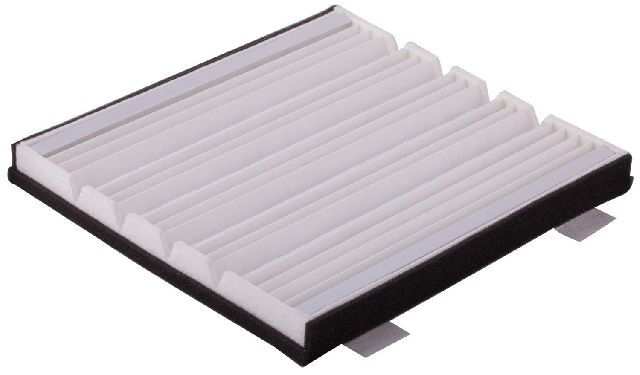
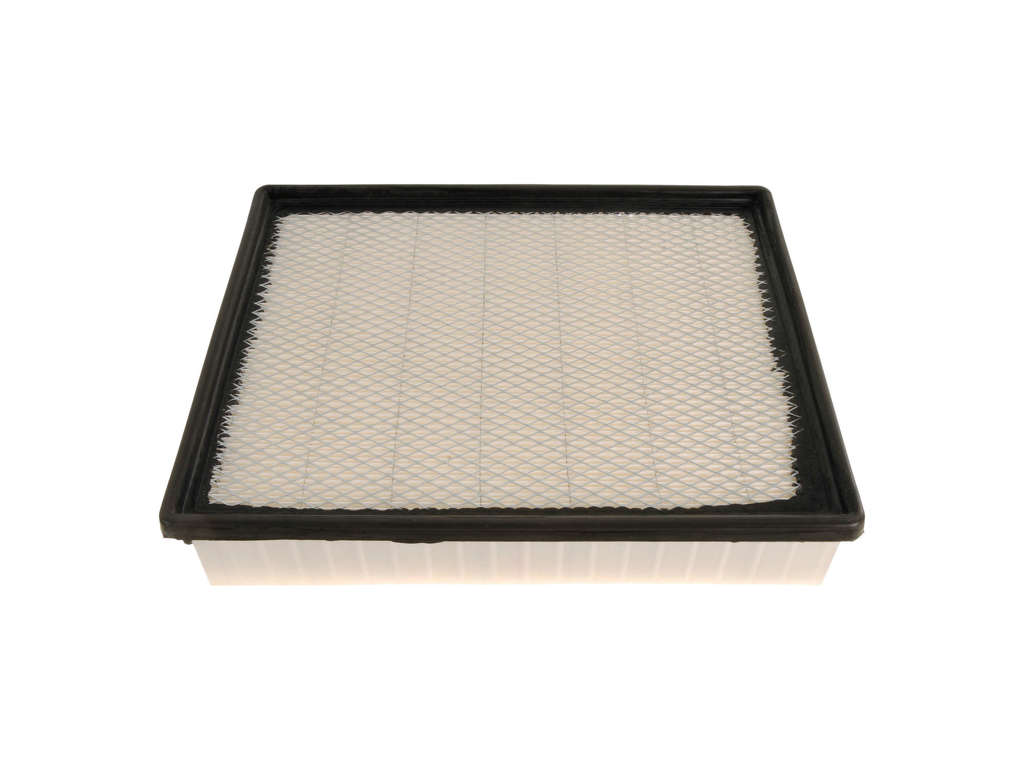
Aftermarket price range: $50-$100 - Engine Air Filter — A clogged or improperly designed aftermarket filter can restrict or disrupt airflow and trigger this code. It's a basic maintenance item that should be checked early in the diagnosis.
Trusted brands: ACDelco, Wix, Fram
Aftermarket price range: $20-$50
Related Codes That Often Appear With This One
- P0171 — System Too Lean (Bank 1) - Often caused by a vacuum leak, which allows unmetered air into the engine, a common cause for P0101.
- P0174 — System Too Lean (Bank 2) - Same as P0171. A vacuum leak will affect both cylinder banks.
- P0420 — Catalyst System Efficiency Below Threshold (Bank 1) - Can appear with P0101 if the root cause is a clogged catalytic converter.
Technical Service Bulletins (TSBs) & Recalls
- Bulletin #PIP4932D: Mentions that vehicles may exhibit a Service Engine Soon Malfunction Indicator Lamp with DTC P0101 and instructs technicians to follow standard diagnostics. While not providing a specific fix, it acknowledges the prevalence of the code.
- A known issue, similar to a TSB, exists for 2007-2009 GM trucks where non-GM (aftermarket) air filters can cause a P0101 code to set even if the filter is clean. The altered airflow characteristics are enough to make the MAF sensor readings appear incorrect to the ECM. The recommended action is to complete standard diagnostics and, if inconclusive, replace the aftermarket filter with a stock A/C Delco filter to see if the code resolves.
Platform-Specific Known Issues
- A very common, and often misdiagnosed, cause for a P0101 on these trucks is the use of an aftermarket air filter. In one documented case, a 2009 GM truck owner spent over $2,000 at four different repair shops, including a GM dealer, replacing the MAF sensor multiple times, repairing wiring, and updating the ECM. The P0101 code, accompanied by limp mode, kept returning. The final fix was simply replacing a clean-looking K&N oiled air filter with a standard OEM paper filter. The aftermarket filter was restricting airflow, causing the MAF to read only 21 g/s at idle, while the correct OEM filter allowed a normal reading of 33 g/s, resolving the issue instantly. This highlights the importance of checking the air filter type early in the diagnostic process.
Mechanic-Grade Diagnostic Values
- MAF Sensor Reading at Idle (Scan Tool) — expected: Approx. 6.0 - 7.0 g/s for a 6.2L V8 at normal operating temperature with accessories off. Should be roughly equivalent to engine displacement in liters.. Failure: A reading significantly below 5.0 g/s at idle suggests a dirty/faulty sensor or an airflow restriction.
- Long Term Fuel Trims (LTFT) at Idle (Scan Tool) — expected: Within +/- 10% on both Bank 1 and Bank 2.. Failure: Consistently high positive fuel trims (+20% or higher) on both banks indicate the engine is compensating for unmetered air (vacuum leak) or under-reported air (bad MAF).
- MAF Sensor Signal Frequency at Idle (Multimeter) — expected: Approximately 3.2 KHz at ~680 RPM.. Failure: A signal that is erratic, absent, or does not increase with RPM suggests a faulty sensor or wiring issue.
- MAF Sensor Signal Frequency at 2500 RPM (Multimeter) — expected: Approximately 5.2 KHz.. Failure: A signal that does not rise to this level when RPMs are increased points to a sensor that is not reporting airflow changes correctly.
Scan Tool Commands That Help
- GDS2 / Tech2 / Professional Scan Tool: Live Data Monitoring (MAF g/s, Short Term Fuel Trim, Long Term Fuel Trim) — This is the primary method to confirm a fix. After cleaning or replacing the MAF sensor, start the engine and watch the live data. A successful repair will show the MAF g/s reading return to a normal range (approx. 6-7 g/s at idle) and the Short Term Fuel Trim (STFT) will immediately go negative to counteract the high Long Term Fuel Trim (LTFT). Over time, the LTFT will then 'learn' its way back towards 0%.
Wiring & Ground Locations
- MAF Sensor Connector (5-Pin) — On the air intake tube, between the air filter box and the throttle body.. This is the direct connection to the sensor. Damaged pins, corrosion, or broken wires here will cause a P0101. The pinout is: Pin A (Tan): IAT Sensor Signal, Pin B (Tan/Black): Low Reference/Ground, Pin C (Yellow): MAF Sensor Signal, Pin D (Pink): Ignition 1 Voltage (Power), Pin E (Black/White): Chassis Ground.
- G103 / G104 — G104 is on the front of the left (driver's side) cylinder head. G103 is on the front of the right (passenger's side) cylinder head.. These are critical engine-to-chassis grounds. G103 is a primary ground for the Engine Control Module (ECM). A loose or corroded connection here can cause erratic sensor readings, phantom codes, and unpredictable ECM behavior, including a P0101.
- Engine Harness Chafe Point — On the driver's side of the engine bay, inspect the main engine harness for contact with the metal ECM/TCM bracket and the shock tower bolt.. Vibrations can cause the harness to rub through at this point, potentially shorting or breaking the MAF sensor signal, power, or ground wires. This can cause an intermittent P0101 that is difficult to diagnose as the sensor and intake system will appear fine.
- Underhood Fuse Block — On the driver's side of the engine bay, near the brake fluid reservoir.. The MAF sensor receives its power via a fuse in this block. On some models, this is fuse #4 and/or #5. A blown fuse will cause the sensor to stop working and immediately trigger a code.
Real Owner Repair Stories
- Jon Will Fix It YouTube Channel (GMC Sierra (5.3L, similar platform)) — Check Engine Light with codes P0101, P0171, P0174. Low MAF reading (~3 g/s) and maxed out fuel trims (+35%).
❌ Tried (didn't work) Initial diagnosis pointed towards a bad MAF sensor or a massive vacuum leak.
✅ What actually fixed it Upon removing the MAF sensor for inspection, a small bug was found lodged inside the sensor's bore, obstructing airflow. The bug was removed, the sensor was reinstalled, and live data confirmed the MAF reading returned to a normal ~5 g/s and fuel trims began to correct immediately. No parts were replaced. - Chevrolet Message Forum user '60_Biscayne' (2003 Chevrolet Avalanche (similar GMT800 platform)) — Persistent P0101 code that baffled mechanics.
❌ Tried (didn't work) Replacing the air filter., Cleaning the intake ductwork., Spraying and cleaning the MAF sensor., Removing and cleaning the throttle body.
✅ What actually fixed it After all cleaning attempts failed, the owner replaced the Mass Airflow Sensor with a new one purchased online. This immediately and permanently resolved the P0101 code.
"I Checked Everything" — The Actual Cause
- In one documented case, a technician diagnosed a P0101 with lean codes (P0171/P0174). The scan tool showed very low MAF g/s readings, pointing away from a typical vacuum leak that a smoke test would find. Instead of a leak, the cause was a small bug physically lodged inside the MAF sensor housing, restricting the sensing elements. A smoke test would have passed with no leaks, potentially misleading the diagnosis towards a faulty sensor when the issue was simply a blockage.
OEM Part Supersession History
15865791→23256991 (ACDelco P/N: 213-4222)— Standard design updates and manufacturer revisions.
Heads up: The current service replacement is 23256991 / 213-4222. While older parts may function, using the latest revision is recommended.10385192, 15836547→15901934— Standard design updates for the air cleaner outlet duct.
Model Year Variations Within This Range
- 2007-2011: No significant variations related to the cause or diagnosis of P0101 have been identified within this model year range for the 6.2L V8 engine. The MAF sensor, intake duct, and common failure points are consistent.
Helpful Videos

Used OEM Parts in Stock

New Aftermarket Parts Available




The information in this article is provided for general reference and educational purposes only. Vehicle specifications, procedures, and part compatibility can vary by production date, trim level, and region. Always consult your vehicle's factory service manual and verify part numbers before purchasing or performing repairs. Safety-critical components such as airbags, seat belts, and braking systems should be installed by a qualified professional.
- Gmc SIERRA DENALI:
- 🎬 Helpful Videos
- 🛍️ Shop This Part
- What's Unique About the 2007-2011 Gmc SIERRA DENALI
- Diagnostic Flowchart
- Symptoms You May Notice
- Most Likely Causes
- Rare But Worth Checking
- Diagnosis Steps
- Parts You'll Likely Need
- Related Codes That Often Appear With This One
- Technical Service Bulletins (TSBs) & Recalls
- Platform-Specific Known Issues
- Mechanic-Grade Diagnostic Values
- Scan Tool Commands That Help
- Wiring & Ground Locations
- Real Owner Repair Stories
- "I Checked Everything" — The Actual Cause
- OEM Part Supersession History
- Model Year Variations Within This Range
- 🎟️ Get 5% Off