

P0101 on 2007-2010 GMC Sierra 2500: MAF Sensor Causes and Fixes
On a 2007-2010 GMC Sierra 2500, code P0101 is most often caused by a dirty Mass Air Flow (MAF) sensor. Cleaning the sensor with a dedicated MAF cleaner for around $15 is the most common and effective first step. On 6.6L Duramax models, also check for cracked intercooler boots and avoid over-oiled aftermarket air filters, which are known to contaminate the sensor and trigger the code.
- P0101 means the MAF sensor reading is out of its expected range.
- The most common and cheapest fix is to clean the MAF sensor with a dedicated cleaner.
- Always inspect for vacuum leaks in the intake tubing and check the condition of the air filter.
- On Duramax models, be cautious with aftermarket air filters as they are a known cause of this code.
- Only replace the MAF sensor after you have tried cleaning it and have ruled out air leaks and filter issues.
What's Unique About the 2007-2010 Gmc SIERRA 2500

For this generation of Sierra 2500, particularly those with the 6.6L Duramax LMM diesel engine, the P0101 code is notoriously sensitive to non-OEM air filters. Aftermarket filters, especially oiled types like K&N, can shed oil onto the MAF sensor's delicate element, causing incorrect readings. Additionally, the complex turbocharged intake plumbing on the Duramax is prone to leaks at the intercooler boots and resonator box, allowing unmetered air to enter and trigger the code. Even a stock filter, if new, can sometimes flow differently enough to cause an intermittent code on sensitive trucks.
Diagnostic Flowchart
Tap your situation to follow the diagnostic path that matches what you're seeing on this vehicle.
Generation note: The 2007 model year was a transition. The 'Classic' body style is the older GMT800 platform, while the new body style is the GMT900 platform, which ran through 2010. This guide primarily covers the GMT900 (2007 new body style - 2010) trucks, but the causes and fixes are very similar for the 'Classic' models as well.
Symptoms You May Notice
- Check Engine Light is on
- "Reduced Engine Power" message on the driver information center (DIC), often referred to as limp mode
- Engine runs rough or idles erratically
- Hesitation or surging during acceleration
- Reduced engine power and sluggish performance
- Black smoke from the exhaust (especially on diesel models)
- Poor fuel economy
- On Duramax models, the code may appear intermittently, especially right after starting the engine when cold, and then clear itself during driving.
- Replacing the MAF sensor without first trying to clean it. A dirty sensor is far more common than a completely failed one.
- Replacing oxygen sensors. While fuel trim codes (P0171, P0174) may appear with P0101, they are usually a symptom of the MAF issue, not the root cause.
- Ignoring small intake leaks. On turbocharged Duramax engines, even a small crack in an intercooler boot can be enough to set the code under certain conditions.
Most Likely Causes

- Dirty or Contaminated MAF Sensor 🔴 High Probability The PCV (Positive Crankcase Ventilation) system, especially on Duramax diesels, can introduce oil vapors into the intake that coat the sensor. Oiled aftermarket air filters are a very common source of contamination. Even road dust and debris can build up over time.
How to confirm: Visually inspect the MAF sensor's small wires or film element. If they appear dirty, oily, or have debris on them, they need cleaning. A scan tool may show low g/s readings at idle (a healthy LMM Duramax should be around 31-33 g/s, while a faulty one might read in the low 20s).
Typical fix: Remove the sensor and clean it carefully with a dedicated Mass Air Flow sensor cleaner spray. Do not touch the delicate wires. 🎬 See the proper way to clean and maintain your sensor. Let it dry completely before reinstalling.
Est. part cost: $10-$20 for cleaner - Vacuum or Intake Air Leak 🟡 Medium Probability On Duramax engines, the rubber intercooler boots and plastic intake resonator can crack with age and heat cycles, allowing pressurized air to escape (a boost leak) or unmetered air to enter. On gas engines, the plastic intake manifold gaskets and PCV hoses are common failure points.
How to confirm: Visually inspect all intake hoses, boots, and gaskets between the MAF sensor and the engine for cracks, oil residue (a sign of a boost leak), or loose clamps. A smoke test is the most effective way to pinpoint hard-to-see leaks.
Typical fix: Replace the cracked or leaking component. Common parts include the intercooler-to-pipe boot or the entire intake duct assembly.
Est. part cost: $50-$200 depending on the specific hose or gasket - Dirty, Clogged, or Improper Air Filter 🟡 Medium Probability The LMM Duramax ECM is particularly sensitive to airflow changes. A clogged filter restricts air, while some aftermarket (especially oiled) filters can alter airflow characteristics or contaminate the sensor, triggering the code even if they are new.
How to confirm: Remove and inspect the engine air filter. If it is visibly dirty, clogged, or an oiled aftermarket type, it is suspect. Many owners report the issue disappearing after switching back to an OEM ACDelco filter.
Typical fix: Replace the engine air filter. Using a quality OEM filter (like ACDelco) is highly recommended.
Est. part cost: $25-$60 - Faulty MAF Sensor ⚪ Low Probability
How to confirm: If cleaning the sensor and confirming there are no intake leaks does not resolve the code, the sensor itself may have failed electronically. This can be confirmed by monitoring MAF sensor data (g/s) with a scan tool to see if readings are erratic, illogical, or do not increase with RPM. Comparing readings to a known-good sensor is a definitive test.
Typical fix: Replace the Mass Air Flow sensor. It is highly recommended to use an OEM ACDelco part, as some aftermarket sensors have been reported to be out of spec from the factory, causing the same code.
Est. part cost: $70-$250
Rare But Worth Checking
- Clogged Catalytic Converter / DPF: A restricted exhaust can cause a backup of pressure, affecting the airflow reading and triggering a P0101 code. This is more likely on higher-mileage vehicles and is often accompanied by a significant loss of power and other exhaust-related codes.
- Wiring or Connector Issue: A damaged wire or loose/corroded connector at the MAF sensor can cause an intermittent or complete loss of signal. One owner on a forum found a broken wire in the harness was the ultimate culprit after replacing the sensor didn't help.
- Faulty or Sticking EGR Valve: On Duramax models, an EGR valve that is stuck open or not seating properly can allow exhaust gases to flow when they aren't commanded. This introduces unmetered air/exhaust into the intake, throwing off the MAF sensor's expected readings and causing a P0101. One owner traced their persistent P0101 to a faulty EGR valve.
Diagnosis Steps
- Check for other stored trouble codes that could provide more context.
- Visually inspect the entire air intake system, from the airbox to the turbo/throttle body. On Duramax trucks, pay extremely close attention to the rubber intercooler boots and all clamp connections for cracks or signs of oil seepage.
- Inspect the engine air filter. Replace if it is dirty, clogged, or an oiled aftermarket type. Consider swapping to an ACDelco filter as a diagnostic step.
- Unplug and remove the MAF sensor. Inspect the sensing elements for dirt, oil, or debris like small bugs.
- If dirty, clean the MAF sensor using only dedicated MAF sensor cleaner. Spray the wires/elements generously and let it air dry completely before reinstalling. Do not touch the elements.
- Clear the trouble codes and drive the vehicle to see if the code returns. Pay attention to the conditions under which it returns (e.g., at idle, under load).
- If the code returns, check the MAF sensor wiring and connector for any damage, corrosion, or loose pins. Ensure the connector clicks securely into place.
- If no physical issues are found, use a scan tool with live data capability. Monitor the MAF sensor's grams-per-second (g/s) reading at idle and while driving. For an LMM Duramax, idle should be around 31-33 g/s. The reading should smoothly increase with RPM.
- If a leak is suspected but not visible, perform a smoke test on the intake system to pressurize it and reveal the source of the leak. 🎬 Watch how to perform a boost leak test on your Duramax.
- If all other possibilities are exhausted and the sensor provides incorrect or illogical data, replace the MAF sensor, preferably with an OEM ACDelco part.
Parts You'll Likely Need

- Mass Air Flow Sensor Cleaner — This is the most common, cost-effective first step, as the sensor is often just dirty from oil vapor or a dirty/oiled filter.
Trusted brands: CRC, Liqui Moly, WD-40 Specialist
Aftermarket price range: $10-$20 - Mass Air Flow Sensor
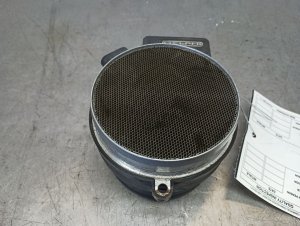
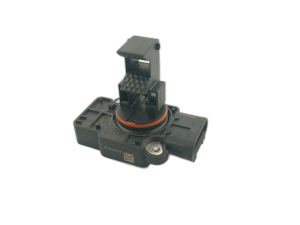
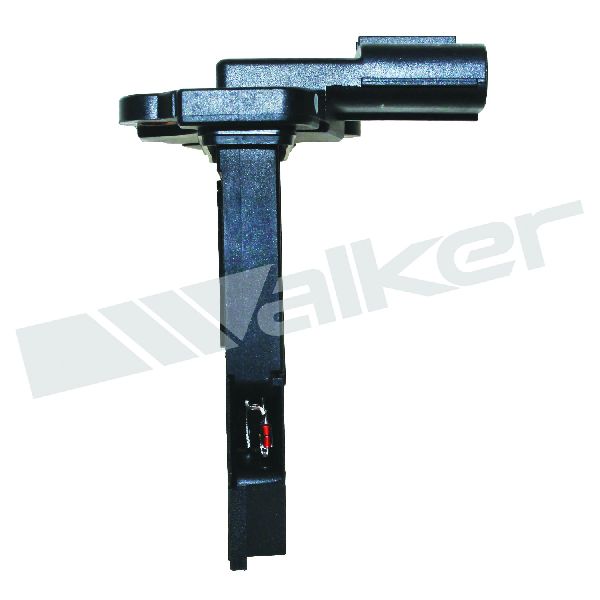
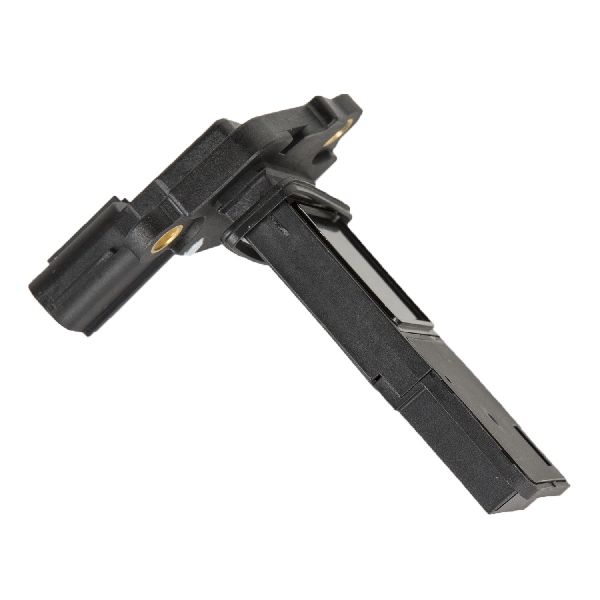
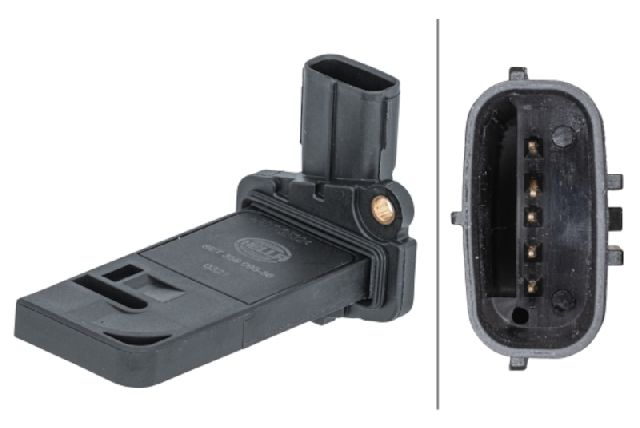
(OEM #ACDelco 213-4222 (GM 15900023) - Fits both 6.6L Duramax LMM and 6.0L/4.8L Vortec gas engines for this generation.)— If cleaning the sensor and checking for leaks doesn't fix the issue, the sensor itself has likely failed. Using a genuine ACDelco part is highly recommended as aftermarket versions are known to cause issues.
Trusted brands: ACDelco
Related Codes That Often Appear With This One
- P0171 — System Too Lean (Bank 1) - If the MAF sensor is under-reporting airflow (due to a leak after the sensor), the computer won't inject enough fuel, leading to a lean condition.
- P0174 — System Too Lean (Bank 2) - Same reason as P0171, but for the second bank of cylinders on V8 engines.
- P0300 — Random/Multiple Cylinder Misfire Detected - An incorrect air/fuel mixture caused by a faulty MAF reading can lead to misfires across multiple cylinders.
Technical Service Bulletins (TSBs) & Recalls
- PIP4932D: Provides general diagnostic guidance for technicians encountering a P0101 code, directing them to standard diagnostic procedures.
Platform-Specific Known Issues
- On the 6.6L Duramax LMM, aftermarket cold air intakes and/or performance tunes can alter the expected airflow parameters, causing a P0101 code to set. Sometimes the tune's MAF calibration table needs to be adjusted to compensate.
- A persistent P0101 on an LMM Duramax that isn't resolved by cleaning/replacing the MAF or fixing intake leaks can be caused by a faulty EGR valve that isn't seating correctly, which alters the expected airflow calculation.
- The NHTSA bulletin PIP4932D mentions that technicians may find DTC P0101 and should follow standard service information diagnostics, confirming it's a widely recognized issue by GM.
Mechanic-Grade Diagnostic Values
- MAF Sensor Reading (g/s) at warm idle (LMM Duramax) — expected: 31-41 g/s.. Failure: Readings consistently in the low-to-mid 20s g/s often indicate a faulty sensor or a significant intake leak.
- MAF Sensor Reading (Hz) at warm idle (LMM Duramax) — expected: Approximately 2,300 Hz to 3,200 Hz.. Failure: A frequency reading that is stuck, erratic, or does not correspond with engine RPM changes.
- MAF Sensor Reading (Hz) under load (LMM Duramax) — expected: Frequency should rise smoothly with RPM, approaching 9,000 Hz at maximum engine load.. Failure: Failure of the frequency to increase smoothly as the engine is revved up.
- MAF Connector Voltage Test (Ignition On, Engine Off - LMM Duramax) — expected: Using the ground pin as reference: one pin should show 12V (battery voltage), and at least one other pin should show a 5V reference signal from the ECM.. Failure: Absence of 12V power or the 5V reference voltage points to a wiring issue, blown fuse, or ECM problem, not a faulty sensor.
Scan Tool Commands That Help
- EFILive, HP Tuners: MAF Calibration / MAF Airflow vs. Frequency Table Adjustment — This is not a standard diagnostic command but a tuning function. It is required when an aftermarket air intake system is installed. The stock MAF calibration is designed for the OEM intake, and the different airflow characteristics of an aftermarket part can cause the sensor's readings to fall outside the expected range, triggering a P0101 even with no leaks or sensor faults.
Wiring & Ground Locations

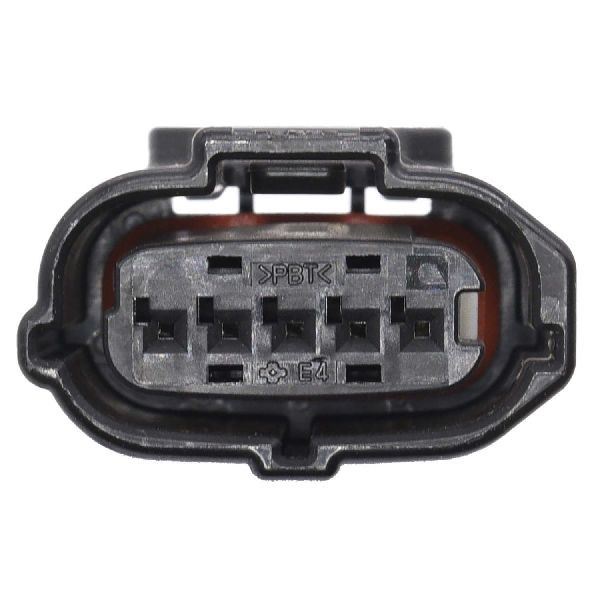
- MAF Sensor Connector (LMM Duramax) — On the MAF sensor, located in the intake tube directly after the air filter housing.. This 5-pin connector provides power, ground, and signal lines to the MAF sensor. A pin-out test can quickly determine if the sensor is receiving the correct voltages from the ECM and vehicle power, ruling out a wiring harness issue. With the ignition on, you should find 12V power, 5V reference, and a solid ground connection at the connector pins.
- G103 / G104 — On the rear of the driver and passenger side cylinder heads, near the firewall.. These are critical engine and ECM ground points. A loose or corroded ground at these locations can cause erratic behavior and incorrect readings from various sensors, including the MAF sensor, leading to a P0101 code that is difficult to diagnose.
Real Owner Repair Stories
- YouTube channel 'Mr Farmer' (2007-2010 LMM Duramax) — P0101 code with 'Reduced Engine Power' message.
❌ Tried (didn't work) Replacing the MAF sensor with a new aftermarket sensor from NAPA.
✅ What actually fixed it The aftermarket NAPA MAF sensor was out of specification. Live data showed it read 26 g/s at idle, while a known-good OEM sensor read 31-33 g/s. Installing a genuine GM/ACDelco MAF sensor resolved the code. - YouTube channel 'DevonsGarage' (LMM Duramax (year not specified, within 2007.5-2010 range)) — Persistent P0101 check engine light immediately after purchase.
❌ Tried (didn't work) Cleaning the MAF sensor., Replacing the air filter (tried three different ones)., Replacing the MAF sensor (tried three different ones).
✅ What actually fixed it After extensive diagnosis, the final cause was a missing O-ring on an intercooler pipe connection, which created a small, unmetered air leak that was difficult to detect. - Reddit user 'Cam_777' on r/Duramax (2010 GMC Sierra 3500HD LMM) — P0101 code and limp mode immediately after reassembling the cooling stack to clean the radiator. Code would set when putting the truck into Park after a drive.
❌ Tried (didn't work) Cleaning the MAF sensor., Replacing the MAF sensor with a new one.
✅ What actually fixed it The user was advised to build a boost leak tester to pressurize the intake system with soapy water, as the symptoms strongly pointed to an intake boot or clamp that was not properly seated during reassembly, causing a leak under specific vacuum/pressure conditions not present at idle.
"I Checked Everything" — The Actual Cause
- While not on this exact truck, a well-documented case on a similar GM truck platform with P0101 showed that multiple smoke tests passed with no leaks found. The actual cause was an internally collapsed PCV hose connected to an aftermarket oil catch can. The hose appeared normal on the outside but would suck flat under engine vacuum, creating a massive unmetered air leak that a pressure-based smoke test could not identify.
When the Usual Fixes Don't Work
- While cleaning the MAF sensor is the most common first step, several documented cases show that replacing the sensor with a non-OEM part can lead to a persistent P0101 code. In one instance, a brand new aftermarket sensor from a major parts store was faulty out of the box, reading significantly lower g/s values at idle than a factory sensor. The issue was only resolved by installing a genuine GM part, proving that a 'new' part is not always a 'good' part for this specific application.
OEM Part Supersession History
GM 15900023 (ACDelco 213-4222)→GM 19351885— Standard part lifecycle update by the manufacturer.
Heads up: While many aftermarket sensors are available, multiple owner reports and diagnostic videos confirm that some aftermarket MAF sensors are not calibrated correctly for the sensitive LMM Duramax ECM and will continue to cause a P0101 code. Using a genuine GM or ACDelco part is strongly recommended to avoid misdiagnosis.
Model Year Variations Within This Range
- 2007.5-2010: No significant variations within the GMT900 platform years for the LMM engine are commonly documented regarding the causes or diagnosis of code P0101. The primary diagnostic procedures apply across this range.
Helpful Videos
Used OEM Parts in Stock


New Aftermarket Parts Available


The information in this article is provided for general reference and educational purposes only. Vehicle specifications, procedures, and part compatibility can vary by production date, trim level, and region. Always consult your vehicle's factory service manual and verify part numbers before purchasing or performing repairs. Safety-critical components such as airbags, seat belts, and braking systems should be installed by a qualified professional.
- Gmc SIERRA 2500:
- 🎬 Helpful Videos
- 🛍️ Shop This Part
- What's Unique About the 2007-2010 Gmc SIERRA 2500
- Diagnostic Flowchart
- Symptoms You May Notice
- Most Likely Causes
- Rare But Worth Checking
- Diagnosis Steps
- Parts You'll Likely Need
- Related Codes That Often Appear With This One
- Technical Service Bulletins (TSBs) & Recalls
- Platform-Specific Known Issues
- Mechanic-Grade Diagnostic Values
- Scan Tool Commands That Help
- Wiring & Ground Locations
- Real Owner Repair Stories
- "I Checked Everything" — The Actual Cause
- When the Usual Fixes Don't Work
- OEM Part Supersession History
- Model Year Variations Within This Range
- 🎟️ Get 5% Off