

P0101 on 2007-2011 GMC Sierra: MAF Sensor Range/Performance Causes and Fixes
Code P0101 on a 2007-2011 GMC Sierra most often means the Mass Airflow (MAF) sensor is dirty or there's an unmetered air leak from a cracked intake boot. The most common fix is to clean the MAF sensor with a dedicated cleaner and inspect the air intake tube for damage, which are both inexpensive DIY tasks. A dirty sensor can cause the g/s reading at idle to be significantly lower than the engine's displacement in liters.
- P0101 indicates the MAF sensor reading doesn't match what the engine computer expects.
- Before buying any parts, your first step should always be to clean the MAF sensor with dedicated cleaner and inspect the plastic air intake tube for cracks.
- A scan tool that can read live data is very helpful. On a warm V8 engine at idle, the MAF reading in g/s should be close to the engine's displacement in liters (e.g., 5.3L ≈ 5.3 g/s).
- If you also have codes P0171 and P0174, you almost certainly have an unmetered air leak after the MAF sensor.
- If you replace the MAF sensor, use a high-quality OEM (ACDelco) or reputable aftermarket part to avoid recurring issues.
What's Unique About the 2007-2011 Gmc SIERRA
On the GMT900 platform trucks like the 2007-2011 Sierra, the V8 engines (4.8L, 5.3L, 6.0L) have a well-known diagnostic rule of thumb: at a hot idle with accessories off, the MAF sensor's reading in grams per second (g/s) should be roughly equal to the engine's displacement in liters. A 5.3L engine should read about 5.3 g/s. A reading significantly lower than this (e.g., 3-4 g/s) is a strong indicator of a dirty sensor, debris in the sensor, or a vacuum leak, which are the most common culprits for a P0101 on these specific trucks. GM vehicles are known to have very strict operating ranges for the MAF sensor, making them more susceptible to this code from minor deviations.
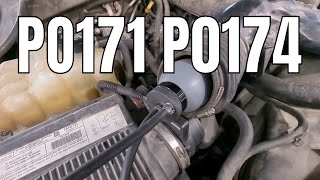
🎬 Watch this diagnostic breakdown of P0101 and lean codes.Diagnostic Flowchart
Tap your situation to follow the diagnostic path that matches what you're seeing on this vehicle.
Symptoms You May Notice
- Check Engine Light is on
- Reduced engine power and poor acceleration
- Engine hesitation or stumbling, especially during acceleration
- Rough idle or stalling when coming to a stop
- Decreased fuel economy
- Black smoke from the exhaust in some cases
- Vehicle may enter a reduced power or 'limp' mode
- Surging while accelerating at part-throttle
- Replacing the MAF sensor when the actual problem is a simple vacuum leak from a cracked intake boot.
- Replacing oxygen (O2) sensors or the throttle body before thoroughly inspecting the air intake system and cleaning the MAF sensor.
- Replacing the fuel pump, as lean conditions can be mistaken for a fuel delivery problem.
Most Likely Causes
- Dirty or Contaminated MAF Sensor 🔴 High Probability The MAF sensor's hot wires are sensitive and can become contaminated with dust, oil vapor from the PCV system, or even small insects and leaves that get past the air filter. This contamination insulates the wire, causing it to under-report airflow. Using over-oiled aftermarket air filters is a frequent cause of contamination.
How to confirm: Remove the sensor and visually inspect the small wires inside for dirt, debris, or an oily film. A video of a GMC Sierra with P0101 showed a bug had gotten into the sensor housing, causing a low g/s reading. Another on a similar GM truck found a leaf lodged inside.
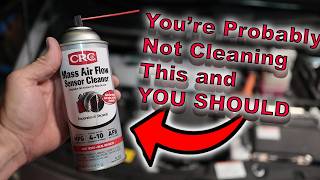
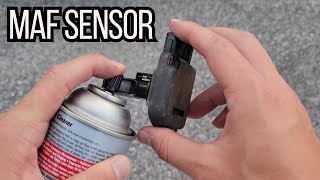
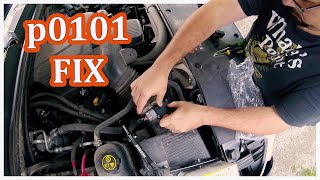
Typical fix: Remove the sensor and clean it thoroughly with a dedicated Mass Airflow Sensor cleaner spray. Do not touch the wires or use aggressive cleaners like brake cleaner. Allow it to dry completely before reinstalling. 🎬 See how to clean or replace your Sierra's MAF sensor.
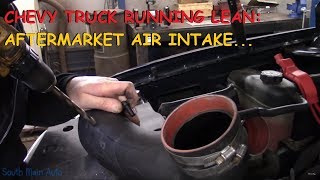
Est. part cost: $10-$15 for cleaner - Vacuum Leak (Unmetered Air) 🔴 High Probability The plastic and rubber components of the air intake system can become brittle with age and heat cycles, leading to cracks. The most common failure point is the large flexible intake duct between the air filter box and the throttle body. These boots are known to tear, especially in the accordion-like flex sections.
How to confirm: Visually inspect the entire air intake path for cracks, tears, or loose connections, paying close attention to the underside of the intake boot. With the engine running, you can spray short bursts of brake cleaner or a propane torch (unlit) around suspected leak areas; a change in engine idle indicates a leak. A professional smoke test is the most definitive method.
Typical fix: Replace the cracked or leaking component, most often the air intake duct (OEM Part Number 25862088 for many V8 models). A temporary repair can be made with high-quality electrical tape.
Est. part cost: $50-$150 for an intake duct - Clogged or Dirty Engine Air Filter 🟡 Medium Probability
How to confirm: Remove and inspect the engine air filter. If it is visibly dirty, clogged with debris, or has collapsed, it is restricting airflow. Also, check that the filter and its housing are seated correctly, as an improper seal can create an unmetered air leak.
Typical fix: Replace the engine air filter with a new, quality filter. Using a standard ACDelco filter is recommended to avoid issues sometimes seen with aftermarket oiled or ill-fitting filters.
Est. part cost: $20-$50 - Failed MAF Sensor ⚪ Low Probability
How to confirm: If the sensor has been cleaned, there are no vacuum leaks, the air filter is clean, and the code returns, the sensor has likely failed electronically. You can confirm this by monitoring its g/s output with a scan tool; if the reading is stuck, erratic, or does not increase smoothly with engine RPM, the sensor is bad. Some owners report issues with non-OEM sensors failing quickly or being inaccurate out of the box.
Typical fix: Replace the Mass Airflow Sensor. It is highly recommended to use an OEM (ACDelco) or high-quality OE-equivalent brand to prevent immediate re-failure. Ensure the arrow on the new sensor is pointing toward the engine upon installation.
Est. part cost: $70-$200
Rare But Worth Checking
- Clogged Catalytic Converter: Specifically noted as a cause on GM trucks. An exhaust restriction prevents air from flowing through the engine correctly, which the MAF sensor interprets as a performance problem. This is usually accompanied by a severe lack of power under load and potentially a P0300 random misfire code or P0420/P0430 catalyst codes.
- Wiring Harness Issue: Less common, but a damaged wire or poor connection in the MAF sensor circuit can cause the code. This could be an open, short, or corrosion in the connector pins. On some GM trucks, wiring harnesses can chafe against engine or chassis components, leading to intermittent shorts.
Diagnosis Steps
- Read all stored trouble codes with an OBD-II scanner. Note any other codes, especially P0171, P0174, or P0300.
- Visually inspect the entire air intake system from the air filter box to the throttle body. Look for cracks in the intake boot (especially on the underside), loose clamps, or disconnected hoses.
- Inspect the engine air filter. Replace if it is dirty or clogged. Ensure the filter housing is properly sealed.
- Carefully remove the MAF sensor (held by two T15 Torx screws). Inspect its sensing elements for any dirt, oil, or debris like bugs or leaves.
- Clean the MAF sensor using only dedicated MAF sensor cleaner spray. Spray the wires and internal components generously but do not touch them. Let it air dry completely before reinstalling.
- Clear the codes and perform a test drive to see if the code returns. Disconnecting the negative battery terminal for a few minutes may also help reset the ECM.
- If the code returns, use a scan tool to monitor the MAF sensor reading in grams per second (g/s) at a fully warmed-up idle with all accessories off. For the V8 engines in these trucks, the reading should be close to the engine's displacement (e.g., ~5.3 g/s for a 5.3L). If the reading is significantly low (e.g., 3-4 g/s), it points towards a persistent sensor issue, a vacuum leak, or an exhaust restriction.
- If a leak is suspected and not visually apparent, perform a smoke test to pinpoint its location.
- If there are no leaks, the g/s reading is still incorrect after cleaning, and the wiring appears intact, the MAF sensor itself has likely failed and should be replaced with a quality part.
Parts You'll Likely Need
- Mass Airflow (MAF) Sensor Cleaner — This is the first and most cost-effective repair attempt, as a dirty sensor is the most common cause of P0101.
Trusted brands: CRC, Liqui Moly
Aftermarket price range: $10-$15 - Mass Airflow (MAF) Sensor
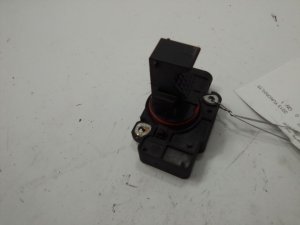
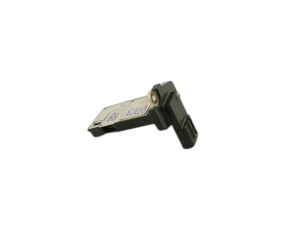
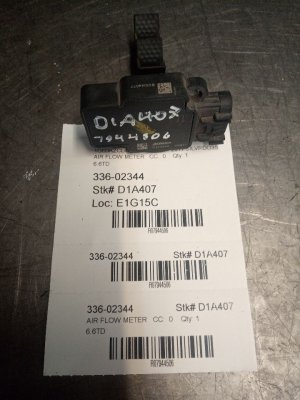
(OEM #15865791 (Also known as ACDelco 213-4222))— If cleaning the sensor and checking for leaks doesn't resolve the code, the sensor itself has likely failed electronically.
Trusted brands: ACDelco, Delphi, Denso
OEM price range: $120-$180
Aftermarket price range: $60-$120 - Engine Air Intake Hose
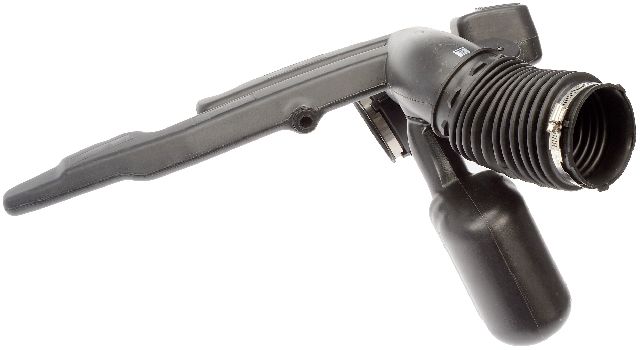
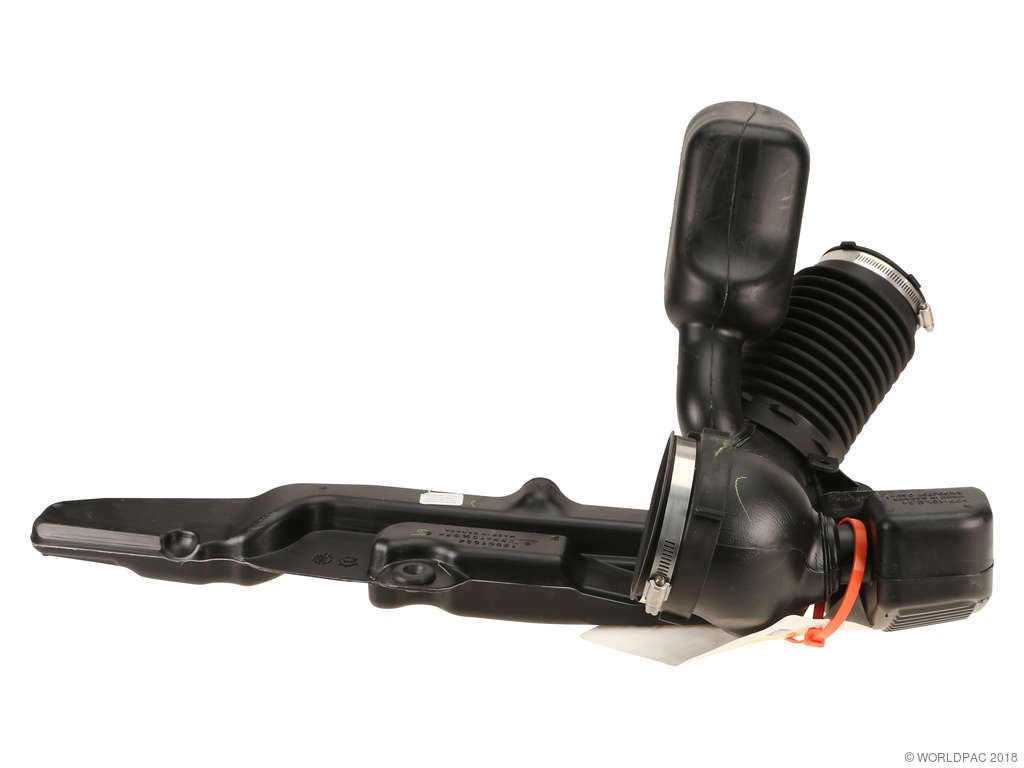
(OEM #25862088 (Verify for specific engine/year))— This flexible duct is the most common source of vacuum leaks that trigger P0101 on these trucks as it cracks with age.
Trusted brands: ACDelco, Dorman
OEM price range: $100-$150
Aftermarket price range: $40-$80
Related Codes That Often Appear With This One
- P0171 / P0174 — These are 'System Too Lean' codes for Bank 1 and Bank 2. They frequently appear with P0101 when the root cause is a vacuum leak, as unmetered air enters the engine after the MAF sensor, creating a lean air/fuel mixture.
- P0300 — This 'Random/Multiple Cylinder Misfire' code can appear if the P0101 is caused by a severely clogged catalytic converter, which creates backpressure and affects all cylinders. It can also be caused by a significant vacuum leak creating a very lean mixture.
Technical Service Bulletins (TSBs) & Recalls
- PIP4932C: A general bulletin that advises technicians to follow standard service information diagnostics for DTC P0101, without pointing to a specific cause. [⭐ MANUFACTURER TSB — highest authority]
- Informational TSB #18-NA-118: While for a different GM vehicle, this TSB details how an improperly installed or warped air cleaner element can create gaps and allow unmetered air into the system, causing P0101. This principle is relevant to the Sierra as a potential cause.
Platform-Specific Known Issues
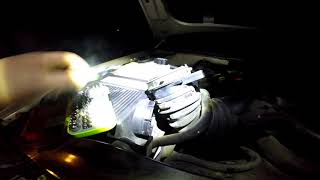
- Debris Inside MAF Sensor Housing: In a well-documented case on a GMC Sierra with a 5.3L engine, a P0101 code accompanied by lean codes P0171/P0174 was caused by a small bug lodged inside the MAF sensor housing. This obstruction caused the idle g/s reading to drop to ~3.5 g/s. After removing the bug and cleaning the sensor, the reading returned to a normal ~5.2 g/s, and the fuel trims immediately began to correct themselves. This highlights how even minor debris bypassing a poorly sealed or damaged air filter can trigger the code.
- Cracked Intake Boot: Owners and technicians frequently report finding cracks and tears in the flexible rubber air intake boot, especially in the accordion ribs. These cracks allow unmetered air to enter the engine, causing the MAF readings to be lower than the actual airflow, which triggers P0101 and lean codes. The cracks are often on the underside and may not be visible without removing or flexing the boot.
Helpful Videos

Used OEM Parts in Stock


New Aftermarket Parts Available


The information in this article is provided for general reference and educational purposes only. Vehicle specifications, procedures, and part compatibility can vary by production date, trim level, and region. Always consult your vehicle's factory service manual and verify part numbers before purchasing or performing repairs. Safety-critical components such as airbags, seat belts, and braking systems should be installed by a qualified professional.
- Gmc SIERRA:
- 🎬 Helpful Videos
- 🛍️ Shop This Part
- What's Unique About the 2007-2011 Gmc SIERRA
- Diagnostic Flowchart
- Symptoms You May Notice
- Most Likely Causes
- Rare But Worth Checking
- Diagnosis Steps
- Parts You'll Likely Need
- Related Codes That Often Appear With This One
- Technical Service Bulletins (TSBs) & Recalls
- Platform-Specific Known Issues
- 🎟️ Get 5% Off