

P0101 on 2014-2021 GMC Sierra 1500: MAF Sensor Performance Causes and Fixes
For a 2014-2021 GMC Sierra, code P0101 most often points to a dirty Mass Air Flow (MAF) sensor, an air leak in the intake system, or manufacturing defects in the air filter housing. Cleaning the sensor with a dedicated cleaner, inspecting the intake tube for cracks or loose connections, and checking for plastic 'casting flash' near the sensor are the most common and cost-effective first steps.
- P0101 on a GMC Sierra indicates the MAF sensor's airflow reading is out of the expected range.
- Before replacing any parts, always clean the MAF sensor with dedicated cleaner and thoroughly inspect the intake system for air leaks.
- For 2014-2017 models, specifically check for plastic 'casting flash' inside the intake tube near the sensor, as this is a known issue covered by a TSB.
- If the sensor must be replaced, using a high-quality OEM or reputable aftermarket brand is recommended to avoid further issues.
- This code is often accompanied by fuel trim codes (P0171, P0174, P0172, P0175), which usually resolve once the root MAF issue is fixed.
What's Unique About the 2014-2021 Gmc SIERRA 1500

For this generation of GMC Sierra, a notable and documented issue is manufacturing defects within the air intake assembly. Technical Service Bulletin (TSB) #PIP5446A specifically calls out "excessive casting flash" (rough plastic bits left from the molding process) inside the air filter housing near the MAF sensor on 2014-2018 models. This defect can disrupt airflow and cause a P0101 code, leading to a misdiagnosis of a faulty sensor. Additionally, TSB #21-NA-149 details multiple locations on 2019-2021 models where the engine wiring harness can chafe against components like the cylinder head or brackets, potentially causing a short or open in the MAF sensor circuit.
Diagnostic Flowchart
Tap your situation to follow the diagnostic path that matches what you're seeing on this vehicle.
Generation note: This year range covers two generations of the GMC Sierra 1500: the third generation (K2XX; 2014-2018) and the fourth generation (T1XX; 2019-2021). While the fundamental causes of P0101 are similar, the specific design of the intake systems, engine options, and wiring harness routing can differ. The casting flash issue noted in TSB #PIP5446A applies to 2014-2018 models. The wiring harness chafing issues detailed in TSB #21-NA-149 are more specific to the 2019-2021 T1XX platform. The MAF sensor part number for many 2014-2019/2020 models is GM Genuine Part #23262343.
Symptoms You May Notice
- Check Engine Light is on
- Rough or unstable idle
- Engine hesitation, sputtering, or surging, especially on light acceleration.
- Harsh shifting between gears.
- Reduced engine power or entering 'limp mode'.
- Poor fuel economy.
- Difficulty starting the engine
- Black smoke from the tailpipe
- Hissing noise from the engine bay, indicating a vacuum leak.
- Replacing the MAF sensor when the actual problem is a vacuum leak, a dirty sensor, or casting flash in the intake tube.
- Replacing the throttle body or oxygen sensors before properly diagnosing the air intake system.
- Blaming an aftermarket cold air intake system without checking for leaks or MAF contamination from an over-oiled filter.
Most Likely Causes

- Dirty or Contaminated MAF Sensor 🔴 High Probability Oiled aftermarket air filters (like K&N) are a frequent cause of contamination, as excess oil can coat the sensor's delicate hot wire. Fine dust and debris can also accumulate over time, causing inaccurate readings.
How to confirm: Remove the MAF sensor and visually inspect the small wires inside the housing. If they appear coated in grime, oil, or even small debris like a bug, they need cleaning. A scan tool may show g/s readings that are lower than expected at idle (e.g., under 5 g/s for a 5.3L V8).
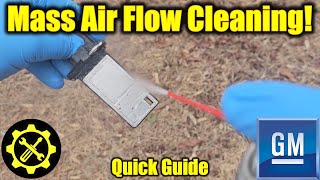
Typical fix: Clean the sensor using only dedicated Mass Air Flow sensor cleaner spray. Do not use brake or carburetor cleaner, as they can damage the sensor's plastics and electronics. Allow it to air dry completely before reinstalling.
Est. part cost: $10-$15 for cleaner - Air Leak in the Intake System 🟡 Medium Probability The large plastic and rubber intake ducting can crack from age and heat cycles, or clamps can loosen, allowing unmetered air to enter the engine after the MAF sensor. This throws off the air-fuel ratio and triggers the code.
How to confirm: Visually inspect the entire air intake path from the air filter box to the throttle body for cracks, loose connections, or deteriorated gaskets. A common failure point is the flexible boot. A smoke test is the most effective professional method to find hidden leaks. A DIY method is to listen for hissing sounds with the engine running.
Typical fix: Tighten loose clamps or replace the cracked or damaged intake boot or gaskets. A temporary fix for a crack can be made with high-quality tape until the part is replaced.
Est. part cost: $50-$150 for a new intake boot - Casting Flash in Air Filter Housing 🟡 Medium Probability TSB #PIP5446A specifically identifies excessive plastic casting flash near the MAF sensor on 2014-2018 models as a cause for P0101 and other drivability issues like harsh shifting. This manufacturing flaw creates turbulence in the airflow across the sensor.
How to confirm: Remove the MAF sensor and inspect the inside of the air filter housing/intake tube. Look for any rough, excess plastic molding artifacts that could disrupt airflow.
Typical fix: The official GM recommendation is to replace the air filter housing lid and inspect the new part for the same defect before installation. Some owners have reported carefully removing the flashing with a deburring tool or small knife.
Est. part cost: $75-$200 for a new air filter housing lid - Faulty MAF Sensor ⚪ Low Probability While less common than a dirty sensor, the electronic components of the MAF sensor can fail internally over time, providing erratic or no signal.
How to confirm: After confirming no leaks, no casting flash, and that cleaning did not work, monitor the MAF sensor's output (in grams/second) with a scan tool. The reading should be stable and roughly match the engine's displacement in liters at a warm idle (e.g., a 5.3L engine should read around 5.3 g/s). The reading should increase smoothly and quickly with engine RPM. If the reading is stuck, erratic, or does not change, the sensor is likely bad.
Typical fix: Replace the Mass Air Flow sensor. Using an OEM brand like ACDelco or a trusted OE supplier like Delphi is highly recommended to avoid compatibility issues. Ensure the arrow on the new sensor points toward the engine.
Est. part cost: $60-$150
Rare But Worth Checking
- Clogged or Restrictive Air Filter: A severely clogged or improper aftermarket air filter (especially non-ACDelco brands) can restrict airflow enough to cause the MAF reading to be lower than expected, triggering a P0101 code. In one documented case, a K&N filter that appeared clean was restricting flow enough to cause the code.
- Wiring Harness Issues: As noted in TSB #21-NA-149 for 2019-2021 models, the engine wiring harness can chafe against the cylinder head, brackets, or shock tower, potentially causing a short or open in the MAF sensor circuit. This would typically present with other electrical DTCs as well. A broken wire in the harness near the connector can also be a cause.
- Clogged Catalytic Converter: A restricted exhaust can cause excessive backpressure, which affects the engine's ability to draw in air, throwing off the MAF sensor's expected readings. This is more likely on higher-mileage vehicles and is often accompanied by other codes (like P0420) and a significant loss of power.
- Faulty EGR Valve: In some cases, particularly on diesel models but possible on gas engines, an EGR valve stuck open can alter the air mixture entering the cylinders, causing the MAF reading to be out of the expected range and setting a P0101. One owner on a forum traced an intermittent P0101 to a faulty EGR valve that wasn't seating properly.
Diagnosis Steps

- Read all stored trouble codes with an OBD-II scanner. Note any other codes that appear with P0101, especially lean/rich codes (P0171, P0174, P0172, P0175). 🎬 See how to diagnose P0101 alongside lean bank codes.
- Visually inspect the entire air intake system, from the air filter box to the throttle body. Look for obvious cracks in the rubber boots, loose clamps, or disconnected hoses.
- Check the engine air filter. If it is excessively dirty, clogged, or a non-OEM brand known to cause issues (e.g., an over-oiled reusable filter), replace it with a stock ACDelco filter.
- Unplug and remove the MAF sensor. It is typically located on the intake tube right after the air filter box, held by two T15 Torx screws.
- Inspect the inside of the sensor for debris or contamination on the hot wires. Also, inspect the intake tube itself for the 'casting flash' mentioned in TSB #PIP5446A, especially on 2014-2018 models.
- If the sensor is dirty, clean it using only a dedicated MAF sensor cleaner spray. Spray the wires and let it air dry completely before reinstalling.
- If the code returns, use a scan tool to monitor live data. With the engine warm and at idle, the MAF sensor reading in grams per second (g/s) should be stable and approximately equal to the engine displacement in liters (e.g., 5.3L engine ≈ 5.3 g/s).
- If the g/s reading is low at idle and you have lean codes (P0171/P0174), suspect a vacuum leak. Perform a smoke test on the intake system to pinpoint its location.
- Inspect the wiring and connector for the MAF sensor. Check for chafing, breaks, or corrosion, paying attention to the areas mentioned in TSB #21-NA-149 for 2019+ models.
- If all other steps fail, test the MAF sensor circuit for proper voltage and ground. A faulty ground connection can cause erratic sensor readings.
Parts You'll Likely Need

- Mass Air Flow (MAF) Sensor
(OEM #23256991)— This sensor is the primary component related to the code. It is often replaced after cleaning fails to solve the problem, or if it fails electronically. Note: This part may be discontinued, with Delphi being a recommended OE alternative.
Trusted brands: ACDelco, Delphi, Hitachi, Denso
OEM price range: $90-$150
Aftermarket price range: $50-$100 - MAF Sensor Cleaner — Often, the sensor is just dirty and does not need to be replaced. This is the first and most cost-effective fix to attempt.
Trusted brands: CRC, WD-40 Specialist
Aftermarket price range: $10-$15 - Air Intake Duct Hose — Cracks in this hose are a common source of vacuum leaks that trigger P0101. It should be replaced if any damage is found during inspection.
Trusted brands: GM Genuine Parts, Dorman
OEM price range: $70-$120
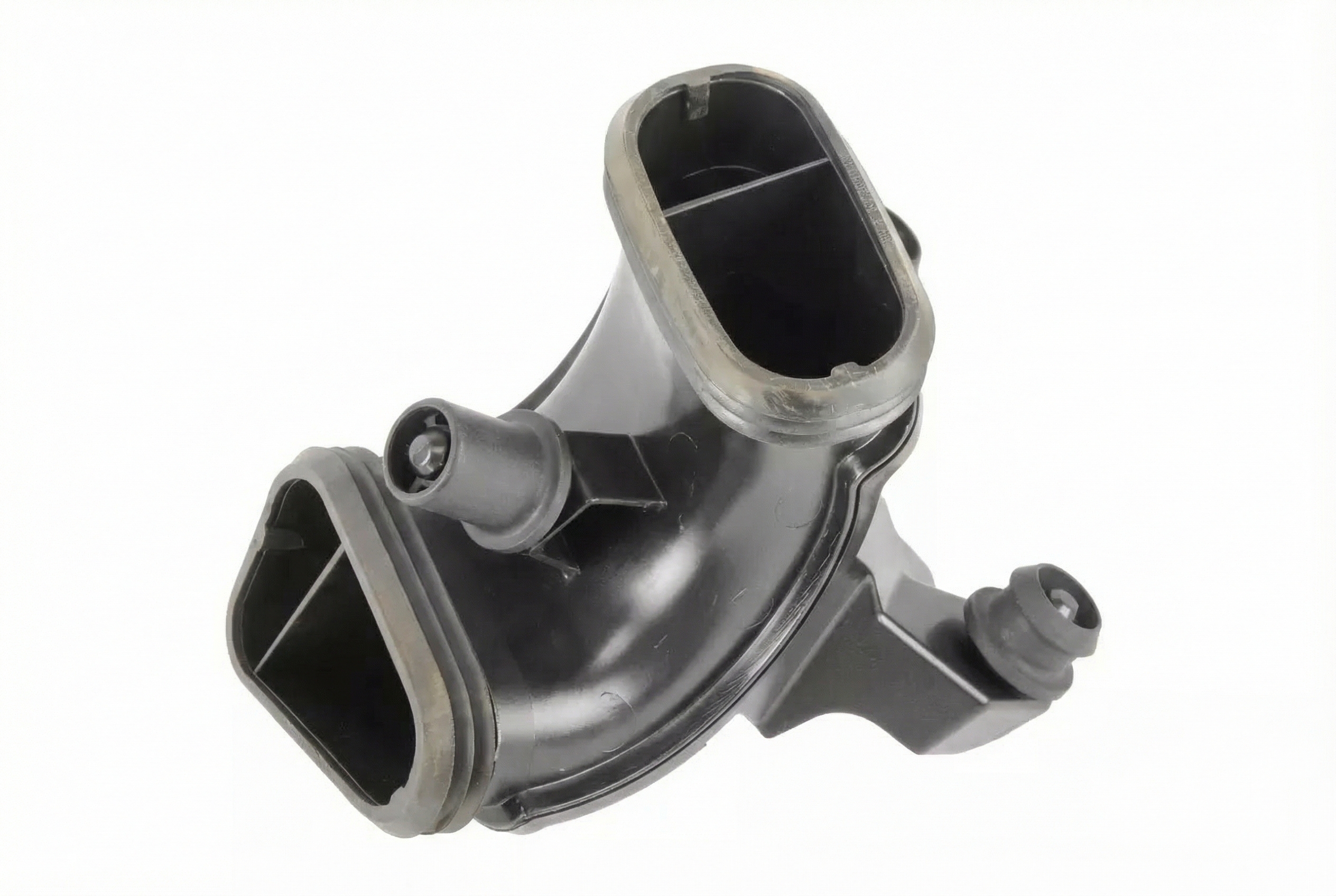
Aftermarket price range: $40-$80 - Air Cleaner Housing Cover — Required fix for the 'casting flash' issue identified in TSB PIP5446A for 2014-2018 models if the defect is present.
Trusted brands: GM Genuine Parts
OEM price range: $75-$200
Related Codes That Often Appear With This One
- P0171 — System Too Lean (Bank 1) - An air leak after the MAF sensor allows unmetered air in, causing a lean condition. This is very commonly paired with P0101.
- P0174 — System Too Lean (Bank 2) - Same reason as P0171, an air leak affects both cylinder banks.
- P0172 — System Too Rich (Bank 1) - A faulty MAF sensor that over-reports airflow can cause the PCM to inject too much fuel.
- P0175 — System Too Rich (Bank 2) - Same reason as P0172, affecting both cylinder banks.
Technical Service Bulletins (TSBs) & Recalls
- 21NA032: Mentions P0101 and a related code (P1682) that can appear after MAF sensor replacement.
- PIP5446A: Details the specific issue of casting flash in the air filter housing causing P0101 and other symptoms on 2014-2017 models.
- PIP5468F: Lists P0101 among many other potential DTCs related to a check engine light.
- PIP4932D: A general bulletin about diagnosing P0101, advising technicians to follow standard service information.
Platform-Specific Known Issues
- Real-World Repair: The Bug in the Sensor: In a diagnostic video for a GMC Sierra with P0101 and lean codes, the technician found the MAF was reading a very low 3 g/s at idle. Upon inspection, a small bug was found inside the MAF sensor housing. After cleaning the bug out, the g/s reading returned to a normal level above 5 g/s and the fuel trims corrected, fixing the issue without replacing any parts.
- Real-World Repair: Loose Intake Bolt: A YouTube video on a Silverado with a 4.3L V6 showed a P0101 code with fuel trims maxed out at +25%, indicating a massive vacuum leak. The technician heard a hissing noise and discovered a loose bolt where the intake tube meets the intake manifold. The weight of the air filter assembly was causing the seal to break. Lifting the assembly stopped the leak. Tightening the connection resolved the code.
- TSB #21NA032: Code Set After MAF Replacement: This TSB addresses a specific scenario where a P0101 code, sometimes accompanied by a P1682, appears immediately after replacing the MAF sensor. This indicates a potential issue with the PCM's learned values or compatibility with the new sensor, and may require a specific relearn procedure or software update.
Mechanic-Grade Diagnostic Values

- MAF Sensor Reading (g/s) at warm idle — expected: Approximately equal to engine displacement in liters (e.g., a 5.3L engine should be ~5.3 g/s).. Failure: A reading significantly lower than displacement (e.g., 3-4 g/s on a 5.3L) paired with high positive fuel trims suggests unmetered air (vacuum leak). A reading that is stuck or doesn't increase with RPM suggests a failed sensor.
- MAF Sensor Signal Voltage at idle — expected: ~0.5V to 1.5V. Failure: Voltage outside this range, or not increasing smoothly with RPM, indicates a problem.
- MAF Sensor Signal Voltage at 3000 RPM — expected: ~2.0V to 2.5V. Failure: Voltage significantly lower or higher suggests a sensor or wiring issue.
- Long-Term Fuel Trims (LTFT) with P0101 — expected: Close to 0% (+/- 10%). Failure: High positive values (e.g., +25% or higher) on both banks strongly suggest a vacuum leak or a MAF sensor that is under-reporting airflow.
Wiring & Ground Locations
- G101 — Located at the front of the engine, on the lower block.. This is a primary ground point for the Engine Control Module (ECM) and the Mass Air Flow (MAF) Sensor. A poor connection here can cause erratic sensor readings and trigger a P0101.
- G102 / G103 — Located on the rear of the cylinder heads (firewall side).. These are critical engine-to-chassis grounds. Corrosion or looseness at these points can cause a host of electrical issues, including problems with sensor readings that rely on a stable ground reference.
- MAF Sensor Connector — On the MAF sensor, located in the intake tube just after the air filter box.. The 5-pin connector provides power, ground, and signal lines. Pin 5 (often a Brown/Blue wire) is the signal wire to the ECU. Pin 3 (often Brown) is the ground. Testing for voltage and continuity at these pins is a key diagnostic step.
Real Owner Repair Stories
- GM-Trucks.com forum user (2016 GMC Sierra 5.3L) — P0101 and P0171 codes, rough idle, stalling.
❌ Tried (didn't work) Cleaned MAF sensor, Replaced MAF sensor with a new ACDelco part, Smoke tested the intake twice (no leaks found), Cleaned throttle body, Replaced spark plugs
✅ What actually fixed it The user had installed an aftermarket oil catch can. The PCV hose connected to the catch can had collapsed internally, creating a massive unmetered air leak that the smoke test did not reveal. Replacing the collapsed hose and removing the catch can resolved the codes permanently.
"I Checked Everything" — The Actual Cause
- In a documented forum case, a 2016 Sierra repeatedly threw P0101 and P0171 codes despite passing multiple smoke tests. The root cause was found to be a collapsed internal hose related to an aftermarket oil catch can installation, which created a vacuum leak under engine load that a static smoke test couldn't detect.
OEM Part Supersession History
Varies by early production→23262343— Standardized part for multiple GM platforms.
Heads up: This part number (ACDelco 23262343 or GM 23262343) fits a wide range of 2014-2019/2020 GM trucks and SUVs with 5.3L, 6.2L, and 6.0L engines, but it is critical to verify by VIN as it will not fit the newer L84/L87 engines introduced around 2019-2020.
Model Year Variations Within This Range
- 2014-2018 (K2XX Platform): These models are specifically called out in TSB #PIP5446A for having potential 'casting flash' in the air intake housing, which can cause P0101. This is less of a documented issue on the 2019+ T1XX platform.
- 2019-2021 (T1XX Platform): These models are subject to TSB #21-NA-149, which details potential wiring harness chafing issues near the cylinder head and shock tower that can cause MAF circuit faults. The harness routing is different from the previous generation.
Helpful Videos


We Have This Part in Stock



The information in this article is provided for general reference and educational purposes only. Vehicle specifications, procedures, and part compatibility can vary by production date, trim level, and region. Always consult your vehicle's factory service manual and verify part numbers before purchasing or performing repairs. Safety-critical components such as airbags, seat belts, and braking systems should be installed by a qualified professional.
- Gmc SIERRA 1500:
- 🎬 Helpful Videos
- 🛍️ Shop This Part
- What's Unique About the 2014-2021 Gmc SIERRA 1500
- Diagnostic Flowchart
- Symptoms You May Notice
- Most Likely Causes
- Rare But Worth Checking
- Diagnosis Steps
- Parts You'll Likely Need
- Related Codes That Often Appear With This One
- Technical Service Bulletins (TSBs) & Recalls
- Platform-Specific Known Issues
- Mechanic-Grade Diagnostic Values
- Wiring & Ground Locations
- Real Owner Repair Stories
- "I Checked Everything" — The Actual Cause
- OEM Part Supersession History
- Model Year Variations Within This Range
- 🎟️ Get 5% Off