

P0101 on 2013-2019 Ford Escape: MAF Sensor Causes and Fixes
On a 2013-2019 Ford Escape, code P0101 is most often caused by a dirty Mass Airflow (MAF) sensor. The fix is frequently as simple as cleaning the sensor with a dedicated MAF cleaner spray, which costs about $15. Before replacing the sensor, always check for a dirty air filter and cracks in the air intake hose, as unmetered air is a very common cause.
- Always try cleaning the MAF sensor with a dedicated cleaner before considering replacement. This is the most common fix.
- Thoroughly inspect the air intake hose between the air filter box and the engine for any cracks or loose connections, as this is a frequent cause of P0101.
- Ensure the engine air filter is clean; a clogged filter can trigger this code.
- If the code is accompanied by P0171 (System Too Lean), you almost certainly have a vacuum leak.
- Do not use an excessively oiled aftermarket air filter, as the oil can contaminate and damage the MAF sensor.
What's Unique About the 2013-2019 Ford Escape

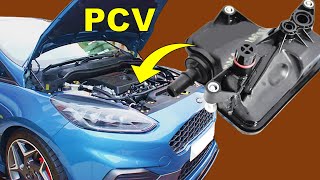
The 2013-2019 Escape was offered with several four-cylinder engines, including the naturally aspirated 2.5L and three different EcoBoost (turbocharged) options. While P0101 can affect any of them, the EcoBoost engines' Positive Crankcase Ventilation (PCV) systems can sometimes allow oil vapor back into the air intake. This vapor can contaminate the MAF sensor's delicate wire, leading to inaccurate readings and triggering the code. This is a known issue across Ford's EcoBoost lineup. Additionally, the complex plumbing of a turbocharged intake system provides more potential locations for air leaks that can also cause this code.
Symptoms You May Notice
- Check Engine Light is on
- Rough or unstable idle
- Hesitation or stumbling during acceleration
- Reduced engine power
- Decreased fuel economy
- Black smoke from the exhaust
- Engine stalling, especially when coming to a stop
- Hissing or whistling sound from the engine bay, especially during acceleration
- Replacing the MAF sensor without first attempting to clean it.
- Replacing the MAF sensor when the actual problem is a vacuum leak downstream in the intake system.
- Replacing O2 sensors for lean/rich codes (P0171/P0172) when the root cause is the P0101 fault.
Most Likely Causes


- Dirty or Contaminated MAF Sensor 🔴 High Probability Oil vapors from the PCV system, especially on EcoBoost engines, can coat the sensor element. Using an over-oiled aftermarket air filter can also cause contamination.
How to confirm: Visually inspect the MAF sensor's wire elements (located inside the sensor housing) for dirt, oil, or debris. The wires should be clean.
Typical fix: Remove the sensor and clean it carefully using only a dedicated Mass Airflow Sensor cleaner spray. Do not touch the wires or use harsh chemicals like brake cleaner.
Est. part cost: $10-$20 for cleaner spray - Vacuum Leak / Cracked Intake Air Duct 🟡 Medium Probability The plastic and rubber components of the air intake system can become brittle and crack over time with heat and age, allowing unmetered air to enter the engine after the MAF sensor.
How to confirm: Visually inspect the entire air intake path from the air filter box to the throttle body for cracks, loose clamps, or disconnected hoses. Listen for a hissing sound with the engine running. A professional smoke test is the most definitive way to find a leak.
Typical fix: Replace the cracked intake duct or repair the source of the vacuum leak.
Est. part cost: $50-$150 for a new intake duct - Dirty or Clogged Air Filter 🟡 Medium Probability A neglected air filter restricts airflow, causing the MAF sensor's readings to be lower than expected for a given engine load, which the PCM can interpret as a performance issue.
How to confirm: Remove and visually inspect the engine air filter. If it is dark, full of debris, or has not been changed in over 15,000 miles, it should be replaced.
Typical fix: Replace the engine air filter.
Est. part cost: $20-$40 - Faulty MAF Sensor ⚪ Low Probability
How to confirm: After confirming there are no leaks, the sensor is clean, and the wiring is intact, the sensor itself may be faulty. This is typically diagnosed by exclusion or by monitoring its live data with an advanced scan tool.
Typical fix: Replace the MAF sensor.
Est. part cost: $70-$200
Rare But Worth Checking
- Clogged Catalytic Converter: A restricted exhaust creates backpressure, which can throw off the air-to-fuel calculations and cause the MAF readings to seem irrational to the PCM. This is usually accompanied by a significant loss of power and may trigger other codes.
- Wiring or Connector Issue: A damaged wire or corroded electrical connector for the MAF sensor can cause an intermittent or incorrect signal, triggering P0101. Wiggling the connector while the engine is running may reveal a loose connection.
Diagnosis Steps

- Check for any other stored trouble codes with an OBD-II scanner. Codes like P0171/P0174 strongly suggest a vacuum leak.
- Visually inspect the entire air intake system, from the air filter box to the throttle body. Look for any cracks in the plastic ducting, loose clamps, or disconnected hoses. Listen for hissing noises.
- Remove and inspect the engine air filter. Replace it if it is dirty or clogged.
- Carefully remove the MAF sensor. Inspect the sensor element for any visible dirt, debris, or oil film.
- If dirty, clean the MAF sensor using only dedicated MAF sensor cleaner. Allow it to dry completely before reinstalling.
- Inspect the MAF sensor's electrical connector and wiring for any signs of damage, corrosion, or looseness. Ensure it 'clicks' into place.
- Clear the trouble codes, drive the vehicle, and see if the code returns. If it does, the next step is to check for vacuum leaks.
- Perform a smoke test on the intake system to definitively identify any hard-to-see leaks.
- If all other possibilities are ruled out, the MAF sensor itself may have failed and requires replacement.
Parts You'll Likely Need

- Mass Airflow Sensor Cleaner — This is the most common and cheapest first step, as a dirty sensor is the leading cause of P0101.
Trusted brands: CRC, Liqui Moly
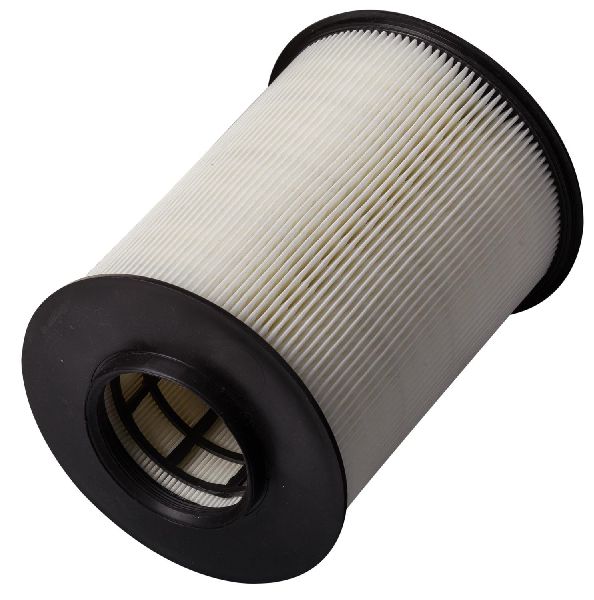
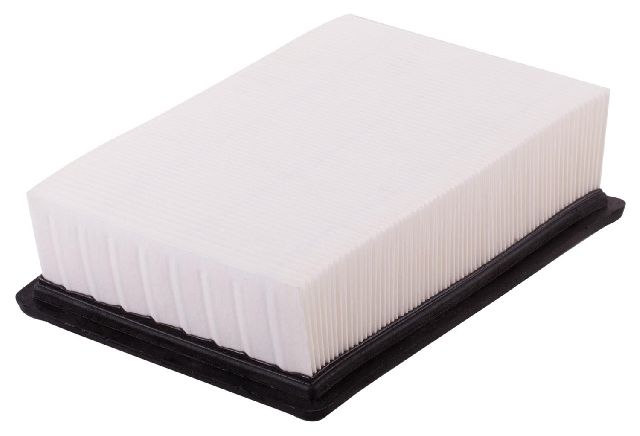
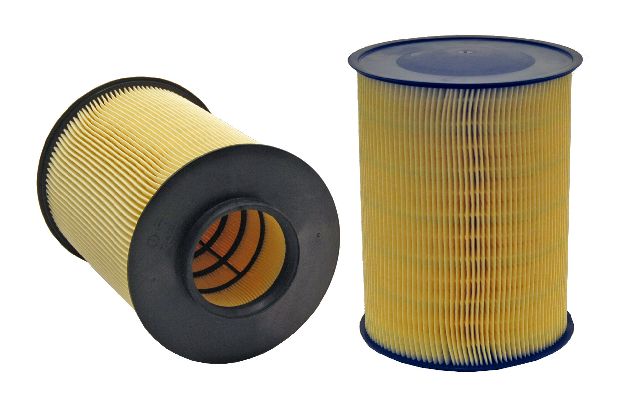
Aftermarket price range: $10-$20 - Engine Air Filter — A clogged filter restricts airflow and can cause this code. It's a routine maintenance item that is often overlooked.
Trusted brands: Motorcraft, Bosch, WIX
OEM price range: $25-$40
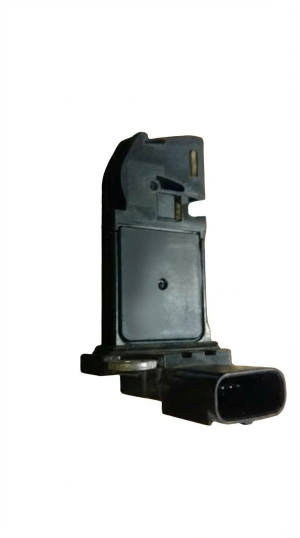
Aftermarket price range: $15-$30 - Mass Airflow (MAF) Sensor
(OEM #Motorcraft AFLS-196 (for 2.5L) or Motorcraft CX-2493 (for 1.5L/2.0L EcoBoost). Verify by VIN.)— If cleaning the sensor and checking for leaks doesn't solve the issue, the sensor itself may have failed.
Trusted brands: Motorcraft, Bosch, Denso, Hitachi
OEM price range: $125-$250
Aftermarket price range: $70-$150
Related Codes That Often Appear With This One
- P0171 / P0174 — These 'System Too Lean' codes often appear with P0101 if there is a vacuum leak. Unmetered air enters the engine after the MAF sensor, causing the engine to run lean.
- P0172 / P0175 — These 'System Too Rich' codes can appear if the MAF sensor is dirty and under-reporting airflow. The PCM injects what it thinks is the correct amount of fuel, but since there is actually more air, the mixture becomes rich.
Technical Service Bulletins (TSBs) & Recalls
- While no TSB directly addresses P0101 on this platform, related TSBs for other models highlight common root causes. For example, TSB 20-2207 for the F-150 2.7L EcoBoost discusses oil leaks contaminating the intake system, a known issue that also affects the Escape's EcoBoost engines and can lead to P0101.
Platform-Specific Known Issues
- PCV Oil Contamination on EcoBoost Engines: The PCV system on the 1.5L, 1.6L, and 2.0L EcoBoost engines is known to allow oil vapor into the intake tract. This oil coats the MAF sensor, causing P0101. Some owners on forums for related vehicles like the F-150 install an aftermarket oil catch can to mitigate this.
- Cracked Air Intake Hose: Owners on forums like fordescape.org and Reddit's /r/MechanicAdvice frequently report finding cracks in the flexible rubber intake hose between the air filter box and the throttle body. This is a very common source of vacuum leaks that trigger P0101 and lean codes (P0171/P0174).
Mechanic-Grade Diagnostic Values
- MAF Live Data (g/s) at idle — expected: Approximately 1 gram/second per liter of engine displacement (e.g., a 2.0L engine should be around 2.0 g/s at hot idle). General range is 2-7 g/s.. Failure: Reading is excessively high (e.g., 17 g/s on a 4.0L) or low at idle, or does not increase smoothly when the engine is revved.
- MAF Sensor Power Supply Voltage — expected: 12 Volts (battery voltage) at the power pin with key on, engine off (KOEO).. Failure: No voltage or significantly low voltage indicates a wiring or fuse issue before the sensor.
- MAF Sensor Ground Circuit — expected: Near 0 Volts on the ground pin(s) when tested.. Failure: Voltage present on the ground wire indicates a bad ground connection, which can cause erratic sensor readings.
- MAF Signal Voltage (at idle) — expected: Should be a steady, low voltage at idle (e.g., ~0.7-1.0V). This voltage should rise smoothly and proportionally with engine RPM, without spikes or dropouts.. Failure: Voltage is erratic, does not change with RPM, or is stuck high/low.
Scan Tool Commands That Help
- Ford IDS / FORScan: Live Data Graphing (MAF_V, MAF_GS) — This is the most critical diagnostic step. Graphing the MAF sensor voltage and grams/second reading while performing a slow throttle sweep from idle to ~2500 RPM can reveal dropouts, spikes, or a non-linear response that a simple numeric reading would miss. A smooth, consistent curve is expected.
- Ford IDS / FORScan: Clear KAM (Keep Alive Memory) — After cleaning or replacing the MAF sensor, clearing the KAM is recommended. This forces the PCM to erase its learned fuel trim and airflow adaptations and start fresh with the new/clean sensor data, which can resolve performance issues faster than waiting for the system to re-adapt on its own.
Wiring & Ground Locations
- MAF Sensor Connector — Located in the air intake duct, immediately after the air filter housing.. This is the primary point of failure for wiring issues. The connector pins can corrode or wires can break, causing a loss of power, ground, or signal. The connector on this platform is a 4-pin type.
- MAF Connector Pinout (Typical 4-wire Ford) — On the harness-side connector for the MAF sensor.. Knowing the pin functions is required for electrical testing. A typical layout is: Pin A: 12V Power, Pin B: Chassis Ground, Pin C: PCM Ground, Pin D: Signal Output. However, a wiring diagram for the specific year/engine should always be consulted for confirmation.
- Primary Engine/Chassis Ground — There are key grounding points under the battery tray and air box. Another accessible ground point for testing is the strut tower bolt or a dedicated ground post on the chassis near the battery.. A poor engine or chassis ground can cause a voltage differential, leading to noisy or incorrect readings from multiple sensors, including the MAF.
Real Owner Repair Stories
- Cobalt SS Network Forum User (LNF Engine (similar turbocharged direct-injection architecture to EcoBoost)) — Persistent P0101 code for 9 months.
❌ Tried (didn't work) Multiple boost leak tests (all passed), Replaced MAF sensor, Replaced MAP sensors and re-soldered wires, Replaced wastegate solenoid, Replaced bypass valve solenoid, Replaced throttle body, Replaced front O2 sensor
✅ What actually fixed it Replacing a faulty EVAP Purge Solenoid. Even though it seemed to pass a vacuum test, it was leaking unmetered fuel vapors into the intake manifold, skewing the air/fuel calculations and triggering the P0101 code.
"I Checked Everything" — The Actual Cause
- A faulty EVAP (Evaporative Emission) purge solenoid/valve can cause a P0101 code even if a smoke test on the intake system comes back clean. If the valve sticks open, it allows unmetered fuel vapor from the charcoal canister to be drawn into the intake manifold. The PCM does not account for this extra 'air' (vapor), causing the MAF sensor's reading to appear incorrect relative to the resulting oxygen sensor feedback, which triggers the P0101.
Model Year Variations Within This Range
- 2013-2016 vs 2017-2019: The 2017 model year marked a significant refresh for the Escape. The 1.6L EcoBoost engine was replaced with a new 1.5L EcoBoost engine. The 2.0L EcoBoost was also revised. While they use a similar MAF sensor design (Motorcraft CX-2493), the engine tuning and software are different, which could affect diagnostic thresholds.
Diagnostic Flowchart
Other Known Issues on This Vehicle
Issues unrelated to this code that are worth knowing about as an owner of this generation:
- 1.5L/1.6L EcoBoost Coolant Intrusion 🔴 High — Common issue where the engine block cracks between cylinders, allowing coolant to leak into the combustion chamber. Often presents as unexplained coolant loss and white exhaust smoke. (Ref: TSB 20-2100, TSB 19-2346, Customer Satisfaction Program 21N12.)
- 6F35 Transmission Failure 🔴 High — Widespread problems with the 6-speed automatic transmission, including shuddering, harsh shifts, slipping, and complete failure, sometimes before 100,000 miles. (Ref: Multiple lawsuits have been filed regarding this issue, though no universal recall has been issued.)
- 1.6L EcoBoost Engine Fire Hazard 🔴 High — Subject to multiple recalls for conditions that could lead to engine fires, including cracked cylinder heads and leaking fuel lines. (Ref: Recalls 13S12, 12V431000.)
- Faulty EVAP Purge Valve 🟠 Medium — The EVAP purge valve can stick open, causing rough idle, stalling after refueling, and triggering various trouble codes, sometimes including P0101-related lean conditions.
Used vs. New Parts: Buying Guide for This Vehicle
When a used part is the smart pick: A used OEM (Motorcraft) MAF sensor from a low-mileage donor vehicle can be a cost-effective alternative to a new aftermarket part. Given that the part is purely electronic with no moving parts, failure is often due to contamination or electronic failure, not mechanical wear. A used air intake hose is also a good option if it is pliable and free of cracks.
Donor-vehicle mileage cap: roughly under 60000 miles for the part to have meaningful remaining life.
What to inspect on the donor part:
- For a MAF sensor, ensure the donor vehicle was not in a front-end collision that could have shocked the electronics.
- Check the sensor's internal wires for any signs of physical damage or oil contamination.
- For an intake hose, squeeze the rubber/plastic to ensure it's still flexible and not brittle or hardened.
- Inspect the hose thoroughly for any hairline cracks, especially in the ribbed, flexible sections.
OEM-only on this vehicle (don't cheap out):
- While not strictly required, using an OEM Motorcraft MAF sensor is highly recommended. The sensor's calibration is critical, and some aftermarket sensors may not perform within the tight tolerances expected by the Ford PCM, leading to persistent or new codes.
Aftermarket brands forum-validated for this vehicle:
- Hitachi (often the original OEM supplier)
- Delphi
- Bosch
- NTK
Brands owners have reported issues with on this vehicle:
- Be cautious with unbranded, white-box parts or remanufactured units from lesser-known brands like Cardone, as their quality and long-term reliability can be inconsistent for sensitive electronics.
Real Owner Stories
Aggregated from forums and TSBs cited above. Mileages and costs reflect what owners reported in those sources.
2017 Ford Escape
Symptoms: Check engine light with P0101 code.
What fixed it: Cleaning or replacing the Mass Air Flow sensor.
Source hint: Reddit r/MechanicAdvice thread titled '2017 Ford Escape P0101 Mass Air Flow Sensor'
Ford Escape EcoBoost
Symptoms: P0101 code and rough idle.
What fixed it: The owner resolved the issue, often involving cleaning the sensor or addressing intake leaks.
Source hint: fordescape.org thread titled 'p0101-code-and-rough-idle-solved.118765/'
Ford Escape (EcoBoost 1.5L/1.6L/2.0L)
Symptoms: Oil coating the MAF sensor causing P0101.
What fixed it: Some owners install an aftermarket oil catch can to mitigate oil vapor from the PCV system coating the sensor.
Source hint: Vehicle-specific issues: PCV Oil Contamination on EcoBoost Engines
Related OBD-II Codes
Frequently Asked Questions
Can I use any cleaner to fix the P0101 code on my Ford Escape?
Is there a TSB for P0101 related to oil contamination on the EcoBoost engines?
Why is my EcoBoost engine more prone to P0101 than the 2.5L Duratec?
Could a rough idle and P0101 be caused by the EVAP system?
I have a P0101 and a hissing sound during acceleration; what should I check?
Will an aftermarket air filter cause this code?
Helpful Videos


Used OEM Parts in Stock
New Aftermarket Parts Available



The information in this article is provided for general reference and educational purposes only. Vehicle specifications, procedures, and part compatibility can vary by production date, trim level, and region. Always consult your vehicle's factory service manual and verify part numbers before purchasing or performing repairs. Safety-critical components such as airbags, seat belts, and braking systems should be installed by a qualified professional.
- Ford Escape:
- 🎬 Helpful Videos
- 🛍️ Shop This Part
- What's Unique About the 2013-2019 Ford Escape
- Symptoms You May Notice
- Most Likely Causes
- Rare But Worth Checking
- Diagnosis Steps
- Parts You'll Likely Need
- Related Codes That Often Appear With This One
- Technical Service Bulletins (TSBs) & Recalls
- Platform-Specific Known Issues
- Mechanic-Grade Diagnostic Values
- Scan Tool Commands That Help
- Wiring & Ground Locations
- Real Owner Repair Stories
- "I Checked Everything" — The Actual Cause
- Model Year Variations Within This Range
- Diagnostic Flowchart
- Other Known Issues on This Vehicle
- Used vs. New Parts: Buying Guide for This Vehicle
- Real Owner Stories
- 2017 Ford Escape
- Ford Escape EcoBoost
- Ford Escape (EcoBoost 1.5L/1.6L/2.0L)
- Related OBD-II Codes
- Frequently Asked Questions
- 🎟️ Get 5% Off