

P0101 on 2016 Chrysler 200: MAF Sensor Causes and Fixes
For a 2016 Chrysler 200 with the 2.4L engine, code P0101 is often caused by a dirty MAF sensor, a wiring issue, or the need for a PCM software update. Cleaning the sensor is a common first step, but check for TSBs related to PCM updates before replacing parts. A significant number of these issues are resolved by a dealer software flash, as indicated by TSB #18-051-16 REV. B.
- This code only applies to the 2.4L engine, and you must first confirm your specific vehicle has a MAF sensor.
- The most common and easiest first step is to clean the MAF sensor with dedicated cleaner.
- Check for Chrysler TSBs related to PCM updates, as a software flash might be the true fix, especially if other codes are present.
- Before replacing the sensor, thoroughly inspect for vacuum leaks and check for known wiring issues like the SK900A splice.
- Do not assume the MAF sensor is bad; it is often the victim of another problem.
What's Unique About the 2016-2016 Chrysler 200
The 2016 Chrysler 200 was available with two engines. The 3.6L V6 does not use a MAF sensor, relying on a MAP sensor instead. This code is specific to the 2.4L I4 MultiAir engine. A key issue for this platform is that not all 2.4L models have a MAF sensor; it depends on the vehicle's emissions package. Federal emissions vehicles typically have a MAF sensor, while California emissions (PZEV) vehicles may use a MAP-only (speed density) system. You can check the underhood VECI label to confirm. Additionally, Chrysler issued Technical Service Bulletins (TSBs) like #18-051-16 REV. B, indicating that P0101, often accompanied by other codes, could be resolved with a PCM software update, suggesting the original sensor calibration was problematic.
Diagnostic Flowchart
Tap your situation to follow the diagnostic path that matches what you're seeing on this vehicle.
Symptoms You May Notice
- Check Engine Light is on
- Engine hesitates or jerks during acceleration
- Rough idle or stalling, especially when coming to a stop
- Reduced engine power and poor acceleration
- Decreased fuel economy
- Black smoke from the tailpipe in some cases
- "Service Electronic Throttle Control" message may appear
- Replacing the MAF sensor without first trying to clean it.
- Replacing the MAF sensor when the actual problem is a vacuum leak or a needed PCM software update.
- Confusing the MAF (Mass Air Flow) sensor with the MAP (Manifold Absolute Pressure) sensor. Some 2.4L models do not have a MAF sensor at all.
Most Likely Causes
- Dirty or Contaminated MAF Sensor 🔴 High Probability Oil vapors from the crankcase ventilation system or fine dust that gets past the air filter can coat the sensor's delicate wires, causing inaccurate readings. This is a common first point of failure for MAF sensors in general.
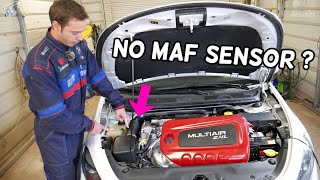
How to confirm: Visually inspect the sensor element for dirt or oil residue. The sensor is located on the air intake tube after the air filter box. 🎬 Watch: How to find the MAF sensor on your 2.4L engine
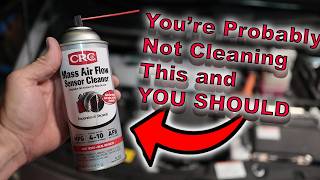
Typical fix: Clean the sensor using a dedicated MAF sensor cleaner spray. 🎬 See this quick guide on cleaning your sensor safely Do not touch the sensor wires or use aggressive cleaners like brake cleaner.
Est. part cost: $10-$15 for cleaner spray - Powertrain Control Module (PCM) Software Update Needed 🔴 High Probability Manufacturer TSB #18-051-16 REV. B is a well-documented fix for P0101 on this specific vehicle. It indicates that the original factory logic was too sensitive and could falsely trigger this code along with others like P050D (Cold Start Rough Idle) and P0335 (Crankshaft Position Sensor Circuit). This is a very common resolution for this code on this platform.
How to confirm: A Chrysler dealership or a qualified shop with a wiTECH scan tool can check the current software calibration ID against the latest available version mentioned in the TSBs.
Typical fix: Flash the PCM with the latest software version. The TSB provides the specific instructions for the dealer.
Est. part cost: $0 if under warranty, otherwise $100-$250 for a dealer to perform the update - Vacuum Leak 🟡 Medium Probability Any unmetered air that enters the engine after the MAF sensor (e.g., through a cracked intake boot, loose clamp, or bad gasket) will cause the MAF reading to be lower than the actual amount of air entering the cylinders, triggering the code.
How to confirm: Visually inspect all intake hoses and vacuum lines for cracks or loose connections. A smoke test is the most effective way to find hidden leaks. 🎬 Watch: Understanding the most common causes for a P0101 code
Typical fix: Repair the leak by replacing the cracked hose or tightening the loose connection.
Est. part cost: $10-$100 depending on the leaking component - Faulty Wiring or Loose Connection ⚪ Low Probability An ALLDATA technical report documented a case on a 2016 2.4L model where a loose connection at splice SK900A, located on top of the motor, caused an intermittent P0101 code under hard acceleration. This indicates a potential weak point in the factory harness.
How to confirm: Inspect the MAF sensor connector for corrosion or loose pins. Trace the wiring harness and check known splice points like SK900A for integrity. Wiggling the harness while monitoring live data can help identify intermittent connection issues.
Typical fix: Repair the damaged wiring or faulty splice.
Est. part cost: $5-$50 for wiring repair supplies
Rare But Worth Checking
- Faulty MAF Sensor: While the sensor itself can fail, it's more common for it to be dirty or affected by another issue. Always rule out other causes before replacing the sensor. A Reddit user reported going through extensive diagnostics, including swapping with a known-good sensor, only to find the issue was elsewhere.
- Clogged or Dirty Air Filter: A severely restricted air filter can starve the engine for air, causing the MAF sensor to report lower-than-expected values and trigger the code. This should be one of the first and easiest things to check.
- Dirty Throttle Body: A carbon-caked throttle body can restrict airflow at idle, causing the PCM to see a discrepancy between expected and actual airflow, which can contribute to a P0101 code.
Diagnosis Steps
- Verify your 2.4L engine has a MAF sensor. Check the air intake tube between the air filter box and the throttle body. If no sensor is present, your vehicle uses a MAP sensor system and this code may be stored in error or indicate a deeper PCM issue.
- Check for Technical Service Bulletins (TSBs). Ask a dealer if TSB #18-051-16 REV. B or similar applies to your VIN, as a PCM update is a very common and documented fix.
- Inspect the Air Intake System. Check the engine air filter and replace if dirty. Carefully inspect the intake boot and all vacuum hoses for cracks, tears, or loose connections.
- Clean the MAF Sensor. Disconnect the electrical connector, remove the sensor (usually held by two Torx or Phillips screws), and spray the sensing element with a dedicated MAF sensor cleaner. Allow it to dry completely before reinstalling.
- Inspect Wiring. Check the MAF sensor connector for damage or corrosion. Investigate the wiring harness for any visible damage, paying attention to known issues like splice SK900A on top of the engine.
- Check for Vacuum Leaks. If the issue persists, perform a smoke test to definitively identify any leaks in the intake system.
- Test the MAF Sensor. Using a scan tool, monitor the MAF sensor data (in grams/second or g/s) at idle and while increasing engine RPM. For a 2.4L engine, a healthy reading at warm idle should be approximately 2-4 g/s. The reading should increase smoothly with RPM, reaching around 15-25 g/s at 2500 RPM. If readings are erratic, stuck, or do not change, the sensor may be faulty.
- If all other steps fail, consider replacing the MAF sensor with a quality OEM or reputable aftermarket part. The Mopar part number is 68144197AA.
Parts You'll Likely Need
- Mass Air Flow (MAF) Sensor Cleaner — This is the first and most common fix. Often the sensor is just dirty, not broken.
Trusted brands: CRC, WD-40 Specialist
Aftermarket price range: $10-$15 - Mass Air Flow (MAF) Sensor
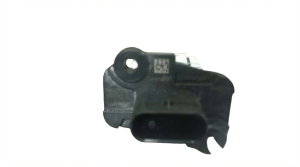
(OEM #68144197AA)— If cleaning and other diagnostics fail, the sensor itself may have failed. This part is used across several FCA vehicles with the 2.4L engine.
Trusted brands: Mopar, Denso, Bosch
OEM price range: $100-$150
Aftermarket price range: $50-$110
Related Codes That Often Appear With This One
- P050D — As cited in TSB #18-051-16 REV. B, 'Cold Start Rough Idle' often appears with P0101, suggesting a common root cause, likely solvable with a PCM software update.
- P0335 — Also listed in TSB #18-051-16 REV. B, a 'Crankshaft Position Sensor Circuit' code can appear alongside P0101 as part of a software-related issue.
- P1185 — 'General Pressure Sensor Correlation' is another code mentioned in TSB #18-051-16 REV. B, pointing towards a systemic data correlation issue within the PCM that a software flash can fix.
- P0171 — System Too Lean (Bank 1). A vacuum leak after the MAF sensor can cause this code to appear with P0101 because unmetered air is entering the engine.
Technical Service Bulletins (TSBs) & Recalls
- 18-051-16 REV. B: The most relevant TSB f
Platform-Specific Known Issues
- Not all 2016 Chrysler 200 models with the 2.4L engine are equipped with a MAF sensor. Vehicles built to California emissions standards (check VECI label under hood) may use a speed density system (MAP sensor) instead. You must physically check your air intake for the sensor before purchasing parts.
- A known issue involves a faulty wiring splice (SK900A) on top of the engine, which can cause an intermittent P0101 code, especially under hard acceleration.
- Chrysler TSB #18-051-16 REV. B is a critical document for this code, indicating a PCM software update is the prescribed fix for P0101 and a cluster of other codes.
Mechanic-Grade Diagnostic Values
- MAF Sensor Live Data (g/s) at Idle — expected: 2 to 7 g/s (varies by engine size, 2-4 g/s is typical for a 2.4L). Failure: A reading that is stuck, erratic, or significantly outside the expected range.
- MAF Sensor Live Data (g/s) at 2500 RPM — expected: 15 to 25 g/s (varies by engine size). Failure: A reading that does not rise smoothly with RPM or is significantly lower/higher than expected.
- MAP Sensor Voltage (Key On, Engine Off) — expected: Approximately 4.5 - 5.0 Volts. Failure: A voltage significantly lower than this range indicates a sensor or wiring issue.
- MAP Sensor Voltage (Engine Running at Idle) — expected: 1.0 - 2.0 Volts. Failure: Voltage that remains high (near KOEO reading) or is below 1.0V suggests the sensor is not reading vacuum correctly.
Scan Tool Commands That Help
- wiTECH 2.0: PCM Flash/Reprogramming — This is the primary function needed to perform the fix outlined in TSB #18-051-16 REV. B, which resolves P0101 along with a cluster of other codes by updating the PCM software.
- wiTECH 2.0: Live Data / OBD2 Monitors — To monitor MAF sensor g/s readings, fuel trims, and other engine parameters in real-time to diagnose performance issues. It can also be used to view misfire counters and perform network communication tests.
Wiring & Ground Locations
- Splice SK900A — Located in the wiring harness on top of the motor.. A documented weak point. A loose connection at this splice can cause an intermittent P0101 code, particularly under hard acceleration when engine movement is greatest. This can be missed by standard checks.
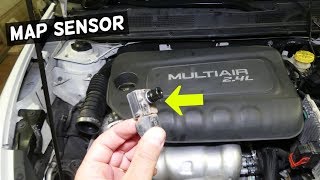
- MAP Sensor Connector Wires (for MAP-only cars or P1185 diagnosis) — On the MAP sensor, located on the intake manifold.. For vehicles without a MAF sensor or when diagnosing the related P1185 code, knowing the wire functions is critical. Wire colors are typically Pink (signal), Green (ground), and Yellow (5-volt supply).
Real Owner Repair Stories
- ALLDATA Tech-Assist Case (2016 Chrysler 200, FWD, 2.4L) — Malfunction Indicator Light (MIL) would illuminate only under hard acceleration, such as merging onto a highway.
❌ Tried (didn't work) Visual inspection of MAF sensor and connector (appeared clean and fine)., Replacing the MAF sensor with a known-good part.
✅ What actually fixed it The technician found and repaired a loose connection at wiring splice SK900A, which was located on top of the motor.
"I Checked Everything" — The Actual Cause
- In a documented case, a 2016 Chrysler 200 repeatedly set a P0101 code under hard acceleration. Standard diagnostics like swapping the MAF sensor failed to resolve the issue. A smoke test for vacuum leaks would likely have been clean. The actual root cause was a loose factory wiring connection at splice SK900A on top of the engine, which was only failing intermittently under the stress of engine movement during acceleration.
Helpful Videos
We Have This Part in Stock

The information in this article is provided for general reference and educational purposes only. Vehicle specifications, procedures, and part compatibility can vary by production date, trim level, and region. Always consult your vehicle's factory service manual and verify part numbers before purchasing or performing repairs. Safety-critical components such as airbags, seat belts, and braking systems should be installed by a qualified professional.
- Chrysler 200:
- 🎬 Helpful Videos
- 🛍️ Shop This Part
- What's Unique About the 2016-2016 Chrysler 200
- Diagnostic Flowchart
- Symptoms You May Notice
- Most Likely Causes
- Rare But Worth Checking
- Diagnosis Steps
- Parts You'll Likely Need
- Related Codes That Often Appear With This One
- Technical Service Bulletins (TSBs) & Recalls
- Platform-Specific Known Issues
- Mechanic-Grade Diagnostic Values
- Scan Tool Commands That Help
- Wiring & Ground Locations
- Real Owner Repair Stories
- "I Checked Everything" — The Actual Cause
- 🎟️ Get 5% Off