

P0101 on 2015-2020 Chevrolet Tahoe: MAF Sensor Causes and Fixes
On a 2015-2020 Tahoe, code P0101 is most often caused by a dirty Mass Airflow (MAF) sensor or a manufacturing defect inside the air filter housing. Cleaning the sensor is a common first step, but a crucial next step is to inspect the intake tube for plastic 'casting flash' as noted in GM Technical Service Bulletin #PIP5446A, which affects 2015-2018 models specifically.
- For a 2015-2018 Tahoe, the first thing to check for P0101 is the plastic 'casting flash' inside the air intake tube near the MAF sensor, as per TSB #PIP5446A.
- The second most common and easiest fix is to clean the MAF sensor using a dedicated cleaner spray.
- Do not immediately replace the MAF sensor; rule out the intake defect, a dirty sensor, and vacuum leaks first.
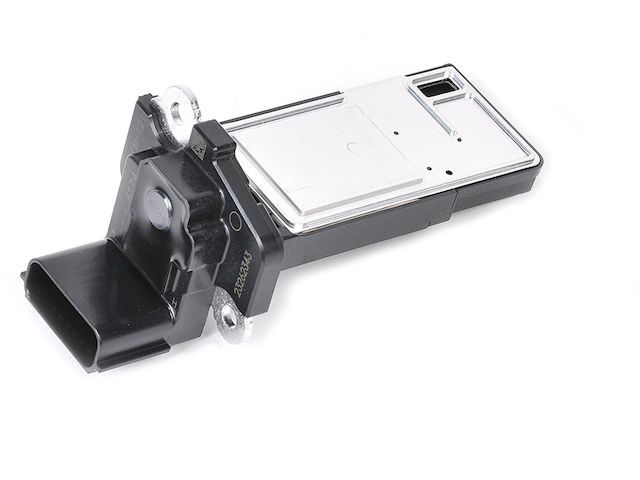
- If you must replace the sensor, use a high-quality OEM (ACDelco) or OE-equivalent part to avoid performance issues. The GM part number is 12671624.
- Pay attention to other codes. P0171/P0174 (lean) usually point to the MAF system, while electrical codes may suggest a wiring issue.
What's Unique About the 2015-2020 Chevrolet TAHOE
For this generation of Chevrolet Tahoe (and its platform mates), a significant and well-documented issue is a manufacturing defect within the air intake assembly. General Motors issued Technical Service Bulletin (TSB) #PIP5446A which points to "excessive casting flash"—rough plastic bits from the molding process—inside the air filter housing right where the MAF sensor sits. This defect disrupts airflow, creating turbulence that causes erratic sensor readings. This can trigger a P0101 code and lead to symptoms like rough idle and harsh 1-2 or 2-3 shifting, often causing a misdiagnosis of a faulty sensor when the housing is the real problem. The TSB explicitly covers 2015-2018 models.
Diagnostic Flowchart
Tap your situation to follow the diagnostic path that matches what you're seeing on this vehicle.
Symptoms You May Notice
- Check Engine Light is on
- Rough or unstable idle
- Hesitation or sputtering during acceleration
- Harsh shifting between gears, especially 1-2 and 2-3 shifts
- Reduced engine power and sluggish performance
- Poor fuel economy
- Engine stalling, especially at low speeds or idle
- Black smoke from the exhaust
- Replacing the MAF sensor without first cleaning it.
- Replacing the MAF sensor when the actual cause is the plastic 'casting flash' in the intake tube, as described in TSB #PIP5446A for 2015-2018 models.
- Replacing oxygen sensors for lean codes (P0171/P0174) without addressing the root P0101 fault. The lean condition is often a symptom of the MAF under-reporting airflow.
Most Likely Causes

- Excessive Casting Flash in Air Intake Housing 🔴 High Probability A known manufacturing defect documented in GM TSB #PIP5446A affects 2015-2018 models. Plastic flashing left from the molding process disrupts airflow across the MAF sensor, causing turbulent, incorrect readings that the PCM flags as a performance fault.
How to confirm: Remove the MAF sensor (held by two T15 or T20 Torx screws) and visually and physically inspect the inside of the air filter housing lid where the sensor mounts. Feel for any rough or excess plastic ridges that could interfere with smooth airflow.
Typical fix: The official GM fix is to replace the air filter housing lid/cover (Part number may vary, but a common one is GM 23170712). Before installing the new part, inspect it for the same flashing defect. Some owners report successfully smoothing down the flashing with a file or sandpaper, followed by a thorough cleaning to remove all plastic debris.
Est. part cost: $50-$150 for a new air cleaner cover. - Dirty or Contaminated MAF Sensor 🔴 High Probability Over time, oil vapor from the PCV system and fine dust can coat the sensor's delicate hot wire elements, insulating them and causing inaccurate readings. Oiled aftermarket air filters (e.g., K&N) are a frequent source of contamination if over-oiled.
How to confirm: Remove the MAF sensor and visually inspect the small wires inside. If they appear coated in grime or oil, cleaning is warranted. A scan tool may show g/s readings at idle that are lower than expected (e.g., under 5 g/s for a 5.3L V8 at warm idle).
Typical fix: Spray the sensor elements thoroughly with a dedicated MAF sensor cleaner spray. 🎬 Watch: Step-by-step guide to cleaning your MAF sensor. Do not touch the elements or use other chemicals like brake or carb cleaner. Let it air dry completely before reinstalling. This is often the first and most successful repair attempt.
Est. part cost: $10-$15 for a can of MAF sensor cleaner. - Vacuum Leak 🟡 Medium Probability The large plastic and rubber intake duct between the MAF sensor and the throttle body can develop cracks from heat and vibration, allowing unmetered air to enter the engine. PCV hoses are another common failure point.
How to confirm: With the engine running, listen for hissing sounds. A smoke test is the most definitive method to find leaks. You can also carefully spray short bursts of carb cleaner near suspected leak points (gaskets, hose connections); a change in engine idle RPM indicates a leak.
Typical fix: Replace the cracked or leaking intake duct, PCV hose, or gasket.
Est. part cost: $75-$200 for an intake duct hose. - Faulty MAF Sensor 🟡 Medium Probability While durable, the sensor can fail electronically. This should be suspected after cleaning the sensor and ruling out intake leaks and the TSB-related flashing issue. Forum users strongly recommend using an OEM ACDelco/GM Genuine part over cheaper aftermarket sensors, which are known to be poorly calibrated and cause persistent issues.
How to confirm: After cleaning and ruling out other causes, monitor live MAF data with a scan tool. At a warm, stable idle, the reading should be approximately equal to the engine's displacement (e.g., a 5.3L engine should read around 5.3 g/s). If the reading is stuck, erratic, or does not increase smoothly with throttle application, the sensor is likely bad.
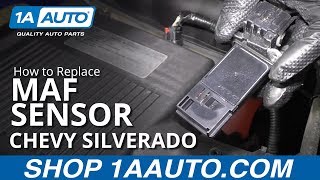
Typical fix: Replace the MAF sensor. 🎬 See this walkthrough on how to replace the sensor. It is highly recommended to use an OEM ACDelco/GM Genuine part (like #12671624 or #23256991, check specific VIN) or a reputable OE-supplier brand like Delphi.
Est. part cost: $80-$180
Rare But Worth Checking
- Clogged Catalytic Converter: A restricted exhaust can reduce the amount of air the engine can draw in, causing the MAF reading to be lower than expected for a given RPM and throttle position. This often triggers other codes like P0420 or P0430 and may be accompanied by a 'rotten egg' smell.
- Wiring Harness Issue: TSB #PIP5729 notes that P0101 can appear with electrical codes like P1682 (Ignition 1 Switch Circuit 2). This suggests a potential electrical problem, such as a faulty ignition relay or a terminal issue in the underhood fuse block, which could interrupt power to the MAF sensor. Check the harness for chafing or damage near the sensor connector and verify ground integrity.
- Dirty or Clogged Air Filter: A severely clogged engine air filter can restrict airflow enough to cause the MAF sensor's readings to be out of the expected range, triggering a P0101 code. This should be one of the first and easiest items to check.
Diagnosis Steps

- Read all stored fault codes with an OBD-II scanner. Note any other codes that appear alongside P0101, especially lean/rich codes (P0171/P0174) or correlation codes (P0068).
- Inspect the engine air filter. Replace it if it is dirty, clogged, or an over-oiled aftermarket type.
- Visually inspect the entire air intake system between the air filter box and the throttle body. Look for any obvious cracks, loose clamps, or disconnected hoses.
- Remove the MAF sensor (usually two T15 or T20 Torx screws). Inspect the inside of the air intake housing for the 'casting flash' mentioned in TSB #PIP5446A, especially on 2015-2018 models.
- While the sensor is removed, inspect its sensing elements. If they appear dirty, clean them using only dedicated MAF sensor cleaner. Let it air dry completely. Do not use compressed air or touch the wires.
- Reinstall the sensor, clear the codes, and perform a test drive to see if the code returns.
- If the code returns, monitor live data with a scan tool. At a warm idle with no accessories on, check the MAF reading. It should be stable and near the engine's displacement in liters (e.g., ~5.3 g/s for the 5.3L V8). A reading below 4 g/s strongly suggests a vacuum leak or faulty sensor.
- If a vacuum leak is suspected, perform a smoke test for the most accurate diagnosis.
- If no leaks are found and the intake is free of defects, check the MAF sensor wiring and connector for damage, corrosion, or loose pins. Check for stable voltage and ground at the connector.
- If all other possibilities are exhausted, the MAF sensor itself is likely faulty and should be replaced with a quality OEM or OE-equivalent part.
Parts You'll Likely Need

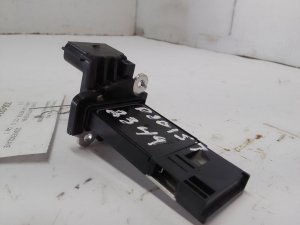
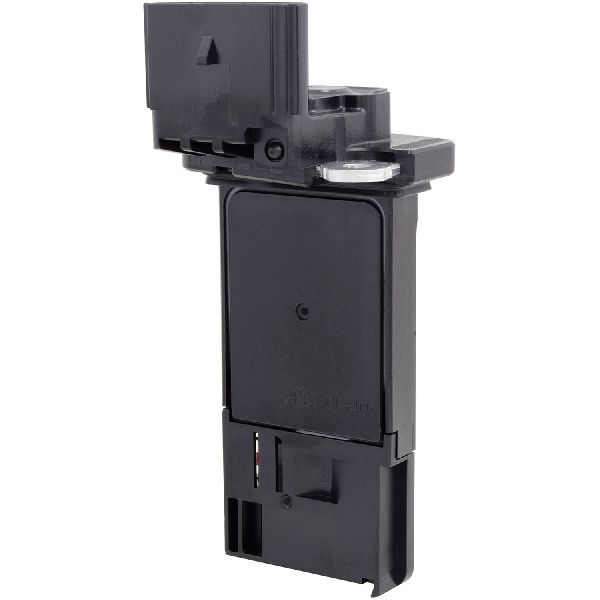
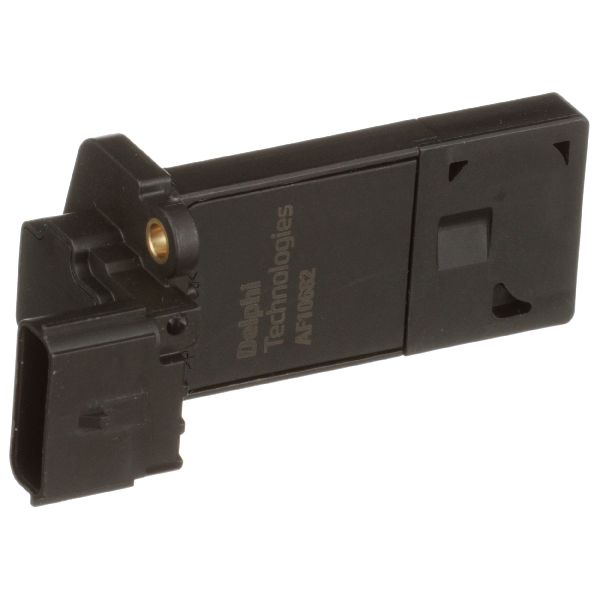
- Mass Air Flow (MAF) Sensor
(OEM #12671624 (ACDelco), 23256991 (GM Genuine). Verify by VIN.)— This sensor is the primary component related to the code. It is often replaced after cleaning fails to resolve the issue. Forum consensus strongly advises against cheap aftermarket parts.
Trusted brands: ACDelco, GM Genuine, Delphi - Air Cleaner Outlet Duct / Housing Cover
(OEM #23170712 (GM). Verify by VIN.)— Required to fix the 'casting flash' issue documented in TSB #PIP5446A on 2015-2018 models. The defect is in the housing itself, not the sensor.
Trusted brands: GM Genuine - MAF Sensor Cleaner — A low-cost first step. Often, cleaning a dirty sensor is all that is needed to resolve the P0101 code.
Trusted brands: CRC, WD-40 Specialist
Related Codes That Often Appear With This One
- P0171 / P0174 — System Too Lean (Bank 1 / Bank 2). These codes are very common with P0101. If the MAF sensor is under-reporting airflow (due to being dirty, a defect, or a vacuum leak), the PCM injects too little fuel, creating a lean condition. TSB #PIP5446A explicitly lists these codes alongside P0101.
- P0172 / P0175 — System Too Rich (Bank 1 / Bank 2). These can also occur with the casting flash issue or if the MAF sensor is incorrectly over-reporting air for some reason.
- P0068 — MAP/MAF - Throttle Position Correlation. This code sets when the data from the MAF sensor, MAP sensor, and throttle position sensor don't align. An owner complaint cited this code appearing with P0101, pointing to a significant discrepancy in sensor readings. [OWNER COMPLAINT]
Technical Service Bulletins (TSBs) & Recalls
- PIP5446A: Addresses rough idle, harsh shifting, and P0101 (and other codes) caused by excessive casting flash in the air filter housing near the MAF sensor on 2015-2018 models. The fix is to replace the air filter housing lid.
- PIP5729: Notes that P0101 can be set along with other electrical DTCs like P1682, pointing to a potential ignition relay or fuse block terminal issue, rather than a faulty MAF sensor itself.
Platform-Specific Known Issues
- The Casting Flash Defect: A widely discussed issue on forums for the K2XX platform is the casting flash inside the airbox. One user on a Silverado forum noted, 'Check of little tab of air cleaner assembly casting flash. If found remove and evaluate.' This corroborates TSB PIP5446A and highlights that even small imperfections in the airflow path can trigger this code. The official fix is replacement, but many DIYers have successfully sanded it smooth.
- Success with Cleaning: Many owners report that a simple cleaning resolves the P0101 code. A Silverado owner with an intermittent Check Engine Light and poor gas mileage stated the fix was cleaning the sensor, a repair costing under $50 and taking only a few minutes. This is consistently the most recommended first step.
- Aftermarket Sensor Woes: A user on TahoeYukonForum shared their experience with a Granatelli aftermarket MAF sensor on a GM truck: 'the overall result was the check engine light coming on a lot, had to be cleaned constantly... eventually trashed it.' This is a common sentiment, with many concluding that 'performance' MAF sensors are a 'waste of money' and that OEM sensors provide the most reliable data for the ECU.
Mechanic-Grade Diagnostic Values
- MAF Sensor Reading (Scan Tool) — expected: Approximately the same grams/second (g/s) as the engine displacement in liters at a warm, stable idle (e.g., a 5.3L engine should read ~5.3 g/s).. Failure: A reading significantly lower than the engine's displacement (e.g., under 4 g/s for a 5.3L) can indicate a vacuum leak, while an erratic or stuck value suggests a faulty sensor.
- MAF Sensor Reading (Scan Tool, WOT Acceleration) — expected: During a wide-open throttle acceleration from a stop, the MAF reading should increase rapidly from its idle value (3-10 g/s) to 170 g/s or more by the time of the 1-2 shift.. Failure: A sluggish or limited increase in g/s during acceleration points to a sensor that is not reading airflow correctly, or a physical restriction in the intake or exhaust.
- Long Term Fuel Trim (LTFT) (Scan Tool) — expected: Ideally, both Bank 1 and Bank 2 should be within +/- 5% at idle. Values up to +/- 10% are generally considered acceptable.. Failure: High positive fuel trims (e.g., +15% to +25%) on both banks strongly indicate a significant vacuum leak downstream of the MAF sensor.
Scan Tool Commands That Help
- GDS2 / Professional Scan Tool (e.g., Innova 5610): Fuel Composition Reset / Reset Fuel Trims — Use this function if the vehicle has been run on different ethanol-content fuels or if long-term fuel trims are excessively high or low (-25% or more) without a clear mechanical cause. The ECU can incorrectly 'learn' a high alcohol percentage, causing it to command a rich mixture and throw off MAF calculations. Disconnecting the battery will not perform this reset.
Wiring & Ground Locations
- MAF Sensor Fuse — In the underhood fuse block, often in position F31.. The MAF sensor requires power to operate. A blown fuse will cause the sensor to stop sending a signal, immediately setting a P0101 or related code.
- Frame Grounds (Front) — Located on the frame right behind both front wheels.. These grounds are in a terrible location prone to corrosion from tire splash. A poor ground connection can cause erratic sensor readings and intermittent electrical faults that are difficult to trace, sometimes manifesting as performance codes like P0101.
- Engine Block Ground (G103) — Typically located on the front of the passenger side cylinder head.. This is a primary ground point for engine-related sensors. A loose or corroded connection here can affect the reference ground for the entire engine management system, including the MAF sensor.
- BCM Ground — Inside the cab, next to the front left speaker. Requires removal of the A-pillar cover and front dash trim to access.. While less direct, poor grounds for the Body Control Module (BCM) can cause a cascade of unpredictable electrical issues across the vehicle's data network, which can interfere with the PCM and engine sensor readings.
Real Owner Repair Stories
- Tahoe Yukon Forum user (2004 Tahoe (similar issue pattern)) — P0101, P0171, and P0174 codes.
❌ Tried (didn't work) Replacing the fuel filter.
✅ What actually fixed it The user first replaced the MAF sensor, which cleared the P0101 code, but the P0171/P0174 lean codes remained. A DIY smoke test then revealed that both intake manifold gaskets were leaking. Replacing the intake manifold gaskets resolved the remaining lean codes. - Tahoe Yukon Forum user (2001 Tahoe (similar issue pattern)) — Initially P0101, then P0300 (random misfire), rough idle, stumbling on acceleration.
❌ Tried (didn't work) Replacing the MAF sensor only.
✅ What actually fixed it After replacing the MAF sensor didn't solve the drivability issues, the user eventually replaced the entire throttle body. While doing this, they discovered broken exhaust manifold bolts. The final fix was a combination of replacing the throttle body and repairing the broken manifold bolts, which resolved the rough idle and misfires.
"I Checked Everything" — The Actual Cause
- In cases where P0101 is present with P0300 (random misfire) and fuel trims appear normal (ruling out a major vacuum leak), the root cause can be a partially clogged catalytic converter. The logic is that if exhaust flow is restricted, the engine cannot draw in its expected volume of air. This causes the MAF sensor to report a lower airflow value than the PCM calculates it should have, setting code P0101. The backpressure also causes poor cylinder scavenging, leading to misfires.
Model Year Variations Within This Range
- 2015-2020: The L83/L86 engines in this generation use an 8-wire Mass Airflow sensor. This is a more complex design than the 5-wire sensor used in the previous generation, as it integrates a humidity sensor along with the traditional mass air and temperature sensors. This is important to know when testing pins or sourcing a replacement.
Helpful Videos


Used OEM Parts in Stock
New Aftermarket Parts Available



The information in this article is provided for general reference and educational purposes only. Vehicle specifications, procedures, and part compatibility can vary by production date, trim level, and region. Always consult your vehicle's factory service manual and verify part numbers before purchasing or performing repairs. Safety-critical components such as airbags, seat belts, and braking systems should be installed by a qualified professional.
- Chevrolet TAHOE:
- 🎬 Helpful Videos
- 🛍️ Shop This Part
- What's Unique About the 2015-2020 Chevrolet TAHOE
- Diagnostic Flowchart
- Symptoms You May Notice
- Most Likely Causes
- Rare But Worth Checking
- Diagnosis Steps
- Parts You'll Likely Need
- Related Codes That Often Appear With This One
- Technical Service Bulletins (TSBs) & Recalls
- Platform-Specific Known Issues
- Mechanic-Grade Diagnostic Values
- Scan Tool Commands That Help
- Wiring & Ground Locations
- Real Owner Repair Stories
- "I Checked Everything" — The Actual Cause
- Model Year Variations Within This Range
- 🎟️ Get 5% Off