

P0101 on 2012-2016 Chevrolet Silverado: MAF Sensor Causes and Fixes
On a 2012-2016 Silverado, code P0101 most often points to a dirty Mass Airflow (MAF) sensor that needs cleaning or a vacuum leak in the air intake system, commonly from failed intake manifold gaskets. Cleaning the sensor is a simple, low-cost first step that often resolves the issue.
- Start with the cheapest and easiest fix: clean the MAF sensor with dedicated cleaner.
- Thoroughly inspect the entire air intake tube between the sensor and the engine for any cracks or loose connections.
- Do not immediately replace the MAF sensor; it is often triggered by another issue like a vacuum leak or exhaust restriction.
- If you experience a significant loss of power along with the P0101 code, a clogged catalytic converter is a strong possibility.
- If you must replace the MAF sensor, use a reputable OEM or equivalent brand to avoid performance issues.
What's Unique About the 2012-2016 Chevrolet SILVERADO
For this generation of Silverado, the P0101 code is frequently a diagnostic starting point rather than a direct indictment of the MAF sensor itself. While a dirty sensor is a top cause, these trucks are also known to set this code due to other issues like intake manifold gasket leaks or, more seriously, a clogged catalytic converter creating exhaust backpressure that fools the sensor. The plastic carrier-style intake manifold gaskets used on the Gen IV V8s (1999-2013) are particularly known to degrade from heat cycles and exposure to ethanol-blended fuels, causing vacuum leaks. It's crucial to diagnose the entire air intake and exhaust path rather than immediately replacing the MAF sensor.
Diagnostic Flowchart
Tap your situation to follow the diagnostic path that matches what you're seeing on this vehicle.
Generation note: This range covers two Silverado generations: the GMT900 (2012-2013) with Gen IV V8 engines and the K2XX (2014-2016) with the newer Gen V V6 and V8 engines. While the causes for P0101 are largely the same, the intake manifold gaskets, PCV systems, and MAF sensor part numbers differ. The Gen IV engines are particularly noted for intake gasket failures.
Symptoms You May Notice
- Check Engine Light is on
- Rough or unstable idle
- Engine stalling, especially under light load or when stopping
- Hesitation or surging during acceleration
- Noticeable loss of engine power, especially at higher RPMs
- Decreased fuel economy
- Difficulty starting the engine
- Black smoke from the tailpipe
- Hissing noise from the engine bay, indicating a vacuum leak
- Replacing oxygen (O2) sensors. While O2 sensor data can be affected (often showing lean codes like P0171/P0174), they are reacting to the air/fuel mixture problem, not causing the P0101 code.
Most Likely Causes
- Dirty or Contaminated MAF Sensor 🔴 High Probability Oiled aftermarket air filters or a deteriorating stock filter can release contaminants that stick to the MAF sensor's hot wire elements, skewing its readings. This is the most common and easiest-to-fix cause.
How to confirm: Visually inspect the sensor's wire elements after removal. If they appear dirty, coated, or oily, cleaning is warranted. The sensor is located on the air intake tube, right after the air filter box.
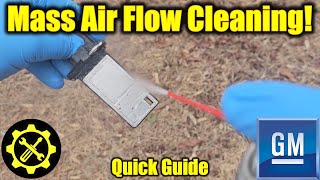
Typical fix: Remove the sensor and clean it carefully using only dedicated Mass Airflow Sensor cleaner. 🎬 Watch: Step-by-step guide to cleaning your MAF sensor. Do not touch the wires. Allow it to dry completely before reinstalling.
Est. part cost: $8-$15 for MAF cleaner - Vacuum Leak 🟡 Medium Probability The OEM plastic intake manifold gaskets on Gen IV V8s (2012-2013) are known to crack and degrade over time, causing unmetered air to enter the engine. Cracked or disconnected intake ducting, loose clamps, and failed PCV hoses are also common sources.
How to confirm: Visually inspect all air intake components between the MAF sensor and the engine. Listen for hissing sounds. A smoke test is the most effective way to pinpoint the source of a leak. High positive long-term fuel trims (e.g., >10%) on a scan tool also strongly suggest a vacuum leak.
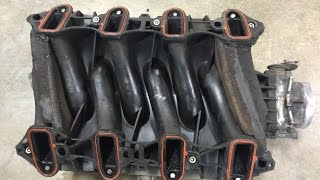
Typical fix: Tighten loose clamps, replace cracked hoses, or replace failed gaskets (e.g., intake manifold gaskets). Upgraded gaskets like Fel-Pro's PermaDryPlus (MS 98016 T) use a metal carrier to prevent future failure. 🎬 See this walkthrough for replacing the intake manifold gaskets.
Est. part cost: $10-$300 depending on the source of the leak - Clogged Catalytic Converter 🟡 Medium Probability
How to confirm: A significant loss of power, especially at high RPMs, is a key symptom. A mechanic can perform an exhaust backpressure test to confirm a restriction. This is often seen with a P0300 (random misfire) code. In one documented case, a truck with P0101 and P0300 that had many parts replaced was ultimately fixed by replacing a blocked catalytic converter. 🎬 Watch: How a clogged catalytic converter can mimic MAF failure.
Typical fix: The catalytic converter must be replaced.
Est. part cost: $500-$2000+ - Failed MAF Sensor ⚪ Low Probability
How to confirm: If cleaning the sensor and verifying there are no vacuum leaks or exhaust restrictions doesn't solve the problem, the sensor itself may have failed. A scan tool showing live MAF data (g/s) can help confirm if readings are erratic, unresponsive, or significantly lower than expected at idle (a 5.3L engine should idle around 5 g/s).
Typical fix: Replace the MAF sensor. Using an OEM or high-quality aftermarket brand like ACDelco or Delphi is highly recommended, as cheap aftermarket sensors are often unreliable.
Est. part cost: $70-$200
Rare But Worth Checking
- Wiring Harness Issue: Damage or corrosion to the MAF sensor's connector or wiring can cause an intermittent or complete loss of signal. Inspect the connector for pushed-out pins or corrosion and check the harness for any visible damage. The pigtail connector is available as a separate part (e.g., ACDelco PT2832 for 2009-2012 models).
- Severely Clogged Engine Air Filter: A completely clogged air filter can starve the engine of air, causing the MAF readings to be abnormally low compared to what the ECM expects for a given throttle input.
- Dirty or Faulty Throttle Body: A throttle body heavily caked with carbon can restrict airflow or fail to open correctly, causing the MAF reading to be out of the expected range for the given throttle command. Cleaning the throttle body can sometimes resolve the issue.
Diagnosis Steps
- Read the code with an OBD-II scanner and note any other codes present, especially P0171, P0174, P0300, P0420, or P0430.
- Visually inspect the entire air intake system from the air filter box to the throttle body. Look for loose clamps, disconnected hoses, or cracks in the plastic/rubber tubing.
- Inspect the engine air filter. If it is excessively dirty, replace it.
- Remove and inspect the MAF sensor. If it appears dirty, clean it with dedicated MAF sensor cleaner spray. Let it dry completely before reinstalling.
- Clear the codes and perform a test drive to see if the code returns. If it does, proceed to the next steps.
- If you have a capable scan tool, monitor the MAF sensor reading (in grams/second) at idle and while revving the engine. The reading should be stable at idle (approx. 4-6 g/s for a V8) and increase smoothly with RPM. Also check long-term fuel trims; values consistently above +10% suggest a vacuum leak.
- Perform a smoke test to definitively check for vacuum leaks, especially around the intake manifold gaskets, PCV hoses, and brake booster line.
- If no vacuum leaks are found and the MAF sensor has been cleaned or replaced, suspect a clogged catalytic converter. An exhaust backpressure test can confirm this.
Parts You'll Likely Need
- Mass Airflow (MAF) Sensor Cleaner — This is the most common, cheapest, and easiest first step. Often, the sensor is just dirty, not broken.
Trusted brands: CRC, WD-40 Specialist
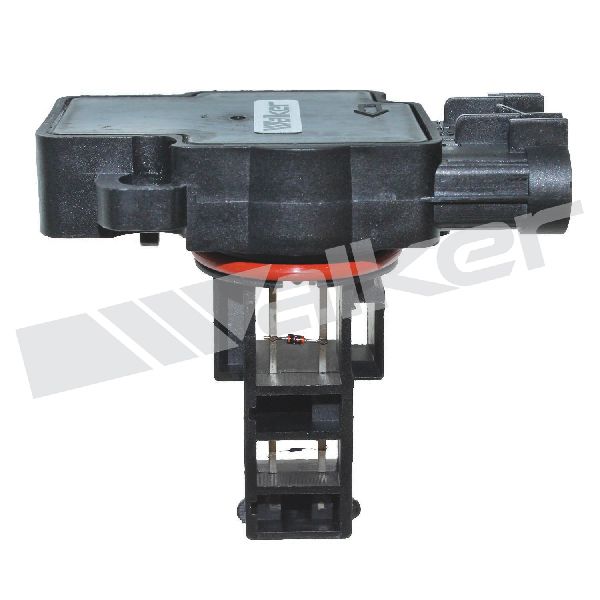
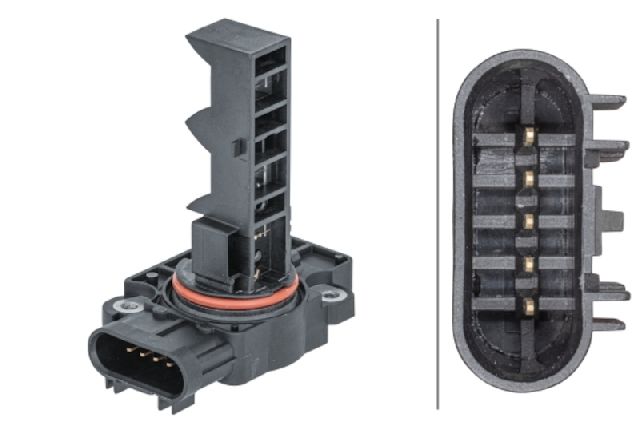
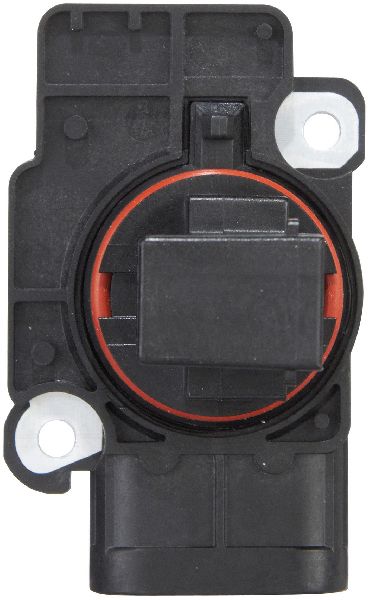
Aftermarket price range: $8-$15 - Mass Airflow (MAF) Sensor
(OEM #ACDelco 23256991 (2012-13), ACDelco 23262343 / 12671610 (2014-16))— If cleaning doesn't work and no other causes are found, the sensor itself has likely failed.
Trusted brands: ACDelco, Delphi, Denso
OEM price range: $140-$210
Aftermarket price range: $70-$180 - Intake Manifold Gasket Set
(OEM #ACDelco 19256623 (2012-13), ACDelco 12626354 (2014-16))— A common source for vacuum leaks on GM V8 engines that can trigger a P0101 code, especially on 2012-2013 models.
Trusted brands: Fel-Pro (e.g., MS 98016 T for 2012-13, MS 97240-1 for 2014-16), ACDelco
OEM price range: $60-$100
Aftermarket price range: $30-$80
Related Codes That Often Appear With This One
- P0300 — A random/multiple cylinder misfire can occur because the incorrect MAF reading leads to a poor air/fuel mixture. It can also be a symptom of a clogged catalytic converter, which also causes P0101.
- P0171/P0174 — System Too Lean (Bank 1/Bank 2). A vacuum leak allows extra, unmetered air into the engine, causing the MAF to report less air than is actually present. The ECM sees the resulting lean condition via the O2 sensors and sets these codes alongside P0101.
- P0420/P0430 — Catalyst System Efficiency Below Threshold. These codes can appear if a clogged catalytic converter is the root cause of the P0101 code.
Technical Service Bulletins (TSBs) & Recalls
- PIP4932C: A general bulletin regarding a Service Engine Soon light with DTC P0101, advising technicians to follow published diagnostics. This indicates the code has multiple known potential causes and isn't a simple 'replace part X' fix.
Platform-Specific Known Issues
- Degrading Intake Manifold Gaskets (2012-2013): The Gen IV V8 engines in 2012-2013 models use a plastic-carrier intake manifold gasket that is known to become brittle and crack from engine heat and fuel exposure, leading to vacuum leaks that cause P0101. Many owners and shops upgrade to aftermarket gaskets with a metal carrier, such as Fel-Pro MS 98016 T, for a more durable repair.
- Aftermarket Cold Air Intakes: Improperly installed or poorly designed cold air intakes can alter the airflow characteristics across the MAF sensor, causing turbulence that leads to incorrect readings and a P0101 code. Oiled filters, if over-oiled, are a frequent cause of sensor contamination.
Mechanic-Grade Diagnostic Values
- MAF Sensor Reading at Idle (Scan Tool) — expected: Approximately the same grams/second (g/s) as the engine displacement in liters. For a 5.3L V8, this is 4.2 to 6.0 g/s.. Failure: Readings significantly lower than the engine's displacement (e.g., 3.0-3.5 g/s on a 5.3L) can indicate a dirty sensor, a vacuum leak, or an exhaust restriction.
- MAF Sensor Reading at 2500 RPM (Scan Tool) — expected: Should rise smoothly to between 15 to 25 g/s, depending on engine size.. Failure: A reading that rises too slowly can indicate a dirty sensor or an air leak downstream. A reading that rises too quickly or erratically can indicate a faulty sensor.
- MAF Sensor Power Supply (Multimeter) — expected: 10 to 12 Volts DC at the Pink wire of the sensor connector with the key on.. Failure: No voltage or low voltage indicates a problem with the fuse or wiring harness leading to the sensor.
- MAF Sensor Ground Circuit (Multimeter) — expected: Good continuity to ground (near 0 ohms) or near 0 Volts DC when testing between the ground wire and the battery negative terminal.. Failure: High resistance or voltage on the ground circuit indicates a bad ground connection, which can cause erratic sensor readings.
Scan Tool Commands That Help
- Manual Procedure (No Scan Tool Required): Throttle Body Relearn / Idle Learn Procedure — Required after cleaning or replacing the electronic throttle body, which can be misdiagnosed as a MAF issue or done as part of the diagnostic process. An unlearned throttle body can cause idle and performance issues that mimic P0101 symptoms. The procedure allows the ECM to recalibrate the throttle plate's closed position. The general steps are: 1. Start and idle the engine in Park for 3 minutes. 2. Turn the ignition OFF for 60 seconds. 3. Start and idle the engine again in Park for another 3 minutes. The idle should stabilize. A drive cycle with decelerations may be needed if idle is still incorrect.
Wiring & Ground Locations
- G101 — Located at the left front of the engine, on the lower block.. This is a primary ground point for the Engine Control Module (ECM), Transmission Control Module (TCM), and the Mass Air Flow Sensor itself. Corrosion or a loose connection here can directly cause faulty MAF sensor readings and trigger a P0101 code.
- PCM Ground (on engine block) — On GMT800-platform based trucks (relevant to early models in this range), a critical PCM ground is located on the top rear of the engine block, often difficult to access.. This is described as the most important ground on these trucks for preventing sensor-related issues. It provides the main ground reference for the computer; if it's compromised by corrosion or vibration, all sensor readings, including the MAF, can become unreliable.
- G103 — On some GM models, located at the left rear of the engine compartment on the cowl, above the brake booster. On others, it is part of the main negative battery cable harness at the left front of the engine block.. This ground serves the Body Control Module (BCM), Instrument Panel Cluster (IPC), and the Data Link Connector (DLC). While not a direct ground for the MAF sensor, a poor connection here can cause communication issues and erratic behavior of multiple electronic systems.
Real Owner Repair Stories
- Reddit user post (2018 Nissan Rogue (demonstrates a vehicle-agnostic principle)) — Solid Check Engine Light with code P0101.
❌ Tried (didn't work) Checking the air filter, Checking for air leaks, Cleaning the MAF sensor
✅ What actually fixed it Replacing a 3-year-old, weak battery. The user learned that a dying battery can cause the MAF sensor to not communicate properly, triggering the P0101 code even with no other battery-related symptoms. - YouTube diagnostic video (Pine Hollow Auto Diagnostics) (2003 Chevy Silverado 1500 HD) — Low power, misfires, and codes P0101 and P0300.
❌ Tried (didn't work) The vehicle had been to other shops that could not diagnose the issue.
✅ What actually fixed it Replacing a partially blocked catalytic converter on Bank 1. The exhaust backpressure prevented air from exiting the engine efficiently, which in turn restricted air from entering, causing the MAF to read lower-than-expected values and trigger P0101.
"I Checked Everything" — The Actual Cause
- In cases where a smoke test for vacuum leaks comes back negative, the root cause for P0101 can be an exhaust restriction. A clogged catalytic converter creates backpressure, reducing the volume of air the engine can draw in. This makes the MAF sensor report airflow that is too low for the given RPM and throttle position, triggering P0101 without any intake leaks.
- A weak or failing battery can provide unstable voltage to the engine's sensors, including the MAF. This can cause the sensor to output an erratic or out-of-range signal, setting a P0101 code, even though the sensor, wiring, and air intake system are all perfectly fine.
When the Usual Fixes Don't Work
- While cleaning the MAF sensor or fixing a vacuum leak are the most common solutions, there are documented cases where these steps do not resolve the P0101 code. In several instances, after mechanics replaced multiple parts like the MAF sensor and intake gaskets, the true underlying cause was found to be a clogged catalytic converter creating exhaust backpressure that skewed the sensor's readings. In another case, a weak battery providing unstable voltage was the culprit, a factor completely unrelated to the air intake system. These examples show that if the common fixes fail, the diagnostic path must expand to include the exhaust system and the vehicle's main electrical supply.
Model Year Variations Within This Range
- 2012-2016: All vehicles in this range use an Electronic Throttle Control (ETC) or 'Drive-by-Wire' system. If the throttle body is cleaned or replaced during P0101 diagnosis, an idle relearn procedure is necessary. Failure to perform this can result in a high or unstable idle that can be confused with the original problem.
Helpful Videos


Used OEM Parts in Stock
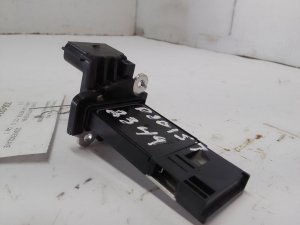
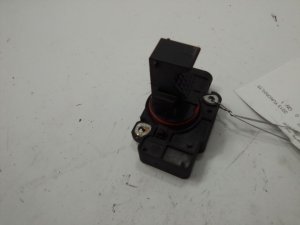

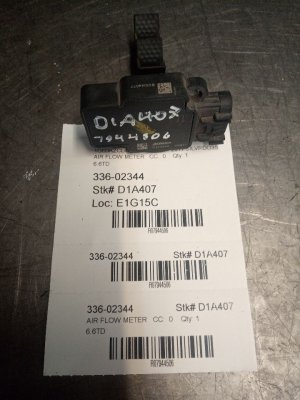

New Aftermarket Parts Available


The information in this article is provided for general reference and educational purposes only. Vehicle specifications, procedures, and part compatibility can vary by production date, trim level, and region. Always consult your vehicle's factory service manual and verify part numbers before purchasing or performing repairs. Safety-critical components such as airbags, seat belts, and braking systems should be installed by a qualified professional.
- Chevrolet SILVERADO:
- 🎬 Helpful Videos
- 🛍️ Shop This Part
- What's Unique About the 2012-2016 Chevrolet SILVERADO
- Diagnostic Flowchart
- Symptoms You May Notice
- Most Likely Causes
- Rare But Worth Checking
- Diagnosis Steps
- Parts You'll Likely Need
- Related Codes That Often Appear With This One
- Technical Service Bulletins (TSBs) & Recalls
- Platform-Specific Known Issues
- Mechanic-Grade Diagnostic Values
- Scan Tool Commands That Help
- Wiring & Ground Locations
- Real Owner Repair Stories
- "I Checked Everything" — The Actual Cause
- When the Usual Fixes Don't Work
- Model Year Variations Within This Range
- 🎟️ Get 5% Off