

P0101 on 2007-2014 Chevrolet Silverado 1500: MAF Sensor Causes and Fixes
Code P0101 on a 2007-2014 Silverado most often means the Mass Airflow (MAF) sensor is dirty. Cleaning it with a dedicated spray (about $12) is the most common fix. If that doesn't work, suspect a vacuum leak from a cracked intake manifold gasket or a faulty sensor.
- P0101 on a 2007-2014 Silverado is most often caused by a dirty MAF sensor.
- Always try cleaning the MAF sensor with dedicated cleaner before replacing it.
- If cleaning the sensor doesn't work, the next most likely causes are a vacuum leak (especially from the intake manifold gaskets) or a clogged air filter.
- This code is frequently accompanied by lean codes (P0171/P0174), which usually point to the same root cause.
- Check for the specific TSB issue of plastic flashing in the intake tube if you experience harsh shifting with the P0101 code.
What's Unique About the 2007-2014 Chevrolet SILVERADO 1500

On this generation of Silverado and its platform mates (Sierra, Tahoe, Yukon), P0101 is a very common code. While a dirty MAF sensor is the usual suspect, these trucks are also known for vacuum leaks, particularly from cracked PCV hoses and degraded intake manifold gaskets, which allow unmetered air to enter the engine. Furthermore, a specific GM Technical Service Bulletin (TSB #PIP5446A) points to a manufacturing defect where plastic 'cast flashing' in the air intake tube near the sensor can disrupt airflow and cause a P0101 code, sometimes accompanied by harsh shifting.
Diagnostic Flowchart
Tap your situation to follow the diagnostic path that matches what you're seeing on this vehicle.
Generation note: This range covers two Silverado generations: the GMT900 (2007-2013) and the first year of the K2XX (2014). The causes, particularly a dirty MAF sensor and vacuum leaks from intake gaskets, are common to both generations in this period. The K2XX platform (2014+) is specifically mentioned in TSB PIP5446A regarding casting flash in the air intake.
Symptoms You May Notice
- Check Engine Light is on
- Rough or unstable idle
- Engine stalling, especially under light load
- Hesitation or lack of power during acceleration
- Harsh shifting between gears, particularly 1-2 and 2-3 shifts
- Sputtering when applying throttle, especially between 0-30%
- Reduced fuel economy
- Difficult starting
- Black smoke from the exhaust if running rich
- Replacing the MAF sensor without first attempting to clean it.
- Replacing oxygen sensors when lean codes (P0171/P0174) appear alongside P0101, as the root cause is often the incorrect air measurement from the MAF or a vacuum leak, not the O2 sensors themselves.
- Replacing the throttle body when the issue is a simple vacuum leak or dirty MAF sensor.
Most Likely Causes

- Dirty or Contaminated MAF Sensor 🔴 High Probability The MAF sensor's delicate wire gets contaminated by dirt, moisture, and oil vapor from the PCV system. Over-oiled aftermarket air filters are a frequent culprit, coating the sensor and causing inaccurate readings.
How to confirm: Visually inspect the sensor's wire elements inside the housing. If they appear dirty, oily, or coated, they need cleaning. A scan tool may show g/s readings at idle that are significantly lower than the engine's displacement in liters (e.g., a 5.3L engine reading below 4.0 g/s).
Typical fix: Remove the sensor and clean it carefully using only dedicated Mass Airflow Sensor cleaner spray. Do not touch the sensor wires. Let it dry completely before reinstalling.
Est. part cost: $10-$15 - Vacuum Leak 🟡 Medium Probability The intake manifold gaskets on the V8 engines are made of plastic and rubber and are notorious for cracking and flattening over time, creating a significant vacuum leak. The PCV hose connecting the valve cover to the intake manifold can also become brittle and crack.
How to confirm: Listen for a hissing sound around the engine bay at idle. A DIY method is to spray brake cleaner or starter fluid in short bursts around the intake manifold gaskets and vacuum hoses; if the engine RPM changes, a leak is present. A professional smoke test is the most reliable method to pinpoint the exact location.
Typical fix: Replace the leaking gasket or hose. The intake manifold gaskets are often replaced as a set. 🎬 Watch this step-by-step intake manifold gasket replacement guide
Est. part cost: $40-$150 - Clogged or Incorrect Air Filter 🟡 Medium Probability A severely clogged air filter can restrict airflow, causing the MAF to report lower-than-expected values. In some cases, the filter itself can disintegrate, sending debris directly into the MAF sensor, causing it to fail.
How to confirm: Inspect the engine air filter. If it is visibly dirty, wet, clogged, or damaged, it should be replaced.
Typical fix: Replace the engine air filter.
Est. part cost: $20-$50 - Faulty MAF Sensor ⚪ Low Probability While less common than being dirty, the sensor's electronics can fail outright. Aftermarket sensors are also known to cause issues; using an OEM/ACDelco part is highly recommended for reliability.
How to confirm: After cleaning the sensor and ruling out vacuum leaks, monitor the MAF reading in g/s on a scan tool. If the reading is stuck at a certain number, erratic, or doesn't increase smoothly with RPM, the sensor is likely bad.
Typical fix: Replace the MAF sensor. It is held in by two T15 Torx screws.
Est. part cost: $70-$260
Rare But Worth Checking
- Clogged Catalytic Converter: A partially blocked catalytic converter can restrict exhaust flow, which in turn limits the amount of air the engine can draw in. This 'choking' effect can cause the MAF reading to be lower than expected, triggering P0101. This is usually accompanied by a significant loss of power and potentially other codes like P0420.
- Intake Tube Casting Flash: A known issue documented in TSB #PIP5446A where excess plastic molding (flashing) inside the air filter housing lid disrupts airflow across the MAF sensor. The fix is to replace the air filter housing lid with a new part, ensuring the replacement is also free of flashing.
- Wiring or Connector Issue: A damaged wire, loose pin, or a corroded connector for the MAF sensor can interrupt the signal to the PCM. This can be intermittent and sometimes triggered by moisture, such as after heavy rain.
- Aftermarket Cold Air Intake (CAI): Improperly designed or installed cold air intakes can alter the airflow characteristics across the MAF sensor, causing it to read incorrectly and trigger a P0101 code. The placement and diameter of the tube relative to the sensor are critical.
Diagnosis Steps

- Read all fault codes with an OBD-II scanner. Note any other codes present, especially P0171/P0174 (lean) or P0172/P0175 (rich).
- Inspect the engine air filter. Replace if it's dirty, wet, or clogged.
- Visually inspect the air intake system for loose clamps, cracked hoses, or disconnected lines between the MAF sensor and the throttle body. Pay close attention to the PCV hose.
- Remove and inspect the MAF sensor (usually two T15 Torx screws). Look for any debris or an oily film on the sensor elements.
- If dirty, clean the MAF sensor using only dedicated MAF sensor cleaner. Do not touch the sensor wires. Allow it to air dry completely.
- Per TSB #PIP5446A, inspect the air filter housing lid for any plastic casting flash near the MAF sensor that could be disrupting airflow. If found, replace the lid.
- Reinstall the sensor, clear the codes, and perform a test drive to see if the code returns.
- If the code persists, use a scan tool to monitor the MAF sensor reading (in grams/second) at a fully warmed-up idle. The reading should be stable and roughly equal to the engine's displacement (e.g., a 5.3L V8 should read approximately 5.3-5.6 g/s). Readings significantly below this (e.g., 2-3 g/s) strongly suggest a vacuum leak.
- If scan tool data suggests a vacuum leak, perform a smoke test to find the source. Pay special attention to the intake manifold gaskets.
- If the MAF reading is erratic, stuck, or does not increase smoothly with RPM after cleaning and confirming no vacuum leaks, inspect the MAF sensor wiring and connector for damage or corrosion.
- If wiring is confirmed to be good and all other steps have been exhausted, the MAF sensor itself is likely faulty and requires replacement. Use of an OEM ACDelco part is strongly recommended.
Parts You'll Likely Need
- Mass Airflow Sensor Cleaner — This is the most common and cheapest first step, as a dirty sensor is the leading cause of P0101.
Trusted brands: CRC, Liqui Moly
Aftermarket price range: $10-$15 - Mass Airflow (MAF) Sensor
(OEM #ACDelco 213-4222 (Supersedes 15865791), GM 23256991)— If cleaning the sensor doesn't resolve the issue and vacuum leaks are ruled out, the sensor itself has likely failed.
Trusted brands: ACDelco (OEM), Hitachi, Denso
OEM price range: $150-$260
Aftermarket price range: $70-$150 - Intake Manifold Gasket Set
(OEM #GM 19256623)— A very common failure point on these engines, causing vacuum leaks that trigger P0101 along with lean codes P0171/P0174.
Trusted brands: Fel-Pro, ACDelco (OEM)
OEM price range: $80-$120
Aftermarket price range: $40-$70
Related Codes That Often Appear With This One
- P0171 — Indicates a lean condition on Bank 1. Often appears with P0101 when a vacuum leak is present or the MAF sensor is under-reporting airflow, causing the PCM to not inject enough fuel.
- P0174 — Indicates a lean condition on Bank 2 (for V8 engines). It frequently accompanies P0171 and P0101 for the same reasons, especially with an intake manifold gasket leak.
- P0172 — Indicates a rich condition on Bank 1. This can occur with P0101 if the MAF sensor is failing and over-reporting airflow, or as noted in TSB #PIP5446A related to intake casting flash.
- P0175 — Indicates a rich condition on Bank 2. Appears with P0172 for the same reason.
- P0300 — Indicates a random or multiple cylinder misfire. This is a direct result of the incorrect air/fuel mixture caused by the P0101 fault, leading to unstable combustion.
Technical Service Bulletins (TSBs) & Recalls

- source — Addresses harsh shifting, sputtering, and rough idle accompanied by P0101 and other codes. The cause is identified as excessive plastic 'casting flash' in the air filter housing near the MAF sensor, which disrupts airflow. The official fix is to replace the air filter housing lid.
- source — A general bulletin for the P0101 code, advising technicians to follow standard service information diagnostics. It doesn't point to a single specific cause but acknowledges the code's occurrence.
Platform-Specific Known Issues
- TSB #PIP5446A notes that on some vehicles, excess plastic 'casting flash' from the manufacturing process can be present in the air intake tube near the MAF sensor, causing turbulent airflow and triggering code P0101 along with rough idle and harsh shifting.
- TSB #PIP4932D is a general bulletin acknowledging the P0101 code and advising technicians to follow standard diagnostic procedures if no other obvious faults are found.
Mechanic-Grade Diagnostic Values
- MAF Sensor Signal (Frequency) — expected: Approx. 3.2 kHz at idle (680 RPM), increasing smoothly with RPM (e.g., ~4.2 kHz at 1500 RPM, ~5.2 kHz at 2500 RPM).. Failure: Signal is stuck, erratic, or does not increase smoothly as engine RPM rises.
- MAF Sensor Power Supply Voltage — expected: 10 to 12 Volts DC on the Pink wire (Pin C) with the key on.. Failure: Voltage is zero or very low, indicating a wiring or fuse issue.
- MAF Sensor Ground Circuit — expected: Good ground connection on the Black w/ White stripe wire (Pin B).. Failure: High resistance or no continuity to a known good chassis ground.
- Scan Tool MAF Reading (g/s) at Idle — expected: Between 2 to 7 g/s at idle, depending on engine size. A common rule of thumb is for the g/s value to be 1 to 1.5 times the engine displacement in liters (e.g., a 5.3L should be around 5.3-7.9 g/s).. Failure: Reading is significantly lower than expected (e.g., 1.6 g/s on a 4.3L V6), suggesting a vacuum leak, or does not change with RPM.
- Long Term Fuel Trim (LTFT) — expected: Close to 0%, typically within +/- 10%.. Failure: High positive numbers (e.g., +25%) indicate the PCM is adding a large amount of fuel to compensate for unmetered air from a vacuum leak.
Wiring & Ground Locations
- MAF Sensor Connector (5-Pin) — On the air intake tube, between the air filter box and the throttle body.. This is the central connection point for the sensor. Corrosion, damage, or loose pins here will directly cause a P0101 code. The 5 wires are for the MAF signal, power, ground, and the integrated Intake Air Temperature (IAT) sensor.
- Pin A (Yellow Wire) — On the MAF sensor connector.. This is the MAF sensor signal output wire. Technicians test this wire for the correct frequency (Hz) signal to determine if the sensor is reading airflow correctly.
- Pin B (Black w/ White Stripe Wire) — On the MAF sensor connector.. This is the chassis ground wire for the sensor. A poor ground connection will cause incorrect sensor readings.
- Pin C (Pink Wire) — On the MAF sensor connector.. This is the 12V ignition power feed for the sensor. No power on this wire means the sensor cannot operate.
- Engine Block Grounds — Bolted to the engine block, often near the firewall behind the fuel injectors.. The MAF sensor's ground circuit ultimately connects to one of these main engine grounds. A loose or corroded main ground can cause a host of sensor issues, including P0101.
Real Owner Repair Stories
- YouTube channel 'Fix It Rich' (Chevrolet Silverado with 4.3L V6) — Poor running condition, P0101 code stored. Scan tool showed very low MAF reading (1.6 g/s) and high long-term fuel trims (+25%).
❌ Tried (didn't work) Initial diagnosis pointed towards a bad MAF sensor or a typical vacuum hose leak.
✅ What actually fixed it A hissing noise was heard near the throttle body. A bolt securing the throttle body to the intake manifold was loose. The weight of the air intake assembly was causing the throttle body to lift slightly, creating a large vacuum leak at the gasket. Tightening the bolt and ensuring the throttle body was sealed properly resolved the vacuum leak, normalized the MAF readings and fuel trims, and fixed the issue.
"I Checked Everything" — The Actual Cause

- In one documented case, a significant vacuum leak was caused by a loose throttle body mounting bolt, which allowed the entire air intake snorkel's weight to pull the throttle body away from the intake manifold. This type of leak might not be easily found with a low-pressure smoke test if the gap only opens under the specific weight and vibration of the running engine. The fix was simply tightening the bolt.
OEM Part Supersession History
12576410→15865791— Standard part evolution and update by the manufacturer.
Heads up: The newer part number, 15865791, is the direct OEM replacement for the older number and is fully compatible.15865791→ACDelco 213-4222— This is the ACDelco service part number that corresponds to the GM factory part number.
Heads up: ACDelco 213-4222 is the same as GM part 15865791 and is the correct OEM service part.
Helpful Videos

Used OEM Parts in Stock

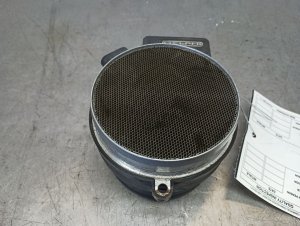

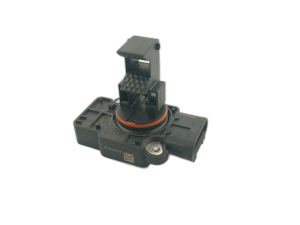


New Aftermarket Parts Available
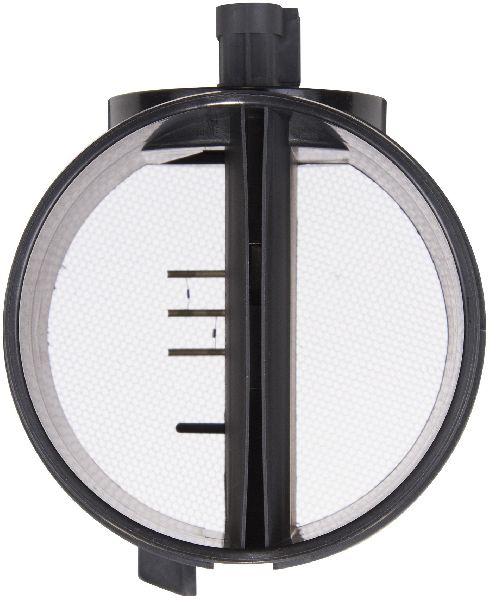

The information in this article is provided for general reference and educational purposes only. Vehicle specifications, procedures, and part compatibility can vary by production date, trim level, and region. Always consult your vehicle's factory service manual and verify part numbers before purchasing or performing repairs. Safety-critical components such as airbags, seat belts, and braking systems should be installed by a qualified professional.
- Chevrolet SILVERADO 1500:
- 🎬 Helpful Videos
- 🛍️ Shop This Part
- What's Unique About the 2007-2014 Chevrolet SILVERADO 1500
- Diagnostic Flowchart
- Symptoms You May Notice
- Most Likely Causes
- Rare But Worth Checking
- Diagnosis Steps
- Parts You'll Likely Need
- Related Codes That Often Appear With This One
- Technical Service Bulletins (TSBs) & Recalls
- Platform-Specific Known Issues
- Mechanic-Grade Diagnostic Values
- Wiring & Ground Locations
- Real Owner Repair Stories
- "I Checked Everything" — The Actual Cause
- OEM Part Supersession History
- 🎟️ Get 5% Off