

P0101 on 2013-2020 Chevrolet Malibu: MAF Sensor & Charge Air Cooler Leak Fixes
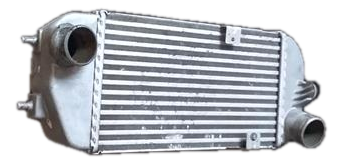
On 2013-2020 turbocharged Malibus, P0101 is most often caused by a disconnected charge air cooler (CAC) pipe at the throttle body. Before replacing the MAF sensor, visually inspect this connection. This is a widespread issue documented in multiple GM Technical Service Bulletins (TSBs), including N192271200 and 22-NA-224, which call for an improved retainer clip.
- For a 2013-2020 Chevy Malibu with a P0101 code, the first and most important check is the charge air cooler pipe connection at the throttle body.
- This issue is so common that GM has issued multiple service bulletins; do not replace the MAF sensor before inspecting for this major air leak.
- Symptoms almost always include the Check Engine Light and a "Reduced Engine Power" warning.
- Other codes like P0299 (Turbo Underboost) and P0172 (System Rich) are strong indicators that the charge air cooler pipe has disconnected.
- The fix is often free and simple: reconnecting the pipe. In some cases, an updated retainer clip may be needed.
What's Unique About the 2013-2020 Chevrolet MALIBU

The 8th and 9th generation Chevrolet Malibu heavily utilize turbocharged engines (1.5L and 2.0L). This introduces a pressurized intake system with a charge air cooler (intercooler). A significant, well-documented weakness on these cars is the connection point where the charge air cooler outlet pipe meets the throttle body. This connection can become loose or disconnect entirely under turbo boost, causing a massive air leak that immediately triggers the P0101 code and puts the car into 'Reduced Engine Power' mode. This specific failure is so common that GM has issued multiple Technical Service Bulletins (TSBs) about it, such as PIP5651G, 22-NA-224, and a recall campaign N192271200 to install an improved retainer.
Diagnostic Flowchart

Tap your situation to follow the diagnostic path that matches what you're seeing on this vehicle.
Generation note: This guide covers the end of the 8th generation (2013-2016 Limited) and the 9th generation (2016-2020) Malibu. The primary cause related to the charge air cooler pipe is most prevalent on the turbocharged engines common in these generations, particularly the 1.5L LFV and 2.0L LTG engines. TSBs specifically call out 2019 models for this issue but it is known to affect the entire generation.
Symptoms You May Notice

- Check Engine Light is on
- "Reduced Engine Power" message on the instrument panel
- Poor acceleration and lack of power
- Rough or unstable idle
- Possible engine stalling at low speeds or when coming to a stop
- A "whooshing" or hissing sound from the engine bay during acceleration
- Black smoke from the exhaust if the air-fuel mixture becomes excessively rich
- Replacing the MAF sensor without first checking for a disconnected charge air cooler pipe. Given the high frequency of this specific failure on Malibus, the air leak should always be the first suspect. TSB 22-NA-224 explicitly warns technicians not to replace the MAF unless it's proven to be faulty after checking for leaks.
Most Likely Causes

- Disconnected Charge Air Cooler (CAC) Pipe 🔴 High Probability The design of the retainer clip at the throttle body connection is a known failure point, as documented by GM in multiple TSBs and a recall campaign (PIP5651G, 22-NA-224, N192271200). Engine movement and turbo boost pressure can cause the pipe to pop off.
How to confirm: Visually inspect the large-diameter intake pipe where it connects to the metal throttle body, located at the top front of the engine. Check if it is loose, disconnected, or crooked. A disconnected pipe will be obvious and is the 'smoking gun' for this issue.
Typical fix: Reconnect the charge air cooler pipe to the throttle body. Ensure the O-ring seal is present and undamaged. Per TSB N192266090, install the updated Charge Air Cooler Retainer Kit (Part No. 13434668) to prevent recurrence. There should be an audible click when the tube is properly seated.
Est. part cost: $15-$40 - Dirty or Faulty Mass Airflow (MAF) Sensor 🟡 Medium Probability Oil vapors from the PCV system and fine dust that gets past the air filter can contaminate the sensor's delicate hot wires, causing inaccurate readings.
How to confirm: Remove the MAF sensor from the intake tube (usually held by two T20 Torx screws). Visually inspect the small wires inside for dirt, oil, or debris. If dirty, clean it with a dedicated MAF sensor cleaner spray. If cleaning doesn't resolve the issue, the sensor may have failed.
Typical fix: Clean the sensor with MAF sensor cleaner only; do not touch the wires. Allow it to dry completely before reinstalling. If the code returns, 🎬 Watch: A quick guide to cleaning your MAF sensor. replace the MAF sensor. The OEM part number for the 1.5L engine is often ACDelco 23366103.
Est. part cost: $15-$150 - Vacuum Leak (other than CAC pipe) ⚪ Low Probability Hoses can become brittle over time. TSB PIP5402C notes that a missing or damaged O-ring seal on other charge air cooler couplers can also cause air leaks leading to P0101/P1101.
How to confirm: Listen for hissing sounds at idle. A smoke test is the most effective method, where smoke is fed into the intake system to reveal the source of any leaks. TSBs recommend this procedure if the main CAC pipe connection is secure.
Typical fix: Repair the leaking hose, gasket, or component. This may involve replacing a cracked hose or a missing O-ring seal.
Est. part cost: $5-$100 - Dirty Throttle Body ⚪ Low Probability Carbon buildup from the PCV system can accumulate around the throttle plate, restricting airflow at idle. This can cause the computer to open the throttle more than expected, which can conflict with MAF readings and trigger codes like P1101, often seen with P0101.
How to confirm: Remove the intake tube from the throttle body and inspect the throttle plate and bore for black carbon buildup.
Typical fix: Clean the throttle body bore and plate with a dedicated throttle body cleaner and a soft cloth. Disconnect the battery before cleaning to avoid confusing the computer.
Est. part cost: $5-$10
Rare But Worth Checking
- Clogged Catalytic Converter: A severely restricted exhaust can reduce the engine's ability to draw in air, causing the MAF sensor readings to be lower than expected. This usually presents with a severe lack of power, especially at higher RPMs, and may be accompanied by catalyst efficiency codes like P0420.
- Charge Air Cooler Icing: In extremely cold climates (below 0°F / -18°C), moisture from the PCV system can freeze inside the charge air cooler, restricting airflow and causing P0101 along with reduced power, oil leaks, and hesitation. GM has issued service bulletin 21-NA-192 for this issue.
Diagnosis Steps
- Read all diagnostic trouble codes from the PCM. Note any other codes that appear with P0101, such as P1101, P0299, P0172, or P0506, as they strongly point to a major intake leak.
- Open the hood and perform a thorough visual inspection of the entire air intake system, from the air filter box to the engine.
- CRITICAL STEP: Pay extremely close attention to the large charge air cooler outlet pipe where it connects to the throttle body. This is the most likely failure point. Wiggle the pipe to check if it is loose or has popped off.
- If the pipe is disconnected, inspect the O-ring seal inside the pipe's connector. If the seal is present and in good condition, reconnect the pipe firmly until you hear an audible 'click'.
- For a permanent fix, it is highly recommended to install the updated 'Retainer Chrg Air' kit, GM Part Number 13434668, as specified in TSB N192266090. 🎬 See this walkthrough on how to remove the intercooler hose.
- If no obvious leaks are found, locate and remove the MAF sensor. Inspect it for contamination (dirt, oil, fibers).
- Clean the MAF sensor using only dedicated MAF sensor cleaner spray. Do not touch the internal elements. Allow it to dry completely before reinstalling.
- Inspect the engine air filter. A severely clogged filter can restrict airflow and cause this code.
- If the code persists, a smoke test should be performed to find less obvious leaks in the intake tract, as suggested by TSB PIP5402C.
- As a last resort, the MAF sensor itself may have failed electronically. A scan tool capable of viewing live data can be used to monitor the MAF sensor's output (in grams/second) to see if it responds correctly to changes in engine RPM.
Parts You'll Likely Need
- Charge Air Cooler Outlet Pipe Retainer Kit
(OEM #13434668)— This is the updated, improved clip designed by GM to prevent the charge air cooler pipe from disconnecting from the throttle body. It is the official fix listed in multiple service bulletins and recall campaigns.
Trusted brands: GM Genuine
OEM price range: $15-$40
Related Codes That Often Appear With This One
- P1101 — This is a manufacturer-specific code for Intake Air Flow System Performance. It is almost always set alongside P0101 and is caused by the exact same issues, particularly the disconnected CAC pipe. Multiple TSBs list them together.
- P0299 — Indicates a Turbo/Supercharger Underboost condition. A disconnected charge air cooler pipe means the boost pressure created by the turbo is escaping instead of entering the engine, directly causing an underboost situation. This code is cited in TSBs N192271200 and 22-NA-224 as a companion to P0101.
- P0172 — Indicates a System Too Rich (Bank 1) condition. When the charge air cooler pipe disconnects, the MAF sensor (located before the leak) reports a large volume of air entering the system. However, a large portion of that air escapes before reaching the cylinders. The PCM injects fuel for the air that was *measured*, not the air that actually *arrived*, resulting in a rich air-fuel mixture. This is confirmed in TSB N192271200.
- P0506 — Indicates an Idle Air Control System RPM Lower Than Expected. A massive unmetered air leak can cause the engine to struggle to maintain a stable idle, sometimes resulting in a stall or an idle speed that is lower than the target. This code is also listed in the main TSBs for this issue.
Technical Service Bulletins (TSBs) & Recalls
- PIP5651G: Links P0101 to a disconnected pipe at the throttle body causing reduced power.
- 22-NA-224: Provides a repair procedure for a concern of Reduced Engine Power with DTC P0101 set.
- PIP5710A: Mentions the charge air cooler tube becoming disconnected from the throttle body as a cause for P0101.
- PIP5529A/B: Lists P0101 as part of a combination of codes that may require further diagnostics.
- N192266090: A service update to install a retainer kit to fix the charge air cooler duct disconnecting.
- PIP5651F: Instructs technicians to check the charge air cooler outlet hose connection first when P0101 and other codes are present.
Platform-Specific Known Issues
- Owner Experience: Repeated Failures and Dealer Frustration: On ChevroletForum.com, a 2016 Malibu owner reported their car entering 'Reduced Engine Power' mode five times within 40,000 miles. Despite OnStar pulling the same code each time, the dealership struggled to find the issue, which later included a disintegrated piston requiring an engine rebuild. Another owner in the same thread experienced four limp mode events in eight months, with causes attributed to a stuck oil pressure valve, low oil, cylinder damage (requiring engine replacement), and a faulty accelerator pedal sensor, highlighting a frustrating diagnostic journey for some owners.
- TSB Guidance on Visual Inspection: TSB 22-NA-224, which supersedes PIP5651G, provides specific instructions for technicians. It states that if the charge air cooler pipe is disconnected, the throttle body and pipe end should be inspected for damage. The TSB includes photos to help distinguish between normal "witness marks" on the throttle body and actual damage that would require replacement. It explicitly warns against replacing the MAF sensor or throttle body unless they are confirmed to be damaged or are the direct cause of the code.
Mechanic-Grade Diagnostic Values
- Mass Air Flow (MAF) Sensor Reading at Idle — expected: Approximately 1.5 g/s for the 1.5L engine (rule of thumb is g/s should roughly equal engine displacement in liters at warm idle).. Failure: A reading significantly lower or higher than the engine's displacement suggests a sensor issue, a vacuum leak, or an exhaust restriction.
- Mass Air Flow (MAF) Sensor Reading at 2500 RPM — expected: 15 to 25 g/s (general value, varies by engine).. Failure: A reading that does not rise smoothly and linearly with RPM, or is outside the expected range, indicates a faulty sensor or airflow problem.
- Long Term and Short Term Fuel Trims — expected: Within +/- 10% at idle.. Failure: High positive fuel trims (e.g., >10%) indicate the engine is compensating for a lean condition, strongly suggesting an unmetered air leak downstream of the MAF sensor.
Hidden / Shadow Codes Worth Checking
- P0101 Run Conditions: On some Chevrolet vehicles, the diagnostic test for P0101 will only run if a specific set of other codes are NOT present. These can include codes for MAP sensor (P0106-P0108), throttle position sensor (P0120, P0220), and EVAP system (P0442, P0455, etc.). This means fixing other system faults may be required before the P0101 code can be properly diagnosed or will clear. (see via This is internal ECM logic, but a technician can infer this if a P0101 code appears only after fixing another seemingly unrelated issue.)
Scan Tool Commands That Help
- GDS2 (or equivalent professional scanner): Throttle Body Idle Air Flow Compensation Reset — This function should be used after cleaning or replacing the throttle body. It forces the ECM to relearn the new baseline airflow characteristics at idle, which can resolve P0101/P1101 codes caused by carbon buildup.
- Any OBD-II Scanner with Live Data: Fuel Trim Reset — After repairing a vacuum leak or replacing a MAF sensor, clearing codes and resetting fuel trims forces the ECM to start with a clean slate, providing a faster way to verify if the repair was successful by observing the new trim values.
Wiring & Ground Locations
- G101 — Located at the front left of the engine, on the lower block.. This specific ground point serves the Mass Air Flow Sensor, Intake Air Temperature Sensor, and the Engine Control Module (ECM). A poor connection at G101 can cause erratic sensor readings and is a critical point to check for corrosion or looseness when diagnosing a P0101.
Real Owner Repair Stories
- YouTube user 'Lara's Garage' (2017 Chevrolet Malibu) — Persistent P1101 code (often paired with P0101) even after replacing the MAF sensor and confirming the air filter was clean.
❌ Tried (didn't work) Replacing the MAF sensor, Checking the air filter
✅ What actually fixed it The problem was resolved by removing the throttle body and thoroughly cleaning the carbon buildup from the throttle plate and bore. The check engine light did not return after 75 miles of driving. - Reddit user 'AfrshTD' (Chevrolet Malibu 1.5L i4) — P1101 code that did not resolve after cleaning the throttle body.
❌ Tried (didn't work) Cleaning the throttle body, Checking crankcase pressure (which was normal)
✅ What actually fixed it The root cause was a plugged PCV orifice inside the camshaft/valve cover. Replacing the valve cover assembly, which contains the integrated PCV system, finally fixed the code.
"I Checked Everything" — The Actual Cause
- A clogged catalytic converter can cause a P0101. The engine can't exhale properly, which means it can't inhale the expected amount of air, causing the MAF sensor to report lower-than-expected airflow. This would not be found with an intake smoke test.
- A failed or clogged internal PCV valve, which is integrated into the valve cover on the 1.5L engine, can cause crankcase pressure issues that lead to P0101/P1101. A standard intake smoke test will not identify this internal engine blockage.
When the Usual Fixes Don't Work
- While the disconnected charge air cooler pipe is the most common cause, it is not the only one. In a documented case for a 2017 Malibu, the P1101/P0101 code persisted after replacing the MAF sensor. The final repair was a thorough cleaning of the throttle body, which had significant carbon buildup. In another case, the cause was a clogged PCV system inside the valve cover, which required replacing the entire cover assembly. These instances show that if the main CAC pipe is secure, the next steps should be to inspect the throttle body and PCV system before assuming the new MAF sensor is also faulty.
OEM Part Supersession History
13434668→84828210— This is the Charge Air Cooler Retainer Kit. The original part was prone to failure, leading to the CAC pipe disconnecting. The new part is an improved design to prevent this common issue.
Model Year Variations Within This Range
- 2016-2018 vs 2019-2020: The 1.5L LFV engine in 2016-2018 models was rated at 163 hp, while 2019 and newer models were rated at 160 hp. Additionally, earlier 9th generation models (2016-2017) are reported to have more reliability issues with the LFV engine than later models.
- 2016+: The 9th generation, introduced in 2016, is nearly 300 pounds lighter than the previous generation, featuring the new 1.5L LFV turbo as the standard engine. This design change is what introduced the pressurized charge-air system that is central to the most common cause of P0101 on these vehicles.
Helpful Videos
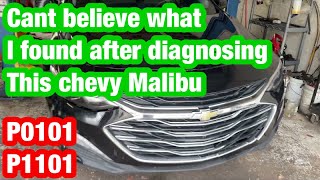

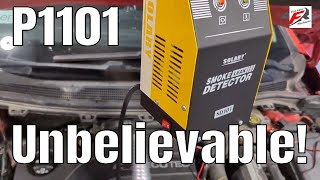
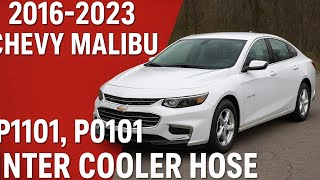
We Have This Part in Stock

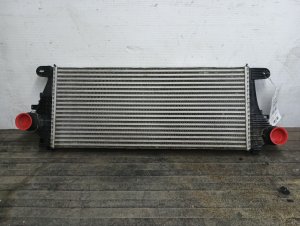

The information in this article is provided for general reference and educational purposes only. Vehicle specifications, procedures, and part compatibility can vary by production date, trim level, and region. Always consult your vehicle's factory service manual and verify part numbers before purchasing or performing repairs. Safety-critical components such as airbags, seat belts, and braking systems should be installed by a qualified professional.
- Chevrolet MALIBU:
- 🎬 Helpful Videos
- 🛍️ Shop This Part
- What's Unique About the 2013-2020 Chevrolet MALIBU
- Diagnostic Flowchart
- Symptoms You May Notice
- Most Likely Causes
- Rare But Worth Checking
- Diagnosis Steps
- Parts You'll Likely Need
- Related Codes That Often Appear With This One
- Technical Service Bulletins (TSBs) & Recalls
- Platform-Specific Known Issues
- Mechanic-Grade Diagnostic Values
- Hidden / Shadow Codes Worth Checking
- Scan Tool Commands That Help
- Wiring & Ground Locations
- Real Owner Repair Stories
- "I Checked Everything" — The Actual Cause
- When the Usual Fixes Don't Work
- OEM Part Supersession History
- Model Year Variations Within This Range
- 🎟️ Get 5% Off