

P0101 on 2014-2017 Chevrolet Impala: MAF Sensor Causes and Fixes
On a 2014-2017 Impala, code P0101 is most often caused by a dirty Mass Airflow (MAF) sensor. Cleaning the sensor with a dedicated cleaner is a common first step and often solves the issue. If cleaning doesn't work, a replacement MAF sensor or a hidden vacuum leak are the next most likely culprits. In some cases, especially if seen with other codes, GM has noted this can be caused by loose intake manifold bolts.
- Start by cleaning the MAF sensor with a dedicated cleaner; this is the most common and cheapest fix.
- If cleaning doesn't work, inspect thoroughly for vacuum leaks, especially the flexible intake boot, before buying a new sensor.
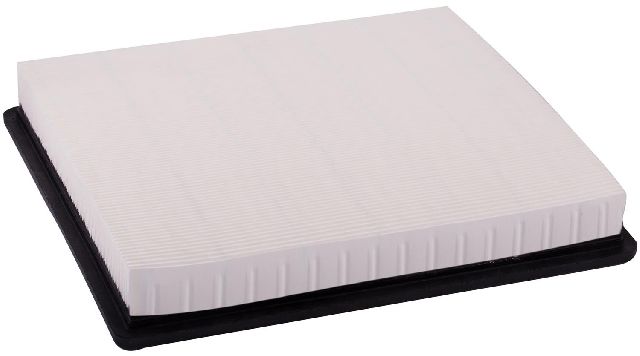
- Always check the engine air filter and replace it if it's dirty.
- If P0101 appears with many other codes, be aware of TSBs that point to a more complex electrical issue.
- When buying a MAF sensor, confirm the part number with your vehicle's VIN, as there are multiple potential part numbers for this generation.
What's Unique About the 2014-2017 Chevrolet IMPALA

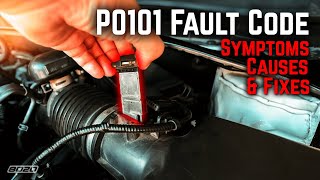
For the 10th generation Impala, the P0101 code is a straightforward MAF performance issue. 🎬 Watch: A breakdown of what the P0101 code really means. However, it's important not to confuse this model with the 'Impala Limited' (a previous-generation fleet vehicle sold until 2016), which may use different parts. Additionally, Chevrolet has issued Technical Service Bulletins (TSBs) that group P0101 with a wide array of other codes. TSB PIP5529B specifically points to a scenario where loose intake manifold bolts can create a vacuum leak, causing P0101 along with other codes, which might otherwise lead a technician to unnecessarily replace sensors.
Diagnostic Flowchart

Tap your situation to follow the diagnostic path that matches what you're seeing on this vehicle.
Symptoms You May Notice
- Check Engine Light is on
- Reduced engine power and poor acceleration
- Engine hesitates or surges, especially under load
- Rough or unstable idle
- Engine may stall, particularly when coming to a stop
- Decreased fuel economy
- Black smoke from the tailpipe (if running excessively rich)
- Replacing the MAF sensor without first attempting to clean it.
- Replacing oxygen sensors when the root cause is unmetered air from a vacuum leak affecting the air-fuel mixture.
- Failing to check for a dirty air filter, which is a simple and cheap fix.
Most Likely Causes


- Dirty or Contaminated MAF Sensor 🔴 High Probability The MAF sensor's sensing elements (hot wires) are delicate and exposed to the intake air. Over time, oil vapors from the PCV system and fine dust can coat the sensor, insulating it and causing inaccurate readings. This is a very common issue on most modern vehicles and the first thing to check.
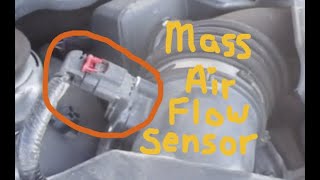
How to confirm: Visually inspect the MAF sensor's wires or heated elements after removing it from the intake tube. If they appear dirty, coated in grime, or oily, they need cleaning. The sensor is located on the air intake tube, just after the air filter box.
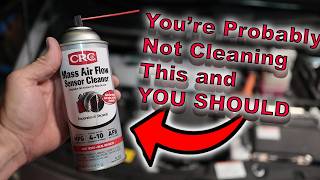
Typical fix: Remove the sensor and clean it carefully using only a dedicated Mass Airflow Sensor cleaner. 🎬 See how to clean your MAF sensor quickly and easily. Do not touch the delicate wires. Allow it to dry completely before reinstalling.
Est. part cost: $8-$15 for MAF cleaner - Vacuum Leak 🟡 Medium Probability Vacuum leaks allow 'unmetered' air to enter the engine after the MAF sensor. Common failure points include cracked plastic or rubber intake boots, leaking intake manifold gaskets, or deteriorated PCV hoses. Specifically for this platform and its relatives, GM TSB PIP5529B notes that loose intake manifold bolts can be a cause, leading to a gasket leak.
How to confirm: Visually inspect all intake ducting between the MAF sensor and the throttle body for cracks or loose clamps. Listen for a hissing sound at idle. A professional can perform a smoke test to pinpoint the exact location of the leak. If multiple codes from TSB PIP5529B are present, checking the torque of the intake manifold bolts is recommended.
Typical fix: Replace the cracked hose, boot, or faulty gasket. If intake manifold bolts are loose, they should be removed one by one, have threadlocker applied, and be torqued to specification.
Est. part cost: $20-$80 for a hose, $40-$100 for intake gaskets - Clogged or Dirty Engine Air Filter 🟡 Medium Probability
How to confirm: Remove and inspect the engine air filter. If it is visibly dirty, clogged with debris, or has not been replaced in a long time, it can restrict airflow and cause the MAF to read incorrectly.
Typical fix: Replace the engine air filter. This is a simple and inexpensive maintenance item that should be checked first.
Est. part cost: $15-$40 - Failed MAF Sensor ⚪ Low Probability
How to confirm: If cleaning the sensor and confirming there are no vacuum leaks does not resolve the code, the sensor itself may have failed electronically. 🎬 Watch: Step-by-step guide to replacing the MAF sensor on your Impala. A mechanic can confirm this by monitoring the sensor's output data (frequency or grams/sec) on a scan tool during a test drive and comparing it to specified values at different RPMs.
Typical fix: Replace the Mass Airflow Sensor.
Est. part cost: $70-$150
Rare But Worth Checking
- Clogged Catalytic Converter: While less common, a restricted exhaust can reduce the engine's ability to draw in air, causing the MAF sensor readings to be lower than expected, which can trigger a P0101 code on some GM vehicles. This is usually accompanied by a significant loss of power, especially at high RPMs, and potentially other codes like P0420 (Catalyst System Efficiency Below Threshold).
- Wiring Harness or Connector Issue: As indicated by GM Technical Service Bulletins, P0101 can appear with many other codes due to an electrical fault. A damaged wire or a corroded/loose pin in the connector for the MAF sensor can cause an erratic or lost signal. This should be suspected if the code is intermittent or appears immediately after service near the intake system.
- Dirty or Faulty Throttle Body: A throttle body caked with carbon can stick or fail to open correctly, causing a mismatch between expected and actual airflow. While less common than a MAF issue, cleaning the throttle body is sometimes required to resolve airflow correlation codes like P0101.
Diagnosis Steps
- Read the code with an OBD-II scanner and check for any other pending or active codes. Note any codes listed in TSB PIP5529B.
- Inspect the engine air filter. If it's dirty, replace it.
- Visually inspect the air intake system for any obvious cracks, loose clamps, or disconnected hoses between the MAF sensor and the engine.
- Remove the MAF sensor and inspect its sensing elements. If dirty, clean it with dedicated MAF sensor cleaner and let it dry completely. Do not touch the sensor wires.
- Inspect the MAF sensor electrical connector for corrosion or loose pins. Ensure it is securely connected.
- Reinstall the sensor, clear the codes, and perform a test drive to see if the code returns.
- If the code persists, check for less obvious vacuum leaks. A smoke test is the most effective method. If multiple codes from TSB PIP5529B are present, check the intake manifold bolts for proper torque.
- If all else fails, use a scan tool with live data to monitor the MAF sensor's readings (in g/s) at idle and throughout the RPM range to see if they are rational. Compare to known-good values if possible to confirm if the sensor is faulty before replacing it.
Parts You'll Likely Need
- Mass Airflow Sensor
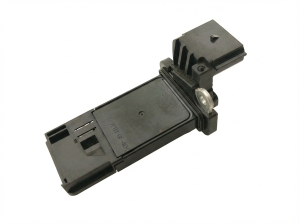
(OEM #23262343)— This is the primary sensor involved in the code. It either gets dirty (most common) or fails electronically. Part number 23262343 (interchanges with 20787043, 23118170) is the GM Genuine part for many Impalas in this range, fitting both 2.5L and 3.6L engines. Always verify with your VIN.
Trusted brands: ACDelco (GM Genuine), Hitachi, Delphi
OEM price range: $100-$180
Aftermarket price range: $60-$120 - Engine Air Filter
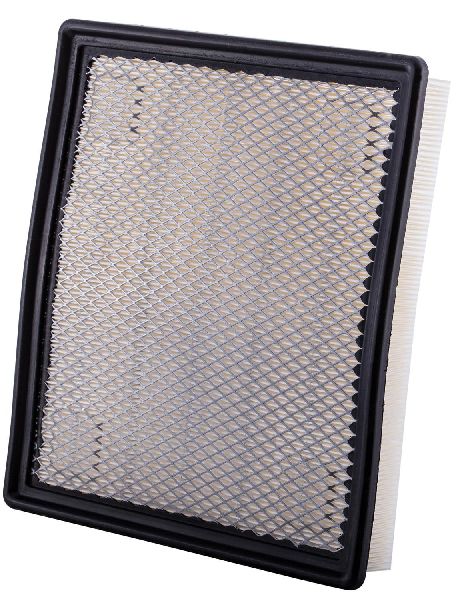
(OEM #ACDelco A3178C (for 2.5L/3.6L))— A clogged air filter restricts airflow and is a simple, inexpensive, and common cause for the P0101 code. It should be checked and replaced if dirty as a first step.
Trusted brands: ACDelco, WIX, Fram
OEM price range: $25-$40
Aftermarket price range: $15-$25 - Mass Airflow Sensor Cleaner — Often, the sensor is just dirty, not broken. A can of specialized cleaner is the cheapest and most common first attempt at a fix.
Trusted brands: CRC, WD-40 Specialist, Liqui Moly
Aftermarket price range: $8-$15
Related Codes That Often Appear With This One
- P0171 — System Too Lean (Bank 1). A vacuum leak or a faulty MAF sensor under-reporting airflow will cause the ECM to inject too little fuel, creating a lean condition and triggering both codes.
- P0174 — System Too Lean (Bank 2). On the 3.6L V6, this indicates a lean condition on the second bank of cylinders, often from the same root causes as P0171, especially a large vacuum leak affecting the entire intake manifold.
- P0068 — MAP/MAF - Throttle Position Correlation. This code appears with P0101 in TSB #PIP5529B, indicating a conflict between the airflow sensors and the throttle position sensor, often due to a significant vacuum leak like loose intake manifold bolts.
Technical Service Bulletins (TSBs) & Recalls
- PIP5529B: Mentions P0101 as part of a group of codes that may set together due to loose intake manifold bolts, requiring additional diagnostics.
- PIP5529A: An earlier version of the same bulletin, also connecting P0101 to a potential intake manifold leak.
Platform-Specific Known Issues
- TSB PIP5529B - Multiple Codes Due to Loose Intake Manifold Bolts: Technical Service Bulletins #PIP5529A and #PIP5529B exist for 2014-2017 models with the 2.5L (LKW) engine where P0101 may be set along with a combination of other codes like P0068, P0106, and P0171. The cause identified by GM is loose intake manifold bolts creating a vacuum leak. The prescribed fix is not to replace the gasket initially, but to
Mechanic-Grade Diagnostic Values
- Mass Airflow (MAF) Sensor Reading at Idle — expected: 2 to 7 g/s (grams per second), depending on engine size and load.. Failure: A reading significantly higher (e.g., 8+ g/s) or lower than this range at a stable idle can indicate a faulty sensor or a large vacuum leak. Readings should be stable.
- Mass Airflow (MAF) Sensor Reading at 2500 RPM — expected: 15 to 25 g/s (grams per second), depending on engine size.. Failure: The reading should increase smoothly and linearly with RPM. A slow response can indicate a dirty sensor or an air leak, while a jumpy or erratic reading suggests a failing sensor or wiring issue.
- Engine Ground Voltage Drop — expected: Close to 0.0V DC.. Failure: When measuring between the negative battery terminal and the engine block or alternator case with the engine running, any reading significantly above 0.1V indicates a poor ground connection, which can cause erratic sensor behavior.
Wiring & Ground Locations
- MAF Sensor Connector — On the air intake tube, between the air filter housing and the throttle body.. This 5-pin connector provides power, ground, and signal lines for both the MAF and integrated IAT (Intake Air Temperature) sensor. Corrosion or damage to the Yellow (MAF Signal, Pin 69 at PCM), Pink (Ignition Voltage), or Black (Ground) wires can directly cause code P0101.
- Engine Block Ground Strap — A braided metal strap typically connecting the rear of the engine block to the vehicle's firewall or chassis frame rail.. This is a primary ground path for the engine and its sensors. If this strap is corroded, loose, or broken, it can create a floating ground, causing unstable voltage and erratic readings from sensors like the MAF, leading to performance codes like P0101.
- PCM C1 Connector (Pin 69) — At the Powertrain Control Module (PCM). The PCM location varies but is often in the engine bay near the firewall or battery.. Pin 69 on the C1 connector is the specific input for the MAF sensor signal (Yellow wire). A technician may back-probe this pin to verify the signal is reaching the PCM, ruling out a wiring break between the sensor and the computer.
Real Owner Repair Stories
- YouTube video on a 2016 Toyota Tundra, but a widely applicable diagnostic principle. (2016 Toyota Tundra w/ 200,000+ miles) — Check engine light with P0101 code, running rough, backfiring.
❌ Tried (didn't work) Replacing the MAF sensor with a new OEM part. The code returned., Clearing the code multiple times. It always came back.
✅ What actually fixed it The throttle body was extremely dirty. After removing it from the engine and cleaning it thoroughly from both sides with throttle body cleaner and brushes, the P0101 code disappeared and did not return.
OEM Part Supersession History
20787043, 23118170→23262343— Standard part consolidation and potential design updates by GM.
Heads up: GM part 23262343 is the correct GM Genuine replacement and is a direct fit with no programming required. Aftermarket versions may not meet the same calibration standards as the OE part.
Model Year Variations Within This Range
- 2014-2017: The primary V6 engine offered in the Impala throughout this period was the 3.6L LFX. Unlike some other GM platforms, the Impala did not switch to the newer LGX V6 engine during this generation. Therefore, parts and diagnostic procedures for the V6 are consistent across these model years. The main infotainment system received an update in 2016 to include Apple CarPlay, but this did not affect engine management.
Helpful Videos
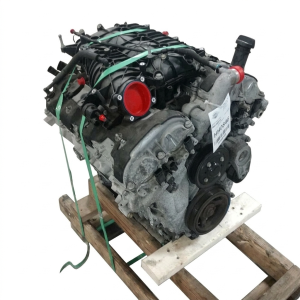
Used OEM Parts in Stock

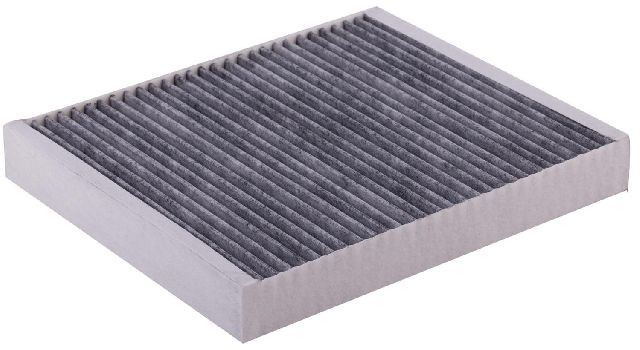
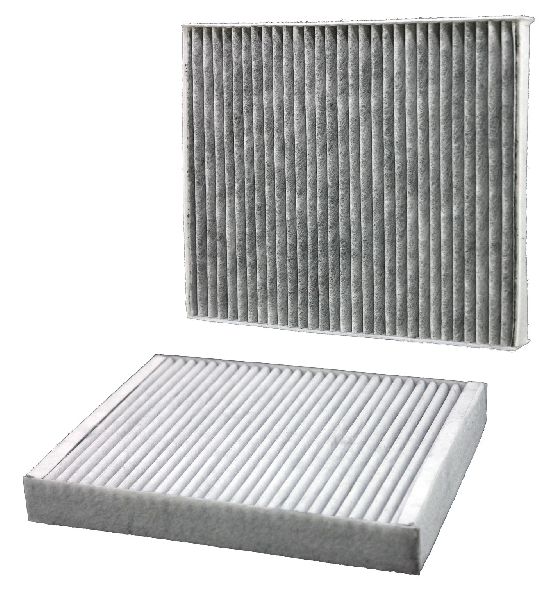
New Aftermarket Parts Available


The information in this article is provided for general reference and educational purposes only. Vehicle specifications, procedures, and part compatibility can vary by production date, trim level, and region. Always consult your vehicle's factory service manual and verify part numbers before purchasing or performing repairs. Safety-critical components such as airbags, seat belts, and braking systems should be installed by a qualified professional.
- Chevrolet IMPALA:
- 🎬 Helpful Videos
- 🛍️ Shop This Part
- What's Unique About the 2014-2017 Chevrolet IMPALA
- Diagnostic Flowchart
- Symptoms You May Notice
- Most Likely Causes
- Rare But Worth Checking
- Diagnosis Steps
- Parts You'll Likely Need
- Related Codes That Often Appear With This One
- Technical Service Bulletins (TSBs) & Recalls
- Platform-Specific Known Issues
- Mechanic-Grade Diagnostic Values
- Wiring & Ground Locations
- Real Owner Repair Stories
- OEM Part Supersession History
- Model Year Variations Within This Range
- 🎟️ Get 5% Off