

P0101 on 2015-2017 Chevrolet Colorado: MAF Sensor and Vacuum Leak Fixes
On a 2015-2017 Colorado, P0101 is often caused by a dirty MAF sensor or a contaminated throttle body. If you have the 2.5L engine and other codes like P0171 or P0106, the most likely cause is loose intake manifold bolts, a known issue covered by a GM Technical Service Bulletin. The fix is to re-torque the bolts to 10 Nm (89 lb-in) with threadlocker.
- For a P0101 code on a 2015-2017 Colorado, always start by cleaning the MAF sensor and throttle body with their respective, dedicated cleaners.
- If you have the 2.5L engine and see other codes like P0171, P0106, or P0068, there is a very high probability that your intake manifold bolts are loose, as per GM TSB #PIP5529B.
- Do not replace the MAF sensor until you have ruled out simpler issues like dirt/contamination and vacuum leaks.
- A vacuum leak is a common cause, either from a simple cracked hose or the specific intake manifold bolt issue on 2.5L models.
What's Unique About the 2015-2017 Chevrolet COLORADO

While a dirty MAF sensor is a common cause on any vehicle, this generation of Colorado and its twin, the GMC Canyon, have a very specific documented issue, especially on the 2.5L LCV engine. GM issued Technical Service Bulletin #PIP5529B which points to loose intake manifold bolts as a primary cause of P0101, often appearing with a cluster of other codes. This creates a vacuum leak that is a root cause for many owners. The TSB specifies re-torquing the bolts to 10 Nm (89 lb-in) with medium-strength threadlocker. Additionally, heavy carbon and oil buildup on the throttle body is frequently reported on these trucks, which can also trigger this code.
Diagnostic Flowchart
Tap your situation to follow the diagnostic path that matches what you're seeing on this vehicle.
Symptoms You May Notice
- Check Engine Light is on
- Rough or unstable idle
- Engine stalling, especially under light load or when coming to a stop
- Hesitation or surging when accelerating
- Reduced engine power
- Decreased fuel economy
- Black smoke from the tailpipe in some cases
- Replacing the MAF sensor without first cleaning it.
- Replacing the MAF sensor when the true cause is a vacuum leak from loose intake manifold bolts (on the 2.5L) or a cracked intake/PCV hose.
Most Likely Causes

- Loose Intake Manifold Bolts 🔴 High Probability Specifically cited in GM TSB #PIP5529B for the 2.5L I4 LCV engine. The bolts can back out over time, creating a vacuum leak at the intake manifold gasket. This is a well-documented failure pattern on these engines.
How to confirm: Check for other codes listed in the TSB (P0068, P0106, P0171, P0506). Perform a smoke test to find the leak or manually check the torque of the intake manifold bolts. They are often found to be extremely loose.
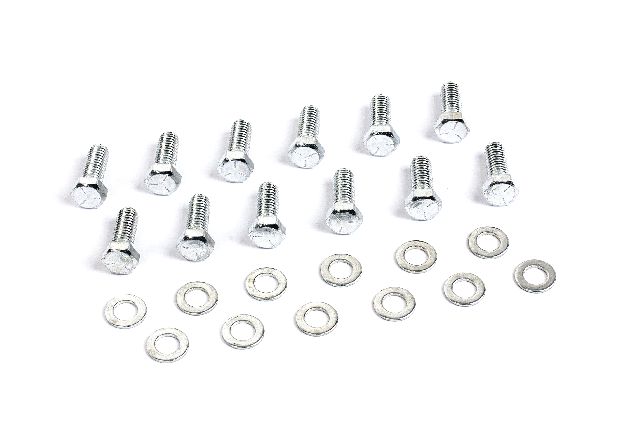
Typical fix: Re-torque the intake manifold bolts to the manufacturer's specification of 10 Nm (89 lb-in or 7.4 ft-lbs). Per the TSB, remove one bolt at a time, apply medium-strength threadlocker (e.g., Loctite Blue), reinstall, and then torque all bolts in the proper sequence. The gasket should only be replaced if it still leaks after torquing.
Est. part cost: $5-$15 for threadlocker - Dirty or Contaminated Mass Airflow (MAF) Sensor 🔴 High Probability The PCV system can allow oil vapor into the intake, which coats the MAF sensor's sensitive wires over time, skewing its readings. Oiled aftermarket air filters are also a common source of contamination.
How to confirm: Remove the sensor from the intake tube (typically held by two Torx screws) and visually inspect the small wires inside for dirt, oil, or debris.
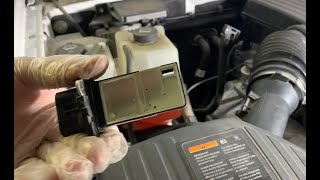
Typical fix: Clean the sensor wires carefully using only dedicated MAF sensor cleaner spray. 🎬 Watch: How to clean the MAF sensor on your Colorado. Do not touch the wires. Allow it to air dry completely before reinstalling.
Est. part cost: $10-$15 for cleaner spray - Dirty Throttle Body 🟡 Medium Probability Like the MAF sensor, the throttle body is susceptible to oil and carbon buildup from the PCV system, which can restrict airflow at idle and cause erratic performance that triggers a P0101.
How to confirm: Remove the intake duct from the throttle body and inspect the throttle plate and bore for a thick black coating of carbon.
Typical fix: Remove the throttle body and clean it thoroughly with dedicated throttle body cleaner and a soft cloth or brush. 🎬 See this guide on cleaning a throttle body the right way. An idle relearn procedure may be necessary after cleaning.
Est. part cost: $10-$15 for cleaner spray - Vacuum Leak (Other) 🟡 Medium Probability Intake hoses, especially PCV tubes, can become cracked, brittle, or disconnected with age and heat cycles, allowing unmetered air to enter the engine.
How to confirm: Visually inspect all intake ducting and vacuum lines for cracks or loose connections. A hissing sound at idle can also indicate a leak. A smoke test is the most definitive way to find a leak.
Typical fix: Replace the cracked or leaking hose/gasket. The PCV hose is a common failure point.
Est. part cost: $20-$100 - Faulty Mass Airflow (MAF) Sensor ⚪ Low Probability
How to confirm: If cleaning the sensor and ruling out all other causes does not resolve the code, the sensor's electronics may have failed. This can be confirmed by monitoring its output with a scan tool or by swapping with a known-good part.
Typical fix: Replace the MAF sensor.
Est. part cost: $80-$200
Rare But Worth Checking
- Clogged Catalytic Converter: A restricted exhaust can reduce the amount of air the engine can draw in, causing the MAF reading to be lower than expected. This usually presents with severe power loss at higher RPMs and may be accompanied by a P0420 code. A Reddit user also suggested this as a possible cause for P0101.
- Damaged MAF Sensor Wiring: The wiring harness leading to the MAF sensor can become damaged or corroded, causing an intermittent or lost signal. This is a possibility if the code returns immediately after clearing and the sensor itself is good.
Diagnosis Steps

- Scan the ECM for stored trouble codes. Note if any other codes, especially those listed in TSB #PIP5529B (P0068, P0106, P0171, P0506), are present, as this strongly points to the loose intake manifold bolts on the 2.5L engine.
- Visually inspect the entire air intake system from the air filter box to the throttle body for any cracks, loose clamps, or disconnected hoses. Pay special attention to PCV hoses.
- Remove and inspect the air filter. Replace if it is dirty or clogged, as this can restrict airflow.
- Remove the MAF sensor. Inspect its sensing elements for contamination. If dirty, clean it with dedicated MAF sensor cleaner and let it dry completely.
- Inspect the throttle body for heavy carbon buildup. Clean if necessary.
- If the 2.5L engine has a combination of the codes mentioned above, check the torque on the intake manifold bolts. If loose, tighten to 10 Nm (89 lb-in) using medium-strength threadlocker as per TSB #PIP5529B.
- If no obvious issues are found, use a smoke machine to test the intake system for hard-to-find vacuum leaks.
- With a scan tool, monitor the MAF sensor reading (in g/s) at idle and while revving the engine to see if it responds smoothly to changes in airflow.
- Inspect the MAF sensor's electrical connector and wiring for any signs of damage, corrosion, or looseness.
Parts You'll Likely Need

- Mass Airflow Sensor Cleaner — Often, the only thing needed is to clean the existing sensor. This should always be the first step.
Trusted brands: CRC, Liqui Moly
Aftermarket price range: $10-$15 - Mass Airflow Sensor
(OEM #23262343)— If cleaning the sensor and checking for vacuum leaks doesn't solve the problem, the sensor itself may have failed electronically.
Trusted brands: ACDelco, Delphi, Hitachi
OEM price range: $150-$220
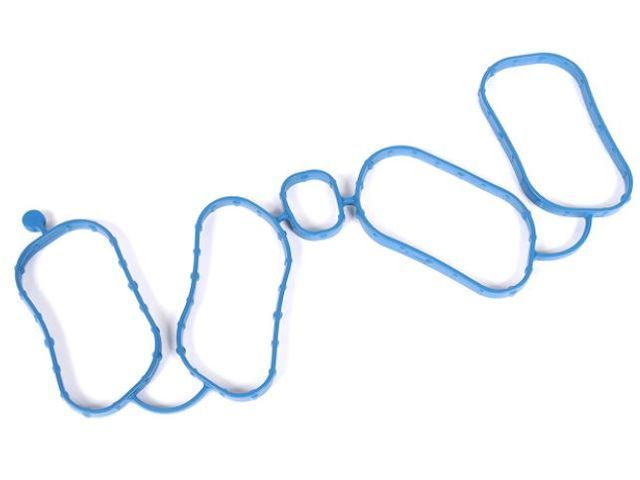
Aftermarket price range: $70-$140 - Intake Manifold Gasket (2.5L LCV)
(OEM #ACDelco 12676539)— Rarely needed. TSB #PIP5529B advises against replacing the gasket unless it's proven to be damaged after re-torquing the manifold bolts.
Trusted brands: ACDelco, Fel-Pro
OEM price range: $25-$40
Aftermarket price range: $15-$30 - PCV Hose
(OEM #12673862 (Foul Air Tube, Varies by specific application))— These rubber/plastic hoses can crack over time, creating a vacuum leak that is a common cause for P0101 and P0171 codes.
Trusted brands: ACDelco, Dorman
OEM price range: $20-$50
Aftermarket price range: $15-$35
Related Codes That Often Appear With This One
- P0171 — System Too Lean. This is very common with P0101 because a vacuum leak allows unmetered air into the engine, creating a lean air/fuel mixture. It is explicitly listed in TSB #PIP5529B.
- P0106 — Manifold Absolute Pressure (MAP) Sensor Performance. A vacuum leak or intake issue causes the MAF and MAP sensor readings to conflict with each other. This code is also listed in TSB #PIP5529B.
- P0068 — MAP/MAF - Throttle Position Correlation. This code indicates a disagreement between the primary sensors that measure engine load. A large vacuum leak is a common cause, and this code is also part of the TSB #PIP5529B cluster.
- P0506 — Idle Air Control System RPM Lower Than Expected. A vacuum leak or dirty throttle body can cause the engine's idle speed to be unstable and lower than the target RPM. This is another code mentioned in TSB #PIP5529B.
Technical Service Bulletins (TSBs) & Recalls
- PIP5529B: Addresses a potential for a group of DTCs including P0101, P0068, P0106, P0171, and others, which may be caused by loose intake manifold bolts on the 2.5L engine.
Platform-Specific Known Issues

- TSB #PIP5529B: Loose Intake Manifold Bolts (2.5L Engine): On 2015-2017 models with the 2.5L LCV engine, GM identified a common issue where the intake manifold bolts can loosen over time. This creates a significant vacuum leak, triggering a cluster of codes including P0101, P0171 (System Too Lean), P0106 (MAP Sensor Performance), P0068 (MAP/MAF-Throttle Position Correlation), and P0506 (Idle RPM Low). The official fix is not to replace the gasket initially, but to remove each bolt one by one, apply medium-strength threadlocker, and re-torque to 10 Nm (89 lb-in). This is often the root cause when multiple of these codes are present.
Mechanic-Grade Diagnostic Values
- Mass Airflow (g/s) at idle (warm engine) — expected: Approximately 2.5 g/s for the 2.5L I4 engine, and 3.6-4.0 g/s for the 3.6L V6 engine.. Failure: Readings significantly higher (e.g., 7-8 g/s) or lower than the engine's displacement in liters suggest a vacuum leak (if high) or a sensor/restriction issue (if low).
- Mass Airflow (g/s) during a 1-2 shift at Wide Open Throttle — expected: Should increase rapidly from idle values to 140 g/s or more.. Failure: A failure to see a sharp increase can indicate a restriction in the intake or exhaust system, such as a clogged air filter or catalytic converter.
- MAF Sensor Signal Voltage — expected: Varies with airflow, but should increase smoothly with RPM. A scan tool is the proper tool to read this data.. Failure: Erratic or non-linear voltage changes as RPMs increase can indicate a failing sensor.
Wiring & Ground Locations
- MAF Sensor Connector — On the air intake tube, just after the air filter box on the passenger side of the engine bay.. This is the primary connection point for the MAF sensor. The pins are: Pin A (Yellow) = MAF Signal Output, Pin B (Black/White) = Chassis Ground, Pin C (Pink) = 12V Ignition Feed. A poor connection or damaged wire at this connector will directly cause P0101.
- Engine Ground Points (G103/G104/G106) — Key engine grounds are typically located on the cylinder heads and engine block. On GM trucks, common locations are on the passenger side behind the airbox and on the driver's side near the fuse box.. The MAF sensor relies on a clean ground path (Pin B) to provide an accurate signal. A corroded or loose engine ground can create a floating voltage, leading to skewed sensor readings and triggering a P0101 code.
Real Owner Repair Stories
- Reddit user in r/chevycolorado (Year not specified, but second generation implied by forum context.) — P0101 Check Engine Light appeared.
❌ Tried (didn't work) Cleaning the K&N oiled air filter., Replacing the MAF sensor.
✅ What actually fixed it The user was advised to check for vacuum leaks or a clogged catalytic converter, which are common next steps after the MAF sensor itself is addressed.
OEM Part Supersession History
20787043, 23118170→23262343— Standard part evolution and consolidation by GM.
Model Year Variations Within This Range
- 2015-2016: V6 models used the 3.6L LFX engine paired with a 6-speed automatic transmission.
- 2017: V6 models were updated to the 3.6L LGZ engine, which was paired with a new 8-speed automatic transmission. While the MAF sensor part number remained the same, the engine and transmission control modules have different software.
Helpful Videos
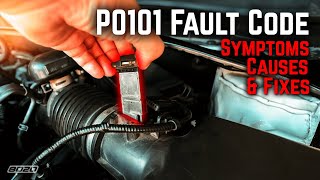
![[HOW TO] Clean Mass Air Flow Sensor (MAF) on 2015+ Colorado/Canyon](https://img.youtube.com/vi/uRQ3NkssDOc/mqdefault.jpg)


Used OEM Parts in Stock


New Aftermarket Parts Available



The information in this article is provided for general reference and educational purposes only. Vehicle specifications, procedures, and part compatibility can vary by production date, trim level, and region. Always consult your vehicle's factory service manual and verify part numbers before purchasing or performing repairs. Safety-critical components such as airbags, seat belts, and braking systems should be installed by a qualified professional.
- Chevrolet COLORADO:
- 🎬 Helpful Videos
- 🛍️ Shop This Part
- What's Unique About the 2015-2017 Chevrolet COLORADO
- Diagnostic Flowchart
- Symptoms You May Notice
- Most Likely Causes
- Rare But Worth Checking
- Diagnosis Steps
- Parts You'll Likely Need
- Related Codes That Often Appear With This One
- Technical Service Bulletins (TSBs) & Recalls
- Platform-Specific Known Issues
- Mechanic-Grade Diagnostic Values
- Wiring & Ground Locations
- Real Owner Repair Stories
- OEM Part Supersession History
- Model Year Variations Within This Range
- 🎟️ Get 5% Off