

P0101 on 2013-2017 Cadillac ATS: MAF Sensor, Leaks, and Fixes
On a 2013-2017 Cadillac ATS, P0101 is often caused by an unmetered air leak. For the 2.0L Turbo engine, the most likely culprit is a failed O-ring seal (OEM #12654059) in the charge air cooler piping, a known issue covered by TSB PIP5402A. For all engines, check for cracked PCV hoses and loose intake manifold bolts (TSB PIP5529B) before cleaning the MAF sensor or replacing any parts.
- Before buying any parts for a P0101 code, thoroughly inspect for air leaks.
- If you have a 2.0L Turbo engine, the most likely cause is a cheap, easy-to-fix O-ring seal in the turbo piping.
- Check all brittle plastic PCV hoses for cracks; they are a frequent failure point.
- Cleaning the MAF sensor with a dedicated cleaner is a cost-effective diagnostic step.
- Only replace the MAF sensor after you have confirmed there are no air leaks and cleaning it did not solve the problem.
What's Unique About the 2013-2017 Cadillac ATS

While a dirty MAF sensor is a common cause on any vehicle, the Cadillac ATS with the 2.0L Turbo (LTG) engine has a specific, well-documented weak point. GM issued a Technical Service Bulletin (PIP5402A) for a boost leak at the charge air cooler coupler, which directly causes the P0101 code, often paired with P1101. This is due to a missing, damaged, or dislodged O-ring on the passenger side of the cooler. Additionally, the plastic PCV hoses on all ATS engines are prone to becoming brittle and cracking, creating vacuum leaks that are a primary cause of this code. Another documented issue covered by TSB PIP5529B is loose intake manifold bolts, which can create a significant vacuum leak and trigger P0101 along with a host of other codes.
Diagnostic Flowchart
Tap your situation to follow the diagnostic path that matches what you're seeing on this vehicle.
Symptoms You May Notice
- Check Engine Light is on
- Reduced engine power or 'limp mode'
- Hesitation or stumbling during acceleration
- Rough or unstable idle
- Poor fuel economy
- Black smoke from the exhaust
- Hard starting.
- Stalling.
- Replacing the MAF sensor before checking for air leaks. Air leaks from charge cooler pipes, PCV hoses, or a loose intake manifold are more common on the ATS and will cause a new MAF sensor to report the same error.
Most Likely Causes

- Leaking Charge Air Cooler Coupler Seal (2.0L Turbo Engine) 🔴 High Probability This is a known issue documented in GM Technical Service Bulletin PIP5402A. The O-ring seal in the charge air cooler pipe on the passenger side is prone to damage, being misplaced during service, or simply failing, causing a boost leak. This is the most common cause for P0101, especially when paired with P1101, on the LTG engine.
How to confirm: Perform a smoke test on the intake system. Smoke will be seen escaping from the charge air cooler pipe connection on the passenger side of the vehicle. Visually inspect the coupler to see if the O-ring is missing or damaged.
Typical fix: Replace the small O-ring seal in the charge air cooler coupler. The OEM part number is 12654059. Ensure the duct and coupler are clean before installation.
Est. part cost: $10-$25 - Cracked or Leaking PCV Hoses/Tubes 🔴 High Probability The plastic and rubber PCV (Positive Crankcase Ventilation) hoses become brittle from engine heat and age, leading to cracks and vacuum leaks. This is a very common failure point on modern GM engines and a frequent cause of lean and MAF-related codes.
How to confirm: Visually inspect all PCV hoses connecting the valve cover to the intake manifold and turbo inlet. A common failure point is the hose that runs over the top of the engine. Listen for a hissing sound at idle. A smoke test is the most reliable method to confirm a leak.
Typical fix: Replace the cracked PCV hose assembly. Several aftermarket and OEM options are available. One common aftermarket part for the 2.0T is Dorman 625-101.
Est. part cost: $30-$80 - Loose Intake Manifold Bolts (All Engines) 🟡 Medium Probability GM TSB PIP5529B specifically identifies loose intake manifold bolts as a cause for P0101 and a cluster of other codes on the ATS (2.0L LTG and 2.5L LCV). This creates a significant vacuum leak at the intake manifold gasket.
How to confirm: If P0101 is present with multiple other codes like P0068, P0106, and P0171, this should be a primary suspect. A smoke test may show smoke escaping from around the intake manifold. A technician can also physically check the torque of the bolts.
Typical fix: Per TSB PIP5529B, the fix is to remove one bolt at a time, apply medium strength threadlocker, and torque all bolts in the proper sequence to GM specification. The intake manifold gasket should not be replaced unless it is proven to be leaking after the bolts are torqued.
Est. part cost: $5-$15 for threadlocker - Dirty or Contaminated MAF Sensor 🟡 Medium Probability Oil vapor from the PCV system or oil from an aftermarket oiled air filter can coat the sensor's delicate wire, causing inaccurate readings. This is often a symptom of another issue (like excessive crankcase pressure) rather than the root cause.
How to confirm: Remove the sensor (held by two T20 Torx screws) and visually inspect 🎬 See how to safely access and replace the MAF sensor. the internal wire for dirt or an oily film. This should be done after confirming no air leaks are present.
Typical fix: Clean the sensor using only dedicated Mass Airflow Sensor cleaner. Do not touch the wires or use other chemicals like brake cleaner. Let it dry completely before reinstalling.
Est. part cost: $10-$15 for cleaner - Cracked Air Intake Duct ⚪ Low Probability The flexible, ribbed sections of the main air intake tube between the air filter box and the throttle body can develop cracks over time, allowing unmetered air to enter the engine post-MAF sensor.
How to confirm: With the engine running, carefully wiggle the intake tube and listen for changes in the engine idle. A visual inspection may reveal cracks, especially in the accordion-like sections. A smoke test will definitively show a leak here.
Typical fix: Replace the entire air intake duct assembly.
Est. part cost: $70-$150
Rare But Worth Checking
- Casting Flash in Air Filter Housing: GM TSB PIP5446 notes that on some vehicles, excess plastic molding (flash) inside the air filter housing near the MAF sensor can disrupt airflow, causing a P0101. While not specific to the ATS, it's worth a quick inspection of the airbox lid.
- Faulty MAF Sensor: While often blamed, the sensor itself failing electronically is less common than air leaks or contamination. Only replace the sensor after ruling out all other causes. TSB PIP5729 notes that other issues, like a faulty ignition relay, can even set a P0101, leading to unnecessary MAF sensor replacement.
- Clogged Catalytic Converter: A restricted exhaust can affect the engine's ability to breathe, altering the airflow dynamics and potentially triggering a P0101 code. This is usually accompanied by other symptoms like a significant loss of power, especially at high RPM.
Diagnosis Steps

- Read all stored fault codes with an OBD-II scanner. Note if codes like P1101, P0171, or P0068 are present, as they strongly suggest an air leak.
- Inspect the engine air filter. A severely clogged filter can restrict airflow and cause this code. Replace if dirty.
- For 2.0L Turbo engines, the primary suspect is the charge air cooler pipe connection on the passenger side. Visually inspect for a missing or damaged O-ring seal, as per TSB PIP5402A.
- Visually inspect the entire air intake tract from the air filter box to the throttle body. Look for loose clamps or obvious cracks in the plastic/rubber tubing.
- Specifically inspect all PCV hoses for cracks, especially where they connect to the valve cover and intake manifold. These are known to become brittle and fail.
- If multiple codes (P0068, P0106, P0171, etc.) are present, check the intake manifold bolts for proper torque per TSB PIP5529B.
- If no obvious leaks are found, perform a smoke test on the intake system to definitively identify any hard-to-see cracks or seal leaks. This is the most reliable diagnostic step.
- If no leaks are found, remove the MAF sensor (usually held by two T20 Torx screws) and clean it with a dedicated MAF sensor cleaner spray. Let it dry completely before reinstalling.
- If the code persists after cleaning and confirming absolutely no leaks, the MAF sensor itself may have failed and requires replacement.
Parts You'll Likely Need

- Charge Air Cooler Coupler O-Ring (2.0L Turbo)
(OEM #12654059)— For the 2.0L Turbo engine, this inexpensive seal is the most likely cause of P0101 due to a known issue documented in GM TSB PIP5402A.
Related Codes That Often Appear With This One
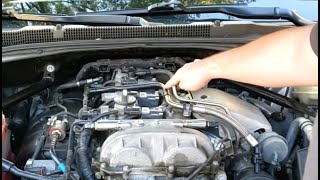
- P1101 — This is a manufacturer-specific code for 'Intake Air Flow System Performance'. On the 2.0T engine, it is almost always set alongside P0101 and points directly to the charge air cooler leak 🎬 Watch: Fixing P0101 and P1101 codes on the GM turbo system. mentioned in TSB PIP5402A.
- P0171 — 'System Too Lean'. An air leak after the MAF sensor allows unmetered air into the engine, creating a lean condition that the oxygen sensors detect. This code is also listed in TSB PIP5529B along with P0101 as being caused by loose intake manifold bolts.
- P0068 — 'MAP/MAF - Throttle Position Correlation'. This code appears with P0101 in TSB #PIP5529B, indicating a significant disagreement between the airflow sensors and the throttle's position, often caused by a large vacuum leak from loose intake manifold bolts.
- P0106 — 'Manifold Absolute Pressure (MAP) Sensor Performance'. Also listed in TSB #PIP5529B, this code can be triggered by the same vacuum or boost leaks that cause P0101.
Technical Service Bulletins (TSBs) & Recalls

- PIP5402A - Covers the charge air cooler coupler O-ring leak on 2.0L LTG engines causing P0101/P1101.
- PIP5529B - Covers multiple DTCs including P0101 caused by loose intake manifold bolts on 2.0L LTG and 2.5L LCV engines.
- PIP5729 - Warns against unnecessarily replacing the MAF sensor for P0101 when other electrical issues (like a bad relay) could be the cause.
Platform-Specific Known Issues
- TSB PIP5402A: Charge Air Cooler Leak (2.0L LTG): Specifically calls out a missing or damaged O-ring seal in the charge air cooler coupler on 2.0L Turbo models as a direct cause for P0101 and P1101. The bulletin shows a picture of the seal's location on the passenger side of the charge air cooler.
- TSB PIP5529B: Loose Intake Manifold Bolts (2.0L LTG & 2.5L LCV): Lists P0101 along with a wide array of other codes (P0068, P0106, P0171, etc.) as being caused by loose intake manifold bolts. The fix is to re-torque the bolts with threadlocker, not to replace the gasket unless a leak persists after torquing.
- Forum Experience: CadillacForums.com: A user with a 2014 ATS 2.0T reported P0101 and P1101 codes, along with a 'whoosh' sound under boost. The dealer diagnosed and replaced the charge air cooler outlet seal (O-ring), which resolved the issue. This aligns perfectly with TSB PIP5402A. (Source: cadillacforums.com/threads/p1101-and-p0101-check-engine-light.1090818/)
Mechanic-Grade Diagnostic Values
- MAF Sensor Reading (grams/second) at Idle — expected: 2.0 - 7.0 g/s, depending on engine size and load.. Failure: A reading that is significantly lower may indicate an unmetered air leak, while a significantly higher reading could indicate a sensor fault.
- MAF Sensor Reading (grams/second) at 2500 RPM — expected: 15 - 25 g/s, depending on engine size. The reading should be linear and rise smoothly with RPM.. Failure: A reading that rises too slowly can indicate a dirty sensor or an air leak. A reading that rises too quickly or behaves erratically can indicate a failing sensor.
- MAF Sensor Signal (Frequency) at Idle — expected: Approximately 3.0 - 4.0 KHz (3000-4000 Hz). This is a reference for a digital MAF; exact value varies by engine.. Failure: A frequency that is unstable or does not correspond to engine load.
- MAF Sensor Voltage at Idle — expected: Below 2.2 V.. Failure: A voltage reading consistently above 2.2 V at idle will trigger the DTC.
Scan Tool Commands That Help
- GDS2 / Professional Scan Tool: Graph MAF Sensor PID — Use this to verify if the MAF sensor signal is linear and responds correctly to changes in engine RPM. Graphing the MAF (in g/s or Hz) against RPM from idle to ~2500 RPM should produce a smooth, steady upward curve. A choppy or flat-lining graph indicates a faulty sensor or connection, even if idle readings seem normal.
Wiring & Ground Locations
- G104 — For 2.0L LTG and 2.5L LCV engines, this primary engine ground is on the lower rear of the cylinder head. For the 3.6L LFX/LGX engine, it is located on the front of the right cylinder head.. The MAF sensor requires a stable ground reference to send an accurate signal to the ECM. A poor connection at G104 can cause erratic sensor readings and trigger a P0101. TSB PI1097A notes to inspect this ground for cleanliness and proper torque, specifically checking for excess glue or shrink wrap under the eyelet that could cause a poor connection.
OEM Part Supersession History
13432262, 13505433→12671624— Standard part consolidation and potential design updates by the manufacturer.
Model Year Variations Within This Range
- 2016-2017: The 3.6L V6 engine was updated from the LFX to the LGX in 2016. The LGX is a significantly redesigned engine with a larger bore, new cylinder heads, Active Fuel Management (cylinder deactivation), and different power/torque curves. While they may use the same MAF sensor part number, the ECM's expected airflow tables and diagnostic thresholds are different.
- 2013: On 2013 models with the 2.0L and 2.5L engines, the location of the main engine ground (G104) was moved. From the start of production through mid-December 2012, it was at the front of the engine. After that date, it was moved to the rear of the engine.
Helpful Videos


Used OEM Parts in Stock


New Aftermarket Parts Available


The information in this article is provided for general reference and educational purposes only. Vehicle specifications, procedures, and part compatibility can vary by production date, trim level, and region. Always consult your vehicle's factory service manual and verify part numbers before purchasing or performing repairs. Safety-critical components such as airbags, seat belts, and braking systems should be installed by a qualified professional.
- Cadillac ATS:
- 🎬 Helpful Videos
- 🛍️ Shop This Part
- What's Unique About the 2013-2017 Cadillac ATS
- Diagnostic Flowchart
- Symptoms You May Notice
- Most Likely Causes
- Rare But Worth Checking
- Diagnosis Steps
- Parts You'll Likely Need
- Related Codes That Often Appear With This One
- Technical Service Bulletins (TSBs) & Recalls
- Platform-Specific Known Issues
- Mechanic-Grade Diagnostic Values
- Scan Tool Commands That Help
- Wiring & Ground Locations
- OEM Part Supersession History
- Model Year Variations Within This Range
- 🎟️ Get 5% Off