

P0101 on 2014-2017 Buick Regal: MAF Sensor & Vacuum Leak Guide
Code P0101 on a 2014-2017 Buick Regal most often points to an unmetered air leak in the intake system or a dirty MAF sensor. A common vehicle-specific cause is loose intake manifold bolts or a leaking charge air cooler coupler O-ring on 2.0L Turbo models, as noted in GM Technical Service Bulletins. Checking for these specific air leaks and cleaning the MAF sensor are the crucial first steps before considering sensor replacement.
- Do not immediately replace the MAF sensor. The most likely cause on a 2014-2017 Regal is an unmetered air leak.
- Check for vehicle-specific issues first: inspect for loose intake manifold bolts and leaking charge air cooler seals as per GM TSBs.
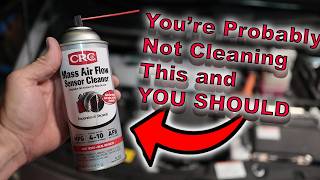
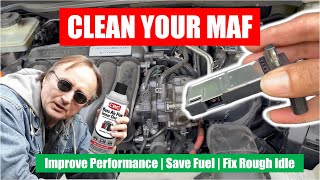
- Cleaning the MAF sensor with a dedicated cleaner is a low-cost, high-impact diagnostic step.
- If other codes like P0171 (System Lean) are present, it reinforces the likelihood of a vacuum or intake leak.
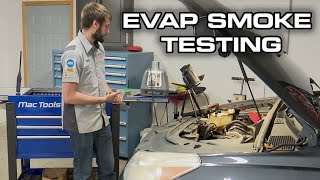
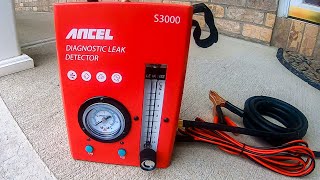
- A smoke test is the most reliable way to find hard-to-see air leaks in the intake system.
What's Unique About the 2014-2017 Buick REGAL
On this generation of Buick Regal, particularly with the 2.0L (LTG) engine, the P0101 code is frequently associated with other diagnostic trouble codes as part of a larger pattern. GM has issued Technical Service Bulletins (TSBs) that link P0101 to issues like loose intake manifold bolts (TSB #PIP5529B) and, more commonly, a missing or damaged O-ring seal on the charge air cooler (CAC) coupler (TSB #PIP5402B/C). This indicates that unmetered air leaks from these specific, documented weak points are a more common cause on this platform than a simple MAF sensor failure. These issues are shared across many GM vehicles using the 2.0L LTG engine.
Diagnostic Flowchart
Tap your situation to follow the diagnostic path that matches what you're seeing on this vehicle.
Symptoms You May Notice
- Check Engine Light is on
- Rough or unstable idle
- Engine hesitation or stalling, especially under load or when coming to a stop
- Reduced engine power and sluggish acceleration, possibly with a 'Reduced Engine Power' message
- Poor fuel economy
- Black smoke from the exhaust, especially on cold starts
- A 'whooshing' or hissing sound from the engine bay during acceleration, indicating a boost leak
- Replacing the MAF sensor immediately without checking for air leaks. Given the TSBs for this vehicle, an air leak from the charge air cooler or intake manifold is a very high probability and should be ruled out first with a visual inspection and smoke test to avoid wasting money on an unnecessary sensor.
Most Likely Causes
- Unmetered Air Leaks (Vacuum or Boost Leaks) 🔴 High Probability TSB #PIP5402B/C specifically points to a missing or damaged O-ring seal on the charge air cooler coupler on 2.0L Turbo models. This is a very common failure point. TSB #PIP5529B also points to loose intake manifold bolts causing a vacuum leak. These are documented weak points across the GM LTG engine platform.
How to confirm: Perform a visual inspection of all intake hoses and connections, especially the charge air cooler pipes. For hard-to-find leaks, a smoke test is the most effective method. 🎬 Watch: This simple trick helps you find hidden vacuum leaks. The TSB for the CAC leak specifically recommends using a smoke machine to verify. Check the torque on the intake manifold bolts.
Typical fix: Replace the charge air cooler coupler O-ring (GM Part #12653390 is a likely candidate) if it is missing or damaged. Tighten loose clamps, replace cracked hoses, or re-torque intake manifold bolts per the TSB instructions.
Est. part cost: $10-$50 for hoses/seals - Dirty or Contaminated MAF Sensor 🟡 Medium Probability All MAF sensors are susceptible to contamination from dirt, dust, or oil from the PCV system or aftermarket oiled air filters. The hot-wire element's accuracy is easily compromised by residue.
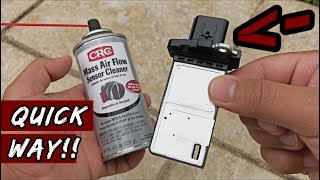
How to confirm: Remove the sensor and visually inspect the small wires inside. If they appear dirty or coated, cleaning is warranted. 🎬 See how to safely clean your MAF sensor in minutes. With a scan tool, monitor the MAF reading at idle; a healthy sensor on a warm 2.0L engine should read around 2.5-5 g/s. A reading that is flat or doesn't change with RPM is a sign of failure.
Typical fix: Clean the sensor element carefully using only dedicated Mass Airflow Sensor cleaner. Do not touch the wires. Let it dry completely before reinstalling.
Est. part cost: $10-$15 for a can of cleaner - Clogged or Dirty Engine Air Filter ⚪ Low Probability
How to confirm: Remove and inspect the engine air filter. If it is visibly dirty, clogged with debris, or has not been changed in a long time, it is restricting airflow.
Typical fix: Replace the engine air filter.
Est. part cost: $20-$40 - Faulty MAF Sensor ⚪ Low Probability While less common than leaks, the sensor can fail electronically. Owners report that cheap aftermarket sensors are often unreliable for GM vehicles.
How to confirm: After confirming no air leaks, cleaning the sensor, and checking the wiring, if the code persists, the sensor itself may have failed. A diagnostic scan tool can monitor the MAF sensor's output in grams/second (g/s). If the reading is stuck, flat-lined, or doesn't increase smoothly with engine RPM, the sensor is likely bad.
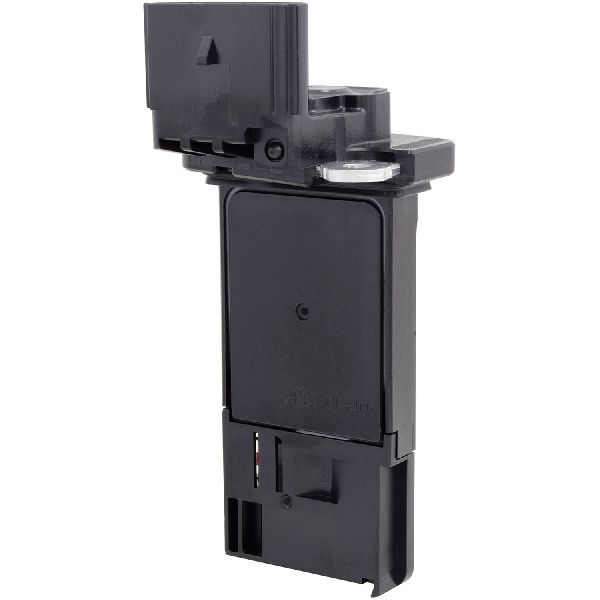
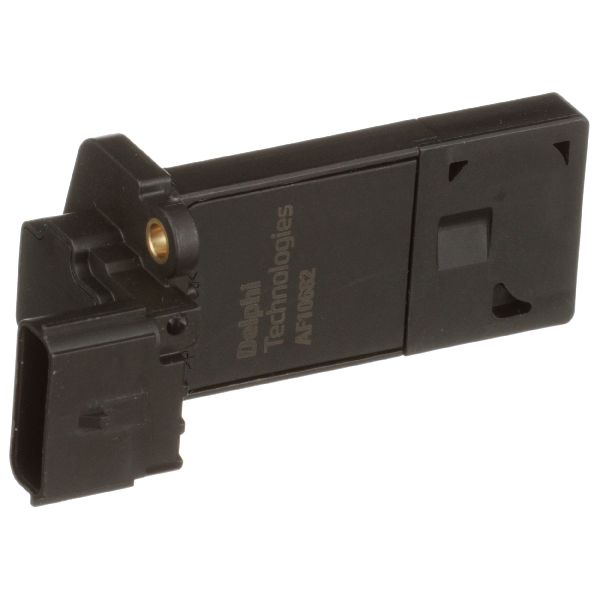
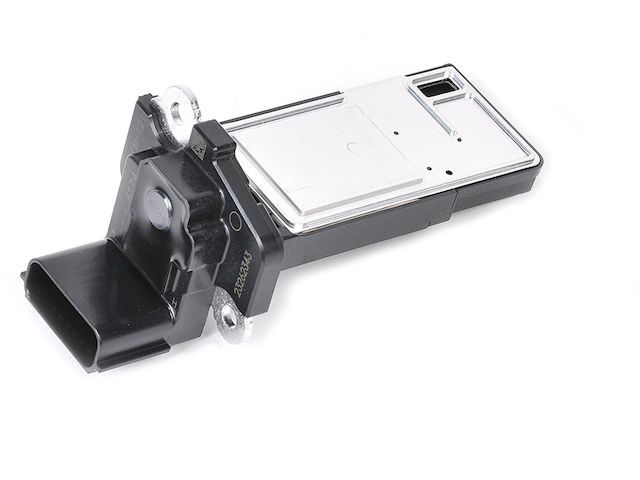
Typical fix: Replace the Mass Airflow Sensor. Using an OEM (ACDelco) or reputable aftermarket brand is highly recommended. The ACDelco part number is often cited as 213-4675, which corresponds to GM part 13301682.
Est. part cost: $70-$200
Rare But Worth Checking
- Clogged Catalytic Converter: A restricted exhaust can cause a backup of air pressure that skews MAF sensor readings, which is a known possibility on some GM vehicles. This usually presents with more severe power loss, especially at high RPMs, and may be accompanied by a P0420 code.
- Wiring or Connector Issue: Frayed wires or a corroded/loose connector at the MAF sensor can cause an erratic or lost signal. Inspect the harness leading to the sensor for any visible damage.
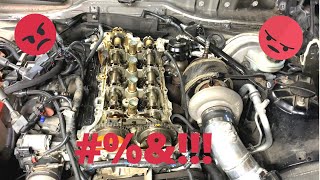
- Faulty PCV System / Valve Cover: On the 2.0L LTG engine, the PCV system is integrated into the valve cover. A failed internal check valve can create excessive, unmetered airflow from the crankcase, causing airflow rationality codes like P1101 and P0101. GM TSB 20-NA-047 discusses this issue. The fix is often a complete valve cover replacement. 🎬 Watch this to understand the challenges of valve cover repairs.
Diagnosis Steps
- Check for other stored DTCs. Codes like P1101, P0171, and P0068 strongly suggest an unmetered air leak.
- Visually inspect the entire air intake system from the air filter box to the throttle body. Look for cracked hoses, loose clamps, or disconnected lines. Pay special attention to the charge air cooler couplers on 2.0L Turbo models, as per TSB #PIP5402B/C.
- If a leak is suspected but not visible, perform a smoke test. This is the most reliable way to find hidden cracks or seal failures in the intake manifold and charge air cooler system.
- Inspect and clean the MAF sensor. Remove the sensor and spray the delicate internal wires with dedicated MAF sensor cleaner. Let it dry completely before reinstalling.
- Inspect the engine air filter and replace if dirty or clogged.
- Check for loose intake manifold bolts, as specified in TSB #PIP5529B. If loose, follow the TSB procedure to re-torque them.
- Using a scan tool, monitor the MAF sensor's g/s reading at idle and while revving the engine. The reading should be stable at idle (approx. 2.5-5 g/s) and increase smoothly with RPM. If it's erratic, flat, or unresponsive, the sensor is suspect.
- Inspect the MAF sensor wiring and connector for any signs of damage, corrosion, or looseness.
- If all other steps fail to resolve the code, the MAF sensor itself is likely faulty and should be replaced with a quality OEM or equivalent part.
Parts You'll Likely Need
- Mass Airflow Sensor Cleaner — Often, the sensor is just dirty, not broken. This is the cheapest and easiest first step.
Trusted brands: CRC, Liqui Moly
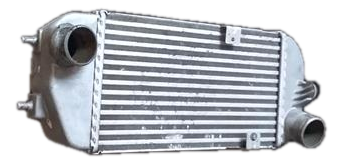
Aftermarket price range: $10-$15 - Charge Air Cooler Coupler Seal/O-Ring
(OEM #12653390)— A known high-failure part on 2.0L Turbo models that causes a boost leak, as identified in TSB #PIP5402B/C. This part number is a common replacement for this issue.
Trusted brands: ACDelco
OEM price range: $15-$30
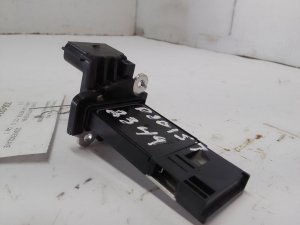
Aftermarket price range: $10-$20 - Mass Airflow (MAF) Sensor
(OEM #13301682 (cross-references to ACDelco 213-4675))— If cleaning the sensor and fixing all air leaks doesn't resolve the code, the sensor itself may have failed electronically. Use of OEM/ACDelco parts is strongly recommended.
Trusted brands: ACDelco, Bosch
OEM price range: $150-$200
Aftermarket price range: $70-$120
Related Codes That Often Appear With This One
- P1101 — Intake Air Flow System Performance. This is a GM-specific code that is extremely common to see with P0101. TSB #PIP5402B/C directly links this code to the charge air cooler O-ring leak on the 2.0L Turbo engine.
- P0171 — System Too Lean. This code is often triggered by the same unmetered air leak that causes P0101. The leak allows extra air into the engine that the MAF sensor didn't measure, leading to a lean condition. It is also listed in TSB #PIP5529B.
- P0068 — MAP/MAF - Throttle Position Correlation. This indicates a disagreement between the air measured by the MAF/MAP sensors and the air expected based on the throttle's position. It's listed in TSB #PIP5529B alongside P0101.
- P0106 — Manifold Absolute Pressure (MAP) Sensor Performance. The ECM cross-references MAF and MAP sensor readings. A problem affecting one (like a vacuum leak) can cause the other to report an out-of-range value. This is also listed in TSB #PIP5529B.
Technical Service Bulletins (TSBs) & Recalls
- PIP5529B: Mentions P0101 in a list of codes that can be caused by loose intake manifold bolts.
- PIP5529A: An earlier version of the same bulletin regarding loose intake manifold bolts.
- PIP5402B: Points to a missing/damaged O-ring seal in the charge air cooler coupler as a cause for P0101 and P1101 on 2.0L Turbo models.
Platform-Specific Known Issues
- Leaking Charge Air Cooler Coupler: TSB #PIP5402B/C identifies that on 2.0L Turbo (LTG) engines, a missing or damaged O-ring seal on the charge air cooler outlet coupler can cause a boost leak. This is the most common cause for P0101/P1101 on this platform. The fix is to inspect and replace the seal. A user on Reddit with a 2014 Regal with the 2.0L Turbo experienced an intermittent P1101 code before noticing a loss of power and turbo noise, classic symptoms of this leak.
- Loose Intake Manifold Bolts: TSB #PIP5529B identifies that loose intake manifold bolts can cause a significant vacuum leak, triggering P0101 along with a host of other codes. The fix is to remove, apply threadlocker, and re-torque the bolts to specification.
Mechanic-Grade Diagnostic Values
- Mass Airflow (MAF) Rate at Hot Idle — expected: 3.4 - 4.2 g/s. Failure: Significantly higher or lower readings suggest a sensor fault or a large air leak.
- MAF Sensor Signal (Frequency Type) — expected: ~3.2 kHz at ~680 RPM idle. Failure: Signal does not change with RPM or is absent. Note: This value is from a different GM vehicle but indicates the type of signal to expect.
- MAF Sensor Signal Voltage (Analog Type) — expected: Fluctuates with RPM, increases as engine speed increases.. Failure: Voltage is static, or exceeds 2.2V at idle, or is less than 0.4V with key on, engine off.
- MAF Sensor Power Supply — expected: 12V (battery voltage) on the power wire (often Pink/Black) and 5V on the reference wire.. Failure: Missing or low voltage indicates a wiring or fuse issue before the sensor.
Scan Tool Commands That Help
- OBD-II Scan Tool (Live Data): Key-On-Engine-Off (KOEO) MAF Reading — With the key in the 'on' position but the engine off, the MAF sensor should read 0 g/s (or very close to it). If the scan tool shows a significant airflow reading, the sensor is electrically faulty.
Wiring & Ground Locations
- MAF Sensor Connector — On the air intake tube between the air filter box and the turbocharger inlet.. This is an 8-pin connector on the 2014-2017 Regal 2.0L. A poor connection, corrosion, or damaged pins/wires here will directly cause a P0101 code. The Black/White wire is typically the sensor ground circuit on GM vehicles.
- G101 / G106 — Typically located on the engine block or frame rail near the front of the engine.. On many GM platforms, these grounds are the primary grounding points for the Engine Control Module (ECM) and the MAF sensor. A loose or corroded ground here can cause erratic sensor readings and multiple engine-related DTCs.
- G111 — Engine compartment, exact location varies.. A known ground point on the 2014 Regal platform. While a TSB mentions it for power steering, poor grounds can cause widespread electrical issues. It should be checked for tightness (spec: 9 Y / 80 lb in) and cleanliness.
Real Owner Repair Stories
- buickforums.com user report (2014 Buick Regal GS) — P1101 code (a common companion to P0101) and a 'whooshing' sound from the engine.
✅ What actually fixed it The charge air cooler hose had blown off the throttle body connection. Re-securing the hose and clamp resolved the issue.
"I Checked Everything" — The Actual Cause
- A failed internal PCV check valve inside the valve cover can cause P0101. This introduces unmetered air from the crankcase that a standard intake smoke test will not detect. The fix is to replace the entire valve cover assembly, as noted in GM TSB 20-NA-047.
- A plugged PCV orifice in the intake manifold can cause abnormal crankcase pressure, leading to various issues that may trigger an airflow rationality code like P0101. This is not a leak and would not be found by a smoke test.
When the Usual Fixes Don't Work
- While most P0101 codes on this vehicle are caused by vacuum/boost leaks or a dirty MAF sensor, a significant number of cases are resolved only by replacing the entire valve cover. This is due to a non-serviceable, integrated PCV check valve failing internally. Technicians may perform a smoke test, clean the MAF, and find no resolution because the unmetered air is coming from the crankcase, not an external leak. This fix is documented in GM TSB 20-NA-047 and is a critical counterpoint to the more common diagnostic paths.
Model Year Variations Within This Range
- 2014: The 2.0L LTG engine had issues with pistons in its initial 2013 run in other GM models (Cadillac ATS). While the Regal started in 2014 with likely updated parts, very early production 2014 models could potentially share early engine component designs.
Helpful Videos

Used OEM Parts in Stock

New Aftermarket Parts Available



The information in this article is provided for general reference and educational purposes only. Vehicle specifications, procedures, and part compatibility can vary by production date, trim level, and region. Always consult your vehicle's factory service manual and verify part numbers before purchasing or performing repairs. Safety-critical components such as airbags, seat belts, and braking systems should be installed by a qualified professional.
- Buick REGAL:
- 🎬 Helpful Videos
- 🛍️ Shop This Part
- What's Unique About the 2014-2017 Buick REGAL
- Diagnostic Flowchart
- Symptoms You May Notice
- Most Likely Causes
- Rare But Worth Checking
- Diagnosis Steps
- Parts You'll Likely Need
- Related Codes That Often Appear With This One
- Technical Service Bulletins (TSBs) & Recalls
- Platform-Specific Known Issues
- Mechanic-Grade Diagnostic Values
- Scan Tool Commands That Help
- Wiring & Ground Locations
- Real Owner Repair Stories
- "I Checked Everything" — The Actual Cause
- When the Usual Fixes Don't Work
- Model Year Variations Within This Range
- 🎟️ Get 5% Off