

P0101 on 2016-2017 Buick Envision: Causes and Fixes for MAF Sensor Issues
Code P0101 on a 2016-2017 Buick Envision indicates a problem with the Mass Airflow (MAF) sensor's performance. The most common causes are unmetered air leaks from loose intake manifold bolts (a known issue covered by a TSB), a dirty MAF sensor, or leaks in the charge air system on turbocharged models. Start by checking for intake leaks before replacing any parts.
- Before buying any parts for a P0101 code on a 2016-2017 Envision, check for loose intake manifold bolts as per TSB #PIP5529B.
- The second step should be to clean the MAF sensor with a dedicated cleaner; do not replace it unless cleaning and checking for leaks fails to solve the issue.
- If you have a 2.0L Turbo engine, pay close attention to the charge air cooler hoses and connections for leaks.
- This code is often accompanied by a P0171 (System Too Lean) code, which strongly points to an unmetered air leak rather than a sensor failure.
What's Unique About the 2016-2017 Buick ENVISION
For the 2016-2017 Buick Envision, a P0101 code is frequently not an isolated sensor failure but is instead linked to specific mechanical issues. GM issued Technical Service Bulletin #PIP5529B because P0101, often accompanied by other codes like P0171 (System Too Lean), can be caused by loose intake manifold bolts creating a significant vacuum leak. This TSB applies to both the 2.5L LCV and 2.0L LTG engines available in the Envision. On models with the 2.0L Turbo (LTG) engine, leaks in the charge air cooler (CAC) system are also a known weak point that can trigger this code. Specifically, TSB #PIP5402E points to a missing or damaged O-ring seal on the charge air cooler outlet coupler as a common cause of P0101 and the related GM-specific code P1101. Therefore, a thorough inspection for these specific air leaks is more critical on this vehicle than simply replacing the MAF sensor.
Diagnostic Flowchart
Tap your situation to follow the diagnostic path that matches what you're seeing on this vehicle.
Symptoms You May Notice
- Check Engine Light illuminated
- Reduced engine power or hesitation during acceleration
- Rough or unstable idle
- Stalling, especially when coming to a stop
- Poor fuel economy
- Black smoke from the tailpipe if running rich
- Hissing or whistling noises from the engine bay
- "Service StabiliTrak" or "Service Traction Control" messages may appear on some GM vehicles.
- Replacing the MAF sensor without first checking for air leaks. On this platform, intake leaks are a very common cause, and a new sensor will not fix the problem.
Most Likely Causes
- Loose Intake Manifold Bolts 🔴 High Probability A known issue documented in GM Technical Service Bulletin #PIP5529B, which specifically lists the 2016-2017 Envision with both 2.5L LCV and 2.0L LTG engines. The bolts can loosen over time, creating a significant unmetered air (vacuum) leak that triggers P0101 and other codes like P0171 and P0068.
How to confirm: Visually and manually inspect the intake manifold bolts to see if they are loose. A smoke test of the intake system is the most definitive way to confirm a leak in this area. 🎬 Watch: How to perform a smoke test to find vacuum leaks. The presence of codes P0171, P0068, and P0106 alongside P0101 strongly points to this issue.
Typical fix: Remove one bolt at a time, apply medium-strength threadlocker, and torque all bolts to the manufacturer's specification in the correct sequence. The torque spec is typically around 13-15 ft-lbs (18-20 Nm), but always verify with the specific service manual. The intake manifold gasket typically does not need replacement unless it is damaged.
Est. part cost: $5-$15 for threadlocker - Leaking Air Intake System (Vacuum or Boost Leak) 🔴 High Probability Particularly on the 2.0L Turbo engine, the pressurized charge air cooler (CAC) hoses and couplers can develop leaks. TSB #PIP5402E identifies a missing or damaged O-ring seal at the CAC outlet coupler as a very common failure point causing P0101 and P1101. 🎬 See this video for an easy fix for the P1101 code. The hose connecting to the throttle body can also become loose or disconnect.
How to confirm: Visually inspect all intake ducting from the air filter to the throttle body for cracks, loose clamps, or damage. Specifically check the charge air cooler coupler on the passenger side for a missing or damaged O-ring. A smoke test is the most effective method to find hard-to-see leaks.
Typical fix: Replace the cracked hose, tighten the loose clamp, or replace the faulty seal. The charge air cooler coupler O-ring (GM Part #12653390 is a likely candidate for the 2.0L LTG) is an inexpensive but critical part.
Est. part cost: $10-$150 depending on the leaking component - Dirty or Contaminated Mass Airflow (MAF) Sensor 🟡 Medium Probability Oil vapors from the PCV system and fine dust can accumulate on the sensor's delicate hot wire, insulating it and causing inaccurate airflow readings. This is a common issue on many vehicles and a good first step in diagnosis.
How to confirm: Remove the MAF sensor and visually inspect the sensing element. If it appears dirty or coated with residue, it needs cleaning.
Typical fix: Carefully clean the sensor elements using only dedicated Mass Airflow Sensor cleaner. 🎬 Watch: A guide on diagnosing and fixing the P0101 code. Do not touch the wires or use other chemicals like brake or carb cleaner. Allow it to dry completely before reinstalling.
Est. part cost: $10-$20 for MAF sensor cleaner - Clogged or Dirty Engine Air Filter ⚪ Low Probability An improperly installed or warped air filter can allow unmetered air to bypass the MAF sensor. A misaligned air filter can cause P0101 and other codes.
How to confirm: Remove and inspect the engine air filter. If it is visibly dirty, clogged with debris, or has not been changed per the service interval, it is restricting airflow. Check for proper installation and sealing in the airbox.
Typical fix: Replace the engine air filter and ensure the housing is properly sealed.
Est. part cost: $20-$50 - Faulty Mass Airflow (MAF) Sensor ⚪ Low Probability
How to confirm: After confirming there are no air leaks and the sensor is clean, monitor the MAF sensor data (g/s) with a scan tool. A 2.0L or 2.5L engine should read approximately 2-7 g/s at idle. If the readings are erratic, do not change with RPM, or are illogical for the conditions, the sensor has likely failed.
Typical fix: Replace the MAF sensor. Using an OEM sensor (ACDelco/GM Genuine) is highly recommended, as some aftermarket sensors can cause persistent issues.
Est. part cost: $80-$220
Rare But Worth Checking
- Clogged Catalytic Converter: A severely restricted exhaust can cause backpressure that affects airflow readings, sometimes triggering a P0101 code on GM vehicles. This would typically be accompanied by a severe lack of power, especially under load.
- MAF Sensor Wiring or Connector Issue: Frayed wiring or a corroded, loose connector can cause an intermittent or incorrect signal from the sensor. A visual inspection and wiggle test of the harness can sometimes identify the problem.
Diagnosis Steps
- Read all stored fault codes with an OBD-II scanner.
- Inspect the engine air filter to ensure it is clean and properly installed.
- Visually inspect the entire air intake system, from the airbox to the throttle body. Look for any obvious cracks, disconnected hoses, or loose clamps.
- Specifically check the intake manifold bolts to ensure they are tight, as per TSB #PIP5529B.
- If no obvious leaks are found, remove and inspect the MAF sensor. Clean it with dedicated MAF sensor cleaner if it appears dirty. Reinstall and clear codes to see if the problem returns.
- Perform a smoke test on the intake system. This is the most reliable way to find small, hidden vacuum or boost leaks.
- If no leaks are found, use a scan tool to monitor the MAF sensor reading in grams per second (g/s) at idle and while revving the engine to check for a logical response.
- If all other steps fail to identify a problem, test the MAF sensor's wiring for proper power, ground, and signal. If wiring is good, the sensor itself may be faulty.
Parts You'll Likely Need
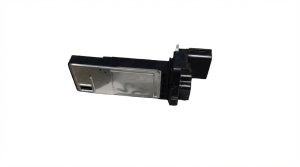
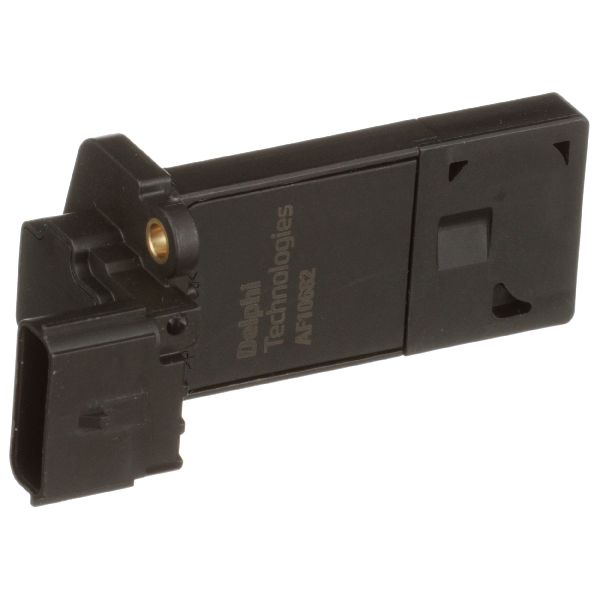
- Mass Airflow (MAF) Sensor
(OEM #23262343)— This sensor is replaced if it is confirmed to be faulty after cleaning and ruling out all air leaks.
Trusted brands: ACDelco, Bosch, Delphi
OEM price range: $150-$220
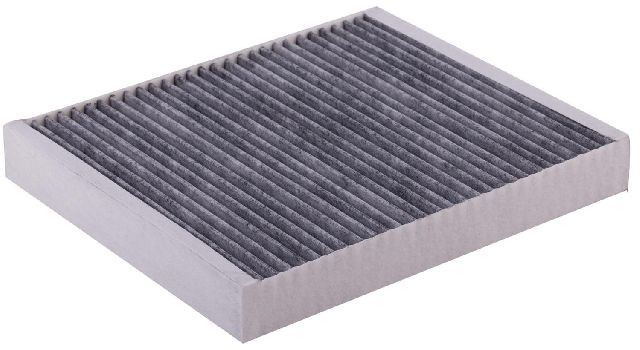
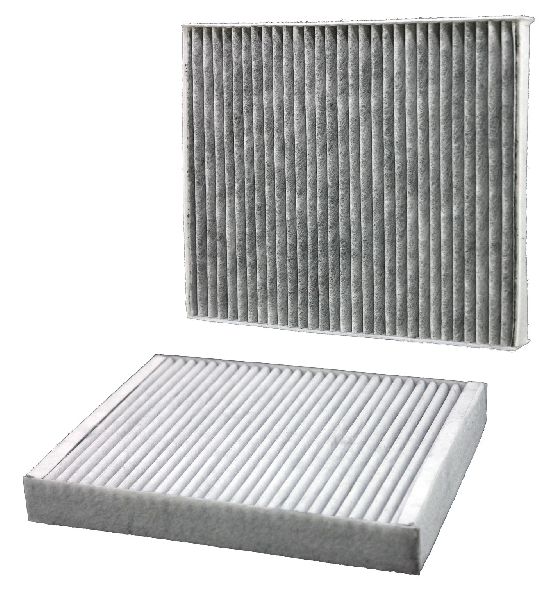
Aftermarket price range: $80-$150 - Engine Air Filter — A clogged air filter can restrict airflow and trigger a P0101 code. It's a routine maintenance item that should be checked first.
Trusted brands: ACDelco, Wix, Fram
OEM price range: $30-$50
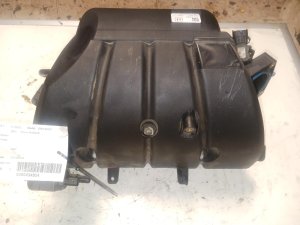
Aftermarket price range: $20-$40 - Intake Manifold Gasket — This is only needed if the gasket is found to be damaged or leaking after re-torquing the intake manifold bolts, which is uncommon according to TSB #PIP5529B.
Related Codes That Often Appear With This One
- P0171 — System Too Lean. This code is often set with P0101 because an unmetered air leak (like from loose intake bolts) allows more air into the engine than the MAF sensor reports, creating a lean air/fuel mixture.
- P0068 — MAP/MAF - Throttle Position Correlation. This code indicates a conflict between the airflow measured by the MAF/MAP sensors and the air expected based on the throttle's position. A large vacuum leak is a common cause.
- P0106 — Manifold Absolute Pressure (MAP) Sensor Performance. This code can appear with P0101 when there is a significant vacuum leak, as both sensors will provide conflicting data to the PCM.
- P0299 — Turbocharger Underboost. On 2.0L Turbo models, a significant leak in the charge air system will cause both a loss of boost pressure (P0299) and an airflow rationality fault (P0101).
- P1101 — Intake Air Flow System Performance. This is a GM-specific code often set with P0101 on 2.0L Turbo models, specifically pointing to leaks in the charge air cooler system per TSB #PIP5402E.
Technical Service Bulletins (TSBs) & Recalls
- PIP5529B: Stall, Hesitation, and multiple codes including P0101, P0068, P0106, P0171 due to loose intake manifold bolts. Applies to 2.5L LCV and 2.0L LTG engines.
- PIP5402C / PIP5402E: Check Engine Light with codes P0101 and/or P1101 due to a missing or damaged O-ring seal in the charge air cooler coupler on 2.0L LTG engines.
- 18-NA-118: Diagnostic tip for P0101/P0171 caused by an improperly installed or warped engine air cleaner element, allowing unmetered air.
- 21-NA-074 / 18-NA-020: Addresses moisture accumulation inside the charge air cooler on 2016-2020 models, which can cause underboost (P0299) and related airflow codes.
Platform-Specific Known Issues
- Owner Experience: The Importance of OEM Sensors: In a Reddit thread discussing persistent P0101/P1101 codes on a Buick, a user noted their similar issue was only resolved after the shop replaced aftermarket sensors with official OEM versions, suggesting that some GM vehicles are sensitive to sensor brand.
- Repair Story: P0101 Fixed by Engine Replacement: An eBay feedback entry for a used 2.5L LCV engine for a 2017-2020 Envision states, 'This thing was my savior on getting rid of my troublesome P0101 code preventing me from passing SMOG!'. This implies that in some severe or hard-to-diagnose cases, the root cause may be significant enough to warrant major engine work, although this is an extreme and rare outcome.
Mechanic-Grade Diagnostic Values
- MAF Sensor Live Data (Scan Tool PID) — expected: 2 to 7 grams/second (g/s) at warm idle, rising smoothly to 15 to 25 g/s at 2500 RPM.. Failure: Readings are stuck at a certain value, erratic, or do not increase linearly with engine RPM.
- MAF Sensor Frequency (Scan Tool or DVOM/Scope) — expected: Approximately 2.0 to 3.7 kHz at idle.. Failure: Frequency is absent, stuck, or does not increase as engine RPM increases.
- MAF Sensor Power Supply (Key On, Engine Off) — expected: 10 to 12 Volts DC at the power wire (often pink) on the sensor's electrical connector.. Failure: Voltage is significantly lower than 10V or is absent, indicating a wiring, fuse, or ground issue.
- TSB #PIP5529B Repair Labor Time — expected: 0.4 hours. Failure: N/A
Hidden / Shadow Codes Worth Checking
- P1101: Intake Air Flow System Performance. This is a GM-specific code that is frequently set alongside P0101, particularly on the 2.0L LTG engine. It strongly indicates an unmetered air leak in the charge air system. (see via Standard OBD-II scanner. TSB #PIP5402E directly links P1101 and P0101 to a leaking charge air cooler O-ring.)
Scan Tool Commands That Help
- GDS2 / Professional Scan Tool: Live Data Monitoring (MAF g/s, MAF Frequency, Fuel Trims, Manifold Pressure) — This is the primary method to confirm a faulty MAF sensor after verifying no air leaks exist. A technician would watch these values at idle and during a test drive to see if the MAF sensor reports airflow changes that are logical for the engine's operating conditions. It is also used to verify a repair is successful.
Wiring & Ground Locations
- G101 — Generally located on the engine block or jumping to the frame cross rail.. This is a primary engine ground point that provides the ground path for the Engine Control Module (ECM) and the Mass Air Flow sensor. A poor connection here can cause erratic sensor readings.
- G105 / G106 — Located in the engine compartment on the inner fenders, near the ECM or air cleaner.. These are ground splice packs for various engine compartment components. Corrosion or a loose connection at these points can cause intermittent electrical issues for sensors connected to the ECM.
- MAF Sensor Connector — On the MAF sensor itself, located in the intake tube just after the air filter box.. The connector pins for power (often pink), ground (black), and signal (yellow) can become corroded or loose, causing a loss of signal or incorrect voltage. A wiggle test of the connector while monitoring live data can identify a poor connection.
"I Checked Everything" — The Actual Cause
- A common scenario reported on similar GM platforms is performing a smoke test on the air intake tract and finding no leaks, yet P0101 and P0171 (System Lean) codes persist. The actual cause was a stuck-open EVAP canister purge solenoid. This valve introduces un-metered air and fuel vapors into the intake manifold *after* the MAF sensor, creating a hidden vacuum leak that a standard intake smoke test will not reveal unless the procedure is specifically adapted to test the EVAP system.
When the Usual Fixes Don't Work
- While a smoke test is the go-to procedure for finding leaks that cause P0101, it is not foolproof. If the smoke test on the main intake system from the air filter to the throttle body comes back clean, do not assume there are no unmetered air sources. The next step should be to command the EVAP purge valve closed with a scan tool and re-run the smoke test, or test the EVAP system separately. A stuck-open purge valve is a known cause of this code that will be missed by a standard smoke test.
OEM Part Supersession History
20787043, 23118170→23262343— Part has been updated by the manufacturer.
Heads up: The new part number is the correct service replacement. This part is often listed for the 2.5L LCV engine.22895480, 23144941→23262344— Part has been updated by the manufacturer.
Heads up: The new part number is the correct service replacement. This part is often listed for the 2.0L LTG turbo engine.
Helpful Videos
![Lean Condition Caused by a Stuck Open Purge Valve [P0171]](https://img.youtube.com/vi/itcifPviwJE/mqdefault.jpg)
Used OEM Parts in Stock

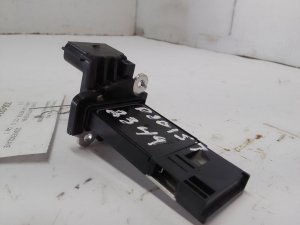

New Aftermarket Parts Available


The information in this article is provided for general reference and educational purposes only. Vehicle specifications, procedures, and part compatibility can vary by production date, trim level, and region. Always consult your vehicle's factory service manual and verify part numbers before purchasing or performing repairs. Safety-critical components such as airbags, seat belts, and braking systems should be installed by a qualified professional.
- Buick ENVISION:
- 🎬 Helpful Videos
- 🛍️ Shop This Part
- What's Unique About the 2016-2017 Buick ENVISION
- Diagnostic Flowchart
- Symptoms You May Notice
- Most Likely Causes
- Rare But Worth Checking
- Diagnosis Steps
- Parts You'll Likely Need
- Related Codes That Often Appear With This One
- Technical Service Bulletins (TSBs) & Recalls
- Platform-Specific Known Issues
- Mechanic-Grade Diagnostic Values
- Hidden / Shadow Codes Worth Checking
- Scan Tool Commands That Help
- Wiring & Ground Locations
- "I Checked Everything" — The Actual Cause
- When the Usual Fixes Don't Work
- OEM Part Supersession History
- 🎟️ Get 5% Off