

P0100 on 2013-2016 Volkswagen CC: MAF Circuit Malfunction Causes and Fixes
P0100 on a 2013-2016 VW CC most often indicates a faulty Mass Airflow (MAF) sensor or a problem in its wiring circuit, such as a broken wire or corroded connector. Cleaning the sensor is a good first step, but replacement with an OEM-quality part from a brand like Bosch is the most common fix. Checking the wiring harness for breaks, especially near sharp bends, is a critical diagnostic step.
- P0100 on your VW CC points directly to a problem in the Mass Airflow sensor's electrical circuit.
- The easiest and cheapest first step is to try cleaning the MAF sensor with a dedicated cleaner.
- Wiring and connector issues are a known problem on this vehicle; inspect the harness for corrosion or damage before buying parts.
- If you need to replace the sensor, using a high-quality OEM brand like Bosch is strongly recommended to ensure compatibility and proper performance.
- This code is often accompanied by P0101, which is normal and points to the same root cause.
What's Unique About the 2013-2016 Volkswagen CC

On the 2.0T TSI engine (engine codes CCTA, CBFA) used in the VW CC, the intake and fuel systems are precisely calibrated and sensitive to sensor input. Volkswagen has acknowledged MAF sensor circuit issues, issuing a technical document that notes P0100 and/or P0101 can occur with corrosion at the MAF sensor connector terminals. Furthermore, the wiring harness for the MAF sensor is known to be a weak point across similar VW platforms, with wires sometimes breaking inside the insulation near sharp bends in the harness routing. This code is also listed in a general Technical Service Bulletin (TSB) for the CC, grouped with other common engine light triggers, indicating it's a known issue for this platform.
Diagnostic Flowchart

Tap your situation to follow the diagnostic path that matches what you're seeing on this vehicle.
Symptoms You May Notice
- Check Engine Light is on
- Engine running in 'limp mode' or fail-safe mode, limiting RPMs to around 3,000.
- Rough or unstable idle
- Engine stalling, especially when coming to a stop
- Hesitation, bucking, or poor acceleration.
- Reduced fuel economy
- Black smoke from the exhaust, indicating a rich fuel mixture.
- Smell of unburned fuel from the exhaust.
- Replacing oxygen (O2) sensors. While a bad MAF can affect O2 sensor readings, the P0100 code points specifically to the MAF circuit.
- Replacing the throttle body. A faulty throttle body would typically set different trouble codes.
- Replacing the MAF sensor without first checking the wiring harness for breaks, which is a very common cause of this specific code on VWs.
Most Likely Causes

- Wiring Harness or Connector Issue 🔴 High Probability The wiring harness leading to the MAF sensor is a known failure point. Wires, particularly the ground wire, can fray and break internally from engine vibration and heat, often near sharp bends in the harness. Volkswagen also specifically noted the potential for corrosion at the MAF connector terminals on the 2016 CC. In some cases, the connector can become unplugged and melt on hot engine components.
How to confirm: Peel back the protective loom from the MAF sensor connector and carefully inspect each wire for breaks, frays, or damage, paying close attention to the 90-degree bend in the harness. Visually inspect the connector pins for green/white corrosion, bent pins, or a loose fit. Tug gently on the wires leading to the connector to check for breaks inside the insulation.
Typical fix: Repair any damaged wires by soldering in a new section and sealing with adhesive-lined heat shrink. Clean corroded terminals with an electrical contact cleaner. If the connector housing is damaged, replace the connector pigtail (Part No. 1J0973705 or 4F0973705).
Est. part cost: $10-$35 for cleaner or a new pigtail - Faulty Mass Airflow (MAF) Sensor 🔴 High Probability MAF sensors are a common failure item on many VWs, especially at higher mileage (over 60,000 miles). The internal electronics can fail, causing a complete loss of signal (a circuit fault) rather than just an incorrect reading. Aftermarket oiled air filters can also contaminate the sensor element, leading to failure.
How to confirm: After confirming the wiring is intact, test the sensor's output signal with a scan tool's live data function. A reading of 0 g/s or a value that doesn't change with RPM points to a failed sensor. If the car runs better when the MAF sensor is disconnected, it's a strong indicator the sensor is faulty and sending bad data.
Typical fix: Replace the MAF sensor. It is highly recommended to use an OEM or high-quality OEM-supplier part (like Bosch) as these engines can be sensitive to cheaper aftermarket sensors which may have incorrect calibration.
Est. part cost: $150-$250 for OEM, $70-$150 for aftermarket - Dirty or Contaminated MAF Sensor 🟡 Medium Probability The 2.0T engine's PCV (Positive Crankcase Ventilation) system can sometimes allow oil vapor into the intake, which can coat the MAF sensor's delicate wire or film over time.
How to confirm: Visually inspect the sensor element inside the MAF housing. If it appears oily or coated in grime, it needs cleaning.
Typical fix: Remove the sensor and clean it thoroughly with a dedicated MAF sensor cleaner spray. Never touch the sensor elements and allow it to air dry completely before reinstalling.
Est. part cost: $10-$15 for cleaner - Vacuum Leak ⚪ Low Probability
How to confirm: A vacuum leak allows unmetered air into the engine after the MAF sensor. This more commonly causes lean codes (P0171) or idle codes (P0507), but can sometimes trigger a MAF code. A smoke test is the most effective way to find leaks in intake hoses, the PCV valve, or intake manifold gaskets.
Typical fix: Replace the cracked hose, faulty PCV valve, or leaking gasket that is identified during the smoke test.
Est. part cost: $20-$100 depending on the leaking component
Rare But Worth Checking
- Blown Fuse: The MAF sensor circuit is protected by a fuse. While rare for a fuse to blow without a reason (like a short circuit), it's a quick and easy check to perform.
- Faulty Engine Control Module (ECM): This is extremely rare but possible. The ECM is the last thing to suspect after all other possibilities, including wiring, have been exhaustively tested and ruled out.
- Clogged Catalytic Converter or Restricted Exhaust: A severe exhaust restriction can prevent air from flowing properly through the engine, which could potentially confuse the MAF sensor and trigger a circuit code, though this is uncommon and would usually be accompanied by other codes and severe performance loss.
Diagnosis Steps
- Read all codes from the ECM using an OBD-II scanner.
- Inspect the engine air filter. A severely clogged filter can restrict airflow and cause issues.
- Visually inspect the MAF sensor's wiring harness and connector. Peel back the plastic loom and check for obvious damage, corrosion, or looseness, especially at any sharp bends.
- Remove the MAF sensor and inspect the sensing element for dirt, oil, or debris. If dirty, clean it with dedicated MAF sensor cleaner and allow it to air dry completely before reinstalling.
- Clear the codes, start the engine, and check if the code returns.
- If the code comes back, use a scan tool to monitor the MAF sensor's live data (measured in grams per second, g/s). At a warm idle with no load, the reading should be stable and roughly match the engine's displacement in liters (e.g., 2.0-4.0 g/s for a 2.0L engine). A reading of 0 g/s or a value that doesn't increase smoothly as you rev the engine indicates a failed sensor or circuit problem.
- Using a multimeter with the key on and engine off, back-probe the MAF sensor connector to check for proper voltage and ground. You should find a 12V power wire, a 5V reference wire, and a ground wire that shows good continuity to the chassis ground.
- If wiring, power, and ground are confirmed to be good but the signal is still absent or incorrect on the scan tool, the MAF sensor itself is faulty and should be replaced.
Parts You'll Likely Need

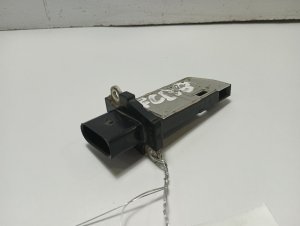
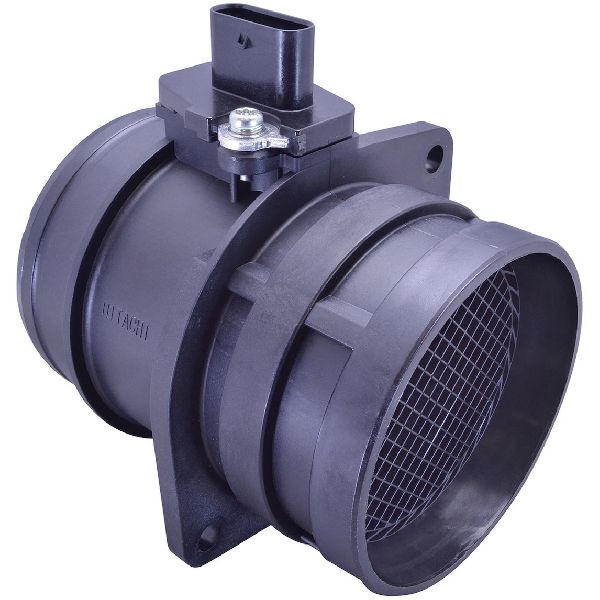
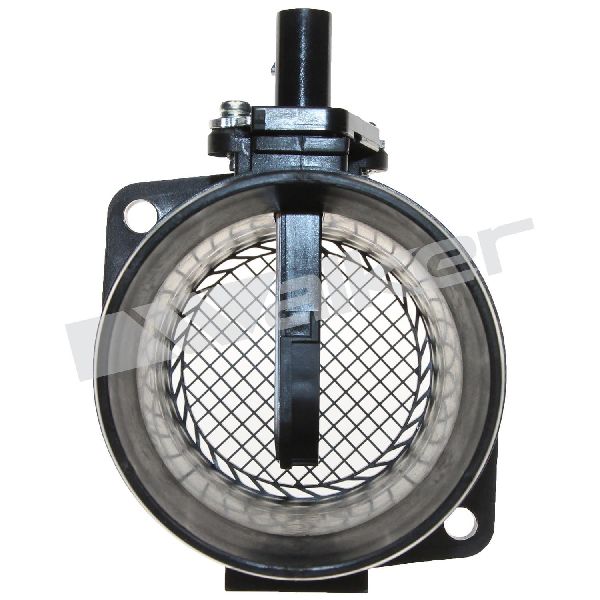
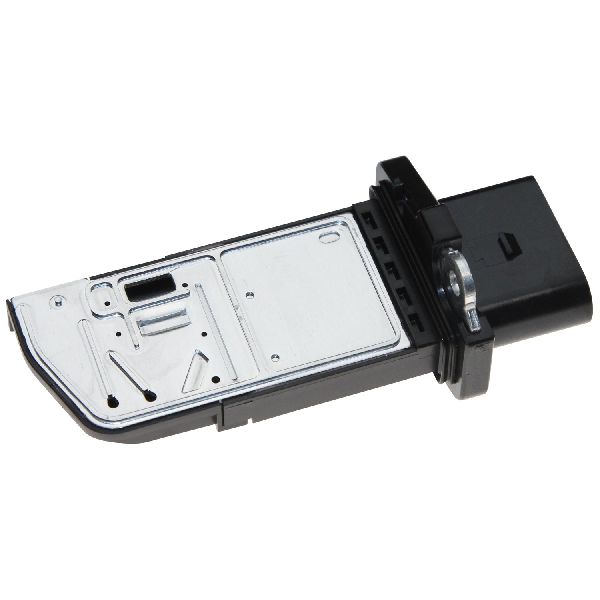
- Mass Airflow (MAF) Sensor
(OEM #06J906461B)— This is a very common component to fail and trigger a P0100 code, either due to internal electronic failure or contamination that can't be cleaned.
Trusted brands: Bosch, Hitachi
OEM price range: $150-$250
Aftermarket price range: $70-$150 - MAF Sensor Connector Pigtail
(OEM #1J0973705)— Used to repair a damaged or corroded factory connector, which is a common failure point for the P0100 circuit code.
Related Codes That Often Appear With This One
- P0101 — This code for 'MAF Circuit Range/Performance' is very commonly seen with P0100, as noted in VW's own technical service documents. It indicates the sensor's readings are out of the expected range, which can happen if the circuit is failing intermittently.
- P0171 — If the MAF sensor is under-reporting airflow due to a fault, the ECM may not inject enough fuel, leading to a 'System Too Lean' condition. This can also be caused by a vacuum leak, a related issue.
- P0172 — Conversely, if the sensor fails in a way that causes it to over-report airflow, the ECM will inject too much fuel, triggering a 'System Too Rich' code.
- P0507 — An 'Idle Air Control System RPM Higher Than Expected' code can appear alongside P0100, often pointing towards a significant vacuum leak as the root cause for both issues.
Technical Service Bulletins (TSBs) & Recalls
- Bulletin #VIN-4-A-PIN AUGU (2014 BACK OVER PREVENTION, dated 2016-08-30): Mentions 'MIL-ON P0101 AND OR P0100' as a known issue.
- Bulletin #VIN-4-A-PIN AUGU (2014 ENGINE, dated 2016-08-24): Also lists 'MIL-ON P0101 AND OR P0100'.
Platform-Specific Known Issues
- A Volkswagen technical document specifically mentions that for the 2016 CC with the 2.0T engine, a P0100/P0101 code can be caused by corrosion at the mass air connector terminals.
- A broader Technical Service Bulletin (TSB) for the 2014 model year includes 'MIL-ON P0101 AND OR P0100' in a list of known, common issues for the platform.
- Owners of vehicles with the 2.0T TSI engine, like the GTI, have found broken wires within the MAF sensor harness, typically near a sharp bend, to be the cause of a P0100 code.
Mechanic-Grade Diagnostic Values
- MAF Sensor Live Data (g/s) at warm idle, no load — expected: 3.4 to 3.8 g/s. A general rule of thumb is 1.7-1.9 g/s per liter of engine displacement.. Failure: A reading of 0 g/s, a static value that doesn't change with RPM, or a value significantly lower than expected (which could also indicate a vacuum leak).
- MAF Sensor Live Data (g/s) at full throttle, peak horsepower RPM — expected: Approximately 80% of the rated horsepower. For a 200hp 2.0T engine, this would be around 160 g/s.. Failure: A value significantly less than the expected 80% of horsepower suggests the MAF is under-reporting airflow and is likely faulty.
- MAF Connector Pin Voltages (Key On, Engine Off) — expected: The 5-pin connector should have: one pin with ~12V (battery voltage), one pin with 5V (reference voltage), two ground pins, and one signal pin.. Failure: Absence of 12V or 5V power, or high resistance on ground pins, indicates a wiring or fuse issue upstream of the sensor.
- Fuel Trims (VCDS Measuring Block 032) — expected: Both additive (idle) and multiplicative (partial load) trims should be close to 0%, within +/- 10%.. Failure: A multiplicative (partial) trim value that is highly positive (e.g., >10%) while the additive (idle) trim is normal often points to a failing MAF sensor that is under-reporting air. Conversely, a high positive additive trim with normal multiplicative trim often indicates a vacuum leak.
Hidden / Shadow Codes Worth Checking
- 16484 / 000256: This is the VAG-specific fault code for 'Mass Air Flow Sensor (G70): Supply Voltage'. It is the direct equivalent of the generic P0100 code and points specifically to a problem with the power supply to the sensor. (see via A VW-specific scan tool like VCDS (VAG-COM) or ODIS will display this code.)
Scan Tool Commands That Help

- VCDS (VAG-COM) or similar VW-specific tool: Measuring Value Blocks (MVB) - Group 002 — To view live data from the MAF sensor (G70) in grams per second. This is the primary screen for observing the sensor's output at idle and during throttle application to see if it's responding correctly.
- VCDS (VAG-COM) or similar VW-specific tool: Measuring Value Blocks (MVB) - Group 032 — To check the long-term fuel trims (additive and multiplicative). This is a critical secondary check. A MAF that is slowly failing and under-reporting air will often cause high positive multiplicative fuel trims before it fails completely, providing strong evidence against a simple vacuum leak.
Wiring & Ground Locations
- MAF Sensor Connector (G70) — Located in the intake tract, immediately after the air filter housing and before the flexible intake hose that leads to the turbocharger.. This 5-pin connector is the primary interface for the sensor. Corrosion on the pins or breaks in the wires right at the connector are extremely common causes for a P0100 circuit fault.
- Engine Block to Chassis Ground Strap — A heavy-gauge, typically braided copper cable connecting the engine block or transmission case to the vehicle's chassis/frame rail, often near the transmission mount.. A corroded or loose main ground strap can cause a host of electrical issues, including unstable sensor readings. The ECU and its sensors rely on a solid ground reference. An unstable ground can cause floating voltages and trigger circuit codes like P0100.
- Fuse Panel — There is a fuse panel in the engine bay (on or near the battery) and another inside the passenger cabin on the driver's side.. The MAF sensor receives its 12V power supply via a fuse in one of these panels. A blown fuse will cause a P0100 code.
Real Owner Repair Stories
- GOLFMKV.com forum user (2009 MK5 GTI 2.0T TSI (127k miles)) — Idle hunting, stalling when stopping, CEL on. Codes P0100, P0507 (Idle Air Control System RPM Higher Than Expected), P0171 (System Too Lean).
❌ Tried (didn't work) Replaced MAF sensor (OEM) - code returned., Shop replaced MAF sensor again., Shop replaced MAF sensor connector and wires - P0100 code persisted., Clearing the code with VCDS would cause the engine to become unstable and stall.
✅ What actually fixed it The issue was traced to the PCV (Positive Crankcase Ventilation) system. Disconnecting the PCV breather hose from the air inlet caused the engine to run normally. The ultimate fix was servicing/replacing the faulty PCV valve, which was creating a massive unmetered air leak that the system interpreted as a MAF circuit fault under certain conditions.
OEM Part Supersession History
06J906461B→This part number appears to be stable for the specified vehicle range.— N/A
Heads up: This MAF sensor is for the 2.0T TSI engine (e.g., CCTA, CBFA) only and is not compatible with the earlier 2.0T FSI (e.g., BPY) engine, which uses a different sensor. The engine type is typically stamped on the engine cover.
Used OEM Parts in Stock

New Aftermarket Parts Available



The information in this article is provided for general reference and educational purposes only. Vehicle specifications, procedures, and part compatibility can vary by production date, trim level, and region. Always consult your vehicle's factory service manual and verify part numbers before purchasing or performing repairs. Safety-critical components such as airbags, seat belts, and braking systems should be installed by a qualified professional.
- Volkswagen CC:
- 🛍️ Shop This Part
- What's Unique About the 2013-2016 Volkswagen CC
- Diagnostic Flowchart
- Symptoms You May Notice
- Most Likely Causes
- Rare But Worth Checking
- Diagnosis Steps
- Parts You'll Likely Need
- Related Codes That Often Appear With This One
- Technical Service Bulletins (TSBs) & Recalls
- Platform-Specific Known Issues
- Mechanic-Grade Diagnostic Values
- Hidden / Shadow Codes Worth Checking
- Scan Tool Commands That Help
- Wiring & Ground Locations
- Real Owner Repair Stories
- OEM Part Supersession History
- 🎟️ Get 5% Off