

P0100 on 2014-2018 Jaguar F-TYPE: MAF Sensor Circuit Causes and Fixes
This code indicates a malfunction in the Mass Airflow (MAF) sensor circuit. For the Jaguar F-TYPE, this is often due to a faulty MAF sensor itself, a wiring issue, or a vacuum leak. V8 models have two sensors, and 'Circuit A' typically refers to the passenger side (Bank 1) on LHD vehicles. Cleaning the sensor is a good first step, but replacement is frequently necessary.
- P0100 on a 2014-2018 F-TYPE points to a problem with the Mass Airflow sensor circuit, specifically an 'incorrect signal frequency' according to Jaguar.
- The most likely causes are a faulty MAF sensor, a dirty sensor element, or a problem with the sensor's wiring/connector.
- Always start by cleaning the sensor with a dedicated MAF cleaner. It's a cheap and easy step that may solve the problem.
- Remember that V8 models have two MAF sensors. P0100 refers to Bank 'A', so ensure you are diagnosing the correct sensor.
- If cleaning doesn't work, replacement of the MAF sensor is the next logical step and is a DIY-friendly job.
What's Unique About the 2014-2018 Jaguar F-TYPE

The Jaguar F-TYPE, particularly the 5.0L V8 supercharged models (AJ133 engine), is equipped with two Mass Airflow sensors—one for each engine bank. This can complicate diagnosis, as the code P0100 refers to 'Circuit A,' which on Left-Hand Drive models corresponds to Bank 1 (the passenger side). The V6 (AJ126 engine) models also use this dual-intake setup. The manufacturer's specific definition of an 'incorrect signal frequency' also suggests these cars may be more sensitive to electrical issues or sensor failure than simple contamination. [TSB #SSM73671 Attachm]
Diagnostic Flowchart
Tap your situation to follow the diagnostic path that matches what you're seeing on this vehicle.
Symptoms You May Notice
- Check Engine Light (MIL) is on.
- Reduced engine power and poor acceleration, sometimes described as hesitation.
- Rough or unstable idle.
- Engine may hesitate or stall.
- Decreased fuel efficiency.
- Black smoke from the exhaust if the engine runs too rich.
- Hissing noise from the engine bay, indicating a possible vacuum leak.
- Replacing oxygen (O2) sensors. While a bad air/fuel mixture can sometimes trigger O2 sensor codes (like P0171/P0174), P0100 is specific to the MAF circuit, which should be diagnosed first.
Most Likely Causes

- Faulty Mass Airflow (MAF) Sensor 🔴 High Probability MAF sensors are sensitive components that can fail over time from heat and contamination. The TSB's focus on 'incorrect signal frequency' points towards internal sensor failure. [TSB #SSM73671 Attachm] These sensors are a known failure point on the AJ126/AJ133 engine family.
How to confirm: After cleaning the sensor and checking wiring, if the code persists, the most reliable method is to monitor live data with an OBD-II scanner. At warm idle, the airflow reading in grams/second (g/s) should be roughly equal to the engine's displacement in liters (e.g., ~3.0 g/s for the V6, ~5.0 g/s for the V8). If readings are erratic, static, or do not increase smoothly with RPM, the sensor is likely bad. Swapping the sensors between banks on a V8/V6 can also confirm a bad sensor if the code follows the sensor to the other bank (e.g., P0100 changes to P010B).
Typical fix: Replace the faulty MAF sensor. V8 and V6 engines have two, so ensure you are replacing the correct one 🎬 Watch: This video shows how to replace the MAF sensor. ('Circuit A' is Bank 1, typically the passenger side on LHD cars).
Est. part cost: $150-$260 - Dirty MAF Sensor 🟡 Medium Probability Oil from aftermarket air filters or fine dust and debris that bypasses the engine air filter can coat the sensor's delicate wire, causing inaccurate readings. This is a common first step in diagnosis across many Jaguar models.
How to confirm: Visually inspect the sensor element. If it appears dirty or oily, cleaning is warranted.
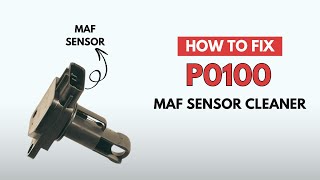
Typical fix: Remove the sensor and carefully clean it using only a dedicated MAF sensor cleaner spray. Do not touch the sensor element. Allow it to air dry completely before reinstalling. 🎬 See how to safely clean your sensor in this quick guide.
Est. part cost: $10-$15 for cleaner - Wiring or Connector Issue 🟡 Medium Probability The TSB specifically mentions a circuit signal issue, which includes the wiring harness and connector. [TSB #SSM73671 Attachm] Engine vibrations and heat can cause wires to fray or connectors to become loose or corroded over time.
How to confirm: Visually inspect the MAF sensor connector for loose pins, corrosion, or damage. Check the wiring harness for any signs of fraying, breaks, or heat damage. A multimeter can be used to check for continuity and proper voltage at the connector per the service manual.
Typical fix: Repair the damaged section of wiring or replace the connector pigtail. Ensure the connector is securely seated.
Est. part cost: $15-$50 for a new connector - Vacuum Leak ⚪ Low Probability Any air that enters the engine after the MAF sensor is 'unmetered' and can cause the sensor's readings to conflict with what the oxygen sensors report, triggering a code. On the AJ133/AJ126 engines, common leak sources include deteriorated PCV valve diaphragms, cracked intake hoses, and small vacuum lines that become brittle from heat.
How to confirm: Perform a smoke test to check the intake system 🎬 Watch: How to use a smoke machine to find vacuum leaks. for leaks from hoses, gaskets, or the intake manifold itself. Spraying starter fluid or throttle body cleaner near suspected leak points while monitoring engine RPM can also help identify leaks, as the idle will change when the fluid is ingested.
Typical fix: Repair the source of the leak, which usually involves replacing a cracked hose, a faulty gasket, or the PCV valve assembly.
Est. part cost: $20-$150
Rare But Worth Checking
- Clogged Engine Air Filter: A severely restricted air filter can starve the engine of air, causing implausible readings from the MAF sensor. It's a simple and inexpensive check that should not be overlooked.
- Faulty Powertrain Control Module (PCM): This is extremely rare. The PCM is the last component to suspect after all other possibilities (sensor, wiring, leaks) have been exhaustively ruled out.
Diagnosis Steps

- Read the code with an OBD-II scanner and check for any other accompanying codes, like P0111, P010B, P0171, or P0174.
- Visually inspect the engine air filter and replace it if it is dirty or clogged.
- Inspect the air intake tube between the air filter housing and the throttle body for any cracks, loose clamps, or disconnections. TSB SSM73671 specifically notes that an improperly fitted air intake elbow can cause leaks.
- Carefully inspect the MAF sensor's electrical connector for corrosion, bent pins, or a loose connection. Check the wiring for any visible damage.
- Remove the MAF sensor and inspect the sensing element. If it appears dirty, clean it with a dedicated MAF sensor cleaner and allow it to dry completely before reinstalling.
- Clear the codes and test drive the vehicle. If the code returns, proceed to the next step.
- Use a scan tool with live data capability to monitor the MAF sensor reading (in grams per second). The reading should be low at idle (approx. 3.0 g/s for V6, 5.0 g/s for V8) and increase smoothly as you raise the engine RPM. If the reading is stuck, erratic, or does not change, the sensor is likely faulty. On V6/V8 models, compare the readings between Bank 1 and Bank 2; they should be very similar.
- If you have access to a multimeter, test the MAF sensor circuit for proper voltage and ground according to the vehicle's service manual.
- If a vacuum leak is suspected, perform a smoke test to identify the source. Pay close attention to PCV valves and all vacuum hoses connected to the intake manifold and supercharger.
- If all other steps fail to identify the issue, consider having the PCM professionally diagnosed.
Parts You'll Likely Need
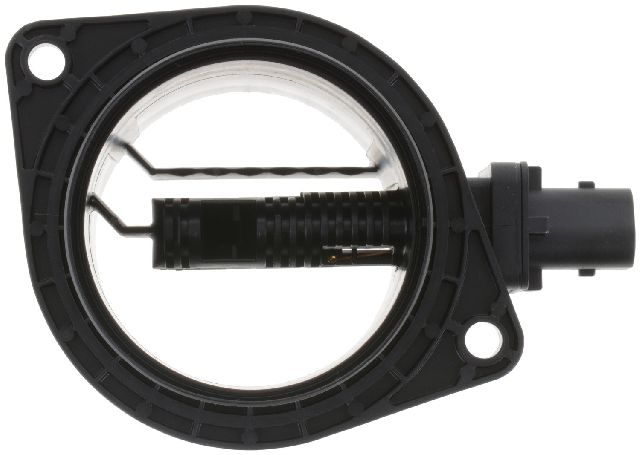
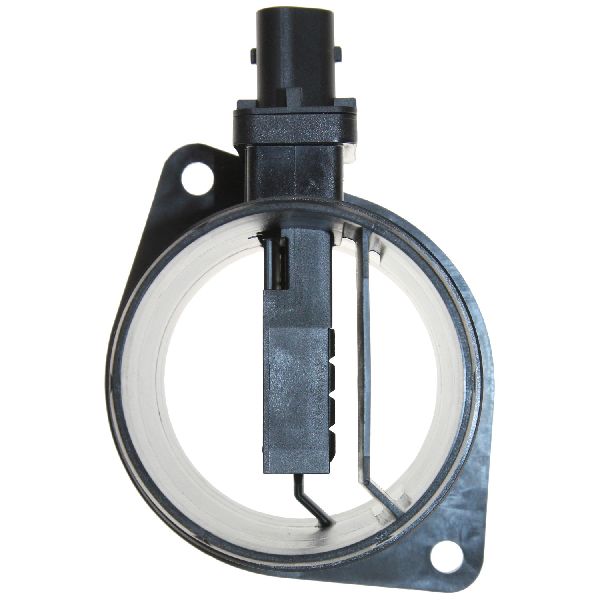
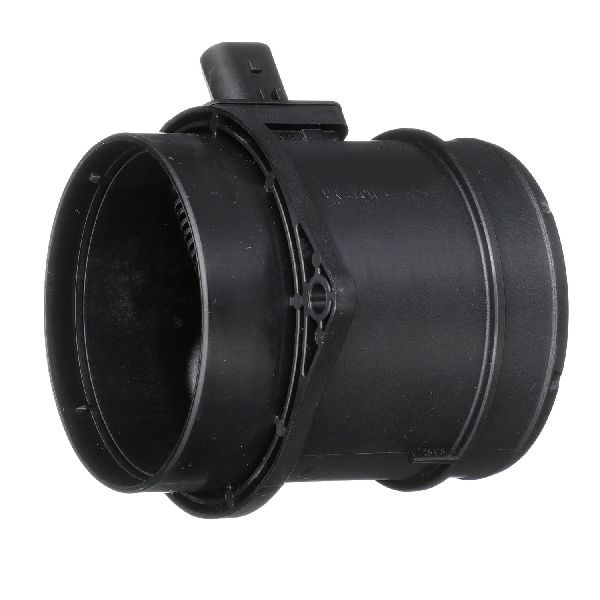
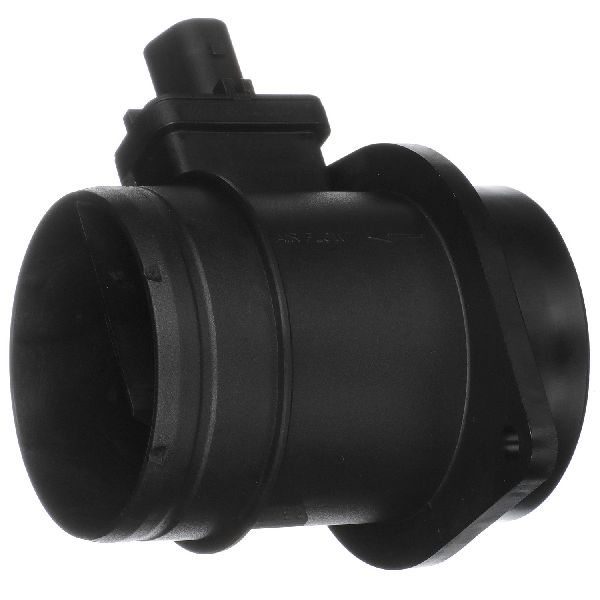
- Mass Air Flow Sensor (V8)
(OEM #LR035727 (Bosch 0280218288))— This is the most common cause of failure for P0100 on the 5.0L V8, especially when cleaning does not resolve the issue. The original part number T2H7707 appears to be for 2.0L engines.
Trusted brands: Bosch (OEM), Delphi
OEM price range: $150-$250
Aftermarket price range: $100-$180 - Mass Air Flow Sensor (V6)
(OEM #LR035726 / C2D19537 (Bosch 0280218286))— The most common cause of failure for P0100 on the 3.0L V6. It is a different part than the V8 sensor.
Trusted brands: Bosch (OEM), Standard Motor Products
OEM price range: $180-$280
Aftermarket price range: $100-$200 - MAF Sensor Cleaner — A necessary first step for diagnosis, as a dirty sensor is a common cause and cleaning is much cheaper than replacement.
Trusted brands: CRC, Liqui Moly
Aftermarket price range: $10-$15
Related Codes That Often Appear With This One
- P0111 — The TSB SSM73671 explicitly mentions that P0111 (Intake Air Temperature Sensor 1 Circuit Range/Performance) can be logged with P0100, as the IAT sensor is often integrated into the MAF sensor housing. [TSB #SSM73671 Attachm]
- P0101-P0104 — These codes are all related to the MAF sensor circuit and indicate different types of failures (e.g., range/performance, intermittent, circuit high/low), which can help pinpoint the exact nature of the fault.
- P0171 / P0174 — These codes indicate a 'System Too Lean' condition on Bank 1 and Bank 2, respectively. A vacuum leak or a faulty MAF sensor under-reporting airflow can cause the engine to run lean, often triggering these codes alongside P0100.
Technical Service Bulletins (TSBs) & Recalls

- SSM73671 Attachm: Notes that the Malfunction Indicator Light (MIL) may appear with DTC P0100-38 (Mass or Volume Air Flow Sensor "A" Circuit signal frequency incorrect) stored in the PCM. It can also be accompanied by P0111 and may be caused by an incorrectly fitted air intake elbow.
Platform-Specific Known Issues
- A Jaguar Technical Service Bulletin (SSM73671) directly addresses P0100 on this vehicle, defining it as a 'signal frequency incorrect' problem, often accompanied by P0111.
Mechanic-Grade Diagnostic Values
- MAF Sensor Signal Voltage at Idle (Warm Engine) — expected: ~0.85V - 1.0V DC. Failure: Voltage is static and does not increase with RPM, or is stuck at a high value (e.g., 3V or 4V).
- MAF Sensor Power Supply (Key On, Engine Off) — expected: 12V (Battery Voltage) or 5V reference. Failure: No voltage is present on the power supply pin.
- MAF Sensor Ground Circuit Voltage Drop — expected: < 9mV (0.009V). Failure: A reading significantly higher than 9mV indicates a poor ground connection, which can cause incorrect sensor readings.
Hidden / Shadow Codes Worth Checking
- P0100-38: Mass or Volume Air Flow Sensor 'A' Circuit signal frequency incorrect. This points to an electrical signal problem rather than a simple airflow reading issue. (see via Jaguar SDD/Pathfinder or other high-level diagnostic tool that can read manufacturer-specific code suffixes. [TSB #SSM73671 Attachm])
Scan Tool Commands That Help
- Jaguar SDD/Pathfinder or generic method: Reset Adaptations / Clear Learned Values — After replacing a MAF sensor, the ECU's long-term fuel trims (LTFT) should be reset. The ECU has 'learned' to compensate for the old, faulty sensor, and failing to reset these values can make the car run poorly with the new sensor. This is more thorough than just clearing codes. A simple method is to disconnect the battery's negative terminal for over 10 minutes.
Wiring & Ground Locations
- MAF Sensor Wiring Diagram — Contained within the official vehicle service manuals and electrical guides.. A full wiring diagram is essential for tracing the MAF sensor circuit back to the PCM to check for continuity, shorts to ground, or shorts to power. A 2017 F-Type wiring diagram is available as a reference.
- Jaguar Wire Color Codes — Referenced in wiring diagrams.. Knowing the color codes helps correctly identify the specific wires for power, ground, and signal at the MAF connector. For example: U=Blue, G=Green, W=White, B=Black, R=Red, O=Orange.
Real Owner Repair Stories
- Jaguar Forums (Jaguar XF (similar AJ-series engine principles)) — P0102-00, P0101-00, P010F-00 (all MAF-related codes) after replacing the crankcase vent/breather.
❌ Tried (didn't work) Initially suspected a need to reset adaptations.
✅ What actually fixed it The user discovered a stripped screw hole for the newly installed part was preventing it from sealing correctly, creating a vacuum leak. Readjusting the component and temporarily securing it caused the fuel trims to correct themselves, confirming the leak as the root cause.
OEM Part Supersession History
T2P1711, CPLA12B579BA→LR035727— Part revision and consolidation across Jaguar Land Rover platforms.
Heads up: LR035727 is the correct current part for the 5.0L V8.
Model Year Variations Within This Range
- 2014-2018: While there were minor cosmetic updates and the introduction of AWD options during this period, the core AJ126 (V6) and AJ133 (V8) engines and their intake/MAF sensor systems remained fundamentally the same. Diagnosis for P0100 is consistent across these years.
Helpful Videos

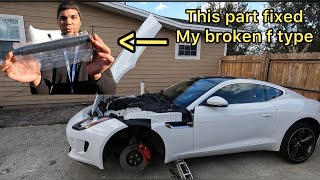
Used OEM Parts in Stock


New Aftermarket Parts Available



The information in this article is provided for general reference and educational purposes only. Vehicle specifications, procedures, and part compatibility can vary by production date, trim level, and region. Always consult your vehicle's factory service manual and verify part numbers before purchasing or performing repairs. Safety-critical components such as airbags, seat belts, and braking systems should be installed by a qualified professional.
- Jaguar F-TYPE:
- 🎬 Helpful Videos
- 🛍️ Shop This Part
- What's Unique About the 2014-2018 Jaguar F-TYPE
- Diagnostic Flowchart
- Symptoms You May Notice
- Most Likely Causes
- Rare But Worth Checking
- Diagnosis Steps
- Parts You'll Likely Need
- Related Codes That Often Appear With This One
- Technical Service Bulletins (TSBs) & Recalls
- Platform-Specific Known Issues
- Mechanic-Grade Diagnostic Values
- Hidden / Shadow Codes Worth Checking
- Scan Tool Commands That Help
- Wiring & Ground Locations
- Real Owner Repair Stories
- OEM Part Supersession History
- Model Year Variations Within This Range
- 🎟️ Get 5% Off