

P0100 on 2012-2018 Ford Focus 2.0L: MAF Circuit Malfunction Causes and Fixes
On a 2012-2018 Ford Focus, code P0100 is most often caused by a dirty Mass Airflow (MAF) sensor. Before replacing anything, try cleaning it with dedicated MAF sensor cleaner (a ~$10 can). If that doesn't work, a replacement Motorcraft sensor costs around $70-$125 and is an easy 15-minute DIY job. Be aware that symptoms heavily overlap with a recalled canister purge valve (CPV) issue.
- First, try cleaning the MAF sensor with dedicated cleaner; this is the cheapest and most common fix.
- P0100 specifically indicates a circuit problem, so check the connector, wiring, and the two related fuses before buying parts.
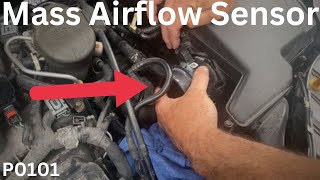
- The MAF sensor is located on the air filter box and is very easy to access and replace with basic tools (T20 Torx or 8mm socket).
- Be aware of the common canister purge valve (CPV) recall on this car, as its symptoms (stalling, rough running) can mimic a bad MAF sensor.
What's Unique About the 2012-2018 Ford Focus
The 2012-2018 Ford Focus (Mk3 generation) with the 2.0L GDI engine is generally reliable, but this code often appears due to simple issues like a contaminated sensor. The most important platform-specific issue is the potential for misdiagnosis. Many drivability symptoms of a P0100 code, like stalling and hesitation, overlap with a very common and recalled issue on this car: a faulty canister purge valve (CPV). It's crucial to investigate the CPV under recall 18S32 if MAF sensor cleaning or replacement doesn't resolve the problem.
Symptoms You May Notice
- Check Engine Light is on
- Engine hesitates or stumbles during acceleration
- Rough or unstable idle
- Engine may stall, especially when coming to a stop
- Engine hard start or stalling immediately after it starts
- Noticeable decrease in fuel economy
- Black smoke from the exhaust if the engine is running too rich
- Reduced engine power or sluggishness
- Replacing the MAF sensor when the actual problem is a faulty Canister Purge Valve (CPV). The symptoms are very similar. Ford issued recall 18S32 for the CPV, which can cause stalling, rough running, and an illuminated MIL with codes like P1450, P0452, or P0456. If MAF-related fixes don't work, investigate the purge valve.
Most Likely Causes
- Dirty Mass Airflow (MAF) Sensor 🔴 High Probability Over time, oil vapors from the PCV system and fine dust can coat the sensor's delicate sensing element, insulating it and preventing accurate readings.
How to confirm: Visually inspect the sensor's wire or film element. If it appears dirty, oily, or has debris on it, it needs cleaning.
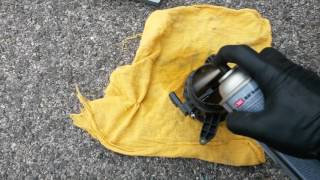
Typical fix: Remove the sensor and clean it thoroughly using only dedicated MAF sensor cleaner spray. 🎬 Watch: Step-by-step guide to cleaning your Focus MAF sensor. Do not use brake or carburetor cleaner, as they will destroy the sensor. Do not touch the internal wires. Let it dry completely before reinstalling.
Est. part cost: $8-$15 for a can of MAF cleaner - Faulty Mass Airflow (MAF) Sensor 🟡 Medium Probability The sensor's internal electronics can fail from age, heat cycles, or vibration, causing a complete loss of signal which triggers the P0100 circuit code.
How to confirm: If cleaning the sensor and checking the wiring doesn't fix the code, the sensor is likely faulty. Using a scan tool with live data, check the MAF reading at idle. If the value is zero or does not change when you rev the engine, the sensor has failed.
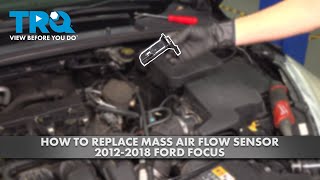
Typical fix: Replace the MAF sensor. This is a simple DIY task requiring only basic tools.
Est. part cost: $70-$125 for an OEM Motorcraft sensor - Damaged Wiring or Loose Connector ⚪ Low Probability
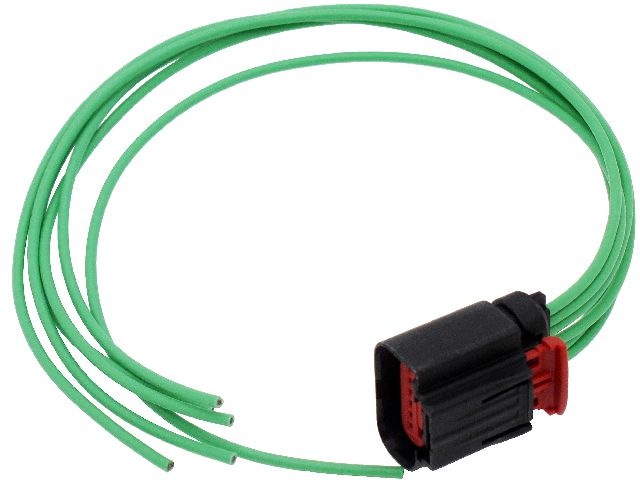
How to confirm: Visually inspect the MAF sensor's electrical connector for corrosion, bent pins, or a loose fit. Wiggle the connector to see if it affects the engine idle. Ensure the red locking tab is fully engaged. Tug gently on the wires to ensure they are secure in the connector. Check the wiring harness for any signs of fraying, melting, or damage.
Typical fix: Clean corroded terminals with an electrical contact cleaner. Repair any damaged wires. Ensure the connector is fully seated and the locking tab clicks into place.
Est. part cost: $0-$25 for cleaning supplies or wiring repair materials - Blown MAF Sensor Fuse ⚪ Low Probability
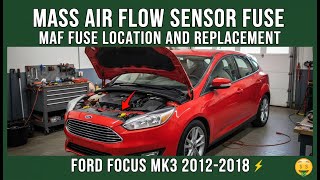
How to confirm: The Mk3 Focus has two fuses related to the PCM and its sensors. Check fuse F28 (15A) in the engine compartment fuse box and fuse F56 (5A) in the Body Control Module (BCM) fuse panel located behind the glove box. 🎬 See this quick DIY swap for a blown MAF fuse. Always confirm fuse locations with your owner's manual.
Typical fix: Replace the blown fuse with a new one of the exact same amperage. If the fuse blows again, it indicates a short circuit in the wiring that needs to be diagnosed.
Est. part cost: $1-$5
Rare But Worth Checking
- Vacuum Leak: A significant vacuum leak in the intake hose between the MAF sensor and the throttle body can sometimes cause the PCM to log a circuit fault. Inspect the large plastic intake tube for cracks or loose connections, especially where it connects to the airbox and throttle body.
- Clogged Exhaust System: A severe restriction in the exhaust, such as a clogged catalytic converter, can impede airflow through the engine and may, in some cases, trigger a MAF circuit code. This is usually accompanied by other codes and a major loss of power.
- Faulty Powertrain Control Module (PCM): This is extremely rare, but the PCM itself can fail. This should only be considered after all other possibilities have been exhaustively ruled out by a professional.
Diagnosis Steps
- Scan for Codes: Use an OBD-II scanner to confirm P0100 is the primary code. Note any other codes present, especially any related to the EVAP system (e.g., P1450), which could point to the CPV issue.
- Inspect the Air Filter: Check the engine air filter. A severely clogged filter can restrict airflow and should be replaced.
- Inspect Wiring and Connector: Carefully examine the MAF sensor's electrical connector and nearby wiring for any visible damage, corrosion, or loose connections. Ensure it is clicked in securely.
- Check Fuses: Locate and inspect the two MAF sensor-related fuses (typically F28 in the engine bay, F56 behind the glove box) and replace if blown. Verify with your owner's manual.
- Clean the MAF Sensor: Remove the sensor (held by two T20 Torx bolts). Spray the internal wires/elements generously with MAF-specific cleaner ONLY. Do not touch the wires or use other chemicals. Allow it to air dry completely for at least 30 minutes before reinstalling.
- Clear Codes and Test Drive: Reinstall the clean sensor, clear the codes with your scanner, and perform a test drive to see if the code returns.
- Check for Vacuum Leaks: If the code persists, perform a visual inspection or a smoke test to check the air intake boot between the MAF sensor and the throttle body for any cracks, tears, or loose clamps.
- Test or Replace MAF Sensor: If all previous steps fail, the sensor itself has likely failed. You can confirm with a scan tool's live data or replace it. Given the low cost, many DIYers opt to replace it at this stage.
- Investigate Canister Purge Valve: If a new MAF sensor does not fix the drivability issues (stalling, rough idle), the problem is very likely the canister purge valve, a known recalled issue on this vehicle. Check if recall 18S32 has been performed. 🎬 Watch: How to replace the canister purge valve yourself.
Parts You'll Likely Need
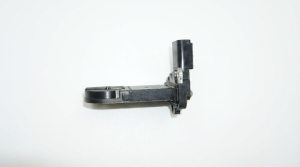
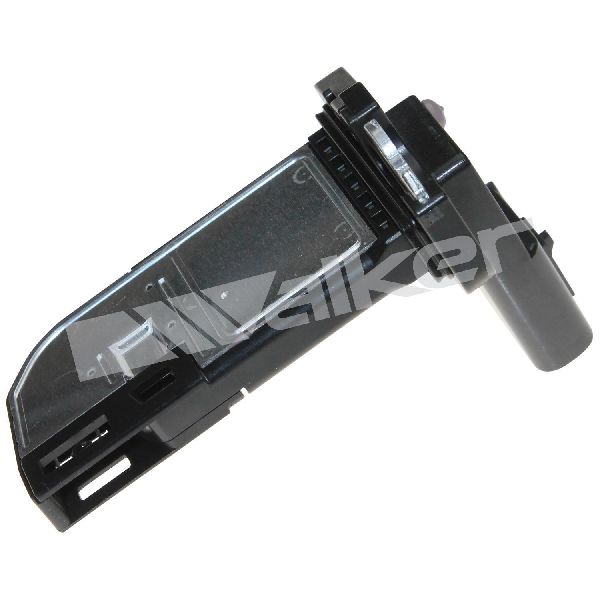
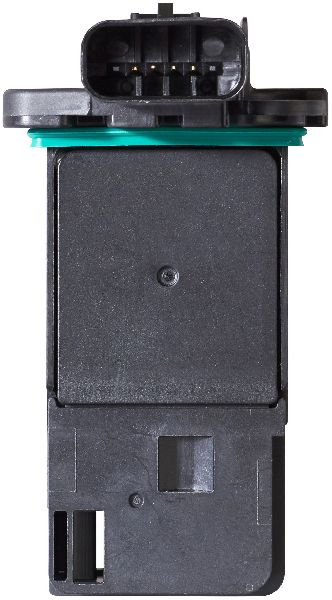
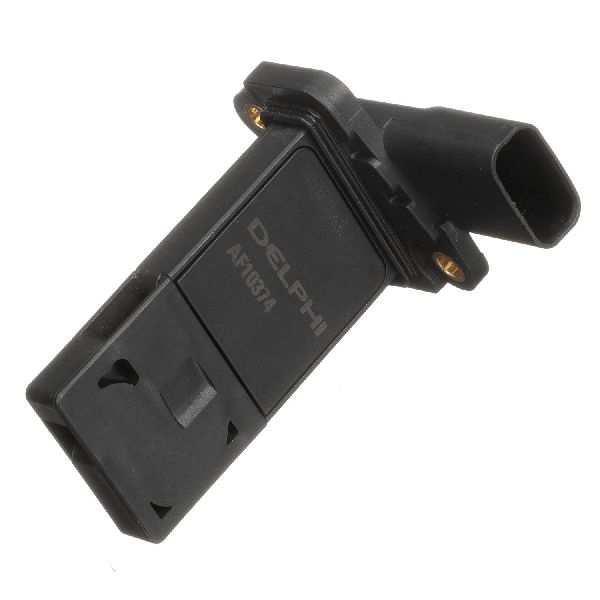
- Mass Air Flow (MAF) Sensor
(OEM #CP9Z-12B579-B)— This is the most common part to fail, causing the P0100 code after cleaning proves ineffective.
Trusted brands: Motorcraft (AFLS-196), Hitachi (MAF0103), Delphi (AF10544), Walker (245-2179)
OEM price range: $70-$125
Aftermarket price range: $40-$90 - MAF Sensor Cleaner — Often, the sensor is just dirty, not broken. This specialized cleaner is the correct and cheapest first step in fixing the problem.
Trusted brands: CRC, Liqui Moly, WD-40 Specialist
Aftermarket price range: $8-$15
Related Codes That Often Appear With This One
- P0101 — This code indicates a MAF sensor 'Range/Performance' issue. It can appear with P0100 if the sensor is failing intermittently or is very dirty before the circuit fails completely.
- P0102 — This code means 'MAF Circuit Low Input'. It is more specific than P0100 and often points directly to a failed sensor or a wiring issue causing a low voltage signal.
- P0171 or P0174 — These 'System Too Lean' codes can be caused by a dirty or failing MAF sensor under-reporting the amount of air entering the engine, causing the PCM to not add enough fuel.
Technical Service Bulletins (TSBs) & Recalls
- Recall 18S32 / 19S22 - Canister Purge Valve and Fuel Tank Deformation. While not directly for P0100, its symptoms (stalling, drivability issues) overlap almost perfectly, making it a critical piece of context for diagnosis. The recall addresses a stuck CPV that can cause a vacuum in the fuel tank, leading to stalling and erratic fuel gauge behavior.
Platform-Specific Known Issues
- A critical recall (NHTSA #18V735, Ford #18S32) was issued for the Canister Purge Valve (CPV) on 2012-2018 Focus models with the 2.0L engine. A faulty CPV gets stuck open, causing excessive vacuum in the fuel system which can deform the fuel tank. This results in symptoms identical to a bad MAF sensor: stalling, rough idle, and erratic fuel gauge readings. The official fix involves a PCM software update and, if needed, replacement of the CPV and potentially the fuel tank. Until the recall is performed, Ford advised owners to keep the fuel tank at least half full to prevent tank deformation.
Mechanic-Grade Diagnostic Values
- Scan Tool: MAF Sensor Live Data (g/s) — expected: Approximately 2.0-3.5 g/s at a stable, warm idle. The reading should increase smoothly and instantly with throttle application.. Failure: A reading of 0 g/s, a reading that is stuck, or a reading that does not respond to RPM changes indicates a failed sensor or circuit. A reading that is low for the given RPM may indicate a vacuum leak after the sensor.
- Multimeter: MAF Sensor Signal Wire Voltage — expected: With the key on, engine off (KOEO), voltage should be near 0V. At warm idle, the signal wire should read between 0.5V and 1.0V. Voltage should rise smoothly to over 2.0V when the engine is revved to ~2500 RPM.. Failure: No voltage, or voltage that is stuck high or low and does not respond to RPM changes, points to a faulty sensor or wiring problem.
- Multimeter: MAF Sensor Power Supply Wire — expected: With the key on, engine off (KOEO), you should find one wire in the connector with 12V (battery voltage).. Failure: No voltage indicates a blown fuse, a break in the power wire, or a PCM issue.
- Multimeter: MAF Sensor Ground Wire — expected: With the key on, engine off (KOEO), you should find at least one wire with good continuity to the chassis ground (less than 1 ohm).. Failure: High resistance or an open circuit on the ground wire will cause the sensor to malfunction.
Wiring & Ground Locations
- Primary Engine Bay Ground — Underneath the airbox, in front of the battery, bolted to the chassis frame rail.. The MAF sensor, along with other critical engine sensors, relies on a clean and secure ground connection to function correctly. A corroded or loose main ground in this area can cause erratic sensor readings and trigger various circuit codes, including P0100.
- MAF Sensor Connector C134 — The electrical connector plugs directly into the MAF sensor, which is located on the air intake tube just after the air filter box.. This is the primary point of failure for wiring issues. The connector pins can become corroded, and the wires entering the back of the connector can fray or break from engine vibration over time, causing an intermittent or complete loss of signal.
Real Owner Repair Stories
- Focus Fanatics Forum Member (2012 Ford Focus SE 2.0L) — Check engine light with P0100, rough idle, hesitation on acceleration.
❌ Tried (didn't work) Cleaned the MAF sensor with MAF cleaner., Replaced the MAF sensor with a new one.
✅ What actually fixed it The user discovered a large crack in the flexible, ribbed section of the air intake snorkel/boot, located between the MAF sensor and the throttle body. The crack was not obvious until the snorkel was removed and flexed by hand. Replacing the entire air intake snorkel assembly resolved all symptoms and the P0100 code did not return. - NHTSA ODI #11219158 — An owner reported that while trying to figure out an issue, they used a reader to test for error codes and found P0100, P2227, and P0456 all came up. Researching these codes led the owner to discover the NHTSA recall information.
- NHTSA ODI #11014092 — Although reported on a different model (Ford Taurus), an owner noted that when the vehicle was scanned, it returned codes P0100-20 and P0121-20 as the issues became more frequent.
OEM Part Supersession History
CP9Z-12B579-A→CP9Z-12B579-B— Minor internal revision by the manufacturer for improved reliability or manufacturing process.
Heads up: None. The parts are fully interchangeable. The Motorcraft service part number is AFLS-196.
Model Year Variations Within This Range
- 2012-2018: While there was a facelift for the 2015 model year, the 2.0L GDI engine and its associated MAF sensor (CP9Z-12B579-B) remained the same across the entire 2012-2018 generation for North American models. Therefore, the causes, diagnostic procedures, and fixes for P0100 are consistent for all years in this range.
Diagnostic Flowchart
Other Known Issues on This Vehicle
Issues unrelated to this code that are worth knowing about as an owner of this generation:
- DPS6 PowerShift Transmission Failure 🔴 High — Extremely common on 2012-2016 models, but also affects later years. Issues can start early in the vehicle's life. Subject of multiple class-action lawsuits. (Ref: Multiple TSBs and warranty extensions were issued, but no all-encompassing recall for the core issue.)
- Canister Purge Valve (CPV) Malfunction 🔴 High — Very common across all 2012-2018 2.0L models, leading to a major recall. (Ref: NHTSA #18V735 / Ford Recall #18S32)
- Engine Mount Failure 🟠 Medium — The passenger-side hydraulic engine mount is known to leak and collapse, typically after 60,000 miles, causing excessive vibration at idle and while in gear.
Used vs. New Parts: Buying Guide for This Vehicle
When a used part is the smart pick: A used MAF sensor is generally not recommended. The part is electronic, sensitive, and has a finite lifespan. The cost savings are minimal compared to the risk of getting a part that is already failing or has been contaminated. A used air intake snorkel/boot is a viable option if it is thoroughly inspected for cracks.
Donor-vehicle mileage cap: roughly under 60000 miles for the part to have meaningful remaining life.
What to inspect on the donor part:
- For an intake snorkel, ensure the rubber is still pliable and not brittle.
- Flex and squeeze the entire length of the snorkel, paying close attention to the ribbed sections, to check for hidden cracks.
- Ensure all mounting tabs and connection points are intact.
OEM-only on this vehicle (don't cheap out):
- Mass Airflow (MAF) Sensor
Aftermarket brands forum-validated for this vehicle:
- Motorcraft (OEM)
- Hitachi
- Delphi
Brands owners have reported issues with on this vehicle:
- Unbranded, 'white box' sensors from online marketplaces are frequently reported on forums to be dead-on-arrival or fail within a few months. The internal electronics are not calibrated correctly for the vehicle, leading to persistent performance issues even if the P0100 code is resolved.
Real Owner Stories
Aggregated from forums and TSBs cited above. Mileages and costs reflect what owners reported in those sources.
2015 Ford Focus 2.0L
Symptoms: The engine was stalling frequently, especially when coming to a stop, had a very rough idle, and the fuel gauge was giving erratic readings. The car was hard to start at times.
What fixed it: The issue was diagnosed as a faulty Canister Purge Valve (CPV) that was stuck open, causing excessive vacuum in the fuel system. The fix was a PCM software update and replacement of the CPV under Ford's recall program.
Source hint: TSB 18S32 / 19S22 - Canister Purge Valve and Fuel Tank Deformation
Related OBD-II Codes
Frequently Asked Questions
My 2014 Focus is stalling and idling rough, but I don't have a P0100 code. What could it be?
What's the very first thing I should do if my Focus shows a P0100 code?
Is there a recall that covers the P0100 code on my Ford Focus?
What kind of cleaner is safe to use on the MAF sensor for my 2.0L Focus?
Where are the fuses for the MAF sensor located on a 2012-2018 Focus?
I replaced the MAF sensor, but my Focus still hesitates and sometimes stalls. What's next?
My scanner shows codes P0100 and P1450. Are they related on my Focus?
Helpful Videos


Used OEM Parts in Stock
New Aftermarket Parts Available


The information in this article is provided for general reference and educational purposes only. Vehicle specifications, procedures, and part compatibility can vary by production date, trim level, and region. Always consult your vehicle's factory service manual and verify part numbers before purchasing or performing repairs. Safety-critical components such as airbags, seat belts, and braking systems should be installed by a qualified professional.
- Ford Focus:
- 🎬 Helpful Videos
- 🛍️ Shop This Part
- What's Unique About the 2012-2018 Ford Focus
- Symptoms You May Notice
- Most Likely Causes
- Rare But Worth Checking
- Diagnosis Steps
- Parts You'll Likely Need
- Related Codes That Often Appear With This One
- Technical Service Bulletins (TSBs) & Recalls
- Platform-Specific Known Issues
- Mechanic-Grade Diagnostic Values
- Wiring & Ground Locations
- Real Owner Repair Stories
- OEM Part Supersession History
- Model Year Variations Within This Range
- Diagnostic Flowchart
- Other Known Issues on This Vehicle
- Used vs. New Parts: Buying Guide for This Vehicle
- Real Owner Stories
- 2015 Ford Focus 2.0L
- Related OBD-II Codes
- Frequently Asked Questions
- 🎟️ Get 5% Off