

P0089 on 2012-2014 Land Rover Range Rover Evoque: Fuel Pressure Regulator Performance Fixes
On a 2012-2014 Evoque, code P0089 is most often caused by a faulty in-tank fuel pump assembly due to an over-active relief valve seal, an issue confirmed by Land Rover TSB LTB00623NAS1. The fix is to replace the entire in-tank fuel pump module. Diagnosis can be confirmed with a scan tool by monitoring low-side fuel pressure sensor voltage. The repair can cost between $1,400 and $1,600 at a shop.
- For a 2012-2014 Evoque, P0089 almost always points to a known issue with the in-tank fuel pump's relief valve, as detailed in TSB LTB00623NAS1. The correct fix is replacing the entire fuel pump assembly (Part No. LR057235). Before replacing the pump, use a scan tool to verify the low-pressure sensor voltage; if the voltage is stable per the TSB, the sensor itself (LR044010) may be the fault. It is critical to check for the '-29' sub-code, as the '-64' sub-code seen on other Land Rover models often points to a software issue, not a mechanical one.
What's Unique About the 2012-2014 Land Rover RANGE ROVER EVOQUE

The 2012-2014 Range Rover Evoque with the 2.0L GTDi engine has a well-documented weakness in its fuel system. Land Rover issued Technical Service Bulletin (TSB) #LTB00623NAS1 specifically for this code on vehicles up to VIN DH856579, identifying the root cause as an 'over-active relief valve seal within the in-tank fuel pump'. This makes the in-tank fuel pump assembly the primary suspect, rather than other components like the high-pressure pump or sensors that might be the first guess on other vehicles.
Diagnostic Flowchart

Tap your situation to follow the diagnostic path that matches what you're seeing on this vehicle.
Symptoms You May Notice
- Check Engine Light illuminated
- Reduced engine performance or sluggish acceleration
- Engine hesitation or stalling
- Rough idle
- Decreased fuel economy
- Hard starting conditions
- Replacing only the fuel pressure regulator
- Replacing the high-pressure fuel pump when the issue is with the low-pressure in-tank pump
- Replacing the fuel pressure sensor without performing the TSB-specified voltage test to confirm it is the point of failure. 🎬 Watch: How to test a fuel pressure sensor the right way.
Most Likely Causes

- Faulty In-Tank Fuel Pump Assembly 🔴 High Probability A manufacturer TSB (#LTB00623NAS1) directly states the cause is likely an 'over-active relief valve seal within the in-tank fuel pump'. The entire pump module is typically replaced to resolve this. Forum users confirm this is the most common fix after sometimes incorrectly replacing sensors first.
How to confirm: Use a scan tool to monitor the 'Fuel rail pressure - Low range sensor' voltage. Per TSB LTB00623NAS1, if the voltage is unstable, or starts low (below 2.9v) and slowly builds, the in-tank pump is faulty. A healthy system should show ~3.0v for 30 seconds at idle, then drop to ~2.3v as the engine speed settles.
Typical fix: Replace the in-tank fuel pump assembly.
Est. part cost: $575-$1100 - Faulty Fuel Pressure Sensor (Low Pressure) 🟡 Medium Probability Sensors can fail and send incorrect data to the ECM, triggering the code even if the pressure is normal. The TSB diagnostic procedure provides a method to isolate a faulty sensor from a faulty pump.
How to confirm: Using a scan tool, monitor the 'Fuel rail pressure - Low range sensor' voltage as described in the TSB. If the voltage readings remain stable and correct (~3.0v and ~2.3v) throughout the test cycle, the TSB indicates the sensor itself is likely faulty and should be replaced.
Typical fix: Replace the low-pressure fuel sensor (Part No. LR044010).
Est. part cost: $50-$150 - Clogged Fuel Filter ⚪ Low Probability The fuel filter is integrated into the in-tank fuel pump assembly. While a clog can cause low pressure, it's less common than the pump's internal valve failure. The fix is the same: replacing the entire pump module. 🎬 See this walkthrough on replacing the fuel filter and pump. Some owners suspect debris entered the tank during a separate fuel flange recall service, leading to this code.
How to confirm: Diagnosed by observing low fuel pressure that cannot be attributed to a failing pump or sensor. This is often a diagnosis of exclusion.
Typical fix: Replace the in-tank fuel pump assembly, which includes the filter.
Est. part cost: $575-$1100
Rare But Worth Checking
- High-Pressure Fuel Pump (HPFP) Failure: The 2.0L engine is direct-injected and uses a high-pressure pump. While less common for this specific code (which often relates to the low-pressure side per the TSB), an HPFP issue can also affect fuel pressure regulation. Another TSB (#LTB00730NAS1) mentions HPFP issues for other codes on this engine.
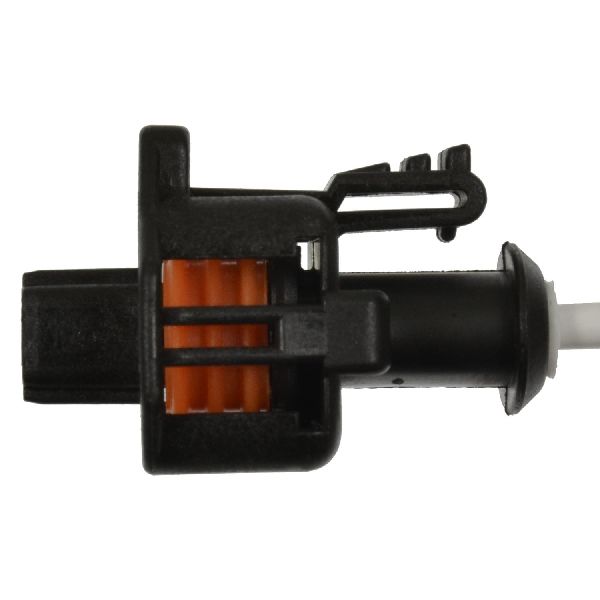
- Wiring Issues: Damaged wires or corroded connectors for the fuel pump or pressure sensors can cause intermittent or invalid signals, triggering the code. This should be visually inspected before replacing parts.
- Software Glitch: In some cases, particularly on related Land Rover models, owners have reported that a Powertrain Control Module (PCM) software update performed by a dealer has resolved the P0089 code. However, for the 2012-2014 Evoque, the mechanical fault described in TSB LTB00623NAS1 is the more probable cause.
Diagnosis Steps
- Connect an OBD-II scanner to confirm the presence of P0089 and check for the manufacturer-specific sub-code '-29'.
- Review TSB #LTB00623NAS1, which strongly suggests the in-tank fuel pump or low-pressure sensor is the culprit for vehicles in the specified VIN range.
- Using a capable scan tool (like the dealer's SDD), access the live datalogger for the 'Engine system'.
- Select and monitor the 'Fuel rail pressure - Low range sensor' signal. Start the engine and let it idle.
- Per the TSB, observe the voltage. For the first 30 seconds, it should be approximately 3.0v (± 0.15). For the next 30 seconds, as idle speed drops, it should be approximately 2.3v (± 0.15).
- INTERPRETATION: If voltage readings are unstable, start low and slowly build, or otherwise do not hold steady in the specified ranges, the in-tank fuel pump assembly is faulty and should be replaced.
- INTERPRETATION: If voltage readings are maintained correctly throughout the test, the low-pressure fuel sensor (LR044010) is likely faulty and should be replaced.
- Before replacing parts, perform a visual inspection of the wiring and connectors for the fuel pump and pressure sensor for any visible damage or corrosion.
Parts You'll Likely Need

- In-Tank Fuel Pump Assembly
(OEM #LR057235)— This is the most common fix, as identified by Land Rover's TSB LTB00623NAS1 which points to a faulty relief valve seal. This part number supersedes previous versions LR044427 and LR026192.
Trusted brands: Land Rover (Genuine), Bosch, URO Parts
OEM price range: $575-$650
Aftermarket price range: $190-$450 - Low-Pressure Fuel Sensor
(OEM #LR044010)— This is the second most likely component to fail according to the official TSB diagnostic procedure. If the in-tank pump's pressure output is stable, this sensor is the next part to replace.
Trusted brands: Land Rover (Genuine), Bosch
OEM price range: $70-$120
Aftermarket price range: $40-$80
Technical Service Bulletins (TSBs) & Recalls
- LTB00623NAS1: Engine MIL Illuminated With DTC P0089-29 Stored - The primary TSB identifying the faulty in-tank pump relief valve seal as the cause and providing specific voltage-based diagnostic steps.
- SGI14-11: Fuel Pressure Regulator Performance - Signal Invalid - A service campaign bulletin that also identifies code P0089-29 and includes the Land Rover LR2 as an affected platform.
Platform-Specific Known Issues
- A Land Rover Technical Service Bulletin (LTB00623NAS1) was issued for the 2012-2014 Evoque (VIN CH000447-DH856579). It states that when the MIL is on with DTC P0089-29 stored, the cause 'may be caused by an over-active relief valve seal within the in-tank fuel pump'.
- Some owners on forums have reported the P0089 code appearing shortly after having the fuel tank flange recall service performed, leading to speculation that debris entering the open tank during the service could contribute to the failure.
Mechanic-Grade Diagnostic Values
- Low-pressure fuel sensor voltage at idle (first 30 seconds) — expected: ~3.0v (± 0.15v). Failure: Voltage is unstable, starts low and slowly builds, or does not hold steady.
- Low-pressure fuel sensor voltage at idle (after 30 seconds) — expected: ~2.3v (± 0.15v). Failure: Voltage is unstable or does not drop to and hold steady in this range.
- General Fuel Pressure Sensor Signal Voltage (Key On, Engine Off) — expected: Approx. 0.5V - 1.3V. Failure: Voltage significantly outside this range, or at 5V, may indicate a sensor or wiring fault.
Hidden / Shadow Codes Worth Checking
- P0089-29: Fuel Pressure Regulator Performance - Signal Invalid. On the 2012-2014 Evoque, this sub-code is specifically linked by TSB LTB00623NAS1 to a mechanical failure of the in-tank fuel pump's relief valve seal. (see via Land Rover-specific diagnostic tool (like SDD, Pathfinder, or advanced aftermarket scanners like GAP IIDTool).)
- P0089-64: Fuel Pressure Regulator Performance - Signal Plausibility Failure. This sub-code, often seen on other Land Rover models, is frequently caused by a PCM software error, not a mechanical part failure. TSBs LTB01275NAS1 and LTB01057NAS1 address this for other vehicles, recommending a PCM software update. (see via Land Rover-specific diagnostic tool (like SDD, Pathfinder, or advanced aftermarket scanners like GAP IIDTool).)
Scan Tool Commands That Help
- JLR SDD / Pathfinder: Configure existing module - Powertrain control module — This function is specified in TSB LTB01275NAS1 to resolve code P0089-64. It updates the PCM software, which may be the root cause if this specific sub-code is present, avoiding unnecessary mechanical parts replacement.
Wiring & Ground Locations
- Engine Control Module (ECM) — Located at the center rear of the engine compartment.. The ECM is the source of the diagnostic code and controls the fuel pump module. Its connections are critical for proper fuel pressure regulation.
- Fuel Pump Control Module (FPCM) — Location varies. On diesel models, it is often in the rear left wheel well area. On petrol models, it may be located in the trunk behind the side trim panel. Always verify location for the specific vehicle configuration.. This module directly controls the voltage and operation of the in-tank fuel pump. Wiring or module failure here will directly cause pressure regulation faults.
- G3D136 — A ground point located under the driver's seat.. A poor ground connection for the fuel pump control module or related circuits can cause erratic voltage and trigger performance codes like P0089.
Real Owner Repair Stories
- landroverforums.com user (Land Rover (model not specified, but behavior is relevant)) — Check Engine Light with code P0089-64 'Signal plausibility failure'.
❌ Tried (didn't work) Replacing the High Pressure fuel sensor.
✅ What actually fixed it Replacing the low-pressure fuel sensor cleared the fault. - landroverforums.com user (Land Rover (model not specified, but behavior is relevant)) — Check Engine Light with P0089.
❌ Tried (didn't work) Initial diagnosis pointed towards fuel pressure sensor or pump.
✅ What actually fixed it An independent shop with an advanced scanner found the root cause to be a faulty 'Oxygen Sensor-Downstream Right'. The tech explained that codes can 'cascade' and the O2 sensor fault was triggering the P0089 code. - landroverforums.com user (2015-2016 Land Rover LR4) — P0089 code with no noticeable driving issues.
❌ Tried (didn't work) Considering immediate fuel pump replacement based on a mechanic's suggestion.
✅ What actually fixed it A dealership performed a PCM software update as per a TSB for the P0089-64 sub-code, and the code did not return for over 20,000 miles.
When the Usual Fixes Don't Work
- While the TSB for the 2012-2014 Evoque strongly points to a mechanical fuel pump failure for code P0089-29, it is critical to not ignore other possibilities, especially if a different sub-code is present. On other Land Rover platforms, the sub-code P0089-64 is frequently resolved with a PCM software update, not a hardware replacement. Furthermore, real-world repair stories show that even a faulty oxygen sensor can trigger a P0089 code as a secondary effect, a diagnosis that would be missed by focusing exclusively on the fuel system. In one case, a technician replaced the high-pressure sensor to no avail, only to find the problem was the low-pressure sensor, reinforcing the importance of the TSB's diagnostic voltage test to isolate the correct component.
OEM Part Supersession History
LR044427→LR057235— Part revision/update by the manufacturer.
Model Year Variations Within This Range
- 2012-2014: The physical location of the Fuel Pump Control Module (FPCM) may vary. On diesel Evoque models, it is often found in the rear left wheel well. On petrol models, some owners report finding it in the trunk area, behind the side trim panels. Verification is recommended before starting the repair.
Helpful Videos
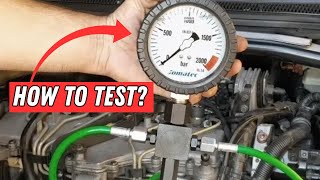
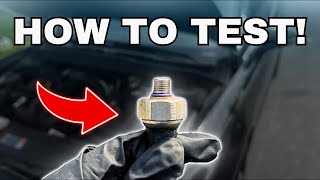
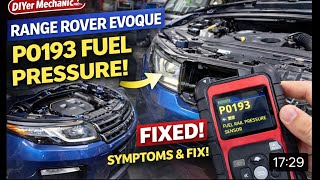
![Range Rover Evoque Fuel Filter Replacement / Change - Restricted Performance Warning Light [HOW TO]](https://img.youtube.com/vi/pdqOhotnEbo/mqdefault.jpg)
Used OEM Parts in Stock


New Aftermarket Parts Available


The information in this article is provided for general reference and educational purposes only. Vehicle specifications, procedures, and part compatibility can vary by production date, trim level, and region. Always consult your vehicle's factory service manual and verify part numbers before purchasing or performing repairs. Safety-critical components such as airbags, seat belts, and braking systems should be installed by a qualified professional.
- Land Rover RANGE ROVER EVOQUE:
- 🎬 Helpful Videos
- 🛍️ Shop This Part
- What's Unique About the 2012-2014 Land Rover RANGE ROVER EVOQUE
- Diagnostic Flowchart
- Symptoms You May Notice
- Most Likely Causes
- Rare But Worth Checking
- Diagnosis Steps
- Parts You'll Likely Need
- Technical Service Bulletins (TSBs) & Recalls
- Platform-Specific Known Issues
- Mechanic-Grade Diagnostic Values
- Hidden / Shadow Codes Worth Checking
- Scan Tool Commands That Help
- Wiring & Ground Locations
- Real Owner Repair Stories
- When the Usual Fixes Don't Work
- OEM Part Supersession History
- Model Year Variations Within This Range
- 🎟️ Get 5% Off