

P0089 on 2018-2024 GMC Terrain 1.5L: Causes for Stalling, Reduced Power, and Fixes
On a 2018-2024 GMC Terrain, P0089 is most often caused by a failing high-pressure fuel pump (HPFP), a known issue for this engine detailed in TSB PIP6003E. Before replacing parts, have a dealer check for a critical ECM software update (TSB N252524760), which can sometimes be the sole fix. The HPFP replacement is a costly repair, often between $900 and $2,500 at a shop, and is the subject of class-action lawsuits.
- P0089 on a 2018-2024 Terrain is a critical code that can cause dangerous engine stalling and should be addressed immediately.
- Before any expensive repairs, your first step should be to have a dealer check if your vehicle needs an ECM software update per TSB N252524760.
- The most common mechanical failure is the high-pressure fuel pump (HPFP).
- Diagnosis requires a scan tool to compare desired vs. actual fuel pressure and should include injector testing (AFIT) to rule out other causes.
- This is not a DIY-friendly repair due to the extreme pressures in the fuel system.
What's Unique About the 2018-2024 GMC Terrain
For this generation of GMC Terrain and its sibling, the Chevy Equinox, code P0089 is exceptionally common and directly linked to specific, documented issues. General Motors has issued technical service bulletins (TSBs) acknowledging that the cause can be a software calibration error that falsely triggers the code. More frequently, however, the code is a symptom of a failing high-pressure fuel pump (HPFP), an issue so prevalent it has been the subject of class-action lawsuits and detailed diagnostic bulletins from GM. These lawsuits allege widespread premature failures of both the high-pressure and low-pressure fuel pumps, causing dangerous stalling conditions.
Generation note: While this vehicle range is all the second-generation Terrain, it spans two versions of the 1.5L engine. The 2018-2022 models use the 1.5L LYX engine. For 2023-2024, GM switched to the 1.5L LSD engine, which features a higher-pressure fuel system (35 MPa vs 20 MPa, or ~5076 PSI vs ~2900 PSI). While the root causes are similar, parts like the HPFP and diagnostic values differ. TSB PIP6003E is specifically targeted at the newer LSD engine but the diagnostic principles apply to both.
Symptoms You May Notice
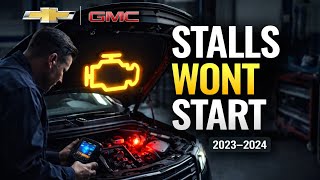
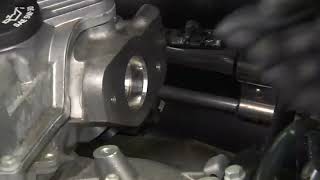
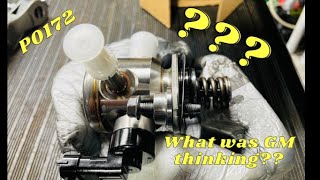
- Sudden engine stalling, sometimes while driving at low or high speeds 🎬 Watch: How to fix stalling issues and codes P0089 or P228C
- "Engine Power Reduced" message on the dash
- Hesitation or stumbling during acceleration
- Rough or unstable idle, sometimes described as 'loping' or 'lunging' at stops
- Long crank time or no-start condition
- Check Engine Light illuminated
- Surging or sputtering at steady speeds
- Replacing the fuel rail pressure sensor without checking for software updates or testing the HPFP.
- Blaming 'bad gas' without performing proper diagnostics. While fuel contamination can cause issues, it's less likely than the known component failures on this platform. Some owners report dealers initially blaming bad gas before finding a faulty pump.
- Replacing the high-pressure fuel pump (HPFP) without first performing the AFIT injector tests as specified in TSB PIP6003E.
Most Likely Causes
- High-Pressure Fuel Pump (HPFP) Failure 🔴 High Probability This is a widely documented failure point on this platform, acknowledged by GM in TSB PIP6003E. Internal wear reduces the pump's ability to build and hold pressure, and can also send debris downstream to the injectors. The failure is so common that it is the primary subject of multiple class-action lawsuits against GM for this engine platform.
How to confirm: Use a scan tool to monitor 'Desired Fuel Rail Pressure' vs. 'Actual Fuel Rail Pressure'. A significant and persistent deviation where actual pressure lags behind desired, especially under load, points to a failing HPFP. A definitive sign of internal failure is the smell of gasoline in the engine oil. This is often the final diagnosis after ruling out software and sensor issues per TSBs.
Typical fix: Replace the high-pressure fuel pump and the one-time-use high-pressure fuel line that connects to the rail. An oil change is mandatory if fuel has contaminated the oil.
Est. part cost: $200-$550 - Engine Control Module (ECM) Software Calibration Issue 🟡 Medium Probability GM has released TSB N252524760 specifically for an issue where the ECM's software can misinterpret sensor data and incorrectly set code P0089, often with P228C.
How to confirm: A GM dealer or a qualified shop with access to GM's service information system (GMSi) must check the vehicle's VIN to see if the software update applies and has not already been performed.
Typical fix: Reprogram the ECM with the latest software calibration. This must be the first step before any parts are replaced.
Est. part cost: $0 (if under warranty) - $200 - Faulty Fuel Rail Pressure Sensor ⚪ Low Probability
How to confirm: If the scan tool shows erratic or nonsensical fuel pressure readings (e.g., stuck at one value, or jumping wildly), the sensor itself may be faulty. Also inspect its connector for corrosion as noted in TSB 20-NA-197. A quick check is to compare the fuel rail pressure sensor reading to the low-side pressure sensor reading with the key on, engine off; they should be very close.
Typical fix: Replace the fuel rail pressure sensor.
Est. part cost: $35-$65 - Leaking Fuel Injector(s) ⚪ Low Probability A leaking injector can cause a drop in rail pressure, which the ECM may interpret as a regulator performance issue. TSB PIP6003E specifically requires injector testing before condemning the HPFP, as debris from a failing pump can damage the injectors.
How to confirm: A technician must perform an Active Fuel Injector Test (AFIT) using a GM-specific diagnostic tool (like GDS2 or a capable professional scanner) to check for leaks and proper function. The test must be performed both when the engine is cold and hot to be conclusive.
Typical fix: Replace the faulty fuel injector(s) and their seals.
Est. part cost: $70-$150 per injector
Rare But Worth Checking
- Weak In-Tank (Low-Pressure) Fuel Pump: If the low-pressure pump in the fuel tank can't supply enough fuel (typically 45-75 PSI) to the HPFP, the high-pressure side will be starved and trigger the code. This is a known issue and the subject of recall N222372310 for some 2021-2022 models, but lawsuits claim it affects a wider range.
- Corroded Wiring at Fuel Pressure Sensor Connector: GM TSB 20-NA-197 highlights that corrosion in the fuel pressure sensor connector can cause various fuel pressure codes, including P0089. A thorough inspection of the connector and terminals for moisture or black, burnt-looking dielectric grease is warranted.
- Broken Intake Camshaft: The HPFP is driven by a lobe on the intake camshaft. In a documented case on a similar 1.5L Turbo engine, a physically broken camshaft between the cam lobes and the HPFP drive lobe caused a P0089 code. This is a rare mechanical failure but possible.
Diagnosis Steps
- Scan the ECM for all stored trouble codes. Note any other codes that appear alongside P0089, such as P228C, P00C6, or P228D.
- Crucial First Step: Check with a GM dealer if TSB N252524760 (ECM reprogram) applies to your vehicle's VIN. If it does and hasn't been performed, complete the update before any other repairs.
- Using an advanced scan tool, graph the 'Desired Fuel Rail Pressure' and 'Actual Fuel Rail Pressure' PIDs.
- Safely test drive the vehicle (if possible) while monitoring the data. Observe if the actual pressure consistently lags behind, drops out, or significantly deviates from the desired pressure, especially under acceleration.
- Check the engine oil for the smell of gasoline. A strong fuel odor is a strong indicator of a failed internal seal in the HPFP, requiring immediate replacement.
- If pressure deviations are confirmed, follow the diagnostic procedure in TSB PIP6003E. This involves performing a cold and hot Active Fuel Injector Test (AFIT) to rule out leaking injectors before condemning the HPFP.
- Inspect the wiring and connector at the high-pressure fuel pump and the fuel rail pressure sensor for any signs of damage, corrosion, or looseness, per TSB 20-NA-197.
- Test the performance of the low-pressure in-tank fuel pump. Its pressure should be stable and within the specified range (typically 45-75 PSI) to ensure it is supplying adequate volume to the HPFP.
- If the software is up to date, the injectors pass the AFIT, the wiring is intact, and the low-pressure system is healthy, the high-pressure fuel pump is the confirmed cause of the failure.
Parts You'll Likely Need
- High-Pressure Fuel Pump
(OEM #12682079 (supersedes 12673450, 12649461))— This is the most common mechanical failure for code P0089 on this engine. The internal pressure regulator fails, leading to pressure control problems.
Trusted brands: ACDelco (GM Genuine), Delphi
Related Codes That Often Appear With This One
- P228C — Stands for 'Fuel Pressure Regulator 1 Exceeded Control Limits - Pressure Too Low'. It often appears with P0089 as it also points directly to the HPFP's inability to maintain commanded pressure.
- P00C6 — Stands for 'Fuel Rail Pressure Too Low - Engine Cranking'. This indicates the system can't even build enough pressure to start properly, often seen when the HPFP has completely failed.
- P228D — Stands for 'Fuel Pressure Regulator 1 Exceeded Control Limits - High Pressure'. This code can appear with P0089 if the regulator inside the pump fails in a way that causes pressure to spike uncontrollably.
Technical Service Bulletins (TSBs) & Recalls
- MIL Potential Stall No Start and/or DTCs P0089 P00C6 P228C P2C1F: This is the primary diagnostic bulletin for this issue, especially on 2023-2024 models. It directs technicians to perform both cold and hot Active Fuel Injector Tests (AFIT) to rule out injector leakage before condemning the HPFP. If the injectors pass, the bulletin advises replacing the high-pressure fuel pump and the one-time-use fuel line. It also warns that an over-fueling condition caused by the fault can damage the catalytic converter.
- ECM Reprogram for False Fuel Pressure Codes: This bulletin addresses a software calibration issue where the ECM can misinterpret sensor data and falsely set P0089, often along with P228C. The fix is to reprogram the ECM with updated software. This should always be checked by a dealer before replacing any hardware.
- Malfunction Indicator Lamp (MIL) Illuminated - Multiple Fuel System DTCs: This bulletin notes that corrosion or damage at the fuel pressure sensor electrical connector can cause a host of fuel pressure codes, including P0089 and P228D. The recommended fix is to inspect the connector, clean terminals, apply dielectric grease, and replace the connector if damage is found.
- Inadequate Fuel Pump Flow: This is a limited safety recall for the *in-tank low-pressure* fuel pump on certain 2021-2022 Equinox and 2022 Terrain models. A faulty low-pressure pump can starve the HPFP, potentially contributing to P0089. However, class-action lawsuits allege the problem is more widespread than this recall covers.
Platform-Specific Known Issues
- A high failure rate of the high-pressure fuel pump is a well-documented problem for 2018+ Terrain and Equinox models with the 1.5L engine, leading to class-action lawsuits.
- GM has issued TSB N252524760, which indicates a software update for the ECM may be required to fix false P0089 codes.
- GM TSB PIP6003E provides a specific diagnostic flow for technicians to follow when encountering P0089, emphasizing cold and hot injector testing (AFIT) before replacing the HPFP.
Mechanic-Grade Diagnostic Values
- Low-Pressure Fuel System (In-Tank Pump) — expected: 45-75 PSI (310-517 kPa).. Failure: Pressure below this range indicates a weak in-tank pump or restriction, starving the HPFP.
- High-Pressure Fuel Rail at Idle (Engine Warm) — expected: 2.96-3.24 MPa (429-470 PSI).. Failure: Pressure that is unstable or significantly lower than this range at idle points to a failing HPFP or leaking injector.
- High-Pressure Fuel System Max Pressure (2018-2022 LYX) — expected: Commanded pressure should reach up to 20 MPa (~2900 PSI) under load.. Failure: Inability for actual pressure to meet commanded pressure under load.
- High-Pressure Fuel System Max Pressure (2023-2024 LSD) — expected: Commanded pressure should reach up to 35 MPa (~5076 PSI) under load.. Failure: Inability for actual pressure to meet commanded pressure under load.
- High-Pressure Fuel Pump Solenoid Resistance — expected: 9-11 Ohms at 77°F (25°C).. Failure: Resistance outside this range indicates a faulty pump solenoid, requiring pump replacement.
- Fuel Rail Pressure Sensor Voltage — expected: Varies between approximately 0.5V and 4.5V depending on pressure.. Failure: Voltage is stuck at 0V, 5V, or fluctuates erratically unrelated to engine load.
Scan Tool Commands That Help
- GDS2 / Professional Scan Tool: Fuel Pump Enable — To activate the low-pressure in-tank fuel pump with the engine off. This allows for safe and accurate pressure testing of the low-pressure side to rule it out as a cause.
- GDS2 / Professional Scan Tool: Active Fuel Injector Test (AFIT) — This is a critical step outlined in GM service bulletins to perform before condemning the HPFP. It tests for leaking or malfunctioning injectors, which can also cause a pressure drop.
- GDS2 / Professional Scan Tool: Fuel Pump Control Module Programming — This function is required after replacing the Fuel Pump Control Module (FPCM) to configure the new module to the vehicle.
Wiring & Ground Locations
- Fuel Pump Control Module (FPCM) — In the rear of the vehicle, typically mounted to the frame rail on the driver's side, sometimes above the spare tire.. This module controls the in-tank low-pressure pump. Its exposed location makes it vulnerable to moisture and corrosion, which can cause it to fail and starve the high-pressure pump, triggering P0089.
- G103 — Typically located at the rear of the left-hand (driver's side) engine cylinder head.. This is a critical ground point for multiple engine sensors and modules. A loose or corroded connection here can cause erratic sensor readings and control module behavior, potentially leading to a false P0089 code.
Real Owner Repair Stories
- ALLDATA Tech-Assist Case Study (2018 Chevrolet Malibu 1.5L Turbo (same engine platform)) — MIL on with codes P0089, P00C6, P0340. Engine lacked power, had a long crank time, and a clacking sound from the HPFP area.
❌ Tried (didn't work) Replaced the high-pressure fuel pump (HPFP)., Replaced the intake camshaft position sensor.
✅ What actually fixed it A borescope inspection revealed the intake camshaft trigger wheel was not moving when the engine was cranked. Removing the valve cover confirmed the intake camshaft was physically broken between the #4 cylinder lobes and the HPFP drive lobe. Replacing the intake camshaft resolved all codes and symptoms.
When the Usual Fixes Don't Work
- While the high-pressure fuel pump (HPFP) is the most frequent cause of P0089 on this platform, it is not the only cause. A documented repair case on an identical 1.5L Turbo engine shows that even after replacing the HPFP and cam sensor, the code persisted. The actual cause was a physically broken intake camshaft, which drives the HPFP. This highlights that if replacing the common-failure parts doesn't resolve the issue, a deeper investigation into rare mechanical failures is necessary before attempting another pump replacement.
OEM Part Supersession History
12649461, 12673450→12682079— Standard part evolution for the 1.5L LYX engine's high-pressure fuel pump, likely for improved reliability and durability.
Heads up: This part number applies to the 2018-2022 LYX engine.Unknown→25207068— New part for the updated 1.5L LSD engine, released under Service Update N242450160.
Heads up: This part is for the 2023-2024 LSD engine with the 35 MPa high-pressure system and is likely not backward compatible with the earlier LYX engine.
Model Year Variations Within This Range
- 2018-2022: These models use the 1.5L LYX engine with a 20 MPa (~2900 PSI) high-pressure fuel system. The correct HPFP is part number 12682079.
- 2023-2024: These models use the updated 1.5L LSD engine with a higher-pressure 35 MPa (~5076 PSI) fuel system. This requires a different HPFP (p/n 25207068) and sensor calibrations. Diagnostic values and parts are not interchangeable with earlier models.
- 2018-2020: A 2.0L LTG turbo engine was also an option. This engine uses a completely different set of fuel system components and part numbers.
Diagnostic Flowchart
Used vs. New Parts: Buying Guide for This Vehicle
When a used part is the smart pick: For this specific vehicle and code, a used part is generally a poor choice for the high-pressure fuel pump (HPFP) due to its extremely high failure rate. However, a used Fuel Pump Control Module (FPCM) or Fuel Rail Pressure Sensor from a low-mileage, collision-damaged vehicle could be a cost-effective option.
Donor-vehicle mileage cap: roughly under 50000 miles for the part to have meaningful remaining life.
What to inspect on the donor part:
- For any electronic part (sensor, module), inspect the connector pins for any signs of green or white corrosion.
- Verify the donor vehicle's VIN to ensure it did not have open recalls or service campaigns related to the fuel system.
- If considering a used HPFP (not recommended), ask for the donor vehicle's mileage and avoid any part from a vehicle over 60,000 miles.
OEM-only on this vehicle (don't cheap out):
- High-Pressure Fuel Pump (HPFP): Due to the known defect and subsequent part revisions, using a genuine GM or ACDelco part is critical to ensure you get the most updated and reliable version.
- High-Pressure Fuel Line: This is a one-time-use, torque-to-yield part and must be replaced with a new OEM part anytime it is disconnected to prevent dangerous leaks.
Aftermarket brands forum-validated for this vehicle:
- ACDelco (GM Genuine)
- Delphi
- Standard Motor Products
Brands owners have reported issues with on this vehicle:
- Unbranded, 'white-box' parts from online marketplaces should be avoided for this critical, high-pressure component.
Real Owner Stories
Aggregated from forums and TSBs cited above. Mileages and costs reflect what owners reported in those sources.
2023-2024 GMC Terrain 1.5L
Symptoms: Vehicle experienced a potential stall, a no-start condition, and the Check Engine Light came on with codes P0089 and P228C.
What fixed it: After performing the required cold and hot Active Fuel Injector Tests (AFIT) which passed, the high-pressure fuel pump and the one-time-use fuel line were replaced.
Source hint: TSB PIP6003E - MIL Potential Stall No Start and/or DTCs P0089 P00C6 P228C P2C1F
2018-2024 GMC Terrain 1.5L LYX Turbo
Symptoms: The Check Engine Light illuminated with code P0089, but there were no noticeable driveability issues like stalling or hesitation.
What fixed it: The ECM was reprogrammed with updated software by a dealer, which resolved the false code.
Source hint: TSB N252524760 - ECM Reprogram for False Fuel Pressure Codes
2018-2024 GMC Terrain 1.5L LYX Turbo
Symptoms: The Malfunction Indicator Lamp (MIL) was on, and the scan tool showed multiple fuel system codes, including P0089 and P228D.
What fixed it: The electrical connector at the fuel pressure sensor was inspected and found to have corrosion. Cleaning the terminals and applying dielectric grease fixed the issue.
Source hint: TSB 20-NA-197 - Malfunction Indicator Lamp (MIL) Illuminated - Multiple Fuel System DTCs
Related OBD-II Codes
Frequently Asked Questions
I have a P0089 code on my 2021 Terrain. Should I replace the high-pressure fuel pump right away?
My mechanic wants to replace the fuel pump for P0089, but didn't mention any specific tests. Is that correct procedure?
I smell gas in my engine oil. Is this related to the P0089 code on my GMC Terrain?
Is there a recall for the fuel pump on my 2022 GMC Terrain?
My Terrain is showing 'Engine Power Reduced' and has a P0089 code. What's the most likely cause?
What could cause P0089 if the high-pressure fuel pump and software are okay?
Helpful Videos
Used OEM Parts in Stock
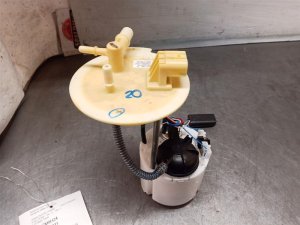

New Aftermarket Parts Available

The information in this article is provided for general reference and educational purposes only. Vehicle specifications, procedures, and part compatibility can vary by production date, trim level, and region. Always consult your vehicle's factory service manual and verify part numbers before purchasing or performing repairs. Safety-critical components such as airbags, seat belts, and braking systems should be installed by a qualified professional.
- GMC Terrain:
- 🎬 Helpful Videos
- 🛍️ Shop This Part
- What's Unique About the 2018-2024 GMC Terrain
- Symptoms You May Notice
- Most Likely Causes
- Rare But Worth Checking
- Diagnosis Steps
- Parts You'll Likely Need
- Related Codes That Often Appear With This One
- Technical Service Bulletins (TSBs) & Recalls
- Platform-Specific Known Issues
- Mechanic-Grade Diagnostic Values
- Scan Tool Commands That Help
- Wiring & Ground Locations
- Real Owner Repair Stories
- When the Usual Fixes Don't Work
- OEM Part Supersession History
- Model Year Variations Within This Range
- Diagnostic Flowchart
- Used vs. New Parts: Buying Guide for This Vehicle
- Real Owner Stories
- 2023-2024 GMC Terrain 1.5L
- 2018-2024 GMC Terrain 1.5L LYX Turbo
- 2018-2024 GMC Terrain 1.5L LYX Turbo
- Related OBD-II Codes
- Frequently Asked Questions
- 🎟️ Get 5% Off