

P0089 on 2010-2017 Chevrolet Equinox: Fuel Pressure Regulator Performance Causes and Fixes
On the 2.4L Equinox, P0089 often points to a failing high-pressure fuel pump (HPFP) or underlying engine timing chain issues. The HPFP is driven by the camshaft, so a stretched timing chain can cause this fuel code. Expect to pay $200-$400 for a new HPFP, or over $1000 for a timing chain replacement.
- P0089 on a 2010-2017 Equinox, especially the 2.4L model, is a serious code pointing to a fuel pressure problem in the high-pressure GDI system.
- Do not immediately assume the fuel pump is bad. Due to the engine design, a worn timing chain is a very common root cause of this fuel code.
- Always check for accompanying timing codes like P0016, P0017, P0011, or P0014. Their presence strongly suggests a timing system fault.
- Diagnosis requires a scan tool capable of reading live fuel pressure data to compare desired vs. actual pressure.
- GM issued TSB #PIP5203C which identifies that an incorrect camshaft or actuator can also cause this code, a possibility if recent engine work has been performed.
What's Unique About the 2010-2017 Chevrolet EQUINOX

On the 2.4L Ecotec engine, common in this generation of Equinox, the high-pressure fuel pump (HPFP) is mechanically driven by a three-lobed section on the intake camshaft. This design creates a unique and critical link between the engine's timing system and the fuel system. Consequently, the well-documented timing chain problems on the 2.4L engine—often exacerbated by excessive oil consumption—are a frequent root cause of fuel pressure code P0089. A stretched or jumped timing chain alters camshaft timing, which directly impacts the HPFP's ability to generate adequate pressure, often triggering P0089 along with timing correlation codes like P0016/P0017.
🎬 Watch: Case study on P0089 and timing correlation codes.Diagnostic Flowchart

Tap your situation to follow the diagnostic path that matches what you're seeing on this vehicle.
Symptoms You May Notice

- Reduced Engine Power message on the dashboard
- Check Engine Light is on
- Engine stalling, especially when coming to a stop or at idle in gear
- Difficulty starting the engine or long crank times
- Rough, unstable, or loping idle
- Poor acceleration and lack of power
- Noticeable decrease in fuel economy
- Engine running rough or misfiring
- Whining noise from the high-pressure fuel pump area
- Replacing only the fuel pressure sensor without confirming it's faulty. The sensor often correctly reports a low-pressure problem caused by the pump or timing chain.
- Replacing the high-pressure fuel pump (HPFP) without addressing an underlying timing chain issue. If timing codes are present, the timing system is the more likely root cause.
- Using cheap, low-quality aftermarket timing chain components, which can fail prematurely and cause the same codes to return.
Most Likely Causes


- Failing High-Pressure Fuel Pump (HPFP) 🔴 High Probability The HPFP is a common failure point on GDI engines. It operates under extreme pressure and can wear out. Internal seals can fail, causing fuel to leak into the crankcase, diluting the engine oil.
How to confirm: Use a scan tool to monitor desired vs. actual fuel rail pressure. If actual pressure is consistently low (or excessively high) and the low-pressure pump is confirmed to be working, the HPFP is the likely culprit. An overfull oil dipstick that smells of gasoline is a strong indicator of a leaking HPFP.
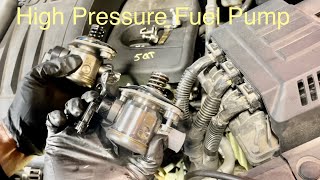
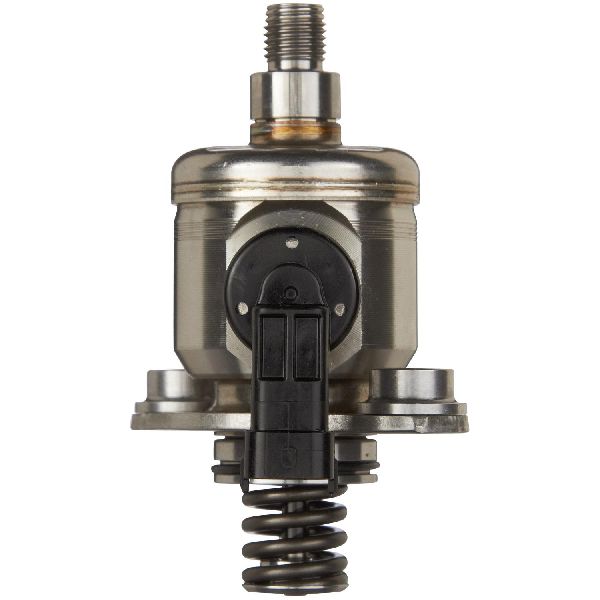
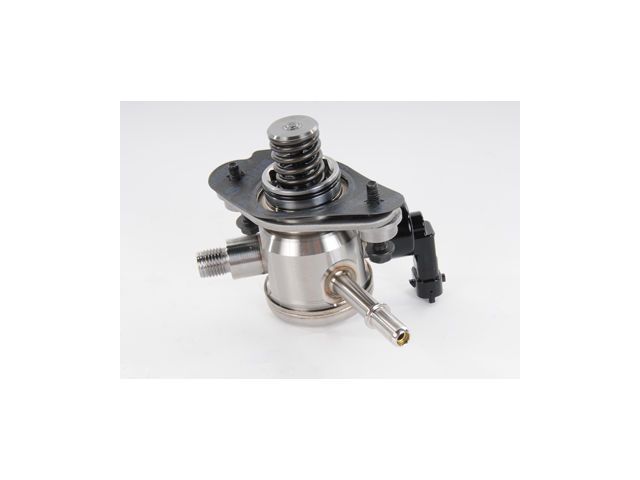
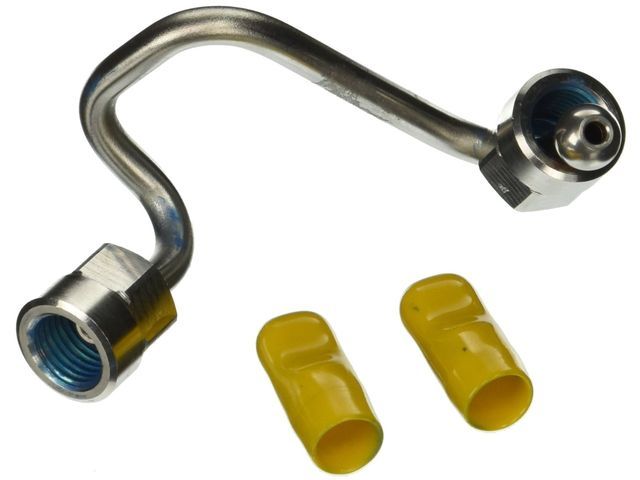
Typical fix: Replace the high-pressure fuel pump and the single-use fuel feed line. 🎬 See this walkthrough for replacing the high-pressure fuel pump. It is critical to also inspect and likely replace the cam follower (tappet) that the pump rides on.
Est. part cost: $200-$450 - Worn Timing Chain, Guides, or Tensioner 🔴 High Probability The 2.4L Ecotec engine is widely known for premature timing chain stretching and tensioner failure, often accelerated by oil consumption issues. Because the HPFP is driven by the intake camshaft, timing issues directly impact fuel pressure and can set P0089 before or alongside timing codes.
How to confirm: Check for related timing codes (P0011, P0014, P0016, P0017). A mechanic can use a scan tool to check camshaft deviation angles or listen for chain rattle on startup. A video case study showed a failed aftermarket tensioner caused P0089/P228D even after a recent timing job.
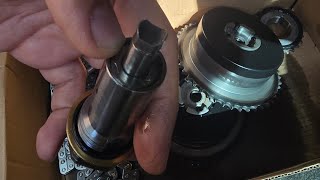
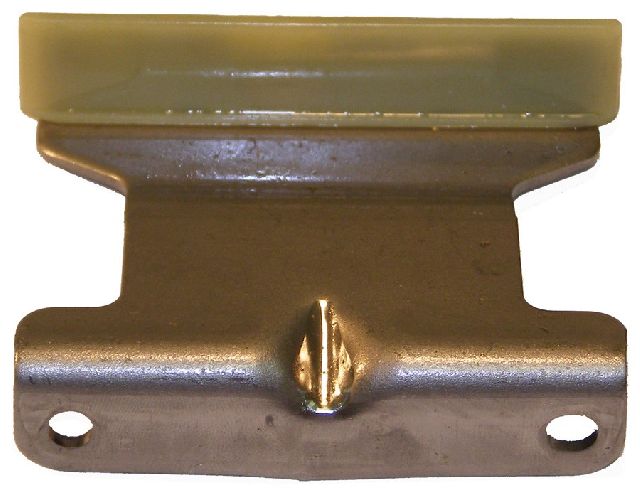
Typical fix: Replace the timing chain, guides, and tensioners as a complete kit using high-quality OEM parts. This is a labor-intensive job. 🎬 Watch: Step-by-step 2.4L timing chain replacement guide.
Est. part cost: $150-$350 - Faulty Fuel Rail Pressure Sensor 🟡 Medium Probability
How to confirm: With the engine off and key on, the fuel rail pressure sensor reading should be near zero and match the low-side pressure reading. If it shows high pressure when there is none, or its readings are erratic, the sensor is likely faulty.
Typical fix: Replace the fuel rail pressure sensor. The fuel rail may need to be removed for access.
Est. part cost: $50-$100 - Weak Low-Pressure In-Tank Fuel Pump ⚪ Low Probability
How to confirm: Connect a mechanical gauge to the low-pressure fuel line service port. The pressure should meet the manufacturer's specification (typically 50-60 PSI) before it reaches the HPFP. A scan tool can also monitor the low-pressure sensor data.
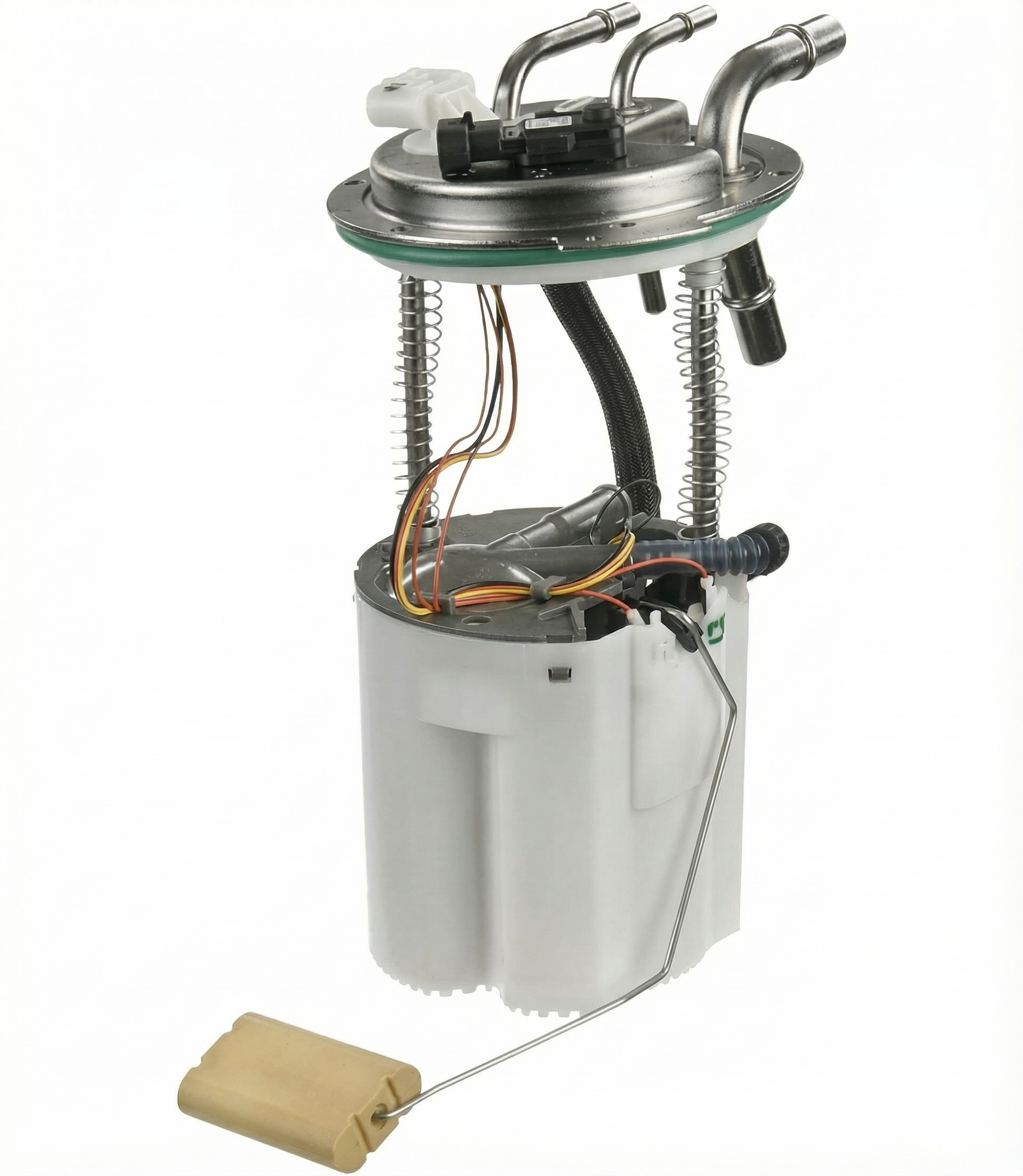
Typical fix: Replace the in-tank fuel pump module.
Est. part cost: $150-$300
Rare But Worth Checking
- Incorrect Intake Camshaft or Camshaft Actuator Sprocket: This is a very specific issue noted in GM Technical Service Bulletin #PIP5203C. If the engine has had recent major work, it's possible the wrong part was installed (e.g., a 2011 cam in a 2010 engine). This changes the HPFP lobe timing and can cause codes P0089 and P228D with excessively high pressure at idle (2000-2500 PSI).
- Leaking Fuel Injector(s): A fuel injector stuck open can cause a drop in fuel rail pressure, triggering P0089. This may also be accompanied by a cylinder-specific misfire code and a rich running condition.
- Worn HPFP Cam Follower (Tappet): The small bucket-style follower that sits between the HPFP and the camshaft lobe can wear down or become damaged, especially if oil is contaminated with fuel. This creates excessive clearance and prevents the pump from stroking fully, reducing pressure. It should always be inspected and likely replaced when the HPFP is serviced.
Diagnosis Steps
- Connect an OBD-II scanner and confirm P0089 is present, noting any other codes, especially P228D, P0011, P0014, P0016, or P0017.
- Using the scanner's live data, monitor 'Desired Fuel Rail Pressure' and 'Actual Fuel Rail Pressure'. Note the discrepancy at idle, under load, and during deceleration.
- Check for any camshaft/crankshaft correlation codes. If present, investigate the timing system first. Listen for chain rattle on cold starts and check cam deviation PIDs if your scanner supports it.
- Inspect the engine oil level and smell. If the oil is overfull and smells strongly of gasoline, suspect a leaking high-pressure fuel pump.
- Test the low-pressure fuel system. Ensure the in-tank pump is supplying 50-60 PSI to the HPFP.
- If low-side pressure is good and timing codes are absent, the high-pressure system is the focus. Inspect the wiring and connector for the fuel rail pressure sensor and the high-pressure fuel pump.
- If wiring is intact, remove the HPFP. Inspect the camshaft lobes for wear and use a magnet or pliers to remove the cam follower ('tappet'). Inspect the follower for scoring, dishing, or excessive wear. If worn, the camshaft lobes are also suspect.
- If the cam and follower are in good condition, the high-pressure fuel pump is the most likely mechanical failure.
Parts You'll Likely Need
- High-Pressure Fuel Pump
(OEM #12641847 (or updated P/N 12677329))— This is the most common direct cause of low fuel rail pressure when the timing system is intact.
Trusted brands: ACDelco, Bosch, GM Genuine
OEM price range: $300-$450
Aftermarket price range: $150-$250 - Timing Chain Kit
(OEM #12685024)— A stretched timing chain is a very common root cause of P0089 on the 2.4L engine, as it under-drives the HPFP. Using cheap aftermarket kits can lead to repeat failures.
Trusted brands: ACDelco, Cloyes
OEM price range: $200-$350
Aftermarket price range: $100-$200 - HPFP Cam Follower (Tappet)
(OEM #12649037 (or 12590679))— This small part takes the mechanical impact from the camshaft lobe. It is a critical wear item that should be replaced with the HPFP to prevent repeat failure.
Trusted brands: ACDelco, GM Genuine
OEM price range: $20-$40
Aftermarket price range: $10-$25 - Fuel Rail Pressure Sensor
(OEM #12621234)— This sensor can fail and send incorrect pressure readings to the ECM, though it's less common than a pump or timing failure.
Trusted brands: ACDelco, Bosch
OEM price range: $70-$120
Aftermarket price range: $40-$80
Related Codes That Often Appear With This One
- P228D — This code for 'Fuel Pressure Regulator 1 Control Performance - High Pressure' is very commonly seen with P0089. They both point to a performance problem in the high-pressure fuel system. Multiple NHTSA complaints and TSB PIP5203C explicitly link these two codes.
- P0016 / P0017 — These codes indicate a 'Crankshaft/Camshaft Position Correlation' error. Their presence with P0089 is a strong indicator that the root cause is a stretched timing chain affecting both engine timing and the camshaft-driven fuel pump.
- P0011 / P0014 — These codes relate to camshaft position timing being over-advanced. Like P0016/P0017, they point towards a timing system issue as the underlying cause of the fuel pressure problem.
Technical Service Bulletins (TSBs) & Recalls
- PIP5203C: States that DTCs P0089 and P228D could be due to an incorrect intake camshaft or camshaft actuator sprocket, causing high fuel pressure. Affects 2010-2011 Equinox/Terrain and 2011 Regal/LaCrosse.
- 12-06-01-009: Discusses timing chain kits for V6 engines but the principles of chain stretch causing codes like P0016/P0017 are relevant as a root cause for P0089 on the 4-cylinder.
Platform-Specific Known Issues
- TSB #PIP5203C: General Motors issued this bulletin for vehicles that set P0089 and P228D, often with high fuel pressure at idle. It advises technicians that the cause could be an incorrect intake camshaft or camshaft actuator sprocket having been installed during a previous repair, which is a known issue when swapping engines between 2010 and 2011 models.
- Timing Chain and Fuel System Link: Multiple owner complaints and forum discussions show a pattern of P0089 appearing alongside a cluster of timing-related codes (P0016, P0017, P0011, P0014) and the fuel pressure control code P228D. This combination almost always points to a stretched timing chain as the root cause.
- Repair Story - Cheap Parts Fail: A YouTube video documented a 2015 Equinox with P0089 and P228D that occurred after a recent timing chain replacement. The technician discovered the new aftermarket timing chain tensioner had physically come apart, causing a loss of oil pressure to the phasers and incorrect timing, which in turn triggered the fuel pressure codes. The fix was to replace all timing components with OEM parts.
Mechanic-Grade Diagnostic Values
- Low-Pressure Fuel System Pressure (KOEO) — expected: 276-448 kPa (40-65 psi). Failure: Pressure is below the specified range.
- Low-Pressure Fuel System Pressure (Idle) — expected: 276-324 kPa (40-47 psi). Failure: Pressure is outside the specified range.
- Low-Pressure Fuel System Leak-Down — expected: Pressure should not decrease more than 34 kPa (5 psi) in 1 minute.. Failure: Pressure drops more than 34 kPa (5 psi) in 1 minute, indicating a leak.
- High-Pressure Fuel Pump Actuator Solenoid Resistance — expected: ~10.1 Ohms. Failure: Resistance is significantly different from the specified value.
- High-Pressure Fuel System (Incorrect Camshaft) — expected: Desired pressure at idle.. Failure: Actual pressure is excessively high at idle, around 2000-2500 PSI.
- High-Pressure Fuel System (P228D Set Condition) — expected: Actual pressure should track desired pressure.. Failure: Actual fuel rail pressure is 3 MPa (435 psi) greater than desired for more than 5 seconds.
Scan Tool Commands That Help
- GDS2 or equivalent professional scanner: Fuel Pump Enable — Used with the engine off to manually run the low-pressure in-tank fuel pump to check its pressure output and perform leak-down tests.
- GDS2 or equivalent professional scanner: High Pressure Fuel Pump Output Test / Fuel Pressure Control — This bidirectional control allows a technician to command different fuel pressures and observe if the high-pressure pump and regulator respond accordingly. It helps isolate a faulty HPFP from sensor or timing issues.
- GDS2 or equivalent professional scanner: Camshaft Position Actuator Solenoid Control — Used to command the intake and exhaust cam phasers to advance or retard, verifying they are not stuck. This is crucial because a malfunctioning intake phaser can affect HPFP performance.
Wiring & Ground Locations
- Fuel Pump Control Module (FPCM) — Located behind the trim panel in the left rear quarter panel area of the cargo compartment.. The FPCM controls the voltage to the in-tank low-pressure fuel pump. A fault in the module or its wiring/ground can starve the HPFP of fuel, leading to low pressure codes like P0089.
- G301 — Under the driver's seat.. This is a major body ground point. While not exclusively for the fuel system, poor grounds can cause a wide range of electrical issues, including erratic sensor readings and module behavior.
- Underhood Fuse Block — Located at the left rear of the engine compartment.. This block contains the fuses and relays for the ECM and fuel system, including the FSCM (FPCM) fuse and Engine Controls Ignition Relay.
- Fuel Rail Pressure Sensor Connector — On the fuel rail, under the intake manifold.. The connector itself can be a point of failure. A damaged connector or wiring pigtail (e.g., AC Delco PT2308) can cause incorrect signals to be sent to the ECM, triggering fuel pressure codes.
Real Owner Repair Stories
- G Auto Repair, YouTube (2015 Chevrolet Equinox 2.4L) — P0089 and P228D codes would appear randomly, but consistently after the engine reached operating temperature (~215°F). No timing codes were present.
❌ Tried (didn't work) The owner had a previous shop perform a complete timing chain job.
✅ What actually fixed it The technician discovered the previous timing job used cheap, low-quality aftermarket parts. The primary timing chain tensioner had physically come apart, causing a loss of oil pressure that prevented the cam phasers from operating correctly. This unstable cam timing directly affected the cam-driven HPFP, causing the fuel pressure codes. Replacing the failed components with OEM timing parts resolved the issue. - ScannerDanner Forum user 'GerryM' (2011 Chevrolet Equinox 2.4L AWD) — Intermittent P0089 and P228D codes, occurring only at idle and in gear after about 30 minutes of driving. Shifting to neutral or raising RPM would normalize pressure.
❌ Tried (didn't work) A previous shop had already replaced the timing chain and VVT solenoids.
✅ What actually fixed it After extensive diagnosis using bidirectional scan tool controls, the problem was isolated to a faulty intake camshaft phaser (actuator). Replacing the intake phaser with a new AC Delco part resolved the intermittent high-pressure fuel codes. - Equinox Forum user '2015 Equinox Experiment01' (2015 Chevrolet Equinox with 140,000 miles) — Check engine light with codes P0016, P0017, and a fuel pressure code. Also had Stabilitrac and ABS lights and was in 'Reduced Power' mode.
✅ What actually fixed it The owner performed a DIY replacement of the complete timing system: timing chains, guides, oiler, both camshaft phasers, and the tensioner. This single, comprehensive repair fixed all the engine codes, including the fuel pressure code, and restored normal engine power.
"I Checked Everything" — The Actual Cause
- A common diagnostic trap for P0089 is focusing solely on the fuel system when pressure tests seem erratic. In a documented case, a 2015 Equinox presented with P0089 and P228D after a recent timing chain replacement. A technician might assume the HPFP or sensor is faulty. However, the actual cause was a cheap aftermarket timing chain tensioner that had disintegrated, causing an internal oil pressure leak. This prevented the cam phasers from maintaining correct intake cam timing, which directly impacts the cam-driven high-pressure fuel pump's performance, especially once the oil thinned out at operating temperature. The root cause was not a fuel system component, but a mechanical engine timing component failure.
When the Usual Fixes Don't Work
- While P0089 is a fuel pressure regulator code, blindly replacing the high-pressure fuel pump is a common and costly misdiagnosis on the 2.4L Equinox. Multiple owner and technician reports confirm that if timing-related codes (like P0016/P0017) are present, or if a timing chain job was recently performed, the root cause is almost certainly in the timing system. A stretched chain, failed tensioner, or faulty cam phaser directly impacts the mechanical operation of the fuel pump. One technician specifically noted that after a timing job with cheap parts, the tensioner failed, causing oil pressure loss and subsequent fuel pressure codes. The fix was to re-do the timing job with OEM parts, not to replace the fuel pump.
OEM Part Supersession History
12608371, 12633115, 12633423, 12639694→12641847 (and later 12677329)— GM periodically updates parts to improve reliability and address failure modes. These supersessions represent revisions to the high-pressure fuel pump.
Heads up: While the newest part number is generally the best choice, always verify fitment for the specific vehicle year, as other components like fuel lines may also have been updated.
Model Year Variations Within This Range
- 2010 vs. 2011: The intake camshaft and actuator sprocket are different. A 2010 model uses a gray intake actuator sprocket, while a 2011 model uses a black one. The locating notch for the actuator on the camshaft is also in a different position. Installing a 2011 cam/actuator in a 2010 vehicle (or vice-versa) will cause incorrect timing for the high-pressure fuel pump, leading to P0089 and P228D.
- 2010-2011 vs. 2012-2017: The 2.4L engine changed from the LAF (2010-2011) to the LEA (2012-2017). The primary difference is that the LEA engine is FlexFuel (E85) capable, which involves changes to internal components to resist the corrosive effects of ethanol. While the core P0089 issue is similar, using parts from the wrong engine variant could cause issues.
Helpful Videos
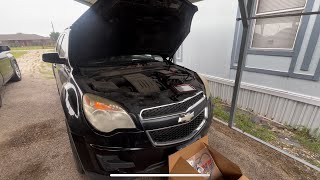
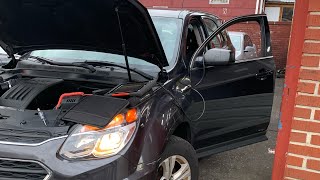
Used OEM Parts in Stock

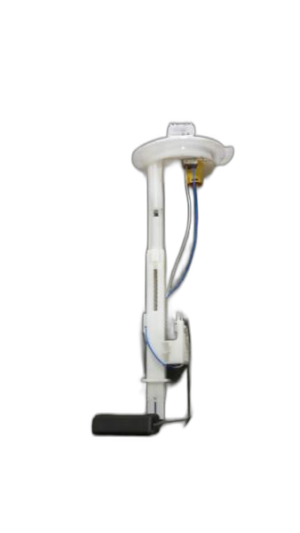
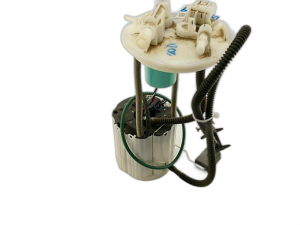


New Aftermarket Parts Available


The information in this article is provided for general reference and educational purposes only. Vehicle specifications, procedures, and part compatibility can vary by production date, trim level, and region. Always consult your vehicle's factory service manual and verify part numbers before purchasing or performing repairs. Safety-critical components such as airbags, seat belts, and braking systems should be installed by a qualified professional.
- Chevrolet EQUINOX:
- 🎬 Helpful Videos
- 🛍️ Shop This Part
- What's Unique About the 2010-2017 Chevrolet EQUINOX
- Diagnostic Flowchart
- Symptoms You May Notice
- Most Likely Causes
- Rare But Worth Checking
- Diagnosis Steps
- Parts You'll Likely Need
- Related Codes That Often Appear With This One
- Technical Service Bulletins (TSBs) & Recalls
- Platform-Specific Known Issues
- Mechanic-Grade Diagnostic Values
- Scan Tool Commands That Help
- Wiring & Ground Locations
- Real Owner Repair Stories
- "I Checked Everything" — The Actual Cause
- When the Usual Fixes Don't Work
- OEM Part Supersession History
- Model Year Variations Within This Range
- 🎟️ Get 5% Off