

P0088 on 2020 Ram 3500 6.7L Cummins: Causes for High Fuel Rail Pressure
P0088 on a 2020 Ram 3500 with the 6.7L Cummins engine most often indicates a faulty Fuel Control Actuator (FCA) or a needed software update. Before replacing parts, check for TSB 18-055-22, which addresses this code with a PCM reflash, especially if the truck has had the Y78 CP4 fuel pump recall performed.
- For a 2020 Ram 3500, your first step for P0088 should be checking with a dealer for TSB 18-055-22, as a simple software update may fix it.
- The most common mechanical failure causing this code is a faulty Fuel Control Actuator (FCA) on the high-pressure pump.
- Do not drive the vehicle. High fuel pressure can cause severe damage to expensive fuel system components and create a serious safety risk.
- Diagnosis requires a scan tool that can read live data for desired vs. actual fuel pressure.
- Working on the high-pressure fuel system is dangerous and generally should be left to professionals.
What's Unique About the 2020-2020 Ram 3500

The 2019-2020 Ram HD trucks were originally built with a Bosch CP4.2 high-pressure fuel pump, which proved to be failure-prone. This led to a widespread safety recall (Y78 / NHTSA 21V880) to replace the CP4.2 with a more robust CP3-style pump. Following this hardware change, a specific software calibration is required. Ram issued Technical Service Bulletin (TSB) 18-055-22 Rev. A, which explicitly lists P0088 as a code that can be triggered by a software issue on post-recall vehicles. The bulletin states, "DO NOT perform this calibration update unless recall Y78 has been performed first." This makes a dealer visit to verify recall status and software version a critical first step, unlike on other vehicles where it might be a last resort.
Diagnostic Flowchart
Tap your situation to follow the diagnostic path that matches what you're seeing on this vehicle.
Symptoms You May Notice
- Check Engine Light is on
- Engine goes into reduced power or "limp mode"
- Noticeable engine rattle or knocking, especially at idle
- Engine RPM surging or loping at idle
- Hard starting or failure to start
- Engine stalling
- Black smoke from the exhaust
- Poor fuel economy
- Replacing the fuel rail pressure sensor when the Fuel Control Actuator (FCA) is the actual problem. It's crucial to diagnose whether the pressure is actually high (pointing to the FCA) or if the sensor is just reporting it as high.
- Replacing fuel system components without first checking if a PCM software update (TSB 18-055-22) is available and applicable, which could fix the issue without replacing any parts, especially after the Y78 recall.
- Immediately replacing expensive fuel components without first checking basic, low-cost items like battery terminals and primary engine/chassis ground connections.
Most Likely Causes

- Powertrain Control Module (PCM) Software Issue 🔴 High Probability Manufacturer TSB #18-055-22 Rev. A directly identifies a software calibration issue as a cause for P0088. This is specifically for 2020 models that have had the CP4 fuel pump replaced with a CP3 pump under recall Y78.
How to confirm: A Ram dealership or a qualified shop with a wiTECH scan tool can check the vehicle's VIN for recall completion and verify if the current PCM software version is the latest one referenced in the TSB.
Typical fix: Reprogramming (flashing) the PCM with the updated software designed for the CP3 pump.
Est. part cost: $0 (if covered under recall/TSB) - Faulty Fuel Control Actuator (FCA) 🔴 High Probability The FCA, also known as the MPROP valve, is an electronic solenoid that meters fuel flow into the high-pressure pump. It is a very common failure item on Cummins engines and can get stuck or fail electronically, leading to uncontrolled pressure spikes.
How to confirm: With a scan tool, monitor desired vs. actual fuel rail pressure. If actual pressure is significantly higher than desired, the FCA is a prime suspect. You can also use the scan tool to cycle the actuator off; a healthy FCA should produce an audible click. A failing FCA can also cause a surging or loping idle.
Typical fix: Replace the Fuel Control Actuator. It is mounted on the high-pressure fuel pump with three T-25 Torx screws.
Est. part cost: $100-$250 - Faulty Fuel Rail Pressure Sensor 🟡 Medium Probability The sensor can fail and send an inaccurate, high-voltage signal to the ECM, tricking it into thinking the pressure is too high when it's actually normal.
How to confirm: Compare the scan tool's pressure reading with a mechanical gauge connected to the rail. If the scan tool shows high pressure but the mechanical gauge shows normal pressure, the sensor is likely faulty. Also, check the sensor's voltage reading with a multimeter or scan tool; a constant high voltage (e.g., 5V) indicates a short or sensor failure.
Typical fix: Replace the fuel rail pressure sensor, which is located on the fuel rail.
Est. part cost: $150-$300 - Blocked or Restricted Fuel Return Line ⚪ Low Probability
How to confirm: Inspect the entire length of the fuel return lines from the engine back to the tank for any kinks, collapses, or blockages.
Typical fix: Clear the restriction or replace the damaged section of the fuel line.
Est. part cost: $20-$100
Rare But Worth Checking
- Failing High-Pressure Fuel Pump (CP4/CP3): While the FCA on the pump is more likely to fail, an internal failure of the high-pressure pump itself can cause this code. This is a much more severe and expensive repair, especially if the original CP4 pump failed and contaminated the system with metal debris.
- Wiring Harness Issues: A short to power in the fuel rail pressure sensor's signal wire can cause a false high reading. This can be caused by chafing against engine components or rodent damage. In some cases, owners have traced similar issues to intermittent opens or grounds in the harness.
- Poor Electrical Grounds or Battery Connections: One owner on Reddit with a P0088 code (and a related P2509 code) traced the root cause to loose/corroded ground contacts and battery connections. Cleaning and tightening all main electrical grounds resolved the issue without replacing any fuel system parts.
- Blocked Fuel Drain Line Check Valve: A diagnostic procedure for P0088 includes checking the fuel drain line check valve, located at the rear of the cylinder head, for blockages or debris.
Diagnosis Steps
- Check for TSBs and Recalls: The absolute first step is to contact a Ram dealer or use an online VIN checker to see if the Y78 (CP4 pump) recall has been performed. If it has, check if TSB 18-055-22 Rev. A applies and if the software has been updated. This TSB is the most common fix for P0088 on post-recall trucks.
- Inspect Basic Electrical System: Before diving into the fuel system, check that the battery terminals are clean and tight. Inspect the main engine-to-chassis ground straps for corrosion or looseness. A poor ground can cause erroneous sensor readings.
- Scan Tool Analysis: Connect a high-quality scan tool and monitor live data. Specifically, watch 'Desired Fuel Rail Pressure' vs. 'Actual Fuel Rail Pressure'.
- Evaluate Pressure Readings: If Actual pressure is significantly and consistently higher than Desired pressure, the issue is likely mechanical (FCA, restriction). If Actual pressure reads abnormally high (e.g., maxed out) but the engine seems to run okay, or if the reading is erratic, suspect the sensor or its wiring.
- Inspect Fuel Control Actuator (FCA): Listen for a click from the FCA when turning the ignition off. Inspect the wiring and connector for damage. Use the scan tool's actuation test to command the FCA off and listen for the click.
- Inspect Fuel Rail Pressure Sensor: Check the sensor's wiring and connector. Back-probe the signal wire to check its voltage. A steady 5V often indicates a short to power or a failed sensor.
- Inspect Fuel Return System: Visually inspect all fuel return lines for obvious kinks, damage, or blockages from the engine back to the fuel tank. As a more advanced step, inspect the fuel drain line check valve at the rear of the cylinder head for blockage.
- Seek Professional Help: If the above steps do not identify the cause, the problem may be a failing high-pressure pump or a complex wiring issue that requires professional diagnosis.
Parts You'll Likely Need

- Fuel Control Actuator (FCA)
(OEM #68005241AA)— This is the most frequent mechanical cause of P0088. It's a solenoid that wears out or gets stuck, directly causing excessive fuel pressure. Also known as an MPROP valve.
Trusted brands: Bosch, Mopar
OEM price range: $180-$250
Aftermarket price range: $100-$170 - Fuel Rail Pressure Sensor
(OEM #68210175AA)— This sensor provides the pressure reading to the ECM. It can fail and send a false high signal, triggering the code even if the pressure is normal.
Trusted brands: Bosch, Mopar, Cummins
OEM price range: $150-$300
Aftermarket price range: $80-$150
Related Codes That Often Appear With This One
- P0506 — Idle Air Control RPM Lower Than Expected, listed in TSB 18-055-22 alongside P0088.
- P0607 — ECU Internal Performance, listed in TSB 18-055-22 alongside P0088.
- P20E8 — Reductant Pressure Too Low, listed in TSB 18-055-22 alongside P0088, indicating a potential software issue affecting multiple systems.
- P0301-P0306 — Cylinder Misfire codes, listed in TSB 18-055-22. Extreme fuel pressure can affect combustion and cause misfires.
- P2509 — Intermittent power to PCM/ECM. One owner reported this code alongside P0088, which was ultimately caused by poor battery/ground connections, suggesting an electrical fault can trigger the high-pressure code.
Technical Service Bulletins (TSBs) & Recalls

- 18-055-22 Rev. A: Flash: Powertrain Control Module (PCM) Updates. Addresses P0088 among many other codes for vehicles that have had the CP3 high-pressure pump installed via recall Y78.
Platform-Specific Known Issues
- The P0088 code on these trucks is often a direct consequence of the major CP4 fuel pump recall (Y78 / NHTSA 21V880). TSB 18-055-22 Rev. A is the software update required *after* the faulty CP4 pump has been replaced with the more reliable CP3 pump. Attempting this flash *before* the hardware change is incorrect and will not resolve the issue.
- Due to the CP4 recall, it is critical to know which high-pressure pump (the original CP4 or the replacement CP3) is installed on the truck before diagnosing this code.
Mechanic-Grade Diagnostic Values
- Fuel Rail Pressure Sensor Voltage (Key On, Engine Off) — expected: Approximately 0.5 Volts. Failure: A reading of 5.0V or significantly different from 0.5V suggests a sensor or wiring fault.
- Fuel Rail Pressure Sensor Ground Circuit Voltage — expected: Less than 50 mV. Failure: Higher voltage indicates a poor ground connection, which can skew sensor readings.
- FCA Driver Circuit Voltage (Ignition On, FCA disconnected) — expected: Approximately 3.5 Volts. Failure: A reading near battery voltage indicates a short to voltage in the driver circuit.
- FCA Driver/Return Circuit Resistance (to PCM) — expected: Below 5.0 Ohms. Failure: Resistance above 5.0 Ohms indicates an open or high resistance in the wiring harness between the FCA and the PCM.
- Low-Pressure Fuel System (Lift Pump) Pressure — expected: Approximately 10 PSI at idle. Failure: While low pressure typically causes a P0087, erratic supply can affect high-pressure pump operation.
Scan Tool Commands That Help

- wiTECH or equivalent professional scan tool: HPCR Duty Cycle Output / Fuel Control Actuator Test — This bidirectional command allows the technician to cycle the Fuel Control Actuator (FCA) off. A healthy FCA should produce an audible click, confirming it is mechanically responding to electronic commands. This helps isolate a stuck FCA from a wiring or ECM driver issue.
- wiTECH or equivalent professional scan tool: Fuel Pressure Override Test — This test commands maximum rail pressure (approx. 26,000 PSI) to check for system integrity and injector return rates. While primarily used for low-pressure codes (P0087), observing the pressure curve during this test can reveal how the system responds to high-pressure commands.
Wiring & Ground Locations
- ECM Connector C1, Pin A74 — On the Engine Control Module (ECM), which is typically mounted on the driver's side of the engine block.. This is the specific pin for the Fuel Pressure Signal wire (BR/YL - Brown/Yellow). Technicians can back-probe this pin to test voltage directly at the ECM, helping to differentiate between a faulty sensor and a wiring issue in the harness.
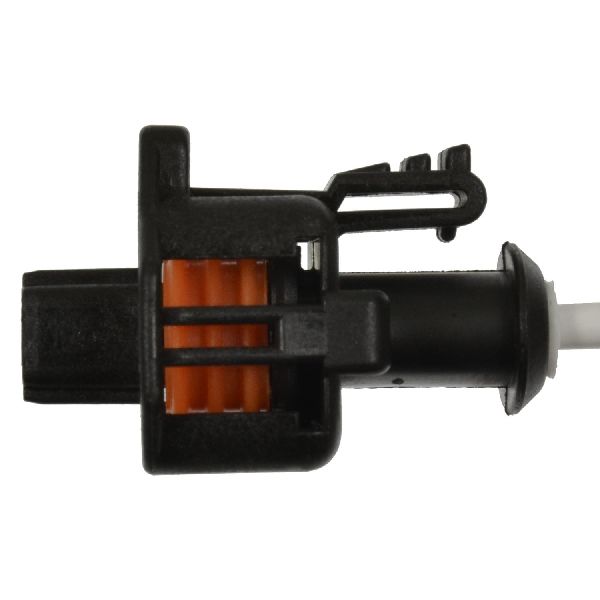
- Fuel Control Actuator (FCA) Connector — On the high-pressure fuel pump, located on the left side of the engine.. This is the primary connection point for testing the FCA and its associated wiring. The two circuits are the FCA Driver (K365) and FCA Return (K366).
- Battery to Engine Ground — A heavy gauge cable running from the battery negative terminal directly to the engine block.. A poor engine ground can cause a voltage differential between sensors and the ECM, leading to inaccurate readings. The resistance of this connection should not exceed 2 milliohms.
Real Owner Repair Stories
- EcoDieselRam.com forum user (2016 Ram 1500 EcoDiesel (Note: Different engine, but identical code behavior and diagnostic path)) — Intermittent Check Engine Light with code P0088 for over two years. No noticeable performance issues.
❌ Tried (didn't work) Replacing the fuel rail pressure sensor ($650), but the code returned within 10 miles.
✅ What actually fixed it The issue was suspected to be an intermittent 'open' or 'grounding' in the wiring harness, as live data showed all fuel pressures were within normal operating values even when the code was present. The final fix was not posted, but the diagnosis pointed directly to a wiring fault, not a component failure. - Reddit user r/powerstroke (2022 Ford F-350 6.7L Power Stroke (Note: Different platform, but highlights a common cause for P0088)) — Check Engine Light, engine surge, then limp mode after getting fuel from a slow-filling station pump.
❌ Tried (didn't work) Initial diagnosis at the dealer.
✅ What actually fixed it The root cause was confirmed to be contaminated fuel from the gas station. This voids the vehicle warranty and requires a full fuel system flush and potentially component replacement at the owner's expense, often covered by comprehensive auto insurance. This highlights that fuel contamination can trigger a high-pressure code.
OEM Part Supersession History
Bosch CP4.2 High-Pressure Pump→Mopar Fuel Pump Upfit Kit (Part # CSRLY781AA)— The original CP4.2 pump was prone to premature failure, leading to Safety Recall Y78 / NHTSA 21V-880.
Heads up: This kit replaces the CP4.2 pump with a more robust CP3 pump. It includes the pump (68573988AA), lines, and hardware. Crucially, after this hardware is installed, the vehicle's ECM/PCM must be reprogrammed with specific software (addressed by TSB 18-055-22) to control the CP3 pump correctly. Failure to flash the ECM will lead to performance issues and fault codes like P0088.
We Have This Part in Stock


The information in this article is provided for general reference and educational purposes only. Vehicle specifications, procedures, and part compatibility can vary by production date, trim level, and region. Always consult your vehicle's factory service manual and verify part numbers before purchasing or performing repairs. Safety-critical components such as airbags, seat belts, and braking systems should be installed by a qualified professional.
- Ram 3500:
- 🛍️ Shop This Part
- What's Unique About the 2020-2020 Ram 3500
- Diagnostic Flowchart
- Symptoms You May Notice
- Most Likely Causes
- Rare But Worth Checking
- Diagnosis Steps
- Parts You'll Likely Need
- Related Codes That Often Appear With This One
- Technical Service Bulletins (TSBs) & Recalls
- Platform-Specific Known Issues
- Mechanic-Grade Diagnostic Values
- Scan Tool Commands That Help
- Wiring & Ground Locations
- Real Owner Repair Stories
- OEM Part Supersession History
- 🎟️ Get 5% Off